Lifestyle
Frankenstein is the monster (movie) Guillermo del Toro was born to bring to life


Oscar Isaac as Victor Frankenstein in Frankenstein.
Ken Woroner/Netflix
hide caption
toggle caption
Ken Woroner/Netflix
Guillermo del Toro has made several monster movies of a particular bent — soulful, swoony, feverish films about grotesque-looking creatures who prove themselves more deeply human than the humans who reject them. Hellboy (2004) was a half-demon with a full heart. The Amphibian Man in The Shape of Water (2017) was an emo f-boy with gill slits. Even the titular marionette in Guillermo del Toro’s Pinocchio (2022) was such a mensch that he earned the right to trade in his knotty pine physiognomy for a flesh bag.
Soulful, swoony, feverish, with a narrative that stacks the emotional deck in favor of the hideous outcast — I mean, that’s pretty much the jacket copy you’d find on any volume of Mary Shelley’s 1818 novel Frankenstein, right?

Which is why this seems like the perfect match between story and muse; certainly del Toro’s been talking about making his own version of the tale for decades, calling it his “lifelong dream.”
That dream is now realized, and while the resulting film captures the tone and spirit of the original novel in all its breathless zeal and hie-me-to-yon-fainting-couch deliriousness, the many narrative tweaks del Toro has made — some of which work, some of which don’t — ensure that you’d never mistake his Frankenstein for anyone else’s.
A monster matriculates

Boris Karloff in his role as the monster of Frankenstein.
AP/AP
hide caption
toggle caption
AP/AP
It’s light-years away, for example, from James Whale’s iconic 1931 version, which surgically implanted Boris Karloff’s lumbering, flat-topped, bolt-necked monster into the culture. Because while Whale was faithful to the bones (heh) of the novel, Karloff’s Creature never grew, intellectually or aesthetically. Maybe Whale was worried doing so would rob the monster of its primal power to clomp its way into his audience’s nightmares.
The book’s Creature, on the other hand, puts itself through a kind of hilarious autodidactical speed run, devouring Plutarch’s Lives and The Sorrows of Young Werther and, famously, Paradise Lost. Which is why you get the following disconnect:
Book Creature: “I ought to be thy Adam; but I am rather the fallen angel, whom thou drivest from joy for no misdeed.”
Karloff’s Creature: “FIRE BAD.”
There’s a lot more of book Creature in del Toro’s Frankenstein, which is good, because his monster inhabits the (literally, in this case) sculpted frame and brooding gaze of Jacob Elordi. For roughly half of his time onscreen, Elordi’s more or less in “FIRE BAD” mode, stumbling around in yellowish strips of cloth that, intentionally or not (but let’s face it, probably intentionally) evoke the gold lamé speedo sported by his Rocky Horror Picture Show analog.

Jacob Elordi as The Creature in Frankenstein.
Ken Woroner/Netflix
hide caption
toggle caption
Ken Woroner/Netflix
But before long the Creature installs that all-important upgrade: He secretly observes the daily life of a loving family, befriends their kindly blind patriarch (David Bradley) and avails himself of their reading matter. Elordi makes his Creature 2.0 just as compelling as the launch version; now outfitted with the full complement of human-emotion DLC (rage, yes — but also gratitude, empathy, sorrow and regret), he sets out to confront Victor (Oscar Isaac), his preening, arrogant brat of a creator.
This is all straight from Shelley’s novel, of course — it’s just inflected by del Toro’s maximalist, heart-affixed-firmly-to-the-sleeve sensibility, which extends to absolutely everything onscreen. The production design goes gratifyingly hard, featuring drawing rooms so huge their walls vanish into shadow, landscapes so vast they swallow the characters — and the buildings they occupy.
Victor’s lonely tower — the site of the Creature’s birth — is a gargoyle-festooned ruin atop a cliff so open to the elements that its rooms and staircases are piled with leaves and other bits of decaying organic matter. Its tiled floors feature yawning pits like frozen whirlpools, foreboding but strangely beautiful.
Spare parts
But del Toro’s spin on the material goes beyond its look and feel – he’s made several changes to the story that leave you wondering what narrative work they are actually doing, besides adding needless complications to justify the film’s two-and-half-hour running time.
He devotes a lot of attention — far more than the book does — to the life of young Frankenstein (heh), played by Christian Convery. Charles Dance adds yet another “stern father” performance to an IMDB page teeming with them, as Victor’s demanding dad, and their frosty, lightly sadistic relationship is clearly meant to foreshadow the one Victor will have with his Creature. I couldn’t help but be reminded of Tim Burton’s Charlie and the Chocolate Factory, and its mystifying determination to explain to us that Wonka only became the candymaker he did because his father was … a dentist.
The film also introduces Christoph Waltz as Harlander, a mysterious figure who acts as Victor’s financial patron. The character ostensibly exists to contrast Victor’s scientific zeal to the greedy drive of capitalism, but I can’t shake the conviction that he could easily lift out of the film without leaving a hole.
A subplot involving Mia Goth’s Elizabeth represents another significant alteration that’s puzzling at first — why make Elizabeth the fiancée of Victor’s brother William (Felix Kammerer) instead of just making her Victor’s fiancée, as she is in the book?
The answer lies in the largest and most essential change that del Toro is making to the story here, which is to turn Victor into even more of a jerk — and, by extension, to cast the Creature as even more sympathetic.
It’s there in Isaac’s bluff, snotty, snooty take on Victor, who’s forever declaring his genius to anyone in earshot. It’s there in his snarling disgust at Elordi’s poor, chained up Creature. And it’s there in Victor’s not-remotely-sly attempts to seduce his own brother’s fiancée.
Elizabeth, for her part, is totally on board with del Toro’s efforts to get us on the Creature’s side; Goth shows us a young woman smart and self-possessed enough to recognize that underneath all the sutures and skin grafts, it’s still Jacob Freaking Elordi we’re talking about, here, people.
Del Toro doesn’t stop there — he also elides book-Creature’s most unsavory aspects and actions to highlight his version’s wet-eyed soulfulness and further cement its status as a blameless thing grievously wronged by the world in general, and by Victor in particular. It’s a marked adjustment from the novel, yes — but one that seems inevitable, given del Toro’s body of work, and his resolute need to portray the outsider as hero.
He’s never been subtle about this, and he’s not here either: At one point a character regards Victor. “You are the monster,” they tell him.
I cannot hope to convey, reader, just how wildly unnecessary that line is, given literally everything about the film we’ve been watching up to that point. It’s del Toro gilding a lily that he’s already spent more than two hours painstakingly crafting out of pure, 24-carat gold.
And yet it works, for him, and for his movie. Del Toro couldn’t possibly do anything less, and, given how perfectly suited he is to tell this story in this particular way, you wouldn’t want him to.
This piece also appeared in NPR’s Pop Culture Happy Hour newsletter. Sign up for the newsletter so you don’t miss the next one, plus get weekly recommendations about what’s making us happy.
Listen to Pop Culture Happy Hour on Apple Podcasts and Spotify.






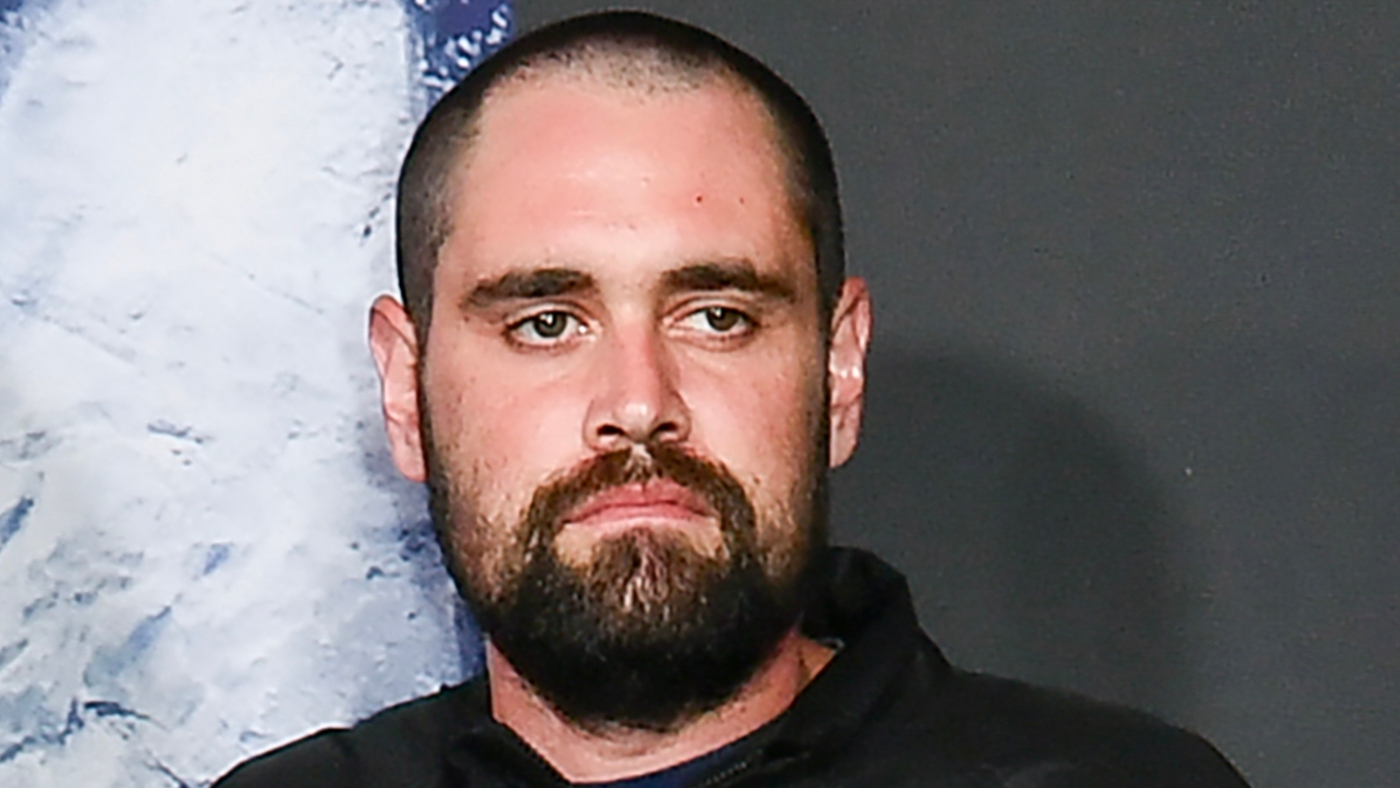
Nick Reiner arrives at the premiere of Spinal Tap II: The End Continues on Tuesday, Sept. 9, 2025, in Los Angeles.
Richard Shotwell/Invision/AP
hide caption
toggle caption
Richard Shotwell/Invision/AP
LOS ANGELES – Alan Jackson, the high-power attorney representing Nick Reiner in the stabbing death of his parents, producer-actor-director Rob Reiner and photographer Michele Singer Reiner, withdrew from the case Wednesday.
Reiner will now be represented by public defender Kimberly Greene.
Wearing a brown jumpsuit, Reiner, 32, didn’t enter a plea during the brief hearing. A judge has rescheduled his arraignment for Feb. 23.
Following the hearing, defense attorney Alan Jackson told a throng of reporters that Reiner is not guilty of murder.
“We’ve investigated this matter top to bottom, back to front. What we’ve learned and you can take this to the bank, is that pursuant to the law of this state, pursuant to the law in California, Nick Reiner is not guilty of murder,” he said.

Reiner is charged with first-degree murder, with special circumstances, in the stabbing deaths of his parents – father Rob, 78, and mother Michele, 70.
The Los Angeles coroner ruled that the two died from injuries inflicted by a knife.
The charges carry a maximum sentence of death. LA County District Attorney Nathan Hochman said he has not decided whether to seek the death penalty.
“We are fully confident that a jury will convict Nick Reiner beyond a reasonable doubt of the brutal murder of his parents — Rob Reiner and Michele Singer Reiner … and do so unanimously,” he said.

Last month, after Reiner’s initial court appearance, Jackson said, “There are very, very complex and serious issues that are associated with this case. These need to be thoroughly but very carefully dealt with and examined and looked at and analyzed. We ask that during this process, you allow the system to move forward – not with a rush to judgment, not with jumping to conclusions.”
The younger Reiner had a long history of substance abuse and attempts at rehabilitation.
His parents had become increasingly alarmed about his behavior in the weeks before the killings.
Legal experts say there is a possibility that Reiner’s legal team could attempt to use an insanity defense.
Defense attorney Dmitry Gorin, a former LA County prosecutor, said claiming insanity or mental impairment presents a major challenge for any defense team.

He told The Los Angeles Times, “The burden of proof is on the defense in an insanity case, and the jury may see the defense as an excuse for committing a serious crime.“
“The jury sets a very high bar on the defendant because it understands that it will release him from legal responsibility,” Gorin added.
The death of Rob Reiner, who first won fame as part of the legendary 1970s sitcom All in the Family, playing the role of Michael “Meathead” Stivic, was a beloved figure in Hollywood and his death sent shockwaves through the community.
After All in the Family, Reiner achieved even more fame as a director of films such as A Few Good Men, Stand By Me, The Princess Bride and When Harry Met Sally. He was nominated for four Golden Globe Awards in the best director category.
Rob Reiner came from a show business pedigree. His father, Carl Reiner, was a legendary pioneer in television who created the iconic 1960s comedy, The Dick Van Dyke Show.

Chiefs
Aware of Dom. Violence Claims
… Made By Rashee Rice’s Ex
Published
The Kansas City Chiefs are addressing the recent social media post made by Rashee Rice‘s ex … where she claimed she was abused during the course of an eight-year relationship, including when she was pregnant.
The shocking allegations were made as part of a lengthy statement shared to the Dacoda Jones’ Instagram account on Wednesday … when said she kept quiet for years to protect her former partner’s image — but can no longer stay silent.
She did not name Rice directly … but certain details about the relationship match up. Rice’s own grandmother even commented on the post … and in a phone conversation with TMZ Sports, she said Jones lied about the abuse after a dispute over paying for an apartment.
In the post, Jones said her relationship ended recently … and “since then it’s been nothing but hell.”
On top of the abuse allegations, Jones claims her ex locked her outside of their home in freezing temperatures after he was caught cheating, damaged her clothes and shoes and showed up at her new home and broke her door.
Jones also claims the man abandoned her and their kids in Kansas and she had to “beg” him for money so she could drive them to Texas.
Jones says he is now trying to force her and their kids out of their home “for no apparent reason.”
“I’ve known this man for YEARS,” Jones said. “He tries to put on this persona like he’s dad of the year. He does the bare minimum and I have to beg for that.”
“I’ve protected his image too long and I’m done doing that. It’s time to protect my peace, protect my children and stand up for myself.”
Jones included images of her alleged injuries from the domestic violence incidents … as well as damage to her home.
We reached out to Rice’s attorney, Royce West, who said his client has not been arrested or charged for domestic violence and hung up the phone.
The NFL declined to comment … but the Chiefs said they are “aware” of the claims made on social media and are in communication with the league.
Rice was suspended six games earlier this season for a 2024 hit-and-run crash in Texas … and teammates like Travis Kelce and Tyquan Thornton wore “Free 4” shirts in support of him during the ban.
He pleaded guilty to two felonies stemming from the incident — one count of racing on a highway causing bodily injury and one count of collision involving serious bodily injury … and was ordered to 30 days in jail and five years of probation.
We’ve reached out to Rice’s camp. No word back.

Timothée Chalamet plays a shoe salesman who dreams of becoming the greatest table tennis player in the world in Marty Supreme.
A24
hide caption
toggle caption
A24
Last year, while accepting a Screen Actors Guild award for A Complete Unknown, Timothée Chalamet told the audience, “I want to be one of the greats; I’m inspired by the greats.” Many criticized him for his immodesty, but I found it refreshing: After all, Chalamet has never made a secret of his ambition in his interviews or his choice of material.
In his best performances, you can see both the character and the actor pushing themselves to greatness, the way Chalamet did playing Bob Dylan in A Complete Unknown, which earned him the second of two Oscar nominations. He’s widely expected to receive a third for his performance in Josh Safdie’s thrilling new movie, Marty Supreme, in which Chalamet pushes himself even harder still.
Chalamet plays Marty Mauser, a 23-year-old shoe salesman in 1952 New York who dreams of being recognized as the greatest table-tennis player in the world. He’s a brilliant player, but for a poor Lower East Side Jewish kid like Marty, playing brilliantly isn’t enough: Simply getting to championship tournaments in London and Tokyo will require money he doesn’t have.

And so Marty, a scrappy, speedy dynamo with a silver tongue and inhuman levels of chutzpah, sets out to borrow, steal, cheat, sweet-talk and hustle his way to the top. He spends almost the entire movie on the run, shaking down friends and shaking off family members, hatching new scams and fleeing the folks he’s already scammed, and generally trying to extricate himself from disasters of his own making.
Marty is very loosely based on the real-life table-tennis pro Marty Reisman. But as a character, he’s cut from the same cloth as the unstoppable antiheroes of Uncut Gems and Good Time, both of which Josh Safdie directed with his brother Benny. Although Josh directed Marty Supreme solo, the ferocious energy of his filmmaking is in line with those earlier New York nail-biters, only this time with a period setting. Most of the story unfolds against a seedy, teeming postwar Manhattan, superbly rendered by the veteran production designer Jack Fisk as a world of shadowy game rooms and rundown apartments.
Early on, though, Marty does make his way to London, where he finagles a room at the same hotel as Kay Stone, a movie star past her 1930s prime. She’s played by Gwyneth Paltrow, in a luminous and long-overdue return to the big screen. Marty is soon having a hot fling with Kay, even as he tries to swindle her ruthless businessman husband, Milton Rockwell, played by the Canadian entrepreneur and Shark Tank regular Kevin O’Leary.
Marty Supreme is full of such ingenious, faintly meta bits of stunt casting. The rascally independent filmmaker Abel Ferrara turns up as a dog-loving mobster. The real-life table-tennis star Koto Kawaguchi plays a Japanese champ who beats Marty in London and leaves him spoiling for a rematch. And Géza Röhrig, from the Holocaust drama Son of Saul, pops up as Marty’s friend Bela Kletzki, a table tennis champ who survived Auschwitz. Bela tells his story in one of the film’s best and strangest scenes, a death-camp flashback that proves crucial to the movie’s meaning.
In one early scene, Marty brags to some journalists that he’s “Hitler’s worst nightmare.” It’s not a stretch to read Marty Supreme as a kind of geopolitical parable, culminating in an epic table-tennis match, pitting a Jewish player against a Japanese one, both sides seeking a hard-won triumph after the horrors of World War II.

The personal victory that Marty seeks would also be a symbolic one, striking a blow for Jewish survival and assimilation — and regeneration: I haven’t yet mentioned a crucial subplot involving Marty’s close friend Rachel, terrifically played by Odessa A’zion, who’s carrying his child and gets sucked into his web of lies.
Josh Safdie, who co-wrote and co-edited the film with Ronald Bronstein, doesn’t belabor his ideas. He’s so busy entertaining you, as Marty ping-pongs from one catastrophe to the next, that you’d be forgiven for missing what’s percolating beneath the movie’s hyperkinetic surface.
Marty himself, the most incorrigible movie protagonist in many a moon, has already stirred much debate; many find his company insufferable and his actions indefensible. But the movies can be a wonderfully amoral medium, and I found myself liking Marty Mauser — and not just liking him, but actually rooting for him to succeed. It takes more than a good actor to pull that off. It takes one of the greats.

Belgium open to housing foreign prisoners in other countries, minister says

Community reacts to ICE shooting in Minnesota. And, RFK Jr. unveils new food pyramid

Woman suspected to have been killed in Colorado’s first fatal mountain lion attack in over two decades

Noem puts Newsom on notice, vows California probe after Minnesota fraud bust

Body found during search for missing Texas teen Camila Mendoza Olmos as another teen girl disappears

Florida High School Football Rankings: Top 25 teams – Oct. 21

Cleary's 21 help Le Moyne down Central Connecticut State 69-64 in OT

How old is Bo Nix? What to know about Oregon quarterback ahead of 2024 NFL Draft

99th annual Pony Swim held in Virginia

Video: ‘It Didn’t Have to Happen This Way:’ U.Va. Faculty Call for Review of Police Response to Protests
Belgium open to housing foreign prisoners in other countries, minister says
Community reacts to ICE shooting in Minnesota. And, RFK Jr. unveils new food pyramid

Video: Minnesota Governor Condemns ICE Shooting

Trump greenlights Russian sanctions bill, paving way for 500% tariff on countries supporting Moscow: Graham

Saudi-led coalition says STC’s al-Zubaidi fled to UAE via Somaliland
-

 Detroit, MI5 days ago
2 hospitalized after shooting on Lodge Freeway in Detroit
-

 Dallas, TX3 days ago
Defensive coordinator candidates who could improve Cowboys’ brutal secondary in 2026
-

 Technology2 days ago
Power bank feature creep is out of control
-

 Health4 days ago
Viral New Year reset routine is helping people adopt healthier habits
-

 Nebraska1 day ago
Oregon State LB transfer Dexter Foster commits to Nebraska
-

 Politics4 days ago
Dan Bongino officially leaves FBI deputy director role after less than a year, returns to ‘civilian life’
-
 Nebraska2 days ago
Nebraska-based pizza chain Godfather’s Pizza is set to open a new location in Queen Creek
-
 Entertainment24 hours ago
Spotify digs in on podcasts with new Hollywood studios