Lifestyle
Cheddar bay biscuits, cheap margs and memories: Readers share their nostalgia for chain restaurants


Affordable, familiar and reassuring are the features that make American chain restaurants a near-ubiquitous presence throughout the country; it is almost as if they are baked into our roadside culture.
Despite well-documented financial struggles, a tough economy and shifting diet trends, these restaurants withstand time.
This series explores why these places have such strong staying power and how they stay afloat at a time of rapid change.
Read our first three pieces in this series, including how these restaurants leverage nostalgia to attract diners, how they attempt to keep costs affordable, and how social media has changed the advertising game – and become a vital key to restaurants’ success.
America’s chain restaurants are not the most glamorous places to eat. And yet, as we’ve reported, they hold a special place in many Americans’ hearts.
We asked readers what comes to mind when they think of restaurants like Olive Garden, Applebee’s or Texas Roadhouse — and you shared plenty of stories.
Not all of the respondees waxed poetic about the merit of these restaurants. David Horton, 62, from New York, for example, said: “The food is mostly frozen and only has flavor from the incredible amounts of sodium they use.”
But overwhelmingly, responses described vivid childhood memories shared in booths looking excitedly over laminated menus and the type of adolescent rites of passage that seem right at home in the parking lot of a suburban chain restaurant.
There’s a science behind why these sorts of memories have such a hold on us.

The feeling of nostalgia is linked closely to food and smell, and these restaurant chains are often where core memories – like graduation celebrations or first dates – are made.
Chelsea Reid is an associate professor at the College of Charleston who studies nostalgia. And she’s no more immune to nostalgic feelings than anyone else even though she has a better understanding of the chemistry behind the feeling.
“Even just saying Red Lobster, I can kind of picture the table and the things that we would do and the things we’d order, and my mom getting extra biscuits to take home,” she said.

A Red Lobster restaurant is seen in Fairview Heights, Ill., in 2005.
James A. Finley/AP
hide caption
toggle caption
James A. Finley/AP
Her nearest Red Lobster closed down, but a local farmers’ market sells a scone reminiscent of Red Lobster’s famed Cheddar Bay Biscuits – a scent she says immediately transports her back to those childhood family outings to the seafood chain.
“I can see my mom wrapping these up in a napkin and putting them in her purse for when we would be like, ‘hey, we’re hungry,’ and she pulls out a purse biscuit.”
Full disclosure: Your intrepid reporters are not without sentimentality. Before launching this project, when it was just a kernel of an idea, we talked frequently about the role these restaurants played in our own lives.
Jaclyn: I distinctly remember cramming into a booth at my local Chili’s in my hometown, Cromwell, Ct., for most birthday dinners until the age of 13 or so.
I’d be surrounded by my mom, dad and brother, and I got to pick whatever I wanted. Except I always chose the same thing: Chicken crispers with a side of fries, topping the night off with the molten lava chocolate cake we’d share as a family.
I can picture it so clearly, down to the booth we’d sit in. Now, my family is spread out. But my love for Chili’s runs deep, and I still get warm and fuzzy when I think about it.
These days, I’m in my 30s, and I need to worry about my health and getting in 10,000 steps a day. So, no, I don’t regularly go to Chili’s now.
But when I do? Those chicken crispers I had as a kid are still on the menu, and yes, I’m likely to order them today (even if on my adult tastebuds, the salt content quickly turns my mouth into the Sahara Desert).
And it’s not to celebrate my birthday. It’s because one of my best friends is telling me she’s getting a divorce over cheap, and sugary, margaritas.
Alana: When the pandemic struck in 2020 and much of the country went into lockdown, there I was mostly alone in my one bedroom apartment, staring at the walls.
After what seemed like a lifetime, I was finally able to expand my tiny COVID bubble.
One of my first “dining out” experiences during that time was in the parking lot of the Hyattsville, Md., Olive Garden where my friend and I sat in absolute glee to be reunited – not just with one another, but also the chain’s staple soup (zuppa toscana for me, please), salad and breadsticks (you can have all the breadsticks if I can have your share of the salad tomatoes).
Since then, that friend and many others have moved away – too far to meet up for a sit-down over a (mostly) hot meal at a reasonably priced restaurant in a city not famed for being cheap.
I recently revisited the Hyattsville Olive Garden for this story. And even though my life is now different, my friends have moved away, and the world has shifted, there it was, exactly the same.
And I liked it.
Many readers said that these restaurants were the type of place a family who could rarely afford to eat outside a home could treat themselves on rare occasions.
Like Julie Philip, 51, from Dunlap, Ill., who wrote: “Growing up in the 70’s and 80’s, Red Lobster was an Easter tradition. We would dress up, go to church, then drive close to an hour to Red Lobster.”

She continued, “It was one of only a few days a year that we could afford to eat at a ‘fancy restaurant.’ I remember my parents remarking that they had to spend $35 for our family of four. I no longer consider Red Lobster a ‘fancy restaurant,’ but as an adult, my family and I often still eat there at Easter. I remind my kids that we are keeping up a family tradition and I tell them stories of my childhood while eating.”
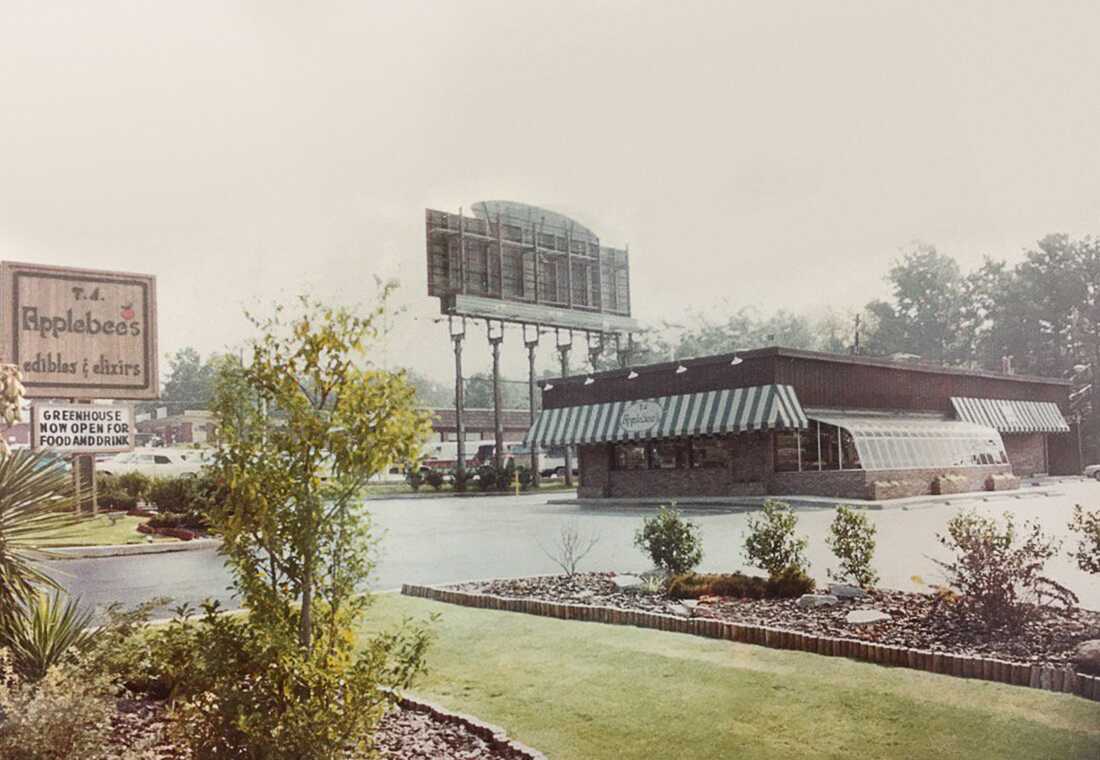
The original Applebee’s restaurant was called T.J. Applebee’s Rx for Edibles & Elixirs and it opened in Decatur, Ga., in 1980.
Applebee’s
hide caption
toggle caption
Applebee’s
For Sarah Duggan, an Applebee’s parking lot evokes a key memory from young adulthood.
Duggan, 32, from North Tonawanda, N.Y., wrote that every time she sees an Applebee’s, she remembers the time her friend, in an act of teenage rebellion, got her belly button pierced in the parking lot of a Long Island Applebee’s — inside the trunk of the piercer’s “salvage-title PT Cruiser.”
Duggan held the flashlight.
She wrote, “I can’t picture those sorts of college kid shenanigans happening in the parking lot of a regular Long Island diner or other independent restaurant, but it seems right that it was at Applebee’s.”
She continued, “It makes me think about how nobody, from riotous camp counselors to your spouse’s grandparents, looks or feels out of place at a chain restaurant.”



It’s hot, school’s out, put your PTO in – summer’s here! And that means Brittany’s back for It’s Been a Minute’s annual summer books episode! This time around authors Sasha Bonét (The Waterbearers) and Cindy Pham (The Secret World of Briar Rose) join the show to give their summer reading recommendations. From wanderlust to first time love – there’s something for everyone.
Want more summer book recommendations?
Sexy & Spiteful: the best books to read this summer
Simmering over summer books
Support Public Media. Join NPR Plus.
Follow Brittany on Instagram: @bmluse
For handpicked podcast recommendations every week, subscribe to NPR’s Pod Club newsletter at npr.org/podclub.
This episode was produced by Alexis Williams. The video was edited by Maya Dangerfield. It was edited by Nick Michael. Our Executive Producer is Barton Girdwood. Our VP of Programming is Yolanda Sangweni.

Sonja Lyubomirsky thinks the Valentine’s Day cards have it wrong. Most, argues the researcher, a distinguished professor of psychology at UC Riverside, say some variation of “I love you.”

Shelf Help is a wellness column where we interview researchers, thinkers and writers about their latest books — all with the aim of learning how to live a more complete life.
“We think all the cards should say, ‘I feel loved by you.’ Or, ‘You make me feel loved,’” says Lyubomirsky, co-author of the recent book “How to Feel Loved: The Five Mindsets That Get You More of What Matters Most.”
The difference is key, and vital, says Lyubomirsky, to our happiness. Being in love, for instance, is not the same as feeling loved, and “How to Feel Loved” documents the latter. For to feel loved is to truly be seen and embraced by another. It’s deeper, and greater, than passion. And we desire it.
Lyubomirsky, a longtime researcher in the field of happiness, together with Harry Reis, a dean’s professor in the University of Rochester’s department of psychology, have written a treatise on how to bring more compassion, acceptance and vulnerability to our relationships.
The bad news: We often go about it incorrectly. The good news: It’s fixable.

Sonja Lyubomirsky, co-author with Harry Reis of the book “How to Feel Loved.”
(Taea Thale Photography )
Too often, they write, we obsess over making ourselves more appealing to others — or more “lovable” — when we should be striving for stronger communication. “How to Feel Loved” outlines multiple mindsets to up our conversation game, each springing off of what they call the “sea-saw method.” Yes, “sea” rather than “see.” We unpack that and more with Lyubomirsky, below.
This interview has been condensed and edited for clarity.
A core tenant of the book is that sometimes we’re our own worst enemies. Things we think may help us feel more loved ultimately work against that goal.
Many of us are loved, but we don’t feel loved. Harry Reis and I created a survey expressly for the book, and we found that 70% reported wanting to feel more loved in at least one of their significant relationships, and 40% wanted to feel more loved by their romantic partner. That’s a problem. Feeling loved is so important to happiness. What are the barriers? Why don’t people feel more loved, and what do they do when they aren’t feeling loved? What we discovered through research is that we kind of go about it the wrong way. We think, “If I don’t feel loved, I need to change myself. I need to make myself more lovable. I need to get more attractive, richer, more accomplished and have more power, status, fame and beauty. I need to show the other person my wonderful qualities and hide my shortcomings and weaknesses.” It turns out that’s backward. That will not make us feel more loved. Our message is empowering. You don’t need to change yourself. You don’t need to change the other person. You just need to change the conversation.
I want to get into changing the conversation, but curious, is a reluctance to do so driven by a fear of rejection?
There’s something called the vulnerability paradox. We think being vulnerable and admitting our mistakes will make people like us less. But actually, often people like us more. So that doesn’t mean just go tell everyone your weaknesses. A lot of emotional intelligence is involved here. You have to read the person — at what point to be a little vulnerable? But right now, I want to impress you with this interview. I want you to think I’m smart, knowledgeable and a good person. That might succeed in impressing you, and maybe you might admire me, but it’s not going to forge a connection. It’s really that vulnerability of going deeper that makes us feel more loved.

“How to Feel Loved” from Sonja Lyubomirsky and Harry Reis.
(Harper Collins Publishers)
So how do we go about that? What’s the first step in feeling more loved?
If you want to feel more loved, you need to make the other person feel loved first. How do you do that? You show genuine curiosity in their day, in their inner life and what they’re all about. We all crave that. The key to feeling loved is truly being known. If you’re hiding your shortcomings and only showing your highlight reel, you’re not going be known. So, Todd, let’s say you only show me very positive sides of you, and never anything vulnerable. Then I express love to you. How can you trust that? What am I loving? I’m just loving this little piece that’s being shown to me. So you’ll always wonder, “Oh, if they only knew A, B, C or D about me, they wouldn’t love me so much.” So the first step to make the other person feel loved is to show radical curiosity. For example, I’ll ask, “Tell me about the last time you cried.”
And yet to ask that question — or to answer it — we need to feel that we’re in a safe space. The concept of radical curiosity seems to create that.
You feel safe because I’m really genuinely interested and I really care. We talk about the open-heart mindset, which is warmth and kindness. I really care about you. I believe in you. We call this the listening to learn mindset. I’m not just trying to respond or turn it back to me, like, “Oh, that reminds me of my story.” Most of us are not good listeners, me included, because we’re formulating an answer instead of just totally taking it in. Listen like you’re watching a film. When you’re watching a film, you’re just taking it in. You’re not formulating an answer when you’re watching a movie.
Some of these tips sound simple but they’re difficult to implement.
We have the “sea-saw” metaphor. The idea: Say you and I are talking. We’re sitting on opposite ends of an underwater “sea-saw.” The reason we’re underwater is because most of us is hidden. I only see the tip of you and you only see the tip of me. But when I’m showing curiosity in you, it’s as though I’m pressing down on my end of the “sea-saw.” I’m helping to lift you up and I see a little more of you. Then when you start talking, I don’t just listen to learn, I listen with warmth and acceptance — without judgment. That’s hard to do, because we’re all judgmental. But that lifts you up even more. Then this is the hard part, but the idea is you will reciprocate. Then you show interest in me and ask me questions and get me to open up. Feeling loved is being known, and you do that through a “sea-saw.” It’s a back and forth.
I like the “sea-saw” idea because a lot of times I get in my head, like, “Say something interesting.” But it’s really more about being interested?
It’s incredibly hard to really cultivate curiosity in someone else’s inner life. It has to be genuine, but it really makes people feel seen, heard and loved. Remember the last time someone was so curious about you. Maybe you’re telling a story and they can’t wait for you to finish a sentence. They’re leaning in. Their eyes are bright. Charismatic people have that. It’s compelling. But we’re not going to feel loved if we don’t share something of ourselves with others, but you want to start small. Pacing is critical. You don’t want to overshare and trauma dump. Maybe start with a little thing. They say, “How are you?” Instead of saying fine, say, “I had a rough morning.” Or, “I’m struggling with a little thing today.” It doesn’t have to be negative. It can be, “I didn’t really like that movie that everyone loved.” That’s a little bit vulnerable.
And it’s letting go of a fear of being judged.
One of my favorite mindsets is the multiplicity mindset. It comes from trauma research. The idea is when we have a trauma in our life, it’s part of you, but it doesn’t define you. We’re a quilt of positive and negative traits. I’m generous at times, but sometimes I’m selfish and sometimes I’m loyal and sometimes I’m narcissistic. That’s true about me, and it’s true about everyone. But one trait doesn’t define us. So use a multiplicity lens when you’re talking to someone, and use it on yourself. Humans are messy, very complex, and full of bad and good traits. The opposite of that is to be judgmental. Being judgmental is something we have to overcome, so using a multiplicity lens takes some effort. So when you want to make someone feel loved, when they’re revealing something about themselves that they may be afraid to reveal, you make them feel accepted and that you see them in all that complexity. You feel loved when a person knows your secrets and still loves you.
And the book provides valuable insight into those moments when maybe you didn’t feel loved.
A couple of early readers of the book — we had finished the book but it wasn’t published yet — shocked me. They were both friends of mine. They said they loved it, but both of them decided to break up with their girlfriends after reading the book. One said to me, “I read your book and I realized she’s not sharing and I’m not sharing.” The other person said, “I realized my girlfriend stopped asking me questions.” We thought of this as prescriptive. “Here are the steps you can take.” They used it as a diagnostic. Were both of you sharing? Were both of you listening? Were both showing an open heart? And multiplicity: If you reveal something negative, is it seen with compassion? This really breaks it down. I don’t want people to break up with people, but if this sheds a light on a relationship, hopefully that means they can talk about it and improve it.

(Maggie Chiang / For The Times)

Comedian Richard Pryor performs on stage at the Los Angeles Hollywood Bowl on Sept. 19, 1977.
Lennox McLendon/Associated Press
hide caption
toggle caption
Lennox McLendon/Associated Press
Historian Elizabeth Stordeur Pryor has spent much of her career tracing the N-word through slavery, Jim Crow, the civil rights movement and hip-hop. But what she didn’t tell her audiences was that her father, Richard Pryor, was the comedian who put the word at the center of American comedy in the 1970s.
“I was a scholar of the N-word — and so was he,” Pryor says of her father.
As the child of a white mother and a Black father, Pryor describes her own relationship to the N-word as a “super complicated” one. She remembers teaching a college class in which one of her white students used the word while quoting Blazing Saddles — a film her father co-wrote. Pryor froze: She had vowed never to use the word in her classroom, but suddenly there it was.

“I [was] just kind of like like a deer in the headlights,” Pryor says. “I was really worried about the Black students. … Something I had never considered when I thought about teaching is what happens when the racism that we study and we teach comes in? … How do I work through that in the moment?”
Pryor’s new book, Something We Said: Richard Pryor, A Notorious Word, and Me, is part memoir and part history of one of the most divisive words in the English language. Late in his career, after spending time in Kenya, Richard Pryor vowed never to use the word again.
“One of the things I admire about that moment when he disavows the word is he said, ‘This is for me. I’m not telling you what to do,’” she says. “There is a piece [of him] where he understood that the word had a function in Black culture. He does talk about, though, as an artist, losing control of what the word was doing.”
Interview highlights
On her father’s use of the N-word
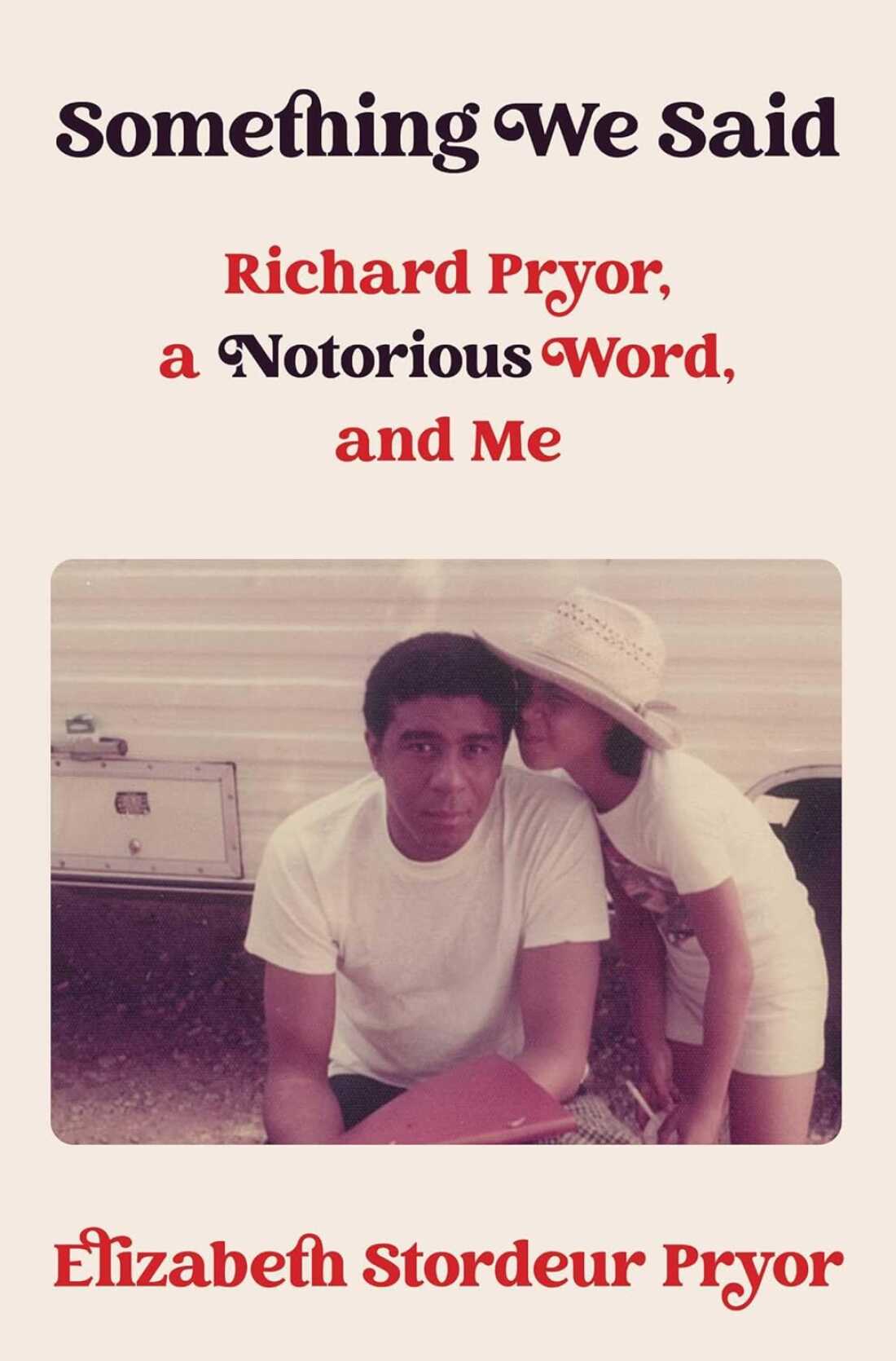
[In] one of the first meaningful conversations I ever had with [my dad] as a little girl, he told me, “Don’t let nobody ever call you that.” And then he used it, and then his friends used it. …
I think it’s really important to emphasize that when I’m saying that he used the word that it was in the subversive way, that it was the language of protest, and that he was building on a Black tradition of protest, that Black people had used this word kind of as a slap in the face to white racism. You know, “We know how to take our punches and our knocks, and we’re not afraid of this thing that you’re trying to demean us as.” And so bringing that use, the way that Black people perceived of the N-word, onto stage was really powerful in the 1970s.
On talking about the N-word with her college students
Teaching the word is still incredibly difficult. I have to say, the conversations are always hard, but I feel like it’s important because my students walk away knowing that this is not a conversation, like I said, about free speech. It’s really about how how we interact, how we want to bring as many people as we can to the table. And if we do that, that means that we’re going to be thinking about who we’re sitting at the table with and how things will impact them.
On meeting her dad for the first time when she was 6
We were in Newark, New Jersey, … and my mom is acting kind of … nervous. And we knocked on the door of a hotel room, and he opened in a towel. And I was like, this is my father. Like, not only do I get a father, but I get this guy. What? I just felt like I won. I loved him immediately. Instantly. His eyes were so warm, and he was so handsome. And I just fell head over heels. … I saw my face [in his face]. … He created a bridge immediately between us and invited me to cross over.
On vying for her father’s attention as a kid

I wanted to be smart enough and creative enough, and I would try to show off. I did theater. I did improv. He would come to my plays and come to my performances. [I] tried to get intellectual with him, like when I was in college. And I had a Black awakening and he basically, like, sent me some stuff so I could awake Blackly, I guess. … He sent me the documentary on Malcolm X that had been filmed, I think, in 1972. And then he sent me The Last Poets’ [song] … “N-words are Scared of Revolution,” to listen to. And I did. I felt like he was inviting me into a secret world, and I wanted to go there. …
At the end of his life, when he couldn’t speak anymore, I would go over and read from the narrative of Frederick Douglass to him, and I could see that he was feeling proud … of being read Frederick Douglass by me.
On Richard Pryor’s upbringing with a sex worker mother and the first laugh that changed everything.
Oh, my dad. He told me a story about being 5 years old and, I don’t know why, but he’s wearing a little cowboy suit, and he was in front of the house and all the people were there, his grandmother, all the sex workers, and his father and his uncle. And he slipped in dog poop and they just start cracking up. And so he got up and he made himself slip in it again, and they couldn’t stop laughing. And so he did it again and again. And it’s pretty painful to think of the lengths that he felt that he needed to go to get their adoration and attention.
Anna Bauman and Thea Chaloner produced and edited this interview for broadcast. Bridget Bentz, Molly Seavy-Nesper and Meghan Sullivan adapted it for the web.
-

 News4 minutes ago
Promoting Advanced Artificial Intelligence Innovation and Security
-

 Los Angeles, Ca1 hour ago
2 women killed after being struck by BMW in Orange County intersection
-

 Detroit, MI2 hours ago
After 12 years in downtown Detroit, Wright & Company calls it quits
-

 San Francisco, CA2 hours ago
San Francisco voters to decide on dueling measures on Top Executive Pay Tax changes
-

 Dallas, TX2 hours ago
Dallas Cowboys’ Path To NFC East Crown Gets Easier After June 1 NFL Trade Frenzy
-

 Miami, FL2 hours ago
Developers pay off $115M in Miami construction loans as condos near sellout
-

 Videos2 hours ago
The AI backlash: Why Gen Z is pushing back | The Global Story
-

 Boston, MA2 hours ago
Updating Red Sox’s Playoff Chances: Numbers Never Lie | NESN

