Lifestyle
Brandy seizes the ‘divine’ opportunity to tell her story with ‘Phases’ memoir


In her long-awaited memoir, Phases, entertainment icon Brandy is opening up about her storied journey from singing in church in rural Mississippi to building a decades-long career in Hollywood as a music artist, songwriter, producer and actress.
Kevin Winter/Getty Images/Kevin Winter/Getty Images
hide caption
toggle caption
Kevin Winter/Getty Images/Kevin Winter/Getty Images
It was in the late summer of 1993 when Brandy first captured viewers nationwide with the premiere season of the sitcom Thea. Playing the vibrant and savvy Danesha Turrell, Brandy stepped into a role that, though short-lived, would become the prelude to her now decades-long entertainment career.
In an interview with Morning Edition ahead of the release of her new memoir, Phases, Brandy recounted that these early achievements affirmed the childhood dreams she held so close growing up in McComb, Mississippi, and Carson, California. While working to reach her visions for herself, Brandy honed her singing and acting skills with the support of her singer and musican father, William “Willie” Norwood Sr., her mother and eventual manager, Sonja Norwood, and her younger brother, Ray J, whose full name is William Norwood Jr.
“All I wanted to do was be a singer, touch people with my voice and meet Whitney Houston. That was my dream. But God had other plans for me. I was able to expand into acting and all sorts of things that I never saw myself doing,” Brandy told NPR’s A Martinez.

Brandy at the ninth annual Soul Train Music Awards in 1995, where she won the award for R&B new artist following the release of her self-titled debut album, which went platinum and featured her chart-topping singles “I Wanna Be Down” and “Baby.”
Jeff Haynes/AFP via Getty/AFP
hide caption
toggle caption
Jeff Haynes/AFP via Getty/AFP
Brandy’s debut acting role came the same year that she secured her first record deal — with her signing to Atlantic Records. Just one year later in 1994, several months after Thea filmed its final episode, Brandy dropped her self-titled debut album. The platinum-selling album stormed the charts, producing two No. 1 singles on the Hot R&B/Hip-Hop Songs chart, three top 10 hits on the Billboard Hot 100 chart and securing Brandy’s title as an artist to watch.
“I just remember being fearless at 14, excited for everything, ready for all of the things that I saw myself doing. I just was so full of spirit,” said Brandy, whose full name is Brandy Norwood, though she’s gone by the mononym Brandy throughout her career.
From a rising star to a pop culture force
Less than a year after releasing her first album, Brandy had already accomplished one of her most coveted goals — meeting her idol Whitney Houston. The pair crossed paths at the Nickelodeon Kids’ Choice Awards in 1995, where Brandy was performing and Houston was hosting the show. Brandy said that encounter was the beginning of a “beautiful friendship” between her and Houston.
YouTube
Brandy and Houston soon worked together again when Houston asked Brandy to be on the soundtrack for Houston’s 1995 film Waiting to Exhale, a music project that Houston curated to feature a roster of all-women music artists and housed Brandy’s No. 1 single “Sittin’ Up in My Room.”
The following year, Brandy took on a new role on the UPN series Moesha, where she starred as the show’s title character, Moesha Mitchell. The show aired for six seasons until its end in 2001, a series run Brandy said she “couldn’t predict” would have lasted so long.

Brandy celebrates the 100th episode of Moesha with her castmates William Allen Young, Yvette Wilson, Shar Jackson, Marcus T. Paulk, Lamont Bentley, Sheryl Lee Ralph and Brandy’s real-life brother, Ray J.
Getty Images/Getty Images/Hulton Archive
hide caption
toggle caption
Getty Images/Getty Images/Hulton Archive
“It was nothing like Moesha on television. It wasn’t a young Black girl with braids on television, just tackling so many topics about life and what teenagers go through. It was different. It was family oriented. It just seemed really grounded,” Brandy said.
“I loved that it was set in Leimert Park. It was just the culture there. It was just so beautiful,” Brandy added, referencing the real-life historic Black neighborhood in Los Angeles where Moesha and her family lived on the show. “I was so happy that we tapped into it. It was such a fun time.”

Brandy and her real-life brother, Ray J, both appeared in the the television series Moesha. Brandy played the series’ title charachter, Moesha Mitchell. While Ray J memorably played several charachters on the show, with his best-known rolebeing Dorian Long.
Getty Images
hide caption
toggle caption
Getty Images
But it was in 1997 that Brandy played one of her most treasured roles — Cinderella in the Disney television film adaption of the musical Rodgers & Hammerstein’s Cinderella. Brandy was cast in the lead role by her own fairy godmother Houston — with Brandy making history as the first Black actress to play a Disney princess on screen.
While working on the film, Brandy says that Whitney centered her with “encouraging energy” and urged Brandy to be herself.
“She just made me feel safe to be myself and I just wanted to impress her,” Brandy said. “Anything I could think of to impress her, I would do it … to make her laugh, to do a run or something to just make her smile. Just because I loved her so much. And I still love her.”

Brandy and Monica arrive at the 41st annual Grammy Awards in February 1999 in Los Angeles, California. That night they won the Grammy Award for best pop duo/group peformance for their chart-topping single “The Boy Is Mine.”
Dan Callister
hide caption
toggle caption
Dan Callister
On the glass heels of the Cinderella film’s international success, Brandy released her 1998 sophomore album Never Say Never. The album included the track “The Boy Is Mine,” her record-breaking duet with her fellow teen sensation Monica. Brandy then closed out the decade with a Grammy win for “The Boy Is Mine,” her becoming the first Black singer to land a CoverGirl contract, Mattel’s release of a Brandy Barbie doll, and her recognition as a beauty and style muse — who’d become known for her trademark braided hairstyles and her fashion on and off the screen.
Balancing the dream
The bustle following Brandy’s debut album in 1994 had surged to a thundering confirmation by the end of the 1990s, with the multiphenate amassing a pop culture significance unrivaled by most of her teen-star contemporaries. But Brandy says navigating her preteen and teenage years as a public figure came with a crushing cost — the mounting expectations of perfection she often felt placed upon her professional and personal life.

Brandy performs during the 50th annual Primetime Emmy Awards on September 13, 1998.
Gerard Burkhart/AFP via Getty Images/AFP
hide caption
toggle caption
Gerard Burkhart/AFP via Getty Images/AFP
“You’re a teenager. That’s when you’re making mistakes, and falling down and trying to get back up — all of these things. And I wasn’t able to do that because I was an example. I was put in a position to be like a role model,” Brandy said.
“The pressures of staying on point and not making mistakes — it was hard to live up to for a long period of time,” Brandy continued. “Because life kicks in. And you do start to learn about yourself. And you do start to make mistakes. And you learn from those mistakes. But when you’re a child star, everything is on blast.”
An expansion of career and honoring of self
Brandy entered the new millennium with artistic fervor, exclaiming her coming of age as a young adult with her 2002 third studio album Full Moon and its acclaimed title track. Her Full Moon era also included the birth of her now 23-year-old daughter Sy’rai Smith, who Brandy says has pulled her own creative inspiration from the beloved project.
“[Sy’rai]’s an artist. She loves music. She can sing her little tail off. So I’m supporting her on her journey, becoming and blossoming into a beautiful artist,” Brandy said, adding that “Full Moon” is Sy’rai’s favorite song out of her mom’s catalog. “Her and her crew, every time that song comes on, they want me to know that they know every lyric. They know every word.”

Brandy visits BET’s 106 & Park and chats with the shows co-host Free in 2002 while promoting her third studio album Full Moon.
Scott Gries/Getty Images/Getty Images North America
hide caption
toggle caption
Scott Gries/Getty Images/Getty Images North America
In the decades following Full Moon, Brandy expanded her career through a melding of film, TV, theater and music projects.
As an actress, she’s taken on feature films like The Perfect Match, her lead role in the sitcom Zoe Ever After, her televsion movie with Sy’rai Christmas Everyday and starring on Broadway as Roxie Hart in the musical Chicago. She’s also continued to foster her musical evolution through studio albums that have found her exploring a range of sonic spaces — including her critically lauded Afrodisiac in 2004, her pop and R&B fusion Human in 2008, Two Eleven in 2012 and her musing experimental album B7 in 2020, which she co-wrote and co-produced.

Brandy’s daughter, Sy’rai Smith, pictured above on the left, is building her own career as a singer and actress. Sy’rai released her debut single “On My Own” in 2023, has been featured on several songs on her mother’s albums and Sy’rai appeared alongside Brandy in the Lifetime holiday movie Christmas Everyday, which premiered in November 2025.
Paras Griffin
hide caption
toggle caption
Paras Griffin
Despite her exhaustive list of creative pursuits, the past three decades have seen Brandy employ moments of dormancy from the spotlight — with her often going inactive on social media and generally retreating from the public eye between projects. It was during one such break that Brandy says she was able to fully address the emotional complexities of her life as a child star.
“Once I was able to step away from the limelight and really work on myself, and work on my self-worth, and heal, I was able to grow and become an amazing person, and mom and a role model for my daughter in the best way possible,” Brandy said. “So I’m grateful for what I’ve been through because I wouldn’t be the person that I am today.”
A timeless icon reinspired
Now putting shape to her fourth decade in the entertainment industry, Brandy says she’s building on the artistic energy she rediscovered during her record-setting joint tour with Monica last fall — which was named after their hit song “The Boy Is Mine.” The 32-date The Boy Is Mine Tour sold out arenas around the nation and dominated social media feeds with performance clips, photos and behind-the-scenes footage.

Brandy attends her Hollywood Walk of Fame induction ceremony on March 30, 2026, in Hollywood, California.
Kevin Winter/Getty Images/Getty Images North America
hide caption
toggle caption
Kevin Winter/Getty Images/Getty Images North America
“When I was creating [The Boy Is Mine] with Rodney Jerkins and LaShawn Daniels, I was watching a lot of [the Jerry Springer Show]. And I saw this [episode] where the show was called pretty much ‘The Boy Is Mine.’ And I was like we should do a song with another artist like Monica,” Brandy said. “I thought my idea for it was amazing. When I heard the song, I just had this idea of our voices going back and forth, and us going back and forth in the song, and producing it like that and. And nobody could see it but me. And I was right.”
“[‘The Boy Is Mine’] is the biggest song of our careers. It won us a Grammy. It put us back on tour 27 years later in 2025 in front of these amazing fans — and reinspired me and reignited me to do more performing and entertainment now. I’m so inspired because of ‘The Boy Is Mine’ and the tour,” Brandy said.

Brandy performs the national anthem ahead of the NFC Championship Game between the Los Angeles Rams and the San Francisco 49ers at SoFi Stadium on January 30, 2022 in Inglewood, California. Brandy’s white tracksuit paid homage to the white windsuit her idol Whitney Houston wore during her iconic performance of the national anthem at the Super Bowl in 1991.
Christian Petersen/Getty Images/Getty Images North America
hide caption
toggle caption
Christian Petersen/Getty Images/Getty Images North America
As Brandy waxes into a new phase of galvanized creativity and self-discovery, she’s reassured that she won’t be overshadowed by weighty expectations and misconceptions. Instead, this era of her life will be fully illuminated by the personal truths she assuredly proclaims in her long-awaited memoir, which she penned in collaboration with journalist Gerrick Kennedy.
“For so long my story was told for me. So given the opportunity to have a chance to speak myself and tell my own story, I just felt like it was divine,” Brandy said. “I wanted to give my younger self a voice and heal my inner child. Some of the things that I went through was super difficult, and I wanted to speak about that and inspire others.”
“[Gerrick Kennedy] helped me to recall some of the things that I didn’t remember and was able to put together a beautiful, compelling story to help other people feel like they can survive whatever they’re going through,” Brandy added.

Lifestyle
Late night has enough political humor already, says host stepping into Colbert’s slot : NPR’s Newsmakers
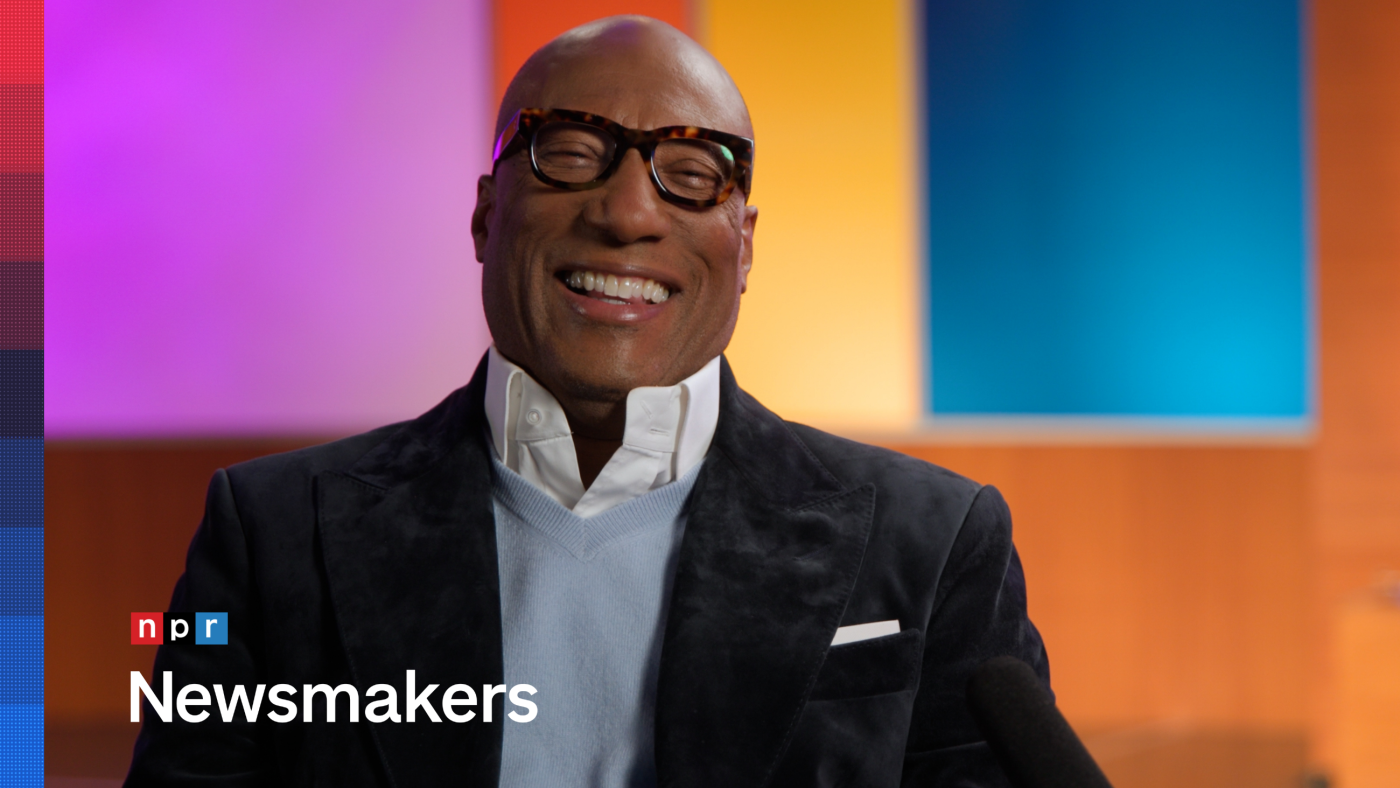
Byron Allen, the media mogul and former stand-up comedian, is gearing up for his latest venture: bringing his show Comics Unleashed to the CBS time slot long held by The Late Show with Stephen Colbert.
“I feel great. I feel amazing. You know, I tell everybody, I have been pursuing this for 51 years,” Allen said in a conversation with NPR’s Ailsa Chang in Culver City, California. He praised Colbert, calling him “an American treasure,” but said Comics Unleashed will steer clear of the political comedy Colbert was known for, breaking away from the typical late night format.
“Not everybody’s gonna love me,” he said. “But there is that one or two percent that would be like ‘hell yeah, I’m rolling with you’ and I learned that at an early age, and by the way, that simple lesson made me a billionaire.”
Allen’s 11:35 p.m. EST debut on Friday, May 22 comes after CBS’ contentious cancellation of The Late Show with Stephen Colbert, despite its top ratings — a move that is widely viewed as political, given Colbert’s frequent criticism of President Trump and his administration. CBS has said the cancellation was “purely a financial decision,” and Allen insists no one at CBS, or its parent company Paramount, has set any limitations or boundaries for his show.
Allen sat down for an interview with NPR’s Newsmakers video podcast ahead of his debut episode.
He discussed his plans for Comics Unleashed in its new prime late night slot, why he thinks there’s still more than enough political comedy after the cancellation of Colbert, and why it’s important for Black Americans to own and produce media.
Can’t see the video above? Watch it on YouTube.
Lifestyle
The BoF Podcast | Leena Nair and Matthieu Blazy on Creativity and the Power of the Human Hand


new video loaded: Stephen Colbert Closes Out “Late Show”
transcript
transcript
Stephen Colbert Closes Out “Late Show”
Stephen Colbert signed off for the last time from “The Late Show” on Thursday. His final guest was Paul McCartney and together they performed the Beatles’ “Hello, Goodbye.”
-
“Tonight is our final broadcast from the Ed Sullivan Theater.”
By Julie Yoon
May 22, 2026
-

 Massachusetts4 minutes ago
Massachusetts’ Charming Town Just Outside Worcester Is A Peaceful Escape With A Beautiful Lake And Garden – Islands
-

 Minnesota10 minutes ago
Renowned Minnesota musician Charlie Parr to make Detroit Lakes debut on June 5 at Historic Holmes Theatre
-

 Mississippi16 minutes ago
Why Samantha Ricketts said Mississippi State beat OU for first super regional win
-
Missouri22 minutes ago
Missouri Lottery Mega Millions, Pick 3 winning numbers for May 22, 2026
-

 Montana28 minutes ago
Montana Plan hurts Montana business
-

 Nebraska34 minutes ago
Invasive Species Awareness Week starts Sunday, May 24 – Sandhills Express
-

 Nevada40 minutes ago
What to know before Nevada early voting begins
-

 New Hampshire46 minutes ago
Best New Hampshire schools for athletes? According to one study, these are top 25

