Lifestyle
Bowen Yang leaves ‘SNL’ midway through his 8th season


Bowen Yang is leaving Saturday Night Live midway through his 8th season with the long-running, late-night comedy sketch series.
Jamie McCarthy/Getty Images
hide caption
toggle caption
Jamie McCarthy/Getty Images
Comedian Bowen Yang is leaving Saturday Night Live midway through the season, his eighth with the long-running NBC late-night sketch comedy series. The performer is scheduled to participate in his final show Saturday, which will be hosted by Wicked star Ariana Grande. Cher is the musical guest.
Yang has not publicly shared the reason for his abrupt departure from SNL. In a social media post on Saturday, the comedian thanked the team and expressed gratitude for “every minute” of his time with the show.
“I loved working at SNL, and most of all I loved the people,” Yang wrote. “I was there at a time when many things in the world started to seem futile, but working at 30 Rock taught me the value in showing up anyway when people make it worthwhile.”

Yang, 35, was one of SNL‘s most prominent recent cast members.
His most famous work on the show includes “The Iceberg That Sank the Titanic,” a “Weekend Update” segment where Yang personifies the infamous iceberg; a commercial spoof co-starring Travis Kelce — “Straight Male Friend” — advertising the benefits of low-stakes friendships; and his recurring impression of expelled congressman George Santos. At one point, Yang also performed a sketch in which he played an intern on NPR’s Tiny Desk concert series.
Yang has been nominated for five Emmy Awards for his work on the series. Beyond SNL, the performer’s credits include the 2022 romantic comedy Fire Island, the musical Wicked (2024) as well as its sequel, Wicked: For Good (2025), and the remake of The Wedding Banquet (2025). He also co-hosts the Las Culturistas podcast with actor and comedian Matt Rogers.
Yang, the show’s first Chinese American cast member, rose through SNL‘s ranks after joining the show as a staff writer in 2018. A year later, he was promoted to on-air talent and eventually became a series regular.

Yang talked about the natural turnover at SNL and hinted at life beyond the show in an interview with People earlier this year. “It’s this growing, living thing where new people come in and you do have to sort of make way for them and to grow and to keep elevating themselves,” he said. “And that inevitably requires me to sort of hang it up at some point — but I don’t know what the vision is yet.”
He joins other cast members who have recently left the show. Heidi Gardner, Ego Nwodim and Devon Walker are among those who departed ahead of the 51st season, which launched in October.
Yang’s reps did not immediately respond to NPR’s request for comment. The series’ network, NBCUniversal, referenced Yang’s social media post, but provided no further comment.
Though uncommon, there have been a few other mid-season SNL departures in the past, including Cecily Strong, Dana Carvey and Eddie Murphy.
Fellow entertainers have commented on Yang’s departure on social media. “Iconic. (Understatement)” wrote actor Evan Ross Katz on Instagram in response to Yang’s post. “Congrats!” wrote comedian Amber Ruffin. “Please make more The Wedding Banquets.”
NPR critic-at-large Eric Deggans called Yang’s departure, even if inevitable, a setback for the show.
“SNL thrives when it has a large crop of utility players who can pull comedic gold from the dodgiest sketch ideas,” Deggans said, counting Yang among the most talented in recent seasons of the show’s cast to fill that role.
“No matter what he was asked to do, from playing the iceberg that sunk the Titanic to playing North Korean leader Kim Jong-un, he was able to wring maximum laughs and patch up SNL’s historic lack of representation regarding Asian performers,” he added.
But Yang, Deggans noted, may have reached an apex of what he could achieve on the show, “and it might be time for him to leave, while his star is still ascending and there are opportunities beyond the program available to him which might not be around for long.”


It’s hot, school’s out, put your PTO in – summer’s here! And that means Brittany’s back for It’s Been a Minute’s annual summer books episode! This time around authors Sasha Bonét (The Waterbearers) and Cindy Pham (The Secret World of Briar Rose) join the show to give their summer reading recommendations. From wanderlust to first time love – there’s something for everyone.
Want more summer book recommendations?
Sexy & Spiteful: the best books to read this summer
Simmering over summer books
Support Public Media. Join NPR Plus.
Follow Brittany on Instagram: @bmluse
For handpicked podcast recommendations every week, subscribe to NPR’s Pod Club newsletter at npr.org/podclub.
This episode was produced by Alexis Williams. The video was edited by Maya Dangerfield. It was edited by Nick Michael. Our Executive Producer is Barton Girdwood. Our VP of Programming is Yolanda Sangweni.

Sonja Lyubomirsky thinks the Valentine’s Day cards have it wrong. Most, argues the researcher, a distinguished professor of psychology at UC Riverside, say some variation of “I love you.”

Shelf Help is a wellness column where we interview researchers, thinkers and writers about their latest books — all with the aim of learning how to live a more complete life.
“We think all the cards should say, ‘I feel loved by you.’ Or, ‘You make me feel loved,’” says Lyubomirsky, co-author of the recent book “How to Feel Loved: The Five Mindsets That Get You More of What Matters Most.”
The difference is key, and vital, says Lyubomirsky, to our happiness. Being in love, for instance, is not the same as feeling loved, and “How to Feel Loved” documents the latter. For to feel loved is to truly be seen and embraced by another. It’s deeper, and greater, than passion. And we desire it.
Lyubomirsky, a longtime researcher in the field of happiness, together with Harry Reis, a dean’s professor in the University of Rochester’s department of psychology, have written a treatise on how to bring more compassion, acceptance and vulnerability to our relationships.
The bad news: We often go about it incorrectly. The good news: It’s fixable.

Sonja Lyubomirsky, co-author with Harry Reis of the book “How to Feel Loved.”
(Taea Thale Photography )
Too often, they write, we obsess over making ourselves more appealing to others — or more “lovable” — when we should be striving for stronger communication. “How to Feel Loved” outlines multiple mindsets to up our conversation game, each springing off of what they call the “sea-saw method.” Yes, “sea” rather than “see.” We unpack that and more with Lyubomirsky, below.
This interview has been condensed and edited for clarity.
A core tenant of the book is that sometimes we’re our own worst enemies. Things we think may help us feel more loved ultimately work against that goal.
Many of us are loved, but we don’t feel loved. Harry Reis and I created a survey expressly for the book, and we found that 70% reported wanting to feel more loved in at least one of their significant relationships, and 40% wanted to feel more loved by their romantic partner. That’s a problem. Feeling loved is so important to happiness. What are the barriers? Why don’t people feel more loved, and what do they do when they aren’t feeling loved? What we discovered through research is that we kind of go about it the wrong way. We think, “If I don’t feel loved, I need to change myself. I need to make myself more lovable. I need to get more attractive, richer, more accomplished and have more power, status, fame and beauty. I need to show the other person my wonderful qualities and hide my shortcomings and weaknesses.” It turns out that’s backward. That will not make us feel more loved. Our message is empowering. You don’t need to change yourself. You don’t need to change the other person. You just need to change the conversation.
I want to get into changing the conversation, but curious, is a reluctance to do so driven by a fear of rejection?
There’s something called the vulnerability paradox. We think being vulnerable and admitting our mistakes will make people like us less. But actually, often people like us more. So that doesn’t mean just go tell everyone your weaknesses. A lot of emotional intelligence is involved here. You have to read the person — at what point to be a little vulnerable? But right now, I want to impress you with this interview. I want you to think I’m smart, knowledgeable and a good person. That might succeed in impressing you, and maybe you might admire me, but it’s not going to forge a connection. It’s really that vulnerability of going deeper that makes us feel more loved.

“How to Feel Loved” from Sonja Lyubomirsky and Harry Reis.
(Harper Collins Publishers)
So how do we go about that? What’s the first step in feeling more loved?
If you want to feel more loved, you need to make the other person feel loved first. How do you do that? You show genuine curiosity in their day, in their inner life and what they’re all about. We all crave that. The key to feeling loved is truly being known. If you’re hiding your shortcomings and only showing your highlight reel, you’re not going be known. So, Todd, let’s say you only show me very positive sides of you, and never anything vulnerable. Then I express love to you. How can you trust that? What am I loving? I’m just loving this little piece that’s being shown to me. So you’ll always wonder, “Oh, if they only knew A, B, C or D about me, they wouldn’t love me so much.” So the first step to make the other person feel loved is to show radical curiosity. For example, I’ll ask, “Tell me about the last time you cried.”
And yet to ask that question — or to answer it — we need to feel that we’re in a safe space. The concept of radical curiosity seems to create that.
You feel safe because I’m really genuinely interested and I really care. We talk about the open-heart mindset, which is warmth and kindness. I really care about you. I believe in you. We call this the listening to learn mindset. I’m not just trying to respond or turn it back to me, like, “Oh, that reminds me of my story.” Most of us are not good listeners, me included, because we’re formulating an answer instead of just totally taking it in. Listen like you’re watching a film. When you’re watching a film, you’re just taking it in. You’re not formulating an answer when you’re watching a movie.
Some of these tips sound simple but they’re difficult to implement.
We have the “sea-saw” metaphor. The idea: Say you and I are talking. We’re sitting on opposite ends of an underwater “sea-saw.” The reason we’re underwater is because most of us is hidden. I only see the tip of you and you only see the tip of me. But when I’m showing curiosity in you, it’s as though I’m pressing down on my end of the “sea-saw.” I’m helping to lift you up and I see a little more of you. Then when you start talking, I don’t just listen to learn, I listen with warmth and acceptance — without judgment. That’s hard to do, because we’re all judgmental. But that lifts you up even more. Then this is the hard part, but the idea is you will reciprocate. Then you show interest in me and ask me questions and get me to open up. Feeling loved is being known, and you do that through a “sea-saw.” It’s a back and forth.
I like the “sea-saw” idea because a lot of times I get in my head, like, “Say something interesting.” But it’s really more about being interested?
It’s incredibly hard to really cultivate curiosity in someone else’s inner life. It has to be genuine, but it really makes people feel seen, heard and loved. Remember the last time someone was so curious about you. Maybe you’re telling a story and they can’t wait for you to finish a sentence. They’re leaning in. Their eyes are bright. Charismatic people have that. It’s compelling. But we’re not going to feel loved if we don’t share something of ourselves with others, but you want to start small. Pacing is critical. You don’t want to overshare and trauma dump. Maybe start with a little thing. They say, “How are you?” Instead of saying fine, say, “I had a rough morning.” Or, “I’m struggling with a little thing today.” It doesn’t have to be negative. It can be, “I didn’t really like that movie that everyone loved.” That’s a little bit vulnerable.
And it’s letting go of a fear of being judged.
One of my favorite mindsets is the multiplicity mindset. It comes from trauma research. The idea is when we have a trauma in our life, it’s part of you, but it doesn’t define you. We’re a quilt of positive and negative traits. I’m generous at times, but sometimes I’m selfish and sometimes I’m loyal and sometimes I’m narcissistic. That’s true about me, and it’s true about everyone. But one trait doesn’t define us. So use a multiplicity lens when you’re talking to someone, and use it on yourself. Humans are messy, very complex, and full of bad and good traits. The opposite of that is to be judgmental. Being judgmental is something we have to overcome, so using a multiplicity lens takes some effort. So when you want to make someone feel loved, when they’re revealing something about themselves that they may be afraid to reveal, you make them feel accepted and that you see them in all that complexity. You feel loved when a person knows your secrets and still loves you.
And the book provides valuable insight into those moments when maybe you didn’t feel loved.
A couple of early readers of the book — we had finished the book but it wasn’t published yet — shocked me. They were both friends of mine. They said they loved it, but both of them decided to break up with their girlfriends after reading the book. One said to me, “I read your book and I realized she’s not sharing and I’m not sharing.” The other person said, “I realized my girlfriend stopped asking me questions.” We thought of this as prescriptive. “Here are the steps you can take.” They used it as a diagnostic. Were both of you sharing? Were both of you listening? Were both showing an open heart? And multiplicity: If you reveal something negative, is it seen with compassion? This really breaks it down. I don’t want people to break up with people, but if this sheds a light on a relationship, hopefully that means they can talk about it and improve it.

(Maggie Chiang / For The Times)

Comedian Richard Pryor performs on stage at the Los Angeles Hollywood Bowl on Sept. 19, 1977.
Lennox McLendon/Associated Press
hide caption
toggle caption
Lennox McLendon/Associated Press
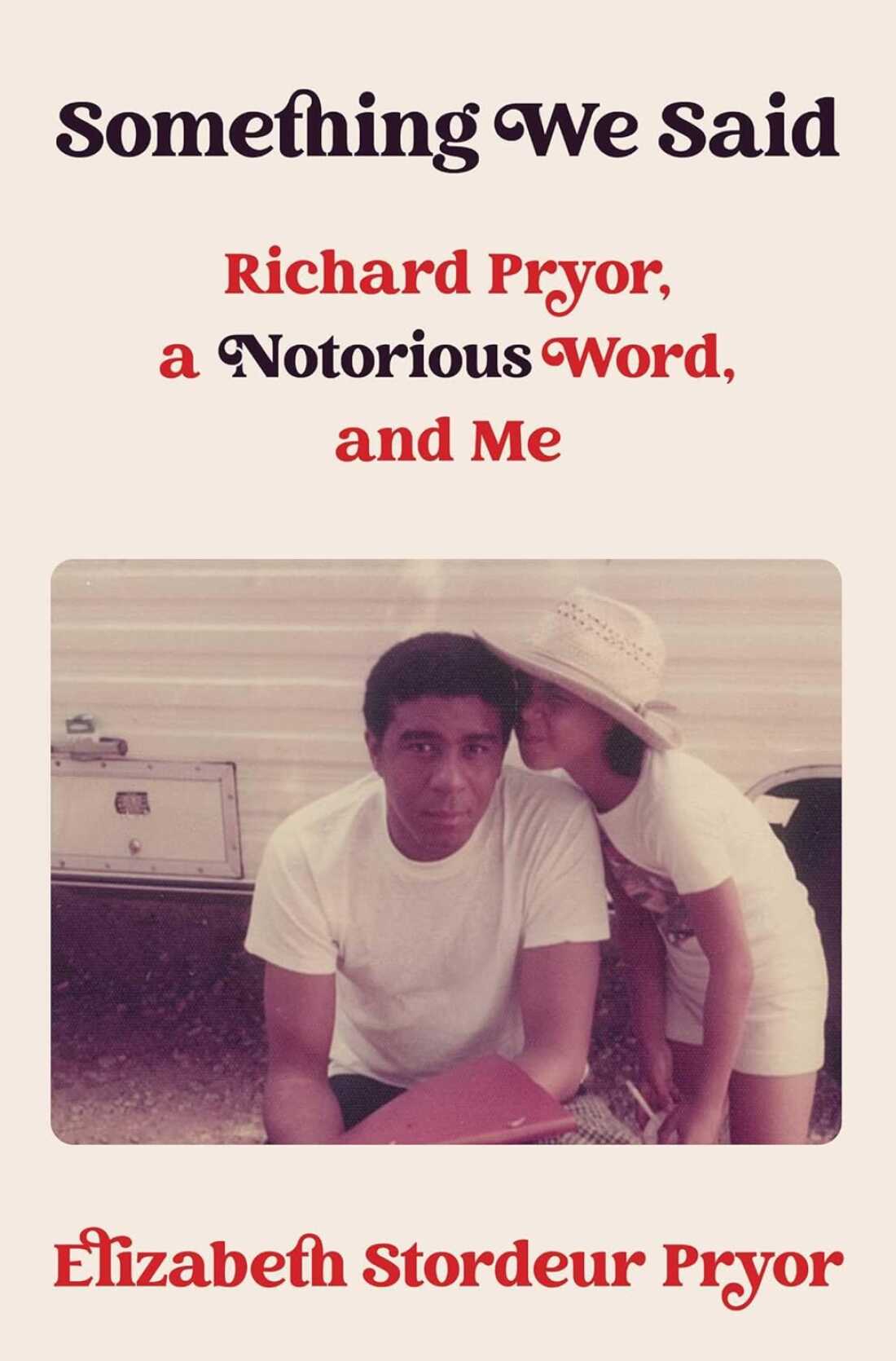
Historian Elizabeth Stordeur Pryor has spent much of her career tracing the N-word through slavery, Jim Crow, the civil rights movement and hip-hop. But what she didn’t tell her audiences was that her father, Richard Pryor, was the comedian who put the word at the center of American comedy in the 1970s.
“I was a scholar of the N-word — and so was he,” Pryor says of her father.
As the child of a white mother and a Black father, Pryor describes her own relationship to the N-word as a “super complicated” one. She remembers teaching a college class in which one of her white students used the word while quoting Blazing Saddles — a film her father co-wrote. Pryor froze: She had vowed never to use the word in her classroom, but suddenly there it was.

“I [was] just kind of like like a deer in the headlights,” Pryor says. “I was really worried about the Black students. … Something I had never considered when I thought about teaching is what happens when the racism that we study and we teach comes in? … How do I work through that in the moment?”
Pryor’s new book, Something We Said: Richard Pryor, A Notorious Word, and Me, is part memoir and part history of one of the most divisive words in the English language. Late in his career, after spending time in Kenya, Richard Pryor vowed never to use the word again.
“One of the things I admire about that moment when he disavows the word is he said, ‘This is for me. I’m not telling you what to do,’” she says. “There is a piece [of him] where he understood that the word had a function in Black culture. He does talk about, though, as an artist, losing control of what the word was doing.”
Interview highlights
On her father’s use of the N-word
[In] one of the first meaningful conversations I ever had with [my dad] as a little girl, he told me, “Don’t let nobody ever call you that.” And then he used it, and then his friends used it. …
I think it’s really important to emphasize that when I’m saying that he used the word that it was in the subversive way, that it was the language of protest, and that he was building on a Black tradition of protest, that Black people had used this word kind of as a slap in the face to white racism. You know, “We know how to take our punches and our knocks, and we’re not afraid of this thing that you’re trying to demean us as.” And so bringing that use, the way that Black people perceived of the N-word, onto stage was really powerful in the 1970s.
On talking about the N-word with her college students
Teaching the word is still incredibly difficult. I have to say, the conversations are always hard, but I feel like it’s important because my students walk away knowing that this is not a conversation, like I said, about free speech. It’s really about how how we interact, how we want to bring as many people as we can to the table. And if we do that, that means that we’re going to be thinking about who we’re sitting at the table with and how things will impact them.
On meeting her dad for the first time when she was 6
We were in Newark, New Jersey, … and my mom is acting kind of … nervous. And we knocked on the door of a hotel room, and he opened in a towel. And I was like, this is my father. Like, not only do I get a father, but I get this guy. What? I just felt like I won. I loved him immediately. Instantly. His eyes were so warm, and he was so handsome. And I just fell head over heels. … I saw my face [in his face]. … He created a bridge immediately between us and invited me to cross over.
On vying for her father’s attention as a kid

I wanted to be smart enough and creative enough, and I would try to show off. I did theater. I did improv. He would come to my plays and come to my performances. [I] tried to get intellectual with him, like when I was in college. And I had a Black awakening and he basically, like, sent me some stuff so I could awake Blackly, I guess. … He sent me the documentary on Malcolm X that had been filmed, I think, in 1972. And then he sent me The Last Poets’ [song] … “N-words are Scared of Revolution,” to listen to. And I did. I felt like he was inviting me into a secret world, and I wanted to go there. …
At the end of his life, when he couldn’t speak anymore, I would go over and read from the narrative of Frederick Douglass to him, and I could see that he was feeling proud … of being read Frederick Douglass by me.
On Richard Pryor’s upbringing with a sex worker mother and the first laugh that changed everything.
Oh, my dad. He told me a story about being 5 years old and, I don’t know why, but he’s wearing a little cowboy suit, and he was in front of the house and all the people were there, his grandmother, all the sex workers, and his father and his uncle. And he slipped in dog poop and they just start cracking up. And so he got up and he made himself slip in it again, and they couldn’t stop laughing. And so he did it again and again. And it’s pretty painful to think of the lengths that he felt that he needed to go to get their adoration and attention.
Anna Bauman and Thea Chaloner produced and edited this interview for broadcast. Bridget Bentz, Molly Seavy-Nesper and Meghan Sullivan adapted it for the web.
-

 Health18 minutes ago
What Really Happens When You Drink Alcohol During a Weight Loss Journey? Experts Explain
-
Lifestyle33 minutes ago
This is what you want to read this summer : It’s Been a Minute
-

 Technology43 minutes ago
Pebblebee’s Halo can help track lost items and keep you safe, and it’s on sale for $50
-

 World48 minutes ago
Hidden tunnel discovered in Tijuana may have supported cross-border trafficking operations
-

 Politics55 minutes ago
Jared Kushner’s overseas luxury resort project faces anti-corruption investigation amid violent protests
-

 Health58 minutes ago
Veterans face surprising threat after cancer diagnosis, study reveals
-

 Sports1 hour ago
Rick Adelman, architect of some of the NBA’s best offenses and Hall of Famer, dead at 79
-

 Technology1 hour ago
Your Microsoft text codes are going away

