Lifestyle
Art and war: Israeli and Palestinian artists reflect on Oct. 7 and the crisis in Gaza


Rana Samara, a Palestinian artist from Ramallah in the Israeli-occupied West Bank.
Tanya Habjouqa/NOOR Images for NPR
hide caption
toggle caption
Tanya Habjouqa/NOOR Images for NPR

Rana Samara, a Palestinian artist from Ramallah in the Israeli-occupied West Bank.
Tanya Habjouqa/NOOR Images for NPR
In Israel’s cultural capital of Tel Aviv, a vibrant artistic community leaves its colorful mark with murals and other art painted throughout the narrow streets of the city’s ancient Jaffa neighborhood and on the walls of businesses within the financial-centered downtown.
Within this same space is a Palestinian community that has long turned to art as a form of resistance, using it to bring light to the struggles of Palestinians in Tel Aviv, the Israeli-occupied West Bank and Gaza.
Since Oct. 7, much of this work has turned heartbroken, mournful, angry and fearful, as members of these artistic communities confront heavy, unimaginable emotions that are bleeding into their craft.
More than 1,200 people in Israel were killed on that day and hundreds of others were kidnapped by Hamas. In response, Israel launched a now months-old war in Gaza that has killed more than 22,000 Palestinians and displaced nearly two million others.
Artists are processing the crisis in a myriad of ways: through paintings of the horrors of war, through anguished song and in dance. The work has been shared in places like Tel Aviv’s Hostages Square, where protesters regularly gather to demand the release of Israeli captives being held by Hamas, and on social media, where a Palestinian diaspora say they can more safely post their work than those still living under the Israeli government.
“I think that if art can function as something, not only for the viewer, but for myself, it’s to create a space for reflection and reassessing and trying to dissect and process and understand,” said Addam Yekutieli, an Israeli artist based in Tel Aviv.
NPR spoke to Yekutieli and five other Israeli and Palestinian artists on how the war between Israel and Hamas has affected their lives and their work.
Each artist took time to reflect on Oct. 7 and its aftermath, sharing stories of fear, anger, sadness and pain.
Rana Samara
“In times of stress, usually people go for black, people go for dark colors,” said Rana Samara, a Palestinian artist from Ramallah in the Israeli-occupied West Bank. “I found that now, my stress has come out with very, very, very bright colors.”
Samara’s work frequently uses bright paint to explore topics like sexuality, gender roles and other issues tied to Palestinian life. When war broke out in Gaza, she decided to turn to the images she was seeing on TV and social media and weave it into her work.
Samara is part of a group of Palestinian artists that joined with the Zawyeh Gallery in Ramallah to create work to help raise money for humanitarian aid in Gaza.
“What caught my mind and heart in what I was watching about this war was the issue of children. And so I looked and I concentrated on what each child was carrying” as they evacuated their homes in Gaza, she said.
For one piece, Samara decided to create a type of poster of these different scenes of children fleeing their homes using bright reds and pinks. Using the image of the children’s piggy bank, for example, she incorporated the war.
“My idea was a piggy bank and inside a tank,” she said. At first look, it’s an attractive, colorful, bright picture, “but when you get close to it, it’s the bleak image. It’s the tank.”
Michal Worke—an Israeli artist with Ethiopian roots, shares her studio space and artwork.
Tanya Habjouqa / NOOR Images for NPR
hide caption
toggle caption
Tanya Habjouqa / NOOR Images for NPR
Michal Worke—an Israeli artist with Ethiopian roots, shares her studio space and artwork.
Tanya Habjouqa / NOOR Images for NPR
Michal Worke
Before Oct. 7, many of Michal Worke’s paintings had rich purples and vibrant patterns that reflected her travels in Ethiopia and South Africa.
But now, the colors in her latest works are muted with blues and grays.
“It started with the shock of the kidnappings, and the murders and disasters,” she said of the attack by Hamas militants.
Worke, who is a Jewish Israeli of Ethiopian descent, found that the footage on social media and on the news of the attack wove itself into her psyche.
“I think I responded like everyone to the trauma that we saw. It was really hard for me. I started having dreams that they are coming for me, and they start shooting and I didn’t know where to hide or where to go,” she said.
In the early days after the attack, Worke said she was avoiding the studio and turning more inward to collect her thoughts and take stock of her emotions.
Michal Worke—an Israeli artist with Ethiopian roots, shares her studio space and artwork.
Tanya Habjouqa / NOOR Images for NPR
hide caption
toggle caption
Tanya Habjouqa / NOOR Images for NPR
Michal Worke—an Israeli artist with Ethiopian roots, shares her studio space and artwork.
Tanya Habjouqa / NOOR Images for NPR
Worke is a painter that has long advocated for the release of Avera Mengistu, a fellow Israeli of Ethiopian descent that has been in Hamas custody for nine years. She regularly paints Mengistu and his family, sharing her work online.
Since Oct. 7, she’s seen the abundance of artwork created in honor of the fallen and the more than 240 hostages taken by Hamas that day, of which more than 100 remain in captivity.
“But not for Avera. He isn’t there, his face isn’t anywhere,” she said.
So, in response she’s worked to continue to amplify Mengistu’s story so that he isn’t forgotten.
Worke has also begun painting other things about the war and the interconnectedness she is finding between the war and her Ethiopian community.
“Many Ethiopian soldiers have died,” she said. “Ninety percent of Ethiopians [in Israel] go to combat units. It’s the highest percentage of any community. So many have died.”
She’s incorporated the untold stories of Israeli soldiers of Ethiopian descent fighting in Gaza into works that also raise awareness for Mengistu.
In one piece, a soldier dressed in his uniform is sitting comfortably by a fence splitting southern Israel with Gaza. On the margins, Worke includes the number of days Mengistu has been in custody. Along the ground of the painting are pieces of bloodstained uniforms.
“This is from a series of larger paintings I’m working on. And you can see the jump between this painting and the others. The difference in the colors and the themes,” she said. “These paintings were done only three months apart.”
Renowned singer-songwriter Bashar Murad on his studio balcony in East Jerusalem.
Tanya Habjouqa / NOOR Images for NPR
hide caption
toggle caption
Tanya Habjouqa / NOOR Images for NPR
Renowned singer-songwriter Bashar Murad on his studio balcony in East Jerusalem.
Tanya Habjouqa / NOOR Images for NPR
Bashar Murad
Bashar Murad has long used pop music as a tool to express his experience as a Palestinian born within the “oppression” of the Israeli government, he said.
“I create pop music that kind of reflects my experience as a human born in this place and all the complexities that come with being born in this place,” he says. “I believe in the power of pop music to reach the masses to help share and spread messages of equality and love, which is what pop music is all about.”
Murad frequently used social media to share his music and thoughts. That all changed shortly after war broke out in Gaza.
He said the feelings of depression and shock that struck him in the hours and days that followed left him homebound and essentially bed-ridden.
“For the first 20 days, I didn’t go out of my room, basically,” he said.
“The sad thing is that for a lot of people in the world, this feels like it’s the first time that these events are happening,” Murad said. “We have gone through a cycle of this ongoing violence. I’ve already written countless songs already throughout the years that actually talk about the same feeling that I’m feeling now. Maybe now it is times 1 million. But it’s the same feeling. It’s the same feeling of powerlessness and helplessness.”
This time there also emerged a new level of fear that Murad and other Palestinian artists hadn’t quite felt before. After the war began, Palestinians in Israel reported discrimination, firings and other threats of violence for simple social media posts criticizing the war.
That scared many Palestinians in Israel, the West Bank and Gaza into silence, Murad said.
“It’s very dangerous for us artists, right now. There’s major censorship that is happening,” he said. “There is a war on the ground, there’s a war on social media, but there’s also a mental war and a war on our identities.”
Murad said he is trying to “be smarter with what I post” — a sentiment that Samara, the painter in Ramallah, also shared.
He said the fighting is not just a war with Gaza, “It’s a war on all Palestinians and all Palestinian identity.” He called it a “continuous struggle,” adding, “it’s not something that starts with an attack and ends with a ceasefire.”
Artist Addam Yekutieli with his dog in his studio. He works with testimonials from Palestinians, Israelis and others, including images of wounds and healing.
Tanya Habjouqa / NOOR Images for NPR
hide caption
toggle caption
Tanya Habjouqa / NOOR Images for NPR
Artist Addam Yekutieli with his dog in his studio. He works with testimonials from Palestinians, Israelis and others, including images of wounds and healing.
Tanya Habjouqa / NOOR Images for NPR
Addam Yekutieli
“In how many ways can your heart break?”
“Whose trauma speaks louder than whose?”
“Can we ever be well?”
These are questions Addam Yekutieli has had rolling around in his mind ever since Oct. 7.
Yekutieli is a multidisciplinary artist based in Tel Aviv. In his ongoing projects, he has reflected on the ideas of scars and borders and the effect they have on people geographically, physically and psychologically.
“I’ve always dealt with kind of like political or social themes, but for a very long time, they were much more metaphorical than they are now,” he said.
Yekutieli, like Worke, found it difficult to return to his normal workload after Oct. 7. About a month after the attacks, Yekutieli spoke about how his work has changed since the outbreak of the war.
“I haven’t really made any art since October 7,” he said in November. “I’ve been mainly writing since then.”
Artist Addam Yekutieli works with testimonials to make a collage.
Tanya Habjouqa / NOOR Images for NPR
hide caption
toggle caption
Tanya Habjouqa / NOOR Images for NPR
Artist Addam Yekutieli works with testimonials to make a collage.
Tanya Habjouqa / NOOR Images for NPR
And what he’s been writing is a long list of questions he has on his mind and has shared it on social media. He calls these posts “questions with no answers.”
“Over the past month and a half, I’ve had so many internal conversations and dialogues and kind of been really like talking myself into circles,” he said.
He posts questions like “What are your five stages of grief?” and “If you had it your way, what would happen?”
“I think that I just feel more comfortable with asking questions more than making statements. They feel more honest. It feels more of an authentic place to be in. And, I think that it also allows more reflection,” he said.
He said the tragedy shook him on a foundational level.
“I think that there are parts of me that feels very naïve. But it feels like everything is spiraling out of control, and becoming progressively worse and worse,” he said.
Yekutieli acknowledged that as an Israeli artist he has a level of privilege to more comfortably share his thoughts and questions on a public domain like Instagram than his Palestinian artist peers who fear reprisal for doing so.
He believes a lot of the hostility toward Palestinians, activists and Israelis critical of their government comes from a place of deep desperation and grief.
“I think that things are very, very emotional,” he said. “And at the same time, I really think that it’s important, as much as we can, and as much as one feels comfortable with, to keep on being vocal.”
Hanna Tams (left) leads a dance class in his studio in East Jerusalem. Since Oct. 7, Tams says that he’s been able to use dance to express himself amidst the oppression he feels as a Palestinian in Jerusalem. ‘It’s not easy,” he said, “but I believe that it is really an important time to use dance.”
Ayman Oghanna for NPR
hide caption
toggle caption
Ayman Oghanna for NPR
Hanna Tams (left) leads a dance class in his studio in East Jerusalem. Since Oct. 7, Tams says that he’s been able to use dance to express himself amidst the oppression he feels as a Palestinian in Jerusalem. ‘It’s not easy,” he said, “but I believe that it is really an important time to use dance.”
Ayman Oghanna for NPR
Hanna Tams
Dance has always been a source of healing for Hanna Tams, a professional dancer that specializes in contemporary and dabka styles.
As a Palestinian living in Jerusalem, Tams has faced oppression his whole life, he said. After the war broke out, it became even more complex and tense than before, he said.
“I was lucky to find dance as a friend,” he said. “I can resist through dancing. Other people don’t have this luxury.”
Tams is the founder of Douban Art Studio, which he opened in 2020 to serve his community’s youth to work through their emotions and struggles in a safe way.
But after Oct. 7, he retreated into himself and closed the studio for two weeks.
“I really wasn’t able to do anything and I wasn’t feeling up to dance. I was sick,” he said.
It was the community he’s worked to serve that reached out to beg him to reopen and help the kids stuck at home.
Dancers rehearse in Hanna Tams’s studio in East Jerusalem.
Ayman Oghanna for NPR
hide caption
toggle caption
Ayman Oghanna for NPR
Dancers rehearse in Hanna Tams’s studio in East Jerusalem.
Ayman Oghanna for NPR
They told him, “‘It’s the kids who are suffering. The kids have no school, they are at home and they are watching TV with us. They are afraid,’” Tams said.
He reopened the studio, but not without difficulty. The studio is in East Jerusalem, in an area where Israeli soldiers constantly patrol the streets and stop Palestinian residents.
“It’s really frightening because every time I will be approached by a soldier who starts asking me why you’re coming here and you’re not allowed,” he said.
In November, Tams was able to perform in a timely show in Switzerland called “Last Things Remaining.” The show involved four dancers telling the story of Palestinians and the resilience it takes to live in this region.
He returned saying, “I need to serve this community. I need to serve these people who don’t have anything.”
When asked how he could still turn to art and especially dance in such a hard time, he said, “For me, the only way I can really help and I can really kind of connect, it’s [through] dancing.”
He continued, “I think art is kind of the language of every culture, and it’s the language of hearts. So if you want to [get at] every heart, I think art is needed.”
Oren Fischer—an Israeli artist—shares his sketch book in a park outside a cafe. He is from a kibbutz in the south of Israel, and creates political commentary on recent events.
Tanya Habjouqa / NOOR Images for NPR
hide caption
toggle caption
Tanya Habjouqa / NOOR Images for NPR
Oren Fischer—an Israeli artist—shares his sketch book in a park outside a cafe. He is from a kibbutz in the south of Israel, and creates political commentary on recent events.
Tanya Habjouqa / NOOR Images for NPR
Oren Fischer
After the war started, Oren Fischer said he reached a point where he just couldn’t deal with any more words.
“So I started painting,” he said.
In the first two weeks after the attacks, Fischer said he slept horribly and had nightmares based on what he was seeing on TV and social media.
He decided to make a change: Instead of doom scrolling each morning, Fischer would instead wake up and meditate on his feelings and “just try to puke it on the papers.”
Fischer, an artist who uses different mediums in his work like video, illustration and textiles, has been using paint and crayon in his sketchbook for these daily pieces. He describes his paintings as “childish” and “naïve” in a way even as it portrays horrors of the Oct. 7 attacks and the war.
“I thought, okay, if it’s bothering me, it’s probably something people really relate to. It’s probably not just me thinking about this,” he said.
“It helped me to heal myself. I made sort of a routine that I wake up and for a few hours I paint and upload on social media,” he said. “So I created my own world inside the catastrophe.”
Oren Fischer’s political cartoon of Israeli Prime Minister Benjamin Netanyahu.
Tanya Habjouqa/NOOR Images for NPR
hide caption
toggle caption
Tanya Habjouqa/NOOR Images for NPR
Oren Fischer’s political cartoon of Israeli Prime Minister Benjamin Netanyahu.
Tanya Habjouqa/NOOR Images for NPR
Like much of his past work, this series of paintings has been deeply critical of Israeli Prime Minister Benjamin Netanyahu and his government, blaming their policies as the spark that led to the attack.
Fischer painted a sketch of Netanyahu with vibrant reds, yellows, oranges and blues of the prime minister with blood on his hands. In the background are Hamas attackers shooting people and homes burning. The image was later used on the cover of an Israeli newspaper.
Fischer said his work has been criticized by some people who misunderstood his sketches as him attacking Palestinians, when the work is really turning criticism to the Israeli government.
Ultimately, Fischer said the impact of the attacks and the ongoing war “is everywhere. You cannot hide from it.”
NPR’s Jaclyn Diaz reported from Tel Aviv, Ramallah and Jerusalem. Freelance producer Eve Guterman contributed to this report.



There’s a three-story house in Baltimore that looks a bit imposing. You walk up the stone steps before even getting up to the porch, and then you enter the door and you’re greeted with a glass case of literary awards. It’s The Clifton House, formerly home of Lucille Clifton.
The National Book Award-winning poet lived there with her husband, Fred, starting in 1967 until the bank foreclosed on the house in 1980. Clifton’s daughter, Sidney Clifton, has since revived the house and turned it into a cultural hub, hosting artists, readings, workshops and more. But even during a February visit, in the mid-afternoon with no organized events on, the house feels full.

The corner of Lucille Clifton’s bedroom, where she would wake up and write in the mornings
Andrew Limbong/NPR
hide caption
toggle caption
Andrew Limbong/NPR
“There’s a presence here,” Clifton House Executive Director Joël Díaz told me. “There’s a presence here that sits at attention.”
Sometimes, rooms where famous writers worked can be places of ineffable magic. Other times, they can just be rooms.

Princeton University Press
Katie da Cunha Lewin is the author of the new book, The Writer’s Room: The Hidden Worlds That Shape the Books We Love, which explores the appeal of these rooms. Lewin is a big Virginia Woolf fan, and the very first place Lewin visited working on the book was Monk’s House — Woolf’s summer home in Sussex, England. On the way there, there were dreams of seeing Woolf’s desk, of retracing Woolf’s steps and imagining what her creative process would feel like. It turned out to be a bit of a disappointment for Lewin — everything interesting was behind glass, she said. Still, in the book Lewin writes about how she took a picture of the room and saved it on her phone, going back to check it and re-check it, “in the hope it would allow me some of its magic.”
Let’s be real, writing is a little boring. Unlike a band on fire in the recording studio, or a painter possessed in their studio, the visual image of a writer sitting at a desk click-clacking away at a keyboard or scribbling on a piece of paper isn’t particularly exciting. And yet, the myth of the writer’s room continues to enrapture us. You can head to Massachusetts to see where Louisa May Alcott wrote Little Women. Or go down to Florida to visit the home of Zora Neale Hurston. Or book a stay at the Scott & Zelda Fitzgerald Museum in Alabama, where the famous couple lived for a time. But what, exactly, is the draw?

Lewin said in an interview that whenever she was at a book event or an author reading, an audience question about the writer’s writing space came up. And yes, some of this is basic fan-driven curiosity. But also “it started to occur to me that it was a central mystery about writing, as if writing is a magic thing that just happens rather than actually labor,” she said.
In a lot of ways, the book is a debunking of the myths we’re presented about writers in their rooms. She writes about the types of writers who couldn’t lock themselves in an office for hours on end, and instead had to find moments in-between to work on their art. She covers the writers who make a big show of their rooms, as a way to seem more writerly. She writes about writers who have had their homes and rooms preserved, versus the ones whose rooms have been lost to time and new real estate developments. The central argument of the book is that there is no magic formula to writing — that there is no daily to-do list to follow, no just-right office chair to buy in order to become a writer. You just have to write.

Bruce Johnston
I’m Riding My Last Wave With The Beach Boys
Published
Bruce Johnston is riding off into the California sunset … at least for now.
The Beach Boys legend announced Wednesday he’s stepping away from touring after six decades with the iconic band. The 83-year-old revealed in a statement to Rolling Stone he’s hanging up his touring hat to focus on what he calls part three of his long music career.
“It’s time for Part Three of my lengthy musical career!” Johnston said. “I can write songs forever, and wait until you hear what’s coming!!! As my major talent beyond singing is songwriting, now is the time to get serious again.”
Johnston famously stepped in for co-founder Brian Wilson in 1965 for live performances, becoming a staple of the Beach Boys’ touring lineup ever since. Now, he says he’s shifting gears toward songwriting and even some speaking engagements … with occasional touring member John Stamos helping him craft what he’ll talk about onstage.
“I might even sing ‘Disney Girls’ & ‘I Write The Songs!!’” he teased.
But don’t call it a full-on farewell tour just yet. Johnston made it clear he’s not shutting the door completely, saying he’s excited to reunite with the band for special occasions, including their upcoming July 2-4 shows at the Hollywood Bowl as part of the Beach Boys’ 2026 tour. The run celebrates both the 60th anniversary of “Pet Sounds” and America’s 250th birthday.
“This isn’t goodbye, it’s see you soon,” he wrote. “I am forever grateful to be a part of the Beach Boys musical legacy.”
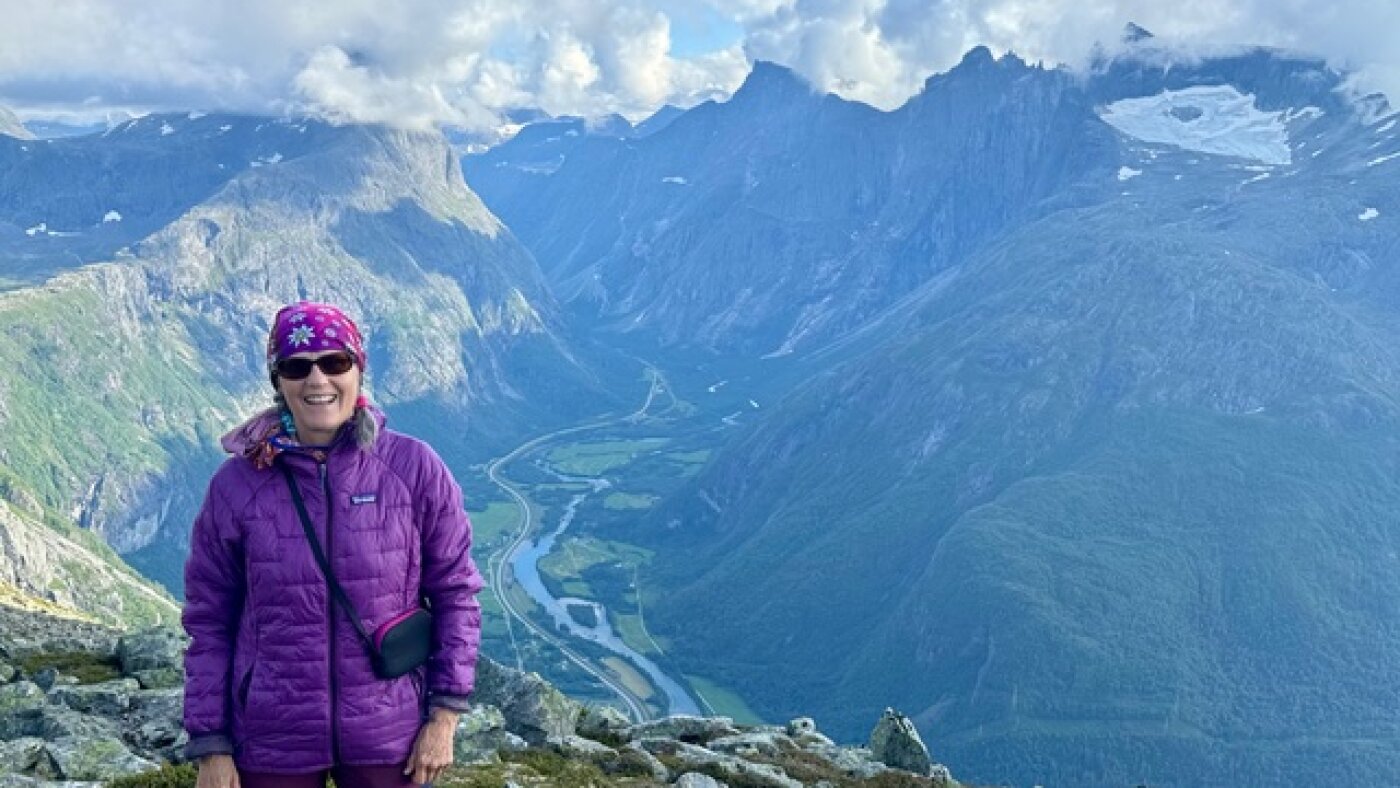
In 1982, Jean Muenchrath was injured in a mountaineering accident and on the brink of death when a stranger and his family went out of their way to save her life.
Jean Muenchrath
hide caption
toggle caption
Jean Muenchrath
In early May 1982, Jean Muenchrath and her boyfriend set out on a mountaineering trip in the Sierra Nevada, a mountain range in California. They had done many backcountry trips in the area before, so the terrain was somewhat familiar to both of them. But after they reached one of the summits, a violent storm swept in. It began to snow heavily, and soon the pair was engulfed in a blizzard, with thunder and lightning reverberating around them.
“Getting struck and killed by lightning was a real possibility since we were the highest thing around for miles and lightning was striking all around us,” Muenchrath said.
To reach safer ground, they decided to abandon their plan of taking a trail back. Instead, using their ice axes, they climbed down the face of the mountain through steep and icy snow chutes.
They were both skilled at this type of descent, but at one particularly difficult part of the route, Muenchrath slipped and tumbled over 100 feet down the rocky mountain face. She barely survived the fall and suffered life-threatening injuries.

This was before cellular or satellite phones, so calling for help wasn’t an option. The couple was forced to hike through deep snow back to the trailhead. Once they arrived, Muenchrath collapsed in the parking lot. It had been five days since she’d fallen.
”My clothes were bloody. I had multiple fractures in my spine and pelvis, a head injury and gangrene from a deep wound,” Muenchrath said.
Not long after they reached the trailhead parking lot, a car pulled in. A man was driving, with his wife in the passenger seat and their baby in the back. As soon as the man saw Muenchrath’s condition, he ran over to help.
”He gently stroked my head, and he held my face [and] reassured me by saying something like, ‘You’re going to be OK now. I’ll be right back to get you,’” Muenchrath remembered.
For the first time in days, her panic began to lift.
“My unsung hero gave me hope that I’d reach a hospital and I’d survive. He took away my fears.”
Within a few minutes, the man had unpacked his car. His wife agreed to stay back in the parking lot with their baby in order to make room for Muenchrath, her boyfriend and their backpacks.
The man drove them to a nearby town so that the couple could get medical treatment.
“I remember looking into the eyes of my unsung hero as he carried me into the emergency room in Lone Pine, California. I was so weak, I couldn’t find the words to express the gratitude I felt in my heart.”

The gratitude she felt that day only grew. Now, nearly 45 years later, she still thinks about the man and his family.
”He gave me the gift of allowing me to live my life and my dreams,” Muenchrath said.
At some point along the way, the man gave Muenchrath his contact information. But in the chaos of the day, she lost it and has never been able to find him.
”If I knew where my unsung hero was today, I would fly across the country to meet him again. I’d hug him, buy him a meal and tell him how much he continues to mean to me by saving my life. Wherever you are, I say thank you from the depths of my being.”
My Unsung Hero is also a podcast — new episodes are released every Tuesday. To share the story of your unsung hero with the Hidden Brain team, record a voice memo on your phone and send it to myunsunghero@hiddenbrain.org.

Reward yourself by exercising regularly at One to One Fitness | CWRU Newsroom | Case Western Reserve University

Movie Review: Here comes “THE BRIDE!”, audacious and wild – Rue Morgue

Netflix, After Walking Away From Warner Bros. Deal, Will ‘Move Forward’ With ‘$2.8 Billion in Our Pocket That We Didn’t Have a Few Weeks Ago,’ CFO Says

Video: Senate Republicans Block Limits to Trump’s War Powers
Mundane, magic, maybe both — a new book explores ‘The Writer’s Room’

Florida High School Football Rankings: Top 25 teams – Oct. 21

Cleary's 21 help Le Moyne down Central Connecticut State 69-64 in OT

How old is Bo Nix? What to know about Oregon quarterback ahead of 2024 NFL Draft

99th annual Pony Swim held in Virginia

Indiana Members Credit Union announced as new anchor tenant at Bottleworks District

DHS defends McLaughlin against allegations husband’s company profited millions from ad contracts: ‘Baseless’

Sánchez defies Trump in political gamble as Madrid say no to war

Satellite images show Iran school strike hit more buildings than earlier reported

US submarine sinks Iranian warship by torpedo in a first since World War II

Which oil and gas facilities in the Gulf have been attacked?
-

 World1 week ago
Exclusive: DeepSeek withholds latest AI model from US chipmakers including Nvidia, sources say
-

 Massachusetts1 week ago
Mother and daughter injured in Taunton house explosion
-

 Wisconsin3 days ago
Setting sail on iceboats across a frozen lake in Wisconsin
-

 Maryland4 days ago
AM showers Sunday in Maryland
-

 Denver, CO1 week ago
10 acres charred, 5 injured in Thornton grass fire, evacuation orders lifted
-

 Florida4 days ago
Florida man rescued after being stuck in shoulder-deep mud for days
-

 Louisiana1 week ago
Wildfire near Gum Swamp Road in Livingston Parish now under control; more than 200 acres burned
-

 Oregon5 days ago
2026 OSAA Oregon Wrestling State Championship Results And Brackets – FloWrestling