Lifestyle
7 genius tips for avoiding preschooler meltdowns (and bankruptcy) at Disneyland

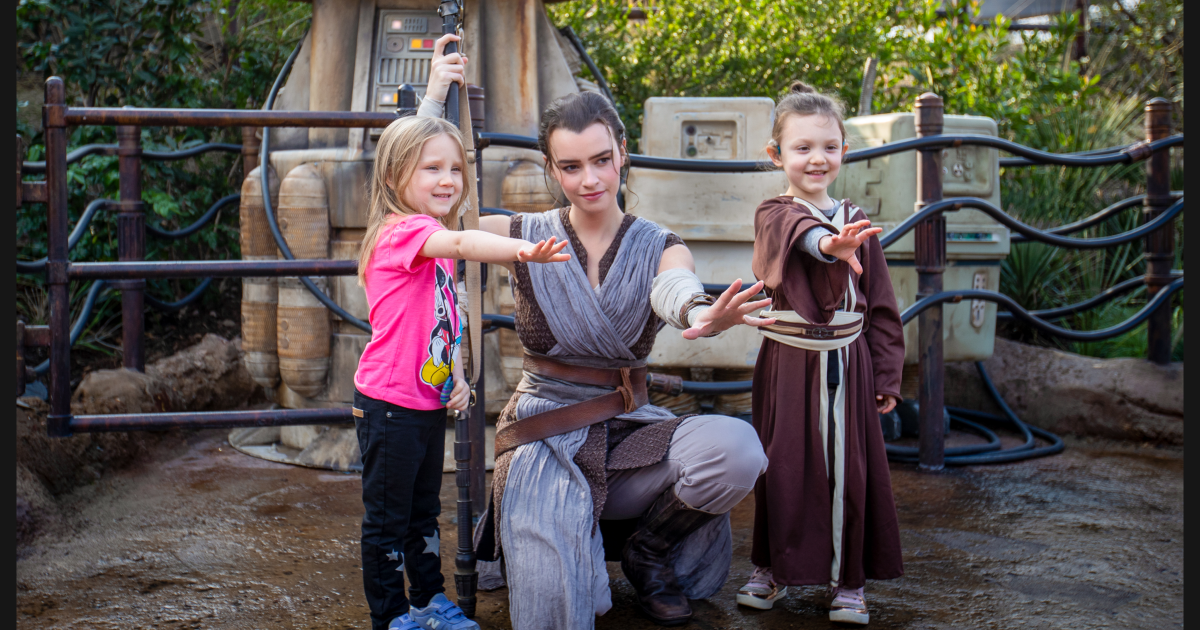
When you figure in the high cost, endless lines, height restrictions and miles of walking, does it ever make sense to take a preschooler to Disneyland?
Yes, as long as their adults adjust their expectations, plan carefully and slow waaay down. Because, let’s face it, most preschoolers are too young to understand what Disneyland is all about. It’s the parental (and grandparental) excitement and expectations that are really driving this visit.
Case in point: When we took my Seattleite granddaughter to Disneyland for her fourth birthday, her parents and I spent most of the time watching her reactions, which, I must admit, were pretty gratifying.
Craft an epic visit to Disneyland and California Adventure with our comprehensive guide.
It’s full of expert tips and fresh perspectives.
Following the advice of Disneyland enthusiasts and L.A. Times readers, we were right in front when the park opened its gates. We were making a beeline to Fantasyland when out of the corner of my eye I saw Minnie and Mickey Mouse waving by the train station. Ordinarily, with my teen (and now adult) kids, nothing would have deterred us from racing to our favorite ride. But this was my granddaughter’s first visit, and all she really knew about Disneyland was that it was Mickey Mouse’s home. How could we ignore this introduction?
So we turned, which was hard, since she was already laser focused on Sleeping Beauty Castle, but when she finally saw Mickey and his gang cavorting just a few feet away, she reared back and started shaking so hard I feared she was going into shock. She couldn’t approach them or even wave; she just stared and vibrated, like an awestruck cartoon character with her finger in a light socket.
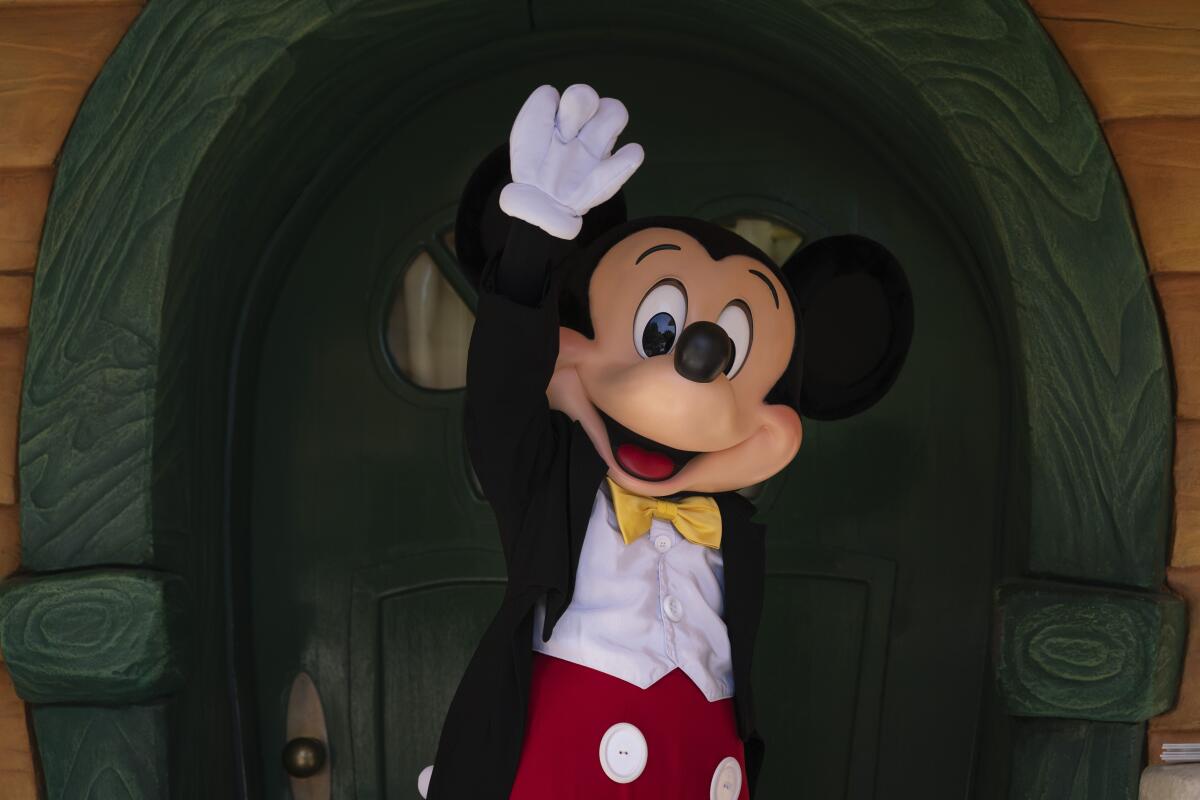
Meeting Mickey and Minnie was an emotional start to the day.
(Jae C. Hong / Associated Press)
I wanted photos, but her parents and I were so busy wiping away our tears we could barely hold the camera. It was a pretty intense start to the morning, and we had barely left the entrance.
“Going when they’re preschoolers may be the best time, because everything is a wonderment at that age,” said Kristen Carr, of Orange, a “Disney mom” of four (ages 10, 9 and 6-year-old twins) who podcasts, blogs and organizes Disney-related activities.
Don’t expect to go on massive thrill rides with preschoolers, Carr said, “but many of the rides feel very well suited for children 3 to 4. Some of my most fun memories are from when my kids were that age.”
Most of the 35 readers who responded to our question “What can you do with a preschooler at Disneyland?” agreed with Carr. Only four said taking preschoolers to Disneyland was a waste of money and time; the rest came down squarely in the plan-ahead-and-you’ll-love-it camp. We followed most of their top tips when we made this Disneyland pilgrimage and almost all were winners. Plus, we discovered rides and experiences at the park we’d never really noticed before.
1. Adjust your expectations
Focus on visiting just one park, and missing most of the big rides. We were in Disneyland from 8 a.m. until 9 p.m., but between rests, meals, more rests and endless lines, we only managed eight rides — the carousel, Storybook Land and Casey’s Railroad in Fantasyland, the junior roller coaster in Toontown (after an hour wait to visit Minnie at her house), the Thunder Mountain roller coaster, Finding Nemo Submarine Voyage (almost too scary), the Jungle Boat Cruise and the Winnie the Pooh ride, plus the Tiki Room, the Toontown playground and the parade.
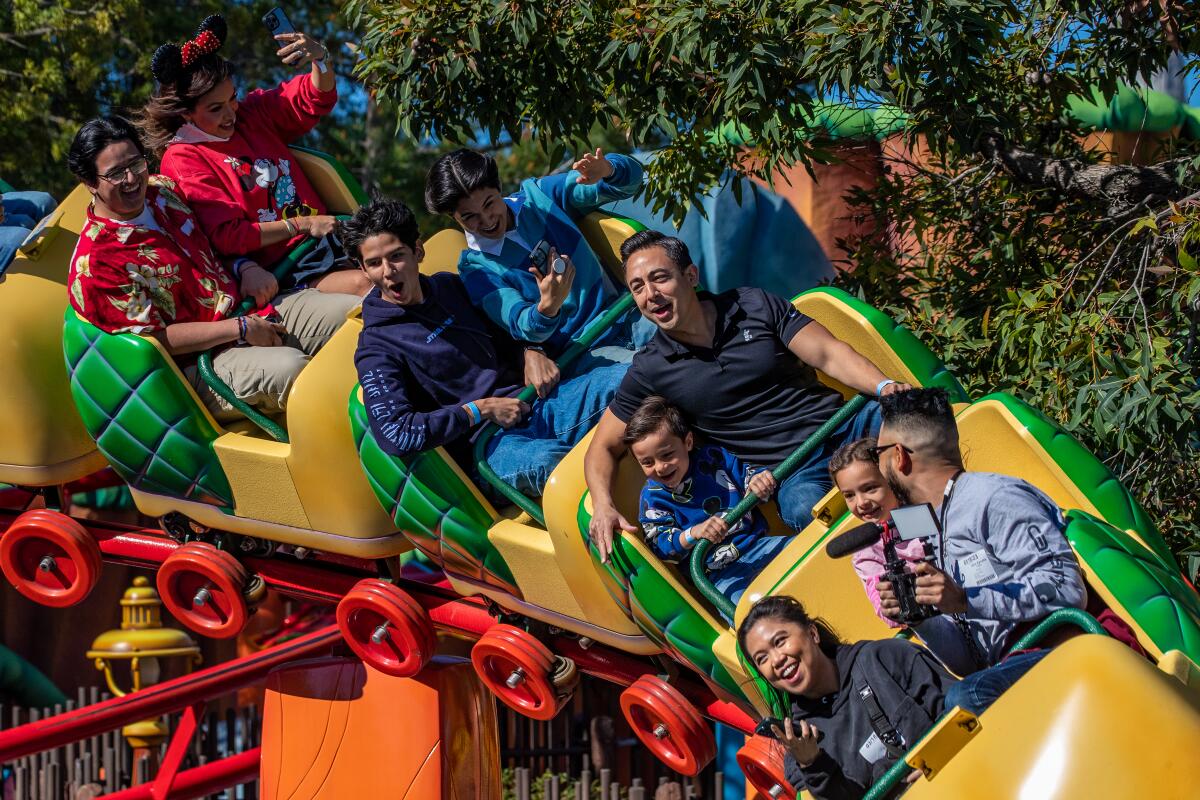
Chip ‘n’ Dale’s Gadget’s Go Coaster at Toontown is a good introduction to roller coasters for small children — although larger adults may feel crippled for hours after having wedged themselves into the seats.
(Irfan Khan / Los Angeles Times)
But we had no meltdowns and she was smiling when we left. (Of course, she was also carrying a new toy purchased just before our departure, but you know, what are grandmothers for?) If the adults must go on a big-person ride, make sure you have someone in your party to take the preschooler to something they’ll enjoy — in my case, we bought a balloon, ate some pre-packed snacks and watched the parade (which she loved) while her parents waited 90 minutes for their first ride on Star Wars: Rise of the Resistance (which they loved).
2. Get a stroller
OK, I wasn’t going to do this because I’ve always hated the herd of strollers blocking everyone’s path in Disneyland, but Carr said it was an absolute must, even for her 6-year-old twins, and most of our readers agreed. The kids start out strong, but when they get tired (which happens quickly for little legs), your choices are to carry them or try to find a quiet bench for a nap (good luck). So we rented a big-kid stroller ($38 for 24 hours), which was delivered to our hotel, and it gave us a place to stash our snacks, extra clothing, and a cuddly blanket so she could relax later in the day. Worth every penny.
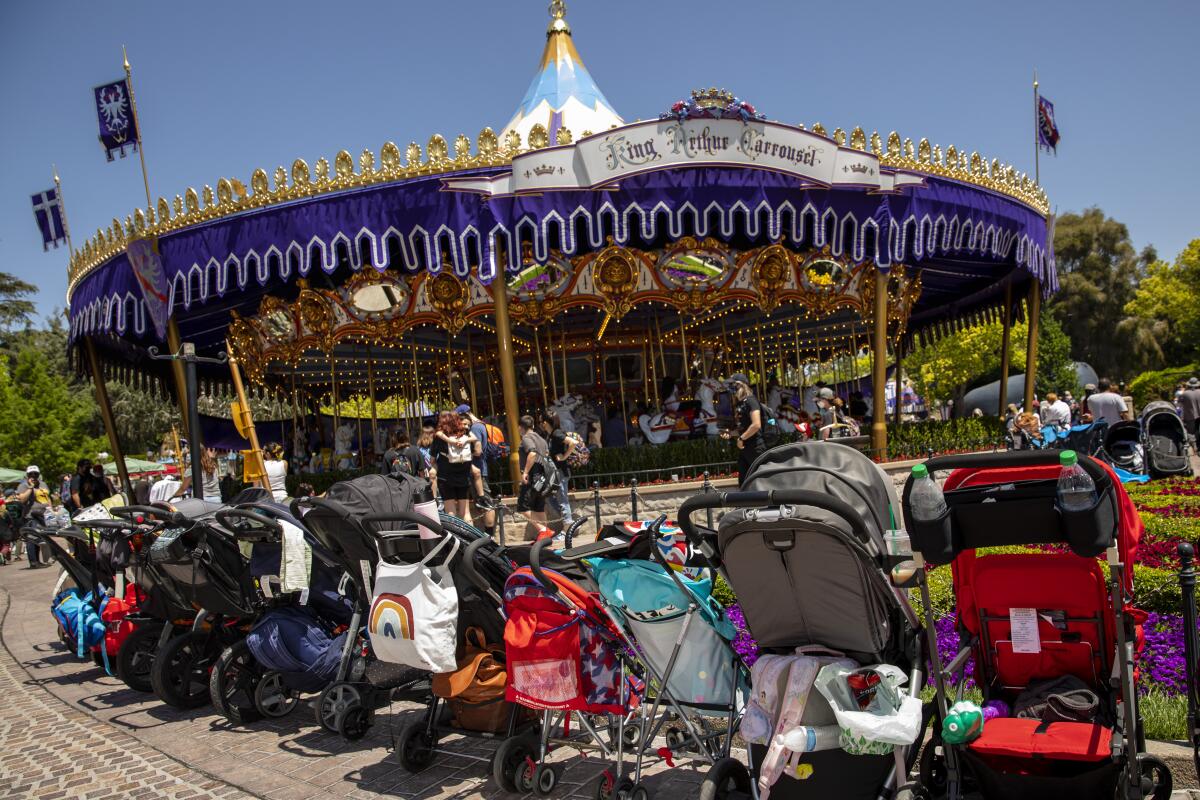
The sea of strollers at Disneyland, here at the King Arthur Carrousel, was long a subject of scorn in my family until we discovered their value in keeping young children happy (and as a place to stash all our gear).
(Jay L. Clendenin / Los Angeles Times)
Carr notes: If you don’t have your own, rent a good sturdy stroller outside the park; Disney’s are hard plastic and not very comfortable, she said. Umbrella strollers are too little for big kids and back breakers for whoever is pushing them. Plus, you won’t have to wait in line at Disneyland to rent and return a stroller. Our stroller was delivered to the hotel about 30 minutes before our departure, and all we had to do was leave it at the front desk when we returned that evening, which was a godsend since we had to walk back to the hotel.
3. Pack water and non-sugary snacks
You can get plenty of sweet stuff at Disneyland, “but a lot of sugar equals a lot of breakdowns” for little ones, Carr said. Bring a small cooler loaded with water, apple slices, carrot sticks, grapes and/or sandwiches, but also do yourself a favor, Carr said: If your child has a favorite snack they eat every day, be sure you pack some of that too.
4. Arrive early, before the park opens
In our case, that meant leaving our off-site hotel at 7 a.m. and running the gauntlet through metal detectors, bag searches and guard dogs so we could be at the gates when they opened at 8 a.m. People who stay in park hotels might be able to enter even earlier. The point is to get in early, before the crowds and head for Fantasyland first, which has the greatest concentration of little-kid rides but also the worst lines once the park starts filling up. Several Fantasyland rides, like Pinocchio, are too dark and scary for preschoolers, but once you get your fill of the sunnier ones, Carr said, you can stop mid-morning, have a late breakfast and plan out the rest of your day.
5. Download the Disneyland app
With preschoolers, I’m not convinced it’s worth the extra $35-$50 per person to get the Genie+ and Lightning Lane passes that let you skip the line at the most popular rides, but the free Genie app is mandatory for ordering food (so you don’t wait in yet another line to eat), keeping track of special events in the park and seeing what rides have the longest lines or are shut down. Pro tip: Bring a portable phone charger.
6. Prep your child for what to expect
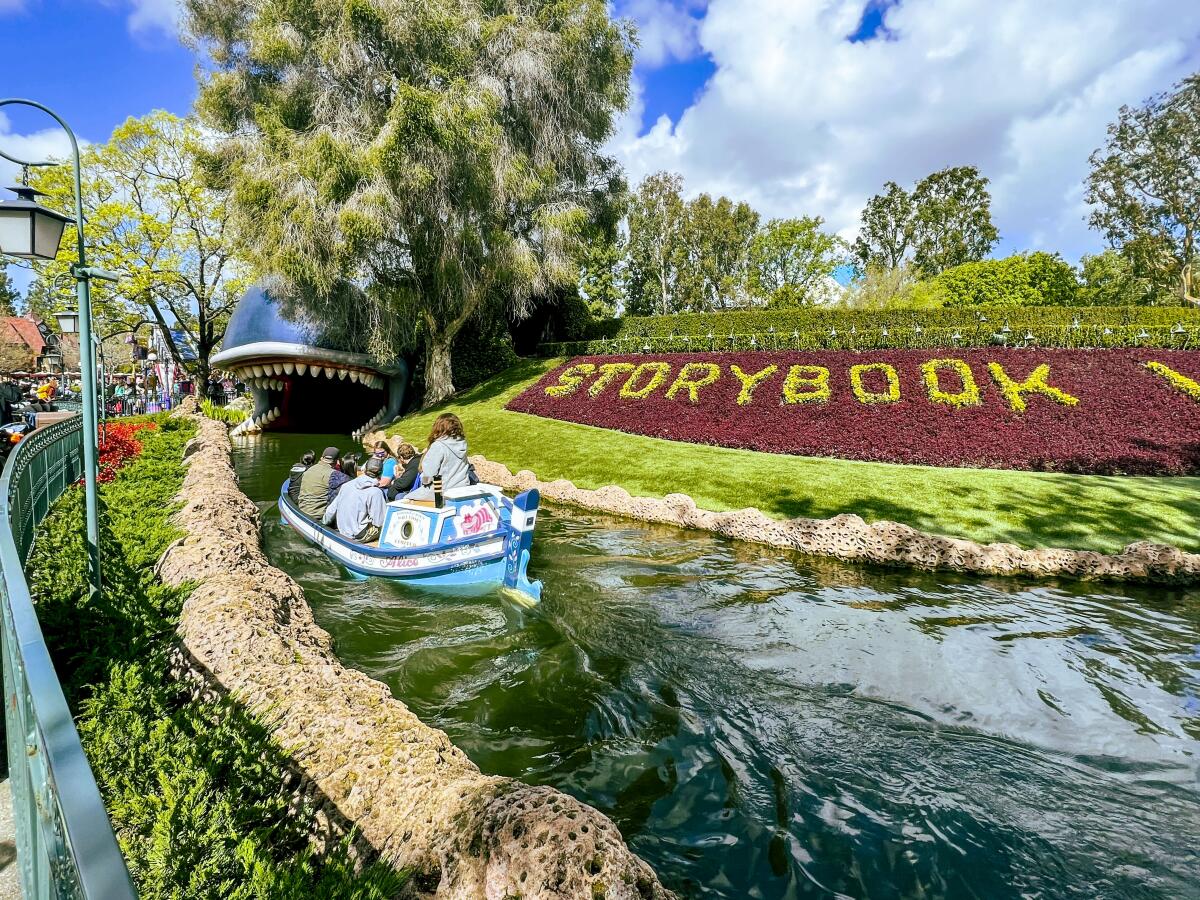
The Storybook Land Canal Boats almost resulted in a major meltdown when the boat left while we waited in line. Our 4-year-old Disneyland newbie didn’t understand that new boats would keep coming.
(Todd Martens / Los Angeles Times)
We almost had a meltdown at the first ride, when my granddaughter thought the boat we were waiting for at the Storybook Land canal left without us. It took about four boats coming and going before she began to understand that their appearance was continuous and we would eventually get our turn to climb aboard. Nothing will truly prepare them for the experience IRL, but you can at least explain how the rides and lines work and show them some photos of what they’ll see.
7. Gird your loins and watch your spending
The nickle-and-diming at Disneyland is intense. Preschoolers want just about everything they see, and doting adults are eager to oblige, but between $30 Ariel bubble wands (which need refilling almost immediately), $20 Mickey Mouse balloons, $30 Star Wars stuffies and $50 sweatshirts, it’s easy to overspend. One of the biggest lures for little ones is the Bibbidi Bobbidi Boutique, where “magical makeovers for royalty-in-training ages 3-12” start at $100, a fee that includes a princess hairstyle, nail polish, sash, T-shirt and “shimmering makeup and face gem.” The prices go up from there, to nearly $500 for all of the above, plus a princess gown, tiara and satin hanger (every preschooler’s dream). There’s also the $80 Deluxe Knight Package, which includes a knight costume, gel hairstyling and a “mighty sword and shield.”
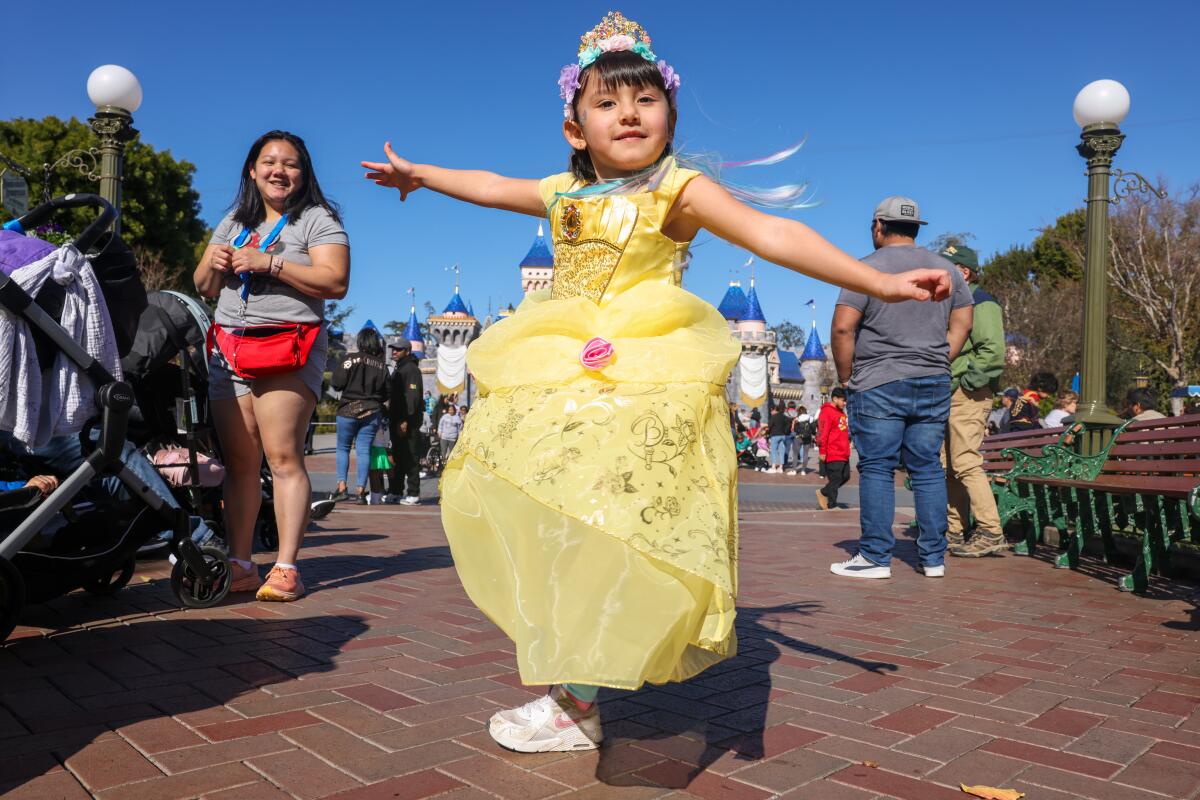
Emily San Miguel, 6, beams as she shows off her fancy “Belle” dress at Disneyland, but the price of a princess “makeover” can have a decidedly different effect on adult pocketbooks.
(Dania Maxwell / Los Angeles Times)
Here’s where advance planning can pay off, Carr said. She bought her daughter’s favorite princess gown online for a fraction of the park price, showed it to her the morning of their trip and let her wear that to the park. They still visited the boutique, she said, but only to get a free sprinkling of pixie dust (a.k.a glitter) anyone can request. I can’t emphasize this enough: Plan ahead for what purchases are a must ($6.50 bowls of Dole Whip are non-negotiable in my family) and let your children and accompanying adults know they can’t have everything they want.
Bonus: The lasting memories may surprise you
With two nights at an off-site hotel ($525), four admissions to the park (only $602, thanks to a short-time $50 deal for young children), meals, treats and souvenirs, our one-day visit in early February cost about $1,500, or $375 per person. That’s an eye-popping figure, but truth be told, we had a lot of fun, and if we’d curbed our souvenir shopping and been willing to spend nearly three hours driving home after a long day at the park, it could have been at least $300 cheaper.
Note this, because four months after our trip, I asked my granddaughter, “What was your favorite part about Disneyland?” Her answer was immediate: When the servers at Café Orleans brought her a tiny cake — basically three blobs of whipped cream in the shape of Mickey Mouse’s head — with a little candle on top. We all sang happy birthday while she beamed and blew the candle out, and that precious moment came free of charge.


The Kennedy Center on June 28, with its facade signage still covered by a tarp and scaffolding.
Alex Wroblewski/AFP via Getty Images
hide caption
toggle caption
Alex Wroblewski/AFP via Getty Images
On Wednesday, a federal appeals court denied President Trump’s request to stop the removal of his name from Washington, D.C.’s Kennedy Center. The signage on the building has been covered with tarp and scaffolding since June 13, but in a court filing last month, the center’s current executive director said that Trump’s name has been removed.
In their decision, three judges from the U.S. District Court of Appeals for the District of Columbia Circuit said that the president had failed to prove that the arts center would be “irreparably injured” without Trump’s name attached to it.
NPR requested comment from the Kennedy Center, but did not receive an immediate reply.
This latest round of court decisions is part of the ongoing litigation filed by Rep. Joyce Beatty, D-Ohio, against President Trump and the board of the Kennedy Center. In a statement emailed Wednesday to NPR, Beatty said: “Today’s ruling again affirms that this administration’s efforts to rename the Kennedy Center were unlawful. His name no longer desecrates this sacred memorial, which belongs to the American people. Now it is time for the Trump administration to accept this, comply with the law, and take the tarps down.”
In previous court filings, Trump’s legal team had asserted that removing the president’s name from the arts complex, both on the physical building and in its digital materials, would inflict irreparable harm in both time and money already spent. In the denial, the three judges — Patricia Millett, Robert Wilkins and Gregory Katsas — wrote that since Trump’s name has already been removed, “a stay would not avert those harms.”
Furthermore, Trump had claimed that without his name attached, future fundraising would be threatened “and [will] contribute to the financial decline of the Center.” In response, the appeals judges wrote: “Appellants, however, have failed to support this assertion with any specific facts or evidence. They offer only the conclusory assertions of the Kennedy Center’s Executive Director that were made in a factually unsupported declaration.” The center’s current executive director, Matt Floca, specializes in physical plant management.
The presiding judge in the case, Christopher R. Cooper, has ordered that the center provide him a status report on the center’s operation and programming before the end of this month. As of Wednesday, the center’s calendar lists a small roster of programs, including outdoor free movie screenings, workshops for children, and five free live performances in July on its Millennium Stage. In the past, the Kennedy Center presented over 2,000 arts and education events each year, including free daily Millennium Stage performances.
Lifestyle
A meal with an animated Mona Lisa? Immersive dining goes high tech — but will L.A. eat it up?
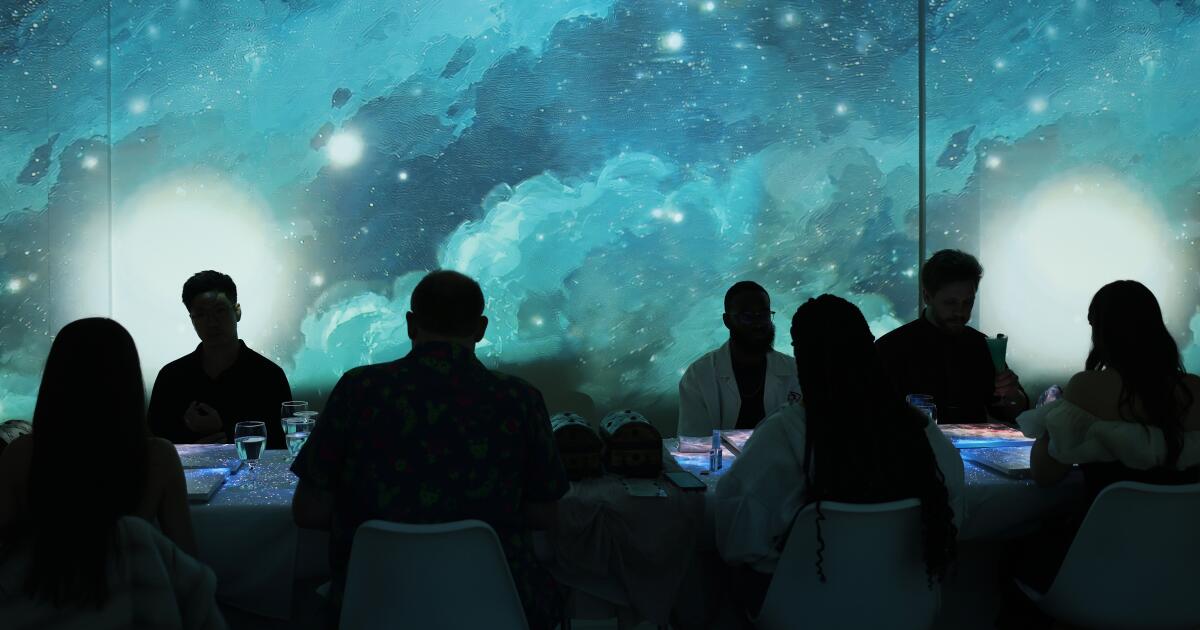
My dinner course is served. It is a Campbell’s-inspired soup can, lightly angled so strands of broccoli are peeking out. I lift the can to uncover a slow-braised short rib and mashed potatoes. An American dish to represent an American artist, here Andy Warhol.
The room is overtaken with projections, scenes of bustling New York traffic paired with bachelor-pad-like guitar riffs. Shown on a wall above a dinner table is a selection of Warhol silkscreens. It’s a Friday night in West Hollywood, and I’m surrounded by a mix of out-of-towners and those celebrating an anniversary. And while this is a special occasion, we’re urged to get a little messy with our food — to use our hands, to paint with a salad, to draw on a cookie.
The main course: A tomato soup can? “7 Paintings” is an immersive event that occasionally hides dishes in artist-inspired presentations.
(Christina House / Los Angeles Times)
Play is the primary side dish at “7 Paintings,” a tech-infused dinner theater that aims to be a crash course in fine art. That selection of veggies paired with multiple mini cups of colorful dressings? Guests are encouraged to mix and match the vinaigrettes into a mess of hues, a nod to abstractionist Jackson Pollock. And yellowfin tuna with dashes of avocado and taro chips? That’s an edible tribute to Banksy, of course. What does raw fish have to do with stenciled street art? It’s bold, heavily angled and has a short shelf life? Maybe? Perhaps don’t overthink it.

Even the paper is edible.
(Christina House / Los Angeles Times)
“Have you ever eaten a painting before?” says Nadine Beshir, the Dubai-based creator of “7 Paintings.” “We try to get people out of their comfort zones and eating paper. I want to bring out the child in them.”
“7 Paintings,” held at Sunset House L.A. through the end of August, is the latest example of immersive dining to arrive in this city. These experiences often involve guest participation and are accentuated with advanced multimedia technology and sometimes theatrical elements.
Worldwide, there have been standouts. For instance, Eatrenalin at Germany’s Europa-Park, a dining room-meets-ride where participants are whisked around the space on trackless “floating chairs,” has just received a coveted Michelin star. Ibiza’s Sublimotion has similar haute ambitions, pairing 12 diners together in a room that will come alive with otherworldly projections and performers. At times, diners will win don virtual reality headgear.
But tech-driven immersive dining experiences have never quite taken off in Los Angeles as a trend. Last year, the Gallery, where fantastical cityscapes and projections surrounded downtown L.A. diners, stood just a couple months before the concept was abandoned.

“7 Paintings” pairs food with art and music. It’s “fun dining, not fine dining,” says its founder.
(Christina House / Los Angeles Times)

Bartender Luca Famulari shakes a cocktail at the immersive dining event.
(Christina House / Los Angeles Times)
“The economics of a restaurant are not the same as the economics of theater and the challenge of combining the two lies in thinking outside the box with respect to pricing and cost structure, such that the customer perceives high value from both the food and the experience,” says the Gallery co-founder Daren Ulmer.
Entrepreneurs keep aiming for that careful balance. “Le Petit Chef and Friends” is currently running at Tangier at downtown’s Hotel Figueroa, an event in which a fully animated film is projected on our plates and tables. Long-running pop-up event Fork N’ Film leans more dinner and movie, pairing dishes directly inspired by what is happening on screen. Upcoming films include “Ratatouille” and “Lilo and Stitch.”
The field comes with challenges. “The costs are very high,” says Joanna Garner, an immersive designer and former creative director with experiential art firm Meow Wolf. Garner has been experimenting herself with communal, immersive dinner events, and her next, the flirtatious “Please Open Your Mouth,” is set for July 11. (No tech there, as Garner is after a more sensual, adult-focused gathering.) Tickets for her event are $150 and a spot in the “7 Paintings” dining room runs $175, priced on par with a number of city’s most acclaimed restaurants.
There is also the reality that all public dining is in some fashion immersive, usually requiring varying combinations of engagement, communication and presentation. And then, are all these added elements distracting?

An animated Mona Lisa sits on the wall as guests enjoy their meals. Throughout the dinner, the painting provides factoids on various artists.
(Christina House / Los Angeles Times)
Throughout “7 Paintings,” for instance, an animated Mona Lisa, situated on the wall next to the main dinner table, will provide brief biographical details of each artist represented.
“Being able to nail the food, and nail the story, those are two very difficult threads to weave,” Garner says. “I do think, ultimately, people come to a dinner table to talk to the people at the table and to have intimate experiences. To have an experience where you’re constantly being taken away from the food, I’m not so sure if that’s what people are looking for.”
Food is framed as a star of “7 Paintings” but tasting it is just one component. At one point, we must uncover a cheese course in a tiny treasure chest, the code for the lock hidden in the projections (don’t stress, it’s not a hard puzzle). Beshir highlights the Pollock-inspired salad course, which is accentuated with a jazz soundtrack, as the thesis of the evening.
1

2

1. A guest uses a silicon brush to apply sauces onto an entree, a nod to abstractionist Jackson Pollock. 2. Projections fill up the dining table during meals.
“This course is really about getting people to free their minds from preconceived ideas,” Beshir says. “Like, you have to eat with a fork and knife, or the salad comes and then the dressing. No, the dressing comes and then the salad, and it’s trying with big brushes to paint the way he did. A lot of people do not understand Abstract Expressionism, and they think it’s people just splashing colors around. But when you understand the link between the rhythm of the music and painting, you live it. We give you time to paint with your salad dressing.”
In L.A., Beshir has partnered with nightlife impresario Kim Kelly, who is plotting a “Sleep No More”-inspired walk-around theatrical show for the Sunset House venue later this year. “7 Paintings,” however, is fully seated, and purposefully a little silly. Beshir and Kelly have been evolving it during its L.A. run, recently adding a stronger painting component by giving guests their own canvas to work on throughout the evening. Each night crowns a winner.
“Everyone comes over to look at their art,” Kelly says. “It just kind of changed the whole thing, to be honest. People are now being creative throughout the entire evening. Instead of just watching and occasionally painting, you’re now painting the whole time.”
As for what, perhaps, soba noodles with edamame and mushrooms have to do with Pablo Picasso, or why Salvador Dali gets an unexpected dessert course of a white chocolate potato souffle, Beshir clarifies the goal of the evening. While the animated Mona Lisa will provide backstories on each painter, this isn’t an educational night. “It’s fun dining, not fine dining,” Beshir says.
And by the end of my night, strangers were socializing, showing off their painted cookie creations, sharing Banksy tidbits and asking for recommendations on various vinaigrette combinations. Ultimately, it’s an evening of discovery, packed with surprises like finding an entire course hidden under a canvas.

Darryl Mayes of Charlotte, N.C., left, and Taylor Smith of North Hollywood, right, uncover their course.
(Christina House / Los Angeles Times)
“We try not to have too much sophistication, like fried ants or something. I’m personally very adventurous in how I eat, but if I want to have this in 100 cities around the world, I cannot be too meticulous.”
And Beshir has big goals.
“I want this be your movie and dinner thing,” Beshir says. “I want people to be waiting for our next show, and to be able to afford to come every couple months.”
And to come home not with leftovers, but perhaps a painting of their own.
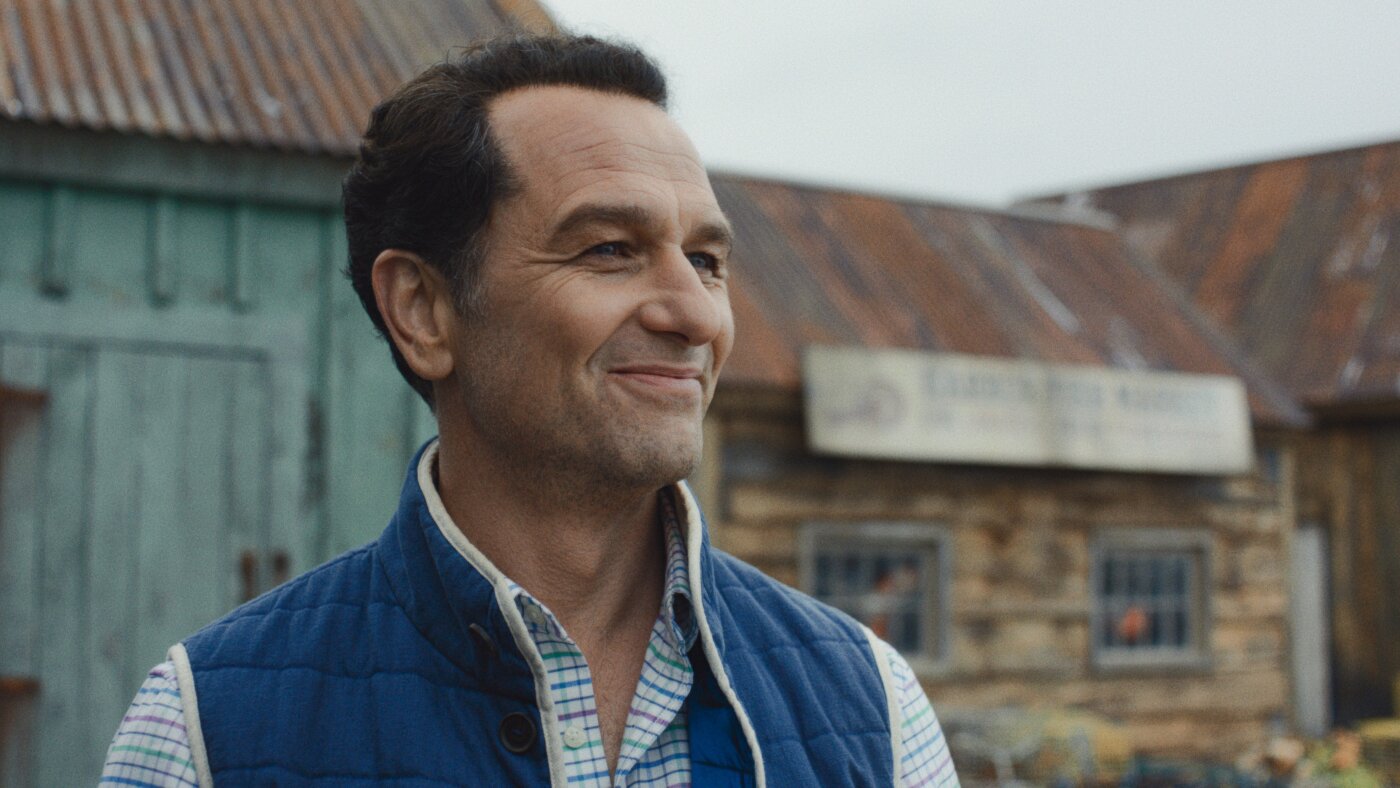
Matthew Rhys was nominated for his role in Widow’s Bay.
Apple TV
hide caption
toggle caption
Apple TV
The 2026 Emmy nominations are here. We’re unpacking the record-breaking nominations for Hacks, plus a big day for Widow’s Bay, The Pitt, and The Bear. We’ll also talk about the snubs and make some early predictions of who will win.
Connect with Pop Culture Happy Hour:
Letterboxd / Facebook
Our weekly newsletter
Support Pop Culture Happy Hour+
-

 Maine2 minutes ago
Live updates: U.S. and Iran escalate attacks; jockeying starts in Maine after Graham Platner drops Senate bid
-

 Maryland5 minutes ago
How the Baltimore-style hot dog tells a uniquely Maryland story
-

 Michigan10 minutes ago
Michigan immigration advocates react after Supreme Court ruling on Temporary Protected Status
-

 Massachusetts17 minutes ago
Is new construction right for you? There are benefits to buying a brand-new home in Massachusetts.
-

 Minnesota20 minutes ago
Where to watch Cleveland Guardians vs Minnesota Twins: TV channel, start time, streaming for July 9
-

 Mississippi25 minutes ago
Where Ace Reese, Mississippi State signees appear in latest MLB mock drafts
-

 Missouri32 minutes ago
Missouri Farm Bureau to host agritourism conference in Hermann | Fulton Sun
-
Montana35 minutes ago
Montana Lottery Powerball, Lotto America results for July 8, 2026

