Fitness
Why modern fitness culture misunderstands human bodies


Sign up for Big Think on Substack
The most surprising and impactful new stories delivered to your inbox every week, for free.
For most of human history, movement was inseparable from survival. Deliberately burning energy for no immediate purpose would have made little sense in a world where calories were scarce and bodies were costly to maintain.
Seen through an evolutionary lens, exercise stops looking like a personal shortcoming and starts looking like a cultural invention we’re still learning how to live with, says Daniel Lieberman.
DANIEL LIEBERMAN: So the word exercise, you know, comes from the Latin ejercicio. And it meant, you know, to train so we still do math exercises or soldiers do exercises to get fit. But eventually the term has changed it’s meaning and it’s developed new meetings. So one hand it means to do voluntary physical activity for the sake of health and fitness. That’s the kind of sort of fitness, physical activity kind of exercise. But on the other hand, it’s also means, you know, to be exercised means to be upset, to be confused, to be anxious, to be kinda worried, you know, we get exercised by our math exercises. And so I, to me it’s part and parcel of the strange concept of exercise, right? It’s this modern idea of doing voluntary discretionary, physical activity for the sake of health and fitness. But we don’t do it often. You know, most people don’t do it ’cause they want to, they do it because, you know, it helps stave off death and decrepitude and in the modern world, of course, a lot of people are confused about it ’cause they find it hard to do, they’re not quite sure how much to do. There are all kinds of myths surrounding it. So very much people are exercised about exercise today. And really I think that by shining the light of evolution and using kind of an anthropological perspective, my goal really is to help people be less exercised about exercise.
– [Voiceover] How evolution made us move.
– I would say that the definition I use of exercise is pretty much the bog standard definition that people in the sort of fitness exercise science world use, it’s important to make a distinction between physical activity and exercise. So physical activity is just moving, right? When you do anything, right, go shop, you know, pick up your groceries and take them to your car. That’s physical activity. When you, you know, sweep the kitchen floor, that’s physical activity. But exercise is discretionary, voluntary physical activity for the sake of health and fitness. So it can include everything from sports to running on a treadmill to going for a walk. I think the paradox of exercise is that everybody knows it’s good for them. I don’t know that really anyone who says they don’t want to ever exercise, right? But the paradox is that most things that are good for us kind of want to do, you know, but exercise is kind of the reverse, right? It’s something that we all know we want to do. It’s good for us, and yet a lot of us have a hard time doing it. And the proof is in the data. According to the CDC, only about 20% of Americans get the very minimum levels of exercise that every health organization in the world thinks is the minimum for an adult, which is 150 minutes a week. So 80% of us really struggle and fail to get very basic amounts of exercise. But almost everyone says that they want to get enough exercise. The most common reason that people don’t like to do exercise when you ask them, is that they don’t have time. You know, they find it stressful and they’re busy, right? And that’s a legitimate concern for a lot of people. Imagine if you have to commute a long distance, you have a job that you know is very sedentary. You gotta, you know, deal with your kids in the evening or maybe you have two jobs or whatever, you know, it’s very challenging for people to exercise and to find the time in the modern world. The other reason that people often give for not exercising because they don’t like to, they find it uncomfortable. They find it unpleasant. They find it, you know, they get hot and bothered and they don’t feel like they get much reward out of it. And so there’s a lot of inertia that prevents people from doing it. They have a hard time getting off the couch. And, you know, I think we need to be compassionate towards both of those reasons, right? Because yes, people are stressed for time and yes, it is often unpleasant and unfun but we make them feel bad about that, right? We make them feel bad for being stressed. We make them feel bad for having that inertia when actually it’s completely normal. I mean, nobody ever exercised in the stone age, right? People were physically active when they had to be, and they might dance or do other sort, play, you know, do other things that were for fun. But you know, but volitionally going on a five mile run in the morning or going to the gym to lift weights whose sole purpose is to be lifted, that’s a really strange, weird, modern behavior and there are all kinds of instincts that we have not to do it. And we shouldn’t make people feel bad for having those instincts. Instead, we should help them figure out ways to overcome those instincts because we live in a world where we now, because we’ve mechanized everything, right, we no longer have to be physically active. We now, in a very strange way, have to choose to be physically active. And that’s not so easy. Oh my gosh, there are so many myths about exercise. It’s hard to know where to start. But I would say that, you know, one myth is that our ancestors were sort of just natural, incredible athletes who just get up in bed in the morning and you know, run ultra marathons at will and without ever much stress or difficulty that our ancestors were really incredibly strong. That there’s a trade off between speed and strength. That you don’t have to, you know, that it’s normal to be less physically active as you get older. That there’s a perfect type of exercise, perfect amount of exercise, that sports equals exercise. I could go on. The topic of exercise is just laden with myths. A common view about our sort of evolutionary origins and about sort of the evolution of physical activity is that we evolve from these kind of super athlete kind of ancestors and that on civilization has sort of contaminated us. So if you wear shoes or you drink Gatorade, or you have a fancy watch or something like that, somehow that kind of deprives you of the kind of natural talent that you have. And if only you had been born in some little village somewhere and didn’t have TV and didn’t have access to all these commercial goods that you’d be a natural, incredible athlete and that you could just get outta bed and you know, run an ultra marathon or something like that. A lot of these myths, to be honest, stem from I think this idea of this Rousseauian idea of the myth of the noble savage, right? That humans uncontaminated by civilization are also sort of naturally good and fine. And they also come from terrible, horrible racist stereotypes about, for example, you know, Africans not experiencing pain as much and you know, Asians having some kind of natural sort of proclivity to sneak around in the dark, you know, I mean, we all know these stereotypes and they’re pernicious and they’re wrong. But they’ve been applied in various ways to hunter gatherers and to subsistence farmers in various parts of the world to make us feel that somehow they’re like these kind of basically fundamental super athletes. And when you do that, I think you do harm to both, to people all around the planet. You do harm to those populations because you kind of dehumanize them. I mean, when they run an ultra marathon, it’s just as hard as when I were to try to run an ultra marathon. They sweat, they toil, they get nausea, they get cramps, they do it because not because it’s easy for them. They do it because they value it, they think it’s worth doing. And you also make people in the west feel terrible. Like somehow there’s something wrong with them, right? And they should throw away their shoes and you know eat a paleo diet or something like that, and all of a sudden ta-da they’ll become this like amazing athlete. And that’s just not true. That’s just a myth. And it’s pernicious in a variety of ways. In 2012, I had that good fortune to be invited to go to the Ironman World Championships in Kona in Hawaii. It’s an amazing event, right? And if you don’t know what an Ironman, full Ironman triathlon’s like, you start off with a 2.4 mile open water swim, then the athletes rush out of the water, jump onto bikes with these like high tech helmets and stuff like that. They speed off and they do 112 mile bike ride across the desert. And then they come back, throw off their bike, jump off their bikes, and then they do a full marathon in the heat. It’s like 90 degrees Fahrenheit, right? And it’s really amazing. And the elite athletes do this in a little bit over eight hours. They’re just like cyborgs. They’re not like human beings. It’s astonishing to watch. And the less lesser athletes take longer to do and everybody has to finish by 17 hours, so by midnight. And it’s just astonishing to see people put their bodies through that kind of endurance to achieve something like that. And I was really impressed by that. I’d never seen a full Ironman before. And then just a few weeks later, I was in a very rural part of Mexico in Chihuahua up in the Sierra Tarahumara where I got to observe a Raráhipri which is the traditional foot race that the Tarahumara Native Americans do. And it’s almost like a soccer game. There are two teams and they have a little ball, a little round ball that’s carved out of wood that morning, and there are about five people on each team, and they kind of kick the ball with their feet and then chase it and find it, and then kick it again and chase it and find it, kick it again. There’s like a little circuit they do. And there are two teams, and whichever team lapse the other team wins. And the race I saw must have been about 40, 50 miles long. And so it’s another incredible endurance event. And on the surface you’d say, oh my god, these events are totally different, right? Ironman is very commercial and everybody’s wearing the fanciest latest gear and they’ve got super fancy shoes and they drink, you know, they’re using gel and goo and all kinds of specially formulated nutrition drinks, and their bikes cost like, you know, $10,000 $20,000 and it’s very commercial, right? And they’re speakers and crowds, et cetera. Whereas the Tarahumara, when they’re running, they’re just wearing the clothes that they normally wear, they’re running in sandals. It’s very uncommercial. And you think, oh my gosh, it’s so different. You know, one is more authentic than the other, but if you stop and think, actually they’re very similar, right? Because both involve rewards, right? So Ironman, there’s like, you know, the winner and the winner gets a prize, et cetera. Well, the Tarahumara also have prizes. They bet huge amounts of stuff, right? They bet clothes and goats and corn and stuff like that. They don’t have Gatorade, but they make their own kind of form of Gatorade out of corn. And they cheer on their runners too. And there’s the joy of victory and the agony of defeat and all that. So in some ways they’re very different, but in other ways it’s kind of the same thing, you know? And it’s a personal journey that people undertake. A very small number of them. The vast majority of people are observers. They’re not participants. So really it made me realize that oh yes, there are some differences between sort of more modern, commercialized western forms of endurance physical activity. This is something basic and fundamental that all cultures do. And actually I think what makes us similar is greater than what makes us different. You know, there are different kinds of training, right? You know, play is a form of training in a way, right? You know, children play, right? Because they’re learning skills, they’re developing capacities and humans are one of the few species, dogs are another that continue to play as adults, right? And that play helps us maintain our capacities. It helps us with social relationships. I mean, there’s all kinds of good things that happen with play, right? But exercise is kind of very, I wouldn’t say exercise is generally play, although some play is exercise. And when you kind of exercise in order to, you know, or train for like an event, you’re doing something, you’re spending a lot of energy. You’re doing physical activity kind of to get ready for something, right? And certainly, you know, for the kinds of things that we do, again, that’s a very modern western behavior. So when I was talking to, and I’ve talked to Native American runners who participate in these, in these long distance races, when I asked them how they get ready for the race, how they train, they would kinda look at me like they didn’t understand the question. There was, you know, what are you talking about? And so, you know, I was working with a translator. The translator was saying, you know, this gringo, you know, like runs five miles every day to kind of get ready for a race. And the question that I got was, you know, why would you run if you didn’t have to? Because their life is their training, right? You know, when I ask people there or ask people in Africa, in the places where I work, when do you run? The most common answer I get is, oh, well, to chase a goat. You know, that’s the most common answer I get. There are a lot of ways to quantify how physically active somebody is, right? And a very simple one. It’s not necessarily the best one, but a simple way of doing it it’s what’s called the physical activity level. It’s just a ratio. So it’s the total amount of energy you spent in a day divided by the energy you would spend if you were just at bed rest, what’s called your basal metabolic rates. The energy you spend just taking care of the most basic essential functions of your body. And so say if you’re in bed rest in a hospital and lying in bed with just like a clicker for the TV and you’re doing absolutely nothing, not even digesting food, your physical activity level would be about at your power, physical activity level it would be about a 1.2. And if you’re like a tour de France cyclist, it would be above three. If you’re kind of a desk worker, it would be like 1.6. So it’s kind of a way to compare individuals but also species because it’s standardized your body size, ’cause your body size essentially determines your basal metabolic rate. And it’s interesting that most animals have physical activity levels of about two to three. So they’re, you know, pretty active. We evolve from apes. And turns out that primates in general, and apes in particular have really low PAL’s, really low physical activity levels. Chimpanzees have physical activity levels about 1.4. And so their physical activity levels are actually lower than sedentary American. So your average sedentary American who doesn’t really do much and you know, spends most of his or her time on in chairs and you know, et cetera, and takes elevators and all that is still more physically active actually than your average chimpanzee. Whereas hunter gathers, people who every day have to go out and get their food, their physical activity levels tend to be around two, about 1.92. Subsistence farmers who don’t have a lot of machines and tractors and stuff like that, they’re may be a little bit harder working maybe 2.1, 2.2. And it wasn’t until the industrial revolution that people’s physical activity levels would be able to go down like about 25% to 1.6, 1.7, which is sort of typical of your average American. So it’s a useful kind of simple standard to help us compare just generally how active , different groups or different individuals are. So your basal metabolic rate is a really important number because it tells you kind of just how much energy you’re spending on just the essential maintenance of your body, you know, paying for your brain and paying for all the tissues in your body. And you know, you have to turn over tissues all the time. Like the cells in your gut are being replaced like every five days or so. I mean, your fingernails are growing, everything’s happening in your body, right? And that all costs energy. And it turns out that a kind of typical say, adult male, my size, right? I’m not all that big, but you know, it spends about two thirds of his or her physical metabolism just on basal metabolic rates. So I spend about 1600 calories a day just existing, you know, just taking care of my body. So the vast majority of the energy that we spend isn’t spent on running around and being physically active and moving. It’s actually spent on just maintenance, just basic total maintenance. And that’s one of the reasons why we can never evolved not to be, you know, all that physically active when it wasn’t necessary. Because until recently, energy used to be limited, right? It wasn’t like, you know, 7-Eleven’s or Dunkin’ Donuts or Whole Foods or whatever your favorite place to get food is around the corner. You know, if you wanted something to eat, you had to go find it. You had to either, you know, hunt it or gather it or dig it up. And so energy was limited. And when energy is limited, you have to engage in trade-offs, right? And so if you spend energy on physical activity, that means you’re not spending energy on taking care of your body or reproducing, which is what the only thing natural selection really cares about. And so the fact that our bodies are so expensive helps explain why we tend to avoid unnecessary physical activity because it prevents, like for example, this morning I went for a five mile run. So I spent about 500 calories. Those are 500 calories that I could have spent on my metabolism. And if I were energy limited, that would’ve been a bit of a problem, right? Which is why people who are energy limited and already physically active, it makes no sense for them to go for a needless, completely pointless five mile run in the morning. So technically a calorie is the amount of energy it takes to raise one gram of water, one degree centigrade, right? So it’s a unit of energy. And so we convert various kinds of energy into calories. There are of course, other units of energy like the joule for example. But calories are kinda a useful one and it’s ’cause we all our food is labeled in calories. So calories is the most common one. But actually the calories that we mostly talk about that are on our food labels are actually kilocalories. They’re actually a thousand calories. So when you look at a label for a chocolate bar or a can of beans or something, and it says there are 50 calories, this actually means that there are 50,000 calories, right? But anyway, that’s neither here nor there, but that’s fine. But so most of the time we’re talking about calories with a capital C or kCal, kilocalorie. And you know, our bodies use a lot of calories. Typical human body spends about 2000 to 3000 calories, or in this case, kilocalories a day existing. That’s your basal metabolic rate. Plus all the energy you spend, you know, running around, doing chores, making dinner, whatever it is you do for your day. When you go for a walk, you probably spend an extra 50 calories per mile. If you go for a run, you’re spending probably an extra 100 calories per mile for that run. So that kinda gives you, hopefully gives you a sense of sort of what kind of energy amounts we’re talking about.


Forget boring home workouts, on-demand HITT classes and cold winter runs.
The latest wellness trend bouncing around TikTok involves a workout you might not even realize you’re doing, and that’s the point. It’s called rebounding. This low-impact exercise involves jumping on a mini fitness trampoline — called a rebounder — to get your heart pumping and support lymphatic drainage.
On Amazon, this best-selling model is currently on sale for just $129. It measures in at just 40 inches, making it ideal for small spaces while still offering room for an adult to jump, squat and jog in place. Users swear it gives them a seriously effective full-body workout, and many remark that it’s “so much fun” to use.
Clinical trials also back the benefits: a 12-week rebounding program for overweight women showed significant improvements in body composition as well as a decrease in diastolic blood pressure.
Ready to jump on the rebounding trend, too? You’d better hop on this Amazon deal fast.
This sleek rebounder by BCAN is sturdy and easy to set up, thanks to pre-assembled bungees and simpel video tutorial.
Reviewers say it’s completely changed their workouts, with one remarking they “feel like a little kid again.” Others have also noted it’s much easier on their joints than higher-impact exercises.
“It absorbs impact well and allows for a nice, smooth rebound that is gentle on the joints, making it perfect for a low-impact cardio workout,” one person explained. “Whether I’m doing high-intensity intervals or simply bouncing for fun, the movement feels fluid and responsive.
The BCAN model features an upgraded handlebar for added stability. It’s 8mm premium bungee — with a durable woven outer layer and a 350-strand natural latex core — delivers smooth, quiet bounces, so you can enjoy your workout without disturbing others.
This article was written by Miska Salemann, New York Post Commerce Writer/Reporter. As a health-forward member of Gen Z, Miska seeks out experts to weigh in on the benefits, safety and designs of both trending and tried-and-true fitness equipment, workout clothing, dietary supplements and more. Taking matters into her own hands, Miska intrepidly tests wellness products, ranging from Bryan Johnson’s Blueprint Longevity Mix to the viral Oura Ring to Jennifer Aniston’s favorite workout platform – often with her adorable toddler by her side. Before joining The Post, Miska covered lifestyle and consumer topics for the U.S. Sun and The Cannon Beach Gazette.
Fitness
Fitness trainer with 18 years of experience shares why exercise is crucial for kids: ‘Not just about health and fitness’

Exercise is often spoken about in the context of physical fitness – stronger muscles, better stamina and improved overall health. But its value, especially for children, extends far beyond the body. Regular physical activity can quietly shape character, teaching lessons about effort, patience, discipline and resilience that mirror how the real world works. From learning to cope with discomfort to understanding that progress takes time, exercise can become a powerful training ground for life itself.
Also Read | Chennai fitness trainer with 18 years of experience shares 5 simple things to focus on for long-term fitness
Chennai-based fitness trainer with 18 years of experience, Raj Ganpath – founder of the Slow Burn Method, co-founder and head coach at Quad Fitness, and author of Simple, Not Easy – is shedding light on why exercise is important for kids, with the benefits going beyond health and fitness. In an Instagram video shared on February 27, he explains how the impact of exercise extends far beyond physical wellness, shaping resilience, discipline and long-term character development.
Embracing discomfort
According to Raj, exercise is one of the healthiest ways to help children learn how to sit with discomfort in a safe, structured and sustainable way. Life inevitably brings challenges and unease – something adults understand well – but many children today are shielded from situations that test their resilience.
He explains, “Exercise is a great way to experience this discomfort in a safe and sustainable manner. Lifting weights, holding a plank, doing cardio, repping till it burns, all of these things are opportunities to embrace discomfort, opportunities to put themselves in a place where they’re not comfortable and learn from it, opportunities to practice physical and mental resilience.”
Learning hardship
The fitness trainer emphasises that hardship is an inevitable part of life, and meaningful success often requires pushing through moments of difficulty. While most adults recognise this truth through lived experience, children may not always have the same exposure to challenge. Raj believes exercise can bridge that gap.
He elaborates, “It will teach them that they need to do hard things if they want to accomplish something. Getting through a very hard workout, setting a goal and achieving it, completing a task. All of these things are not just random chores. These are incredible opportunities – opportunities to experience hardship and build fortitude.”
Delayed gratification
In today’s fast-paced world, the desire for instant gratification is stronger than ever – and children are growing up at the centre of it. With technology, streaming platforms and 10-minute delivery services, almost everything is available at the tap of a screen. As a result, the ability to wait, persist and work steadily towards a long-term goal can easily take a back seat. Exercise, notes Raj, offers a powerful counterbalance.
He explains, “Everyone wants everything right away today. This is true for us adults too, but it is even more true for our kids because this is the only world they know. A world where everything happens right then and right there, whenever they want it, wherever they want it. Exercise will teach them to wait, to be patient, to trust the process, to fail and still keep going, to work towards something larger that they will get much later. This is a very important character building quality and will serve them well for many, many years to come.”
The fitness trainer concludes, “Exercise is not just about health and fitness. It is a simulation of life itself. A ready-made character building tool available to you to help prepare your kids for life, the raw and real life that they’re going to have to deal with no matter what. So make sure they build the habit and make sure they embrace it.”
Note to readers: This article is for informational purposes only and not a substitute for professional medical advice. It is based on user-generated content from social media. HT.com has not independently verified the claims and does not endorse them.

The World Health Organization says the average adult is supposed to get 60 minutes of moderate to vigorous activity five days a week, which sounds somewhat doable until it’s 9 p.m., your kids are finally in bed, and you just want to fall onto the couch and dissociate. But more and more people online are talking about “movement snacks” — little bite-sized amounts of exercise you can do throughout your day to meet your 60-minute goal without having to make special time for one big workout. Because yes, we all want to be our healthiest, but sometimes a HIIT class at the gym is just not in the schedule.
We asked personal trainers and fitness coaches for their favorite movement snacks you can do in the office, around the house, and on busy weekends when everyone’s home.
How much exercise is a person really supposed to get?
While the WHO recommends 60 minutes a day, the CDC is a little more lax, recommending at least 150 minutes of moderate-intensity physical activity a week, or about 30 minutes a day, five days a week. While it may feel like you’re the only one struggling to fit a workout into your daily routine, you’re far from alone. In fact, it’s always been hard for most Americans. So, while movement snacks may be a cute new term we’re all hearing for the first time, fitness pros have been promoting bite-sized exercise forever.
“I work with busy professionals, so I’ve been integrating micro workouts of two to 10 minutes into my clients’ lifestyles for almost 20 years,” says Andrea Marcellus, certified personal trainer and CEO of AND/life.
The most important thing for your health isn’t getting all your daily movement done in one big, perfectly curated workout — it’s about being consistent, Marcellus says. Movement snacks can help you stay consistent because you don’t have to budget a big chunk of time; instead, you can fit something simple into your day when you have three minutes to spare. Hell, you don’t even have to change clothes or go anywhere.
“Most people think movement only counts if it’s a workout. That mindset is what keeps people sedentary. In reality, your body doesn’t care if steps come from a hike, a gym session, or pacing when you’re on a call,” says Lindy Royer, physical therapist and balanced body educator. “This is where you win the game — by stacking movement into things you’re already doing.”
Movement Snacks To Try Throughout Your Day
- Set an alarm on your phone to chime every hour — that’s what women’s fitness coach Allison Kalsched tells her clients. When it goes off, stand up and do 10 bodyweight squats. Then go back to work. When you get tired of squats, mix in walking lunges, push-ups (it’s fine if they’re modified!), or dead bugs. Throw on 30 seconds of jumping jacks or high knees for bone-building benefits, which is important for women in menopause, she adds.
- Take a micro walk. “Five minutes or 500 steps is my absolute favorite,” says Dr. Milica McDowell, doctor of physical therapy, author of the forthcoming book Walk, and exercise physiologist at US Physical Therapy. “It changes mood, lowers blood pressure, boosts mental clarity, and can help you get your cumulative steps in.”
- Dance to your new favorite song with your kids or all by yourself. “Dance party was big with my kids after dinner,” Marcellus says. “It takes four to 10 mins and helps kids burn off dinner energy, while also giving parents a metabolic boost.”
- Stop and do 60 reps of any full-body exercise, like squats, lunges, or jumping jacks — this usually takes about two minutes, no matter which one you choose, Marcellus says. Or, hold a plank for one to two minutes.
- Pair walking with habits that already exist to get your steps in, like marching in place while brushing your teeth or doing a lap inside the house while your food is in the microwave. “This means you’re not adding time — you are upgrading your time,” says Royer.
- Count your housework. Sweeping, mopping, vacuuming, general domestic labor — these things totally contribute to your total exercise time each day, says Royer.
- If you go up or down the stairs at home, just… do it two or three times. That little extra here and there adds up, according to Royer.
The best advice is to focus not on “how can I move right now?” but “how can I do something that isn’t sitting right now?” Royer says. “The real truth that most people ignore is that sedentary time is the real enemy, not a lack of workouts. Focus on breaking up your sitting time. Build in frequent movement snacks. You’re not looking for perfection, just something more than nothing. You don’t need more time; you actually just need more conscious efforts to move.”
Iran fires missiles at US bases across Middle East after American strikes on nuclear, IRGC sites

Common nighttime noise exposure may trigger heart problems, study suggests

MLB pitcher Merrill Kelly says California tax rate swayed decision to reject Padres’ free agency offer

Google dismantles 9M-device Android hijack network
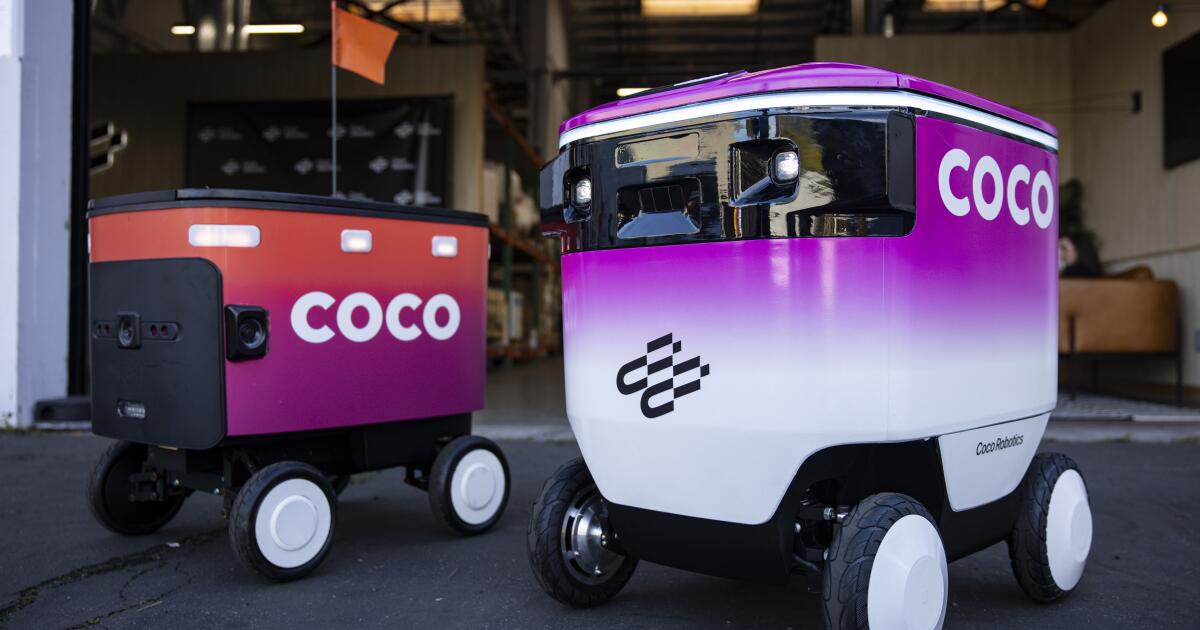
A new delivery bot is coming to L.A., built stronger to survive in these streets

Florida High School Football Rankings: Top 25 teams – Oct. 21

Cleary's 21 help Le Moyne down Central Connecticut State 69-64 in OT

How old is Bo Nix? What to know about Oregon quarterback ahead of 2024 NFL Draft

99th annual Pony Swim held in Virginia

Indiana Members Credit Union announced as new anchor tenant at Bottleworks District

Israel strikes two schools in Iran, killing more than 50 people

Anthropic CEO says he’s sticking to AI “red lines” despite clash with Pentagon

ICE blasts Washington mayor over directive restricting immigration enforcement

Did the EU bypass Hungary’s veto on Ukraine’s €90 billion loan?

How the federal government is painting immigrants as criminals on social media
-

 World2 days ago
Exclusive: DeepSeek withholds latest AI model from US chipmakers including Nvidia, sources say
-

 Massachusetts3 days ago
Mother and daughter injured in Taunton house explosion
-

 Montana1 week ago
2026 MHSA Montana Wrestling State Championship Brackets And Results – FloWrestling
-

 Louisiana5 days ago
Wildfire near Gum Swamp Road in Livingston Parish now under control; more than 200 acres burned
-

 Denver, CO3 days ago
10 acres charred, 5 injured in Thornton grass fire, evacuation orders lifted
-

 Technology1 week ago
YouTube TV billing scam emails are hitting inboxes
-

 Technology1 week ago
Stellantis is in a crisis of its own making
-

 Politics1 week ago
OpenAI didn’t contact police despite employees flagging mass shooter’s concerning chatbot interactions: REPORT