Fitness
This exercise habit is making your skin look older, according to experts


There are so many dilemmas when it comes to exercise: quantity versus quality, volume versus intensity, high impact vs low impact. But when we factor in ageing well and maintaining beautiful, radiant skin is added in as a factor, the choices suddenly become clearer.
If you want your skin to look great, don’t worry about clocking up more hours in the gym. There’s a way to efficiently do what’s necessary for your body – and it doesn’t involve excessive exercise, which can actually do more damage than good.
The next question, of course, is how? Join us in delving into this anti-ageing topic with three experts: a doctor, a personal trainer and longevity specialist. Here’s what they have to say…
How excessive workouts and stress cause cellular ageing
One of the biggest mistakes people make when it comes to working out is thinking that more activity always guarantees more benefits. However, poorly structured workouts with too much exercise or moves that are not well planned can lead to unnecessary wear and tear on your body (including your skin).
This increases the risk of injury and results in chronic fatigue, which is counterproductive in the long term.
“The ideal approach is to create a structured, optimised exercise plan that stimulates key biological markers (or indicators) associated with living a long and healthy life – but without placing undue stress on the body,” explains longevity expert Gonzalo Ruíz Utrilla. “What truly makes a difference [with exercise] is the type of physical challenge the body receives and how it adapts to it.”
If we overdo exercise past a certain age, we combine the stress of sport with a high allostatic load. The allostatic load is the wear and tear the body experiences as it responds to demands – not just physical, such as exercise, but also life stress. When these loads become too heavy, they can over-activate your sympathetic nervous system.
“This excessive activation triggers chronic stress,” says the expert. “This stress not only impairs your body’s ability to repair itself but also decreases your metabolism’s flexibility, promotes continuous systemic inflammation and causes cells to age more quickly.”
 © Getty Images
The skin benefits: How moderate exercise boosts collagen and oxygen
How does working out affect blood circulation and tissue oxygenation, and what specific benefits does moderate exercise offer as far as skincare?
Dr Sofía Ruiz del Cueto, co-director of Madrid’s Mira+Cueto aesthetic clinic, states that, “When you boost blood circulation, the skin receives a greater supply of essential oxygen and vital nutrients.
“This process allows the skin to renew itself by forming necessary collagen and elastin, and repairing damaged cells while also boosting hydration. It’s also effective at speeding up the removal of waste and toxins, which stops the kind of inflammatory reactions that cause premature ageing.”
 © Getty Images
According to the doctor, “Exercise also modulates cortisol levels (a hormone related to stress), which helps prevent premature ageing.”
She advises moderate cardiovascular exercise around three to five days a week, accompanied by a sensible diet rich in protein and antioxidants, as well as adequate hydration.
Is too much exercise making your skin look older?
You may be wondering if there are certain types of exercise that should be avoided because of the potential negative impact on your skin’s appearance. “You should avoid overdoing your workouts, because too much exercise speeds up cell damage (oxidation) and increases inflammation in the body,” says the doctor.
The expert also has one big “Do” and a big “Don’t”:
- Do stay hydrated before, during, and after exercise – it will keep your skin from being dehydrated, too.
- Don’t exercise during peak UV exposure hours or in high temperatures.
 © Getty Images
Impact training vs. strength training: Which is better for longevity after 50?
You may have also heard the notion that impact training accelerates ageing. According to CrossFit expert and personal trainer Jesús Valor, it’s crucial to understand precisely what “impact training” means, especially after the age of 50.
“By impact training, we don’t mean those group classes where jumping is the main feature of the workout, but rather exercises that make the bones, tendons and joints truly feel that they’re being engaged,” the expert says. “This is best achieved through strength training, which is highly recommended over 50 because, particularly for women experiencing menopause and a subsequent drop in oestrogen, they need to focus on it more than ever.”
 © Getty Images
Muscle is an endocrine organ that sends internal messages. For this reason, he believes, impact workouts (adapted to individual needs) are beneficial in every sense. “There is no scientific evidence that impact training, in moderation, accelerates skin ageing,” says Valor.
He advises that as time progresses, the body’s adaptation to stimulus and recovery naturally slow down, so the quality of your workout is paramount during midlife.
Strength exercises are the most highly recommended for delaying ageing, including for your skin. We’re not talking about lifting huge amounts of weight, but about properly moving your body – it’s a win-win.



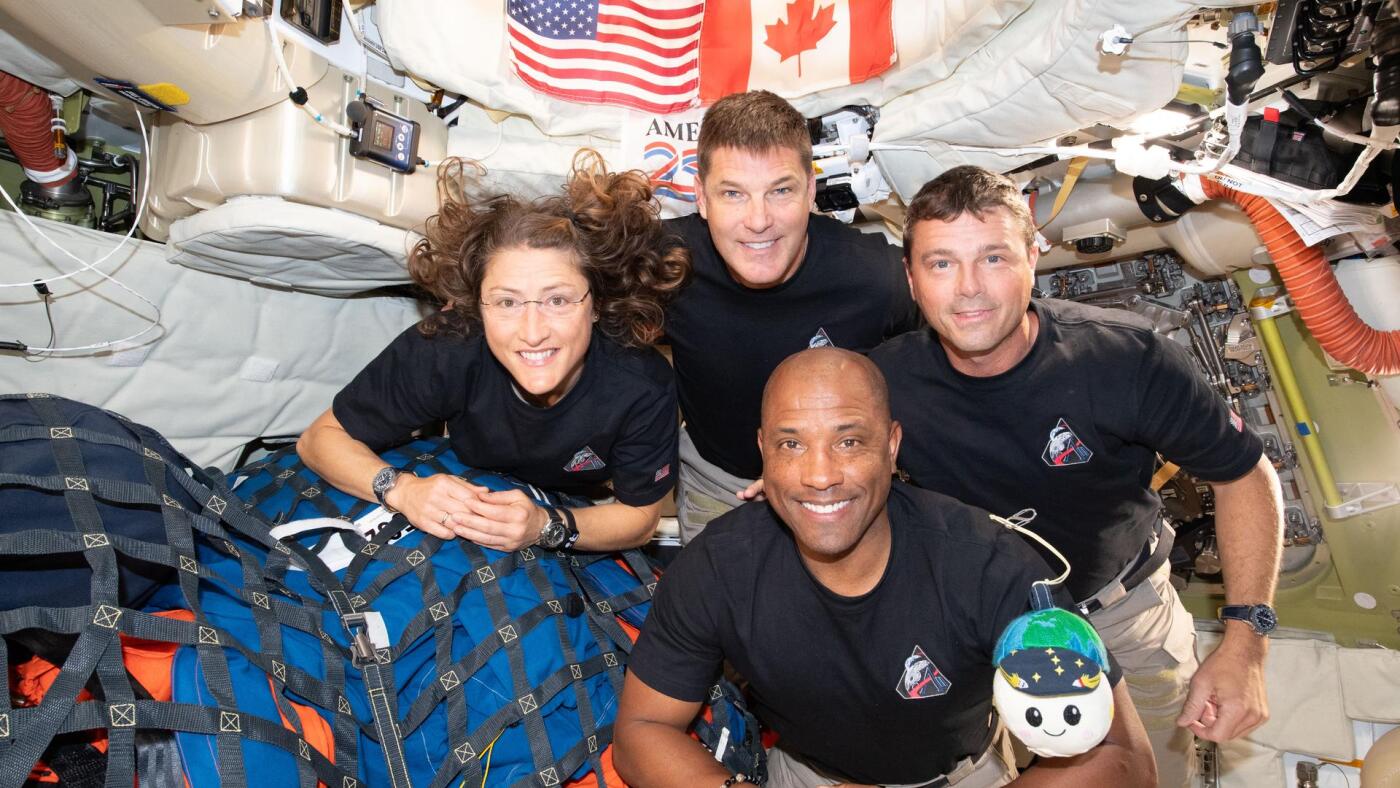
The Artemis II crew — Christina Koch (left), Jeremy Hansen, Victor Glover and Reid Wiseman — have to share tight quarters aboard the Orion spacecraft on their way home. But even with limited space, they can still get a solid workout in — thanks to a very special piece of equipment.
NASA
hide caption
toggle caption
NASA
Even a few days away from Earth can significantly alter the human body. Without the constant pull of gravity on the skeleton, muscle and bone can quickly atrophy. To combat this immediate physical decline, the four astronauts aboard Orion on the Artemis II mission are using a specially designed machine known as the flywheel.

In a video blog posted before the crew launched, Canadian astronaut Jeremy Hansen compares the flywheel to a rowing machine. “Like a cardiovascular workout where you row at a lower resistance and a fast pace,” Hansen explains as he demonstrates the flywheel’s functionality. Astronauts strap their feet onto a small platform and pull on a handle connected to a cable. Pulling spins a flywheel. It works like a yo-yo, according to NASA — astronauts get as much resistance as they put into it.
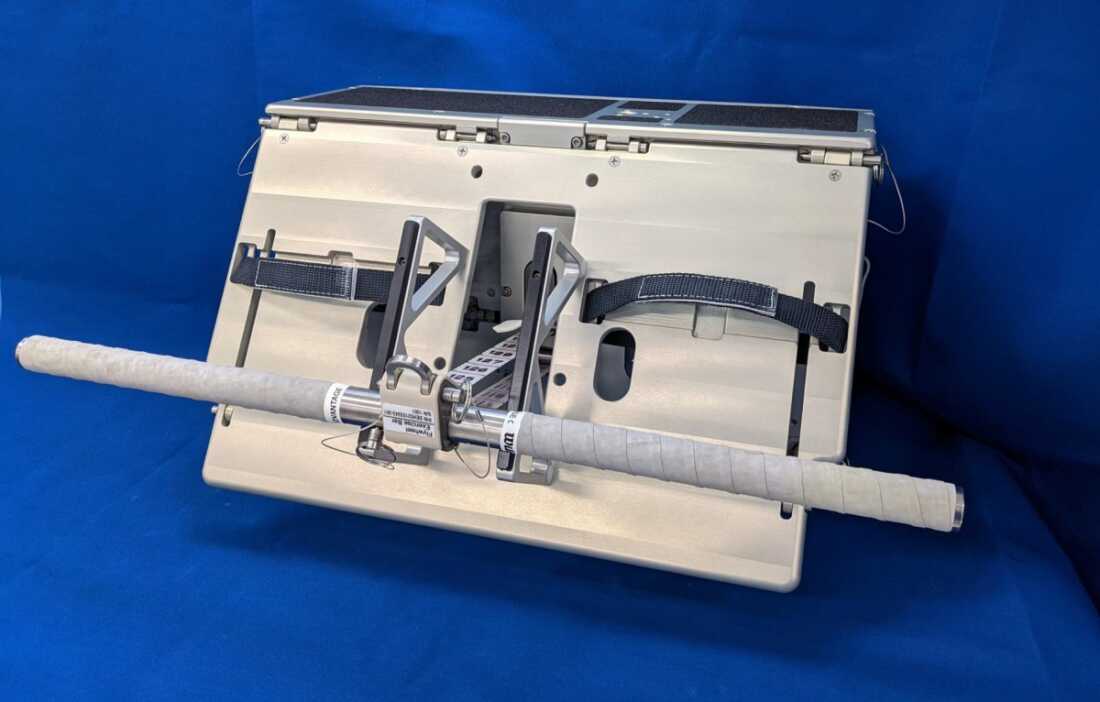
The Artemis II crew exercises on Orion using a flywheel, a simple cable-based device for aerobic and resistance workouts.
hide caption
toggle caption
The flywheel is small, not unlike an extra large shoebox. Working in Orion’s tight quarters — only 316 cubic feet , about the size of a smallish bedroom — engineers had to design this device to perform with utmost efficiency, so that it can both provide a cardiovascular workout and resistance exercises up to 400 pounds. Astronauts can use it to do weightlifting moves like squats, deadlifts and curls.
Before the astronauts, there were the pillownauts
The flywheel has been years in the making. Jessica Scott, an exercise physiologist at Memorial Sloan Kettering Cancer Center, worked on early prototypes for NASA, anticipating that astronauts would be vulnerable to rapid muscle atrophy without physical exertion.

Scott compares ten days in space to ten days in bed. Atrophying for that amount of time, says Scott, “You would feel very weak and your muscles start to lose size very quickly.” The heart, she stresses, is especially vulnerable with this decline in strength.
When recruiting people to study these early flywheel prototypes, says Scott, researchers looked for 30 subjects willing to lie in bed for 70 days. She and her colleagues weren’t sure they would be easy to recruit.
Turns out, people were eager to spend hours a day reclining in the name of science.

“We had over 10,000 people apply for 30 positions,” says Scott.
They called themselves the “pillownauts.”
Researchers divided these participants into different groups. Some stayed in bed all day. Some of them broke their bed rest in order to work out on a more traditional suite of exercise equipment, and some of them used the flywheel. The goal was not to improve fitness, but to prevent declines.
The flywheel, says Scott, delivered the results researchers were hoping.
“What was really exciting was that the small device could prevent the declines, the same amount that a full gym could do,” she says.
Other missions — like those aboard the International Space Station — have full suites of exercise equipment. The flywheel has not yet been tested for longer durations, but Scott says she’s hopeful it could also provide fitness for astronauts in longer periods of gravity deprivation.
Not everyone’s an astronaut, but everyone ages
Even for people who are not planning on orbiting the moon — this research has important implications, says Thomas Lang, a radiologist who studies bone and muscle loss and has worked with NASA on exercise science for previous missions.
“You start childhood and then as you grow your bone density and mass reach a peak,” says Lang, “in your late twenties or early thirties.”
Those who are lucky to live to old age, he says, will experience hormonal changes that lead to bone loss over time. For women, that escalates sharply in menopause. “That’s a big whopping decline,” says Lang.
Men’s decline may not be as dramatic, says Lang, but they are also vulnerable, especially as they live into their 70s and 80s.
NASA researcher Jessica Scott is also hopeful this work could have broader applications for the general public. Few of us will travel to space, but many of us can relate to dealing with time and space constraints when it comes to exercise, says Scott.
“One day we could all be having our own flywheel,” she says — something small enough to fit under a desk at work, or in the corner of an office.
After his first 30-minute aerobic session with the device, astronaut Reid Wiseman said he was happy to report that in addition to providing a good workout, he was pleased the flywheel didn’t drive his roommates too crazy. No one had to wear ear plugs to block out the sound.
“ It is a really good piece of gear and we can actually get a nice workout,” says Wiseman. “I look forward to the next time I get to try a resistance workout.”
Fitness
Surprising study finds this simple seated exercise reduces glucose spikes by 50% – here’s how

While you probably know that walking after eating and avoiding sitting for prolonged periods of time can reduce glucose spikes and help manage blood sugar levels, a recent study shows that something much simpler could be just as effective: seated soleus push-ups, a.k.a. seated calf raises.
The research was done on an equal number of men and women in their late 20s to early 30s, and involved them performing continuous soleus push-ups after consuming a glucose drink. Blood glucose and insulin were then measured at various intervals over time. The same measurements were taken on participants after consuming the drink, without the soleus push-ups, and responses were compared.
Doing the exercise led to a 52% reduction in glucose spikes, and a 60% lower insulin response, proving that you may not even need to leave your desk or sofa to improve blood sugar control.
There’s something unique about the exercise that makes it superior to others. ‘There’s a muscle in your calf called the soleus muscle,’ French biochemist Jessie Inchauspé, a.k.a. The Glucose Goddess, explained during an episode of Steven Barlett’s podcast, The Diary of a CEO. ‘This muscle is very good at soaking up glucose from your blood stream, so this is an easy hack you can do after you east something sweet – just do some calf raises at your desk, nobody will notice. In studies they do hours of this, but even just one minute is better than nothing.’
What’s important to reap the rewards is that the exercise is performed after eating (as in the study, where participants did it after consuming a glucose drink), and that reps are continuous as opposed to performed in sets with rest. This is because the sustained activation is what drives the glucose uptake – the continuous muscle contractions ensure glucose levels can’t rebound during rest intervals.
The authors of the study added that the exercise is a practical low-cost strategy – and one that could be particularly useful for people who are sedentary, elderly or have limited mobility.
Unless you’re diabetic, insulin resistant, or have metabolic risk factors such as PCOS, remember that glucose spikes are normal. They’re simply part of the digestion process and healthy bodies are capable of returning to baseline glucose efficiently. You don’t need to strictly avoid spikes, but better management of blood sugar can help energy levels and appetite, even without medical conditions. Speak to a medical professional if you’re unsure.
How to do soleus push-ups
- Sit upright with your feet flat on the floor, knees bent at about 90 degrees.
- Lift your heels while keeping the balls of your feet on the ground (like a small calf raise).
- Lower your heels back down in a slow, controlled motion.
- Repeat continuously at a steady, gentle pace for an extended period (aim for continuous movement over short sets with rests in between).
How long to do them
While the study involved participants performing the exercise continuously for around four hours, a separate study proved that a reduction in glucose spikes occurred around the 30-minute mark. It’s also worth noting that, anecdotally, Reddit users report a reduction in glucose spikes after just eight minutes, and Inchauspe affirms that ‘even one minute is better than nothing’.
The conclusion
Most of the existing research is based on a small sample size and performed in specific, controlled lab conditions – but the findings are promising proof that the exercise could be superior to other exercises for blunting glucose spikes, and could be an effective method for people who spend a lot of time sitting or those unable to employ other hacks, such as walking after meals. They’re not a magic bullet for everyone; any light activity after meals (like walking) is well-proven to manage blood sugar levels, but if you are unable to walk or perform other exercise, it’s worth a try.

As Women’s Health UK’s fitness director and a qualified Pilates and yoga instructor, Bridie Wilkins has been passionately reporting on exercise, health and nutrition since the start of her decade-long career in journalism. She secured her first role at Look Magazine, where her obsession with fitness began and she launched the magazine’s health and fitness column, Look Fit, before going on to become Health and Fitness writer at HELLO!. Since, she has written for Stylist, Glamour, Cosmopolitan, Marie Claire, Elle, The Metro, Runner’s World and Red.Now, she oversees all fitness content across womenshealthmag.com.uk and the print magazine, spearheading leading cross-platform franchises, such as ‘Fit At Any Age’, where we showcase the women proving that age is no barrier to exercise. She has also represented the brand on BBC Radio London, plus various podcasts and Substacks – all with the aim to encourage more women to exercise and show them how.Outside of work, find her trying the latest Pilates studio, testing her VO2 max for fun (TY, Oura), or posting workouts on Instagram.

Starting your day with a healthy dose of exercise can help build core strength and stability.
Many famous fitness icons believe in the power of morning exercise. Actor and fitness enthusiast Mark Wahlberg is one major fan and stays dedicated to his intense 4 a.m. workout sessions. In fact, the celeb says early morning workouts make him feel like he can “conquer the world“—they help him begin each day with a feeling of accomplishment, and science agrees.
According to Piedmont Healthcare, rising early and working out offers mental clarity, less distractions, and a boosted metabolism for the rest of the day. Having a morning routine in place is also a way to ensure it gets done. And one essential age-related item on that a.m. bucket list? Building your core. A strong core is essential for independent, active living. Your core includes your back, pelvic, and abdominal muscles, and helps you walk, lift, bend, and more. It’s also key when it comes to keeping you from slouching and remaining balanced.
We spoke with Doug Bertram, M.S., L.Ac., MTCM—Founder & CEO of Structural Elements®, a three-time Ironman triathlete, and ultramarathoner—who shares three morning exercises to build core strength faster than planks after 50. With more than 30 years of experience, Bertram has progressed the field of orthopedic wellness by focusing on the body’s structure rather than pain symptoms on their own. He developed the Structural Elements® Balancing Method, an integrative approach emphasizing postural alignment, fascia mapping, and tensegrity-based assessment.
“Core strength often declines after the age of 50 due to several factors, primarily related to the natural aging process,” Bertram tells us. “One significant factor is sarcopenia, which is the age-related loss of muscle mass. As muscle fibers decrease, the core muscles, crucial for stability and support, become weaker. This decline in core strength negatively impacts balance, increasing the risk of falls, which can be particularly dangerous for older adults. Additionally, weakened core muscles contribute to poor posture, leading to discomfort and potential back pain.”
Daily movement can become more laborsome, decreasing overall mobility, confidence, and independence. In addition to sarcopenia, stiffening of the fascia and reduced elasticity of tissues can make you less capable of distributing load.
Which Core Muscles Should Be Prioritized To Build Functional Strength?
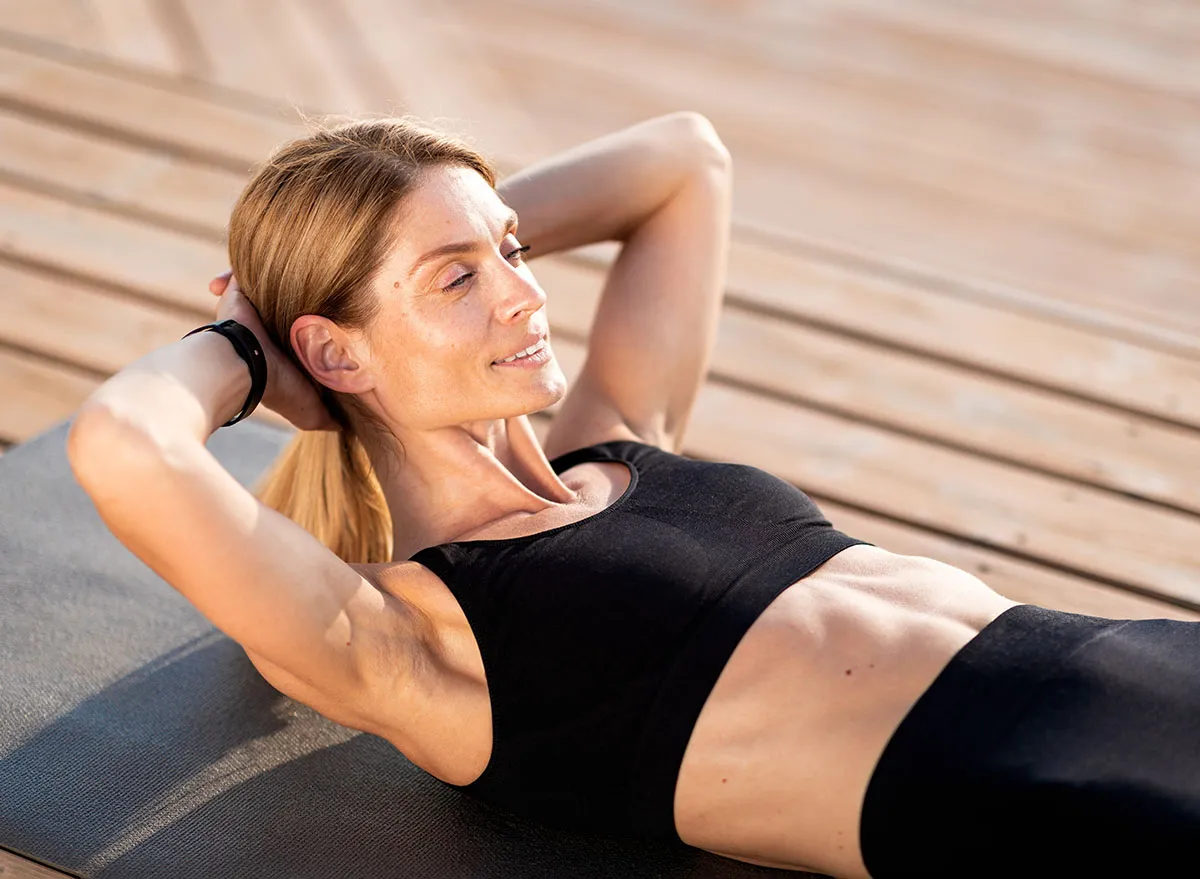
In order to build functional core strength after 50, it’s essential to prioritize specific muscle groups that contribute to overall support and stability.
“The transverse abdominis is essential for stabilizing the pelvis and spine, while the multifidus plays a crucial role in spinal alignment and stability,” Bertram tells us. “The rectus abdominis, commonly known for creating the ‘six-pack,’ is involved in overall core function. Additionally, the obliques are vital for rotational movement and lateral stability. Lastly, strengthening the pelvic floor muscles is important for core stability and can improve overall health and function, particularly in maintaining continence.”
Below, Bertram offers three morning moves that can help boost core strength more efficiently than planks. These exercises offer a safe yet effective way to strengthen the essential muscles in your core.
Bird-Dog
“The bird-dog involves starting on all fours and extending one arm and the opposite leg while engaging the core, which enhances stability and activates multiple core muscles,” Bertram says.
- Start on all fours.
- Extend your left arm and right leg, keeping your core braced.
- Hold for a moment before returning to the start position.
- Switch sides, continuing to alternate.
Dead Bug
“The dead bug is performed lying on the back with arms extended and knees bent, lowering one arm and the opposite leg without arching the back, promoting core control and stability without straining the back,” Bertram points out.
- Lie face-up on the mattress with your arms extended toward the sky and knees lifted and bent to 90 degrees.
- Press your lower back into the mattress as you gradually lower your left arm and extend your right leg.
- Return to the center.
- Then, lower your right arm and left leg.
- Continue to alternate.
Seated Leg Lifts
“Seated leg lifts entail sitting on a sturdy chair and lifting one leg off the ground while engaging the core, making it easier on the joints while effectively strengthening the abdominal muscles,” Bertram says.
- Begin seated at the edge of your chair with your legs straight out. Hold onto the sides of the chair.
- Activate your abs as you lift both legs and bring your knees toward your chest.
- Hold for 2 seconds at the top, making sure not to round your back.
- Slowly lower.
Alexa Mellardo

Video: Mayor Mamdani Answers Questions From New Yorkers

How to buy Detroit Pistons 2026 NBA playoff tickets

Home of Sam Altman, CEO of OpenAI, hit with Molotov cocktail

Review: Sicily Comes to Dallas at Caffe Lucca, With Some Kinks to Work Out

A long line awaited the opening of Uniqlo in Downtown Crossing. Take a look inside. – The Boston Globe

Florida High School Football Rankings: Top 25 teams – Oct. 21

How old is Bo Nix? What to know about Oregon quarterback ahead of 2024 NFL Draft

Cleary's 21 help Le Moyne down Central Connecticut State 69-64 in OT

99th annual Pony Swim held in Virginia

Indiana Members Credit Union announced as new anchor tenant at Bottleworks District

Rep Randy Fine joins House Freedom Caucus: ‘Strongest group of conservative patriots in Congress’

Trump issues NATO ultimatum to reopen Strait of Hormuz ‘within days’
Women are getting most of the new jobs. What’s going on with men?

Video: How Trump’s Advisers Felt About Going to War With Iran

Unearthed clip exposes shocking claim by Newsom’s wife about inmates at violent California prison
-

 Atlanta, GA6 days ago
1 teenage girl killed, another injured in shooting at Piedmont Park, police say
-

 Education1 week ago
Video: We Put Dyson’s $600 Vacuum to the Test
-

 Movie Reviews1 week ago
Vaazha 2 first half review: Hashir anchors a lively, chaos-filled teen tale
-

 Education1 week ago
Video: YouTube’s C.E.O. on the Rise of Video and the Decline of Reading
-

 Georgia3 days ago
Georgia House Special Runoff Election 2026 Live Results
-

 Pennsylvania4 days ago
Parents charged after toddler injured by wolf at Pennsylvania zoo
-

 Education1 week ago
Video: Toy Testing with a Discerning Bodega Cat
-
 Milwaukee, WI4 days ago
Potawatomi Casino Hotel evacuated after fire breaks out in rooftop HVAC system