Fitness
New Osage Nation exercise complex has walking trail, pickleball courts


Improve gut health with these targeted exercises
These targeted exercises can help with bloating, inflammation and gas.
Reviewed
The Osage Nation executive branch on Oct. 28 celebrated the completion of the first phase of the development south of Main Street in downtown Pawhuska of a new outdoor health complex.
The complex is located between Lynn Avenue on the east and Kihekah Avenue on the west. It stretches along what once was a depot site for the Midland Valley Railroad. A new concrete walking trail forms a perimeter for it. Pickleball courts, as well as fitness equipment and courses, are available for free public use. Publicly accessible parking is available on three sides.
Casey Johnson, secretary of Development for the Osage Nation, said during the ribbon-cutting ceremony that future additions to the complex are expected to include sports fields. The loop of walking trail will offer safety from motor vehicle traffic to persons walking to lose weight or achieve other health-related goals, he said. Johnson shared that he recently needed to lose weight and ended up walking along public streets, one result of which was that he was nearly run over more than once.
Principal Chief Geoffrey Standing Bear said the continued development of the exercise complex will require additional political and financial support. The Osage Nation executive branch established the facility without the backing of the Osage Nation Congress. Ribbon cuttings for new Osage Nation amenities typically feature recognition for members of Congress, but that was missing Oct. 28.
“We’re working on it every day,” Standing Bear said regarding additional backing for the exercise complex. Standing Bear is in his third four-year term as principal chief and has been an energetic proponent of expanding health, education and housing services.
“It’s real. It’s really happening,” Standing Bear said regarding the exercise complex. “You see, I’ve got to exercise.”
Johnson said that the idea for the new complex came from Osage Nation executive branch deliberations during the COVID-19 pandemic.
“One of the things we talked about was getting people healthy,” Johnson said. Survey work was done regarding the health of people in Osage County and the results were disturbing, he said.
“And they found that the farther away from Osage County you get, the healthier you get,” Johnson said.
Johnson recently told the Osage News that the executive branch had invested more than $7 million in the exercise complex so far. Funding used to pay for the work came from amounts already approved and available, though not expressly earmarked for the outdoor facility in Pawhuska, he said. The Osage Nation also received donations for the project, he said.
“We’re shooting big on this thing,” Johnson said during the Oct. 28 ribbon cutting. The outdoor complex is located immediately south of the new Osage Nation Visitors Center at the intersection of Lynn Avenue and Main Street, as well as the new Osage Nation health clinic that is under construction on the south side of Main Street.
Standing Bear reiterated the political aspect of the continued development of the exercise complex,
“It’s political. I’ll just say it,” he said, adding that some people apparently don’t agree about the value of the complex. “There is a future to grab ahold of here.”



Fitness
Surprising study finds this simple seated exercise reduces glucose spikes by 50% – here’s how

While you probably know that walking after eating and avoiding sitting for prolonged periods of time can reduce glucose spikes and help manage blood sugar levels, a recent study shows that something much simpler could be just as effective: seated soleus push-ups, a.k.a. seated calf raises.
The research was done on an equal number of men and women in their late 20s to early 30s, and involved them performing continuous soleus push-ups after consuming a glucose drink. Blood glucose and insulin were then measured at various intervals over time. The same measurements were taken on participants after consuming the drink, without the soleus push-ups, and responses were compared.
Doing the exercise led to a 52% reduction in glucose spikes, and a 60% lower insulin response, proving that you may not even need to leave your desk or sofa to improve blood sugar control.
There’s something unique about the exercise that makes it superior to others. ‘There’s a muscle in your calf called the soleus muscle,’ French biochemist Jessie Inchauspé, a.k.a. The Glucose Goddess, explained during an episode of Steven Barlett’s podcast, The Diary of a CEO. ‘This muscle is very good at soaking up glucose from your blood stream, so this is an easy hack you can do after you east something sweet – just do some calf raises at your desk, nobody will notice. In studies they do hours of this, but even just one minute is better than nothing.’
What’s important to reap the rewards is that the exercise is performed after eating (as in the study, where participants did it after consuming a glucose drink), and that reps are continuous as opposed to performed in sets with rest. This is because the sustained activation is what drives the glucose uptake – the continuous muscle contractions ensure glucose levels can’t rebound during rest intervals.
The authors of the study added that the exercise is a practical low-cost strategy – and one that could be particularly useful for people who are sedentary, elderly or have limited mobility.
Unless you’re diabetic, insulin resistant, or have metabolic risk factors such as PCOS, remember that glucose spikes are normal. They’re simply part of the digestion process and healthy bodies are capable of returning to baseline glucose efficiently. You don’t need to strictly avoid spikes, but better management of blood sugar can help energy levels and appetite, even without medical conditions. Speak to a medical professional if you’re unsure.
How to do soleus push-ups
- Sit upright with your feet flat on the floor, knees bent at about 90 degrees.
- Lift your heels while keeping the balls of your feet on the ground (like a small calf raise).
- Lower your heels back down in a slow, controlled motion.
- Repeat continuously at a steady, gentle pace for an extended period (aim for continuous movement over short sets with rests in between).
How long to do them
While the study involved participants performing the exercise continuously for around four hours, a separate study proved that a reduction in glucose spikes occurred around the 30-minute mark. It’s also worth noting that, anecdotally, Reddit users report a reduction in glucose spikes after just eight minutes, and Inchauspe affirms that ‘even one minute is better than nothing’.
The conclusion
Most of the existing research is based on a small sample size and performed in specific, controlled lab conditions – but the findings are promising proof that the exercise could be superior to other exercises for blunting glucose spikes, and could be an effective method for people who spend a lot of time sitting or those unable to employ other hacks, such as walking after meals. They’re not a magic bullet for everyone; any light activity after meals (like walking) is well-proven to manage blood sugar levels, but if you are unable to walk or perform other exercise, it’s worth a try.
As Women’s Health UK’s fitness director and a qualified Pilates and yoga instructor, Bridie Wilkins has been passionately reporting on exercise, health and nutrition since the start of her decade-long career in journalism. She secured her first role at Look Magazine, where her obsession with fitness began and she launched the magazine’s health and fitness column, Look Fit, before going on to become Health and Fitness writer at HELLO!. Since, she has written for Stylist, Glamour, Cosmopolitan, Marie Claire, Elle, The Metro, Runner’s World and Red.Now, she oversees all fitness content across womenshealthmag.com.uk and the print magazine, spearheading leading cross-platform franchises, such as ‘Fit At Any Age’, where we showcase the women proving that age is no barrier to exercise. She has also represented the brand on BBC Radio London, plus various podcasts and Substacks – all with the aim to encourage more women to exercise and show them how.Outside of work, find her trying the latest Pilates studio, testing her VO2 max for fun (TY, Oura), or posting workouts on Instagram.

Starting your day with a healthy dose of exercise can help build core strength and stability.
Many famous fitness icons believe in the power of morning exercise. Actor and fitness enthusiast Mark Wahlberg is one major fan and stays dedicated to his intense 4 a.m. workout sessions. In fact, the celeb says early morning workouts make him feel like he can “conquer the world“—they help him begin each day with a feeling of accomplishment, and science agrees.
According to Piedmont Healthcare, rising early and working out offers mental clarity, less distractions, and a boosted metabolism for the rest of the day. Having a morning routine in place is also a way to ensure it gets done. And one essential age-related item on that a.m. bucket list? Building your core. A strong core is essential for independent, active living. Your core includes your back, pelvic, and abdominal muscles, and helps you walk, lift, bend, and more. It’s also key when it comes to keeping you from slouching and remaining balanced.
We spoke with Doug Bertram, M.S., L.Ac., MTCM—Founder & CEO of Structural Elements®, a three-time Ironman triathlete, and ultramarathoner—who shares three morning exercises to build core strength faster than planks after 50. With more than 30 years of experience, Bertram has progressed the field of orthopedic wellness by focusing on the body’s structure rather than pain symptoms on their own. He developed the Structural Elements® Balancing Method, an integrative approach emphasizing postural alignment, fascia mapping, and tensegrity-based assessment.
“Core strength often declines after the age of 50 due to several factors, primarily related to the natural aging process,” Bertram tells us. “One significant factor is sarcopenia, which is the age-related loss of muscle mass. As muscle fibers decrease, the core muscles, crucial for stability and support, become weaker. This decline in core strength negatively impacts balance, increasing the risk of falls, which can be particularly dangerous for older adults. Additionally, weakened core muscles contribute to poor posture, leading to discomfort and potential back pain.”
Daily movement can become more laborsome, decreasing overall mobility, confidence, and independence. In addition to sarcopenia, stiffening of the fascia and reduced elasticity of tissues can make you less capable of distributing load.
Which Core Muscles Should Be Prioritized To Build Functional Strength?
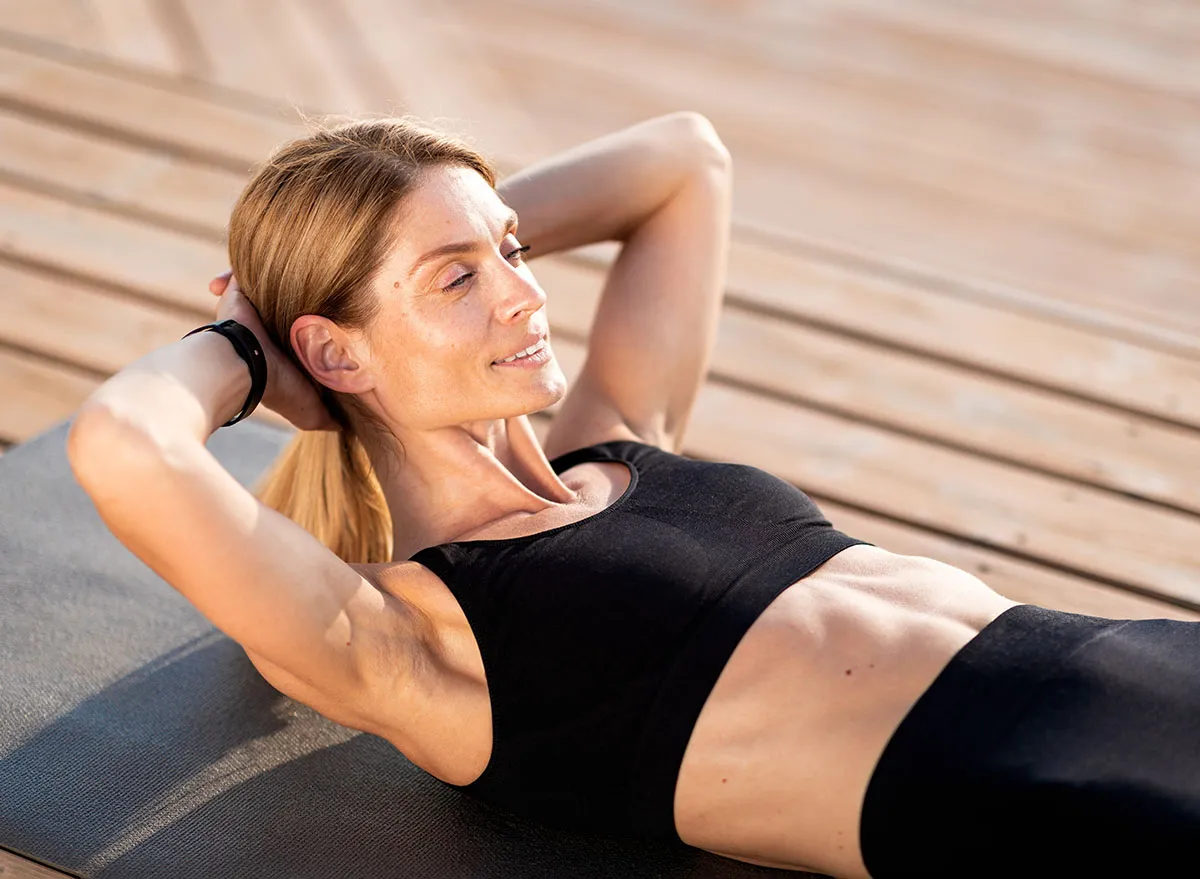
In order to build functional core strength after 50, it’s essential to prioritize specific muscle groups that contribute to overall support and stability.
“The transverse abdominis is essential for stabilizing the pelvis and spine, while the multifidus plays a crucial role in spinal alignment and stability,” Bertram tells us. “The rectus abdominis, commonly known for creating the ‘six-pack,’ is involved in overall core function. Additionally, the obliques are vital for rotational movement and lateral stability. Lastly, strengthening the pelvic floor muscles is important for core stability and can improve overall health and function, particularly in maintaining continence.”
Below, Bertram offers three morning moves that can help boost core strength more efficiently than planks. These exercises offer a safe yet effective way to strengthen the essential muscles in your core.
Bird-Dog
“The bird-dog involves starting on all fours and extending one arm and the opposite leg while engaging the core, which enhances stability and activates multiple core muscles,” Bertram says.
- Start on all fours.
- Extend your left arm and right leg, keeping your core braced.
- Hold for a moment before returning to the start position.
- Switch sides, continuing to alternate.
Dead Bug
“The dead bug is performed lying on the back with arms extended and knees bent, lowering one arm and the opposite leg without arching the back, promoting core control and stability without straining the back,” Bertram points out.
- Lie face-up on the mattress with your arms extended toward the sky and knees lifted and bent to 90 degrees.
- Press your lower back into the mattress as you gradually lower your left arm and extend your right leg.
- Return to the center.
- Then, lower your right arm and left leg.
- Continue to alternate.
Seated Leg Lifts
“Seated leg lifts entail sitting on a sturdy chair and lifting one leg off the ground while engaging the core, making it easier on the joints while effectively strengthening the abdominal muscles,” Bertram says.
- Begin seated at the edge of your chair with your legs straight out. Hold onto the sides of the chair.
- Activate your abs as you lift both legs and bring your knees toward your chest.
- Hold for 2 seconds at the top, making sure not to round your back.
- Slowly lower.
Alexa Mellardo

Fitness trackers seem to be everywhere — from smartwatches and rings to devices you clip to your clothes. But if you’re not a “gym person,” you might wonder whether they’re worth it.
Advertisement
Cleveland Clinic is a non-profit academic medical center. Advertising on our site helps support our mission. We do not endorse non-Cleveland Clinic products or services. Policy
The short answer? They can be helpful tools for many people, but they’re not magic.
“Fitness trackers give you information about your body and your activity,” says certified personal trainer Curt Fischer, CPT. “What really matters is how you use that information to stay consistent and keep moving.”
Fischer shares advice about what to know when choosing and using a fitness tracker.
What are fitness trackers?
Fitness trackers are devices that monitor your physical activity and certain body metrics throughout the day, and even overnight. Depending on your model, they may have features like:
- Step logging
- Distance tracking
- Calorie burn estimates
- Heart rate and heart rhythm information
- Blood oxygen levels
- Minutes of exercise
- Period tracking
- Medication logging
- Noise monitoring
- Fall detection
- Sleep quality
But not every metric is equally reliable.
Some measurements — like heart rate — tend to be fairly accurate as long as you’re wearing the device properly. Others, like body composition estimates, may be less precise.
“A lot of those advanced measurements are more of an estimate,” Fischer notes. “They can be off, so it’s important not to rely on them as exact numbers.”
Benefits of fitness trackers
Fitness trackers aren’t just for athletes or gym regulars. They can offer practical benefits for just about anyone. Let’s take a look at what you can learn about your health by using one regularly.
Awareness
Perhaps one of the biggest advantages fitness trackers can offer is that they can help you understand your body better.
“You can learn a lot about yourself and your habits,” Fischer says. “Over time, you start to recognize your heart rate, your patterns and how your body responds to activity.”
That awareness can help you make more informed choices about your health and daily habits.
Motivation
Most trackers are designed to encourage movement, whether that’s through step counts, activity rings or reminders to stand up. Even small nudges from your tracker can help you maintain healthy habits.
Likewise, features like notifications when you reach a certain goal or opportunities to share your activity with friends can help you celebrate a job well done.
Feedback
Instead of guessing how hard you’re working, a tracker can help you gain insight in real time.
Heart rate monitoring, for example, can help you gauge your exercise intensity. The American Heart Association, among other groups, encourages adults to get at least 150 minutes of moderate intensity exercise per week, or 75 minutes of vigorous exercise.
With a fitness tracker, your heart rate is at your fingertips (or on your wrist, as the case may be). So, you can know if you’re working at the proper intensity.
“If you can see your heart rate during activity, you know whether you’re in that moderate intensity range, where you’re really getting benefits,” Fischer explains.
Safety and peace of mind
Some devices include features like fall detection, emergency alerts or GPS tracking. While not always perfect, these tools can offer reassurance. And they can be especially helpful for older adults or people with certain health concerns.
“There are features that can alert others if something happens,” Fischer shares. “That peace of mind can be valuable for a lot of people.”
Tracking progress
Seeing your data over time — whether it’s daily activity or heart rate trends — can help you spot improvements.
“If your heart rate comes down over time with the same activity, that’s a sign you’re getting fitter,” Fischer illustrates.
That kind of feedback can reinforce healthy habits and give you a sense of accomplishment.
Choosing the best fitness tracker for your needs
The market for fitness trackers is huge. Costs vary wildly, as do features. So, choosing the best fitness tracker for your needs can take some research and forethought.
Here are a few things to consider:
- Your main goal: Are you focused on tracking general activity, heart rate, sleep or something more advanced, like GPS for outdoor workouts?
- Ease of use: Some devices are simple and straightforward. Others come with steeper learning curves. If you prefer something basic, a simpler model may be a better fit. If it’s too complicated to use regularly, you’re less likely to benefit from it.
- Form factor: If you already have a favorite watch or bracelet, wearing a clip-on or ring-style tracker may be better for you. On the other hand, rings can pose a safety risk for some jobs. So, what works for you may be different from what works for other people.
- Compatibility: Most devices will send data to an app on your smartphone. And that technology may be brand-specific. Make sure your tracker will play nicely with your tech.
- Battery life: Fitness trackers need to be charged — some more than others. Consider how you’ll use your tracker to determine how long you need the batter to last.
- Accuracy: Heart rate tracking with a fitness device is generally reliable. Other features may vary. If absolute accuracy is important, focus on devices known for strong performance in the areas you care about.
- Cost: Prices can vary widely. Basic models may cost less than $50, while high-end devices can cost hundreds of dollars. And the upfront price may not be the whole story. “A lot of these devices come with subscriptions or added features that cost extra,” Fischer says.
- Lifestyle fit: Think about how you’ll actually use it day to day. If you won’t wear a watch to bed, for example, a sleep-tracking feature isn’t going to do you much good.
Fitness trackers can be useful tools — but they’re just that: tools.
“They don’t improve your health on their own,” Fischer states. “What matters is that you wear them, review your stats and stay active.”
In other words, the best fitness tracker is the one you’ll use (and keep charged). Using it regularly can help you move more, learn more about your body and stick with habits that support your health.

WVDNR wildlife specialist named West Virginia Wildlife Manager of the Year

UW track breaks 4x100m relay school record

Morgan Stanley Low-Fee Bitcoin ETF Sparks Fee War Across Issuers, Analyst Says

Financial planner debunks common money myths for Financial Literacy Month

Surprising study finds this simple seated exercise reduces glucose spikes by 50% – here’s how

Florida High School Football Rankings: Top 25 teams – Oct. 21

How old is Bo Nix? What to know about Oregon quarterback ahead of 2024 NFL Draft

Cleary's 21 help Le Moyne down Central Connecticut State 69-64 in OT

99th annual Pony Swim held in Virginia

Indiana Members Credit Union announced as new anchor tenant at Bottleworks District

Video: How Trump’s Advisers Felt About Going to War With Iran

Unearthed clip exposes shocking claim by Newsom’s wife about inmates at violent California prison

Gaza journalists mourn Al Jazeera’s Wishah, killed by Israel

Exclusive: Trump weighs pulling some US troops from Europe amid NATO strains, official says

Video: The Fragile Cease-Fire in Iran
-

 Atlanta, GA5 days ago
1 teenage girl killed, another injured in shooting at Piedmont Park, police say
-

 Education1 week ago
Video: We Put Dyson’s $600 Vacuum to the Test
-

 Movie Reviews1 week ago
Vaazha 2 first half review: Hashir anchors a lively, chaos-filled teen tale
-

 Georgia2 days ago
Georgia House Special Runoff Election 2026 Live Results
-

 Pennsylvania3 days ago
Parents charged after toddler injured by wolf at Pennsylvania zoo
-
 Milwaukee, WI3 days ago
Potawatomi Casino Hotel evacuated after fire breaks out in rooftop HVAC system
-

 Education1 week ago
Video: YouTube’s C.E.O. on the Rise of Video and the Decline of Reading
-
 Entertainment1 week ago
Inside Ye’s first comeback show at SoFi Stadium