Fitness
Move More, Live Healthier Lives: Special Olympics Health Messengers and Coaches Inspiring Their Communities to Get Moving

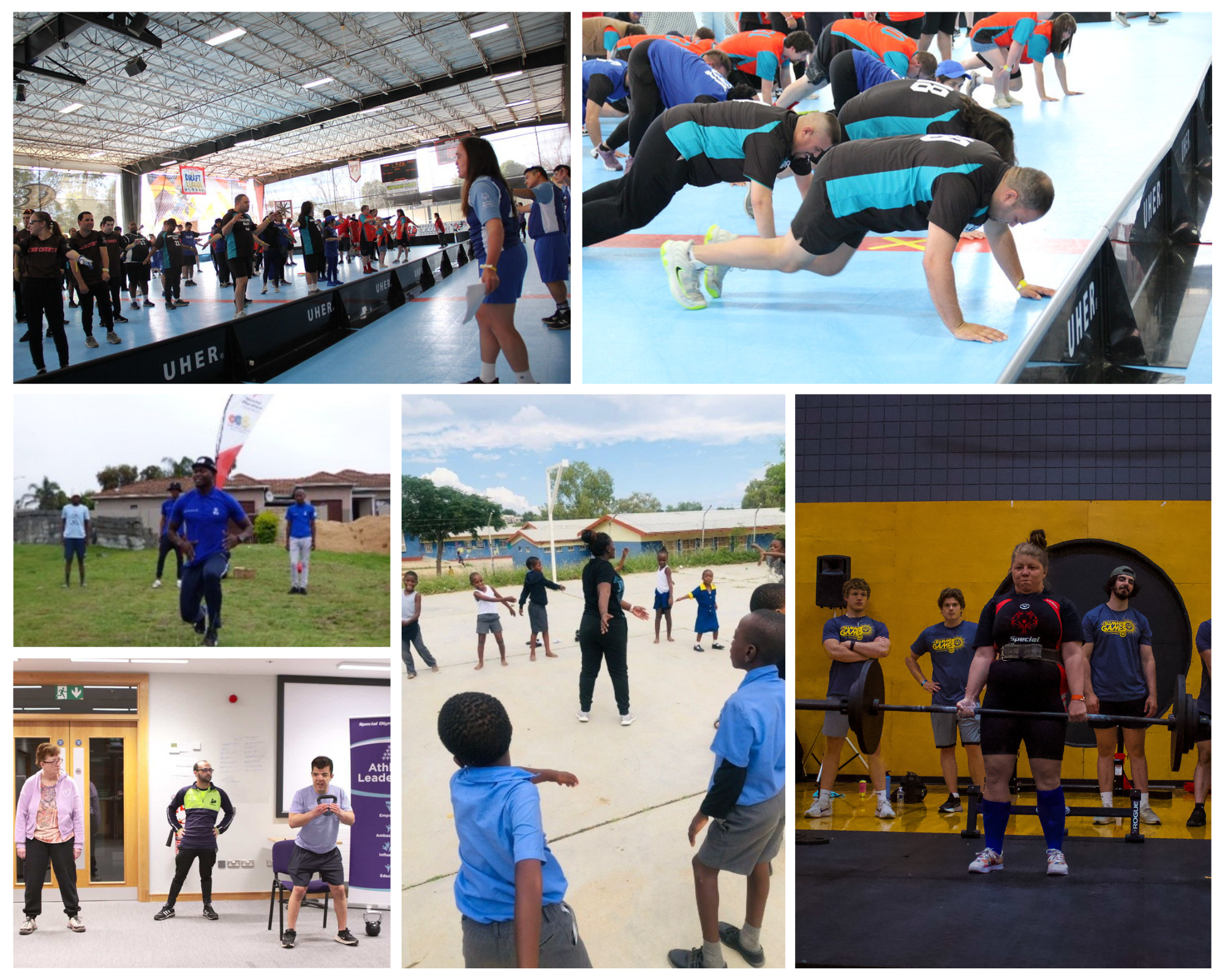
Fitness is a key aspect of Special Olympics’ mission. Special Olympics Fitness comprises three components that focus on healthy lifestyle behaviors: physical activity, nutrition, and hydration. When Special Olympics athletes practice regular physical activity, eat healthy, and stay hydrated, they improve their health, confidence, and quality of life.
According to Special Olympics Fitness 2024 Annual Report, 74% of athletes report improved confidence in doing physical activity after participating in Special Olympics fitness programming. This focus on fitness extends beyond individual athletes and into entire communities. Across the globe, Special Olympics Athlete Leaders and coaches are inspiring others to be more active daily. They are dedicated to making fitness more inclusive, leading education and fitness activities, and empowering their fellow athletes, family members, and other supporters of the Special Olympics movement to live healthy lifestyles.
This emphasis on movement is celebrated globally on World Day for Physical Activity, observed annually on 6 April, which promotes physical activity and encourages people of all abilities to move more every day. This World Day for Physical Activity, we’re highlighting Athlete Leaders and a coach who have taken on a variety of leadership roles to empower athletes to stay active year-round. Get to know them below!
Ayoub Deboub – Special Olympics Ireland

Ayoub Deboub is an athlete, football and Special Olympics Young Athletes coach, Certified Personal Trainer, Special Olympics International Fitness Advisory Committee member, and advocate for people with intellectual and developmental disabilities (IDD). He is passionate about making fitness inclusive for everyone.
Having grown up with a disability and gone through multiple surgeries, Ayoub understands first-hand the challenges and barriers people with IDD face when it comes to physical activity. These experiences have shaped his belief that sport isn’t just about winning; it’s about building skills, confidence, and empowering every athlete to reach their full potential.
Reflecting on these experiences, Ayoub said, “Throughout the years, I’ve worked in schools and centres to create opportunities for people of all abilities. I hosted a fitness workshop for the Eastern Region in Special Olympics Ireland, focusing on breaking barriers for physical activity by introducing simple, adapted, and enjoyable exercises. There were team-building exercises and stations with different workouts for the athletes. The energy and engagement throughout the session were incredible, with many stepping outside their comfort zones.
By the end, participants felt more empowered and motivated to stay active in their daily lives. I believe the workshop made a real impact by showing that disability should never be a limitation to leading an active and healthy lifestyle.”
To Ayoub, fitness means empowerment, inclusion, and personal growth.
Krystal Johnson – Special Olympics Southern California

Krystal Johnson has been an athlete with Special Olympics Southern California for 25 years. She is a multi-sport athlete competing in tennis, floorball, bowling, and athletics. As a Fitness Captain, Krystal supports her teammates in maintaining their health on and off the field. Fitness Captains are athletes on a sports team who lead the team in activities related to fitness and a healthy lifestyle. Krystal uses her leadership and communication skills to empower athletes to be healthy and fit.
When asked about why she wanted to become a Fitness Captain, Krystal shared, “I enjoy being a Fitness Captain leading warmups and cooldowns with my fellow teammates. I want to help us all get ready for a good day at practice. I want to help promote fitness to my teammates by being an example. They see me working with the coaches and this is something that they can learn to become part of.”
Banele Makhonco – Special Olympics South Africa

Banele Makhonco is a Special Olympics South Africa athlete, coach, and Athlete Input Council member based in the Eastern Cape Province. He has become a true champion in health and fitness.
For Banele, fitness goes beyond staying healthy; it’s become a way for him to connect with others in his community. In addition to leading boot camp fitness activities in his community, Banele also runs inclusive training sessions for people of all abilities, helping each person reach their true potential.
Banele explained, “I help others with routines, training strategies, and training plans. I also assist other colleagues and the local gym. Most importantly, I support my former school with fitness sessions and assist selected athletes when they go to Provincial or National Games.”
Banele is also passionate about teaching others about the importance of nutrition, and that to be a great athlete, you must be a healthy athlete. His hope this World Day for Physical Activity is that everyone can “understand that health and fitness is a way of life. It is important to keep fit and live healthy because you can live a longer life without suffering from petty illnesses.”
Susan David – Special Olympics Namibia (Coach)

Susan David has been a Special Olympics Namibia coach for 27 years. Her journey into fitness and health was shaped not only by her passion, but by the athletes she coached.
When Susan first started fitness training, she shared that she “was simply a coach who gave instructions to athletes. I guided them on what to do, but I was not fully practicing what I was teaching. Over time, the athletes began to influence me in a powerful way. Their dedication and energy rubbed off on me, and I became more interested in fitness myself.”
Susan found herself inspired by the dedication and energy of the athletes, which led her to follow what she loved.
“I started doing what I preached,” Susan shared. “One athlete who lives close to my house, a [Special Olympics] Health Messenger, played a big role in my journey. He would remind me about my running schedule and encourage me to stay consistent.Today, I love running and continuously work towards improving my fitness.”
Today, Susan continues to lead fitness sessions with the support of Fitness Captains and Health Messengers in schools and communities.
Kayla Cornell – Special Olympics Michigan

Kayla Cornell is a Health Messenger, athlete, and serves on the Special Olympics Fitness Team’s Athlete App Advisory Committee. One way Kayla motivates her fellow athletes and herself to stay active is by using the Special Olympics Fitness App.
The Special Olympics Fitness App is a free, inclusive fitness tool designed to help athletes with IDD stay active, build healthy habits, and feel empowered in their wellness journey. The app features fun challenges and helps you track your workouts, nutrition, sleep, and mental wellness.
When asked about her favorite features of the app, Kayla mentioned: “What really sets the experience apart for me is the resource section. I use a ton of the resources available there to stay informed and keep my routine fresh. Whether it’s looking up new exercise techniques or following health tips, having all that information in one place makes staying healthy feel much more manageable.”
The app also provides healthy tips to stay motivated and lets users share their progress with friends. “We talk a lot about how the app makes fitness fun and less stressful, and by working together from different places, we can show others that you don’t have to be in the same room to stay active,” Kayla added.
These stories remind us of the importance of being active year-round, and how this can promote well-being among athletes, families, and community members.
Interested in learning more? Download the free Special Olympics Fitness App on the Apple or Google Play stores. The app features health behavior tracking, goal setting, fitness challenges, and resources, including being able to do Fit 5 exercise videos right from your phone!

Continue Reading

RICHMOND, Va. (WRIC) — 8News got a visit from two special guests Friday to learn about the benefits of Pilates and try out some beginner moves.
8News anchors Autumn Childress and Delaney Hall were joined by Laura Mae Harper and Angie Madison with Point and Flex Pilates. The studio, which opened on Sept. 3 last year, offers a variety of classes, ranging from beginner to intermediate and advanced.
“We went through years of teaching at other places and developed this beautiful studio for them and this community, and we’re super excited about it,” Harper said.
For more information, visit Point and Flex Pilates.

Like every piece of gear you wear on your body day in and day out, fitness trackers are incredibly personal. The right tracker for you should be comfortable, accurate, and tailored to your lifestyle, including your preferred workouts and health goals. Do you bike, row, or strength train? Do you run on trails for hours at a time, or do you just want a reminder to stand up every hour? Do you want to wear it on your wrist or your finger, or tuck it into your sports bra?
No matter what your needs are, there’s never been a better time to find a powerful, sophisticated tool to help optimize your workouts or jump-start your routine. We test dozens of fitness trackers every year while running, climbing, hiking, or just doing workout videos on our iPads at night, to bring you these picks.
Our top choice for most people is the Garmin Vivoactive 6 ($300), which works well with Android and iOS, but we also vouch for the latest Oura Ring 5 ($399) and the budget-friendly Google Fitbit Air ($100). For more wearables, check out our guides to the Best Smartwatches, Best Smart Rings, and Best Sleep Trackers.
Jump To
Best Fitness Tracker Overall
Garmin makes some of the most accurate fitness trackers on the market, and the Vivoactive 6 is the best midrange option for most people. It strikes a solid balance between smartwatch features and fitness tracking, with support for both iPhone and Android users.
Why WIRED recommends: The Vivoactive 6 is accurate, comfortable, and packed with useful wellness features without feeling overwhelming. It uses Garmin’s proprietary algorithms to power features like Morning Report and Body Battery, which provide daily insights into your sleep, recovery, and readiness. It also has built-in satellite connectivity and GPS, so you can track outdoor workouts without bringing your phone along. There’s also incident detection, which alerts emergency contacts if it detects a serious fall.
Garmin’s biggest advantage remains its free Connect platform, which enables health and fitness tracking without requiring a subscription. The company also continues to add new software features through regular updates without putting them behind a paywall.
The trade-offs: Garmin launched Connect+, a $70-per-year subscription with extras like live tracking and access to Garmin’s AI-powered Active Intelligence. Former editor Adrienne So doesn’t think most people need it, but it’s worth noting if you’re looking for a completely subscription-free experience. The Vivoactive 6 may also feel like overkill for casual users who only want basic activity and sleep tracking.
Fitness
Why this unexpected exercise is most effective for building arm muscle in your 50s – and how to do it properly

When it comes to building strong, defined arms, traditional fitness advice will usually point you toward endless sets of bicep curls and tricep extensions. But according to Dr Stacy Sims, a leading women’s exercise physiologist specialising in perimenopause and menopause, isolation movements like these aren’t necessarily the most effective. Instead, she advocates for one functional compound movement: the farmer’s carry.
Speaking on podcast A Life of Greatness, when host Sarah Grynberg asks how to get arm muscles like Dr Sims, the 51-year-old explained: ‘In order to get shoulders like this, heavy farmer’s carries. I’ve been travelling so much this year, and I haven’t been in the gym being consistent with all the push presses and Olympic lifts that I love to do, but what I have been consistent in doing is heavy farmer’s carries.
‘It’s good for grip strength, learning how to walk properly, core strength, shoulders – so if there’s one move everyone should do, it’s heavy farmer’s carries.’
The magic of the move lies in its ability to engage your biceps, triceps, shoulders, forearms and hands all at once. And because your arms are working continuously to stabilise heavy loads against gravity, the exercise activates the deep muscle fibres that don’t fire up as efficiently in single-joint arm movements, like bicep curls. Here’s how to do it with proper form, plus how heavy to lift and a workout to try, straight from Dr Sims.
How to do a farmer’s carry
- Standing with feet hip-width apart and weights at the outside of the ankles, hinge your hips back and bend the knees, keeping your back flat.
- Tighten up your lower back and abdominals before reaching down to grab the weights.
- After gripping the weights, begin to stand tall by driving your heels into the ground, maintaining a tight form. Once you reach full standing position, tighten your armpits and make sure your shoulders are pulled back to activate the muscles in the rotator cuff area.
- Finally, begin to take small steps forward, maintaining a strong grip and form. If you’re returning in opposite direction, set the weights down, turn around, and then grab the weights again before walking in the opposite direction.
Set/reps for results: Aim for three sets. Try timing your farmer’s carry for 25 to 30 seconds or go for 10 steps forward and back.
Form tips: Start out with a light weight to ensure you don’t end up leaning too far forward or towards one side. Make sure to keep your back straight for safety. When it comes to moving, small strides will do. They’ll keep you balanced as you increase your weights.
How heavy to lift
As for what “heavy” means to Dr Sims, she says: ‘How many people have heard that you should be able to farmer carry 75% of your body weight for a minute? That is made up from bro science. It’s a good metric but there’s no science behind it. So, a heavy farmer’s carry is you have two very heavy dumbbells by your side and you’re walking back and forth.’
Here’s a weight guide to follow:
- Beginners: 2x 4-6kg
- Intermediate: 2x 8-12kg
- Advanced: 2x 12-20kg

Farmer’s carry workout
Dr Sims shares a descending ladder workout to try.
- 500m ski
- 500m heavy farmer’s carry
- 400m ski
- 400m heavy farmer’s carry
- 300m ski
- 300m heavy farmer’s carry
- 200m ski
- 200m heavy farmer’s carry
- 100m ski
- 100m heavy farmer’s carry
‘If you really have anything left in the tank after this workout, you go back up in 100m,’ she adds.

One of our most frequently asked questions here at Women’s Health? How to build muscle and burn fat at the same time. So, we asked superstar trainer Oyinda Okunowo exactly how to do it. In this 4-week plan – created exclusively for Women’s Health COLLECTIVE members – you’ll get the workouts and nutrition guidance needed to help you on your way to better body composition. Tap the link below to unlock 14 days of free access to Oyinda’s plan and start training today.
Get the plan
As Women’s Health UK’s fitness director and a qualified Pilates and yoga instructor, Bridie Wilkins has been passionately reporting on exercise, health and nutrition since the start of her decade-long career in journalism.
After earning a first-class degree in journalism and NCTJ accreditation, she secured her first role at Look Magazine, where she launched the magazine’s health and fitness column, Look Fit, before going on to become Health and Fitness writer at HELLO!
Since, she has written for Stylist, Glamour, Cosmopolitan, Marie Claire, Elle, The Metro, Runner’s World and Red. Today, she oversees all fitness content across Women’s Health online and in print, spearheading leading cross-platform franchises, such as ‘Fit At Any Age’, which showcases the women proving that age is no barrier to exercise.
She has also represented the brand on BBC Radio London, plus various podcasts and Substacks – all with the aim to encourage more women to exercise and show them how. Outside of work, find her trying the latest Pilates studio, testing her VO2 max for fun (TY, Oura), or posting workouts on Instagram.
-

 World12 minutes ago
Trump vows Iran will not charge Strait of Hormuz tolls, but says US might
-
 News35 minutes ago
DOJ memo stokes fear among disability advocates of a return to institutionalization
-

 Los Angeles, Ca2 hours ago
Armed home invasion in L.A.’s Fairfax District leaves resident assaulted
-

 Detroit, MI2 hours ago
Tigers top Chicago White Sox 4-1; Detroit pitcher Troy Melton allows 1 hit in 6 innings
-

 San Francisco, CA2 hours ago
MLB Rumors: Latest Intel on Potential Matt Chapman Trade for San Francisco Giants
-

 Dallas, TX2 hours ago
Dallas’ Fair Park to Get $2.5M Boost From McKesson – Dallas Weekly
-

 Miami, FL3 hours ago
Air quality alert in effect in Miami-Dade and Broward counties: National Weather Service
-

 Boston, MA3 hours ago
Boston Signs Big Blueliner Rylind MacKinnon To One-Year Extension

