Fitness
Is It Possible to Burn 1,000 Calories a Day?


Burning 1,000 calories a day might sound like a lofty goal, but it’s not as far-fetched as it seems. Whether you’re an athlete looking to boost performance or someone looking to shed extra pounds, understanding how calorie burning works is essential for reaching your health and fitness goals. That’s why we spoke with certified personal trainers and fitness experts who explain how you can burn 1,000 calories a day through regular exercise and increased daily activity, making it an achievable goal regardless of your fitness level.
Increasing your daily calorie expenditure can accelerate weight loss, improve cardiovascular health, and boost overall fitness. Additionally, torching more calories can ramp up your metabolism, helping you maintain a healthy weight. However, it’s crucial to approach your calorie-burning goals with a balanced perspective and a well-structured plan. Pushing yourself too hard, not recovering between workouts, and poor nutrition habits can thwart your calorie-burning efforts, potentially leading to injuries and burnout. That’s why health and fitness experts stress the importance of incorporating rest days into your routine and eating a balanced diet rich in essential nutrients.
Now, let’s explore how you can burn 1,000 calories a day, along with practical tips and expert advice on maintaining this goal in the long term.
What are calories, and how is calorie burn measured?

“Calories are units of energy used to measure the energy content of foods,” explains TJ Mentus, CPT, a certified personal trainer at Garage Gym Reviews. “The calories in food give your body the energy it needs to function and perform all the activities needed to stay alive, such as breathing, moving, and circulating blood. The excess is stored as fat when the body consumes more calories than it needs for energy. When caloric consumption is less than the body needs, it burns fat to make up the deficit that does not come from nutrition. A heart rate tracker is the best way to measure caloric burn since calorie burn is correlated with heart rate. This is because the heart rate increases, so does the need for oxygen, which requires more energy.”
Calorie burn is influenced by several factors, such as your Basal Metabolic Rate (BMR), which is the number of calories your body needs to maintain basic physiological functions at rest. According to the National Academy of Sports Medicine, your Total Daily Energy Expenditure (TDEE) includes BMR multiplied by a certain physical activity multiplier based on how much exercise you get a week. Factors like age, weight, gender, and activity level also significantly impact how many calories you burn daily.
Is burning 1,000 calories a day possible?
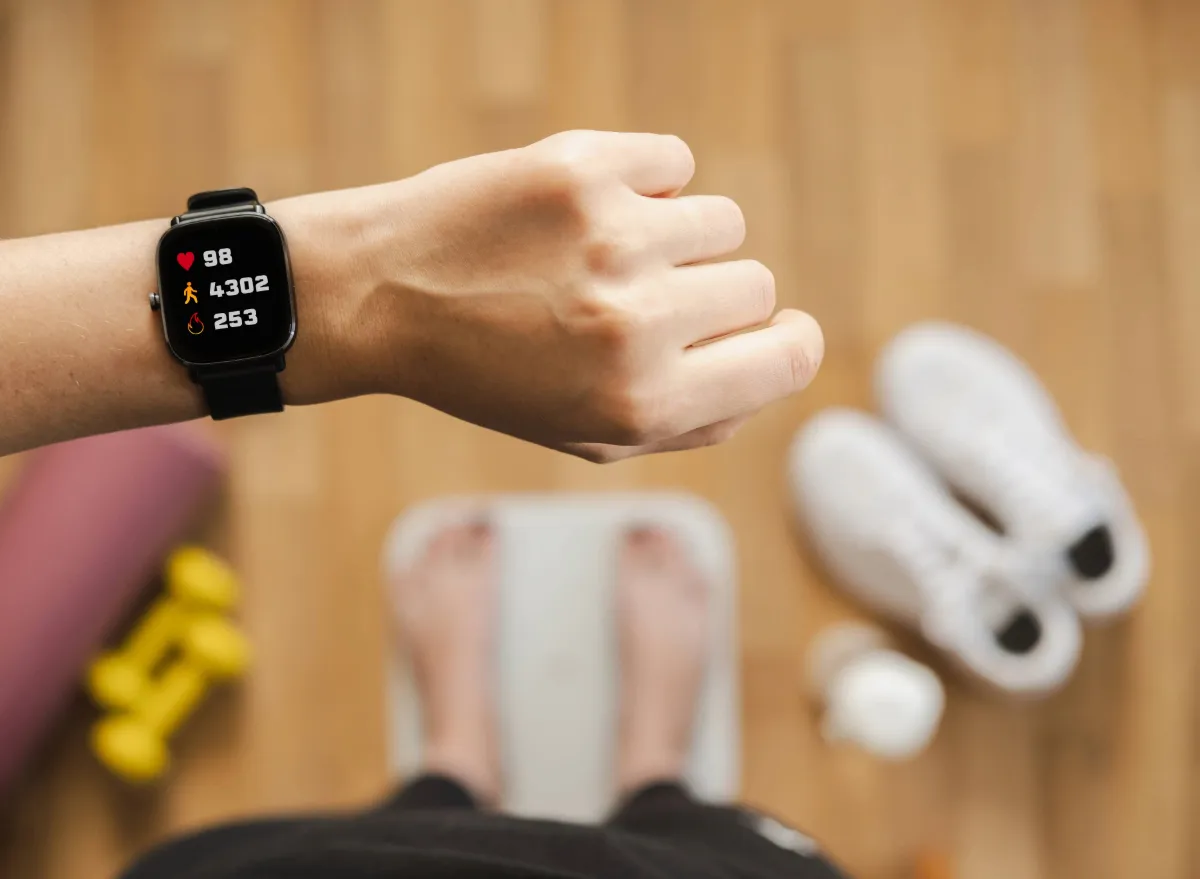
Burning 1,000 calories daily is possible, but the odds of success vary widely depending on your fitness level and body type. Physically active people and those with larger bodies or more muscle mass may find burning 1,000 calories easier than those who are sedentary, smaller in size, or lacking muscle.
“A typical strength workout will burn 300 to 400 calories in one hour on average,” says Mentus. “One hour of running will burn between 600 to 700 calories. Looking at those two typical forms of exercise, you will need to exercise at least two hours a day, which may not be realistic for most people. Unless you’re already in good shape, I would not suggest going right into two hours of working out as you will place yourself at a higher risk of burnout and possible injury.”
How long do you have you have to exercise to burn 1,000 calories?
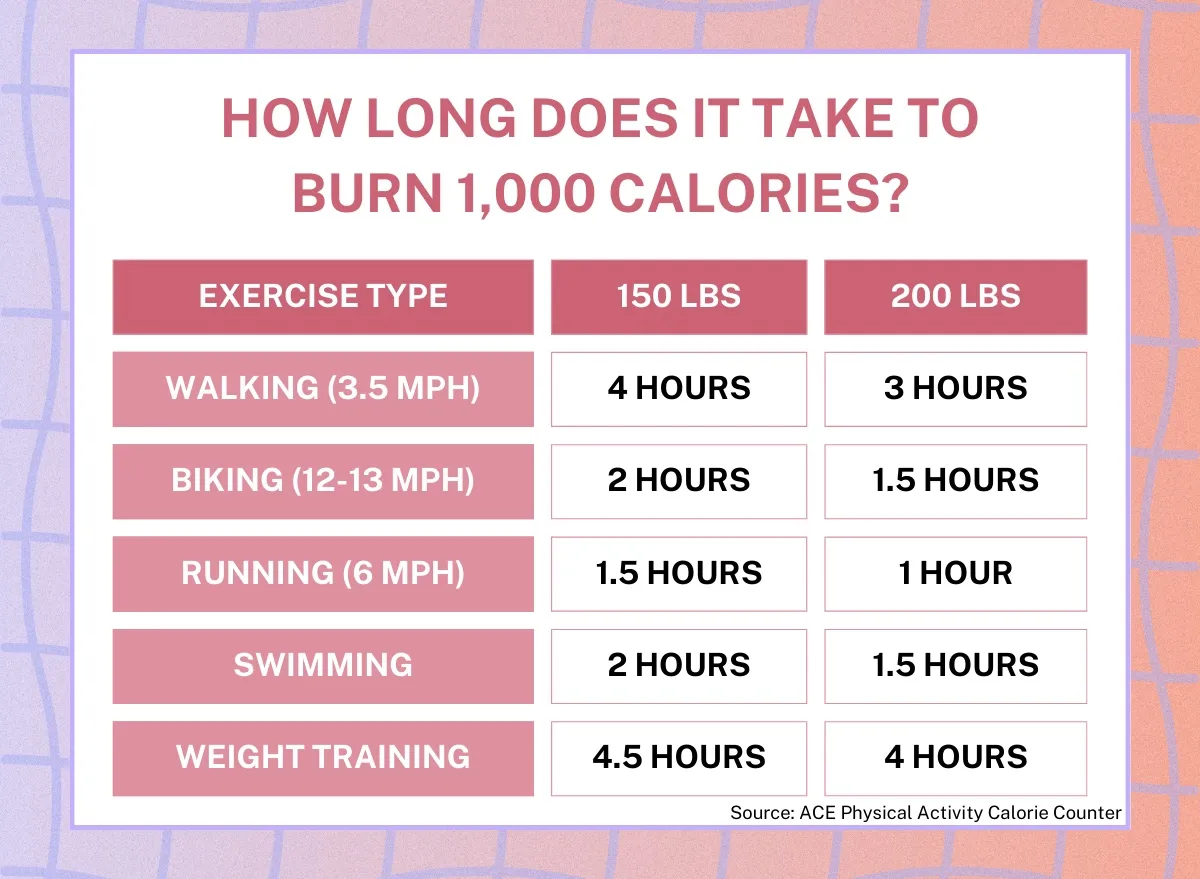
Again, the time required to burn 1,000 calories varies widely based on body type, age, fitness level, and the form of exercise.
“Higher intensity activities generally burn more calories,” says Kyrie Furr, CPT, a certified personal trainer and performance coach with Barbend. “For example, high-intensity interval training (HIIT) workouts can vary widely in intensity, but they typically involve alternating between bursts of high-intensity exercise and periods of rest or lower intensity.”
Furr points out that for many individuals, torching 1,000 calories may require a combination of exercises and physical activity scattered throughout the day rather than one long, intense workout.
Safety and risks of burning 1,000 calories a day:
Burning 1,000 calories a day is an ambitious goal with potential risks. Pushing yourself too hard can lead to overtraining and inadequate recovery time, potentially resulting in injuries, fatigue, and burnout. That’s why balancing intense workouts with proper nutrition, hydration, and rest is essential to continue exercising consistently and burning calories sustainably.
Before starting any new workout routine, speak with a fitness professional or your health care provider to help avoid injury and burnout while staying on track toward your health and fitness goals.

Sign up for our newsletter!



Books are getting Australians into the gym and keeping them there longer, and the benefits of this emerging health trend aren’t just physical – they’re mental too.
Listening to audiobooks and podcasts helped Yvonne Kong, 41, and her husband get back into fitness after becoming parents and lose a combined 50 kilos.
Yvonne Kong, 41, used podcasts to get back into exercise and stay motivated. Yvonne Kong
It also helped them broaden their minds and carve out a bit of “me time” in our busy modern world.
Audiobooks and podcasts have given Aussies the chance to turn exercise into a vehicle for learning, training their minds and bodies simultaneously. Some are even taking their e-readers and paperbacks to the gym (more on that later).
“Listening to a story while working out actually helped me stay motivated and more consistent,” Kong told nine.com.au.
Like many Aussies, she used to dread hitting the treadmill and constantly found herself counting down the minutes until her session was over.
That changed when she hit play on a true-crime podcast during a workout.
Kong got so caught up in the story she forgot about the timer on her treadmill until her workout was over.
“I did an hour treadmill course and actually finished it without noticing,” she said.
Have you got a story? Contact reporter Maddison Skipper at mleach@nine.com.au
Since then, she’s found herself looking forward to exercising because it gives her an hour of dedicated listening time.
Her husband does the same while running; he took up listening to audiobooks because it motivated him to run longer and more often so he could get through the story.
The benefits of reading/listening while exercising
About one in three Aussies now listen to audiobooks when they exercise, according to data from Audible.
More than a third of them exercise for longer because of it, one quarter work out more often, and half experience better mood during exercise.
Data released exclusively to nine.com.au revealed both men and women reported these positive experiences at an almost identical rate, despite often having different workout routines and attitudes towards exercise.
Audiobooks are particularly popular with runners, more than a third of whom say they feel more focused on their run while listening.
Personal trainer Ben Lucas is one of them; he started listening while running to make time pass quickly and train his mind as well as his body.
“You’re out there anyway, so you may as well be learning something valuable while you do it,” he told nine.com.au.
What the experts think
Mindfulness expert Luke McLeod told nine.com.au there has even been some research into how exercise increases blood flow to the brain, which helps information retention.
Lucas devours business and personal development audiobooks like Atomic Habits by James Clear while working out, a trend which has become known as ‘personal development/PD stacking’.
The goal is to “double-up of some type of personal development like listening to an e-book, which works out the mind, while also working out the body,” McLeod said.
‘PD stacking’ is the new health optimisation trend, according to Luke McLeod. Luke McLeod

It’s all about optimising time in our busy world, which is particularly appealing to Aussies who are time-poor; like new parents trying to juggle work and a baby.
“When I’m with [my daughter], I’m trying to be present for her, so I’m not going to be listening to podcasts or anything,” Kong said.
“When I exercise, that’s my time.”
Personal trainer Ben Lucas has been using audiobooks to stay on track with his running. Ben Lucas

McLeod agreed that reading or listening while working out can be a great form of self-care for some Aussies.
The only pitfall is that not every workout is suited to it.
It’s hard to keep up with an audiobook or podcast if you’re trying to count reps while strength training, and there’s no way to read an e-book on a rowing machine.
“I find podcasts and audiobooks work best during longer, slower cardio sessions,” Lucas said.
“Whether it’s an easy run, walk, or long ride, you can relax into the session, tune out a little, and focus on what you’re listening to while still getting the work done.”
He also warned Aussies to stay aware of their surroundings and hazards like traffic, cyclists, other pedestrians, or uneven paths if they listen while exercising outdoors.
McLeod added that stacking habits like exercise and reading isn’t worth it if one interrupts the other.
Road testing reading at the gym
I’ve been in and out of the gym a lot over the last decade, jumping from strength training, to reformer Pilates, and other programs in between.
But my favourite way to exercise is to hop on a treadmill with my Kindle.
I rest it on the console, set a slight incline and a moderate speed and lose myself for an hour. No workout has ever felt faster or easier.
My Kindle fits perfectly into the little divot on the treadmill console meant for a phone or tablet. Maddison Skipper

The pros: Focusing on what I’m reading takes my mind off the clock and get through an hour of cardio without getting bored or losing motivation.
Reading at the gym also helps me stay consistent because it’s one of the few places I can just switch off and focus on my book without interruptions, so I want to keep coming back.
That hour of dedicated reading time has also been great for my mental health because it forces me to slow down and focus on something completely removed from any stress in my own life.
The cons: It did take a few sessions to get used to reading while moving, but raising the brightness on my Kindle and setting it to a larger font really helped.
Those who prefer to listen don’t have to worry about any of that though; just download an audiobook and you’re good to go.
I also invested in a pair of noise-cancelling headphones to muffle the dance music that plays over my gym’s loudspeakers, which made it much easier to focus.
Reading at the gym allows Aussies like me to work on my physical and mental fitness simultaneously. Maddison Skipper

Now the only downside to reading at the gym that I sometimes hit a slump after I finish a really good book because I don’t want to hit the gym again until I find something new to read.
The verdict: It’s not for everyone, but I have found that reading at the gym has been the best way for me to stay motivated and consistent.
I feel good about taking the time to work on both my body and my mind a few times a week, and I’ve been able to check some amazing books off my ‘to be read’ list while working out.
Audiobooks make it even easier for Aussies who want to exercise without the hassle of a physical book or e-reader, or who have different accessibility needs.

RICHMOND, Va. (WRIC) — 8News got a visit from two special guests Friday to learn about the benefits of Pilates and try out some beginner moves.
8News anchors Autumn Childress and Delaney Hall were joined by Laura Mae Harper and Angie Madison with Point and Flex Pilates. The studio, which opened on Sept. 3 last year, offers a variety of classes, ranging from beginner to intermediate and advanced.
“We went through years of teaching at other places and developed this beautiful studio for them and this community, and we’re super excited about it,” Harper said.
For more information, visit Point and Flex Pilates.

Like every piece of gear you wear on your body day in and day out, fitness trackers are incredibly personal. The right tracker for you should be comfortable, accurate, and tailored to your lifestyle, including your preferred workouts and health goals. Do you bike, row, or strength train? Do you run on trails for hours at a time, or do you just want a reminder to stand up every hour? Do you want to wear it on your wrist or your finger, or tuck it into your sports bra?
No matter what your needs are, there’s never been a better time to find a powerful, sophisticated tool to help optimize your workouts or jump-start your routine. We test dozens of fitness trackers every year while running, climbing, hiking, or just doing workout videos on our iPads at night, to bring you these picks.
Our top choice for most people is the Garmin Vivoactive 6 ($300), which works well with Android and iOS, but we also vouch for the latest Oura Ring 5 ($399) and the budget-friendly Google Fitbit Air ($100). For more wearables, check out our guides to the Best Smartwatches, Best Smart Rings, and Best Sleep Trackers.
Jump To
Best Fitness Tracker Overall
Garmin makes some of the most accurate fitness trackers on the market, and the Vivoactive 6 is the best midrange option for most people. It strikes a solid balance between smartwatch features and fitness tracking, with support for both iPhone and Android users.
Why WIRED recommends: The Vivoactive 6 is accurate, comfortable, and packed with useful wellness features without feeling overwhelming. It uses Garmin’s proprietary algorithms to power features like Morning Report and Body Battery, which provide daily insights into your sleep, recovery, and readiness. It also has built-in satellite connectivity and GPS, so you can track outdoor workouts without bringing your phone along. There’s also incident detection, which alerts emergency contacts if it detects a serious fall.
Garmin’s biggest advantage remains its free Connect platform, which enables health and fitness tracking without requiring a subscription. The company also continues to add new software features through regular updates without putting them behind a paywall.
The trade-offs: Garmin launched Connect+, a $70-per-year subscription with extras like live tracking and access to Garmin’s AI-powered Active Intelligence. Former editor Adrienne So doesn’t think most people need it, but it’s worth noting if you’re looking for a completely subscription-free experience. The Vivoactive 6 may also feel like overkill for casual users who only want basic activity and sleep tracking.
-
 Lifestyle25 minutes ago
‘Wait Wait’ for June 20, 2026: With Not My Job guest Caro Claire Burke
-

 Technology33 minutes ago
Sony’s Xperia 1 VIII is still a phone for the fans
-

 World40 minutes ago
Trump-backed ‘El Tigre’ looks to crush cartels, end Colombia’s socialist era in pivotal election
-

 Politics43 minutes ago
Obama Center visitors say project symbolic of ‘Black excellence,’ claim scandal-free legacy while Trump ripped
-

 Health48 minutes ago
Poison centers link growing Benadryl abuse among teens to dangerous social media trends
-

 Sports55 minutes ago
Bryce Harper hits for cycle, Kyle Schwarber blasts three homers in Phillies blowout win over Mets
-

 Technology57 minutes ago
Meta offers paid training for AI data center jobs
-
 Business1 hour ago
‘I got crushed’: AI giants are funding ad wars in races across the country

