Connect with us

Fitness

A Great Athlete is a Healthy Athlete: Muaz’s Journey to Becoming a Fitness Captain

Published

on

A Great Athlete is a Healthy Athlete: Muaz’s Journey to Becoming a Fitness Captain
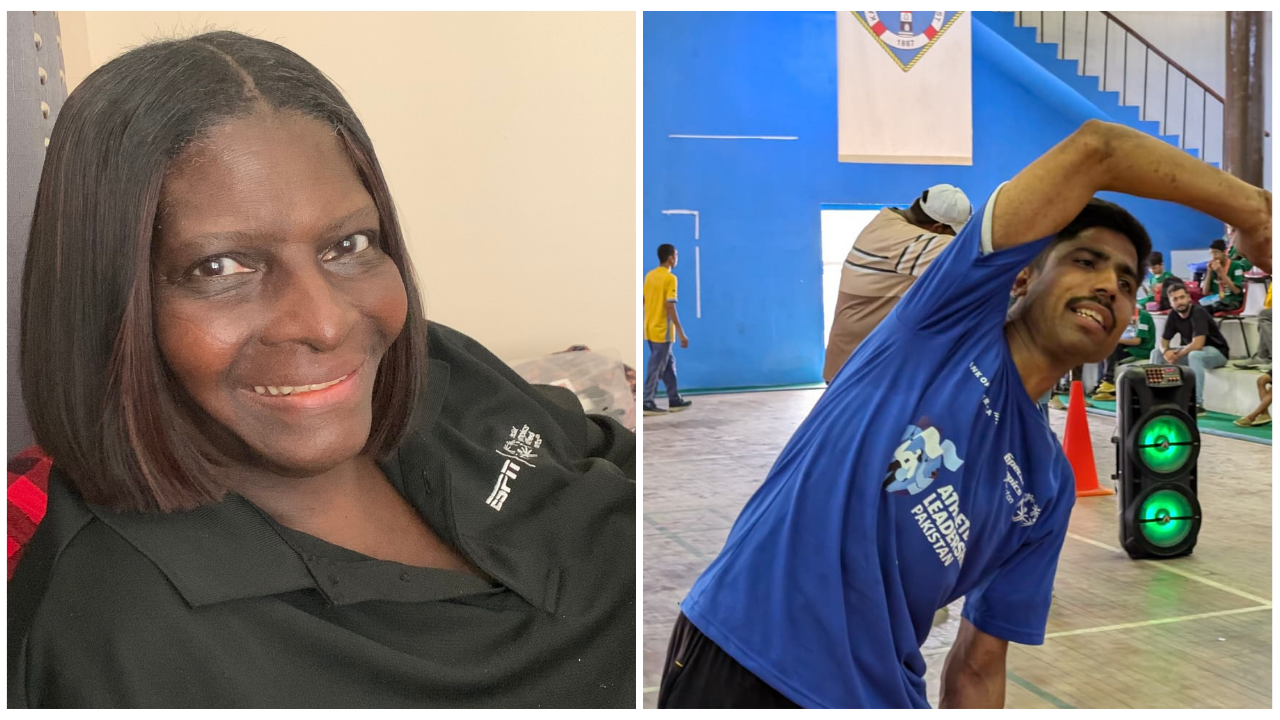
Renee Dease (left) and Muaz Khan (right).

Fitness Captains as of 2025

All 7 Regions

Have Health fitness Captains Representaiton

Advertisement

1,329

Health Messengers added in 2025

2,255

Total Fitness Captains

Advertisement

Every May, Special Olympics celebrates Fitness and Sport Month, recognizing the power of sport to support athlete health, fitness, and performance. To celebrate, I met with Special Olympics Pakistan athlete and Fitness Captain Muaz Khan to learn about his journey to becoming a Fitness Captain.

Muaz has been an athlete for six years and a Fitness Captain for two years. Fitness Captains are athlete leaders who promote health, fitness, and healthy lifestyle habits within their Special Olympics teams and communities. They are trained to lead their sports teams in fitness activities, including warm-ups, cool downs, and exercises that enhance overall health and sports performance.

Today Fitness Captains are represented across all seven Special Olympics Regions in 80 Programs worldwide. In 2025 alone, a record-breaking 1,329 new Fitness Captains were trained, bringing the global total to 2,255.

Driven by a passion for fitness, Muaz became a Fitness Captain and today inspires his fellow athletes to practice healthy habits every day. After completing the Fitness Captain training two years ago, he embraced the idea that a great athlete is a healthy athlete and gained skills to lead safe and effective warm-ups and cool-downs while teaching his teammates about habits that improve fitness and sports performance.

With this new knowledge in hand, Muaz became a peer-leader for his teammates on and off the field. During practice and at Games, Muaz conducts warm-ups and cool-downs. He understands how important both are for sports performance. “Warm-ups are important because it prepares athletes to start being active before playing any match. Athletes get tired after playing, so cool-downs help them relax their bodies.”

Advertisement

Muaz also shares health tips during training sessions, often times emphasizing how healthy eating habits are crucial to both health and fitness and referencing Special Olympics Fit 5 Guide. “I tell my teammates that they should drink eight glasses of water each day and have three home-cooked, healthy meals.”

Implementing Fitness through Sport within practice and competition expands the reach of health and fitness programming through a focus on three connected outcomes:

  1. Performance: Including endurance, speed, strength, and flexibility
  2. Health: Including energy, healthy weight, and fewer injuries
  3. Wellbeing: Including reduced risk of disease and improved quality of life
A group of three people standing in the middle of a gym perform fitness exercises in front of a group of people sitting on bleachers.
Muaz (middle) and fellow Fitness Captains lead morning exercises.

In addition to teaching his teammates healthy habits, Muaz also inspires his classmates to stay active daily. Every day at school, Muaz leads fitness activities and exercises he learned from the Fit 5 Guide.

“My favorite part about being a Fitness Captain is the Fit 5 activity. I conduct the Fit 5 activity every morning in front of my entire school.”

Muaz Khan, Special Olympics Fitness Captain and Athlete

Advertisement

At the end of our conversation, Muaz shared advice to athletes considering becoming a Fitness Captain, “My life has changed a lot since becoming a Fitness Captain. I learned about the importance of exercise and so I do it very often, which has helped me become healthier. Once you become a Fitness Captain, your life will also change.”

Interested in learning more about Fitness Captains? Check out the Fitness Captain webpage and email Gwendolyn Apgar (gapgar@specialolympics.org) for more information on how to offer a training.

Continue Reading
Click to comment

Leave a Reply

Your email address will not be published. Required fields are marked *

This site uses Akismet to reduce spam. Learn how your comment data is processed.

Fitness

This equipment-free workout is designed to be done at your desk to build strength and muscle

Published

on

This equipment-free workout is designed to be done at your desk to build strength and muscle

If you were interested in joining the military, there are some fitness tests you would need to pass in order to qualify.

But not all military roles are physical. In fact, many military workers are desk-based and experience the same challenges as regular office workers,

Advertisement
Continue Reading

Fitness

At 55, Zoe Ball relies on NEAT exercise to stay fit without the gym – here’s how to make it work

Published

on

At 55, Zoe Ball relies on NEAT exercise to stay fit without the gym – here’s how to make it work

If the thought of gruelling gym sessions leaves you cold, you’re in good company. Almost eight years on from her Sport Relief cycling challenge, where she cycled over 350 miles from Blackpool to Brighton, beloved radio broadcaster Zoe Ball has turned to a more sustainable, low-intensity form of movement: NEAT exercise.

Standing for Non-Exercise Activity Thermogenesis, NEAT exercise refers to any movement you do that isn’t planned exercise, like walking or doing chores. For Zoe, it means gardening. ‘We cannot underestimate the power of gardening and how good it is for your health,’ she said on a recent episode of Dig It, the podcast she co-hosts alongside radio presenter Jo Whiley. ‘What I love about it the most is it doesn’t matter if I’m out there for two, three minutes, half an hour. The world is quite overwhelming at the moment, and when the kids drive me mad or anything like that I just get out there – whether that’s to tidy up, sweep up or just sit on a bench with a cup of coffee and watch the birds and all the insects.’

BBC / Joseph Sinclair//BBC

Back in lockdown, she even referred to gardening as ‘life-changing’ in an interview with the Radio Times, explaining that 15 minutes every evening had provided some much-needed solace.

While Zoe waxes lyrical about the mental benefits, the physical pros are unparalleled. Non-intentional exercise makes up significantly more of your TDEE (Total Daily Energy Expenditure – how many calories you burn across each day), compared to the time you spend exercising in a gym or doing a planned workout. NEAT makes up around 50%, while a planned workout typically counts for roughly 10%. The more you fit movement into your day, the more energy you expend.

Advertisement

‘NEAT exercise is a great way to control and maintain a healthy weight,’ explains GP and trainer Dr Folusha Oluwajana. ‘Increasing your NEAT increases your metabolic rate as you will burn more calories throughout the day. People with higher NEAT levels are often more successful at achieving and maintaining weight loss.’

As for gardening in particular, research published in the Journal of Physical Activity and Health found that tasks such as digging, raking and weeding meet the criteria for moderate-intensity exercise and count toward weekly physical activity recommendations. Other research has linked regular gardening to lower BMI, improved wellbeing, and reduced risk of cardiovascular disease.

Need some inspo? Check out Zoe’s recent garden transformation.

Examples of NEAT

  • Washing the car
  • Using a standing desk
  • Walking upstairs over using the lift or escalator
  • Dog walking
  • Carrying grocery shopping
  • Playing with children or pets
  • Walking instead of taking public or private transport
Headshot of Bridie Wilkins

As Women’s Health UK’s fitness director and a qualified Pilates and yoga instructor, Bridie Wilkins has been passionately reporting on exercise, health and nutrition since the start of her decade-long career in journalism.

After earning a first-class degree in journalism and NCTJ accreditation, she secured her first role at Look Magazine, where she launched the magazine’s health and fitness column, Look Fit, before going on to become Health and Fitness writer at HELLO!

Advertisement

Since, she has written for Stylist, Glamour, Cosmopolitan, Marie Claire, Elle, The Metro, Runner’s World and Red. Today, she oversees all fitness content across Women’s Health online and in print, spearheading leading cross-platform franchises, such as ‘Fit At Any Age’, which showcases the women proving that age is no barrier to exercise.

She has also represented the brand on BBC Radio London, plus various podcasts and Substacks – all with the aim to encourage more women to exercise and show them how. Outside of work, find her trying the latest Pilates studio, testing her VO2 max for fun (TY, Oura), or posting workouts on Instagram.   

Continue Reading

Fitness

Scientists Say Most Adults Need 4 Times More Exercise Than Recommended for Major Heart Benefits

Published

on

Scientists Say Most Adults Need 4 Times More Exercise Than Recommended for Major Heart Benefits
A large observational study suggests adults may need far more weekly exercise than current guidelines recommend to significantly lower the risk of heart attacks and stroke. Credit: Stock

Substantial heart health benefits may require 560-610 minutes of weekly exercise, with lower fitness individuals needing even more activity to achieve similar protection.

Adults may need far more exercise than current public health guidelines recommend to significantly lower their risk of heart attack and stroke, according to an observational study published online in the British Journal of Sports Medicine.

Researchers found that adults needed between 560 and 610 minutes of moderate to vigorous physical activity each week for a substantial reduction in cardiovascular risk. That is roughly 3 to 4 times higher than the current recommendation of at least 150 minutes weekly of activities such as brisk walking, running, or cycling.

The findings also suggest that people with lower fitness levels need slightly more exercise than highly fit individuals to achieve the same cardiovascular benefits.

Researchers said current exercise recommendations may need to move away from a one-size-fits-all approach and instead provide personalized goals based on a person’s fitness level.

Advertisement

VO2 Max and Cardiovascular Fitness Explained

Cardiorespiratory fitness differs widely between individuals and is considered a strong indicator of heart health. Researchers noted that low cardiorespiratory fitness is closely linked to a higher risk of heart attacks, strokes, and early death.

One common way to measure fitness is through VO2 max, which reflects the maximum amount of oxygen the body can use during intense exercise. The measurement shows how efficiently the heart, lungs, and muscles work together to deliver and use oxygen.

Researchers from Macao Polytechnic University in China investigated how physical activity levels and cardiorespiratory fitness, measured through VO2 max, influenced cardiovascular disease risk.

UK Biobank Study Tracks Exercise and Heart Events

The study analyzed data from 17,088 participants in the UK Biobank study collected between 2013 and 2015. Participants had an average age of 57, while 56% were women and 96% were white.

Participants wore wrist devices for seven consecutive days to track their normal exercise levels. They also completed a cycling test to estimate VO2 max.

Advertisement

The researchers included additional information such as smoking habits, alcohol use, self reported health and diet, body mass index, resting heart rate, and blood pressure.

Over an average follow-up period of 7.8 years, researchers recorded 1,233 cardiovascular events. These included 874 cases of atrial fibrillation, 156 heart attacks, 111 cases of heart failure, and 92 strokes.

560–610 Minutes Weekly Linked to Stronger Risk Reduction

Adults who met the current guideline of 150 minutes of exercise per week saw a modest 8% to 9% reduction in cardiovascular risk, regardless of fitness level.

However, achieving a more substantial reduction of greater than 30% required between 560 and 610 minutes of moderate to vigorous exercise weekly. Only 12% of participants reached that level of activity.

Lower Fitness Levels Require More Physical Activity

The analysis showed that participants with the lowest fitness levels needed about 30 to 50 additional minutes of exercise each week compared with highly fit individuals to gain similar benefits.

Advertisement

For example, a person with low fitness needed about 370 minutes of moderate to vigorous exercise each week to reduce cardiovascular risk by 20%, compared with 340 minutes for someone with high fitness.

The researchers say, “This finding highlights the steeper challenge faced by deconditioned populations.”

Researchers Call for Personalized Exercise Guidelines

Because the study was observational, the researchers said it cannot prove cause and effect. They also acknowledged that participants may have been healthier and fitter than the general population. Additional limitations included estimating cardiorespiratory fitness rather than directly measuring it and not tracking sedentary behavior or lighter physical activity.

The team said the findings support current exercise guidelines as an effective minimum target for cardiovascular protection. However, they added that more personalized recommendations could help motivated individuals further reduce their heart disease risk.

“Future guidelines may need to differentiate between the minimal moderate to vigorous exercise volume required for a basic safety margin and the substantially higher volumes necessary for optimal cardiovascular risk reduction,” they conclude.

Advertisement

Reference: “Joint non-linear dose–response associations of device-measured physical activity and cardiorespiratory fitness with cardiovascular disease: a cohort and Mendelian randomisation study” by Zhide Liang, Senyao Du, Shiao Zhao, Xianfei Wang, Qiang Yan, Baichao Xu, Sanfan Ng and Ziheng Ning, 19 May 2026, British Journal of Sports Medicine.
DOI: 10.1136/bjsports-2025-111351

Never miss a breakthrough: Join the SciTechDaily newsletter.
Follow us on Google and Google News.

Continue Reading
Advertisement

Trending