Connect with us

Fitness

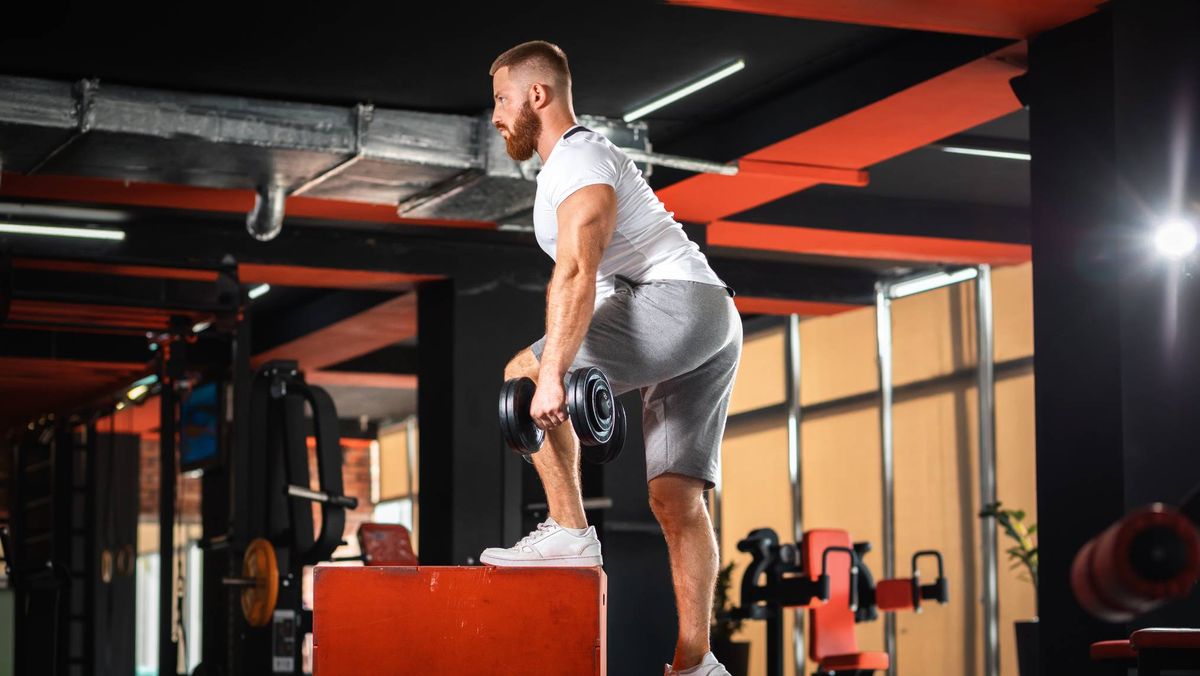
“We naturally lose muscle mass, reaction speed and balance as we age,” says this elite Hollywood coach who’s trained everyone from Margot Robbie and Scarlet Johansson to Richard Madden and Pedro Pascal — but recommends doing step-ups to undo the damage of aging in your glutes, quads and calves

Published

on

“We naturally lose muscle mass, reaction speed and balance as we age,” says this elite Hollywood coach who’s trained everyone from Margot Robbie and Scarlet Johansson to Richard Madden and Pedro Pascal — but recommends doing step-ups to undo the damage of aging in your glutes, quads and calves

There’s a reason why some of the most effective exercises tend to mirror movements in real life. It’s not because personal trainers and coaches lack imagination, but because the body doesn’t care how creative your programming is — it cares whether you can climb a flight of stairs without grabbing the banister, for example, or if you can catch yourself from a stumble.

These are just a few of the benchmarks that matter in later life, and for elite performance coach David Higgins — who has trained everyone from Margot Robbie and Scarlett Johansson to Samuel L. Jackson, David Harbour, Game of Thrones’ Richard Madden and the entire cast of The Batman, among many others — one exercise sits at the top of the list for anyone over 50: the step-up. Here’s why.

Lower-body power matters so much after 50

Continue Reading
Click to comment

Leave a Reply

Your email address will not be published. Required fields are marked *

This site uses Akismet to reduce spam. Learn how your comment data is processed.

Fitness

Erasmus content with Argentina fitness exercise

Published

on

Erasmus content with Argentina fitness exercise

South Africa coach Rassie Erasmus feels Saturday’s tough game against Argentina helped get his injury-hit team back into shape ​to face the All Blacks.

The Springboks edged out a 17-10 win ‌at Vélez Sarsfield over their hosts as they welcomed back a raft of players who had been sidelined but who they hope to have ready for the four-test series against New Zealand, ​which starts in a fortnight.

“We had seven or eight guys who’d played ​almost no minutes over the last six, seven weeks, so I ⁠always thought it was going to be disjointed.

“We just had to get a lot ​of players through some match fitness,” Erasmus said.

One was captain Siya Kolisi, who had ​been suffering from a hamstring injury and went off after 25 minutes with a similar setback, but World Cup-winning locks Lood de Jager and Eben Etzebeth both impressed, and Cobus Reinach was ​back along with Sacha Feinberg-Mngomezulu in the important halfback pairing.

Advertisement

Erasmus said he did ​not feel the match was in any way preparation for the upcoming clash against the All ‌Blacks, but ⁠rather an exercise in getting players match fit.

“I wouldn’t say it’s a good practice, honestly, because Argentina plays a different style (to New Zealand), and it’s very intimidating in the stadium here. Obviously, it wasn’t pretty. Obviously, it wasn’t perfect, but that ​we expected.

“They (Argentina) play a ​very similar style ⁠of physical game as us, and we’ve always struggled to get over them physically. I thought that our defence was good, ​and our discipline was relatively good. Obviously, there are things ​on our ⁠attack which we have to sort out.

“So over the next two weeks, we’ll have to look at our injuries, and then we’ll pick the team that we hope can ⁠try and ​win against New Zealand in the first test ​match,” Erasmus added.

The All Blacks are on an eight-match tour of South Africa. Coach Dave ‌Rennie has named a new starting team for the clash with the Sharks on Tuesday as he continued with his policy of giving all the tour party an outing in the early stages of the tour.

Advertisement

Luke Jacobson will captain the All Blacks for ​the first time. “He is highly respected, has a ⁠great feel for the game and will lead through ​his actions,” Rennie said at the team announcement on ​Sunday.

Hooker Asafo Aumua, loose forward Ethan Blackadder, lock Sam Darry, prop Ollie Norris, halfback Kyle Preston and winger Caleb Clarke, who all came ​off the bench against the Stormers in the tour ​opener on Friday, will start against the Sharks. 

The first test is in ​Johannesburg on August 22.

Reuters

Advertisement
Continue Reading

Fitness

China steps up nationwide fitness campaign to promote public health

Published

on

China steps up nationwide fitness campaign to promote public health

China is accelerating the integration of fitness and healthcare, with community health centers, smart exercise services and professional guidance helping people pursue safer and more scientifically grounded lifestyles.

Driven by national strategies such as Healthy China 2030 and nationwide fitness initiatives, China is expanding public sports facilities, building “15-minute fitness circles” and bringing exercise opportunities closer to communities.

From grassroots leagues and school activities to winter sports and mass-participation events, a nationwide fitness movement is reshaping China’s sporting culture and encouraging people of all ages to embrace healthier lives.

Every morning, 71-year-old Ren Daqing heads to a community clinic near his home in the eastern Chinese city of Nanjing, not for medicine, but for exercise.

Heart disease once made Ren wary of physical activity. Today, he runs on a treadmill under the supervision of fitness coaches, with medical staff nearby to monitor his condition. It is part of a growing model across China that combines structured exercise with healthcare services.

Advertisement

Residents receive physical fitness assessments at a community hospital in Jinan, east China’s Shandong Province, March 19, 2026. (Xinhua/Zhu Zheng)

“I used to worry that exercise might put my health at risk,” Ren said. “Now I know that with professional guidance, exercise can actually help me become healthier.”

Community-based health and fitness centers are emerging across China. They combine exercise equipment with tools to monitor physical indicators, conduct cardiopulmonary and strength assessments, and design exercise plans tailored to individual needs.

PUTTING PUBLIC HEALTH FRONT AND CENTER

Ren’s story reflects a broader transformation taking place across China. From football pitches echoing with cheers to neighborhood squares filled with dancing, regular exercise has become part of everyday life for many people. This shift stems from a long-term national strategy that places people’s well-being at the heart of sports development.

In 2024, Chinese President Xi Jinping reiterated this people-centered approach while meeting China’s delegation to the Paris Olympic Games. He stressed that the country would continue to promote the deeper integration of national fitness and national health initiatives, advancing the goals of building China into a sporting powerhouse and a healthy nation.

Advertisement

People play football in an urban park for free in Beijing, capital of China, March 22, 2026. (Xinhua/Xie Han)

In 2014, China elevated nationwide fitness to a national strategy. The “Healthy China 2030” blueprint was released in 2016, while successive five-year national fitness plans have continued to guide the development of public sports.

This July, China unveiled its National Fitness Plan for 2026-2030, setting the goal of having around 40 percent of the population regularly participate in physical exercise by 2030, while increasing average sports facility space per capita to around four square meters.

BRINGING FITNESS CLOSER TO ALL

The transformation is increasingly visible. By the end of 2025, China had built more than five million sports venues, covering a total area of 4.37 billion square meters. The concept of a “15-minute fitness circle,” in which residents can reach sports facilities within a short walk, has rapidly taken shape.

Across cities, previously overlooked spaces are being transformed into places for exercise and recreation. Unused corners of urban areas, former industrial sites and rooftops are being redesigned as fitness facilities that bring sports closer to local communities.

Advertisement

In Wuxi, a 6.4-hectare area beneath elevated highways has been transformed into a multifunctional fitness park.

An aerial drone photo taken on July 27, 2026 shows people exercising at a sports park beneath an overpass in Huaian, east China’s Jiangsu Province. (Photo by He Jinghua/Xinhua)

“For me, it takes only two or three minutes to walk here from home. Being able to exercise right outside my doorstep is incredibly convenient,” said local resident Jin Heping.

Xining, capital of northwest China’s Qinghai Province, has used parkland, spaces beneath bridges and former factory buildings to build 233 table tennis courts and 56 shared gyms for residents.

Beyond expanding public spaces, China has also accelerated efforts to open school and workplace sports facilities to local communities. Cities such as Shenzhen have introduced one-stop online reservation systems for public sports venues, covering more than 2,150 facilities and serving over 65 million visits.

Increasingly, the focus has shifted toward helping people exercise more safely, scientifically and effectively.

Advertisement

China’s network of social sports instructors has grown to more than 3.9 million professionals and volunteers, bringing fitness guidance to neighborhoods, parks and community centers nationwide.

Rapid advances in artificial intelligence are also reshaping the fitness experience. Smart gyms, AI-powered coaching systems and digital competitions are making exercise more personalized, precise and convenient.

Enthusiasts practice Taiji under the guidance of a social sports instructor at a community venue in Jinan, east China’s Shandong Province, March 19, 2026. (Xinhua/Zhu Zheng)

A deeper transformation is also taking place through the integration of sports and healthcare.

With China’s three-year Weight Management Initiative underway, local governments have introduced creative campaigns encouraging healthier lifestyles. Lighthearted competitions with names such as “Trade Fat for Beef” and “Trade Fat for Potatoes” have gone viral on social media, turning public health advocacy into a movement embraced by millions.

The trend reflects a broader policy direction, shifting healthcare priorities from treating illness to preventing it. Governments are building collaborative systems in which sports authorities, health services and communities work together to improve public well-being.

Advertisement

That vision is steadily taking shape. Jiangsu has established more than 200 exercise-based health service centers, providing exercise intervention programs for over 100,000 people each year.

Shanghai has launched dozens of evening fitness schools offering courses ranging from yoga and Taiji to table tennis and aerobics, allowing residents to access professional coaching after work.

Nationwide, more than 5,500 medical institutions have opened clinics dedicated to healthy weight management, where physicians and exercise specialists jointly design personalized health plans.

“The public is moving from simply following exercise routines to understanding why they exercise, how they should exercise and how to maintain healthy habits,” said Zheng Jiakun, a professor at Shanghai University of Sport. “People are shifting from passive exercise to proactive health management.”

NATIONWIDE MOVEMENT GAINING MOMENTUM

Advertisement

The success of nationwide fitness depends on participation. Across China, that participation is becoming increasingly visible in schools, neighborhoods and sporting arenas.

At a primary school in Nanjing, the playground comes alive as soon as the class bell rings. Children rush outside to play traditional games such as shuttlecock kicking, beanbag throwing and spinning tops.

Students play spinning tops during a break at a primary school in Jinhua, east China’s Zhejiang Province, March 25, 2024. (Photo by Hu Xiaofei/Xinhua)

“I especially like spinning tops,” said fourth-grader Wu Zehao. “It’s fun, it helps me exercise, and I feel I’ve become much stronger.”

The enthusiasm extends far beyond campuses. Grassroots sporting events have become one of the defining features of China’s nationwide fitness campaign.

At the 15th National Games in 2025, thousands of ordinary citizens competed alongside elite athletes in mass-participation events, bringing the country’s largest multi-sport event closer to the public.

Advertisement

Elsewhere, amateur competitions are reshaping China’s sporting culture. In Jiangsu, the amateur football competition known as the Su Super League has evolved from a local tournament into a national phenomenon. Its players include teachers, students, office workers, engineers and mechanics, all brought together by a shared love of football.

Players of Changzhou and Nantong prepare for kick-off during the opening match of the Su Super League in Changzhou, Jiangsu Province, April 11, 2026. (Xinhua/Li Bo)

Its popularity has inspired similar city-based leagues across nearly 20 regions in China, bringing new energy to grassroots football.

Winter sports tell a similar story. In 2014, while meeting then-International Olympic Committee President Thomas Bach, President Xi set an ambitious goal of engaging 300 million people in winter sports.

China’s successful bid for the 2022 Beijing Winter Olympics accelerated that progress. Between the bid in 2015 and the opening of the Games, 346 million Chinese people participated in winter sports.

Today, indoor ski resorts and ice rinks are thriving even in southern cities that rarely experience natural snowfall, showing that winter sports have expanded beyond their traditional geographic boundaries.

Advertisement

People enjoy skiing at an indoor ski resort in Wuhan, central China’s Hubei Province, July 31, 2026. (Xinhua/Wu Zhizun)

China’s growing enthusiasm for fitness has also resonated with foreign residents living in the country.

After retiring from professional boxing, Croatian Goran Martinovic moved to Suzhou in east China’s Jiangsu Province, where he founded a boxing academy to introduce more young people to the sport.

“I’ve personally experienced how strong the grassroots sports culture is in China,” Martinovic said. “More and more children, parents and elderly people are embracing exercise. It gives the whole country a remarkable sense of vitality.”

Continue Reading

Fitness

Supernatural’s head of fitness on rebooting the VR exercise app after leaving Meta – Engadget

Published

on

Supernatural’s head of fitness on rebooting the VR exercise app after leaving Meta – Engadget

It’s rare for tech companies to get a second chance at life, but that’s the story of the VR exercise platform Supernatural. After Meta announced that it was cutting the company’s staff and pausing new content for the exercise app in January Supernatural made the surprising revelation that it will be relaunching later this year as an independent company. While it’s getting a bit more expensive — back to its original launch pricing of $20 a month or $200 a year — that probably won’t deter the company’s superfans, many of whom were heartbroken about the app’s potential shutdown. 

So what’s next for Supernatural? Leanne Pedante, one of Supernatural’s founding coaches and its current Head of Fitness, says the company is currently working on bringing back everything its existing users love with its reboot. “We have a library of over 3,000 workouts that we’ve built over the years — all of that comes back,” she said in an interview on the Engadget Podcast. “The same coaches, the same beautiful environments. We’re working on our music negotiations right now. We’ll also start releasing new content, which hasn’t been happening for quite a while now.”

Based on her conversations with Supernatural’s community, Pedante says many members are onboard with the new plan, even given the price hikes. (Members of the Supernatural subreddit aren’t as pleased.) New and existing subscribers can sign up to be Founding Members of the new app for a slightly discounted $180 subscription for the first year.

“The other thing that’s been really cool is that because we’re a small team now… essentially we’re a flat organization,” she added. “There’s no bureaucracy. We can move really fast. And so immediately we were able to respond to people talking about there being a [paywall] barrier by creating a Supernatural scholarship program.” 

Advertisement

In its FAQ, the company says that limited scholarships will be offered quarterly to members undergoing financial hardships. They’ll be reviewed by Supernatural’s team to “grant support where it’s needed most.” Some members have also suggested that they’d want to pay for someone else’s membership.

Even with a slight price increase, Supernatural’s cost and convenience is still well below a typical fitness club, or even community clubs like the YMCA. There’s no need to commute to another place, no traces of other people’s sweat on equipment and none of the horrors of the communal showers. Of course, that also means you don’t get the benefits of exercise facilities, which typically offer a variety of equipment for more intense workouts. You won’t get much cardio or strength work done with just a headset alone. And of course, you’ll also have to shell out $350 for the Meta Quest 3S or a whopping $600 for the Quest 3, both of which are far more expensive than they were at launch.

Similar to VRChat, Supernatural has also built up a core group of users who love the community building aspects of the app. She recently spent two weekends at meetups in Seattle and Denver, where she was able to chat with hundreds of subscribers, including a couple that got married after working out together in Supernatural.

While VR is at the core of Supernatural — its Chris Milk and Aaron Koblin founded the app as part of their VR studio Within — there’s potential for its workouts to reach even more people with devices like the Nex Playground. It uses a camera to capture what you’re doing and project digital objects on your TV; similar to Microsoft’s Kinect, it can support games that are controller- and headset-free. 

Advertisement

 ”I can definitely say that we’re actively exploring where else to meet our members outside of headsets,” Pedante said. “I think in fitness for sure, one of the main things that allows a person to create consistency and create a habit is if you build trust and a relationship with your fitness community. And so once you’ve established that trust, which Supernatural members have established over the past six years with us and with each other, then, you want to be with those people to further your experience, right? So whether that’s running, or a couch to 5K type of thing [training programs outside of headsets for members], people are absolutely interested in that, and we’re exploring all of that.”

Continue Reading
Advertisement

Trending