Fitness
40% lower dementia risk: The workout habit that could protect your aging brain

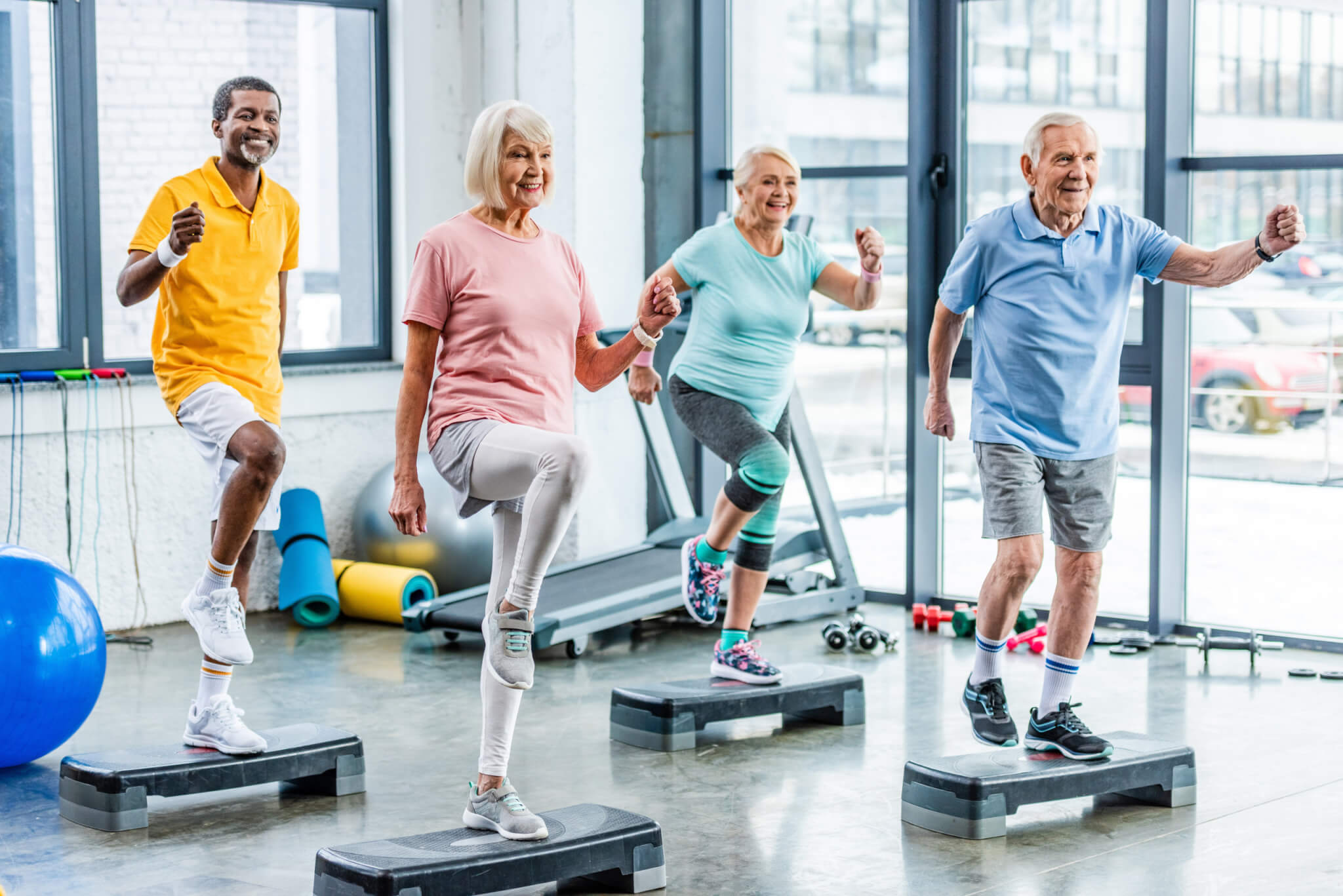

(© LIGHTFIELD STUDIOS – stock.adobe.com)
TIANJIN, China — Your body’s ability to handle a workout might be more than just a matter of physical prowess – it could be your brain’s insurance policy. That’s the fascinating conclusion from a massive new study that’s rewriting our understanding of the connection between fitness and cognitive health. According to scientists, your heart and lung fitness might be one of the best defenses against cognitive decline.
The comprehensive study, published in the British Journal of Sports Medicine, reveals that individuals with higher cardiorespiratory fitness not only perform better on cognitive tests but also face a significantly lower risk of developing dementia – even if they carry genetic risk factors for the condition.
The Power of Cardiorespiratory Fitness
Cardiorespiratory fitness (CRF) – a measure of how well your body can supply oxygen to your muscles during physical activity – has long been recognized as a crucial indicator of overall health. Think of it as your body’s engine efficiency: the better your CRF, the more effectively your heart and lungs can keep your body running during exercise. This fitness metric naturally declines as we age, with the decline accelerating more rapidly in our later years. By our 70s, we might be losing over 20% of our CRF per decade.
In this landmark study, researchers from various institutions, including Tianjin Medical University and the Karolinska Institute, followed over 61,000 participants from the UK Biobank for up to 12 years. The participants, all between 39 and 70 years-old, underwent a simple six-minute exercise test on a stationary bike to measure their cardiorespiratory fitness levels. Unlike previous studies that required participants to exercise to exhaustion, this study used a more manageable submaximal exercise test, making it more practical for people of various fitness levels.
The results were striking. People with high CRF showed better performance in several cognitive areas, including prospective memory (remembering to do things in the future), verbal and numeric memory, and processing speed. But the benefits didn’t stop there. Over the study period, 553 participants developed dementia. However, those with high CRF levels had a 40% lower risk of developing any type of dementia compared to those with low fitness levels.
Perhaps most intriguingly, the study found that high cardiorespiratory fitness could delay the onset of dementia by about 1.5 years. This finding is particularly significant given that delaying dementia onset by even a small amount can have substantial public health implications.
Genetics Meets Fitness
One of the most compelling aspects of this research was its examination of how fitness levels interact with genetic predisposition to dementia. The researchers used a polygenic risk score – essentially a measure of genetic risk factors for Alzheimer’s disease – to categorize participants into low, moderate, and high genetic risk groups.
The surprising finding? Even among people with moderate to high genetic risk for dementia, those with high CRF levels showed a 35% lower risk of developing dementia compared to their less-fit counterparts. This suggests that staying physically fit might help offset some of the genetic cards we’re dealt when it comes to cognitive decline.
The study population was notably diverse in age and fitness levels, though predominantly white and from less socioeconomically deprived areas. This broad representation helps make the findings more applicable to the general population, although the researchers note that the results might be even more pronounced in more diverse populations.
Call to Action
The takeaway of this research are clear: maintaining good cardiorespiratory fitness isn’t just about physical health – it’s an investment in your cognitive future. While we can’t control our genetic predisposition to conditions like dementia, we can influence how our bodies respond to these predispositions through lifestyle choices.
The good news is that improving CRF doesn’t require extreme measures. Regular aerobic activities like brisk walking, swimming, cycling, or dancing can help maintain and improve cardiorespiratory fitness. The key is consistency and gradually building up your endurance over time.
As we face an aging global population and rising concerns about dementia, this research offers a hopeful message: while we can’t turn back the clock on aging, we might be able to keep our cognitive engines running smoother, longer, simply by keeping our bodies fit. It seems that when it comes to brain health, the old adage holds true – a healthy body really does promote a healthy mind.
Paper Summary
Methodology
The researchers used data from the UK Biobank, focusing on 61,214 participants who completed a six-minute submaximal exercise test on a stationary bike. Each participant’s CRF was calculated based on their heart rate response to increasing workloads during the test. The researchers also collected detailed information about participants’ lifestyle, medical history, and genetic risk factors. Cognitive function was assessed through various tests measuring different aspects of memory and thinking speed. The participants were then followed for up to 12 years to track who developed dementia.
Key Results
The study found that compared to those with low CRF, participants with high CRF had better cognitive performance at baseline and a 40% lower risk of developing dementia. High CRF was associated with delaying dementia onset by 1.48 years. Among people with moderate to high genetic risk for dementia, high CRF reduced the risk by 35%. The benefits were consistent across different age groups, though slightly stronger in middle-aged adults.
Study Limitations
The participants were generally healthier and more socioeconomically advantaged than the general population. Some people with health conditions couldn’t participate in the exercise test, potentially skewing results. The study relied on medical records for dementia diagnosis, which might have missed some cases. The submaximal exercise test, while more practical, isn’t as accurate as maximal testing for measuring CR
Discussion & Takeaways
The research suggests that maintaining good cardiorespiratory fitness could be a powerful strategy for preventing or delaying dementia, even in people with genetic risk factors. The study’s large scale and long follow-up period provide strong evidence for the protective effects of fitness on cognitive health. The findings support the importance of regular physical activity for brain health and suggest that CRF could be used as a predictor of cognitive health.
Funding & Disclosures
The study was supported by grants from the Swedish Research Council, the Swedish Council for Health Working Life and Welfare, and the Karolinska Institutet Research Foundation. The researchers declared no competing interests, and the funders had no role in the study’s design, conduct, or reporting.



Books are getting Australians into the gym and keeping them there longer, and the benefits of this emerging health trend aren’t just physical – they’re mental too.
Listening to audiobooks and podcasts helped Yvonne Kong, 41, and her husband get back into fitness after becoming parents and lose a combined 50 kilos.
Yvonne Kong, 41, used podcasts to get back into exercise and stay motivated. Yvonne Kong
It also helped them broaden their minds and carve out a bit of “me time” in our busy modern world.
Audiobooks and podcasts have given Aussies the chance to turn exercise into a vehicle for learning, training their minds and bodies simultaneously. Some are even taking their e-readers and paperbacks to the gym (more on that later).
“Listening to a story while working out actually helped me stay motivated and more consistent,” Kong told nine.com.au.
Like many Aussies, she used to dread hitting the treadmill and constantly found herself counting down the minutes until her session was over.
That changed when she hit play on a true-crime podcast during a workout.
Kong got so caught up in the story she forgot about the timer on her treadmill until her workout was over.
“I did an hour treadmill course and actually finished it without noticing,” she said.
Have you got a story? Contact reporter Maddison Skipper at mleach@nine.com.au
Since then, she’s found herself looking forward to exercising because it gives her an hour of dedicated listening time.
Her husband does the same while running; he took up listening to audiobooks because it motivated him to run longer and more often so he could get through the story.
The benefits of reading/listening while exercising
About one in three Aussies now listen to audiobooks when they exercise, according to data from Audible.
More than a third of them exercise for longer because of it, one quarter work out more often, and half experience better mood during exercise.
Data released exclusively to nine.com.au revealed both men and women reported these positive experiences at an almost identical rate, despite often having different workout routines and attitudes towards exercise.
Audiobooks are particularly popular with runners, more than a third of whom say they feel more focused on their run while listening.
Personal trainer Ben Lucas is one of them; he started listening while running to make time pass quickly and train his mind as well as his body.
“You’re out there anyway, so you may as well be learning something valuable while you do it,” he told nine.com.au.
What the experts think
Mindfulness expert Luke McLeod told nine.com.au there has even been some research into how exercise increases blood flow to the brain, which helps information retention.
Lucas devours business and personal development audiobooks like Atomic Habits by James Clear while working out, a trend which has become known as ‘personal development/PD stacking’.
The goal is to “double-up of some type of personal development like listening to an e-book, which works out the mind, while also working out the body,” McLeod said.
‘PD stacking’ is the new health optimisation trend, according to Luke McLeod. Luke McLeod

It’s all about optimising time in our busy world, which is particularly appealing to Aussies who are time-poor; like new parents trying to juggle work and a baby.
“When I’m with [my daughter], I’m trying to be present for her, so I’m not going to be listening to podcasts or anything,” Kong said.
“When I exercise, that’s my time.”
Personal trainer Ben Lucas has been using audiobooks to stay on track with his running. Ben Lucas

McLeod agreed that reading or listening while working out can be a great form of self-care for some Aussies.
The only pitfall is that not every workout is suited to it.
It’s hard to keep up with an audiobook or podcast if you’re trying to count reps while strength training, and there’s no way to read an e-book on a rowing machine.
“I find podcasts and audiobooks work best during longer, slower cardio sessions,” Lucas said.
“Whether it’s an easy run, walk, or long ride, you can relax into the session, tune out a little, and focus on what you’re listening to while still getting the work done.”
He also warned Aussies to stay aware of their surroundings and hazards like traffic, cyclists, other pedestrians, or uneven paths if they listen while exercising outdoors.
McLeod added that stacking habits like exercise and reading isn’t worth it if one interrupts the other.
Road testing reading at the gym
I’ve been in and out of the gym a lot over the last decade, jumping from strength training, to reformer Pilates, and other programs in between.
But my favourite way to exercise is to hop on a treadmill with my Kindle.
I rest it on the console, set a slight incline and a moderate speed and lose myself for an hour. No workout has ever felt faster or easier.
My Kindle fits perfectly into the little divot on the treadmill console meant for a phone or tablet. Maddison Skipper

The pros: Focusing on what I’m reading takes my mind off the clock and get through an hour of cardio without getting bored or losing motivation.
Reading at the gym also helps me stay consistent because it’s one of the few places I can just switch off and focus on my book without interruptions, so I want to keep coming back.
That hour of dedicated reading time has also been great for my mental health because it forces me to slow down and focus on something completely removed from any stress in my own life.
The cons: It did take a few sessions to get used to reading while moving, but raising the brightness on my Kindle and setting it to a larger font really helped.
Those who prefer to listen don’t have to worry about any of that though; just download an audiobook and you’re good to go.
I also invested in a pair of noise-cancelling headphones to muffle the dance music that plays over my gym’s loudspeakers, which made it much easier to focus.
Reading at the gym allows Aussies like me to work on my physical and mental fitness simultaneously. Maddison Skipper

Now the only downside to reading at the gym that I sometimes hit a slump after I finish a really good book because I don’t want to hit the gym again until I find something new to read.
The verdict: It’s not for everyone, but I have found that reading at the gym has been the best way for me to stay motivated and consistent.
I feel good about taking the time to work on both my body and my mind a few times a week, and I’ve been able to check some amazing books off my ‘to be read’ list while working out.
Audiobooks make it even easier for Aussies who want to exercise without the hassle of a physical book or e-reader, or who have different accessibility needs.

RICHMOND, Va. (WRIC) — 8News got a visit from two special guests Friday to learn about the benefits of Pilates and try out some beginner moves.
8News anchors Autumn Childress and Delaney Hall were joined by Laura Mae Harper and Angie Madison with Point and Flex Pilates. The studio, which opened on Sept. 3 last year, offers a variety of classes, ranging from beginner to intermediate and advanced.
“We went through years of teaching at other places and developed this beautiful studio for them and this community, and we’re super excited about it,” Harper said.
For more information, visit Point and Flex Pilates.

Like every piece of gear you wear on your body day in and day out, fitness trackers are incredibly personal. The right tracker for you should be comfortable, accurate, and tailored to your lifestyle, including your preferred workouts and health goals. Do you bike, row, or strength train? Do you run on trails for hours at a time, or do you just want a reminder to stand up every hour? Do you want to wear it on your wrist or your finger, or tuck it into your sports bra?
No matter what your needs are, there’s never been a better time to find a powerful, sophisticated tool to help optimize your workouts or jump-start your routine. We test dozens of fitness trackers every year while running, climbing, hiking, or just doing workout videos on our iPads at night, to bring you these picks.
Our top choice for most people is the Garmin Vivoactive 6 ($300), which works well with Android and iOS, but we also vouch for the latest Oura Ring 5 ($399) and the budget-friendly Google Fitbit Air ($100). For more wearables, check out our guides to the Best Smartwatches, Best Smart Rings, and Best Sleep Trackers.
Jump To
Best Fitness Tracker Overall
Garmin makes some of the most accurate fitness trackers on the market, and the Vivoactive 6 is the best midrange option for most people. It strikes a solid balance between smartwatch features and fitness tracking, with support for both iPhone and Android users.
Why WIRED recommends: The Vivoactive 6 is accurate, comfortable, and packed with useful wellness features without feeling overwhelming. It uses Garmin’s proprietary algorithms to power features like Morning Report and Body Battery, which provide daily insights into your sleep, recovery, and readiness. It also has built-in satellite connectivity and GPS, so you can track outdoor workouts without bringing your phone along. There’s also incident detection, which alerts emergency contacts if it detects a serious fall.
Garmin’s biggest advantage remains its free Connect platform, which enables health and fitness tracking without requiring a subscription. The company also continues to add new software features through regular updates without putting them behind a paywall.
The trade-offs: Garmin launched Connect+, a $70-per-year subscription with extras like live tracking and access to Garmin’s AI-powered Active Intelligence. Former editor Adrienne So doesn’t think most people need it, but it’s worth noting if you’re looking for a completely subscription-free experience. The Vivoactive 6 may also feel like overkill for casual users who only want basic activity and sleep tracking.
-

 Colorado7 minutes ago
Colorado’s Powderhorn Mountain Resort sells historic lift chairs
-

 Connecticut10 minutes ago
Developing story: Crash closes Taft Bridge on Connecticut Avenue NW
-

 Delaware22 minutes ago
Delaware Lottery Powerball, Play 3 Day winning numbers for June 20, 2026
-

 Florida25 minutes ago
Juneteenth in Fort Myers: See photos of the celebration
-
Georgia30 minutes ago
Georgia Lottery Powerball, Cash 3 results for June 20, 2026
-

 Hawaii37 minutes ago
Waianae encampment deadline extended amid pushback from lawmaker, community
-

 Idaho40 minutes ago
One dead, four injured in US 26 crash near Ririe – East Idaho News
-

 Illinois44 minutes ago
Illinois Prison Closure Deepens Small Town’s Fears

