Finance
Why Yhangry’s Female Founders Left Finance For Food


Yhangry offers private chefs for dinner parties, hen dos, stag dos, and more
When Siddhi Mittal and Heinin Zhang swapped their six-figure incomes for the uncertainties of entrepreneurship, they weren’t chasing a safe investment, but an idea: that is, to start a company that would make private chefs as accessible as dining out.
And, unlikely as it was for two women who’d spent years in trading and corporate finance to leave it all behind for the culinary arts, their company, Yhangry, has fast become the UK’s largest private chef platform.
The scale of their achievement doesn’t stop there, either. Since its 2020 launch, Yhangry has facilitated $7.6 million in earnings for chefs, hosted over 135,000 guests, and closed its second $1 million investment round in just two weeks of fundraising. All of which is even more striking when you consider its scrappy beginnings.
“At the time, we were knee-deep in the world of corporate finance, climbing the ladder and looking to earn as much as possible,” Mittal recalls. “Very quickly, that ceased to inspire or excite us.”
Like many others, they had been conditioned to see the corporate grind as the pinnacle of professional success. But for Mittal and Zhang, something was missing. “Both of our fathers are businessmen, in India and in China, and we’ve seen them graft through and actually create an impact on this world, not just making money for themselves—I think both of us always had that itch.”
The idea of Yhangry took root as they began to notice a gap in the market. “People in countries like India and China have private chefs all the time; it’s normal. Here in the Western world, it was just impossible to find one,” Mittal explains.
Heinin Zhang and Siddhi Mittal, co-founders of Yhangry
Though everyone around them kept saying that private chefs were not affordable enough to hire, they knew that restaurant chefs were among the lowest-paid workers in the hospitality industry, and that facilitating the gap in the market could be extremely profitable. “We realised that customers would love this if it was cheaper than a restaurant, and that chefs who have a very tough life with the long, gruelling hours—they’d love to get more private work.”
Initially, they didn’t have much to work with, let alone the finances to turn it into an industry-leading reality. “In the beginning, we didn’t even have a chef,” Mittal admits. “We just made up prices as we were confident that we would find one and pay them. We told people it would be something like £100 [$127] to £150 [$190] all in, and the chef would come and cook for you.”
Still, sharing a simple PDF with their colleagues and corporate peers (“we knew that everyone in finance has a good income”) turned out to be all it would take to get them started. “It was all about hustling to get people to book in, and soon after we were fulfilling grocery orders, even sending them to our Barclays office by accident!”
Two months in, the demand was so high they could no longer juggle their day jobs with the growing needs of Yhangry. A pivotal milestone in many an entrepreneur’s journey, there was only one real question for Mittal and Zhang to answer before jumping in: would their parents approve?
“Heinin’s Dad said “no pressure, no diamonds” and I remember telling my dad that I was
going to start this start-up or I’m going to go to do an MBA, which would cost around $200k,
so this was the cheaper option,” Mittal jokes.
Of course, the hustle paid off. After building momentum through small-scale dinner parties throughout 2019, their business caught the eye of Dragon’s Den producers, who invited them to pitch their business to the show’s celebrity investors… and the millions of viewers who tuned in each week.
“Dragon’s Den was amazing,” says Mittal, “but while you’re in the Den, you don’t get to ask the dragons any questions.”
Though they secured offers from Peter Jones and Tej Lalvani, they ultimately turned them down off-air. “The thing is, the terms aren’t very commercial, so we were offered £100k [$127k] for 10%, however, only two months after and before Dragon’s Den aired, we raised £1m [$1.27m] for 10%. It’s very hard for the Dragons to add any commercial value to a tech start-up, so that’s why we chose to decline.”
Yhangry dinner parties
Grateful as they are to both the investors and the experience, it ended up being the exposure that benefited the business most.“It’s how a lot of consumers found out about us,” Mittal says, “with a lot of people still remembering watching us.
“It’s also great to have two Asian girls of different backgrounds on primetime TV. We had a lot of people saying ‘my daughter saw it, I saw it, and we’ve never seen women like me on TV for business!’—that was a great byproduct.”
As luck would have it, these objective wins coincided with the start of the Covid-19 pandemic, ushering in nearly two years of losses.
“It was insane, I’ve never seen so many orders and cancellations happen in a matter of minutes,” Mittal recalls—and that was just the first lockdown.
With restaurants closed, and a complete ban on having people outside of your bubble—let alone chefs—in your home, their entire business model disappeared overnight. “We had nothing to do—we explored virtual classes and kept trying to build the community and grow our followers, but every time the business would gain some momentum with rule changes, we would then be hit with another lockdown–there were so many challenges.”
Adapting in every way they could to survive, including turning the business briefly into a grocery delivery business, the co-founders now feel the experience taught them a very important lesson. “Whatever comes we’re going to give it a go, because everything that seemed impossible happened during Covid and we had faith that if we kept going, kept learning, then we would make it through.”
And made it through, they did. Despite almost “crashing and burning” as part of responsive changes to the business in 2021 and 2022, Yhangry was recognised among the top 10 female-run businesses by the Department for Business and Trade in the UK this year, contributing to their latest funding round’s appeal to high-profile investors, including Tamara Lohan, co-founder of Mr & Mrs Smith, and Michael Seibel, MD of Y Combinator.
The investment is set to fuel their U.S. expansion in 2025, as well as continued expansion into Europe, the Middle East and Africa thereafter.
“On the face of it, all of our accolades seem very glamorous, but everything in the middle is a rejection. When we left corporate, for example, a lot of our peers thought ‘wow, these two women are so silly’ – someone even said ‘oh, they’re going to start a catering company behind our backs’. It was painful and I just remember thinking, ‘we will show you one day’.
“The same people that rejected us a year ago are suddenly backers and now want to invest–but all of that happens with momentum, time and execution.You need to be an execution beast.”
Mittal has found it particularly affirming to see Yhangry’s growing chef cohort–now over 1,000 talented chefs strong–-reaping the rewards of the platform’s growth. Case in point: Chef Mark Bywater, who previously served as Disney CEO Bob Iger’s personal chef, has managed to earn an additional £211k [$268k] since joining Yhangry in 2021, far exceeding the average salary of a restaurant chef.
“We’re not just about providing meals,” Mittal reflects. “We’re about creating moments that people cherish, while also giving chefs the opportunities they deserve.”
In a recent change, their work now extends beyond individual chefs to broader partnerships. In the last two months, Yhangry has established over 100 short-term rental collaborations, enhancing profit margins for hosts and enriching guest experiences. With a pipeline of over 3,000 potential partnerships, the opportunities for growth are immense.
“The travel sector has become really big,” Mittal continues. “People go travelling, they’re booking a self-catering accommodation and guests want great food to go with this, so this is a new focus and we’re going to be very big in this space in the coming years.”
As the company looks to the future, their goals remain grounded in what they do best: brilliant, equitable dining experiences for everyone involved. It seems they have, in fact, made private chefs as accessible as going out.



For a company navigating one of the most consequential transformations in its history, financial clarity is not optional—it is essential. Natura &Co, the Brazilian personal care and cosmetics group behind iconic brands such as Natura and Avon, has long been committed to combining purpose-driven business with commercial performance. After a period of strategic portfolio reshaping, including the divestiture of its Aesop and The Body Shop holdings, the company is now sharpening its focus on profitability and operational excellence across Latin America and global markets.
At the center of that effort sits a deceptively complex challenge: understanding, in real time, which revenue and cost factors are driving or eroding gross margin across a highly diversified business. For years, answering that question meant manual reporting, delayed insights, and finance teams spending valuable time on data gathering rather than analysis.
That’s now changing, thanks to a co-innovation initiative developed together with SAP and Numen, a global SAP partner specializing in digital transformation and enterprise software implementation.
From manual reporting to proactive decision intelligence
The project’s goal was to replace a labor-intensive gross margin analysis process with a generative AI application embedded directly into Natura &Co’s financial workflows. Built on SAP Business AI Platform, SAP’s unified foundation integrating business technology, data, and AI capabilities, the application connects directly to data in SAP S/4HANA to provide finance teams with automated insights and narrative recommendations in real time, without the need for manual data pulls or offline reporting.
The application enables users to explore revenue, cost, and margin drivers interactively, identifying at a glance which elements are protecting or eroding margin performance across markets and product lines. Crucially, human oversight remains central to the design: the AI application generates insights, while finance professionals retain full control over interpretation and decisions.
“The implementation of gross margin analysis using AI in SAP S/4HANA marked an inflection point in the analytical capability of our finance area,” said Rogério Dias Garcia, tech manager, ERP Latam, Natura &Co. “We overcame delays and raised the standard of insights by integrating margin analysis from SAP S/4HANA with a large language model connected via the SAP AI Core layer. This architecture allowed us to provide, in an agile, secure, and completely anonymous manner, a stratified and precise view of gross margin offenders and protectors—discriminating exactly which revenue or cost elements were driving market performance.”
A collaborative architecture for scalable AI adoption
Natura &Co’s application derived from a prototype SAP partner Numen created in early 2024 at SAP’s global Hack2Build on business AI, leveraging the generative AI capabilities of SAP Business AI Platform. The solution was designed and developed through close collaboration between Natura &Co, Numen, and SAP. From the outset, the approach was to align AI adoption with concrete business priorities, ensuring the application would be scalable and production-ready rather than a standalone prototype.
Numen brought deep SAP implementation expertise to the project, combining knowledge of SAP S/4HANA architecture with hands-on experience in building solutions on SAP Business AI Platform. The technology stack—SAP S/4HANA, SAP AI Core, SAP Fiori, and SAP Business Technology Platform—provided the secure, integrated foundation needed to connect financial data with generative AI capabilities in an enterprise context.
“SAP enabled the transformation by providing the technological foundation and expert support,” said Carlos Aravechia, head of Data Design & Intelligence at Numen.
The success of the project has validated a broader conviction at Natura &Co: that generative AI, embedded directly in ERP workflows, can fundamentally reposition finance from a transactional function to a strategic business partner.
A blueprint for other businesses
The Natura &Co project demonstrates a pattern that other organizations can replicate, particularly those running SAP S/4HANA. The combination of structured ERP data with the contextual reasoning capabilities of large language models creates a foundation for decision intelligence that goes well beyond traditional business intelligence tools.
The project was built within a six-month co-innovation sprint and went live in August 2025. It is currently in use across Natura &Co’s Equador operations.
Looking ahead, Natura &Co is already planning the next phase: integrating Joule Agents to further automate the extraction of standard analytical content and deepen the AI-driven optimization of financial processes.
“The success of this initiative validates the transformative potential of embedded AI within our ERP,” Dias Garcia noted. “We are now ready to move forward—deepening these insights and integrating the capability of Joule Agents to maximize the extraction of standard content and further optimize our business decisions.”
For SAP customers evaluating how to move from AI experimentation to AI in production, the Natura &Co project offers a concrete, replicable model: start with a high-value, well-defined business process, embed AI directly into existing workflows, and build in human oversight from the start.

A girl from a disadvantaged rural family in central China topped this year’s gaokao, attracting numerous live-streamers eager to finance her education, which she declined.
The home of 18-year-old secondary school graduate Han Yaping in a Henan province village was recently bustling with live-streamers.
This attention came after Han achieved an impressive score of 699 out of 750 in the gaokao, China’s national college entrance exam.
She has received offers from China’s two leading universities, Tsinghua University and Peking University.
Han’s accomplishment is particularly remarkable given her family’s impoverished circumstances.
Her mother suffers from ankylosing spondylitis, an inflammatory arthritis affecting the spine, preventing her from working. Her father, who earns a living through farming and odd jobs, serves as the family’s sole provider. Han also has a younger sister.

The UK’s Financial Conduct Authority (FCA) published a landmark review on Monday that proposes recommendations to regulate the impact of artificial intelligence (AI) on the financial decisions made by consumers.
The review, titled the Mills Review, anticipates that both consumers and firms will start delegating “more financial decision-making to AI systems,” including for agreements, initiating transactions, and executing decisions “within agreed parameters.” One of the key findings of the review outlined that while AI can help bridge advice gaps and “support growth,” there remain risks “associated with fraud, cyber security, and consumer harm.” Conducting the review, Sheldon Mills highlighted that “AI can also amplify risks: bias, discrimination, exclusion, opaque decision-making (particularly when multiple AI models interact), misleading or hallucinatory advice and erosion of consumer trust.”
The review stated that presently, one in five adults in the UK are “already open to AI making decisions for them,” particularly when decisions feel “complex or high stakes.” It found that roughly 26 percent of the population “trust general-purpose tools such as ChatGPT, Claude or Gemini for financial advice” with little awareness that such platforms provide no “formal routes to recourse” or protections.
Overall, the Mills Review identified four areas that it anticipates will be impacted by AI in the financial sector: “the transformation of firms,” “new consumer journeys,” “a reshaped competition landscape,” and “amplified financial crime and cyber risk.” The FCA projected the shift in how consumers and firms consult AI to take place by 2030.
The Mills Review put forth seven “priority” recommendations to be considered by the FCA Board. It recommended that any transitions to autonomous AI models be monitored and that regulatory frameworks and perimeters be adapted and secured. The review called for the strengthening of “system-wide coordination and oversight,” the scaling up of the FCA’s AI Lab to enable it to support AI models and innovation for agentic finance, and an “AI-enabled agentic supervisory model” to be built and adopted. Finally, it recommended that a trusted “public-interest AI-enabled financial capability service” be developed.
The FCA announced, in the press release, that it will launch an AI “good and poor practice publication” in late 2026.
-
 Science1 minute ago
What’s the deal with … coffee enemas?
-
 Sports4 minutes ago
LAPD weighs canceling academy classes to get more cops on streets for Olympics
-

 World16 minutes ago
Trump ordered to pay E Jean Carroll $5.8m after failed appeal
-
 News39 minutes ago
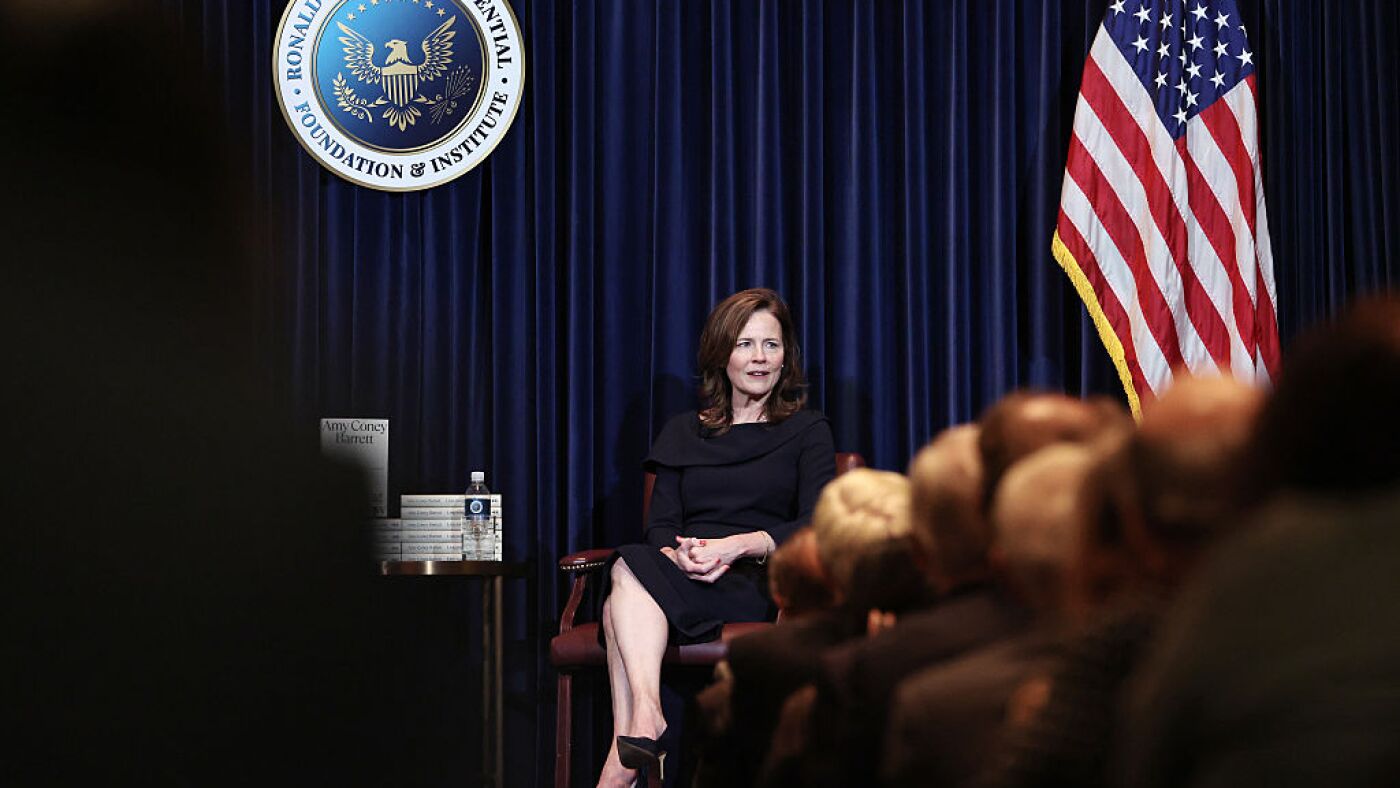
Supreme Court financial disclosures reveal how their books add to their income
-

 Los Angeles, Ca2 hours ago
Waymo video could determine charges after teens’ bizarre California ride
-
Detroit, MI2 hours ago
DPD investigating after human remains found in home on Detroit’s west side
-

 San Francisco, CA3 hours ago
Bay Area Teen Waymo Riders Nabbed For Allegedly Shooting Projectiles From Robotaxi
-
Dallas, TX3 hours ago
Role Call: Tyrus Wheat looking to make most of second stint with Cowboys


