Connect with us

Finance

Public Finance Group Ranked in Chambers USA Guide – Jackson Walker

Published

on

Public Finance Group Ranked in Chambers USA Guide – Jackson Walker

In its first-ever guide to the top Texas firms for Public Finance, Chambers and Partners ranked Jackson Walker in the 2024 USA Guide released today. In addition, Public Finance partners Rick A. Witte, Todd B. Brewer, Tanya A. Fischer, and Hoang T. Vu were ranked among the top Texas attorneys in this area.

Each year, Chambers and Partners releases its flagship guides that identify leading practitioners and law firms in the United States and around the world through the culmination of thousands of interviews with attorneys and clients conducted by over 200 research analysts.

In the 2024 guide, Chambers noted that Jackson Walker “has a strong Texas-based public finance practice. The firm has significant expertise in the education sector, routinely representing school districts in financings. It has complementary strength acting as underwriters’ counsel for financial institutions.

The firm is proud of the Public Finance team’s recognition along with first-time rankings in the areas of antitrust, immigration, intellectual property, government relations, and white-collar litigation. For more information, view Jackson Walker’s announcement of the Chambers 2024 rankings and the firm’s Chambers profile.

About the Practice

Jackson Walker’s Public Finance team plays a leading role in advising government entities, nonprofits, and financial institutions across Texas on tax-exempt financings for major projects generated in part by the state’s population growth and infrastructure needs. With more than 140 years of collective experience, the Public Finance group has represented practically every type of entity that can borrow funds on a tax-exempt basis or provide tax-exempt financing in more than $200 billion of public finance transactions.

Advertisement

The team serves as bond counsel to several clients, including (but not limited to):

  • Houston Independent School District, the largest public school district in Texas with over 190,000 students;
  • Katy Independent School District, one of the fastest-growing school districts in Texas with over 88,000 students;
  • Pasadena Independent School District; and
  • City of Pearland, Texas, the fastest-growing city in the Houston, Texas region.

In addition, the team represents the Public Finance Authority of Wisconsin in connection with the Texas Infrastructure Program, which has developed an early stage, short-term financing to bridge the gap between public infrastructure expenditures and Municipal Utility District reimbursements, which allows real estate developers to pay infrastructure costs early in the development cycle with nonrecourse tax-exempt debt. This program is important because traditional financing methods are antiquated and have become increasingly more arduous and less accessible in the last five years. Construction of public infrastructure in connection with residential development, including the financing thereof, throughout the state is vitally important.

About Our Attorneys
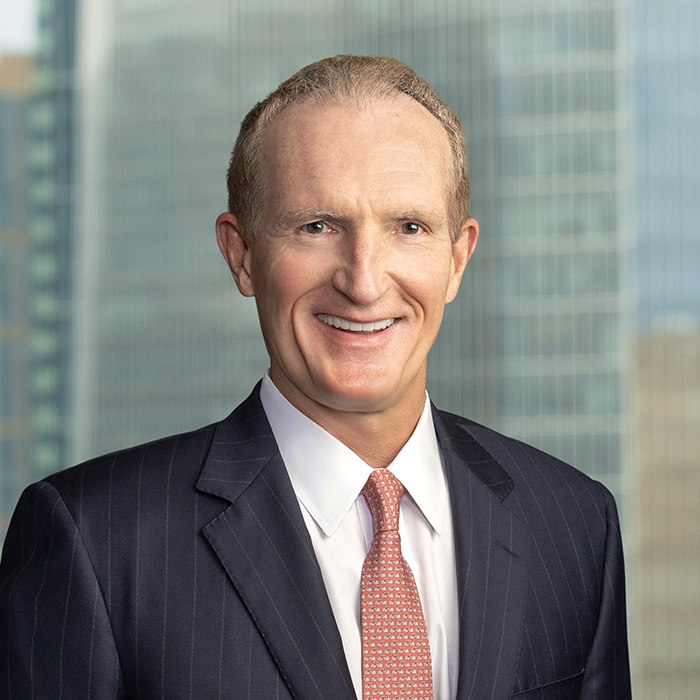
Rick Witte Rick A. Witte leads the Public Finance group at Jackson Walker. He regularly serves as bond counsel, disclosure counsel, underwriters’ counsel, and bank counsel for tax-exempt and taxable bond transactions for school districts, junior college districts, cities, counties, state agencies, economic development corporations, and special authorities throughout Texas. In the inaugural Chambers Texas Public Finance rankings, Rick is listed in Band 1, the highest band of the top-ranked attorneys in this area.
Todd BrewerTodd Brewer Todd B. Brewer, who ranks in Band 2 in the Chambers USA Guide, brings a wealth of public finance experience in all areas of tax-exempt and taxable transactions. His practice includes the roles of bond counsel, underwriters’ counsel, and direct purchaser counsel for cities, counties, school districts, special purpose districts, local government and economic development corporations, state agencies, non-profit organizations, and private entities for infrastructure, public and private schools, charter schools, economic development, cultural and community facilities, land development, and the securitization of assets and revenue streams due to private entities. He has extensive experience in representing governmental entities and private parties in connection with economic development projects and major sports and entertainment facilities.
Tanya FischerTanya Fischer Tanya A. Fischer, who is also listed in Band 1 along with Rick, represents domestic and foreign banks that provide credit and liquidity facilities for tax exempt or taxable financings as well as on public finance transactions involving loans and direct purchases. She serves as bond counsel, disclosure counsel, and underwriters’ counsel in tax-exempt bond transactions for school districts, junior college districts, cities, counties, and state agencies throughout Texas. Chambers noted that one client stated in an interview that Tanya “is extremely knowledgeable and always available to answer my questions.”
Hoang VuHoang Vu Hoang T. Vu, who is ranked in Band 2, was praised by clients as “an excellent attorney” in the Chambers USA Guide. In his practice, Hoang serves as bond counsel, disclosure counsel, underwriters counsel, issuer counsel, borrower counsel, and bank counsel in connection with taxable and tax-exempt financings for governmental and nonprofit entities. He also has distinctive experience in representing banks and other financial institutions on public finance transactions including loans, direct purchases of debt and credit and liquidity facilities for variable rate bonds and commercial paper programs.
Continue Reading
Click to comment

Leave a Reply

Your email address will not be published. Required fields are marked *

This site uses Akismet to reduce spam. Learn how your comment data is processed.

Finance

Texas restaurants feel financial strain as costs continue to rise, report shows

Published

on

Texas restaurants feel financial strain as costs continue to rise, report shows

Texas restaurant operators are continuing to face mounting financial pressure as rising food and fuel costs impact businesses across the state, according to the latest quarterly economic report from the Texas Restaurant Association.

The association’s 2026 first-quarter report shows that many restaurant owners are struggling to keep up with increased operating expenses while trying to avoid passing those full costs on to customers.

“You know, what we’re seeing a lot of in Texas from these quarterly economic reports that we do is that food costs continue to rise,” said Texas Restaurant Association Chief Marketing Officer Tony Abroscato. “We all know that it’s up 35% since the pandemic. And so that’s an impact on our restaurant.”

According to the report, 77% of restaurant operators reported increased costs of goods, while 66% said suppliers have added fuel surcharges as gas prices continue to climb.

“We’re seeing that 90% of consumers start to adjust their habits based upon rising gas prices,” said Tony Abroscato. “Then also those gas prices impact the cost of food because everything is trucked and shipped and a variety of different things.”

Advertisement

In addition to rising costs, labor shortages remain a major concern for restaurant owners. More than half of association members reported difficulties finding enough workers.

“You know, immigration is difficult and has had an impact on the restaurant industry, the farming industry, which again, then raises prices along the way,” said Abroscato.

Despite the financial challenges, the Texas Restaurant Association’s 2026 first-quarter report shows that Texas restaurants are only passing a portion of those increased costs on to customers while absorbing the rest through reduced profits.

Some restaurant owners have been making changes to adjust, like limiting menu items or even turning to QR code ordering, Abroscato said.

Copyright 2026 by KSAT – All rights reserved.

Advertisement
Continue Reading

Finance

Household savings, income and finances in Spain: how did they fare in 2025 and what can we expect for 2026?

Published

on

Household savings, income and finances in Spain: how did they fare in 2025 and what can we expect for 2026?

In 2025, GDI grew above the rate of average annual inflation (2.7%) and the growth in the number of households (1.3% according to the LFS), which allowed for a recovery in purchasing power. In this context, real household income has grown by 4.5% since before the pandemic, highlighting that households have continued to gain purchasing power in real terms.

The strong financial position of households is reflected not only in the high savings rate but also in their financial accounts. In this regard, households’ financial wealth continued to increase in 2025: their financial assets amounted to 3.4 trillion euros at the end of the year, versus 3.1 trillion at the end of 2024. This increase of 292 billion euros is broken down into a net acquisition of financial assets amounting to 95 billion, higher than the 21.5-billion average in the period 2015-2019, when interest rates were very low, and a revaluation effect of 194 billion. When breaking down the net acquisition of assets, we note that households invested 42 billion euros in equities and investment funds, just under 9.6 billion less than in deposits, while they disposed of debt securities worth 6 billion following the fall in interest rates.

On the other hand, households continued to deleverage in 2025, and by the end of the year their financial liabilities stood at 46.9% of GDP, compared to 47.8% in 2024, the lowest level since the end of 1998. This decline reflects the fact that, in 2025, households took advantage of the interest rate drop to prudently incur debt: net new borrowing amounted to 35 billion euros, representing an increase of 3.8%, which is lower than the nominal GDP growth of 5.8% and the GDI growth of 5.3%.

As a result of the increase in financial assets and the decrease in liabilities as a percentage of GDP, the net financial wealth of households recorded a notable increase of 7.3 points compared to 2024, reaching 156.8% of GDP.

Continue Reading

Finance

Fresno Mayor Jerry Dyer touts ‘strong financial outlook’ in city’s budget proposal

Published

on

Fresno Mayor Jerry Dyer touts ‘strong financial outlook’ in city’s budget proposal

FRESNO, Calif. (KFSN) — Mayor Jerry Dyer has unveiled his 2026- 2027 budget proposal at Fresno’s City Hall.

The overall budget total is $2.55 billion, with a majority of the funding going to public works, utilities, police and FAX.

The mayor also highlighted several investments, including a 10-year tree trimming cycle, the Homeless Assistance Response Team and an America 250 celebration.

Dyer says that despite some challenging circumstances, the City of Fresno’s long-term financial condition remains healthy.

“We’re pleased to say that based on increasing revenues and sound financial management, as well as a very healthy reserve, the city of Fresno has a strong financial outlook,” he said.

Advertisement

Dyer’s office says the budget is a comprehensive financial plan that reflects the city’s ongoing commitment to the “One Fresno” vision.

Copyright © 2026 KFSN-TV. All Rights Reserved.

Continue Reading
Advertisement

Trending