Finance
Former Brazil Finance Head Says Lula’s Government Contacted Him for Braskem Job


“I was contacted by the Chief of Staff’s office and made myself available,” Mantega said in an interview when asked about the petrochemical producer. “If the shareholders’ meeting decides this, then I will go to the Braskem board.”
The government is turning to Mantega, one of Lula’s closest allies and economic advisers, as it maneuvers for greater influence in key companies. Last month, Lula fired the CEO of Petrobras due to a dispute over the dividends it paid instead of using the money for investments. The leftist leader is under pressure to raise spending, juice economic growth and halt a decline in approval ratings.
Lula tried to appoint Mantega as CEO and chairman of mining company Vale SA earlier this year in a move that prompted push-back from both its top brass and investors. A 75-year-old member of the Workers’ Party, he was Brazil’s longest-serving finance minister under Lula and his successor Dilma Rousseff.
In that role, Mantega backed counter-cyclical fiscal measures to shore up Brazil’s economy after the 2007-2008 global financial crisis, though those policies led to a deterioration in public accounts. On his watch, the government also intervened in the power sector to force down electricity prices.
The office of the Chief of Staff didn’t immediately respond to a request for comment. Braskem declined to comment.
‘Irrational’ Policy
Mantega said Brazil’s main economic problem now is “irrational” monetary policy championed by central bank Governor Roberto Campos Neto. The country needs more investment to grow, and higher-than-necessary interest rates are driving up borrowing costs for companies, he said.
On top of that, Brazil’s inflation is under control, Mantega said, meaning there was no reason for policymakers to slow the pace of monetary easing.
Last month, Campos Neto, who was appointed by right-wing former President Jair Bolsonaro, led the majority of central bank board members that decided to cut benchmark Selic by a quarter-point, to 10.5%. All four directors appointed by Lula, however, favored a larger, half-point cut.
“The Bolsonaro government continues to manage monetary policy,” Mantega said. “This is wrong. I’m not against central bank independence, but it has to be based on the new government. Otherwise you can have a conflict between fiscal policy and monetary policy, which is what is happening now.”
Fiscal Target
One of the reasons that could explain the rationale behind the central bank’s move, the former minister said, was the government’s decision to target a less ambitious 2025 fiscal result than previously indicated.
In April, the economic team said it will aim for a balanced primary budget, which excludes interest payments, instead of a surplus next year. Still, in Mantega’s view, that change is not enough to spur inflation.
“You can’t say that just because the government is going to spend half a percentage point more in 2025, you’re going to have inflation,” he said. “It’s not possible.”
Mantega agrees with current Finance Minister Fernando Haddad that Brazil’s 3% inflation target is very demanding. He said he expects policymakers will do a more rational job after Lula’s appointees become a majority of the board next year.
“Controlling inflation has to be an absolute priority, because inflation hurts the economy,” he said. “The new board will certainly follow what is set out by the National Monetary Council, which established inflation targets that will be pursued and that are very low for the situation of the Brazilian economy.”
Mantega also said Lula is more anxious now than in his prior times in power because the balance of political forces has changed. Most notably, Congress had more sway than in the past.
“Sometimes he has to accept decisions he wouldn’t like to, but he does,” Mantega said. “So I think maybe he’s more distressed because of this situation.”
–With assistance from Bruna Lessa and Mariana Durao.
More stories like this are available on bloomberg.com
©2024 Bloomberg L.P.
You are on Mint! India’s #1 news destination (Source: Press Gazette). To learn more about our business coverage and market insights Click Here!
Download The Mint News App to get Daily Market Updates.
More
Less
Published: 04 Jun 2024, 12:05 AM IST


As the business side of team sports, such as football, becomes larger and more complex, the opportunities for banks to provide financing solutions for the individuals and institutions involved proliferate. At Deutsche Bank’s private bank, it sees considerable opportunities ahead.
With American and other non-UK investors/owners buying into UK
football teams, it has highlighted that handling the
financial side of sports is now a distinct asset class that even
those uninterested in sports should consider.
Deutsche Bank’s private banking arm certainly considers sports
finance a sufficiently large area to warrant a specialist
offering, as announced
a few days ago. The business focuses on Europe and the
US.
The financing business is led by Arjun Nagarkatti, who is the
head of the private bank for the US and Europe international
business. Deutsche
Bank has appointed Sowmya Kotha in London and Joshua Frank in
New York, who report to Adam Russ, head of wealth management and
business lending.
“Sport can be a local passion project. However, it is becoming
more of a legitimate asset class. Even a non-sports person should
look at sports,” Nagarkatti told WealthBriefing in a
meeting at the German bank’s London offices in the City. “These
are big businesses and a lot of people still don’t know how big
they are.”
Family offices/ultra HNW individuals are trying to take
a “more institutional” approach to transacting in sports
teams, he said.
Setting up such a business feeds into the specialist lending and
financial advisory work that Deutsche has discussed
with this publication in recent months. (See
an example here – via Hong Kong.) This work uses the
combined private bank/investment banking connections where
private clients will also have operating business concerns.
The sports financing business shows that this area is not simply
a private banking niche. Rival Citigroup, for example,
spoke to this news service in 2025 about its work with
ultra-wealthy people wanting to buy, sell and run sports teams.
Our US correspondent recently wrote about opportunities for
wealth management arising from changes in college
sports.
The expanded capability at Deutsche on the sports side is
“significant for the bank,” Nagarkatti said. “It is a core focus
for us.”
UHNW sports owners/potential owners tend to be ideal clients –
they are internationally minded, want advice and guidance on
financial/personal wealth matters, he continued. “This is a big
opportunity for us and it is a consistent connection we have had
with clients, and we have been doing this for 10 to 15
years.”
Deutsche is initially concentrating on the English Premier
League. As its US franchise has expanded, this has led to
financing across all four major US sports leagues: National
Football League; Major League Baseball; National Basketball
Association, and National Hockey League.
Mention of cross-border owners of clubs leads to potential owners
of, say, a UK football club needing to understand that when
they buy a team, they’re also buying into hopes and dreams.
Owners raise their heads above a parapet – not always a fun
experience.
“You become a public figure,” Nagarkatti said.
One example that springs to mind is Sir Jim Ratcliffe, the
billionaire founder of INEOS, the chemical producer who took
a 27.7 per cent stake in Manchester United more than a year
ago. While well known in business circles before buying into the
“Red Devils” –
one of the most famous sports institutions in the world – his
profile has risen since, with every comment – controversial or
otherwise – analysed, not always kindly.
American owners of teams have to adjust to the risk, for example
when a football (soccer) team gets relegated, Nagarkatti
said. Anyone looking to own a club must understand risks,
including how their public profile, assuming they were very
private people, rises rapidly, and in ways that are not always
comfortable if a team has problems, he said.
There is a need for realism.
“When you buy these top assets, you must spend time and work them
and increase their value. You must be prepared to invest time,
such as on the team, stadiums, facilities,” Nagarkatti said. “It
is like buying a hotel. You cannot just sit there and think it
will go up in value by 10 times.”
For the wealth management industry in general, the business of
sports teams, as well as the individual financial affairs of
sportsmen and women, has become a distinct – and large –
specialism. For example, the Rockefeller Global Family Office has
experts who look after athletes and entertainers. Other firms
that have expertise in and around sports include Carnegie Private
Wealth, for example, and Merrill Lynch Management. In the UK, the
private banking group Coutts has a sports, media and
entertainment division for its wealthy clients. Standard
Chartered, the UK-listed bank with a significant presence in
Asia, has launched a new alternative fund focused on sports for
ultra-high net worth and high net worth clients under its Global
Private Bank. Standard Chartered is a sponsor of Liverpool
FC.
Deutsche Bank announced 2025 full-year and fourth-quarter
financial results here.

Australians now need a record amount of superannuation to afford a comfortable retirement, and one group is still lagging significantly behind. Women are approaching retirement with tens of thousands of dollars less in superannuation than men, but there are moves that can be made now to help close the gap.
By the age of 40 to 44, men have a median super balance of $108,344, compared to women with $79,445 – a gap of nearly $30,000. This gap peaks in the 55 to 59 age range, where men have $202,584 on average and women $140,662 – a difference of more than $60,000.
AustralianSuper deputy chief executive and chief member officer Rose Kerlin told Yahoo Finance while we’ve seen some improvements over time, the super gender gap is “still very real” and becomes the most obvious as women approached retirement.
RELATED
“A big part of the gap comes down to caregiving and disparities in pay. When women take time out of the workforce or move into part-time roles to care for children or family members, their super takes a hit, and that impact compounds year after year,” she said.
This gap is particularly worrying now that a single homeowner aged 67 needs a lump sum of $630,000, up from $595,000, to achieve a comfortable retirement. Couple homeowners need a balance of $730,000 in super, which is up from $690,000.
In contrast, the latest ATO data shows men at or approaching retirement at 60 to 64 have a median balance of $219,73, while women have $163,218.
The government has flagged reforms to help address the gap. Since July last year, superannuation has been paid on government parental leave payments.
From July next year, the Low Income Superannuation Tax Offset (LISTO) income threshold will increase from $37,000 to $45,000 to align with the top of the second income-tax bracket. The maximum LISTO payment will increase from $500 to $810.
While policy reform is important, Kerlin said there were also things women could do now to feel more on top of their super and more confident about where they’re headed.
“Small actions today can help build greater confidence and security for the years ahead,” she said.
One action could be making additional contributions, even small ones, whenever possible, as this could make a big difference over time.
AustralianSuper’s modelling found that someone who made after-tax contributions of $600 annually between the ages of 35 to 39 and met the eligibility criteria for the government’s co-contribution of $300 each year could retire with $9,000 more.
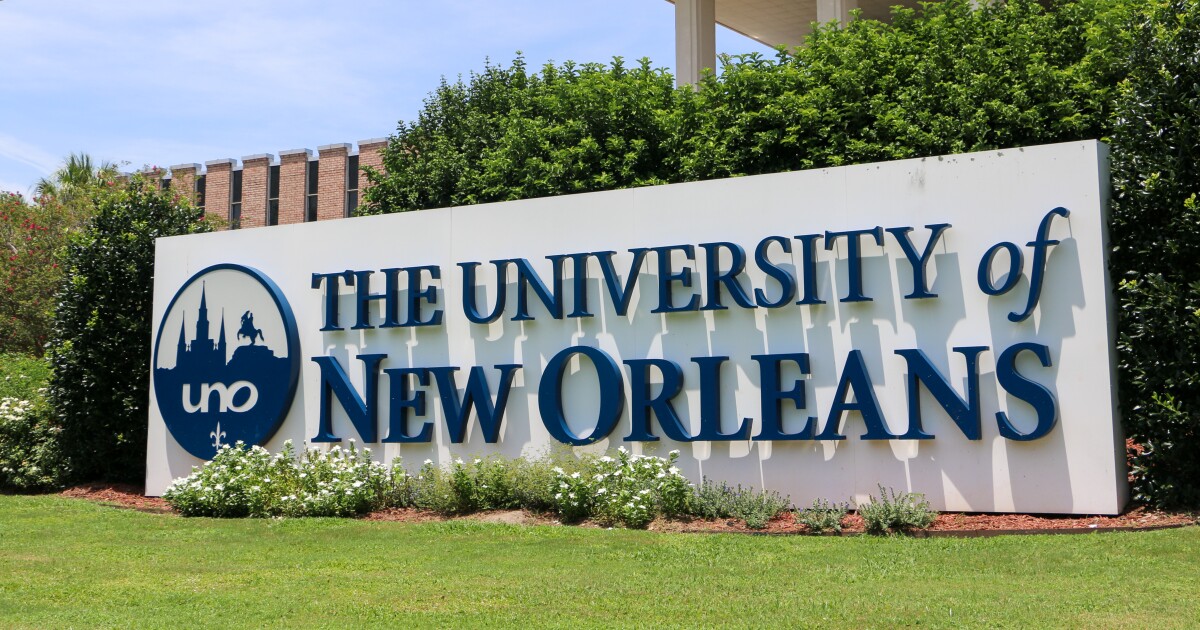
Editor’s note: WWNO is licensed to the University of New Orleans but is funded independently and reports on the university like any other school.
The University of New Orleans is making changes to its financial structure and campus as it prepares to transition back to the LSU System on July 1.
UNO, which officials have already started referring to as LSU New Orleans, has hired Jeanette Weiland as its interim chief administrative officer, a reconfigured role the school’s president says will strengthen its finances.
Weiland previously served as chief business officer of Tulane University’s School of Science & Engineering. She started on a contract basis in January and was hired as an employee on March 1.
In an email to staff this week, President Kathy Johnson said Weiland’s position will span more departments than before, making forecasting and budgeting easier.
“For many years, some of our financial challenges have stemmed from the way separate revenue sources have operated in parallel rather than in alignment,” Johnson said.
The university eliminated its vice president for finance and administration as part of the restructuring, Johnson said, and will hire an interim chief financial officer to work under Weiland.
Arlean Wehle had been serving in both roles, on an interim basis, after Edwin Litolff left for the University of Louisiana at Lafayette last summer. Johnson thanked Wehle for her “tireless work ethic, her steady leadership, and her unwavering commitment to our mission.”
UNO has struggled financially in recent years, which officials have attributed to low enrollment and poor management. The school currently enrolls fewer than 6,000 students, down from more than 17,000 at its peak before Hurricane Katrina.
While faculty and staff have specific concerns about the transition, according to a survey conducted by LSU, more than 60% of students, alumni and faculty support the move.
Officials have promised to revive the university by sharing system resources, eliminating some programs, expanding those it says are unique and successful — like UNO’s naval architecture and marine engineering school — and rebranding the campus as part of the LSU family.
In the same email, Johnson said UNO will lease a building to its neighbor, Benjamin Franklin High School, starting in June, and plans to close its oldest academic building at the end of the semester.
Franklin has been looking for room to expand, rather than cap its enrollment. The school plans to take over the Human Performance Center.
Johnson said the lease will strengthen the existing partnership between the two, “while generating revenue” that UNO needs. Franklin will move out of the classrooms it uses in a campus building that’s farther away, freeing those up.
The terms of the lease with Franklin are still being negotiated, Johnson said in an email to WWNO. It will likely go before the University of Louisiana System board in April, which UNO remains part of until July 1.
The Liberal Arts Building, the facility slated to close, houses the following departments: English, foreign languages, philosophy, history and elements of anthropology.
Johnson said the decision was reached based on UNO’s financial standing and a facility analysis by an outside firm.
“This is not a decision made lightly,” she said in the email. “We simply do not have the resources required to restore it to acceptable standards.”
Departments housed in both impacted buildings will be relocated to other parts of the campus.

Fighting cancer in the gym: how exercise prepares your body for battle – ABC listen

Movie Review: “THE BRIDE!” – Assignment X

Video: Fire Breaks Out Near Glasgow Central Station

Video: Airports Struggle to Staff T.S.A. During Partial Government Shutdown

How Rising Home Insurance Costs Are Linked to Credit Scores

Florida High School Football Rankings: Top 25 teams – Oct. 21

How old is Bo Nix? What to know about Oregon quarterback ahead of 2024 NFL Draft

Cleary's 21 help Le Moyne down Central Connecticut State 69-64 in OT

99th annual Pony Swim held in Virginia

Indiana Members Credit Union announced as new anchor tenant at Bottleworks District
Video: Airports Struggle to Staff T.S.A. During Partial Government Shutdown

Before-and-after satellite imagery offers a rare look at damage inside Iran
Hungary's opposition leader Péter Magyar calls on Russia to refrain from election interference

Video appears to show U.S. cruise missile striking Iranian school compound

Trump vows block on signing new laws until SAVE America Act passes Senate
-

 Wisconsin1 week ago
Setting sail on iceboats across a frozen lake in Wisconsin
-

 Massachusetts6 days ago
Massachusetts man awaits word from family in Iran after attacks
-

 Maryland1 week ago
AM showers Sunday in Maryland
-

 Florida1 week ago
Florida man rescued after being stuck in shoulder-deep mud for days
-

 Pennsylvania4 days ago
Pa. man found guilty of raping teen girl who he took to Mexico
-

 Oregon1 week ago
2026 OSAA Oregon Wrestling State Championship Results And Brackets – FloWrestling
-

 News1 week ago
2 Survivors Describe the Terror and Tragedy of the Tahoe Avalanche
-

 Sports4 days ago
Keith Olbermann under fire for calling Lou Holtz a ‘scumbag’ after legendary coach’s death