Finance
Expert's rogue 2026 RBA interest rates prediction: 'Pay the price'


Two experts believe Aussie homeowners won’t get any mortgage relief until at least 2026. The Reserve Bank of Australia (RBA) decided to hold interest rates at the 13-year high of 4.35 per cent following its two-day September meeting.
Not a single expert from Finder’s research was tipping a cut from this meeting and the overwhelming majority (15) believe the first round of cuts will happen in February 2025. But Richard Holden, Professor of Economics at UNSW Business School, told Yahoo Finance homeowners should expect to hold their breath longer — much longer.
“We’re not going to solve this inflation problem by cutting rates. We’re going to make it worse,” he said.
RELATED
He and Malcolm Wood, Ord Minnett’s head of institutional research, reckon the first rate cut won’t come until sometime in 2026.
The RBA has been insistent that inflation has to come into the 2-3 per cent range before rates should be cut.
Governor Michele Bullock said a lot of work needs to be done to get inflation down and all but ruled out a rate cut this year.
Will you be forced to sell your home if the RBA doesn’t cut rates this year? Email stew.perrie@yahooinc.com
At the post-meeting press conference, Bullock said the bank isn’t convinced inflation is moving in the direction it needs for a cut.
“The board needs to be confident that inflation is moving sustainably towards the target before any decisions are made about a reduction in interest rates, so we really need to see progress on underlying inflation coming back down toward the target,” she said.
Where is inflation at the moment?
Data from the Australian Bureau of Statistics (ABS) shows inflation has fallen dramatically since the 2022 peak of 7.8 per cent.
On Wednesday, new figures revealed it dropped to its lowest point in nearly three years to just 2.7 per cent in the 12 months to August, which is down from 3.5 per cent in July.
But a big factor in that fall are the state and federal electricity subsidies handed out after July 1.
Holden said it’s “misleading” to focus on headline inflation because it can be swayed by things like government handouts.
He said the number to keep your eyes on is trimmed inflation, which is also called core inflation or underlying inflation.
This “smooths out the impact of temporary or irregular price changes” like from subsidies and excludes the top and bottom 15 per cent of price changes to give a more accurate reflection of what’s going on in Australia’s economy. The economist said that number is much harder to move.
“Underlying inflation is a long game,” he told Yahoo Finance.
The RBA also noted that trimmed inflation has been particularly sticky over the past few months.
“Our current forecasts do not see inflation returning sustainably to target until 2026,” it said in its September meeting notes.
“In year-ended terms, underlying inflation has been above the midpoint of the target for 11 consecutive quarters and has fallen very little over the past year.”
Trimmed inflation came in at 3.4 per cent for August, which is still a considerable drop from the 3.8 per cent in July.
Economist and Yahoo Finance contributor Stephen Koukoulas has argued the RBA should feel comfortable cutting interest rates soon based on headline inflation.
“The RBA is refusing to cut interest rates because it is guessing that the step lower in inflation in August will be temporary, a call that is based on faith not facts,” he wrote.
“In the end, the markets embraced the low inflation result and yet again discounted the RBA view of the economy by pricing in a better than even chance of a 25 basis point interest rate cut before the end of 2024 and a total of 125 basis points of interest rate cuts by the end of 2025.”
But what about other countries cutting their interest rates?
The US Federal Reserve announced last week it was finally reducing its interest rates from a 23-year high.
In a near-unanimous decision, the rate was slashed by 0.5 percentage points to a range of 4.75 to 5 per cent.
It was the first rate cut since 2020 and experts are predicting there will be two more rate cuts by Christmas, four more cuts in 2025 and twice again in 2026.
Inflation peaked in the US in June 2022 at 9.1 per cent and is now at 2.5 per cent.

The US’s move brought it in line with other major nations including the European Union, the UK, Canada, New Zealand, Denmark, Switzerland, China, and many others.
Federal Reserve Chairman Jerome Powell said waiting longer to reduce the federal funds rate compared to other nations “really paid dividends” as it allowed policymakers to get more comfortable about the downward path of inflation.
Holden said Australia will likely have to follow a similar path.
“It’s a real shame that we didn’t do what the US and the UK and Canada and Europe and New Zealand did, which was take our medicine early on, raise rates more aggressively, deal with the problem, not be so lavish with government spending,” he explained to Yahoo Finance.
“You can see the fruits of that… look at America… that’s the story of what we should have done, and we haven’t done it, and we’re all paying the price for it.”
When do the Big Four banks think interest rates will drop?
Commonwealth Bank expects the RBA to cut rates in December 2024. It thinks there will be five 0.25 per cent cuts by the end of 2025, taking the cash rate to 3.10 per cent.
Westpac thinks there will be a cut in February 2025, with four 0.25 per cent cuts in total to bring the cash rate down to 3.35 per cent.
NAB thinks it will be in May 2025, although it says February is possible, with five 0.25 per cent cuts down to 3.10 per cent.
ANZ has forecast a February 2025 cut, with three cuts in total to bring the cash rate down to 3.60 per cent.
Get the latest Yahoo Finance news – follow us on Facebook, LinkedIn and Instagram.



A select team of students from the University of St. Thomas’ Cameron School of Business has officially launched its bid for the FY 2025–2026 Texas Region CFA (Certified Financial Analyst) Institute Research Challenge, a prestigious competition often referred to as the “Investment Olympics” for university students.
The CFA Institute Research Challenge is an annual competition that provides university students with hands-on mentoring and intensive training in financial analysis. The competition tests students’ analytical, valuation, report writing and presentation skills, challenging them to take on the role of real-world research analysts. The 2025–2026 cycle involves more than 6,000 students from more than1,000 universities worldwide.
Representing UST, the team is comprised of Team Captain Chih Jung Ting, MSF; Vice-Captain Daria Kostyukova, BBA/MSF; Reginald Paolo Laudato, BBA/MSF; Simon Wong, BBA in Finance; and Anjali Sebastian, BBA in Finance.
The team of five students has been selected to conduct an exhaustive equity analysis of a target company, competing against top-tier universities from around the Texas area.
“Taking part in the CFA Research Challenge has been the most intense and rewarding experience of my academic career,” said Chih Jung Ting, team captain. “We aren’t just reading case studies anymore—we are digging into real balance sheets, forecasting real economic shifts, and learning how to defend our ideas under pressure. It’s given us a true taste of what it means to be an analyst.”
The team is supported by Department Chair of Economics and Finance Dr. Joe Ueng, CFA, and faculty advisor Dr. Dan Hu. Assisting the team was industry mentor Matt Caire, CFA, CFP®, CMT from Vaughan Nelson, a seasoned professional who provides guidance on the intricacies of equity research.
“Our participation in the CFA Research Challenge is a testament to the caliber of our students and the strength of our curriculum,” said Dr. Ueng. “By applying advanced financial theory to a live market scenario, our students demonstrate that they are not just learners, but emerging professionals ready to contribute to the global financial community. We are incredibly proud of their dedication to academic excellence.”
Dr. Sidika Gülfem Bayram, the Cullen Foundation Endowed Chair of Finance and UST associate professor of Finance said participating in the CFA Research Challenge this year creates a pivotal moment for UST students.
“I’m impressed to see our students apply their curriculum knowledge to meet the depth and vast nature of the analysis required in such a fierce competition,” Dr. Bayram said. “I’m so proud of the effort the students put into the challenge.”
This year, the team has been tasked with analyzing Green Brick Partners, a publicly traded company in the consumer cyclical sector. During the past several months, the students have dedicated more than 150 hours to conducting a deep-dive analysis of the company’s business model and industry position, interviewing company management and financial experts, building complex financial models to determine the stock’s intrinsic value, and compiling an “Initiation of Coverage” report with a buy, sell or hold recommendation.
“Participating in the CFA Research Challenge allows our students to bridge the gap between classroom theory and the fast-paced world of investment management,” said Dr. Hu. “It demands a level of rigor and professional ethics that prepares them for the highest levels of the finance industry.”
The team will presented its findings and defended its recommendation before a panel of judges from leading investment firms at the CFA Society local final in late February. Winners of the local competition will advance to the subregional and regional rounds, with the goal of reaching the global finals in May 2026.
';

Nantucket’s municipal finance director Brian Turbitt has announced his resignation and will leave his position with the town on April 21st.
“With mixed emotion, I have submitted my resignation from the position of Town of Nantucket Director of Municipal Finance, effective April 21, to pursue an opportunity off-island,” Turbitt wrote in a message to the Current. “I have thoroughly enjoyed working with Town Manager Libby Gibson and her administration during the past 12 years and am extremely proud of all we have accomplished as a team. My time on Nantucket has been the experience of a lifetime, and one for which I am truly grateful and will never forget.”
Turbitt told the Current that despite his resignation, he will still attend the Annual Town Meeting in his current role on May 4th. Turbitt often presents and defends many of the town’s budget requests during the meeting, which falls just weeks after his scheduled departure date.
As the town’s chief financial officer, Turbitt oversees the town’s budget, guiding the $170 million operation. Turbitt has been with the town since 2014, but his 12-year tenure will end next month.
Finance
300 years of wars show they are ‘always disaster times’ for holders of government debt because of inflation and financial repression | Fortune

Government bonds, especially Treasuries, have long been seen as a safe haven during recessions, geopolitical calamities, and other market-moving disasters that create uncertainty.
But after looking at 300 years of U.S. and U.K. history, the Center for Economic Policy Research found that wars and pandemic-scale emergencies have pummeled holders of debt.
“The historical evidence reveals a striking pattern: government bonds have repeatedly generated substantial real losses during these extreme episodes,” authors Zhengyang Jiang, Hanno Lustig, Stijn Van Nieuwerburgh, and Mindy Xiaolan wrote. “They have even underperformed equities and real estates which are traditionally regarded as risky assets.”
That’s because wars typically triggered large increases in government spending, averaging about 7% of GDP annually during the first four years, and tax hikes alone were rarely sufficient for financing needs, they added.
The finding comes as the U.S. is waging war on Iran while the national debt has exploded to $39 trillion. The Pentagon is seeking more than $200 billion in a budget request for the conflict, sources told the Washington Post.
Across their dataset, the CEPR authors calculated that bondholders suffered average real losses of roughly 14% during the first four years of conflicts. The losses were so steep that they reduced the real value of government debt outstanding.
To add insult to injury, cumulative bond returns were more than 20% below the cumulative returns on stocks and real estate, the opposite of how those assets perform during financial crises or recessions.
“Whenever there is a major war, we observe a sharp decline in the bond performance — wars are always disaster times for bondholders,” they warned. “Similarly, the bondholders also suffered large losses during the ‘war on Covid-19.’”
Center for Economic Policy Research
A key factor in bond losses is inflation, according to CEPR, which said the cumulative rate averaged about 20% in the first four years of wars.
In fact, during the current U.S.-Israel war on Iran, Treasuries and government debt from other countries have sold off sharply as surging oil prices have raised expectations for elevated inflation while budget deficits are also seen worsening. Since the war began three weeks ago, the U.S. 10-year yield has soared more than 40 basis points.
But profligate spending wasn’t the only way inflation weighed on bonds. The think tank said it was often the result of policy choices to reduce debt burdens without explicitly defaulting, such as by suspending gold standard commitments.
Another reason bonds perform so poorly during wars is so-called financial repression, or government policies that curb borrowing costs by influencing financial markets. That prevents bond yields from keeping pace with inflation.
For example, the Federal Reserve implemented yield-curve control, capped Treasury rates, and launched massive bond buying during World War II.
CEPR’s findings have particular relevance for U.S. debt as Treasuries continue to form the foundation of the global financial system with the dollar serving as the world’s reserve currency.
That status has allowed the U.S. to borrow more cheaply than investors would otherwise allow. Meanwhile, the interest on U.S. debt is now the fastest-growing budget item and is already at $1 trillion a year. CEPR said its report presents governments with an important tradeoff.
“Protecting taxpayers from large spending shocks may require shifting part of the burden onto bondholders through inflation or financial repression,” it said. “Economic theory suggests that such policies may be optimal when taxation is highly distortionary. However, they also reduce the safety of government debt and may raise borrowing costs over time if investors anticipate these risks.”

Kahil Fennell of Texas-Rio Grande Valley takes over struggling Western Michigan program

The behind-the-scenes drama that led to Kyle Whittingham bolting Utah for Michigan

Louisville vs. Vermont – First round NCAA tournament extended highlights

Georgia vs Virginia predictions, picks, odds for NCAA Tournament First Round

Washington Nationals release right-handed pitcher Drew Smith

Florida High School Football Rankings: Top 25 teams – Oct. 21

How old is Bo Nix? What to know about Oregon quarterback ahead of 2024 NFL Draft

Cleary's 21 help Le Moyne down Central Connecticut State 69-64 in OT

99th annual Pony Swim held in Virginia

Indiana Members Credit Union announced as new anchor tenant at Bottleworks District

Schumer gambit fails as DHS shutdown hits 36 days and airport lines grow

Trump threatens to deploy ICE to airports amid Homeland Security shutdown

Alabama student reportedly fell to his death in Barcelona waters by accident

Read the Ruling in The Times’s Lawsuit Against the Pentagon

NYC Mayor Mamdani’s wife glorified terrorists in online posts, criticized US military: report
-

 Detroit, MI3 days ago
Drummer Brian Pastoria, longtime Detroit music advocate, dies at 68
-

 Oklahoma1 week ago
Family rallies around Oklahoma father after head-on crash
-

 Nebraska1 week ago
Wildfire forces immediate evacuation order for Farnam residents
-

 Georgia5 days ago
How ICE plans for a detention warehouse pushed a Georgia town to fight back | CNN Politics
-

 Massachusetts1 week ago
Massachusetts community colleges to launch apprenticeship degree programs – The Boston Globe
-

 Alaska6 days ago
Police looking for man considered ‘armed and dangerous’
-
 Southwest1 week ago
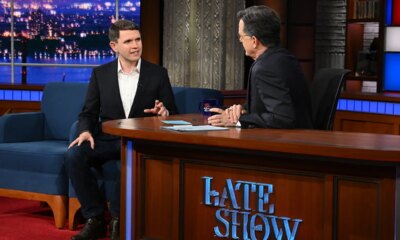
Talarico reportedly knew Colbert interview wouldn’t air on TV before he left to film it
-

 Michigan1 week ago
Michigan-based Stryker hit with cyberattack