Entertainment
YouTube steps up its shopping game with help from influencers


Inside a historic aircraft hangar in Playa Vista, crowds of people gathered on Thursday to browse the latest fashions from handbags to clothing and shoes as they prepared for the holiday shopping season.
These weren’t shoppers or retailer buyers searching for the latest products. Instead, they were YouTube video creators who were being courted by brands from Lowe’s to Shark Beauty to encourage online audiences to buy their products.
Aaron Ramirez, a 22-year-old influencer who focuses on men’s fashion and lifestyle, stood in front of racks of carefully curated shelves of backpacks as he decided which items he would endorse for his 234,000 YouTube subscribers.
“I can make a video about anything that improves my quality of life and add a link to it,” said Ramirez. “I only recommend products that I really use and really like.”
The San Diego resident was among about 300 creators participating in YouTube’s annual benefit for creators dubbed “Holiday House” that helps internet personalities get ready to sell goods during the busy holiday shopping season.
The event — held at the cavernous converted Google offices that once housed Howard Hughes’ famous Spruce Goose plane — underscores YouTube’s desire to be a bigger player in online shopping by leveraging its relationship with creators to promote products in much the same way that rival TikTok does.
In August, YouTube introduced new tools to help its creators better promote products they plug in their videos. One feature uses AI to identify the optimal place on the screen to put a shopping link when an influencer mentions a product. If a customer clicks on that link and makes a purchase, the creator gets a commission.
Brands that were once skeptical about influencers have embraced them over time as sales-tracking tools have improved and the fan base of video creators has mushroomed.
“It’s like the people that you saw on television and before that the people that you listened to on radio who became the trusted personalities in your life,” Earnest Pettie, a trends insight lead at YouTube, said in an interview. “Oprah’s Favorite Things was a phenomenon because of how trusted Oprah was, so it really is that same phenomenon, just diffused across the creator ecosystem.”
Despite economic uncertainty and tariffs imposed by the Trump administration, shoppers in the U.S. are expected to spend $253.4 billion online this holiday season, up 5.3% from a year ago, according to data firm Adobe Analytics.
Social media platforms have helped drive some of that growth. The market share of online revenue in purchases guided by social media affiliates and partners, including influencers, is expected to grow 14%, according to Adobe Analytics.
Cost-conscious consumers are doing more research on how they spend their money, including watching influencer recommendations. In fact, nearly 60% of 14- to 24-year-olds who go online say their personal style have been influenced by content they’ve seen on the internet, according to YouTube.
“It’s more about discovery, understanding where the best deals are, where the best options are,” said Vivek Pandya, director at Adobe Digital Insights. “Many of these users are getting that guidance from their influencers.”
YouTube is one of the top streaming platforms, harnessing 13.1% of viewing time in August on U.S. TV sets, more than rivals Netflix and Amazon Prime Video, according to Nielsen. And shopping-related videos are especially popular among its viewers, with more than 35 billion hours watched each year, according to YouTube.
With YouTube’s shopping feature, viewers can see products, add them to a cart and make purchases directly from the video they’re watching.
Promoting and enabling one-click e-commerce from video has been huge in China, triggering a wave across Asia and the world of livestreaming and recorded shopping videos. Live commerce, also known as live shopping or livestreaming e-commerce, is a potent mix of streaming, chatting and shopping.
The temptation to shop is turbocharged with algorithms like that of TikTok Shop, enticing people to try more channels and products.
2

1. YouTube content creators Diana Extein, left, and Candice Waltrip, right, film clothing try-ons during YouTube’s Holiday House shopping event at Google Spruce Goose on Thursday in Playa Vista, Calif. 2. YouTube content creator Peja Anne, 15, makes a video with beauty products as her mom Kristin Roeder films during YouTube’s Holiday House shopping event at Google Spruce Goose on Thursday in Playa Vista, Calif.

A YouTube content creator who declined to give her name browses YouTube’s Holiday House shopping event at Google Spruce Goose on Thursday in Playa Vista, Calif.

YouTube content creator Cheraye Lewis’ channel focuses on lifestyle and fragrance, and a brand deal with Fenty Beauty helped launch her content to larger audiences.
More than 500,000 video creators as of July have signed up to be a part of YouTube Shopping, the company said.
Creators who promote products can make money through ads and brand deals, as well as commissions.
YouTube already shares advertising and subscription revenue with its creators and currently does not take a cut from its shopping tools, said Travis Katz, YouTube Shopping vice president.
“For us, it’s really about connecting the dots,” Katz said. “At YouTube we are first and foremost very focused on, how do we make sure that our creators are successful? This gives a new way for creators to monetize.”
Companies like Austin-based BK Beauty, which was founded by YouTube creator Lisa J, said YouTubers have helped drive sales for their products.
“They’ve built these long-term audiences,” said Sophia Monetti, BK Beauty’s senior manager of social commerce and influencer marketing. “A lot of these creators have established channels. They’ve been around for a decade and have just a really engaged community.”
To be sure, YouTube faces a formidable rival in TikTok, which is a leader in the live shopping space (its parent company, Byte Dance, is being sold to an American investor group so that the hugely popular app can keep operating in the U.S.).
Two years ago, the social video company launched TikTok Shop, working with creators and brands on live shopping shows that encourage viewers to buy products. TikTok had 8 million hours of live shopping sessions in 2024.
YouTube says its size and technology create advantages, along with the loyalty its creators build with fans when it comes to product recommendations.
Bridget Dolan, a director of YouTube Shopping Partnerships, said “shopping has been in YouTube’s DNA from Day One” and that the company has been integrating shopping features into its viewing experience.

YouTube content creators peruse products and film content during YouTube’s Holiday House shopping event at Google Spruce Goose on Thursday in Playa Vista, Calif.
Santa Clarita-based YouTube creator Cheraye Lewis said that YouTube Shopping helped her gain traction and earn a trusting audience through quality recommendations. Lewis, who has 109,000 subscribers on YouTube, makes videos about items such as fragrances and skincare products.
Lewis has been a video creator for eight years and has worked with such companies as Rihanna’s beauty brand Fenty.
“I try to inspire women and men to feel bold and confident through the fragrances that they’re wearing,” Lewis said at the event Thursday. “I give my audience real talk, real authenticity.”


Perhaps there’s a certain irony in a story about a fireworks factory mostly keeping away from explosive drama. Yoshitoshi Shinomiya‘s lowkey feature directorial debut A New Dawn is at the very least visually captivating, comprised of lush and rather hypnotic production design. The story is small scale focusing on a trio of friends who try to save a fireworks factory in their hometown, but the imagery feels expansive and lush. A New Dawn begins with a beautiful and vaguely familiar display of this beauty: the flowing, painterly imagery of its opening sequence recalls Shinomiya’s work on the flashback sequence in Makoto Shinkai‘s your name., immediately showing that the film’s visuals might transcend its small town drama.
A background artist himself on films by Makoto Shinkai as well as the similarly resplendent Pompo: The Cinéphile, it makes sense that this history would be felt in the background works of A New Dawn. They’re dense with detail, rich with almost luminous color and illustrative texture. Shinomiya, who also wrote and storyboarded the film, veers away from the photorealism associated with someone like Shinkai through some impressionist touches – like the splotches of green paint which represent treelines – which sometimes turns into outright abstraction like when a character begins to run through the space. Sometimes there are swaying, morphing textures in the background as splotches of paint subtly shift around. On a more intimate level, the cluttered and characterful interior spaces tell a story too. This is a long-winded way of saying A New Dawn looks really, really good.
It’s not just in the tableaux of its countryside habitats and ramshackle living spaces carved out of abandoned warehouses, but there’s a sense of invention permeating through A New Dawn‘s various experiments with visual languages of animation. The most prominent is an incredibly charming stop motion animated sequence using a cardboard diorama and real human hands invading the shot in a creative reflection of a drunken character’s perspective. Even though it broadly still looks “anime” through its character design, there are also smaller details which work to set A New Dawn apart from its contemporaries, touches like its occasional lineless artwork or the way rain is defined through smudged black brushstrokes.
It’s in the screenwriting where A New Dawn begins to feel more run of the mill. Its story about the constant chasing of the majesty of a fabled firework “Shuhari” feels both familiar in its premise but also a little bit alienating in its structure. The importance of the firework itself never feels clear – the moment its mystery is unravelled hardly feels like a revelation as a result, something amplified by how the writing often obfuscates what anyone is talking about. The whole story feels a little distancing, and despite the allure of the background art and design of the spaces the characters inhabit, the people themselves feel constantly at arms length.
It almost pulls things back with its climax – the detonation of the “Shuhari” goes a long way in justifying the circular conversations about its nature and origins – a painted streak of light launches into the sky before turning into something otherworldly, suddenly tripling down on the film’s captivating exaggerations.
Entertainment
Review: They’re finally too old for it in the middling clip reel ‘Jackass: Best and Last’

The best weapon in the “Jackass’” arsenal isn’t the taser, the beehive or the booby-trapped latrine. It’s the explosion of relief when a prank ends, often in humiliation, always with hoots and claps. The first film, 2002’s “Jackass: The Movie” was slow to discover that carnage without camaraderie is painful; several injuries limped off-screen in horrified silence. Laughter heals, except for the brain hemorrhage that Johnny Knoxville suffered in 2022’s “Jackass Forever” when, dissatisfied by the clobbering he took from a bull, requested a second ramming that knocked him out cold.
Hence “Jackass: Best and Last,” the goon squad’s alleged final film, is underwhelmingly tame. Shot quickly by stalwart director Jeff Tremaine this spring, half of it is a clip reel of past hits, like the time fan favorite Steve-O slingshotted into the sky in a port-a-potty. The rest is scraps of hastily assembled chaos, the most elaborate of which is a puppet show in which veterans Ehren McGhehey, Dave England and Jason “Wee Man” Acuña dangle helplessly from strings, trying to recite cue cards while being pummeled by tropical fruit. “A pineapple!” Wee Man moans.
I’m no sadist. They’ve suffered plenty for our amusement. Still, it’s a shame that for the first time in two and a half decades of cringe comedy, the guffaws feel forced.
Acknowledging the Jackasses’ age, if not maturity, are a couple skits about prostate and rectal checkups. (The gnarliest involves clear pants, colonoscopy prep liquid and a game of Twister.) Modern technology enters the arena with a nimble-fingered robot. If the team had invested any actual energy into brainstorming this entry, they’d have played paintball with a sniper drone. At least for the sake of torch-passing, someone should have thought of something for the newish members introduced in “Jackass Forever” to do besides stand around and applaud.
These fresher faces — Jasper Dolphin, Rachel Wolfson, Zach Holmes — prove brave and resilient when allowed to participate. Only one of them, Sean “Poopies” McInerney, a surf bro so gullible that I’m not sure he’s capable of informed legal consent, fits into “Best and Last” like a well-worn punching bag. (When Poopies yelps that “my mind is getting to me” while wearing a shock collar around a sensitive area, people snort because, as sweet as he seems, the only thing rattling inside his cranium is a moth.) Early on, Poopies gets swollen lip injections that, someone claims, will last the whole movie. You expect his trophy wife pout to be a running sight gag. But his disfigurement never even gets another closeup.
“Jackass” started with a bang. In January of 1998, Knoxville, then a 26-year-old aspiring actor, strapped on a cheap bulletproof vest padded with a stack of “Hustler” magazines and fired a gun point-blank into his chest. His dumb derring-do went viral on VHS tapes, earning him an MTV show and five feature films. Watching that Rosetta Stone-cold stupid footage here, you’re struck not only by his audacity, but by the scene’s excruciating comic pacing. As there’s only one bullet in the pistol, empty chambers click multiple times before the bullet finally fires. Logically, you know Knoxville will live long enough for his hair to turn fright-wig white. Yet the lizard brain making you gawk is shrieking.
Do not attempt any of the stunts you’re about to see, the prefatory caution blares. Absolutely. The thing is, no one else could. “Best and Last’s” flashbacks are a walloping reminder that Knoxville is inimitable: a telegenic and extroverted entertainer with a charisma he wields like a skunk aims its stink. Upset him at your own risk. Like Buster Keaton before him, Knoxville has an uncanny awareness of how his death-defying escapades appear on camera. Even in that near-suicidal early segment, note how Knoxville stays on his feet, enduring agony with a magician’s “Ta-da!” He might have given himself a bruise the size of a baseball but he’s focused on the audience’s delight.
Over the years, the visuals dramatically improve, from snuff film aesthetics to confidently silly splendor. “Jackass Number Two,” released in 2006, expended major energy on a musical homage to Old Hollywood that nodded to Keaton and bathing beauty Esther Williams who, in MGM’s “Million Dollar Mermaid,” plunged 50 feet into a pool and broke her neck. By 2010’s “Jackass 3D,” which riffed on classic cartoons with Knoxville strapping himself onto an Acme-style red rocket, one could admit they went to see a Jackass movie for the cinematography with even more sincerity than if Knoxville claimed he bought “Hustler” for its life-saving properties.
The new movie doesn’t have any artistic ambition. The charitable excuse for its reliance on old material is that the gang wanted one more film that summed up their entire legacy — from the impact of seeing them age to the opportunity to include departed colleagues Ryan Dunn, who died in 2011, and Bam Margera, fired in 2020. The other explanation is it’s a cash grab made for pennies. Still, Steve-O strives for memorable moments, gathering the gang in a generic office building corridor to watch him take off his pants and pop out a ping-pong ball. There’s a lot of nudity but the setting feels half-assed.
“Best and Last’s” intro splat-tacular, typically a highlight of each film, hinges on the posse standing still on a moving floor. But the monochrome staging — white walls, white ground — looks almost like CGI, the antithesis of their appeal, and it takes us a minute to understand what’s actually going on. Worst, it lacks both suspense and surprise, that no-they-aren’t–oh-god-they-are drama that once elevated the franchise to the peak of pure cinema.
There is — and I mean this — existentialism in witnessing a person embrace shame and terror. Actors have won Oscars without achieving the transcendence of, say, misery glutton McGhehey in “Jackass Forever,” bound to a chair and coated in salmon and honey, realizing that his friends have released a bear into the room. Meryl Streep could never do that (and wouldn’t have to). McGhehey’s sole path to stardom is that he did.
Not everything in a “Jackass” movie needs to be that sublime. One of my few genuine howls in “Best and Last” came in a three-second rehash of someone stepping on a rake; another was the percussion Chris Pontius makes with his swinging nethers before attempting a naked Fosbury flop. There’s a great accidental gag in a cut bit from the original MTV pilot when a deputy pulls up to arrest Knoxville and forgets to put her car in park. Yet the snippet I keep thinking about is a throwaway beat in a new skit when McGhehey willingly gets into the wrong chair again and, once freed, attacks Knoxville who coolly knees him in the nuts. Everyone chuckles.
Once, in anthropology class, my professor lectured on an insular island tribe that cackled whenever someone got hurt. Schadenfreude was the community’s way to vent tension. I thought of that village throughout “Best and Last,” especially during Knoxville’s nonchalant disarmament of his pal. Team Jackass has stayed united even while at each other’s throats. In bad times, they’ve borne each other’s struggles with sobriety and mental health. In good, they’ve seen the inequality of success that’s left Knoxville in a better financial position to retire than the rest.
While “Best and Last” is a whiff, I can forgive this band of bozos’ urge to make it. No one seems happy to still be zapping themselves with electrodes. They just want to rally together for the final time to choke out one last laugh.
‘Jackass: Best and Last’
Rated: R, for extremely dangerous stunts and crude material throughout, graphic nudity, pervasive language and sexual material
Running time: 1 hour, 32 minutes
Playing: Opening Friday, June 26 in wide release
Movie Reviews
Hollywood Pariah Kevin Spacey Opens in a Straight to Video Movie with 25 Producers, 1 Review, No Theaters, No Press – Showbiz411

As we know, Kevin Spacey is a pariah in Hollywood.
He’s in a rare club with Mel Gibson, Armie Hammer, Nate Parker, Jonathan Majors, and James Franco.
Spacey has managed to avoid jail time by reaching settlements with various accusers of sexual malfeasance, all men.
His film career — which included two Oscars and a Tony Award — has been destroyed.
Spacey has been reduced to appearing in straight to video films, made for whatever reason the various producers involved know only to themselves.
On Friday, a new Spacey movie surfaced against its will, but not in theaters. It also went straight to video. “1780” is a period piece set during the Revolutionary War. Spacey plays a toothless Pennsylvania country trapper.
There is no rating on Rotten Tomatoes, largely because there is only one review. The review by Alan Ng of Film Threat is positive. Ng recently reviewed “World War Bigfoot,” which he also liked. He seems to specialize in reviewing films no one has heard of.
“1780” does boast 25 producers who will probably not see a return on their investment. But they can say they made a movie with Kevin Spacey.
Donate to Showbiz411.com
Showbiz411 is now in its 13th year of providing breaking and exclusive entertainment news. This is an independent site, unlike the many Hollywood trades that are owned by one company. To continue providing news that takes a fresh look at what’s going on in movies, music, theater, etc, advertising is our basis. Reader donations would be greatly appreciated, too. They are just another facet of keeping fact based journalism alive.
Thank you
-

 Milwaukee, WI3 minutes ago
Missed opportunities haunt Crew as Brewers falls to Cubs in extras 4-3
-

 Atlanta, GA8 minutes ago
Robbie Ray leads SF Giants over Atlanta for first winning homestand since April
-

 Minneapolis, MN15 minutes ago
1 dead, 8 hurt in Minneapolis amid string of weekend shootings
-
 Indianapolis, IN18 minutes ago
Heat Advisory and Warning for central Indiana
-

 Pittsburg, PA23 minutes ago
Cincinnati Reds vs. Pittsburgh Pirates Game Delayed on Sunday
-

 Augusta, GA30 minutes ago
CSRA Death Cafe holds gathering at Augusta church
-
 Washington, D.C33 minutes ago
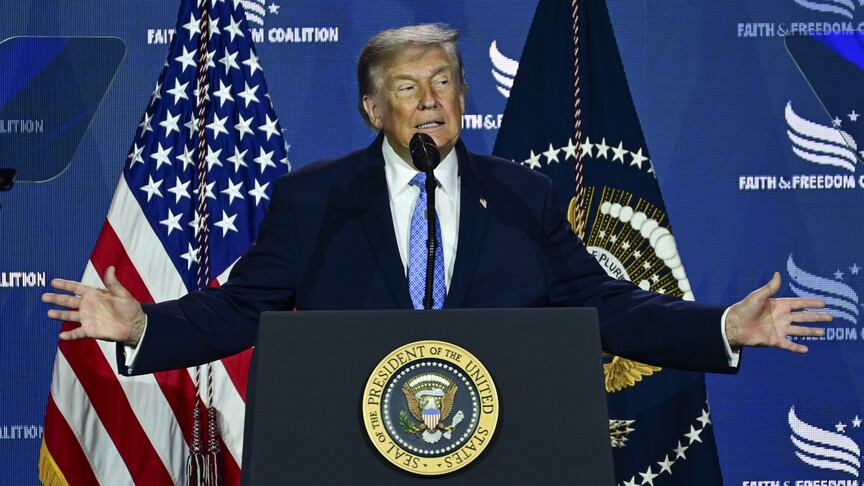
Trump lashes out at Washington, DC, mayoral nominee
-

 Cleveland, OH38 minutes ago
1 dead, 1 hospitalized after early morning crash: Cleveland EMS

