Entertainment
'Who am I?' For 'Fantasmas' star Martine, Vanesja is one part of her persona


In a show that boasts appearances by the likes of Emma Stone, Bowen Yang, Amy Sedaris and Aidy Bryant, Julio Torres’ “Fantasmas” may well make a TV star out of someone who aptly goes by a single name: Martine.
“This is the biggest role I’ve ever had,” Martine, a trans visual and performance artist, says via Zoom. “I’m officially the star of a television show. And it might also be my favorite TV show.”
For anyone who’s watched “Fantasmas,” that endorsement should double as insight into Martine’s own aesthetic and artistic sensibility. Because “Fantasmas” isn’t like any other television show out there.
The six-part urban fairy tale, which premiered June 7 on HBO and drops episodes weekly on Fridays through July 12, imagines a New York City where ExxonMobil builds developments and rideshare apps called Chester — with a driver named Chester — exist alongside mermaid sales reps and rodent nightclubs-turned-CVS pharmacies.
Within that fantastical vision of New York, Torres’ Julio (who was hit by lightning as a child and is allergic to the color yellow) is constantly trying to eke out a living with the help of his robot assistant, Bibo (voiced by Joe Rumrill), and his agent, Vanesja (the “j” is silent), played by Martine.
“The show itself is kind of postgenre,” Martine suggests. “It’s very much a genre-building show. It’s hard to explain what you should expect to see.”
Every set piece in “Fantasmas” — whether it’s a sitcom called “MELF ” that riffs on “ALF ” and features Paul Dano, or a vignette focused on a zealous customer service rep played by “Euphoria’s” Alexa Demie — lays bare its crafted theatricality. It’s always clear that audiences are watching something shot on a set, with painted backdrops and makeshift props. This is a fanciful world that never pretends to be anything more than an absurd and absurdist take on everyday life.
1
2

1. Paul Dano, right, is featured in a skit about an “ALF”-like puppet named MELF. (Atsushi Nishijima/HBO) 2. Alexa Demie plays an overzealous customer service rep. (Monica Lek/HBO)
“It felt like theater,” Martine says of working on the show. “It felt like being onstage with an audience. Everything was built inside this one giant soundstage and it was all repurposed: The school becomes the nightclub, the nightclub becomes a rooftop. And the audience was everyone on set.”
Within this funhouse mirror of a show, which blends sketch comedy with a farcical plot that finds Julio wanting to avoid getting an ID that would serve as his “proof of existence,” Martine was similarly encouraged to play with her own identity — as a performer, artist and actor.
“I don’t recognize myself in the show,” she says. “Because it’s Vanesja. And I think Vanesja happened because I was so nervous about my performance. The only way for me to move ahead was to say, ‘You don’t have to be yourself. You can put forward some kind of armor, some kind of stronger, idealized person you want to move through the world as.’”
For Martine, the very idea of being “yourself” is elusive. Questioning the rigidity of our sense of self has long been at the heart of her art, which has been featured in galleries and art museums all over the country — not to mention at the Venice Biennale — and in magazines like Interview and Artforum.
“Who am I?” she wonders aloud. “I think I’m constantly trying to shed that definition. I think I’m constantly throwing it away, discarding the old skin, shedding it, as it were, to move into some wider, broader, stronger, faster model. Or predator or something.”
Such facetious language, which moves from the probing to the preposterous with ease and humor, is arguably why she gets along with Torres. Martine first met the Salvadoran comedian close to a decade ago at an archery championship. “It’s truly an unbelievable story,” she recalls. “Julio was there at the buffet. He’s vegan, and I was kind of pretending to be vegan at the same time.”
They both reached for the last tater tot, and at the moment when their fingers touched and their eyes met, Martine knew she’d found a new friend. Maybe even more. “This is your sister wife,” she remembers thinking. “This is your kindred spirit, and you’re both starving … to be seen.”
What Torres most remembers about his first encounter with Martine was something equally ineffable. “Her ability to subvert her own physicality, to find humor in beauty,” he recalls via email.
Their friendship blossomed in between archery practices and congenial DMs as their careers bloomed in separate if complementary directions. While Torres joined the “Saturday Night Live” writing staff and later premiered his own comedy special (“My Favorite Shapes”), Martine was busy creating art installations that satirized advertising campaigns (Martine Jeans), a publication that similarly critiques glossy high-fashion magazines (Indigenous Woman) and sci-fi-set live performances (“Circle”) that toyed with ideas around gender, femininity and self-expression in equally cheeky and wryly self-serious ways.
Their earlier collaborations — Martine previously played an unimpressed gallerist in Torres’ feature film debut, “Problemista,” and an impaled beauty queen in his Peabody award-winning show “Los Espookys” — feel like playful preambles to their work together on “Fantasmas.” Vanesja is, after all, a performance artist who’s been playing Julio’s talent agent for so long, she’s lost track of whether it’s still a performance.
“Without Martine, there is no Vanesja,” Torres says. “That’s how I work sometimes, in collaboration with a performer to create something tailor-made for them. She first planted the seeds of Vanesja when leaving me cryptic voicemails. Something about closing a big deal and not being able to discuss it. We welcomed each other into our worlds.”
In the surreal world that is “Fantasmas,” Vanesja is a reminder of how we ourselves can often be indistinguishable from the makeshift roles we play.
“I think a lot of the show’s motifs exist in my work too,” Martine says. “I love mannequins. I love asking a lot of questions broadly about identity and using costumes and using personas to try and get to some deeper truth. And it was so refreshing to lean into that with comedy because the art world is so unbearably serious.”
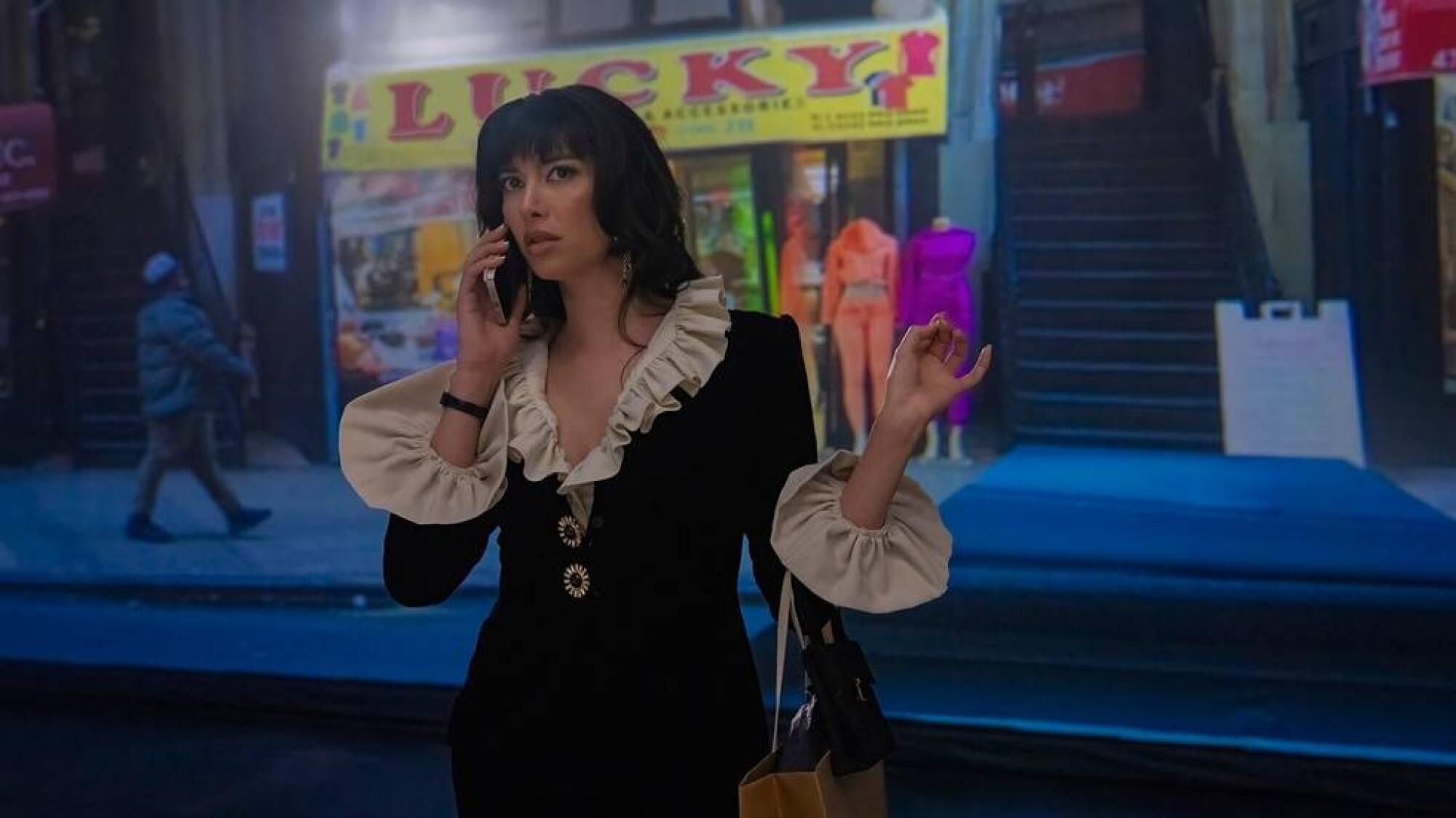
“I love mannequins. I love asking a lot of questions broadly about identity and using costumes and using personas to try and get to some deeper truth,” Martine says.
(Monica Lek / HBO)
With Vanesja, you see Martine reveling in that comedy. With her droll sense of humor intact and Vanesja’s aesthetic aching to be described as “business executive realness,” she’s constructed a dry-witted performance of an artist-cum-agent whose indifference to the world around her is bewitching. There’s her voice, for starters, which is sultry and breathy, marked by a glacial pace that makes Julio and audiences alike become engrossed by her every word. She almost feels plucked from the late 1990s, when the blazers and pencil skirts Vanesja wears were synonymous with a feminine, if not outright feminist, brand of seriousness.
“Vanesja is classically binary,” Martine says. “She has both the charm of a woman and all the strength of a man.”
In working within such a gendered binary, I bluntly ask how she was able to create this entrancing character who seems aloof yet interested, cold yet warmhearted. How did she do it?
“How does she Vanesja?” she asks herself, in between laughter, wanting to clarify my question — knowing, perhaps, that she’s arrived at a key philosophical way of understanding her process and her character alike. “I Vanesja every day. I try to Vanesja at least once a day, just for flexibility and my health, my mental health.”
For Martine, getting a chance to create Vanesja alongside Torres was a joy because it allowed her to unearth parts of herself and her work that exist at the surface yet get at deep-seated ideas about who we are and how we present ourselves. At a purely visual level, though, she had a very simple reference in mind.
“I’m obsessed with Ursula from ‘The Little Mermaid’ when she becomes a cis woman,” she says. “Her name is Vanessa, and I do feel like there is a resemblance between that Vanessa and myself, just like out of drag. This was me trying to implement a villainous persona that I personally feel lives inside me.”
That hint of Disney wasn’t the only personal touch Martine brought to “Fantasmas.” She is to thank for what has already become one of the most talked-about images teased from the show, and seen in Friday’s episode: her scene partner, “Teen Wolf” star Dylan O’Brien, wearing red lacy undergarments, with garters and stockings to match.
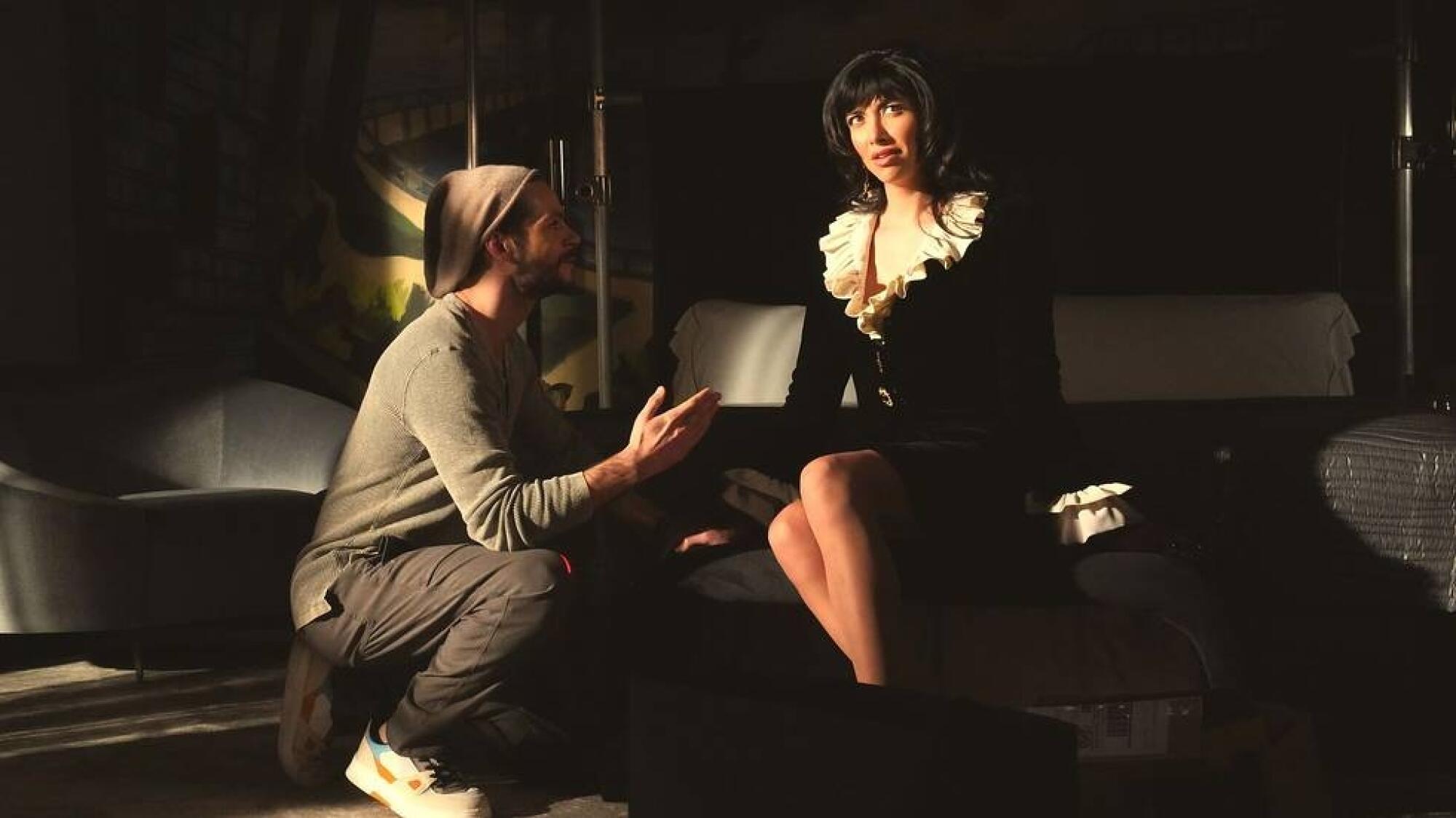
Dylan O’Brien and Martine in “Fantasmas.”
(Monica Lek / HBO)
“That was probably my one contribution, narratively, to the show,” she admits. “It’s a personal taste thing. I think it’s really sexy to see a man in women’s lingerie. Dylan had no problems with it. He was so down. And he looked great.”
Such an incongruous image (in a scene that’s quite melancholy, not really all that steamy, in fact) doesn’t feel out of place in “Fantasmas.” The show, like Vanesja, embraces binaries only to bridge them. Or break them. Or perhaps just toy with them. But it can do so only because the series is fascinated by the personal dramas we all carry within. There’s a push toward empathy for the other that runs through the show, even in its most outlandish moments.
“‘Fantasmas’ is the people who populate it,” as Torres puts it. It’s a show “about characters who, with little screen time, aim to capture the curiosity of the viewers.”
Further echoing those words and in trying to sum up this off-kilter show’s ambitions, Martine is reminded of Jon Brion’s song “Little Person,” which he co-wrote with Charlie Kaufman for the filmmaker’s meta-theatrical opus “Synecdoche, New York.”
That 2008 film is centered on a theater director eager to celebrate the mundanity of real experiences. The only way he knows how is to put on a stage show of his own life and that of everyone he comes into contact with. “I’m just a little person,” Martine sings. “One person in a sea of many little people, who are not aware of me.”
“I feel like that’s everyone in New York,” she says. “And also everyone in ‘Fantasmas.’ You get this everything, everywhere all at once TikTok universe where every story is simultaneous. Where everyone is the lead in their own narrative. Which is kind of the closest thing to reality that you can get.”



In contrast to other sci-fi heroes, like Interstellar’s Cooper, who ventures into the unknown for the sake of humanity and discovery, knowing the sacrifice of giving up his family, Grace is externally a cynical coward. With no family to call his own, you’d think he’d have the will to go into space for the sake of the planet’s future. Nope, he’s got no courage because the man is a cowardly dog. However, Goddard’s script feels strikingly reflective of our moment. Grace has the tools to make a difference; the Earth flashbacks center on him working towards a solution to the antimatter issue, replete with occasionally confusing but never alienating dialogue. He initially lacks the conviction, embodying a cynicism and hopelessness that many people fall into today.
The film threads this idea effectively through flashbacks that reveal his reluctance, giving the story a tragic undercurrent. Yet, it also makes his relationship with Rocky, the first living thing he truly learns to care for, ever more beautiful.
When paired with Rocky, Gosling enters the rare “puppet scene partner” hall of fame alongside Michael Caine in The Muppet Christmas Carol, never letting the fact that he’s acting opposite a puppet disrupt the sincerity of his performance. His commitment to building a gradual, affectionate friendship with this animatronic creation feels completely natural, and the chemistry translates beautifully on screen. It stands as one of the stronger performances of his career.
Project Hail Mary is overly long, and while it can be deeply affecting, the film leans on a few emotional fake-outs that become repetitive in the latter half. By the third time it deploys the same sentimental beat, the effect begins to feel cloying, slightly dulling the powerful emotions it built earlier. The constant intercutting between past and present can also feel thematically uneven at times, occasionally undercutting the narrative momentum. At 2 hours and 36 minutes, the film feels like it’s stretching itself to meet a blockbuster runtime when a tighter cut might have served better.
FINAL STATEMENT
Project Hail Mary is a meticulously crafted, hopeful, and dazzling space epic that proves the most moving friendship in film this year might just be between Ryan Gosling and a rock.
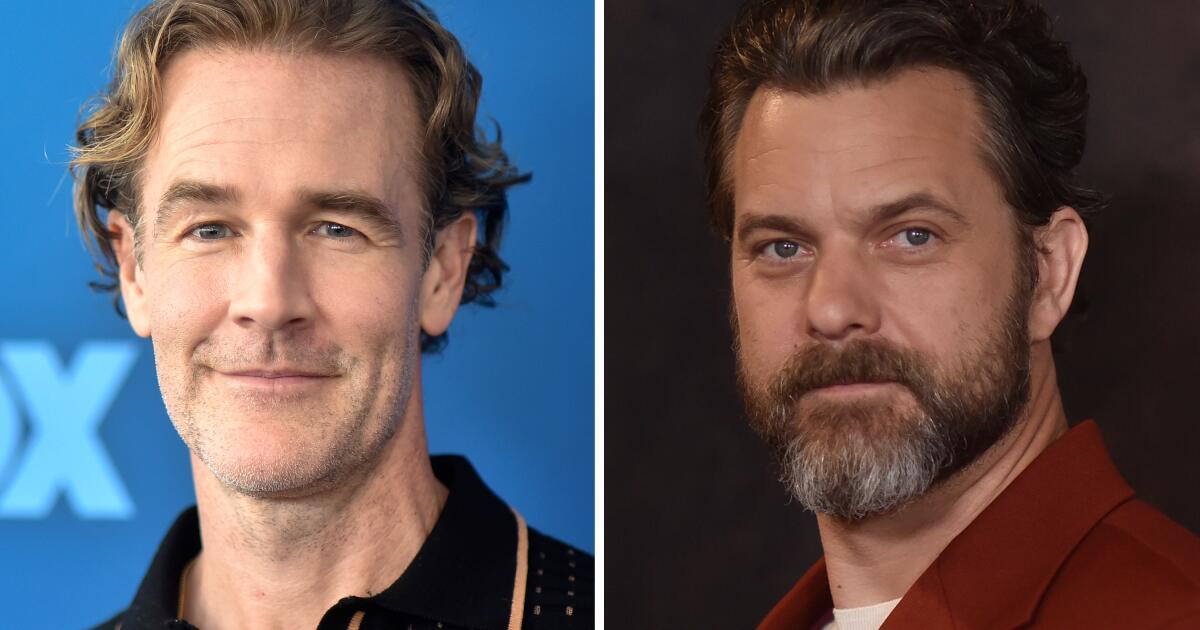
Joshua Jackson says he knows he was “really just a footnote” in James Van Der Beek’s life, despite the “amazing” time they spent together as stars of the series “Dawson’s Creek.”
The star of “The Affair” is reflecting publicly for the first time about his former castmate, who died Feb. 11 at age 48 after a battle with colorectal cancer.
The time they shared on set was “formational” for them, Jackson said on “Today.” When the “Dawson’s Creek” pilot aired in January 1998, he was 19 and Van Der Beek was almost 21, playing characters who were 15.
“I know both of us look back on that time with great fondness, but I will also say that I know that I’m really just a footnote in what he actually accomplished in his life.”
Jackson spoke with great respect for his friend, who he said “became what we used to just call a good man, a man of the kind of belief, the kind of faith that allowed him to face the impossible with grace, an unbelievable partner and husband, just a real man who showed up for his family and a beautiful, kind, curious, interested, dedicated father.”
On the one hand, the 47-year-old said, “that’s beautiful.” On the other, “The tragedy of that loss for his family is enormous.”
Since Jackson and Van Der Beek played Pacey Witter and Dawson Leery three decades ago, both men had kids of their own — a 5-year-old daughter for Jackson, born during the pandemic with ex-wife Jodie Turner-Smith, and six kids for Van Der Beek with second wife Kimberly Brook. The latter couple’s children — two boys and four girls, ranging in age from 4 to 15 — were what Van Der Beek said changed everything for him.
“Your life becomes shared, and your joys become shared joys in a really beautiful way that expands your level of circuitry out to other people instead of just keeping it all for your own gratification,” the actor told “Good Morning America” in May 2023. “And the lessons, they keep on coming. It’s the craziest, craziest thing I’ve ever done, and it’s the thing that’s made me happiest.”
Knowing his colleague’s love for his family, Jackson said on “Today” that “for me as a father now, I think the enormity of that tragedy hits me in a very different way than just as a colleague, so I think the processing [of Van Der Beek’s death] is ongoing.”
The “Little Fires Everywhere” actor was on the morning show Tuesday to bring attention to colorectal cancer screenings.
Van Der Beek’s diagnosis, which went public in November 2024, was among the factors prompting Jackson to get involved with drugmaker AstraZeneca’s “Get Body Checked Against Cancer” campaign, which takes a lighter approach to a serious subject — cancer screening — through a partnership with Jackson, the National Hockey League and the Philadelphia Flyers’ furry orange mascot, Gritty.
“It is … true, the earlier you find something,” said “The Mighty Ducks” actor, “the better your possible outcomes are.”

DAN WEBSTER:
It may now seem like ancient history, especially to younger listeners, but it was only 26 years ago when the streets of Seattle were filled with protesters, police and—ultimately—scenes of what ended up looking like pure chaos.
It is those scenes—put together to form a portrait of what would become known as the “Battle of Seattle” —that documentary filmmaker Ian Bell captures in his powerful documentary feature WTO/99.
We’ve seen any number of documentaries over the decades that report on every kind of social and cultural event from rock concerts to war. And the majority of them follow a typical format: archival footage blended with interviews, both with participants and with experts who provide an informational, often intellectual, perspective.
WTO/99 is something different. Like The Perfect Neighbor, a 2026 Oscar-nominated documentary feature, Bell’s film consists of what could be called found footage. What he has done is amass a series of news reports and personal video recordings into an hour-and-42-minute collection of individual scenes, mostly focused on a several-block area of downtown Seattle.
That is where a meeting of the WTO, the World Trade Organization, was set to be held between Nov. 30 and Dec. 3, 1999. Delegates from around the world planned to negotiate trade agreements (what else?) at the Washington State Convention and Trade Center.
Months before the meeting, however, a loose coalition of groups—including NGOs, labor unions, student organizations and various others—began their own series of meetings. Their objective was to form ways to protest not just the WTO but, to some of them, the whole idea of a world order they saw as a threat to the economic independence of individual countries.
Bell’s film doesn’t provide much context for all this. What we mostly see are individuals arguing their points of view as they prepare to stop the delegates from even entering the convention center. Meanwhile, Seattle authorities such as then-Mayor Paul Schell and then-Police Chief Norm Stamper—with brief appearances by Gov. Gary Locke and King County Executive Ron Sims—discuss counter measures, with Schell eventually imposing a curfew.
That decision comes, though, after what Bell’s film shows is a peaceful protest evolving into a street fight between people parading and chanting, others chained together and splinter groups intent on smashing the storefronts of businesses owned by what they see as corporate criminals. One intense scene involves a young woman begging those breaking windows to stop and asking them why they’re resorting to violence. In response a lone voice yells their reasoning: “Self-defense.”
Even more intense, though, are the actions of the Seattle police. We see officers using pepper spray, tear gas, flash grenades and other “non-lethal” means such as firing rubber pellets into the crowd. In one scene, a uniformed guy—not identified as a police officer but definitely part of the security crowd, which included National Guardsmen—is shown kicking a guy in the crotch.
The media, too, can’t avoid criticism. Though we see broadcast reporters trying to capture what was happening—with some affected like everybody else by the tear gas that filled the streets like a winter fog—the reports they air seem sketchy, as if they’re doctors trying to diagnose a serious illness by focusing on individual cells. And the images they capture tend to highlight the violence over the well-meaning actions of the vast majority of protesters.
Reactions to what Bell has put on the screen are bound to vary, based on each viewer’s personal politics. Bell revels his own stance by choosing selectively from among thousands of hours of video coverage to form the narrative he feels best captures what happened those two decades-and-change ago.
If nothing else, WTO/99 does reveal a more comprehensive picture of what happened than we got at the time. And, too, it should prepare us for the future. The way this country is going, we’re bound to see a lot more of the same.
Call it the “Battle for America.”
For Spokane Public Radio, I’m Dan Webster.
——
Movies 101 host Dan Webster is the senior film critic for Spokane Public Radio.

Virginia lawmakers criticize anti-redistricting mailer with Jim Crow-era images – WTOP News

Wisconsin Lawmakers Propose Ranked Choice Voting for All Elections

New laws establish a statewide literacy program

Current price of Bitcoin for March 10, 2026 | Fortune

When should kids start learning about money? Advice from local financial advisor

Florida High School Football Rankings: Top 25 teams – Oct. 21

Cleary's 21 help Le Moyne down Central Connecticut State 69-64 in OT

How old is Bo Nix? What to know about Oregon quarterback ahead of 2024 NFL Draft

99th annual Pony Swim held in Virginia

Indiana Members Credit Union announced as new anchor tenant at Bottleworks District

Map: 2.3-Magnitude Earthquake Reported North of New York City

Trump stirs GOP primary drama with visit to Massie’s Kentucky home turf

Israeli air strike targets building in south Lebanon

Ed Martin, outspoken Justice Department lawyer, is formally accused of ethical violations | CNN Politics

Trump reveals top issues GOP should focus on to secure midterms victory: ‘I’ve never been more confident’
-

 Wisconsin1 week ago
Setting sail on iceboats across a frozen lake in Wisconsin
-

 Massachusetts1 week ago
Massachusetts man awaits word from family in Iran after attacks
-

 Maryland1 week ago
AM showers Sunday in Maryland
-

 Pennsylvania5 days ago
Pa. man found guilty of raping teen girl who he took to Mexico
-

 Florida1 week ago
Florida man rescued after being stuck in shoulder-deep mud for days
-

 Sports6 days ago
Keith Olbermann under fire for calling Lou Holtz a ‘scumbag’ after legendary coach’s death
-

 Virginia6 days ago
Giants will hold 2026 training camp in West Virginia
-

 Politics1 week ago
Mamdani’s response to Trump’s Iran strike sparks conservative backlash: ‘Rooting for the ayatollah’