Entertainment
On the ‘Laguna Beach’ reunion, this former love triangle is back for nostalgia, not drama


It feels like a relic from a bygone age of simplicity: an entire season of reality TV hinging on the social lives of a group of unpolished teenagers. They gossiped, cried, partied and fought. They worried about college admissions and which shade of polish to choose at the nail salon. They cast longing looks from across the room.
That was “Laguna Beach.”
Series creator Liz Gateley had just started working at MTV in 2003 when she pitched an unscripted series following a real group of high schoolers in Southern California.
“The logline was, ‘90210’ and ‘Heathers’ meets ‘Dawson’s Creek,’’’ because we knew we wanted music to be a big part of it,” Gateley said. “We didn’t know it would be the phenomenon it became.”
Shot more like those glossy dramas than a reality series, every “Laguna Beach” episode opened with Hilary Duff’s “Come Clean” playing over the sun–kissed credits and a title card that let viewers know “the people, the locations and the drama are real.”
For the most part, they were.
At the heart of the first season was a quasi-love triangle between on-again, off-again Laguna Beach High School couple Stephen Colletti and Kristin Cavallari, and Colletti’s close friend (possibly more), Lauren Conrad.
The cast of MTV’s “Laguna Beach,” from left: Stephen Colletti, Kristin Cavallari, Morgan Olsen, Christina Schuller, Trey Phillips, Lo Bosworth, Lauren Conrad and Talan Torriero.
When the series premiered on MTV in 2004, it became an instant (and controversial) hit, made millennial household names out of Cavallari, Colletti and Conrad, and led to the spin-offs “The Hills,” “The City” and “Newport Harbor.”
Now, 10 original cast members, including those stars, have reunited for “The Reunion: Laguna Beach” premiering Friday on the Roku Channel. (The special was originally planned to coincide with the cast’s 20th high school reunion in 2024 but is now loosely timed to the anniversary of the show’s 2006 finale.)
Hosted by actor Casey Wilson, the reunion is an upbeat, feel-good affair, highlighting some of Season 1’s most memorable moments and faces. Cavallari, Colletti and Conrad all served as executive producers and wielded a degree of “creative control,” Colletti said.
“We didn’t want it to be this dramatic, ‘Housewives’-type reunion,” Cavallari said. “We wanted to do it for the nostalgia.”
Ahead of the reunion’s premiere, Colletti and Conrad, both 40, and Cavallari, 39, convened for a lengthy interview with The Times at a beachfront hotel restaurant in Santa Monica. Nestling into a corner booth with the trio felt like sitting with the cool kids you’d only ever watched from afar.
Yet, the three — even Cavallari and Conrad, who were pitted against each other in the 2000s — were warm and chummy, cracking jokes and enthusiastically agreeing with one another.
They’ve come a long way from their high school drama. Conrad has returned to Laguna Beach where she and her husband, the Something Corporate guitarist turned attorney William Tell, are raising their two sons. Cavallari oversees a lifestyle brand in Nashville and shares three children with her ex-husband, the former NFL quarterback Jay Cutler. And Colletti recently appeared on “The Traitors” and stars in the upcoming second season of the comedy “Everyone Is Doing Great.” He and his wife, NASCAR host Alex Weaver, are currently expecting their first child.
These are edited excerpts from the conversation.
How did the reunion come about? Did anyone require convincing?
Cavallari: I credit Stephen for all of this, because the [“Back to the Beach”] podcast [co-hosted by Cavallari and Colletti] was his idea, and then from there, the reunion.
Colletti: When I first called Lauren about it, she was like, “Alright, I have a few questions.” You didn’t shoot it down right away, but you could tell there were some things that we needed to work through for this to make sense, and rightfully so.
Conrad: For me, just the idea of bringing cameras back into my life was very nerve-racking, but we were all executive producers. We all had a say, so we felt like we had a bit of control, which, in the past, we haven’t.

Conrad, Colletti and Cavallari are all executive producers on “The Reunion: Laguna Beach.”
(Jason Armond / Los Angeles Times)
The “Laguna Beach” producers chose your high school for the show in 2003 and then began selecting interested students to star. What do you remember about your applications?
Cavallari: I just remember trying to make myself stand out. I was competitive. I didn’t even have the foresight to be like, “Do I want to be on TV?” It was more like, “I want to win this thing,” like I’m competing to be on TV. Everybody was vying for it.
Colletti: I remember doing some of the interviews [with the producers], and I’m freaking mumbling. I’ve got this pineapple hair. I’m trying to be like Freddie Prinze Jr. I didn’t know who I was.
What was your understanding of what being on reality TV entailed?
Conrad: Well, they put together a package for us. They had filmed for maybe a week, and they showed it to us and our parents before we signed on — and that was pretty different from where we landed.
Cavallari: It was more PG. No real drama, more like a documentary.
Colletti: No s— talking.
Conrad: Just like, “What’s it like to live in a beach town?”
Cavallari: I remember my dad being like, “Well, this is going nowhere. They’re really boring.”
When did you realize that your love triangle was going to be the central storyline of Season 1?
Cavallari: Pretty quickly. In my [audition] interview, a lot of the questions were geared toward it. Obviously, once we started shooting, we got a pretty clear idea.
Colletti: They started to hone in on certain things, or they fed our friends a question to ask us.
Cavallari: I remember having to be very careful about what I said — but not careful enough because I didn’t think about editing. I was just like, “Well, if I don’t say it, what are they going to do?”
Conrad: A look says it all. They’ve admitted to me that in the pilot, at the hotel, they used a scene where I’m looking at a tray of food, and they made it look like I was looking at Stephen.
Lauren and Kristin, you don’t ever really speak face-to-face on “Laguna Beach.” Were there more interactions happening at that time that we didn’t see?
Conrad: No, that was it.
Cavallari: We really did not.

“I have a lot of respect for Lauren, and I think it’s been really nice to get to know this version of her, as adults, as moms, as business owners,” says Kristin Cavallari about her former castmate Lauren Conrad.
(Jason Armond / Los Angeles Times)
You two share a really mature conversation in the reunion. How have your perceptions of each other changed over the years?
Cavallari: I have a lot of respect for Lauren, and I think it’s been really nice to get to know this version of her, as adults, as moms, as business owners. We have a lot more in common than I ever thought. I’m just really thankful that we can close this “Laguna Beach” chapter this way. It does feel really therapeutic.
Conrad: I echo everything you said. So much time has passed and pretty quickly after the show ended, we sort of squashed everything, but we’ve lived separately and we don’t see each other ever. So, this was a nice excuse to do it on camera because I think that actually is meaningful for people who were invested in that storyline to see — you grow up and you move on and these things are not that important.
The fashion on the show was pretty iconic during that era. Were you putting much thought into your TV outfits?
Conrad: Not in Season 1. I had to buy all my own clothes, so I’m mostly in a C&C tank top and Miss Sixty [jeans] that I saved up for. It’s all the same outfit, I’m just reversing tanks.
Colletti: For me, it was board shorts all the time. In Season 2, for some reason, we started wearing sports coats over hoodies. Not good.
Cavallari: I wish I cared more in Season 2. That was my senior year, and I was over high school in general, so that carried through to the show and my appearance. Maybe that was part of the appeal, as well. There was this innocence with us just being normal kids.
There were no false lashes or full faces of glam.
Conrad: Oh no, no, no. A lot of it’s, like, last night’s eyeliner.
Cavallari: I always had a zit.
Conrad: Oh, yeah, I know! Not for you, but for me. My skin wasn’t very good.

The cast in 2004, from left: Lo Bosworth, Trey Phillips, Kristin Cavallari, Lauren Conrad, Talan Torriero, Christina Schuller, Morgan Olsen and Steven Colletti.
(MTV)
You were all 16 and 17 when you were cast on “Laguna Beach.” Were there any discussions around, “Be mindful of what you do on camera,” or “This might follow you for the rest of your life”?
[All laugh]
Cavallari: Honestly, no.
Colletti: The only media training that we got was like 30 minutes before the VMAs [Video Music Awards] in Miami right before [the first season of] the show was about to air. They’re like, “If anybody asks, it’s all real.” That’s what we were told. “Don’t say this. Say this,” and “Good luck.”
The show was more tame than most of today’s reality TV, yet there was a lot of on-camera underage drinking.
Cavallari: Oh, yeah. A lot.
Conrad: [The producers] were very aware. They couldn’t buy us alcohol, but they were aware we were drinking.
Did anyone ever step in and say, “Hey, maybe we shouldn’t be filming these teenagers in an inebriated state”?
All: No.
Cavallari: I don’t even remember it ever being a conversation.
Colletti: There was a moment where producers said, “You know you guys are underage, so you can’t be drinking.” But they said it so casually and while the cameras were rolling —
Conrad: — Oh, liability.
Colletti: Yes. I actually felt for a moment, should we put [the drinks] away? And everyone’s like, “No, dude. It’s fine.”
Cavallari: In no way, shape or form was MTV ever pushing it. We were just naturally doing that, like most high school kids back then.
Conrad: On “The Hills,” they had to start filming morning scenes of us hungover because they showed so much drinking. They were like, “We have to show the consequences of drinking.”
Gateley noted that the “Laguna Beach” producers “would have, for sure, stepped in if anyone was not safe.”
Kristin, during the reunion you said that you didn’t realize saying “no” to the producers was an option. What would you have done differently?
Cavallari: I don’t regret anything, it just never crossed my mind. Maybe because I’m a high school kid, and I have these adult producers saying, “Hey, show up here and do this,” and I just assumed that was what I was supposed to do. I wised up later in my reality TV career, but not for a while.
Conrad: I remember [castmate] Lo [Bosworth] used to say no to a lot of stuff. She’d be like, “I’m just not going to go,” and I was like, “I don’t think we can do that!” I was very like, “I signed up, I need to show up.” I can’t remember ever saying no. I questioned stuff sometimes, like the voiceover. I would reword stuff because it would feel a little harsh.
Colletti: They never forced anything on us, but when you’re 17 years old and you’ve signed this contract with MTV, you felt that responsibility.
Cavallari: I realized too that they were going to get what they wanted no matter what, whether you put up a fight about a line or not.
Conrad: I went into the [production] office once and they had a storyboard on a big wall. I realized we were only halfway through the wall, and there was a card like, “Story continues.” I was like, “Oh, my God, what’s going to happen? What comes next?” It felt very “Truman Show.”

In a memorable Season 1 episode, the teens journey to Mexico to spend spring break in Cabo San Lucas. While there, they get drunk at a club. Kristin gets close with another boy and dances on a bar, while Stephen repeatedly yells that she’s a “slut.”
The first Cabo episode —
Colletti: It looms large.
Stephen and Kristin, how do you look back on that now?
Cavallari: We were so young. At 17 and clearly being intoxicated, my go-to was to pop off. So, when I watched it back, I was proud of myself for trying to remove myself from the situation. I can totally appreciate what Stephen was going through. Not everyone has a camera in their face at age 17, and we had to grow up in front of an audience.
Colletti: I had fully locked that away. I don’t even know if I even watched it all the way through [when it aired]. But, ultimately, it boils down to just not [being] proud of the way I acted.
I look at it feeling sorry for us, for those two kids, that this is an embarrassing moment that’s on camera. You wish it’s not there for them, but at the same time, look how far they’ve come from that time and that moment.
Did MTV show you the episodes before they aired?
Conrad: They came the day before.
Colletti: Sometimes, strategically, I think that they ended up arriving the next day. It was like, “Oh, we didn’t get it in the mail to you on time!”
Were they on DVD?
Conrad: VHS! [Executive producer] Adam DiVello bought me a VHS player for my dorm in San Francisco so that I could watch them.
When the show premiered, did your lives change instantly?
Conrad: It felt immediate for me. The first week I arrived at college, [MTV] came out with these posters that said, “They really are this rich and beautiful.” That was the tagline. And I was, like, at art school. I never got to have a college experience because pretty immediately it was like, “Oh, I’m that girl.”
Colletti: The irony is, I wanted to do the show to no longer conform to the trends of high school. I made the choice to go to San Francisco State because not a lot of people from Laguna were going there, and then [everyone] saw this version of me on the show. It was a lot to process — people in the dorm trying to take pictures of you when you’re walking to the shower, or guys at parties trying to fight you just because you’re a guy from a reality show.
Cavallari: I was sort of in a bubble still being in high school. Life felt fairly normal, but then they would call me and be like, “Hey, we need to get on a plane tonight to be on ‘TRL.’ tomorrow.”

The castmates say their lives changed after “Laguna Beach” aired: “It felt immediate for me. The first week I arrived at college, [MTV] came out with these posters that said, ‘They really are this rich and beautiful,’” Lauren Conrad, far left, says.
(Jason Armond / Los Angeles Times)
Do you remember what you bought with your first paycheck? It was around $2,000 for the whole first season.
Conrad: I bought a pair of Chanel sunglasses.
Cavallari: I bought a little Chanel purse. I think that was probably the second season, though.
Colletti: I blew it on some golf clubs. I’d always had hand-me-downs from my brother, so the fact that I could buy new golf clubs, I was on top of the world.
Cavallari: I would have done the show for free. I was like, “We’re going to get paid for this?!”
Would you let your kids be on a reality show when they’re in high school?
Cavallari: No, I would never let them do a show like we did. Those are such precious years. When you graduate and you turn 18, that’s one thing. But while you’re a kid, just be a kid.
Conrad: If we were going back and doing it during the time we did it and in that environment, maybe it’s a conversation. Now, with social media, I would have a hard time letting one of my children do it. It’s just so much pressure.
Colletti: I’ve got this master plan of telling my kid that his dad was on a TV show that was really cool back in the day. And then, when he sees his dad on it, he’ll be like, “It’s not cool. I don’t want to do what Dad did.” It’ll deter him or her.
Why do you think “Laguna Beach” continues to resonate?
Colletti: It represents a very specific time in society, and it was [showcasing] kids who were not trying to become famous. The whole fame machine that is reality TV these days, we really did not think we were getting ourselves into that.
Conrad: Nowadays, people do a show and they’re like, “This is going to kickstart my career.” I was looking to make some connections in the fashion industry, but besides that, I wasn’t looking to create a brand or do any of those things. We didn’t seek it out.
Are there any other paths you’d like to pursue that you haven’t? [“The Hills” star] Spencer Pratt is running for L.A. mayor — any chance you’ll have a political career?
Cavallari: No. I feel pretty fortunate that I’ve been able to do a lot of really exciting things over the years. I feel pretty content.
Conrad: Me too. I worked so hard in my 30s. I wanted to do everything, but I’m in a place where I’m so lucky to have my family, and I just want to be present for them.
Colletti: I’m excited to become a dad. It’s such an exciting time. Everything feels right where it should be.


Christopher Nolan delivers his boldest and most visually stunning film to date.
TOP FIVE OF “THE ODYSSEY”
5. Nolan’s Astounding Script
As a writer-director, Nolan has evolved in substantial ways over the course of his career. He has always been a strong, concept-oriented writer who could sell the ever-living shit out of a great narrative hook, but in recent years, he has reached another level of craftsmanship, especially when it comes to the emotional depth of his work. His take on The Odyssey has the unenviable task of condensing Homer’s sprawling, lyrical epic into a feature-length runtime, yet he manages to turn that challenge into a strength rather than a weakness. From the very first frame, Nolan engages in a fascinating conversation with the original text.
The screenplay merges elements of both Homer’s The Iliad and The Odyssey in articulate and insightful ways that should excite scholars and newcomers alike. Nolan’s film is so efficient that it remains completely accessible to those unfamiliar with the stories, while also serving as a fascinatingly complex and deeply thoughtful adaptation that will keep longtime fans captivated until the very end. Somehow, he accomplishes all of this while crafting one of his most personal works to date. The film is explicitly rooted in many of Nolan’s recurring thematic interests, including time, familial bonds, and the inherent guilt of achievement, while pushing each of those ideas to new depths. This is my favorite Nolan screenplay to date, and an incredible accomplishment.
4. The Insane Ensemble
The cast Nolan assembles for The Odyssey is as sprawling as Homer’s epic itself. The ensemble is a blend of longtime Nolan collaborators and newcomers, all of whom come together to form a richly woven tapestry of fully realized performances. For my money, there isn’t a weak link in the group. If anything, it’s remarkable to see acclaimed actors like Charlize Theron, Lupita Nyong’o, and Zendaya appear for only a few minutes each and still leave a lasting impression.
There are, however, several standout performances, particularly from Matt Damon, Samantha Morton, Robert Pattinson, Anne Hathaway, and Elliot Page. Each actor is utterly magnetic, possessing the screen presence and charisma to command Nolan’s signature IMAX frames in breathtaking fashion. Tom Holland also deserves special recognition, delivering what is arguably the best performance of his career. By the film’s end, it genuinely feels like he’s entering an entirely new chapter as an actor. Altogether, the performances are phenomenal, filled with emotion, pathos, and deeply affecting, soulful work.
3. The Horror Sequences
It’s astonishing how much of Homer’s epic Nolan manages to fit into this film without ever making it feel rushed or condensed. For me, though, the most exhilarating moments come when he fully embraces the story’s fantastical elements through a distinctly unsettling, dread-filled lens. The Cyclops sequence feels like Nolan casually inserted a masterful horror short into the middle of the film’s first act. Even more impressive is the Circe-centered sequence later in the runtime, which pushes the film into even more delirious and mesmerizing territory while employing a similarly immersive approach.
These sequences give Nolan the opportunity to apply many of his signature filmmaking techniques in entirely fresh ways. The craftsmanship on display feels deeply rooted in his established style, incorporating everything from practical on-screen light sources and a thunderous blend of diegetic and non-diegetic sound to his trademark cross-cutting. Yet, when placed within these mythological and fantasy-driven settings, those familiar techniques feel completely revitalized, creating some of the most visually and emotionally striking moments of Nolan’s career.
2. An All-Encompassing Cinematic Experience
Which brings us to the culmination of all this extraordinary craftsmanship: The Odyssey is simply a transportive experience, one that can only be compared to one other Christopher Nolan film, his masterpiece, Dunkirk. From Hoyte van Hoytema’s breathtaking cinematography and Richard King’s immersive sound design to Ludwig Göransson’s soaring score, every element of the film pulls you deeper into its world. Sitting in an IMAX theater, surrounded by this level of cinematic precision and commitment, while witnessing the remarkable performances and Nolan’s grand creative vision, results in something truly monumental.
It was a theatrical experience I won’t soon forget, one that felt epic in every sense of the word.
1. The Obscenely Satisfying Final Act
The final thirty minutes of The Odyssey feel like watching a magic trick unfold before your eyes. As gripping and immersive as the film is from the very beginning, it becomes clear that Nolan has been meticulously setting up layers upon layers of narrative and thematic dominoes, all so he can knock them down in spectacular fashion during the final act. The sheer number of satisfying payoffs that arrive in rapid succession throughout this closing stretch is nothing short of astonishing.
At three hours long, The Odyssey never feels like it’s wasting a single moment. Instead, Nolan creates an experience that makes you feel as though you’ve genuinely embarked on this journey alongside the characters. By the time the film reaches its conclusion and everything comes full circle with such precision and emotional weight, it’s difficult to put into words just how deeply moving it all is. I genuinely sat there with my jaw on the floor. It’s phenomenal filmmaking.
RGM GRADE
(A)
Over the past few decades, Christopher Nolan has established himself as one of the defining filmmakers of his generation. From early works like the critically acclaimed cult classic Memento to blockbuster landmarks like The Dark Knight and Inception, and most recently the Academy Award-winning Oppenheimer, Nolan has remained one of the most influential voices in modern cinema. That made the question of what he would do after winning Best Picture and Best Director for Oppenheimer especially compelling. What kind of film does a director who seemingly can do anything choose to make at the absolute height of his creative powers?
The answer is The Odyssey, an adaptation of Homer’s seminal, genre-defining epic. The choice of source material wasn’t entirely unexpected, given Nolan’s long-documented fascination with the story. He nearly directed Troy back in 2004 before pivoting to Batman Begins, a decision that ultimately launched the extraordinary run of films that followed. What is surprising, however, is the sheer ambition and fearless conviction with which he tackles the material. In a post-Oppenheimer world, Nolan clearly feels emboldened to take even bigger, bolder, and more daring creative swings. The result is a staggering achievement. The Odyssey is unlike anything else in modern blockbuster filmmaking and stands among the finest accomplishments of Nolan’s career.
Ultimately, it’s almost unbelievable that a film like this exists: a massive-budget, three-hour, R-rated epic that finds Christopher Nolan pushing himself further than ever before while embracing his unique storytelling instincts in deeply thoughtful and compelling ways. For a filmmaker whose work has often felt meticulously controlled, The Odyssey crashes over you like a roaring sea, occasionally threatening to overwhelm even its creator, yet becoming all the more exhilarating because of it. It’s a breathtaking, enthralling, and profoundly insightful cinematic achievement. I cannot recommend it highly enough.

Discover more from RGM
Subscribe to get the latest posts sent to your email.
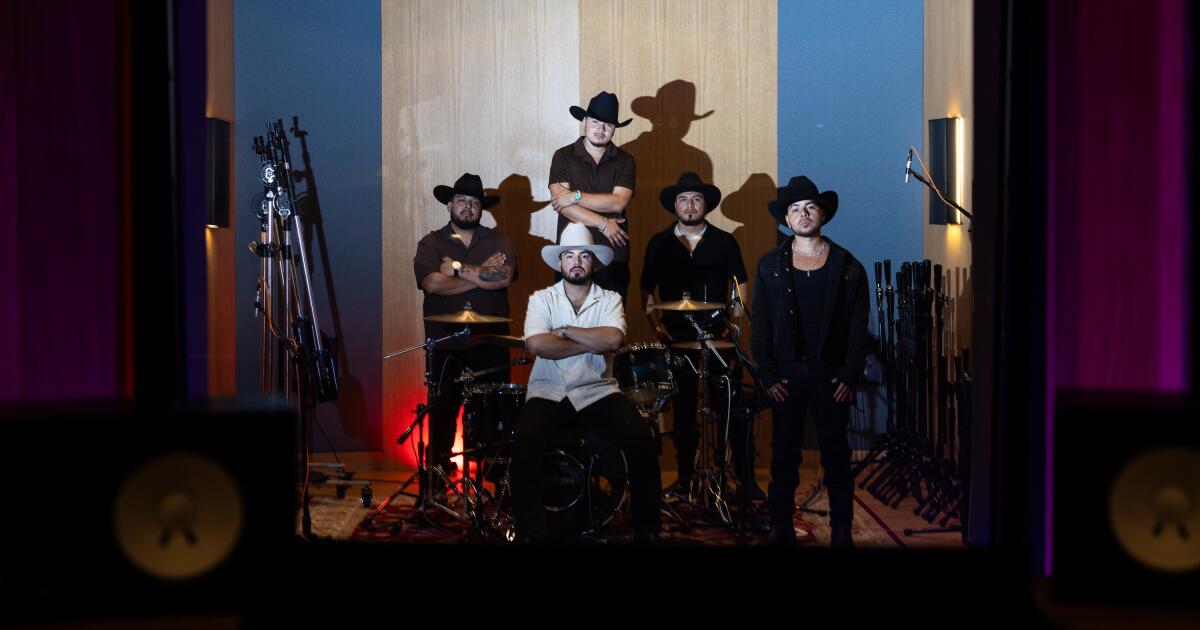
When you walk into a room with Los Primos del Este, the happy-go-lucky guys immediately make you feel like part of the family. What they first cultivate with silly banter and lighthearted ad-libs eases into a more vulnerable, introspective atmosphere, comparable to a cathartic therapy session.
When I met the norteño-sax band in at Interscope Records — the major label that signed them in early 2023 — it was just a couple of hours before the official release of Los Primos’ new album, “Dulce Amargo,” on Thursday.
For a young band of players in their early 20s, they play it cool; “Dulce Amargo” is their eighth LP to date. The project feels thoroughly chiseled to their refined sonic tastes (influenced by Julión Álvarez, Legado 7 and Remmy Valenzuela) inflected with raw, sentimental lyricism and a wailing saxophone that commands each track with the spirit of an electric guitar.
“Play it back to back and actually start understanding the sound more and realize there’s new sounds being created,” said lead vocalist Geovanni Flores. “Because a lot of people get stuck in their old ways.”
Made up of five members — Flores, bassist and supporting vocalist Ariel Jesus Lopez, accordionist Juan Luis Hernandez, drummer Alejandro Tellez and saxophonist David Tellez — the group has built a steady momentum in the música mexicana genre. They’ve championed the resurgence of norteño-sax, a subgenre that fuses the accordion sounds of norteño music with an invigorating alto saxophone, made popular by legendary groups like Conjunto Primavera.
Since forming in 2017, the North Carolina-based band has gained over 2 million listeners on Spotify through catchy norteño-sax songs like “No Es Mentira (Version Norteña),” “Poema” and “Mami” — drawn together by a polka-like beat that has made them a staple of Mexican dance venues.
In 2024 alone, the subgenre grew by 39% in both the U.S. and Mexico, per Spotify.
Los Primos del Este formed in 2017 out of North Carolina.
(Arwen Clemans / Los Angeles Times)
The band took a few years to find its groove. Its 2020 debut album, “PDE,” experimented more with the prickly, sad sierreño sound popularized by acts like Eslabon Armado and DannyLux — as well as trap-infused corridos tumbados with a thumping tololoche. Still, this was music one could bop their head to, even if dance parties were limited during the global pandemic. With norteño-sax, the group could incorporate contemporary dating themes into songs that bring people physically closer to one another on the dance floor.
“There’s been a sense of maturity that’s happened within the group. In the past, we would just make music to make music and release it,” said Flores. “ We thought about every single detail now, even down to the album cover.”
Before getting into the thick of their recent music catalog, Los Primos del Este quickly unfurled details of the album cover, which shows the group sprawled across the flatbed of a white truck. The image was inspired by Alejandro Cartagena, a Dominican Republic-born Mexican creative who photographed carpooling laborers on the flatbeds along a highway in Monterrey, Mexico, in 2012. The project was a visual representation of how everyday people — often marginalized individuals — navigate transit in a sprawling suburban area.
Such an open stance on community issues appears to be a norteño-sax speciality. In 2000, their forefathers Conjunto Primavera previously told The Times that they make music for working-class audiences: “Wealthy people don’t like what we do.”
“Personally, I found myself in the bed of a truck at one point, low-income, trying to make something out of nothing,” said Lopez. “That’s the world I grew up in, and that’s the world I wanna show everybody. It’s not all sweet, you know?”
The band also nods to injustices faced by immigrant communities — including the recent fatal shootings of 52-year-old Lorenzo Salgado Araujo and 26-year-old Johan Sebastian Duran Guerrero by Immigration and Customs Enforcement agents in Texas and Maine, respectively.
“We’re willing to take the heat,” said Lopez, referring to the band’s pro-immigrant stance. “The community looks at us as a negative presence, but in reality, we’re hard-working, dedicated family people.”
It is both that honesty and vulnerability that are etched into the 14-track LP “Dulce Amargo,” which translates to “bittersweet” in English. The band shared that each member contributed details of his own personal experience to the brainstorming sessions — a process they likened to therapy.
“We were comfortable enough with each other to let [our] stories be heard,” said Lopez. “In the Latino community, there is kinda like that stereotype [that] you have to be strong. I think this message goes out to everybody — if you’re feeling something, specifically the men, it’s OK to just let it out.”

(Arwen Clemans/Los Angeles Times)
The hazy love melody “Tremenda,” for example, underscores an intense yearning for connection. Written after Lopez was starstruck by a woman, its first lyrics begin in wondrous marvel: “Tal vez fue tu mirada,” or, “Perhaps it was your gaze.”
“What’s the first thing you do when you look at somebody? I look at the eyes,” said Lopez. “They say the eyes are the doors to the soul.”
Alejandro Tellez’s contribution came with the punchy “Linda Sonrisa,” that pleads for someone to realize the realities of the mistreatment they’re facing with another lover.
“How many times are you gonna let him do you wrong until you realize that you have the right guy in front of you?” said Alejandro Tellez in a sing-song twang. “That’s a story that I went through in high school.”
For Flores, the EDM-fused, echoing melody “Mejor Sin Ti,” struck a personal chord; could a relationship be the only thing standing in your way to personal success? “Some people do hold you back, some people tie you down — that’s what I felt,” said Flores.
Hernandez gets a bit teary-eyed when talking about his favorite song, “Sentimientos,” a whirling polka-driven ballad about an avoidant situationship, he said. “To me, it’s like we both kinda love each other already, but we’re kind of afraid to say it,” he explained. “A lot of people are afraid of falling in love again, so that song hits close to home.”
The concept behind “Mereces Mejor,” a trance-inducing ode with floating melodies that implores a loved one to recognize their self-worth, was inspired by David Tellez’s own experience with unrequited love: “She’s trying to go to the bad guy, and I’m over here giving everything I got.”
As the five artists prepare to take their new album on the road — including an upcoming performance at the Lone Star State’s Truck Show Texas Fest on July 25 — they want to make clear that norteño-sax is not a stagnant subgenre. Like most of música mexicana, it, too, is evolving, both in sound and lyricism, encapsulating today’s complex dating culture. Their emotional vulnerability is welcome in a field flooded with artists that may otherwise shrink away from such honesty — perhaps due to the stigma of mental health issues in the Latino community, especially among men.
“We understand that changing the sound may not be for everybody, but we’re making music for the next generation,” said Lopez. “Who knows? Maybe their parents might end up liking this too.”
Movie Reviews
‘3 Weeks After’ Review: A High-School Field Trip Goes Off the Rails in a Skillful but Sadistic Serbian Shocker

The kids are not alright, or even right in the head in Serbian drama 3 Weeks After. This skillfully made but mean-spirited exercise revolves around a high-school trip to the countryside that turns extra dark when nearly everyone takes to bullying one kid among them: a boy, Zoza (Jovan Ginic), who just happens to have been the best friend of another kid they all bullied into committing suicide three weeks before, hence the title.
Imagine an especially vicious adaptation of Lord of the Flies or a remake of Gus Van Sant’s Elephant but directed by Gaspar Noé. Indeed, there’s even an extended sequence in which the teens get high and dance to techno, recalling Noé’s Climax. Unfortunately, 3 Weeks is way less fun and has a sadly deflated final stretch. More importantly, for all that director Miroslav Terzic (Redemption Street, Stitches) has talked up basing this loosely on actual events and discussing peer-on-peer violence with his young cast, the film offers an absurdly bleak portrait of Gen Z that just doesn’t ring true.
3 Weeks After
The Bottom Line Nasty beyond belief.
Venue: Karlovy Vary Film Festival
Cast: Jovan Ginic, Klara Karaulic, Andjela Alavirevic, Tihana Lazovic, Branislav Trifunovic, Andrija Markovic
Director: Miroslav Terzic
Screenwriters: Vladimir Arsenijevic, Bojan Vuletic, Miroslav Terzic
1 hour 35 minutes
The picture opens with a sledgehammer of a visual metaphor: a building on a housing estate is fully engulfed in flames, but there are no firefighters on the scene, no victims screaming from windows, and not even any gawking spectators except for Zoza. Even he seems pretty unbothered about the inferno. Seemingly having had his fill of conflagration watching, Zoza heads off with his backpack, joined en route by classmate Darija (Andjela Alavirevic), who expresses her surprise that he’s going on the school trip to Bulgaria so soon after “what happened.” This traumatic three-weeks-old inciting incident — wherein Zoza’s friend Andrija killed himself in order to escape bullying from his schoolmates — is only gradually explained as the film unfolds, with nasty little details dropped like breadcrumbs along the way.
It turns out that Zoza was also somewhat culpable for Andrija’s death, although nowhere near as much as those who actually beat and humiliated the late teen until he could bear it no longer. As the kids sit on the hired coach in little cliques and subgroups, it becomes clear that they’ve decided Zoza will be the next victim, partly because he knows what happened to Andrija and partly just because he’s quiet, a bit of a loner and not a morally benumbed sociopath like the rest of the class.
At a rest stop along the way, head sociopath Milos Bogdanovic (Andrija Markovic), who has been banned from the trip while the circumstances of Andrija’s death are investigated, sneaks aboard so he can be with his queen bee girlfriend Milica (Klara Karaulic). Somehow neither the two chaperone teachers on the trip, flighty Viktorija (Tihana Lazovic) and lumpish Markus (Branislav Trifunovic), nor the coach’s driver notice Bogdanovic’s arrival. His presence is only detected when the bus is forced to stop on the way due to a landslide-blocked route and a tire is punctured while trying to turn around on the narrow mountain road.
Perhaps that’s all also meant to be further visual metaphors. Certainly, there’s very little that’s metaphorical about the way the script, by Terzic, Vladimir Arsenijevic and Bojan Vuletic, has Viktorija and Markus negligently putting on noise-muffling headphones as they go to bed in the sprawling remote hotel the whole party has checked into. Having spent a little time griping to each other about how awful kids are these days, they both make themselves about as useful as nipples on cockroaches by electively shutting up their ears. With no adult supervision (the hotel staff is mysteriously absent too, as it’s meant to be the end of the season), the teens raid the beer supply and begin hunting down Zoza, who’s lured out by the one person he semi-trusts.
As repellent as the scenes that follow are — especially one in which a child is brutalized out of frame while Milica scrolls her phone with a blank affect, complaining that she’s bored when the atrocity is finished — there’s no denying that Terzic and his team have skills. The chase of Zoza through the forest and caves beyond the hotel is well-wrought, coherently mapped out spatially, and filmed by cinematographer Damjan Radovanovic and his team with just enough light and the right filters to allow us to work out what’s going on. That said, this probably won’t be even faintly legible on a home entertainment system, let alone the handheld gadgets that kids like the ones seen here prefer to watch entertainment on these days.
But this movie isn’t meant for teenagers, or really anyone who has more than a passing acquaintance with young people of this generation. Maybe things are worse in Serbia, which suffered a war a generation ago that left deep scars, but it rather beggars belief that this cohort could be, right down to every single child, quite this pathologically cruel and morally bereft. Likewise, it seems very farfetched that the morning after every single one of them would be so catatonically hungover, passed out in puppy piles in their clothes with not a drop of vomit in sight, that they wouldn’t wake and hear the ominous things going on. Is it another kind of metaphor that Terzic cuts abruptly to black instead of showing us the climactic combustion we’ve been set up to expect? Maybe, but really who cares?
-

 World3 minutes ago
Death toll from the two earthquakes that hit Venezuela hits 5,069
-

 News33 minutes ago
Where Wildfire Smoke Remains—And What To Do About It
-

 Los Angeles, Ca2 hours ago
Cybertruck driver arrested for DUI after Los Angeles pursuit crash
-

 Detroit, MI3 hours ago
DER Weekends: Pathways for first-gen students at the University of Detroit Mercy – WDET 101.9 FM
-

 San Francisco, CA3 hours ago
“There is no ceiling”: Welcome to Area AI
-

 Dallas, TX3 hours ago
Cowboys news: Dak Prescott embraces high expectations in Dallas
-

 Miami, FL3 hours ago
How to watch France vs. England in the third-place FIFA World Cup match: TV channel, streaming, kickoff time
-

 Boston, MA3 hours ago
Police investigating deadly shooting in Allston – Boston News, Weather, Sports | WHDH 7News

