Movie Reviews
‘Longlegs’ Review: Maika Monroe and Nicolas Cage in a Mesmerizing Serial Killer Chiller That Burns With Satanic Power


The unease lurking in a quiet Pacific Northwest town plagued by a series of murders is a distant second to the fears churning inside the protagonist’s head in Longlegs. Writer-director Osgood Perkins’ serial killer chiller fully acknowledges a debt to The Silence of the Lambs in its chronicle of a young female rookie agent pulled into the FBI manhunt for a killer wiping out entire families. But the movie is also its own freaky trip, a darkly disturbing experience pulsing with an evil that’s unrelenting in its subcutaneous creepiness.
Technically, I guess this could be considered a spoiler, so if you continue reading, don’t complain. But the film allows Nicolas Cage to add another Hall of Fame entry to his gallery of psychos, one that won’t soon be forgotten. If you cast Cage in genre material like this and then only hint at his presence in the trailers, it’s a given that he’s not going to be playing warm and cuddly. The fun in Longlegs is in discovering that Cage’s title character is just one part of the horrific reality behind a growing string of violent deaths.
Longlegs
The Bottom Line Is there a more malevolent hobby than dollmaking?
Release date: Friday, July 12
Cast: Maika Monroe, Blair Underwood, Alicia Witt, Nicolas Cage, Michelle Choi-Lee, Dakota Daulby, Lauren Acala, Kiernan Shipka
Director-screenwriter: Osgood Perkins
Rated R,
1 hour 41 minutes
The full extent of that horror is revealed to be alarmingly close to home for Maika Monroe‘s Agent Lee Harker, who first encountered Longlegs when she was a child, 25 years earlier.
In that attention-grabbing prologue — unfolding a day before the ninth birthday of the young Lee (Lauren Acala) and shown in snug 4:3 aspect ratio with the rounded corners of an old home movie — Perkins adopts the Jaws principle of giving the audience only an unsettling partial glimpse of the monster without being able to form a full picture. What does stay with us is the voice — a fluttery quasi-falsetto of indeterminate gender — as the stranger approaches Lee in the snowy grounds outside her isolated home.
The main action, set around 2000, opens with the adult Lee and her partner Agent Fisk (Dakota Daulby) on their first day out in the field. As they case a suburban cul-de-sac looking for a house they believe is connected to the murders, Lee focuses on an attic window. She informs Fisk, with a tone of absolute certainty, that she has identified the house and that the killer is inside. Her partner brushes off her suggestion of calling for backup, approaching the door full of misplaced confidence.
A Bureau psych evaluation finds Harker to have heightened intuitive abilities, prompting her boss, Agent Carter (Blair Underwood), to make her a key member of the investigative team on the murders. Ten houses and ten different families have been hit, with husbands killing wives and children before taking their own lives, using weapons that were already in the house. There are no signs of forced entry or outsider DNA but at the scene of each crime, a note is left behind, written in code and signed “Longlegs.”
As Lee pores over case files and graphic crime-scene photographs, she makes the connection that all the families had daughters whose birthdays fell on the 14th of any given month. She keeps some of her findings to herself, not mentioning to Carter the figure she sees watching her from the woods outside her house, or the cryptic note she later finds on her desk, which helps her crack the code.
Even before Lee’s mother, Ruth (Alicia Witt), urges her daughter to keep saying her prayers to protect her from evil, Perkins has begun insinuating hints of religious horror into the film’s hallucinatory mood. When the killings are traced back to a farm family in 1966, whose sole survivor (Kiernan Shipka in a chilling extended cameo) is in a psychiatric institution, it emerges that the elusive Longlegs is a devil worshipper and a dollmaker.
You don’t need to have seen the Annabelle or Chucky movies or the deliciously campy M3GAN (what’s happening with that sequel?) to know that dolls in a horror movie are seldom benign playthings. Accepting one as a gift is foolishness. But even with many of the key elements in place, the movie keeps you guessing for a good long while about how the murders are being orchestrated and who else is involved.
There’s also the fear that Harker, whose heavily medicated mother suggests a family history of mental instability, might be susceptible to the subliminal influences that appear to be part of the killer’s method.
This is gripping stuff that steadily cranks up its nightmarish feeling of dread. Even if the identity of the family that will lead to a conclusive break in the case is telegraphed way too early, the movie continues to work its way under your skin for the duration.
Perkins’ stroke of genius is waiting more than 40 minutes before giving us full visual access to Cage’s Longlegs, whose look is signaled by the lyrics from the pervy T. Rex banger “Get It On” that appear as text on the screen at the start: “Well you’re slim and you’re weak / You’ve got the teeth of the hydra upon you / You’re dirty, sweet and you’re my girl.”
Virtually unrecognizable under heavy facial prosthetics, Cage is like a cross between Marc Bolan and Tiny Tim, a gone-to-seed glam rock casualty with a mop of straggly silver hair, pasty skin and smeared traces of eye makeup and lipstick. That aspect finds sly echoes in album-cover shots of T. Rex’s The Slider and Lou Reed’s Transformer. The weird sing-song voice Cage adopts, often on the brink of hysteria, is unnerving enough, but his physical presence is something else entirely. His mentions of “My friend downstairs” will send shivers down your spine.
Perkins takes his cue from the interviews between Clarice Starling and Hannibal Lecter in The Silence of the Lambs, and the face-to-face confrontation of Lee with Longlegs doesn’t disappoint. It also opens a path for the murder investigation to veer in another direction, one that heightens Lee’s already off-the-charts anxiety levels.
Monroe’s desperate attempts to outrun evil in David Robert Mitchell’s creepy cult hit It Follows seem to have been good training for her character’s ordeal here. Unlike the always direct Carter or fellow agent Browning (Michelle Choi-Lee), who considers Harker too green to be so central to the investigation, Lee is brooding and uncommunicative, her delivery affectless; she seems petrified by all that she uncovers and at the same time somewhat in thrall to a malignant force and in denial about the lingering trauma of that enigmatic childhood encounter.
Underwood brings gravitas but also family-man affability to Carter, allowing him to gain the trust of wary Harker, while Witt takes her mother Ruth from semi-absent and mildly off-kilter to messed-up beyond repair.
As much as the actors, what gives Longlegs its cursed power is the shivery atmosphere of Andrés Arochi Tinajero’s cinematography, often shooting through doorways or windows that frame our view from insidious angles. Eugenio Battaglia’s dense sound design is another big plus, dialing up jump scares derived from music or other sonic cues rather than leaning on the usual visual tricks. At 101 minutes divided into three chapters, the movie is tautly paced, making deft use of the shifting aspect ratios between past and present and of an eerie score.
Perkins has traveled down sinister roads before, in his 2015 feature debut The Blackcoat’s Daughter, in his more uneven follow-up, I Am the Pretty Thing That Lives in the House, and in his 2020 contribution to the subgenre of gruesomely reimagined fairy tales, Gretel & Hansel. It might be argued that he stirs too many elements into the mix here — crime procedural, occult mystery, mind manipulation, Satanic worship, scary dolls, a Faustian bargain and a “nun” not fit for any convent. But Longlegs is his most fully realized and relentlessly effective film to date.



The world of cinema and TV series offers hundreds of premieres every year, but not all of them are worth the time spent. Viewers are increasingly looking not just for entertainment, but for meaning — stories that leave an aftertaste, make them think, or help them experience strong emotions. That is why reviews are becoming an important guide: they help separate truly high-quality content from loud but empty hype. UNN has reviewed the most anticipated premieres and selected films worth watching.
“Kakhovka Object” (war drama)
The film shows war not only as combat operations but also as a test of human dignity, character, and choice. Through the fate of the main character, the viewer sees how difficult it is to make decisions in extreme circumstances when every step can affect the lives of others. The director masterfully combines psychological tension with realistic details, creating an atmosphere of complete immersion. The film is not only about war but also about human responsibility, strength of spirit, and the ability to remain human in the chaos of events.
“Mavka. The True Myth” (romantic fantasy)
The premiere will take place on March 1, 2026. This is a continuation of the Ukrainian fantasy tradition, where national myths and legends come to life on screen. The film reveals Mavka’s inner world, her desire for love and freedom, as well as the conflict between the human and the magical. The animation promises to be bright and detailed, and the story is universal: it touches on the themes of choice, self-discovery, and responsibility for one’s feelings. This film will be a good example of modern Ukrainian animation, capable of captivating both children and adults.
“When Will You Divorce?” (corporate comedy)
A comedy about personal life and work relationships that raises questions about the balance between career and personal feelings. The film humorously shows how easy it is to get confused in one’s own emotions, trying to satisfy the expectations of others. The authors successfully combined light life situations and ironic dialogues, which makes the viewing entertaining but not superficial. This film is for those who appreciate modern humor and recognize themselves or colleagues in the characters.
“Odyssey” (epic adventure drama)
A large-scale adaptation of Odysseus’s travels after the Trojan War. The film shows not only the hero’s physical trials but also his inner transformation: courage, ingenuity, patience, and moral choice in critical moments. The artistic design and the use of modern technologies to create epic landscapes and battle scenes are impressive. The director managed to combine a classic story with a modern cinematic rhythm, which makes “Odyssey” not only spectacular but also emotionally deep.
“Lord of the Universe” (sci-fi, action)
The film transports the viewer into a vibrant magical world where heroes fight for justice, and the line between good and evil constantly shifts. This is a story about courage, self-sacrifice, and responsibility for one’s own destiny and the destiny of others. The combination of special effects, a fantasy world, and an adventure plot makes the film attractive to a wide audience. But the main thing is not the effects, but the internal struggle of the characters, which gives the film depth and meaning.
“Scream 7” (2026)
The return to the famous slasher franchise proved unsuccessful. Despite the direction of series veteran Kevin Williamson and the comeback of Neve Campbell and Courteney Cox, the film received mostly negative reviews from critics.
Thus, 2026 promises to be a landmark year for Ukrainian and world cinema. Even with fewer premieres, there is a tendency towards a deep elaboration of characters, psychological conflicts, and moral issues, which makes modern films and series not only entertainment but also a way of understanding human life and the modern world.
“You Are Space” breaks records: Ukrainian sci-fi attracts over 326,000 viewers10.02.26, 21:04 • 6852 views
Movie Reviews
Movie reviews reveal A Poet and All That’s Left of You dominate March with perfect 100% scores – Art Threat
Show summary Hide summary
Two masterpieces just shattered critical consensus on Rotten Tomatoes. Both A Poet and All That’s Left of You have garnered rare perfect 100% scores from critics, dominating March 2026’s excellence rankings. These dual releases represent a historic moment for international cinema.
🔥 Quick Facts
- A Poet: 100% Rotten Tomatoes score from critics celebrating Simón Mesa Soto‘s Colombian drama
- All That’s Left of You: 100% Certified Fresh multi-generational Palestinian epic by Cherien Dabis
- Release Timeline: Both films expanding dramatically in theaters March 2026 after festival triumphs
- Critical Moment: Rare simultaneous perfect scores elevate international storytelling into mainstream spotlight
A Poet Achieves Unanimous Critical Acclaim
Simón Mesa Soto‘s A Poet stands as one of 2026’s finest achievements. Starring Ubeimar Rios as Oscar Restrepo, a once-promising writer turned tragic failure, the film examines fatherhood’s weight with devastating wit and elegance. The Colombian-Swedish-German co-production premiered at Cannes Film Festival’s Un Certain Regard section last year and has conquered every distribution market since.
The ensemble cast includes Rebeca Andrade, Guillermo Cardona, and Humberto Restrepo, delivering layered performances that anchor the film’s four-chapter structure. Critics hailed the film as a triumph of tone, mixing tragicomic observation with genuine emotional devastation. The New York Times called it “The Romance of Misery”, recognizing its ability to find beauty in human failure. The film’s philosophical depth and formal precision explain its unprecedented critical consensus.
| Title | A Poet (Un Poeta) |
| Director | Simón Mesa Soto |
| Lead Actor | Ubeimar Rios as Oscar Restrepo |
| Rotten Tomatoes | 100% Certified Fresh |
| Theatrical Status | Expanding in March 2026 |
All That’s Left of You Shatters Records as Palestinian Saga
Cherien Dabis wrote, directed, and starred in All That’s Left of You, a sweeping three-generational epic set in the Occupied West Bank spanning decades of family trauma and resilience. Featuring Saleh Bakri, Mohammad Bakri, Adam Bakri, and Maria Zreik, the film follows a teenage boy swept into a pivotal protest with consequences that ripple through his family’s future.
Produced by Watermelon Pictures, the film premiered at Sundance Film Festival 2025, where it immediately earned Certified Fresh status and near-universal praise. Filming relocated to Cyprus, Greece, and Jordan after production complications, yet the result feels seamlessly authentic. Critics point to Dabis’s multi-media mastery (she directs, performs, and produces) as essential to the film’s emotional authority. The film’s scope rivals the greatest epics while maintaining intimate character work that defines recent international cinema.
All That’s Left of You arrived in selected theaters on January 9, 2026 and steadily expanded throughout early March. The film’s 100% Rotten Tomatoes score reflects not just critical respect but genuine reverence for Dabis’s artistic vision. This achievement represents Palestinian cinema reaching its greatest artistic and commercial moment.
Why These Two Films Dominate March 2026’s Conversation
Rarity defines these simultaneous perfect scores. A Poet and All That’s Left of You occupy the rare 100% Tomatometer tier reserved for films of historic excellence. The 2026 FilmFare recognized both as front-runners for major awards, acknowledging how they’ve elevated the expectations for drama itself. Industry observers note that achieving perfect critical consensus in today’s fractious landscape represents not consensus but unanimous recognition of artistic achievement.
Both films reflect cinema’s global moment. Simón Mesa Soto‘s Colombian vision and Cherien Dabis‘ Palestinian perspective prove that international storytelling now commands the cultural conversation. Rotten Tomatoes‘ Official Rankings place both films in its exclusive Certified Fresh top tier. March 2026 becomes the month cinema decided: universal critical acclaim belongs to filmmakers willing to transcend borders.
“All That’s Left of You is a sweeping multigenerational epic that captures the thematic breadth of great cinema while exploring what it means to endure generational trauma.”
— Rotten Tomatoes Critics Consensus, Officials
The Future of International Cinema Starts Now
Both films expand to more theaters through March 2026 and beyond. A Poet hits streaming services and digital platforms simultaneously, making it accessible to audiences beyond Select Release cities. All That’s Left of You continues rolling out across regional markets, having already secured international distribution. Industry observers expect both to capture major festival awards at upcoming spring cinema celebrations.
These perfect scores matter beyond accolades. They signal to studios, streamers, and investors that audiences hunger for international voices and authentic storytelling. March 2026 becomes a watershed moment where Colombian drama and Palestinian cinema proved they belong in the conversation with any major market release. The critical paths of A Poet and All That’s Left of You forecast how cinema itself will evolve toward greater global representation.
Where Can Film Lovers Watch These Perfect-Score Masterpieces?
Both films remain available in theatrical releases across the United States and expanding internationally. A Poet plays select theaters with plans to widen release through spring 2026, while All That’s Left of You continues broader theatrical circulation. Check major ticketing platforms for showtimes and streaming availability. International audiences should consult local cinema schedules for release dates and language availability. These 100% Rotten Tomatoes achievements deserve the big screen experience both directors envisioned.
Sources
- Rotten Tomatoes – Official Tomatometer scores and Critics Consensus for both films
- The New York Times – Critical analysis and reviews of A Poet’s artistic achievement
- Watermelon Pictures – Official distribution and production information for All That’s Left of You
Give your feedback
★★★★★
Be the first to rate this post
or leave a detailed review
Movie Reviews
‘They Will Kill You’ Review: Zazie Beetz Kicks Ass in a Giddy, Gory Eat-the-Rich Actioner

At the end of it all, a flabbergasted detective asks a survivor what’s just occurred. The victim, battered and exhausted and covered in blood, grunts out just two words: “Rich people.”
That’s about the extent of the social commentary on offer from They Will Kill You, a new action-horror-comedy set in a Manhattan luxury building whose Satan-worshipping tenants engage in ritualistic killings of their mostly poor and marginalized staff. But it’s all the excuse writer-director Kirill Sokolov (Why Don’t You Just Die!) and his co-writer Alex Litvak need to unleash great big arterial sprays with gonzo style, to enjoyably giddy, if ultimately insubstantial, effect.
They Will Kill You
The Bottom Line Not a lot of brains, but plenty of splattered guts.
Release date: Friday, March 27
Cast: Zazie Beetz, Myha’la, Paterson Joseph, Tom Felton, Heather Graham, Patricia Arquette
Director: Kirill Sokolov
Screenwriters: Kirill Sokolov, Alex Litvak
Rated R,
1 hour 34 minutes
Arriving just one week after Ready or Not 2: Here I Come hit theaters — and having first debuted at SXSW just a few days after Ready or Not 2: Here I Come did — They Will Kill You will inevitably draw comparisons. It’s impossible to argue they aren’t fair.
Both films are about ordinary women brought into a tightly guarded enclave of the one percent, where they’re to be hunted for sacrifice by entitled sociopaths who’ve struck a literal deal with the Devil. Both films saddle their heroines with estranged younger sisters who harbor lingering resentment about having been abandoned by their big sisters in their youth, but now must make up with them in order to survive. Both films devolve into frenetic yet stylish melees deploying all manner of unusual weaponry before, finally, confronting the supernatural head-on.
But any assumption that they’re the same movie will be wiped out the moment the satin-cloaked Satanists of They Will Kill You corner Asia (Zazie Beetz), the newest maid at the exclusive Virgil apartments, in a closet — only for her to come out literally swinging with a sword, slicing one of their heads clean off to uncork the first of what will be many, many geysers of blood to come.
Asia, we learn through one of several flashbacks, is no oblivious victim but an “avenger,” as her boss (Patricia Arquette‘s Lily) puts it, with an irritated sigh suggesting she isn’t the first. Asia has come here under false pretenses with the intention of rescuing her sister, Maria (Myha’la), another recently hired maid. She’s thus armed to the teeth with blades and guns and ammo, though perhaps nothing is deadlier than her fighting spirit, honed over years of prison brawls. The residents of the Virgil, for their part, are more than ready to defend what’s theirs, with one major supernatural asset up their capacious sleeves that gives them the upper hand.
The simplicity of the plot — the only way out is a fire escape at the top of the building, forcing Asia to fight her way up its nine floors, á la The Raid: Redemption or Dredd — gives Sokolov a relatively blank canvas across which to splatter a grand and gory pastiche of seemingly everything he has ever found cool, from video games to animé to John Wick to Sergio Leone and Quentin Tarantino. If he’s yet to coalesce all those influences into his own distinctive style, he wields them with gleeful enthusiasm. He dials the violence up to Looney Tunes silliness while Beetz infuses it all with an effortless cool, giving Asia an athleticism that makes her a pleasure to watch and a defiance that makes her a joy to root for.
Asia never swings an axe when she can swing a flaming axe so that she can set her enemies on fire even as she hacks off their limbs. Furniture getting hurled through the air is captured in slow-motion, all the better to admire when it shatters on someone. Gunshots are punctuated by flurries of mattress stuffing falling through the air like snow. And I haven’t even revealed the big twist that accounts for the film’s most eye-poppingly gruesome sights; those, I’ll leave you to goggle at in the theater for yourself.
But even with that endless appetite for mayhem — and even with a trim 94-minute run time — there’s a point at which They Will Kill You starts to leave intriguing ideas on the table in favor of repeating itself. Take the layout of the building. We’re told each floor is themed after a different deadly sin, but aside from a brief glimpse of a writhing orgy on the “fuck floor” (Lust, obviously) and a set piece in an empty kitchen (Gluttony, presumably), we don’t get to see any of the others. Instead, we spend much of that time crawling around dark underground tunnels and climbing up nondescript shafts. It seems a missed opportunity to set the Virgil apart from any of a million hallways we’ve seen action stars punch their way through before.
Then there are the characters. They Will Kill You barely bothers fleshing out its robed and masked masses of villains; the ones played by Heather Graham and Tom Felton are distinguishable only because they’re played by Heather Graham and Tom Felton. But it has not much more interest in key characters like Maria, whose motives shift with the needs of the plot. Or Lily and her husband Roy (Paterson Joseph), about whom I could tell you almost nothing beyond that Arquette seems to have decided halfway through the shoot to adopt a “local newscaster on St. Paddy’s day”-level Irish accent, and Joseph to pick up a gently Southern one.
Even its haves-versus-have-nots posturing turns out to be less about exploring social injustice than allowing us to root for ultra-violence guilt-free, secure in the knowledge that these rich actually are not like the rest of us because they are much, much, much worse.
But perhaps it’s for the best. For all the weapons in Asia’s arsenal, thoughtfulness or emotionality or complexity are nowhere among them. They Will Kill You is simply not equipped to serve up a nuanced exploration of class division, or a poignant drama of sisterly devotion, or what have you. What it is armed for is violence — lots and lots and lots of violence, so brutally nasty it comes all the way back around to childishly funny. That, it is happy to dish out in spades, with enough gusto to sate even the most bloodthirsty filmgoer.

All of Arkansas under high fire danger in March as burn bans spread statewide
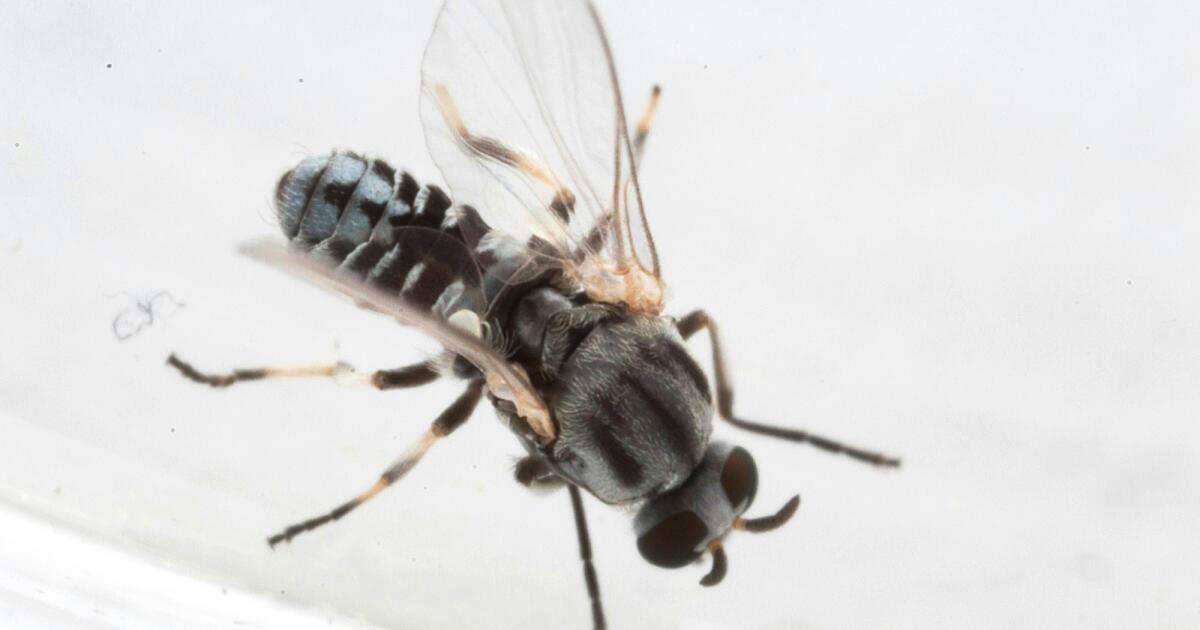
Eye-biting black flies are ‘like little demons’ in San Gabriel Valley, residents say

Grand jury indicts over half the officers in a rural Colorado county

The Houston Comets are back as the Sun sets on the WNBA’s time in Connecticut, where fans face unfortunate reality

Supreme Court says local elections board must hear residency challenge

Florida High School Football Rankings: Top 25 teams – Oct. 21

How old is Bo Nix? What to know about Oregon quarterback ahead of 2024 NFL Draft

Cleary's 21 help Le Moyne down Central Connecticut State 69-64 in OT

99th annual Pony Swim held in Virginia

Indiana Members Credit Union announced as new anchor tenant at Bottleworks District

WATCH: Senate hearing goes silent after Angel Father confronts top Dem over daughter’s death

US diplomat Marco Rubio denounces settler violence, tolls in Hormuz strait

Iran-linked hackers have breached FBI Director Kash Patel’s personal emails | CNN Politics

Live: CPAC 2026 Day 2

Video: Will ICE Change Under Its New Leader?
-

 Detroit, MI1 week ago
Drummer Brian Pastoria, longtime Detroit music advocate, dies at 68
-

 Movie Reviews1 week ago
‘Youth’ Twitter review: Ken Karunaas impresses audiences; Suraj Venjaramoodu adds charm; music wins praise | – The Times of India
-

 Sports6 days ago
IOC addresses execution of 19-year-old Iranian wrestler Saleh Mohammadi
-

 New Mexico5 days ago
Clovis shooting leaves one dead, four injured
-
 Business1 week ago
Disney’s new CEO says his focus is on storytelling and creativity
-

 Technology5 days ago
YouTube job scam text: How to spot it fast
-

 Tennessee4 days ago
Tennessee Police Investigating Alleged Assault Involving ‘Reacher’ Star Alan Ritchson
-

 Texas1 week ago
How to buy Houston vs. Texas A&M 2026 March Madness tickets