Entertainment
Maurice Hines Jr., who went from tap-dancing brother act to Broadway trailblazer, dies at 80

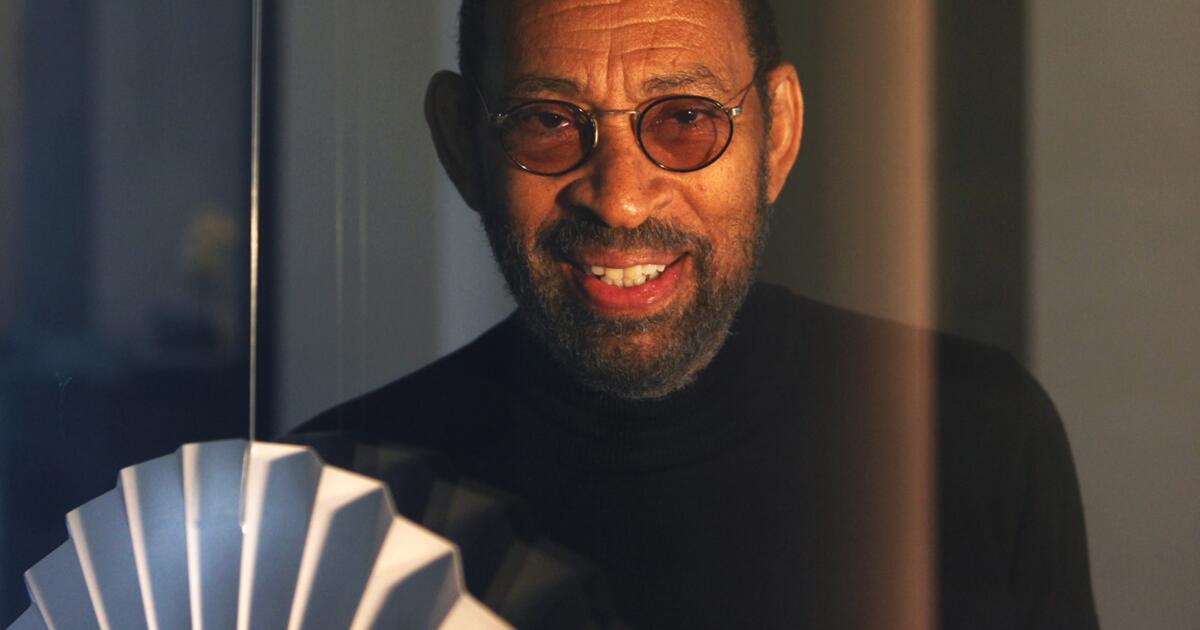
The scene from the movie “Cotton Club” was fictional but encapsulated much in the relationship between Maurice and Gregory Hines. In the film, the estranged brothers, once a top-billed dance duo, come face to face in a nightclub, their wounds and vanities visible; then they reunite in a seamless virtuoso dance, followed by an embrace.
Maurice Hines Jr., the older and longer-lived brother of a famous tandem act that evolved to separate solo stardom for each man, died Friday in Englewood, N.J., said his cousin Richard Nurse, who maintains the Maurice Hines website.
Hines forged a trailblazing 70-year career creating, choreographing, directing and starring in Broadway shows — and also performing all over the world — all the while overcoming prejudice against Black entertainers in leadership roles, and also prejudice against out gay men and out gay Black men.
Centrally, he could flat-out dance, with tap dancing as his trademark form but not his only one.
That movie scene and another from the film exhibit those skills as well as the troubled relationship with brother Gregory Hines, who achieved surpassing fame in Hollywood. Director Francis Ford Coppola allowed the brothers to improvise their filmed interactions.
“Francis picked up on the tension and brought that into the story,” said John Carluccio, who directed and produced the 2019 documentary “Maurice Hines: Bring Them Back.” “They played it very well because clearly that was going on.”
Soon after the film came out, there began a 10-year period where the brothers did not speak. They put aside their differences to be with their dying mother in the latter 1990s. This reconciliation lasted until 2003, when Gregory died of cancer at 57.
Those “Cotton Club” scenes were the last they danced together.
Maurice and Gregory Hines achieved early fame as perhaps the last of the great tap-dancing duos to emerge from the classic age of tap. They dazzled audiences in the early 1950s, first appearing on Broadway when they were 9 and 7 in the 1954 show “The Girl in Pink Tights.” They also sang and, in the early 1960s, joined forces with their father, Maurice Hines Sr., who played drums as part of Hines, Hines and Dad.
Tap had fallen out of vogue, but the brothers worked steadily, appearing more than two dozen times on “The Tonight Show” alone. Gregory, however, tired of being the impish, irresistible younger sibling and decamped alone for Southern California in 1972.
Living on opposite coasts, Maurice was faring better. He was hand-picked to star in the Broadway musical revue “Eubie!” and urged producers to give his brother an audition, while also haranguing his brother to get to New York. Gregory did not impress — his failed audition was later captured in spirit by a scene in the 1999 movie “Tap,” which starred Gregory Hines. In real life, Maurice insisted he would bow out of “Eubie!” unless Gregory was given a chance.
The 1979 show was a smash — as was their duet — but critics in particular fell in love with Gregory, and thus was launched his Tony-winning Broadway career.
Maurice would later replace Gregory — at the latter’s recommendation — as the lead in the stage hits “Sophisticated Ladies” and “Jelly’s Last Jam,” each making the role his own.
Gregory returned to Hollywood to pursue a notable film career. Maurice focused almost entirely on live theater.
“They both found their own lane,” documentarian Carluccio said.
Maurice’s energy, creativity, forcefulness and forthrightness helped him break ground creating, directing, choreographing and starring in two Broadway shows: “Uptown … It’s Hot!” in 1986 and “Hot Feet” in 2006. The latter retold Hans Christian Andersen’s fairy tale “The Red Shoes” through the music of Earth Wind & Fire.
“His choreography was some of the best I’ve ever seen, breathtaking,” said veteran actor-director-producer Mel Johnson Jr., who worked with Maurice Hines on several shows. “The performers were exhausted but they loved it, because they didn’t get the chance to do that kind of dancing on Broadway.”
Despite appreciation for the dancing, neither show proved a commercial or critical success — and Maurice Hines was forced to do much of his best work off Broadway and on tour.
His body of theater work included tributes to other artists such as Ella Fitzgerald, the fusion of hip-hop with traditional theater, a dance company that melded tap and ballet and, late in his career, the biographical, well-received “Tappin’ Thru Life,” which featured an all-female orchestra. He also recorded albums and headlined an acclaimed, long-running nightclub act.
Maurice Robert Hines Jr. was born in Harlem in New York City on Dec. 13, 1943. Gregory was born Feb. 14, 1946. Their mother, Alma Lola Lawless Hines, became a canny manager of the family act. Maurice Sr. was both jack-of-all-trades and working-class Renaissance man, for a time alternating roles as nightclub bouncer and drum-playing orchestra leader, Nurse said. After serving as a mariner in World War II with the Merchant Marine, he sold soda. Late in life he became a chef.
Maurice started dance lessons at 5 after fledgling dance studio owner Henry LeTang went door-to-door recruiting for students, Nurse said. Maurice would immediately teach what he learned to 3-year-old Gregory. LeTang, who later became a force on Broadway, spotted the boys’ talent and drive — and soon began private lessons.
The boys began performing, including at Harlem’s legendary Apollo Theater, where bad acts were not tolerated.
And they watched, performed with or learned directly from such talents as the acrobatic Nicholas Brothers, jazz singer Ella Fitzgerald and entertainer Sammy Davis Jr. — incorporating elements of those performers’ artistry into their own work.
“We wanted us to see all the great tap dancers,” Hines told documentarians. “We saw Coles and Atkins and we saw Bunny Briggs and Teddy Hale, Baby Lawrence. We were learning from these guys and we wanted to be up close so we could see their feet. … The quality that they all had, that I wanted so badly — and I do have it but I learned from them — was … appealing to the audience, be one with the audience, being honest and real with them.”
They boys quickly became popular across the country, opening for entertainers such as Lionel Hampton and Gypsy Rose Lee. They started off as the Hines Kids, became the Hines Brothers and finally Hines, Hines and Dad — until Gregory broke up the act.
Although the split hurt Maurice emotionally, each brother grew artistically. Maurice studied ballet, African and Dunham Technique as well as studying with modern maestro Alvin Ailey and jazz dance innovator Frank Hatchett. His body became limber and stronger, his turns sharp and fast.
He had to “redesign my body,” as he put it. “It was hard.”
Gregory, in turn, developed an earthy, explosive, emotive improvisational style that built on Black rhythmic traditions and influenced an entire generation that followed, including current star Savion Glover, whom Gregory mentored.
Both brothers were key figures in the revival of tap dancing through their teaching, performing and personal connection to greats of the past.
“My brother and I tap completely differently although we were both taught by Henry LeTang,” Maurice Hines told The Times in 1994. “We have very different stances. My style tries to be exactly like Fayard Nicholas, a full body style. [Gregory] dances from the waist down.”
It was ultimately Gregory Hines who became the defining tapper of his generation, although both brothers were undisputed masters of the craft.
Maurice Hines headlined shows into his early 70s, finally slowing down as health problems and accelerating memory issues took their toll, family and friends said.
Hines is survived by an adopted daughter, Cheryl Davis, whom he raised with former longtime companion Silas Davis. Funeral plans are pending.


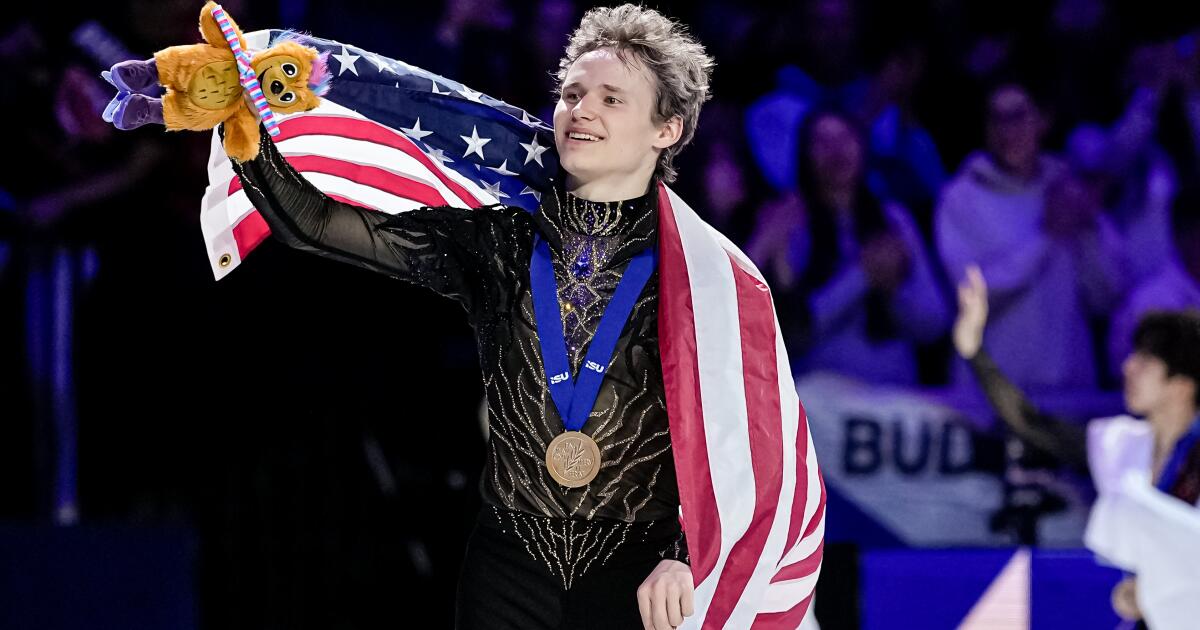
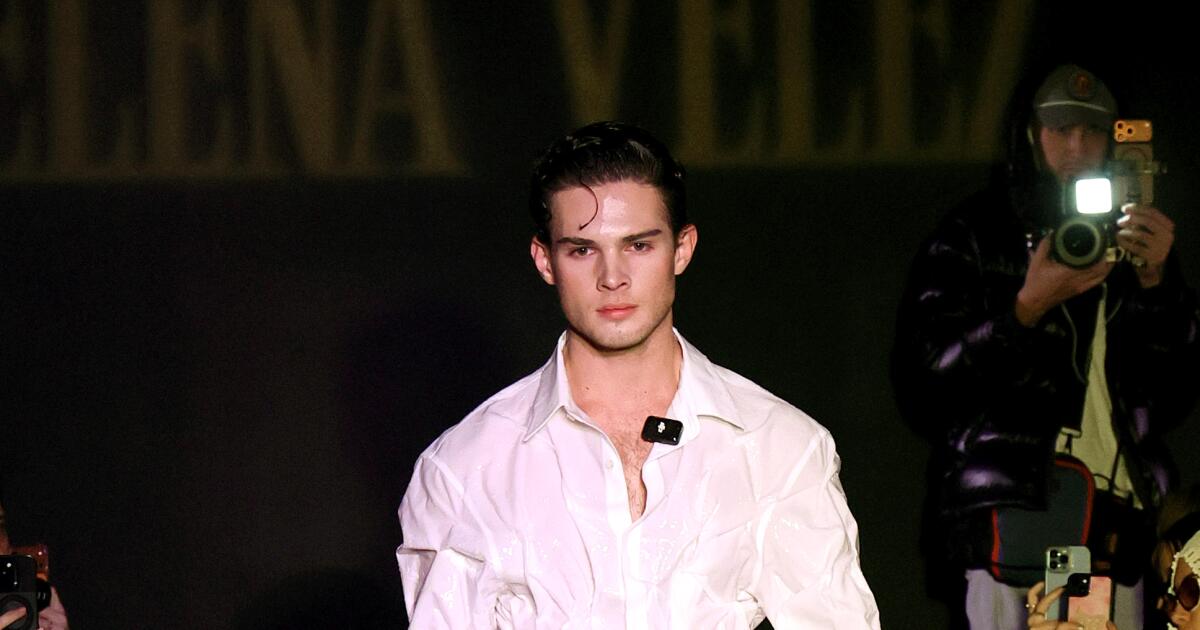
Clavicular, the social media influencer leading the “looksmaxxing” movement, is out on bond after being arrested in Florida on suspicion of misdemeanor battery.
The manosphere internet celebrity, born Braden Eric Peters, was taken into custody Thursday on a warrant issued by the Osceola County Sheriff’s Office, according to a Fort Lauderdale Police Department spokesperson.
The sheriff’s office asked Fort Lauderdale police for assistance in arresting Peters, 20, who they alleged instigated a fight between his girlfriend, Violet Lentz, 24, and a 19-year-old influencer in February at a Kissimmee short-term rental.
In the video of the altercation, which was broken into clips and cross-posted across social media platforms, Peters and the woman are hanging out when Lentz arrives, upset. The argument escalates into a physical altercation with the women pushing, punching and pulling hair.
Peters is seen in the video standing to the side for much of the brawl, but at one point, he intervenes and holds the 19-year-old’s wrists while separating the women. While the woman’s wrists are being held to her sides, Lentz punches her several times, the video shows.
“Neither Peters nor Lentz came out of the residence to speak to deputies about the incident when they arrived at the house to investigate,” the sheriff’s office said in a statement to NBC Miami. “Detectives from the Osceola Sheriff’s Office completed their investigation after reviewing videos and talking with witnesses.”
Peters did not respond to reporters’ questions about the battery charges as he left Broward County Jail on Friday.
“I just woke up. I’m a little tired. Maybe next time,” he said.
A representative for Peters declined to comment on Friday.
The face of “looksmaxxxing,” a subculture hyperfocused on taking extreme measures to perfect one’s physical appearance, Peters doesn’t just boast a fit lifestyle, he’s admitted in interviews to using drugs from steroids, peptides and testosterone to methamphetamine and has said he chisels his face by smashing his bones with a hammer.
The Florida Fish and Wildlife Conservation Commission has also launched a separate investigation into another of Peters’ videos involving an alligator in the Everglades, according to the agency.
In that video, the influencer appears to come across what is seemingly the carcass of an alligator floating in the water and shoots it repeatedly. Peters has not been charged with any crime in that incident.
“Florida’s wildlife and waterways deserve respect, not content farming,” Lt. Gov. Jay Collins said in a statement on X. “Under my watch, anyone who abuses wildlife in Florida will be held accountable to the fullest extent of the law.”
Peters was previously arrested in February at Casa Amigos nightclub in Scottsdale, Ariz., and charged with forgery and possession of prescription-only pills. But the Maricopa County Attorney’s Office dropped the charges on Feb. 11, citing “no reasonable likelihood of conviction.”
Peters shared the news on X alongside a screenshot of an article with the headline “Men’s facial features may sway criminal sentencing.”
Above the screenshot, he wrote, “You just gotta mog.”
By Friday evening, Peters once again returned to social media, posting a video on TikTok with the caption “I’m back.”
A comment underneath the post read, “Bailmaxxxing.”

Lisa Dent
Weekdays 2-6pm
A native of Rockford, Lisa Dent, heard 2 pm to 6 pm weekdays, began her radio career in Fort Atkinson, Wisconsin in 1981. She has worked at stations in Minneapolis, San Diego, Seattle, and Houston. Dent returned to Chicago in 2002. (Click for more.)
Entertainment
‘Look, it’s a lawsuit!’ Lion King composer sues comedian for $27 million over song translation

The Grammy-winning composer behind the signature opening chant in the song “Circle of Life” for “The Lion King” movies is taking a comedian to court for allegedly damaging his reputation by misrepresenting the song’s meaning on a viral podcast episode.
In a federal lawsuit filed this month seeking millions in damages, Lebohang Morake, known as Lebo M, accused Zimbabwean comedian Learnmore Jonasi of intentionally botching the translation of the lyrics, central to both the Disney films and the musical theater adaptations.
“I’m getting sued for $27 million and to make matters worse, I got served the lawsuit while I was performing,” Jonasi said in a post on social media Tuesday. The post included a clip of the comedian performing at the Laugh Factory when a manila envelope is tossed onstage.
“Right now, I’m looking for a lawyer. … I can’t believe I’m getting sued for telling a joke. What kind of stupid world do we live in?” he added.
It all started when Jonasi’s appearance on the “One54” podcast went viral late last month. In the episode of “One54” cited in the lawsuit, one of the podcast’s Nigerian hosts, Akbar Gbajabiamila, prompts the comedian with “I heard you had a problem with the ‘Lion King,’ why?” He then breaks into song, trying his hand at the chant and butchering the delivery.
“That’s not how you sing it, don’t mess up our language like that,” Jonasi says, before singing the correct lyrics in Zulu. When the hosts ask what it means, he says it translates to: “Look, there’s a lion. Oh, my God.”
The hosts erupt with laughter, saying that they’d always thought the chant was something more “beautiful and majestic.”
Jonasi often uses the same “Lion King” bit in his stand-up routines. He translates the song’s lyrics from Zulu and Xhosa, two of South Africa’s 12 national languages, and offers a broader critique on the film.
In Season 19 of “America’s Got Talent,” the comedian won over audiences by joking about how American movies about Africa often confuse Africans, asking, “Why do the lions have American accents?”
The civil lawsuit accuses Jonasi of intentionally mocking “the chant’s cultural significance with exaggerated imitations,” according to the complaint.
Disney’s official translation of the opening phrase “Nants’ingonyama bagithi Baba” is “All hail the king, we all bow in the presence of the king.”
“Hay! baba, sizongqoba,” the chant continues. It translates to “Through you we will emerge victoriously,” according to Lebo M.
Lebo M’s lawyers acknowledged in the complaint that “ingonyama” can literally translate to “lion,” but said it’s used in the song as a “royal metaphor” that invokes kingship, and that Jonasi intentionally misrepresented “an African vocal proclamation grounded in South African tradition.”
Jonasi “received a standing ovation” for a similar joke he made about the song during a March 12 stand-up performance in Los Angeles, according to the lawsuit. Such viral statements, it says, are interfering with Lebo M’s business relationships with Disney and his income from royalties, causing more than $20 million in actual damages. The lawsuit also seeks $7 million in punitive damages.
The complaint also argues that Jonasi presented his translation “as authoritative fact, not comedy,” so it shouldn’t get the 1st Amendment protections afforded to parody and satire.
Jonasi and reps for Lebo M didn’t respond to emails seeking comment, but the two have been busy on social media, making alternating statements and sub-posting each other for weeks.
Earlier this month, Jonasi revealed that he’d been receiving threats on social media for offending his fellow Africans. “It was never my intention to disrespect anybody,” he said in the video posted to Instagram. “When I went on that podcast, my intention was actually to talk about African identity. … I’d like to apologize to anybody that I hurt. But my comedy was a way to crack open a window for a conversation.”
“I had no idea the chant from ‘The Lion King’ was a royal welcoming song … I speak a little bit of Zulu, so I directly translated the words, and I even spoke to some of my South African friends, and most of them don’t even know what it means. And the rest of the world thought it was actually gibberish.”
A few days later, Lebo M posted his own Instagram video, saying he had attempted to speak with Jonasi privately, but claimed the comedian had disrespected him. “You are riding a huge wave of going viral on negativity,” he said in the video.
“I would like to encourage you to please slow down. You have a long way to go. I wish you success, but you cannot disrespect other people’s cultures that gave you the first opportunity to start with and claim it’s comedy. … You continue making a mockery of my work … the likes and the viral things won’t be there when it’s just you.”
After exchanging a few more public statements via Instagram, Jonasi was served with court papers.
He shared the news online and announced he’s selling merchandise and launching a GoFundMe to raise money for his defense. The shirts and hoodies for sale feature two different designs — one reads “Look it’s a lion,” and the other “Look it’s a lawsuit, Oh, my God.” As of Friday afternoon, Jonasi’s GoFundMe raised more than $17,000.
The tense situation seemed to be cooling on Friday morning, when Lebo M posted a lengthy statement to Instagram signaling a shift from an impending courtroom showdown to what his team is calling a “white flag moment.”
According to the post, Lebo M’s team has contacted Jonasi to “explore the possibility of a structured settlement.”
The Associated Press contributed to this report.

Baseball is changing forever with robot ump challenges

How the landmark verdict against Meta and YouTube could hit their businesses
Florida manosphere influencer Clavicular arrested on suspicion of battery

Gen Z is the loneliest generation. Here’s what can help

Millions are expected to protest Trump during Saturday’s ‘No Kings’ rallies

Florida High School Football Rankings: Top 25 teams – Oct. 21

How old is Bo Nix? What to know about Oregon quarterback ahead of 2024 NFL Draft

Cleary's 21 help Le Moyne down Central Connecticut State 69-64 in OT

99th annual Pony Swim held in Virginia

Indiana Members Credit Union announced as new anchor tenant at Bottleworks District

Hundreds of thousands march through London in stand against the far right

2 students killed, 7 other people injured in Tennessee bus crash during school field trip

Dem senators dodge crucial question on illegal alien accused of killing Chicago college student

EU Parliament unblocks key political hurdle in digital euro talks

Man arrested in plot to firebomb Palestinian activist’s home after undercover op
-

 Detroit, MI1 week ago
Drummer Brian Pastoria, longtime Detroit music advocate, dies at 68
-

 Movie Reviews1 week ago
‘Youth’ Twitter review: Ken Karunaas impresses audiences; Suraj Venjaramoodu adds charm; music wins praise | – The Times of India
-

 Sports1 week ago
IOC addresses execution of 19-year-old Iranian wrestler Saleh Mohammadi
-

 New Mexico6 days ago
Clovis shooting leaves one dead, four injured
-
 Business1 week ago
Disney’s new CEO says his focus is on storytelling and creativity
-

 Tennessee5 days ago
Tennessee Police Investigating Alleged Assault Involving ‘Reacher’ Star Alan Ritchson
-

 Technology6 days ago
YouTube job scam text: How to spot it fast
-

 Texas1 week ago
How to buy Houston vs. Texas A&M 2026 March Madness tickets