
Connect with us

Entertainment

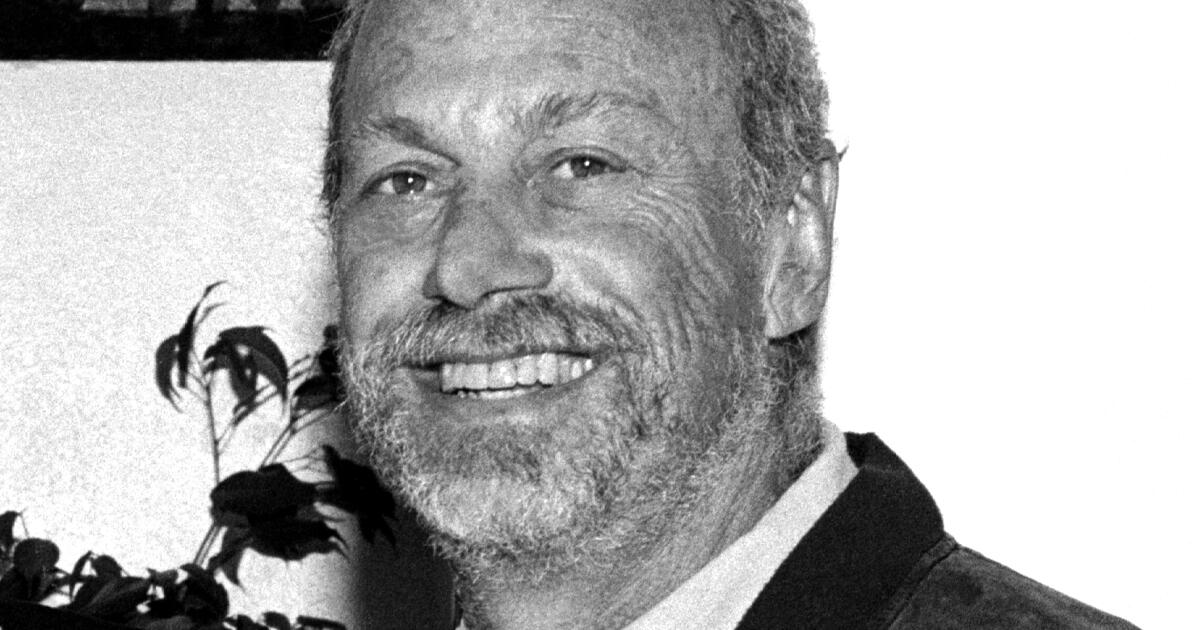
Eddie Rosenblatt, longtime president of Geffen Records, dies at 89

Published

on

Eddie Rosenblatt, longtime president of Geffen Records, dies at 89

Eddie Rosenblatt, the longtime president of Geffen Records who signed John Lennon and built a roster of rock and alternative acts including Guns N’ Roses and Nirvana, died of pneumonia on Tuesday at a Santa Barbara hospital surrounded by family, his son Michael told The Times. He was 89.

The executive, nicknamed “The Chief,” first made a name for himself during his decade-long stint at Warner Bros. Records in the 1970s, where he was mentored by industry titan Mo Ostin. He partnered with David Geffen to launch Geffen Records in 1980 and was appointed president of the label, which made immediate waves within the industry.

Just weeks before Lennon’s death, Geffen Records released Lennon and Yoko Ono’s “Double Fantasy.” The label also signed Elton John and Donna Summer.

During the company’s early years, Geffen and Rosenblatt saw success with records from Peter Gabriel, Don Henley and Neil Young. They also oversaw the debuts of supergroups Asia and Quarterflash.

As Geffen Records grew, the label built a strong hard-rock portfolio with Guns N’ Roses and Whitesnake. The company’s DGC offshoot included bands Nirvana, Hole, Weezer, Beck and Sonic Youth.

Advertisement

Rosenblatt remained president of Geffen Records after it was sold for $550 million 10 years after its inception to MCA. When Geffen left his namesake company in 1995, Rosenblatt continued as president and also became chairman.

“With Eddie at the helm I know the company is in good hands,” Geffen told The Times when leaving the position. “Eddie has been my partner since the day we opened Geffen Records, and I feel great pride in passing the torch and watching him take over this amazing company we created.”

The company made half a billion dollars in album sales in 1994.

“If you think of David as the vision behind Geffen Records, then Eddie is the heart,” Ostin told The Times. “That label is not just profitable; it’s got hipness and heat, and Eddie is the glue that has held it together all these years.”

In 1998, Rosenblatt retired after 40 years in the industry.

Advertisement

Born in Queens, N.Y., Rosenblatt earned his bachelor’s degree from Brooklyn College, served in the U.S. Army and completed Macy’s management training program before making his segue into the music industry in 1958. He started what would be his decades-long career at Cosnat Distribution and Mainline Distribution in Ohio.

He eventually moved to Los Angeles, joining A&M Records as a sales director. Later, he co-founded TA Records with film producer and director Steve Binder, most notably releasing Seals and Crofts’ debut album.

Rosenblatt is survived by his four children, Michael, Steven, Peter and Gretchen; six grandchildren; and one great-grandchild. Bobbi, his wife of over 60 years, died last year.

Advertisement

Movie Reviews

Stream It Or Skip It: ‘The Home’ on Starz, a paranoid thriller where Pete Davidson gets trapped in a creepy retirement home

Published

on

Stream It Or Skip It: ‘The Home’ on Starz, a paranoid thriller where Pete Davidson gets trapped in a creepy retirement home

The Home (now streaming on Starz) pits Pete Davidson against the residents of a creepy retirement community, and it isn’t exactly a Millennials-vs.-Boomers clash for the ages. “Best generation, my f—in’ dick,” our headliner mutters under his breath at one point, and that’s an accurate representation of this quasi-horror movie’s level of articulation. Filmmaker James DeMonaco (director of the first three The Purge movies, writer of all of them) takes a halfway decent idea and turns it into an uninspired, vaguely brownish-colored movie version of the stew you make out of all the leftovers in the fridge, and that you can’t revive with just a little more salt.

THE HOME: STREAM IT OR SKIP IT? 

The Gist: Hurricane Greta is about to slam into this community, and this movie would love you to come to the conclusion that it’s the result of the collective might of boomers’ farts after they ate too many Wagyu tenderloins basted in the metaphorical gravies wrung from the pores of younger generations. Maybe that’s why Max (Davidson) is so skinny, but it’s definitely why he’s so P.O.’d. He breaks into a building and expresses his angst via some elaborate graffiti art that gets him arrested – again. His foster father finagles a deal for him to avoid jail time by performing community service at the Green Meadows Retirement Home and that doesn’t seem too bad since he’ll be a janitor and not a nurse on diaper duty. And at this point it’s established that Max has some trauma stemming from his foster brother’s suicide, the type of trauma that’s requisite to pile atop any and all protagonists of crappo horror movies at this point in the 21st century.

It’s worth noting that Green Meadows is a halfway-decent retirement community – not as posh as the one in The Thursday Murder Club, and not as repugnant as you might expect for a low-rung horror flick. BUT. There’s always a BUT. He arrives at the home and looks up and sees peering out a window the face of a gaunt old man with eyes that ain’t quite right. I’m sure it’s nothing! Management gives him the nickel tour, and gives him the first rule of The Friday the 13th Murder Club: DON’T GO ON THE FOURTH FLOOR. And yes, that’s also the second rule of The Friday the 13th Murder Club. Max will stay in a room at the home so he can be available 24/7 in case the job requires a 2 a.m. mop-up, and also so he can have lucid dreams that may or may not actually be dreams about weird shit happening around these here parts.

But everything goes fine and Max quietly manages his trauma and nothing incredibly gross and/or violent happens and he lives happily ever after the end. No! Actually, he catches a glimpse of old people in bizarre masks having miserable sex, and hears horrible screams of agony coming from, yes, the fourth floor. Max seems to be getting along OK, and even makes a couple of friends, like Lou (John Glover), who summons Max to clean up a big mess of feces when it’s actually a little welcome party for the new super. Ha! Max also has conversations about Real Stuff with Norma (Mary Beth Peil), both sharing the pain of the people they’ve lost. Eventually the fourth floor misery noises get to be too much and Max picks the lock and investigates, and it’s full of wheelchair-bound elderlies in states of drooling, semi-comatose madness. After Max gets his hand slapped for violating the first/second rule, that’s when the bullshit ramps up. Let’s just say this bullshit has some Satanic vibes, and poor Norma doesn’t deserve what happens to her, although Max seems ready to do something about all this.

PETE DAVIDSON THE HOME STREAMING
Photo: LionsGate

What Movies Will It Remind You Of? The Home is sub-Blumhouse drivel nominally referencing things like Rosemary’s Baby, Eyes Wide Shut, and One Flew Over the Cuckoo’s Nest  in order to make it seem smarter than it is. Other recent scary movies set in nursing homes: The Manor, The Rule of Jenny Pen.

Performance Worth Watching: A moment of praise for the makeup and practical effects people, who provide The Home with more memorable elements than any of the cast performances.

Advertisement

Sex And Skin: A bit. Nothing extensive. But definitely unpleasant.

THE HOME STREAMING MOVIE
Photo: Lionsgate

Our Take: In The Home, DeMarco tries a little bit of everything: flashbacks, dream-sequence fakeouts, jump scares, body horror, surveillance-tech POVs, occult gobbledygook, creepy sex, conspiracies, climate change dread, generational divide, paranoia, deepfake-ish dark-web weirdness… it goes on, and none of it is particularly compelling or original. It’s most effective in its grisly imagery, with a couple of memorable deaths that might tickle the cockles of horror connoisseurs, and DeMarco’s generous deployment of pus and eyeball gloop shows a variation on the usual bodily fluids that’s, well, I don’t know if “satisfying” is the right word, but at least we’re not drenched in the same ol’ blood and barf. Small victories, I guess.

Most will take issue with the casting of Davidson, who in the majority of his roles to date has yet to show the intensity that anchoring a thriller like The Home demands. He puts in some diligent effort in the role of the guy who routinely goes what the eff is going on around here?, and his work is a cut above merely cashing a paycheck, which isn’t to say he’s necessarily good. Miscast, maybe. The victim of half-assed writing, more likely, this being a paranoid creepout that never gets under our skin, with attempts at cheeky comedy that fizzle out and social commentary that dead-ends into obviousness. Having Davidson piss and moan about “F—ing boomers” ain’t enough.

The plot works its way through its hodgepodge of this ‘n’ that plot mechanisms to get to a conclusion that’ underwhelming and over the top at the same time; the initial bit of exhilaration quickly dissipates and we’re left with the sense that the movie just hasn’t been good or diligent enough in its storytelling and character development to earn this catharsis. It’s just spectacle for its own gory sake. This mediocrity might just inspire Davidson to retire from horror movies.

Our Call: Hate to say it, but 1.7 decent kills does not a horror movie make. SKIP IT.

Advertisement

John Serba is a freelance film critic from Grand Rapids, Michigan. Werner Herzog hugged him once.

Continue Reading

Entertainment

House committee report questions distribution of FireAid’s $100 million for L.A. wildfire relief

Published

on

House committee report questions distribution of FireAid’s 0 million for L.A. wildfire relief

The House Judiciary Committee on Tuesday released a report after its own investigation into FireAid, the charity founded by Clippers executives that raised $100 million for wildfire relief efforts in Los Angeles last January.

The investigation — led by Rep. Kevin Kiley (R-Rocklin) under committee chair Jim Jordan (R-Ohio) — began in August when Kiley “sent a letter to FireAid requesting a detailed breakdown of all non-profits that received money from FireAid.” Kiley expressed concern that the money had gone toward local nonprofits rather than as more direct aid to affected residents.

FireAid promptly released a comprehensive document detailing its fundraising and grant dispersals. After reaching out to every named nonprofit in the document, The Times reported that the groups who successfully applied for grants were quickly given money to spend in their areas of expertise, as outlined in FireAid’s public mission statements. A review conducted by an outside law firm confirmed the same.

The new Republican-led committee report is skeptical of the nonprofit work done under FireAid’s auspices — but cites relatively few examples of groups deviating from FireAid’s stated goals.

Representatives for FireAid did not immediately respond to request for comment on the report.

Advertisement

Out of hundreds of nonprofits given millions in FireAid funds, “In total, the Committee found six organizations that allocated FireAid grants towards labor, salaries, or other related costs,” the report said.

The committee singled out several local nonprofits, focused on relief and development for minorities and marginalized groups, for criticism. It named several long-established organizations like the NAACP Pasadena, My Tribe Rise, Black Music Action Coalition, CA Native Vote Project and Community Organized Relief Efforts (CORE), whose activities related to fire relief they found “unclear,” without providing specific claims of misusing FireAid funds.

The report — while heavily citing Fox News, Breitbart and New York Post stories — claims that “FireAid prioritized and awarded grants to illegal aliens.” Yet its lone example for this is a grant that went to CORE, citing its mission for aiding crisis response within “underserved communities,” one of which is “undocumented migrants” facing “high risk of housing instability, economic hardship, exploitation, and homelessness.”

The report said that $500,000 was used by the California Charter Schools Assn., Neighborhood Legal Services of Los Angeles County, Los Angeles Regional Food Bank, LA Disaster Relief Navigator, Community Clinic Assn. of Los Angeles County and LA Conservation Corps “towards labor, salaries, or other related costs,” which the committee said went against FireAid’s stated goals.

Yet the examples they cite as suspicious include NLSLA using its FireAid grant to pay salaries to attorneys providing free legal aid to fire victims, the Community Clinic of Los Angeles “expanding training in mental health and trauma care” through grants to smaller local health centers, and the L.A. Regional Food bank allocating its funds to “mobilize resources to fight hunger.”

Advertisement

The report singled out one group, Altadena Talks Foundation, from Team Rubicon relief worker Toni Raines. Altadena Talks Foundation received a $100,00 grant from FireAid, yet the report said Altadena Talks’ work on a local news podcast, among other efforts, “remains unclear” as it relates to fire relief.

The report’s claims that “instead of helping fire victims, donations made to FireAid helped to fund causes and projects completely unrelated to fire recovery, including voter participation for Native Americans, illegal aliens, podcast shows, and fungus planting” sound incendiary. Yet the evidence it cites generally shows a range of established local nonprofits addressing community-specific concerns in a fast-moving disaster, with some small amounts of money possibly going toward salaries or overhead, or groups whose missions the committee viewed skeptically.

FireAid still plans to distribute an additional round of $25 million in grants this year.

Advertisement
Continue Reading

Movie Reviews

Movie Review: A Home Invasion turns into a “Relentless” Grudge Match

Published

on

Movie Review: A Home Invasion turns into a “Relentless” Grudge Match

I’d call the title “Relentless” truth in advertising, althought “Pitiless,” “Endless” and “Senseless” work just as well.

This new thriller from the sarcastically surnamed writer-director Tom Botchii (real name Tom Botchii Skowronski of “Artik” fame) begins in uninteresting mystery, strains to become a revenge thriller “about something” and never gets out of its own way.

So bloody that everything else — logic, reason, rationale and “Who do we root for?” quandary is throughly botched — its 93 minutes pass by like bleeding out from screwdriver puncture wounds — excruciatingly.

But hey, they shot it in Lewiston, Idaho, so good on them for not filming overfilmed Greater LA, even if the locations are as generically North American as one could imagine.

Career bit player and Lewiston native Jeffrey Decker stars as a homeless man we meet in his car, bearded, shivering and listening over and over again to a voice mail from his significant other.

He has no enthusiasm for the sign-spinning work he does to feed himself and gas up his ’80s Chevy. But if woman, man or child among us ever relishes anything as much as this character loves his cigarettes — long, theatrical, stair-at-the-stars drags of ecstacy — we can count ourselves blessed.

Advertisement

There’s this Asian techie (Shuhei Kinoshita) pounding away at his laptop, doing something we assume is sketchy just by the “ACCESS DENIED” screens he keeps bumping into and the frantic calls he takes suggesting urgency of some sort or other.

That man-bunned stranger, seen in smoky silhoutte through the opaque window on his door, ringing the bell of his designer McMansion makes him wary. And not just because the guy’s smoking and seems to be making up his “How we can help cut your energy bill” pitch on the fly.

Next thing our techie knows, shotgun blasts are knocking out the lock (Not the, uh GLASS) and a crazed, dirty beardo homeless guy has stormed in, firing away at him as he flees and cries “STOP! Why are you doing this?”

Jun, as the credits name him, fights for his PC and his life. He wins one and loses the other. But tracking his laptop and homeless thug “Teddy” with his phone turns out to be a mistake.

He’s caught, beaten and bloodied some more. And that’s how Jun learns the beef this crazed, wronged man has with him — identity theft, financial fraud, etc.

Advertisement

Threats and torture over access to that laptop ensue, along with one man listing the wrongs he’s been done as he puts his hostage through all this.

Wait’ll you get a load of what the writer-director thinks is the card our hostage would play.

The dialogue isn’t much, and the logic — fleeing a fight you’ve just won with a killer rather than finishing him off or calling the cops, etc. — doesn’t stand up to any scrutiny.

The set-piece fights, which involve Kinoshita screaming and charging his tormentor and the tormentor played by Decker stalking him with wounded, bloody-minded resolve are visceral enough to come off. Decker and Kinoshita are better than the screenplay.

A throw-down at a gas-station climaxes with a brutal brawl on the hood of a bystander’s car going through an automatic car wash. Amusingly, the car-wash owners feel the need to do an Idaho do-si-do video (“Roggers (sic) Car Wash”) that plays in front of the car being washed and behind all the mayhem the antagonists and the bystander/car owner go through. Not bad.

Advertisement

The rest? Not good.

Perhaps the good folks at Rogers Motors and Car Wash read the script and opted to get their name misspelled. Smart move.

Rating: R, graphic violence, smoking, profanity

Cast: Jeffrey Decker, Shuhei Kinoshita

Credits:Scripted and directed by Tom Botchii.. A Saban Entertainment release.

Running time: 1:34

Advertisement

Unknown's avatar

About Roger Moore

Movie Critic, formerly with McClatchy-Tribune News Service, Orlando Sentinel, published in Spin Magazine, The World and now published here, Orlando Magazine, Autoweek Magazine

Continue Reading
Advertisement

Trending