Connect with us

Entertainment

Autumn Durald Arkapaw on making history with her ‘Sinners’ cinematography nomination

Published

on

Autumn Durald Arkapaw on making history with her ‘Sinners’ cinematography nomination
p]:text-cms-story-body-color-text clearfix”>

With her nomination for the cinematography of “Sinners,” Autumn Durald Arkapaw becomes the first woman of color — and only the fourth woman ever — to be recognized in the category. The recipient of a record-setting 16 nominations, Ryan Coogler’s vampire film set in the 1930s was advanced in every category for which it was eligible. Arkapaw previously collaborated with Coogler on 2022’s “Black Panther: Wakanda Forever.”

Arkapaw got on the phone on Thursday morning from her home in Altadena — thankfully spared from last year’s fires — that she shares with her husband, Adam Arkapaw, also a cinematographer.

“It’s nice to have an understanding of what each other does because it’s a hard job and making films isn’t easy,” said Durald Arkapaw of having two cinematographers under one roof. “But we also have a family, so usually when I’m working, he’s watching our son and vice versa. So it’s kind of a team effort. But there is an understanding. I wouldn’t say we talk about it all the time because it gets exhausting. You get enough of that when you’re at work.”

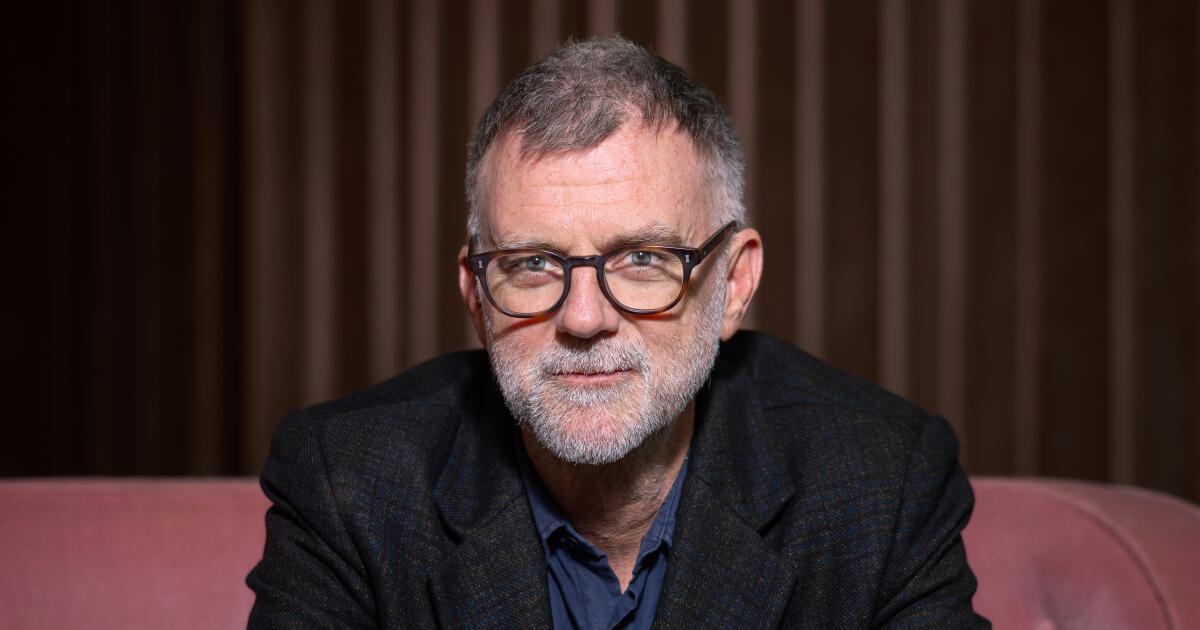
Autumn Durald Arkapaw, photographed in Los Angeles in November.

Advertisement

(Bexx Francois / For The Times)

What do these historic firsts mean to you?

Autumn Durald Arkapaw: I’m trying to take a moment to kind of let it sink in. I’m just so honored every time I get to stand next to Ryan and make a film with him, because what I think he does and says is very unique. And we’re always doing something for the first time and with a very unique group of people. Like having all heads of departments be women of color and these are women that inspire me every day. I think now to be a part of that because [production designer] Hannah [Beachler] and [costume designer] Ruth [E. Carter] have also been able to do some work that’s been recognized. Now being a part of that group, I feel very honored, especially for a film like this. That it’s for this film, means a lot to me.

What is it about this film in particular that makes it even more special?

Advertisement

Arkapaw: I think for myself and most of the team members, we have a lot of history and culture rooted in this story. My family’s from New Orleans. My father was born there, my great-grandmother was born in Mississippi. So when I read the story, it felt very close to home. And I think that allows you to be able to pour yourself into it. And there’s a lot of meaning in it and you want to make your ancestors proud. This film has so much love that was poured into it on set and I think it really connected with a lot of people. And I think that’s how you do really great films. You pour as much as you can of yourself into it.

The film was such a success when it came out earlier this year. What is it that you think audiences were responding to?

Arkapaw: I’m an operator so I love to have my eyepiece to the camera and Ryan sits right next to me. So a lot of the stuff that we photographed, I was there in the moment. It was very felt. And I always said, “If I don’t feel it, then I don’t feel the audience can.” So I’m very much someone who shoots from the heart and wants to make sure that emotion is being conveyed. Ryan is the same way. There was a lot of that going on on set, where there were moments where you felt like you actually weren’t making a movie. Things were unfolding in front of you in a very unique way. Like it felt like a real space at times. That matters. If you feel that way on set, it is, it does feel communicated all the way up until the audience sees it in this dark room. And then they don’t feel like they’re watching a movie anymore. And it’s nice when that translates. It doesn’t always happen. And with this film it did, on an insane level.

Two twin brothers in suits and hats smile.

Michael B. Jordan as Smoke and Stack in the movie “Sinners.”

(Warner Bros. Pictures)

Advertisement

When did you and Ryan start talking about shooting in 65-millimeter Imax?

Arkapaw: He had envisioned it to be 16-millimeter. So originally, I made some lenses with Panavision that I shot “The Last Showgirl” with before this. And so I was kind of testing those in hopes that it would be something we would use. And then the studio called Ryan and said, “Have you guys thought about large format?” And he called me immediately after and he was like, “Let’s talk about it.” And we got a bunch of different formats together and when you’re talking about large format in a film context, it means 65-[millimeter]. So we tested all these different formats. And obviously we fell in love with the [Imax formats] 15-perf and the 5-perf. And putting them together for the first time was unique. That was fun to do because we tested it and then we kind of put an edit together and looked at it as a team and it all felt very right. So it’s nice to do something historic like that and have it work and have the audience enjoy that big shift of ratios.

Just from a workflow aspect, what was it like having to adjust to these new technologies?

Arkapaw: I always feel like with Ryan, he always gives me a big challenge. He likes to think big and outside the box. We did that on “Wakanda Forever.” We shot a bunch of our scenes underwater with actors, for real. And in this film, there were a lot of different sequences, moving the Imax camera around in the studio, treating it like it wasn’t necessarily a large-format film, but shooting like we would if it was a smaller camera and being true to how we like to move the camera. It’s a lot of logistics involved. You have to have an amazing team. My team personally is fantastic and they did a great job. Focus-pulling is not easy on a film like this.

So it was a challenge. But I think because everyone’s so inspired by Ryan, he’s a great leader on set and everyone really likes him, so they want to do a good job for him. I see that every time we do a film, I have the same crew that I use. It’s like a family. And they respect him. So when you give us a challenge, we really want to make sure that we do it well so that it’s a good experience for the moviegoers. Because he’s always reminding us on set about that: “Big movie, big movie.” We’re making a movie for the theaters.

Advertisement

When the movie was coming out, people really liked that the explainer video that Ryan made about all the different formats. How did you feel about that video and that, for something that felt so technical and nerdy, it got really popular.

Arkapaw: I remember the moment that he brought it up, we were at the Playa Vista Imax headquarters and we had just done a screening to look at the prints. And he was like, “I want to talk to you guys.” And so myself and Zinzi [Coogler], our producer, and our post-producer Tina Anderson, we went and talked for a second and Ryan said, “I want to shoot a video that explains all the formats so that people can understand what we did and what it means and all that stuff.” And his eyes lit up and I thought it was such a cool idea. Fast-forward to it coming out and everyone really embracing it because it was so thoughtful. It was really cool.

If you see it in Dolby, it’s special, but if you go see it this way, it’s even more special because the screen opens up. So I think putting that in the hands of audiences is very thoughtful. And that’s how Ryan is. He wants them to have this information because when he was a kid and going to theaters, we all felt that same way, where that one night you walked to the theater or you drove and you waited an hour to see it and it was a whole experience. And so I think that’s why it went viral because people wanted to be a part of that.

Do you have a preferred format?

Arkapaw: My preferred format is the origination format, because I’m framing the movie for Imax 1.43:1 and then also with the 2.76:1 Ultra Panavision format. So my best way of seeing the film would be the Imax 70mm full-frame print. And obviously, there are only about 40 theaters in the world that project that. I don’t think we had it in all 40, maybe we only had 11, I think, across the world. But I was very much telling everyone that if you can get a ticket, please go see it in the 70-[millimeter] projection of Imax, full-frame. It’s so beautiful.

Advertisement

Entertainment

Paul Thomas Anderson wins Directors Guild Award for ‘One Battle After Another’

Published

on

Paul Thomas Anderson wins Directors Guild Award for ‘One Battle After Another’

In a widely anticipated outcome that felt like a long-overdue coronation, Paul Thomas Anderson won the top honor at Saturday’s Directors Guild of America Awards for his Thomas Pynchon-inspired political thriller “One Battle After Another.” The ceremony was held at the Beverly Hilton Hotel in Beverly Hills.

It was the director’s first DGA win after two prior nominations, in 2008 for “There Will Be Blood” and in 2022 for his San Fernando Valley reminiscence “Licorice Pizza.”

Speaking at the podium after receiving the award from last year’s winner, “Anora” director Sean Baker, a humbled Anderson thanked the guild, mentioning recent EGOT winner Steven Spielberg, sitting in the audience right in front of him. “It reminds me, being in this room, of ‘Close Encounters,’ ” Anderson said. “We’re all brought here for a reason — some cosmic thing brought us to this room. It was that call to the mountain. It’s that feeling that we all love making s— and we need to do it.”

Anderson also devoted much of his speech to remembering his first-assistant director Adam Somner, who died from thyroid cancer in November 2024. “May you be blessed with the relationship I had with him,” the director said, “and if you have one already, hold them close and remind them that you love them.”

Advertisement

True to tradition, the evening was both a celebration of achievements in directing and an occasion for much pro-guild testifying — from nominees, winners and Christopher Nolan, presiding over his first ceremony as DGA president. “We are the best at what we do,” Nolan said, touching on last year’s 40% dip in DGA member employment with a note of solidarity and urgency. “We are the storytellers. We are the people who have to innovate.”

All five nominees for theatrical feature film are invited to give a speech during these annual awards, with the eventual winner speaking twice. Guillermo del Toro, up for his personal take on “Frankenstein,” saluted Nolan: “I love saying ‘President Nolan’ because it’s so good to say ‘President’ with a good word after it,” he cracked to hearty applause. (The joke was echoed by several podium speakers.)

Ryan Coogler, a DGA nominee for “Sinners,” thanked the guild for his health insurance and mentioned his longtime dream — not of filmmaking but of joining a union, like some of the adults in his life growing up.

“Lately I’ve been learning about alchemy, “ said Chloé Zhao, representing “Hamnet,” her domestic drama about the grief-stricken family life of William Shakespeare. “You need fire and you need a chalice. To me, that fire is my creativity. It’s my birthright to create. And that chalice is the community that holds me.”

Indicating the respect the DGA commands among actors, several A-listers attended the ceremony to introduce their directors: Leonardo DiCaprio for Anderson, Jacob Elordi for Del Toro and Timothée Chalamet, the latter celebrating his “Marty Supreme” director Josh Safdie with sincerity and gentle deprecation. “I don’t think Josh will ever be ‘institutional,’ ” Chalamet said. “I think Josh will forever be an insurgent filmmaker and I don’t think the world would be right otherwise.”

Advertisement

An Oscar victory path is now clear for Anderson, previously nominated for the academy’s directing honor three times, for “There Will Be Blood,” “Phantom Thread” and “Licorice Pizza,” but never a winner. Twenty of the last 23 recipients of the DGA’s top prize have gone on to take the Oscar for directing.

Here is a complete list of the night’s nominees, with winners in bold:

Outstanding directorial achievement in theatrical feature film

Paul Thomas Anderson, “One Battle After Another” (Warner Bros. Pictures)
Ryan Coogler, “Sinners” (Warner Bros. Pictures)
Guillermo del Toro, “Frankenstein” (Netflix)
Josh Safdie, “Marty Supreme” (A24)
Chloé Zhao, “Hamnet” (Focus Features)

Michael Apted Award for outstanding directorial achievement in first-time theatrical feature film

Charlie Polinger, “The Plague” (Independent Film Co.)
Hasan Hadi, “The President’s Cake” (Sony Pictures Classics)
Harry Lighton, “Pillion” (A24)
Alex Russell, “Lurker” (Mubi)
Eva Victor, “Sorry, Baby” (A24)

Outstanding directorial achievement in documentary

Mstyslav Chernov, “2000 Meters to Andriivka” (PBS)
Geeta Gandbhir, “The Perfect Neighbor” (Netflix)
Sara Khaki and Mohammadreza Eyni, “Cutting Through Rocks” (Assembly Releasing)
Elizabeth Lo, “Mistress Dispeller” (Oscilloscope Laboratories)
Laura Poitras and Mark Obenhaus, “Cover-Up” (Netflix)

Advertisement

Outstanding directorial achievement in dramatic series

Amanda Marsalis, “The Pitt,” “6:00 P.M.” (HBO Max)
Liza Johnson, “The Diplomat,” “Amagansett” (Netflix)
Janus Metz, “Andor,” “Who Are You?” (Disney+)
Ben Stiller, “Severance,” “Cold Harbor” (Apple TV+)
John Wells, “The Pitt,” “7:00 A.M.” (HBO Max)

Outstanding directorial achievement in comedy series

Seth Rogen and Evan Goldberg, “The Studio,” “The Oner” (Apple TV+)
Lucia Aniello, “Hacks,” “A Slippery Slope” (HBO Max)
Janicza Bravo, “The Bear,” “Worms” (FX on Hulu)
Christopher Storer, “The Bear,” “Bears” (FX on Hulu)
Mike White, “The White Lotus,” “Denials” (HBO Max)

Outstanding directorial achievement in limited and anthology series

Shannon Murphy, “Dying for Sex,” “It’s Not That Serious” (FX on Hulu)
Jason Bateman, “Black Rabbit,” “The Black Rabbits” (Netflix)
Antonio Campos, “The Beast in Me,” “Sick Puppy” (Netflix)
Lesli Linka Glatter, “Zero Day,” “Episode 6” (Netflix)
Ally Pankiw, “Black Mirror,” “Common People” (Netflix)

Outstanding directorial achievement in movies for television

Stephen Chbosky, “Nonnas” (Netflix)
Jesse Armstrong, “Mountainhead” (HBO Max)
Scott Derrickson, “The Gorge” (Apple TV+)
Michael Morris, “Bridget Jones: Mad About the Boy” (Peacock)
Kyle Newacheck, “Happy Gilmore 2” (Netflix)

Outstanding directorial achievement in variety

Liz Patrick, “SNL50: The Anniversary Special” (NBC)
Yvonne De Mare, “The Late Show With Stephen Colbert,” “Julia Roberts; Sam Smith” (CBS)
Andy Fisher, “Jimmy Kimmel Live!,” “Stephen Colbert; Kumail Nanjiani; Reneé Rapp” (ABC)
Beth McCarthy-Miller, “SNL50: The Homecoming Concert” (Peacock)
Paul Pennolino, “Last Week Tonight With John Oliver,” “Public Media” (HBO Max)

Advertisement

Outstanding directorial achievement in sports

Matthew Gangl, 2025 World Series – Game 7 – Los Angeles Dodgers vs. Toronto Blue Jays (Fox Sports)
Steve Milton, 2025 Masters Tournament – Augusta National Golf Club (CBS Sports)
Rich Russo, Super Bowl LIX – Philadelphia Eagles vs. Kansas City Chiefs (Fox Sports)

Outstanding directorial achievement in reality / quiz & game

Mike Sweeney, “Conan O’Brien Must Go,” “Austria” (HBO Max)
Lucinda M. Margolis, “Jeopardy!,” “Ep. 9341” (Syndicated)
Adam Sandler, “The Price Is Right,” “10,000th Episode” (CBS)

Outstanding directorial achievement in documentary series / news

Rebecca Miller, “Mr. Scorsese,” “All This Filming Isn’t Healthy” (Apple TV+)
Marshall Curry, “SNL50: Beyond Saturday Night,” “Written By: A Week Inside the SNL Writers Room” (Peacock)
Susan Lacy and Jessica Levin, “Billy Joel: And So It Goes,” “Part Two” (HBO Max)
Alexandra Stapleton, “Sean Combs: The Reckoning,” “Official Girl” (Netflix)
Matt Wolf, “Pee-Wee as Himself,” “Part 1” (HBO Max)

Outstanding directorial achievement in commercials

Kim Gehrig (Somesuch), “You Can’t Win. So Win.” – Nike | Wieden+Kennedy
Miles Jay (Smuggler)
Spike Jonze (MJZ)
Andreas Nilsson (Biscuit Filmworks)
Steve Rogers (Biscuit Filmworks)

Advertisement
Continue Reading

Movie Reviews

‘Rakkasapuradhol’ movie review: This Raj B Shetty-starrer gets the job done after a shaky start

Published

on

‘Rakkasapuradhol’ movie review: This Raj B Shetty-starrer gets the job done after a shaky start

Raj B Shetty in ‘Rakkasapuradhol’.
| Photo Credit: Anand Audio/YouTube

The runtime of the Raj B Shetty-starrer Rakkasapuradhol mirrors the film’s highs and lows. At two hours and seven minutes, you expect a taut thriller. Director Ravi Saranga’s film is far from that. There are portions that unfold more slowly than they should. Yet, the film accelerates before it’s too late for a good finish, ensuring the film isn’t needlessly long.

The first half tries its best to keep our curiosity intact, but it’s not easy to guess the story’s deceptive turns. A small town is jolted when women start disappearing. Dead bodies are found to make things worse. The villagers fear it’s the doing of Kolli Devva (Torch Ghost). There is also a perverted teacher (Gopalakrishna Deshpande) and a temple priest (B Suresha), who is revered as a deity by the locals.

Rakkasapuradhol (Kannada)

Director: Ravi Saranga

Cast: Raj B Shetty, Gopalakrishna Deshpande, B Suresha, Swathishta Krishnan, Archana Kottige

Runtime: 127 minutes

Advertisement

Storyline: When Shiva, an arrogant, drunkard cop, enters Rakkasapura, a series of unnatural manhunts begins

In the middle of these dramatic episodes is Inspector Shiva (Raj) who is introduced as a wacky, alcoholic cop. Again, it’s easy to guess that his lax discipline will never come in the way of the crucial case in front of him. Till the plot kicks in, he is the archetypal cool cop hiding his brilliance behind the facade of an arrogant and drunken officer.

Rakkasapuradhol gets its act together when the director dives into the crucial details of the case. It gets engaging and never loses focus when the inspector begins to unearth shocking details about the murderer. The thriller gets an extra layer when it deals with the mental disorder of the protagonist. Shiva is schizophrenic, and how this psychological aspect becomes integral to the plot pushes Rakkasapuradhol to a flourishing finish.

ALSO READ: ‘Valavaara’ movie review: Sutan Gowda’s debut feels like a warm hug

The film would have benefited from a deft handling of the episodes that build towards the big reveal. The loud background score is a drawback. There is something alluring about atmospheric thrillers set in rural regions. Cinematographer William David transforms the pleasing backdrop into something unsettling to indicate the impending danger.

Advertisement

Rakkasapuradhol is a thriller that punches above its weight. More importantly, it gets the job done after a shaky start.

Rakkasapuradhol is currently running in theatres

Advertisement
Continue Reading

Entertainment

Brad Arnold, lead singer of 3 Doors Down, dies at 47

Published

on

Brad Arnold, lead singer of 3 Doors Down, dies at 47

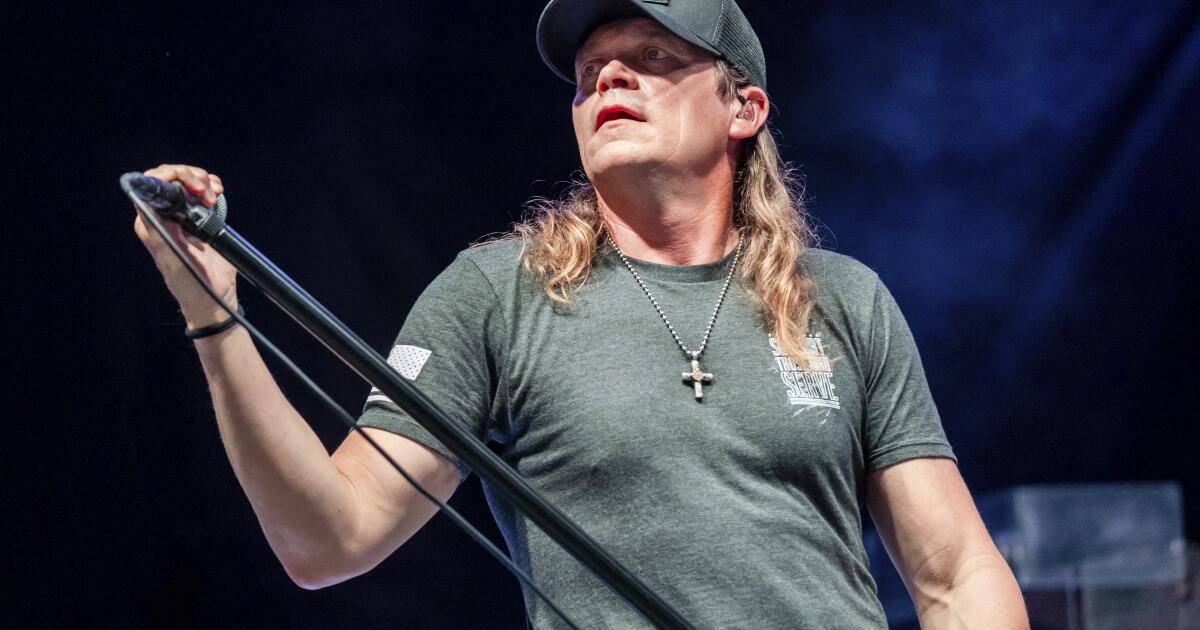
Brad Arnold, the 47-year-old cofounder and lead singer of the Mississippi rock band 3 Doors Down, died Saturday, nine months after revealing a diagnosis of kidney cancer.

The band announced Arnold’s death in a social media post, which said he had “helped redefine mainstream rock music, blending post-grunge accessibility with emotionally direct songwriting.”

In May 2025, Arnold announced that the band would be canceling its summer tour because he had advanced-stage kidney cancer that spread to his lungs.

“That’s not real good,” he said of his diagnosis. “But you know what? We serve a mighty God, and He can overcome anything. So I have no fear. I really sincerely am not scared of it at all.” He added, “I’d love for you to lift me up in prayer every chance you get.”

He was public about his battle with alcoholism. He said he started drinking in his teens, an addiction fueled by the pressure of stepping on a tour bus at 20 years old.

Advertisement

“It’s just a lot to hand a 20-year-old,” he told a Christian podcaster. He thanked religion for his sobriety and took to proclaiming his faith on stage.

Born in Escatawpa, Miss., in September 1978, Arnold formed the band with friends Todd Harrell and Matt Roberts in the mid-1990s.

As a 15-year-old in algebra class, he wrote the song “Kryptonite,” drumming out the beat on his desk.

“I used to be our drummer,” he told the lead vocalist of the band Candlebox in an interview. “I only became the singer because we didn’t have a singer. That beat just came from just sitting on a desk. I probably wrote that song in the length of time that it took to me to just to write it down. It really was just one of those that kind of fell out of the sky.”

It became the band’s breakout hit in 2000 and earned a Grammy nomination.

Advertisement

“The Better Life,” the first of the band’s six albums, sold more than six million copies, and the 2005 album “Seventeen Days” entered the national charts at No. 1. That year, reviewing a Los Angeles performance, a critic noted Arnold’s “heartland drawl” and sleeveless denim shirt, calling him “less punk than Springsteen.”

The band released its final album, “Us and the Night,” in 2016. The following year, the band played at the inauguration of President Trump. Arnold is survived by his wife, Jennifer.

Advertisement
Continue Reading

Trending