Entertainment
Ariana Grande explains voice change during viral interview — 'I've always done this'

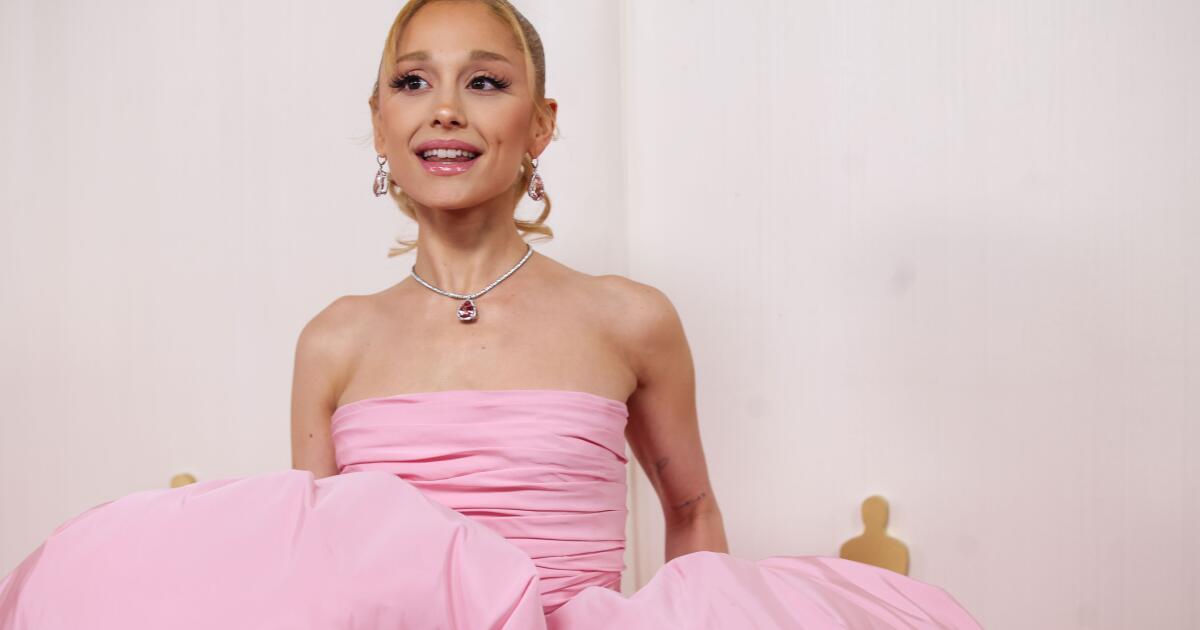
Glinda the Good Witch has seemingly appeared out of thin air in a new Ariana Grande interview.
Grande, who plays the sparkling sorceress in the upcoming ”Wicked” movie musical, came under scrutiny this week after a viral interview clip showed her changing her speaking voice mid-dialogue.
At the beginning of the clip, taken from the June 17 episode of Penn Badgley’s “Podcrushed” podcast, the “Positions” singer initially talks in a low voice to Badgley — who also recently starred in her “The Boy Is Mine” music video. When she turns to co-host Sophie Ansari, her pitch rises dramatically.
Netizens quickly pointed out the switch, with one X user writing that “this voice change is sending me 😭😭 regular Ariana was coming out for a second,” and another, “oh GLINDA FREE MY GIRL.”
Grande has since offered an explanation — or, several.
“Habit (speaking like this for two years) and also vocal health 🙂 🍵,” she commented on the viral TikTok clip. “i intentionally change my vocal placement (high / low) often depending on how much singing i’m doing 😭i’ve always done this BYE.”
The singer previously discussed the rigor of her vocal training for “Wicked” on the “Zach Sang Show”: “I trained every day… to transform my voice, even — like, my singing voice — everything about me, I had to deconstruct to prove to them I could handle taking on this other person.”
This isn’t the first time fans have noticed Grande slipping into character — such discourse arose following a 2023 r.e.m. beauty promotional video and her 2024 Oscars presentation with “Wicked” co-star Cynthia Erivo. Speculation about the singer intentionally altering her voice is not new; dozens of videos on TikTok and YouTube trace its evolution over the years.
Still, some fans were less focused on Grande’s speaking patterns during her “Podcrushed” episode and more so on her revealing a potential deluxe version of her March album “eternal sunshine.”
“I went to the studio the day after the Met [Gala] and I stayed for, like, 10 days. I was literally living there,” Grande said. “I felt like I woke up today, and I felt like Austin Powers being unfrozen. I was like, ‘Where have I been? Where have I been?’”
She continued: “I’ve been writing a lot, and maybe there’s some more, but I would like to do a deluxe at some point.”
Grande also on Monday announced a remix of “The Boy Is Mine” featuring R&B legends Brandy and Monica, who released a duet by the same name in 1998 and had cameos in the video for Grande’s song.
“I ……… cannot believe this is real (i don’t know if i will even long after it’s out),” the “thank u, next” singer wrote on Instagram. “my deepest and sincerest thank you to Brandy and Monica, not only for joining me for this moment, but for your generosity, your kindness, and for the countless ways in which you have inspired me. it is near impossible to say how much this means to me.
“This is in celebration of you both and the impact that you have had on every vocalist, vocal producer, musician, artist that is creating today,” she added.
The remix drops June 21.



Movie Reviews
‘Scream 7’ Review: Neve Campbell Returns for a Back-to-Basics Sequel That’s a Little Too Basic

The “Scream” movies, at their best, are delectable booby-trapped entertainments, and part of that is how cleverly they stay a step ahead of us. But there’s a moment in “Scream 7” that typifies the sensation this new movie gives you: that it’s leading the audience and lagging behind it at the same time.
We’re watching a homicidal pursuit through the home of Sidney Prescott (Neve Campbell), who is not only back but once again the central character (let’s call her the Final Girl as Mom). Sidney and her teenage daughter, Tatum (Isabel May), a kind of Final Girl in Training, are attempting to elude the blade of Ghostface. There’s a good bit where they inch along a catwalk behind the living-room wall, with Ghostface stabbing it from the other side. He misses, and they wind up on the street outside, where the killer gets smashed by a car that comes barreling out of nowhere (the driver, in fact, turns out to be an old friend).
The killer’s costume-shop Edvard Munch mask gets pulled off, revealing his identity, and this is followed by some chatter about how Ghostface often turns out to be more than one person. You don’t say! Considering that we’re only 45 minutes into the movie, that’s kind of a super duh. “Scream 7” is inadvertantly revealing its true theme, which is: Does anyone even care anymore who Ghostface is? Once all the obvious suspects have been eliminated, the answer is destined to be as arbitrary as it is forgettable.
The last two “Scream” films were nothing if not busy — nearly antic at times, stuffed to the bloody gills with backstory and mythology and schlock trivia. Yet there’s no denying that that was part of what kept the pulse of the series alive. In the lead-up to “Scream 7,” however, the busy quality seemed to transfer over to the drama offscreen: the firing of Melissa Barrera after comments she made that some judged to be antisemitic; the bowing out of Jenna Ortega; the fight over Neve Campbell’s salary (she sat out “Scream VI”); the fact that the directors who’d taken over the franchise, Matt Bettinelli-Olpin and Tyler Gillett, opted out, and their replacement, Christopher Landon, then quit after he started getting death threats over Barrera’s firing.
As if to calm the waters, the reins were handed back to Kevin Williamson, who 30 years ago wrote and created the original “Scream.” He was the series’ true auteur: the one who devised the whole concept of a meta slasher movie, a trash thriller maze that would be equal parts straight horror and a hack-’em-up version of Trivial Pursuit.
But Williamson returns to the “Scream” franchise, now directing one of the films for the first time, with a weirdly restricted agenda. The whole slaughter-movie scholarship side of the “Scream” films — “Look! We’re deconstructing the prospect of our own deaths like horror-film-class geeks!” — has basically been played out. And the series is all too aware of that. Williamson knows that he can’t just go back to that age-of-VHS ’90s drawing board. So what he’s done instead is to return the series to its “roots” in a straightforward, analog, Jamie Lee Curtis-in-the-rebooted-“Halloween”-franchise sort of way. “Scream 7” has enough shocks and yocks to keep the product churning and the audience, at least for a weekend, turning out. Williamson has gone back to basics, but the result is a “Scream” sequel that, while it nods in the direction of being seductively convoluted, is really just…basic.
The teenage Tatum, named for Sidney’s late lamented bestie (the Rose McGowan character from the original “Scream”), has a boyfriend, Ben (Sam Rechner) who smirks too much, along with a minor circle of friends who could all, theoretically, be suspects. But they get bumped off with a regularity that lets us know the mystery is elsewhere. One of the murders is a grisly piece of showmanship: Hannah (Mckenna Grace), flying around on a harness as she rehearses the high-school play, gets slashed with Ghostface’s knife until her innards fall out. But that scene is the exception to the film’s rule of routine “sensational” killings. Simply put, “Scream 7” isn’t very scary, and it isn’t very inventively gory (which some of the sequels have been).
The film opens with a fun variation on the ritual Ghostface phone call: Scott and Madison (Jimmy Tatro and Michelle Randolph) are visiting the former home of Stu Macher, which has been turned into a slasher museum. Among the nostalgic artifacts is a life-size Ghostface model that turns its head via movement sensors. Roger L. Jackson is once again the voice of Ghostface (the aggro psycho as AM radio DJ), and all of this erupts into a satisfyingly incendiary prelude.
But once “Scream 7” settles into its main story, Williamson adopts a tone of mordant sincerity regarding Sidney and the trauma she can’t seem to outrun. Courteney Cox’s Gale Weathers shows up, and she too becomes a major player, though the “media” commentary is strictly pro forma. The film has better luck reviving Matthew Lillard’s Stu, a character we were certain was dead‚ and he may in fact be. But then how is Stu, with mottled skin, calling up Sidney and conducting threatening live video-phone chats with her? Lillard’s raging performance could almost be his answer to Quentin Tarantino’s dis of him. The actor, like the character, is saying, “I’m still here,” and that’s true even if Stu is just a deepfake.
As Mindy, the aspiring TV news reporter who’s working for Gale, Jasmin Savoy Brown gets to deliver the film’s few token snippets of horror-snob geekery, and she’s so good at it that she made me wish Williamson had included more of it. Maybe the reason this stuff got so played out is that the series, creatively speaking, could actually use a more expansive vision of what horror movies are. But that’s not about to happen, because the “Scream” films are so successful they’re now effectively trapped in a genre that can’t risk being too smart about playing dumb.
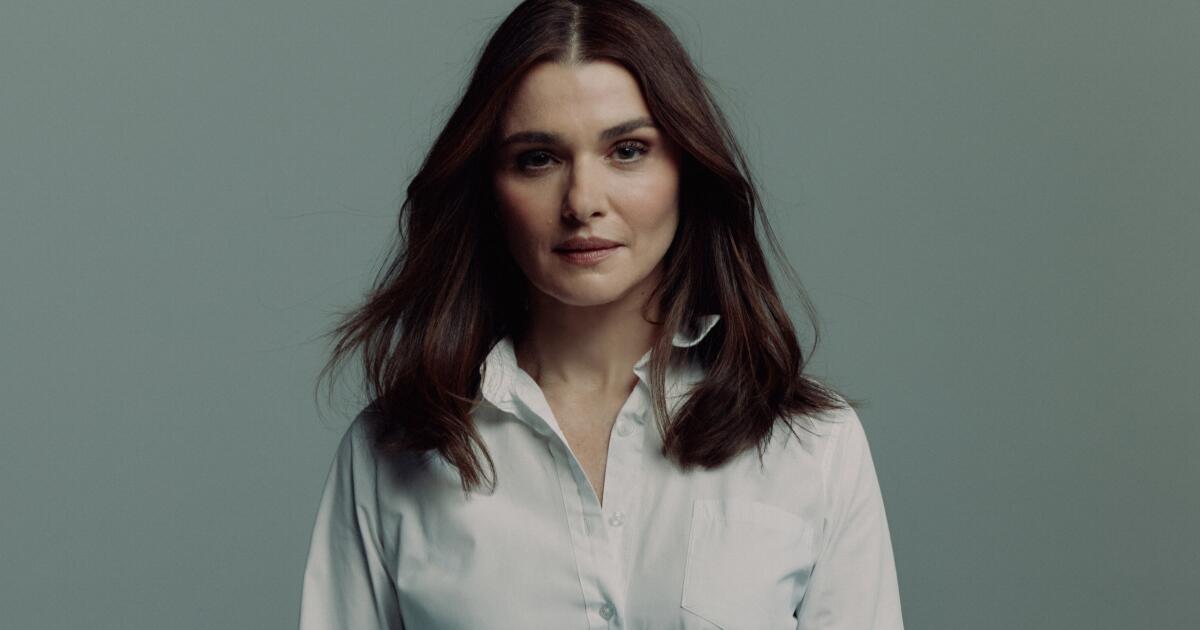
London — It’s been almost six months since Rachel Weisz wrapped filming on “Vladimir,” and she’s still unsure how to discuss her character on the series. The unnamed protagonist, known in the scripts as “M,” was so complexly drawn that Weisz is now struggling to externalize the experience of playing her.
“This is the first time I’ve spoken about it to anybody,” she says, sitting at a table in Goodfare, a restaurant in London’s Camden, on a frigid morning in early January. “I may be a little creaky.”
It’s a few days after the holiday break and Weisz, 55, is preparing to start production on a new film, “Séance on a Wet Afternoon.” Despite that, she hasn’t fully left M behind. As an executive producer on the series, she was involved in the edit, still ongoing at the time of our interview. Today, after a meandering back and forth about the character, she admits, “I suppose I still need to gather my own point of view on her.”
“Vladimir,” an eight-episode limited series premiering March 5, is based on playwright Julia May Jonas’ 2022 novel of the same name. Both the novel and the series center on a literature professor (Weisz) who teaches at a liberal arts college. Her husband (John Slattery) is under investigation for misconduct at the school as she becomes infatuated with a new colleague named Vladimir (Leo Woodall). Jonas wrote the pilot several years ago without a particular actor in mind for the lead character, who narrates the novel as if she were delivering an ongoing monologue. Weisz had read the book — it was recommended to her by a friend — before she was sent the script.
Rachel Weisz as M, a literature professor who becomes infatuated with the titular character, played by Leo Woodall.
(Netflix)
“It was a damn good piece of writing, the novel and the pilot,” she says. It led to a meeting with Jonas. “Ultimately, I think I was really intrigued about getting into the skin of this character,” Weisz adds. “I thought it would be challenging and hopefully fun.”
As M’s life goes farther off the rails, she becomes more obsessed with Vladimir, often indulging in torrid romantic fantasies about him, which the audience sees in juxtaposition to the more mundane reality. She eventually crosses lines at work and at home, all while narrating her unraveling directly to the viewer.
“The novel is very internal,” Jonas says, speaking later over Zoom from New York. “So it was about: How do we take that internal voice and translate it to the screen? One of the ways was her direct address, but we wanted to twist what that device usually does for an audience. In most direct addresses, the actor tells you the truth about what’s really going on.”
But that’s not what always happens here.
“I wanted to flip that to where she’s talking to someone and she’s always trying to massage the truth or sometimes outright lie,’” Jonas says. “She’s a completely unreliable narrator.”
Throughout the series, M confides in the camera, an unusual technique that draws its inspiration from Jonas’ theater background. Weisz remembers doing a Neil LaBute play in the ‘90s in which she broke the fourth wall but had never done so onscreen. The actor says she did have an audience in mind when speaking to the camera, but it would be “reductive” to overexplain it.
“There was somebody I was imagining,” she says. “On set, we called it my special friend. The other actors had to pretend it didn’t happen. It wasn’t so much choreographed as it was breaking out of the scene and chatting to my special friend and then going back into the scene.”
It eventually became second nature for her and the cast, she says.
“It was really interesting watching Rachel and all the creators involved navigate that,” Woodall adds, speaking separately on Zoom from London. “She did a really remarkable job at staying within a scene while also having to pivot and deliver a monologue and then come straight back into the scene. It was a new challenge for me, but I thought it was going to be more difficult than it actually was.”

“There was somebody I was imagining,” says Rachel Weisz about breaking the fourth wall with her character on “Vladimir.” “On set, we called it my special friend.”
(Sophia Spring / For The Times)
The episodes are snappy, at around 30 minutes each, and the tone of “Vladimir” often leans more funny than serious. Weisz tends to gravitate toward drama — her last series was a remake of David Cronenberg’s “Dead Ringers” — but she has flexed her comedic muscles in the past, notably in Yorgos Lanthimos’ satirical film “The Favourite.” She doesn’t see herself as a particular funny actor despite the many laugh-inducing moments in “Vladimir.”
“For me, everything was intensely serious,” she says. “It was about committing to her reality and what she cares about and what matters to her and how she’s trying to convince herself that everything’s just fine.”
She pauses. “I wouldn’t know how to be funny,” she affirms. “It’s not my wheelhouse. I was aware that there was a lot that was ridiculous, but life is often so ridiculous, isn’t it? Things are going very wrong in her life with her husband and everything. It gets harder and harder for her to toe that line as she tries to pretend it’s not going wrong.”
Weisz mostly relied on her “imagination and Julia’s words” to portray the character. She’s known a lot of professors over the years, especially when she lived in New York City, which helped. She understood that despite the character’s misbehavior in the series — like breaking into her boss’ office — she’s decently good at her job. “Times are changing and her husband is in this deep crisis and her reputation is on the line,” Weisz says. “But I think she thinks she’s a beloved teacher and an esteemed professor.”
To play M, Weisz had to be totally on her side. She knows it’s generally important to be able to defend the person you’re playing, but she also says the character felt “psychologically true.”
“It’s very hard to do something if it doesn’t feel like that,” she says. “The writing is the beginning of my job and this was so well written. But I wouldn’t be able to play someone unless I could totally be in their point of view.”
Jonas says what makes M compelling is that it’s hard to put a label on her or know what to expect.

“Vladimir” is an adaptation of Julia May Jonas’ novel. The author says M is difficult to pin down.
(Sophia Spring/For The Times)
“Is she right? Is she wrong? Is she psycho? Is she sane? Is she brilliant? Is she all of those things? Or none of them? You can’t pin her down,” Jonas explains. “And that’s what makes her so exciting to watch. You’re not quite sure what the choice is that she’s going to make next other than being deeply smart and well read.”
“Vladimir” began shooting in July 2025 in Toronto, which stood in for an undefined liberal arts college town. It was deliberately shot while Weisz’s young daughter with husband Daniel Craig was out of school for the summer. Although the actor felt tethered to the character while on set, she could easily dissociate at the end of the day. She’s repeatedly keen to clarify that she’s nothing like M even as she defends her, as if she’s slowly realizing just how unhinged the character comes off in the series.
“I deeply empathize with her and understand her,” Weisz says. “But I left her when I got home. She’s like a projection of what a viewer might want to live out.”
Jonas adds, “It’s allegorical in nature. What if I could just take this man and chain him up? It’s making that literal for us to watch. It’s about that female id deep inside of us.”
Both Woodall and Jonas were struck by Weisz’s intuitive approach to the character. Woodall and Weisz didn’t discuss M’s relationship with Vladimir during filming.
“She loves as much spontaneity as possible, and she loves to not really know ahead of time what the actor’s going to do,” Woodall says. “For someone who’s as well established as she is and so beautiful, it was really fun to see her allow herself to be the butt of a joke and look ridiculous. Some of the scenes that we shot, we would finish, and she would burst out laughing. She leaned into it and had a lot of fun with it.”
“Rachel is completely surprising,” Jonas adds. “The first time I’d see a scene I’d think, ‘Oh, that’s not how I wrote it at all.’ And then I would see it a second time and I would realize what she was doing. That’s what makes her so alluring as an actor. She’s funny and interesting and a little off-key but fully committed, and you never know what she’s going to do next.”
Weisz has always wanted to be an actor, but she didn’t realize it could be a career until college. She’s drawn to writing and to singular voices. “I loved joining hands with Julia’s imagination,” she says. “I love writers. I’m not one because it’s too solitary, but they’re my favorite people to be with.”

“She’s funny and interesting and a little off-key but fully committed, and you never know what she’s going to do next,” says Jonas about Weisz.
(Sophia Spring / For The Times)
She tends to select projects based on the script, but otherwise she isn’t picky. Weisz has done everything from quirky indie films to prestige drama to high-octane action to Marvel. She won the Oscar for supporting actress in 2006 for “The Constant Gardener” and was nominated again for “The Favourite.”
“In the beginning of my career, I just did whatever job I got so I could pay the rent,” she says, shrugging. “I wasn’t picky. Now I’m in this luxurious position where I can choose things. It’s really about the character and writing, if it appeals to me or if it seems it would be interesting to pretend that story.”
Since our interview in January, Universal Pictures confirmed the production of “The Mummy 4,” which will feature Weisz and Brendan Fraser reprising their roles as Evelyn and Rick O’Connell (Weisz didn’t appear in the third installment). Prior to that announcement, though, Weisz is cagey about the film. “They’re seriously talking about it,” she says. “Brendan’s been very involved. It sounds very interesting.”
Being interested in a character or a story is what ultimately drives Weisz. Her performance in “Vladimir” completely eschewed vanity and instead fixates on what makes this woman go off the rails. M wants so badly to control her own narrative and is unable to face the reality of her life, but she’s also a talented writer and professor who wants the best for her family.
“People are contradictory,” Weisz says. “They can be brilliant at their jobs and have a very messy personal life. This is someone who is human. I know it’s very heightened and ridiculous, and it is in the genre of comedy, but it’s very true. Humans can have these massive contradictions.”
Although Weisz instinctively understands M, questions linger. She hasn’t decided whether M is complicit in her husband’s misbehavior (“That’s a hornet’s nest,” she says) and she’s not sure what happens to the character in the end. Even during the editing process she’s struggled to see M from the outside. “I just see her,” she says. “I don’t see me there at all.”
As the interview wraps, Weisz worries I won’t have what I need. Did she say enough about the series? Did she overly defend her character?
“I’m still aligned with her point of view,” she acknowledges again. “I think she’s — I was going to say I think she’s reasonable, but that might not be quite the right word.”
The actor laughs. “I am aware that is not the right word.”

Subtitles always turn me away; I’m not really a foreign movie fan. There has been a chance for at least one film. Smother slapped me into place. I have never been so into a story such as this; it’s dark, it’s dreary, and it’s full of subtitles you won’t even notice after a while. The film itself separates art from the artist and pulls you into questioning reality. At least I know I did. It’s one of those moments where everything comes together in a certain way.
Let’s get into the review.
Synopsis
Micheala is a mother, and a recovering alcohlic. When the mother and daughter get into a drinking and driving accident, Hanna stops talking to her mother and dependingd more on her fathers love, Michaela decomes more jealous with every moent she watches the father and daughter’s relationship. After moving into ehr grandparents home trigger Michaela to become something she regrets.
After watching the film, Smother reached into the crevices of my brain and thought of every jealous moment as a father watching their kids growing up in general. However, the tragic thoughts soon become terrifying, spinning you into a completely different thought process. You tink you can’t be afraid of a movie, try Smother. The dark and gloomy background fits the story perfectly. It’s such a dark time at first, looking like any city, anywhere.
Watching the mother change was one of the most frightening scenes Ihave ever seen. There are no jump scares; it’s a very artsy form of film. The difference is that Smother beats them all. I know that’s all personal opinion, but open your eyes and see true evil. Smother does not need a scary scene; the atmosphere and acting kept you from noticing what was around you. To me, that’s the form of true terror, the fear of the people who swore to protect you. Making an event like this, you have to work hard. The entire cast nailed the focus. The entire story seems like a fairy tale gone wrong. Only sunflowers can save you.

Smother, though in a completely different language, you were able to watch without subtitles because the entire film passed its test. If you ask me, the language barrier made it a lot more intimidating and spooky. It was refreshing to see an artsy horror film that actually delivered. After a while, you just look at the genre as a failure to all the “die hard” horror fans (like me). But I would suggest giving it a try; there were no mind-blowing scenes, but there doesn’t need to be. The film speaks for itself, just in another language.
In The End
In the end, I didn’t know what to expect. I knew there were barriers with me, such as not being able to follow the story corresctly. I thoroughly enjoyed the film. And if you win me over with something like this, you are doing a great job! No, really, it will make you check the locks on your doors before heading to sleep.

Deadly crash closes US-95 in Nye County; both drivers dead

Man dead after Windsor, New Hampshire, house fire

San Diego Wave FC Unveils “Balboa Park Kit”: New Community Jersey for 2026 Season – San Diego Wave Fútbol Club

NMSP release details on capture of Fort Sumner shooting suspects

Lawmakers discuss solutions to solving a 'child care crisis' in NC

Florida High School Football Rankings: Top 25 teams – Oct. 21

Cleary's 21 help Le Moyne down Central Connecticut State 69-64 in OT

How old is Bo Nix? What to know about Oregon quarterback ahead of 2024 NFL Draft

99th annual Pony Swim held in Virginia

Indiana Members Credit Union announced as new anchor tenant at Bottleworks District

DHS shutdown triggers TSA ‘emergency measures’ as lawmaker warns airports could feel economic pain

How Trump’s 2026 Iran ‘war’ script echoes and twists the 2003 Iraq playbook

As Nancy Guthrie’s disappearance nears one month, other Tucson families have been waiting decades for answers | CNN

Video: An Inside Look at the State of the Union

Biden’s FBI subpoenaed Kash Patel’s and Susie Wiles’ phone records during federal Trump investigation
-

 World15 hours ago
Exclusive: DeepSeek withholds latest AI model from US chipmakers including Nvidia, sources say
-

 Massachusetts24 hours ago
Mother and daughter injured in Taunton house explosion
-

 Montana7 days ago
2026 MHSA Montana Wrestling State Championship Brackets And Results – FloWrestling
-

 Oklahoma1 week ago
Wildfires rage in Oklahoma as thousands urged to evacuate a small city
-

 Louisiana3 days ago
Wildfire near Gum Swamp Road in Livingston Parish now under control; more than 200 acres burned
-

 Technology5 days ago
YouTube TV billing scam emails are hitting inboxes
-

 Culture1 week ago
Test Your Knowledge of the Authors and Events That Helped Shape the United States
-

 Technology5 days ago
Stellantis is in a crisis of its own making