Culture
Why tennis media is a fragmented mess, from Grand Slam broadcast rights to social media highlights


Alexandra Eala had the biggest week of her tennis career at the Miami Open in March. She beat three Grand Slam champions — Jelena Ostapenko, Madison Keys and Iga Świątek — on her way to the semifinals, where she had 2024 U.S. Open finalist Jessica Pegula on the ropes in what was ultimately a three-set defeat. Eala, 19, who has been making tennis history for the Philippines for most of her life, was the most surprising star of the tournament.
More surprising, for anyone familiar with the uneasy relationship between tennis and media, was how quickly she became a star on the women’s tennis tour’s YouTube, too. By the Monday after her incredible run, Eala was front and center for “Rally the World,” the WTA’s series of videos in which players declare how the sport lets them express their full selves, launched as part of a rebrand in late February.
“This is my stage to rally a nation,” Eala, who became the highest-ranked Filipino player in WTA history at the end of March, says.
Eala used the Miami Open’s teal and blue courts as her living room for most of that tournament, but the wider stage on which tennis broadcasts itself — across television, streaming and social media — is more often an exercise in restricted views and convoluted entry points. When world No. 3 Coco Gauff, who has as much star power on TikTok as she does on the tennis court, was asked about what she wanted the WTA to improve, she focused on user-generated content: the clips, highlights packages, memes and other media that players and fans make, separate from the official output of the tennis tours or rights holders. The WTA cannot create this itself, because then it wouldn’t be user-generated, but it can follow the outlines of what makes it so compelling.
“Obviously I’m someone who is on social media a lot. A lot more TikToks and following the trends that a lot of the other sports are doing, which I know that WTA has a plan in place … they ask for feedback and that was the main thing I noticed,” Gauff said in a news conference at Indian Wells.
The tension between official and unofficial content — and how the rights and deals are made that decide which is which — are at the center of tennis’ future.
If a tennis fan in the United States wants to watch the next Grand Slam, the French Open at Roland Garros, Paris, they have a few choices. They can buy in-person tickets; they can watch on television; they can watch on a streaming service; or they can watch highlights, either on those services or on a social media channel like YouTube.
Buying in-person tickets is expensive, even before factoring in travel to France. To watch on cable television, they will need to use a Warner Bros. Discovery network, after the company signed a 10-year, $650 million (£503.2m) deal for U.S. broadcast rights to the tournament in June 2024. In April, it announced that eight-time Grand Slam champion Andre Agassi will join as an analyst, for coverage that will air on TNT Sports and TBS. It will also stream on Max. It had previously aired across a fragmented combination of NBC, the Tennis Channel, Tennis Channel+ (its streaming service) and Peacock.
That’s for one Grand Slam. The other three are variously broadcast across ABC, ESPN and the Tennis Channel. For the next rung down, ATP and WTA 1,000 tournaments, the fan could use Tennis Channel. Or, to just watch men’s tournaments, they could subscribe to Tennis TV, the ATP-run streaming service from ATP Media. It launched as a combined service in 2009, but the WTA left the platform in 2016. The WTA has its own WTA TV platform, but it does not operate in the United States.
For highlights, the fan could use television or streaming, or they could use YouTube — through the French Open’s own channel.
This combination of platforms, subscription costs and split services is a feature, rather than a bug, because of how central broadcast media rights are to tennis’ financial ecosystem. ESPN will pay $2.04 billion (£1.58 bn) to air the U.S. Open through 2037, while Wimbledon’s broadcast deal with ABC and ESPN networks comes in at $52.5m per year as of 2024, according to SP Global. Those revenues, along with ticket sales and sponsorships, form the three pillars of how tennis tournaments make money.
At the upper echelons of tennis, media rights revenues take up more of that three-way split; moving down the pyramid of events, they take up less. For the biggest events, that means their value requires protection, which means being officious about broadcast restrictions. One of the main limitations to Gauff’s desire for more social content? Players, who create the product for which media companies pay so much, can’t even share footage of themselves.
At Wimbledon last year, the Australian player Daria Saville launched a petition against the restriction. “It pains me that Grand Slams do not currently permit players and fans to share footage and highlights from matches on their social media platforms,” she wrote. “The opportunity for us to self-promote and inspire a broader audience, particularly young and aspiring athletes, is being denied by this outdated copyright policy.”
Daria Kasatkina, the world No. 12 who recently switched allegiance from Russia to Australia, runs “What The Vlog.” It’s a YouTube channel, produced with Kasatkina’s partner, Natalia Zabiiako, which gives fans an insight into life on the tour and interviews Kasatkina’s fellow players. Kasatkina has also criticized the fact that players can’t share footage of themselves in action. “This is something I a bit don’t agree with, because it’s not like we’re streaming,” she told a couple of reporters at the Australian Open.
“It’s something that happened two weeks ago, plus, it’s me. Goddamn, it’s me playing the match. I was waiting there outside running, and now I cannot use the footage of myself.”
The Grand Slams were contacted for comment. A spokesperson for the All England Lawn Tennis Club, which organizes Wimbledon, said: “It’s important to strike a balance between encouraging fan engagement with The Championships, the players and the sport, while at the same time tackling the growing issue of illegally pirated content and protecting the contractual agreements that are in place with our rights-holding broadcasters who bring a significant amount of value into the tennis ecosystem.”
A spokesperson for the United States Tennis Association (USTA) added: “Our broadcast partnerships are vital to the growth and success of the U.S. Open and the game of tennis in many ways. Together they are the platform through which the US Open is seen by hundreds of millions of fans around the world each year. We understand the evolving universe of player and fan-shared content, and we support athletes’ desires to promote themselves. We’re constantly evaluating how we can make changes and enhancements in these areas to maximize the promotion and growth of our sport, while also ensuring that our agreements with our partners, and their copyrighted material, are protected.”
Myriad tennis players like Coco Gauff have used social media to build a connection with fans beyond the court. (Robert Prange / Getty Images)
Kasatkina said that the WTA has been more permissive about sharing match footage from its events. Marina Storti, chief executive of WTA Ventures, the tour’s commercial arm, said in an interview in February that what players can and can’t share will be a discussion point in future rights negotiations.
The WTA has also introduced “Inside the Tour,” a video series designed to emulate the popularity of player vlogs like Kasatkina’s, on its own YouTube channel.
One Grand Slam has even circumvented its own broadcast agreements in order to attract a wider audience. In January, the Australian Open showed matches for free live on its YouTube channel, but instead of the actual match footage, it used animated characters, like something from a video game. It was a hit, with the viewership increasing from 246,542 over six days for a more basic 2024 version to 1,796,338 in the same timeframe this year.
Innovation in how tennis is broadcast is not easy in a sport with an often traditionalist audience. “I think broadcasting in all sports has stayed the same,” said Farzeen Ghorashy, president at Overtime, in a video interview in February.
“What innovation has there been in broadcasting broadly? The camera angles are the same. The commentators are mostly the same. There’s more simulcasts and visual sort of things, but that doesn’t bring fans into the sport.
“I think if you’re any league that has sold your media rights and it lives on linear television, the average age of the linear television viewers is older, so therefore the fan is going to be older as well.
“So I think all the leagues and rights holders are now thinking about, how do I age down … (and) reach a new audience in a different way.”
Overtime is a media company aimed at Gen Z sports fans which focuses on the NFL and NBA, and claims to have an audience of over 100m people. The ATP Tour recently signed a content partnership to bring its clip-microphone interviews with players to tennis. These kinds of clips, which can be shared endlessly by fans across social media platforms, are a key access point for people who may know someone like Gauff, Ben Shelton, Carlos Alcaraz or Aryna Sabalenka as someone they have seen on social media doing a dance, rather than a champion tennis player.
Other sports, including Formula One, have embraced drivers’ prominence in other spaces, especially on streaming platforms like Twitch. Amazon, which owns Twitch, had a five-year deal for the U.S. Open between 2018 and 2023. It did not renew the deal, and the cross-over opportunity went away. Golf has made strides in embracing YouTube. Direct-to-consumer streaming services, like the one the Tennis Channel launched in November last year, could yet add single-match subscriptions, or one-off payments for compelling rivalries, or other introductory offers. Even a relatively modest monthly payment is not a good deal for someone who only wants to follow one player or just the odd final. But these things don’t yet exist.
Another key entry point is controversy, something which official rights holders don’t always want to lean into. At last year’s Madrid Open, a short clip of Daniil Medvedev asking if the “Illuminati” were responsible for roof closure decisions went viral. It is still up on the Tennis Channel and Tennis TV YouTube channels, but it was copyright-striked on X. These kinds of clips, like the above player interviews, are ways into tennis for fans unfamiliar with the sport and its protagonists, but more often than not rightsholders’ contracts are written so restrictively that they limit discoverability.
Fans generating these kinds of entry points meet similar obstacles. The Sabinelisickifansss YouTube account racked up 27,000 subscribers before being shut down last July for repeated copyright strikes, in which the official rightsholder for a clip makes a complaint to YouTube. The account started as a way of sharing footage of the German player and former Wimbledon finalist Sabine Lisicki, but grew into a showcase for controversial moments on the WTA Tour more widely.
It became popular with videos like “Top 10 most HATED WTA tennis players” and “Double Bounce in WTA Tennis (No Sportsmanship at all…) ( (DRAMA),” but sailed close to the wind with the amount of footage it used without actually owning any rights. After a series of complaints from Wimbledon, and previous copyright strikes from other tournaments and governing bodies, it was shut down.
The account was first set up by Jacky, 25, who lives in Hong Kong. He started it seven years ago, when he was a student. In a phone interview in February, he said he was “shocked” when the account was closed down, despite receiving several warnings. Last year, a letter sent to the European Union and signed by the Premier League, Sky and Warner Bros Discovery, among others, claimed that the total cost of piracy to sports rights holders is $28.3bn each year. That complaint was primarily about the live streaming of events on unofficial streams, rather than short clips from matches that happened, in some cases, years ago.
Jacky said that the tours’ limits on what they will post don’t serve fans’ desire for controversy. “They will not put up negative things like the worst player in history. But I think the WTA audience wants to know which player played really badly in a Grand Slam or what’s the biggest losing streak on the WTA Tour.
“This tennis YouTube is doing something official YouTube accounts cannot provide, and Grand Slam highlights are often only like two or three minutes long.”
He decided to start a new version of his YouTube account after around a month away. He said that he’s a lot more careful now about sharing footage from Grand Slams, but feels strongly that tennis fans are often underserved by the quality and quantity of highlights that is freely available from the majors. Highlights on the ATP and WTA channels are made using artificial intelligence, which can capture exciting points but often leads to a package that gives a fan absolutely no idea of how a match played out, jumping from halfway through with one player leading to the other player having match point.
They are also very short (official Grand Slam channels, most often the Australian Open, do offer longer packages and sometimes full matches) and big matches sometimes don’t get full fanfare. Last year’s Madrid Open final between Świątek and Sabalenka, widely regarded as the best match of the year and a rare final meeting for the two best women’s players in the world, got the full-match treatment…
…On Christmas Day, almost eight months after it was played.
Joint broadcast rights for the ATP and WTA Tours would simplify all of this. This is in place at the four Grand Slams, but a long-discussed commercial merger between WTA Ventures and the ATP into a new company called Tennis Ventures is yet to be finalized. The proposed merger would not come with a 50-50 revenue split between the two tours at present, with the ATP slated to receive closer to 80 percent of revenue from tournaments, media rights and sponsorships.
“Everyone sees the opportunity to align more closely the men and the women sport both commercially, but also from a marketing perspective,” Storti said, adding that talks remain ongoing. “And we know we see the opportunity to help grow the sport. I think it would benefit everyone — the players, the tournaments.”
Tennis is also not alone in reaching a sports media inflection point, as media companies try to figure out how to balance the decline in what has made them money in the past (linear broadcast and cable) and the rise of what could make them money in the future, but largely hasn’t yet (streaming.) MLB and ESPN will terminate their broadcast deal, which was supposed to run until 2028, at the end of the 2025 season. Sources briefed on ESPN’s thinking told The Athletic that ESPN, which would have paid the league $550 million for the three remaining seasons, saw that figure as too far above market value.
The sport is also still recovering from the impact of Covid-19, which was financially ruinous; the renewal of media rights deals in its wake has been vital.
In the short-term, tennis tournaments and tours can see that high-value rights deals plus intense media restrictions equals high demand for pay television and in-person tickets. But in the long-term, as streaming inevitably overtakes cable, those restrictions — which shut out fans from discovering the sport, as well as consistently watching it — could come home to roost.
If those broadcast deals decline in value, and other services don’t fill the shortfall — because their figures show there are fewer fans waiting to watch on the other side of that decline, because their routes into the sport have been closed off — tennis tournaments will suddenly find themselves at the head of a broken system.
The WTA’s increased focus on its players’ stories, and acting with speed when a new one emerges, like with Eala in Miami, is one example of a move to fight against that tide. The Australian Open’s cartoon players and the ATP’s Overtime partnership are another; so are the social media accounts of players like Gauff and Kasatkina.
It’s the friction between these on-ramps for fans and the full tournament experience that will be critical for tennis, if it really does want to “rally the world.”
(Illustration: Kelsea Petersen / The Athletic / Getty Images)



Welcome to Lit Trivia, the Book Review’s regular quiz about books, authors and literary culture. This week’s challenge is all about an influential group of writers, editors and other creative types known as the Algonquin Round Table. In the five multiple-choice questions below, tap or click on the answer you think is correct. After the last question, you’ll find links to related books and other information about the era if you’d like to do further reading.

A strong sense of place can deeply influence a story, and in some cases, the setting can even feel like a character itself. But as it’s summer here in the Northern Hemisphere and travel adventures abound, this week’s literary geography quiz takes you on a trivia tour of notable libraries around the world. To play, just make your selection in the multiple-choice list and the correct answer will be revealed. At the end of the quiz, you’ll find links to more information if you’d like to do further reading.

Welcome to Literary Quotable Quotes, a quiz that tests your recognition of classic lines. This week’s installment highlights observations from future or alternate worlds depicted in popular science fiction. In the five multiple-choice questions below, tap or click on the answer you think is correct. After the last question, you’ll find links to the books if you’re intrigued and inspired to read more.
-

 Health11 minutes ago
She Ate High-Protein Ice Cream Daily and Lost 193 Lbs—Her Keys to Success
-
 Lifestyle26 minutes ago
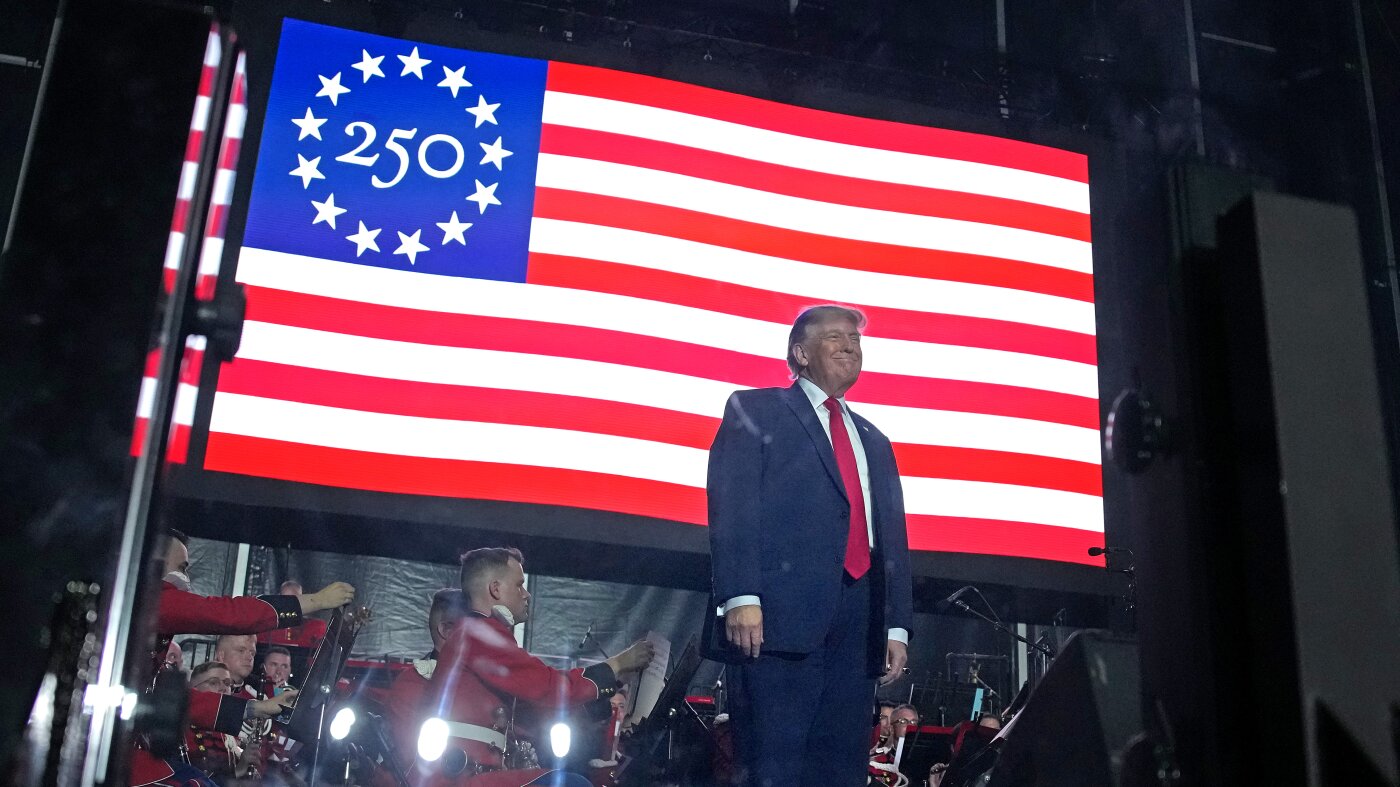
House Democrats accuse Trump of ‘hijacking’ America’s 250th birthday for his own gain
-

 Technology38 minutes ago
Tesla driver faces manslaughter charges over Texas crash that killed a woman inside her home
-

 World41 minutes ago
Six Kurdish fighters killed in IRGC ambush as clashes spread across western Iran
-

 Politics46 minutes ago
Sanctuary county refused 615 ICE transfer requests, turned over just 11 illegal immigrants, records show
-

 Health52 minutes ago
Mystery parasite leaves Americans battling ‘explosive’ illness as CDC investigates
-

 Sports56 minutes ago
2026 World Cup Round Of 16 Odds: Who’s Favored To Advance?
-

 Technology1 hour ago
Fox News AI Newsletter: American manufacturer says AI is creating jobs, not replacing them

