Culture
NHL playoff tiers: Where each team sits and what’s at stake down the stretch this season


The trade deadline is behind us and there are only 26 days until the end of the 2024-25 NHL regular season.
With each team having 15 or fewer games left, attention has shifted to the final stretch of the season. Whether a team is vying for a division title, in a tight playoff chase or looking to finish the season with momentum, the stretch run has a lot to offer for all 32 clubs.
This week, The Athletic asked its NHL staff to put teams into five playoff tiers — “not happening,” “long shot,” “bubble team,” “looks like a good bet” and “it’s a lock” — and highlight what’s at stake for each team down the stretch. Teams are listed alphabetically in their respective tiers.
Not happening
Boston Bruins
What’s at stake: Who will be the next captain?
The Bruins are sinking. They traded five players off their roster. It’s unlikely interim coach Joe Sacco will assume a permanent title behind the bench. Morale is low. So this is a good time for the organization to determine who will replace Brad Marchand as captain. David Pastrnak is currently wearing the only “A” with Charlie McAvoy injured. Pastrnak is known for his positivity and friendliness with his teammates. If Pastrnak can help the team hold its head high, he could be the next captain. — Fluto Shinzawa
Buffalo Sabres
What’s at stake: The direction of the rebuild
The Sabres will miss the playoffs for a 14th straight season and are going to be a lottery team in Kevyn Adams’ fifth season as general manager. But he’s still been speaking and operating like someone who will stay employed beyond this season. Buffalo still has a lot of questions to answer this offseason beyond Adams’ job security. Will Lindy Ruff stay on as coach? Will he bring in new assistants? Which players will be part of the future? The stretch run could help determine some answers to those questions. — Matthew Fairburn
Chicago Blackhawks
What’s at stake: Anders Sörensen’s audition for permanent coach
Time is running out for Blackhawks interim coach Anders Sörensen to prove he deserves a shot at being the permanent coach. The Blackhawks have had some highs and lows since he was promoted. Some consistency down the stretch would likely be helpful for his case. — Scott Powers
Nashville Predators
What’s at stake: Andrew Brunette’s future as coach
Predators general manager Barry Trotz has made public comments recently that suggest he expects Brunette back next season, but he then tried to walk back those comments and made clear there is no final evaluation at this point. The Preds are better off losing to increase their lottery odds, and the lineup reflects that at times, but Brunette still must try to get the best he can out of these guys each night. Especially if Trotz is truly undecided. — Joe Rexrode
Philadelphia Flyers
What’s at stake: Spots for the future
After dealing useful and young-ish players Morgan Frost and Joel Farabee to Calgary in late January, Flyers general manager Daniel Briere offered an unspoken reminder to the young guys still on the team that the bar is high to stick for the long term. Management will be keeping a close eye on the players who are still developing to determine whether to keep them or perhaps try and deal them in a trade this offseason. — Kevin Kurz
Sidney Crosby has 76 points in 69 games this season. (Steph Chambers / Getty Images)
Pittsburgh Penguins
What’s at stake: Sidney Crosby’s point-per-game streak
Sidney Crosby needs four points over the Penguins’ last 11 games to complete his 20th point-per-game season in a row, which would break Wayne Gretzky’s record of 19. Other than hoping to show off a new and improved Tristan Jarry to potential summer buyers, there isn’t a ton for the Penguins to play for at this point. Crosby missed two games earlier this season, so his magic number is 80 points. He currently sits at 76 points in 69 games played. — Josh Yohe
San Jose Sharks
What’s at stake: Winning the draft lottery — again?
The only goals the Sharks had entering the season were playing a more competitive brand of hockey in Ryan Warsofsky’s first year as coach and ushering Macklin Celebrini into the NHL. If success is seeing Celebrini already becoming their best player, Will Smith starting to blossom in the second half and William Eklund showing to be a core playmaking forward, then call it success for San Jose. The wins will come later, the future is now and that means seeing youngsters Shakir Mukhamadullin, Collin Graf and Luca Cagnoni progress down the stretch. Otherwise, why not try to land the No. 1 pick and think about adding Matthew Schaefer to a promising blue line? — Eric Stephens
Seattle Kraken
What’s at stake: The team’s lottery odds
Two years out from a fairy tale run to within a game of the Conference Final, the Kraken have been a massive disappointment, and nothing that occurs down the stretch can really change that. At least Shane Wright has taken a major step, and Kaapo Kakko has flashed some major potential. The Kraken made some serious moves to begin to rebuild, and given their lack of progress after both a coaching change and a pair of expensive win-now moves this offseason, are probably best served by improving their lottery odds down the stretch. The internal pressure to make real progress next season has to be significant. — Thomas Drance
Long shot
Anaheim Ducks
What’s at stake: Momentum for 2025-26 with a strong finish
The Ducks will fall short of a wild-card berth, but they’ve reached the step of playing games of some importance in March for the first time in several years. They’ve got 13 games left to make a statement that they intend to be a playoff team next season. Their last playoff appearance came in 2018, which is also the last time they finished above .500. Great goaltending by Lukas Dostal and John Gibson has powered them all season but now they’re seeing Jackson LaCombe become a force on defense and Mason McTavish having a big second half. Trevor Zegras is starting to recapture his mojo as a point producer. Now is the time to play spoiler and then build on the roster in the offseason. — Eric Stephens
New York Islanders
What’s at stake: Less than you’d think
Lou Lamoriello, who’ll be 83 in October, doesn’t seem to be in danger of being asked to leave by ownership. Patrick Roy is locked in behind the bench. The Islanders traded Brock Nelson for a good return at the deadline but would have some work to do to make other changes in the offseason. The playoffs would be nice, but we’ve known what this team is for a while now, and missing out won’t alter that perception. — Arthur Staple
Utah Hockey Club
What’s at stake: Building goodwill in a new market
The Utahns are only 4 points back of the final wild-card spot in the West, but they need to jump a couple of teams and don’t hold the tiebreaker. Their chances are down to 9 percent and an absolute pounding by the Oilers (7-1 loss) on Tuesday and recent losses to Chicago and Seattle haven’t helped. Keeping things close will be the goal, as no one’s job is likely on the line, with the real test coming in the offseason for this front office. They’ll have tons of cap space, a new name, rising young stars and a chance to make some noise in 2025-26. Year 2 in Salt Lake City will be the first with real pressure. — James Mirtle
Bubble team
Calgary Flames
What’s at stake: Their own first-round pick
Calgary is playing with house money by being in contention thanks in part to their team MVP Dustin Wolf. One big question now is: Which first-round pick are they giving up to Montreal after this season thanks to that Sean Monahan trade? Where they finish in the standings will dictate which of their first-rounders they’ll have to give up (not including the New Jersey pick). — Julian McKenzie
Columbus Blue Jackets
What’s at stake: A truly inspirational story
The Blue Jackets aren’t supposed to be here. They were expected to be among the dregs of the NHL, down there at the bottom of the standings with San Jose, Chicago, Anaheim, etc. Truth be told, in losing eight of their last nine, including six straight, the Jackets are probably closer to a long shot than a bubble team. They’re three points behind Montreal for the final spot, but that murky middle of the Eastern Conference is quite the traffic jam. They’ve already overachieved, but this season won’t be viewed through quite the same lens if they don’t make the playoffs. — Aaron Portzline
Detroit Red Wings
What’s at stake: A summer of discontent
Detroit has been much better since head coach Todd McLellan arrived at Christmas, getting back into the playoff race despite long odds. But even so, Red Wings fans’ patience has slowly evaporated after eight long years without playoff hockey. Steve Yzerman is safe as general manager, but missing the postseason for a ninth straight year certainly won’t make it a comfortable summer in Hockeytown, where the pressure to win is now really ramping up. There aren’t many obvious solutions in free agency, especially given Detroit’s so-so track record there the last few seasons, but the Red Wings can’t just keep waiting forever — especially with Montreal seemingly already having caught up to them. — Max Bultman

The Canadiens are making a late push for the playoffs. (Eric Bolte / Imagn Images)
Montreal Canadiens
What’s at stake: A great development opportunity
The Canadiens have already achieved their goal of playing meaningful games in March; the fact they largely have their playoff destiny in their own hands this late into the season is a bonus. But for the young core of this rebuild, to have an opportunity to experience the intensity of the playoffs would be an invaluable development moment. The Canadiens are far from a finished product, there are several pieces left to add and develop in this rebuild, but a playoff appearance would serve as an accelerator in many ways, and proof to their fans that brighter days are around the corner and their patience will be rewarded. — Arpon Basu
New York Rangers
What’s at stake: Respectability
The Rangers have been a mess most of this season. Their defense is among the worst in the league, and Chris Drury has tried to remake to roster on the fly. They’ve dug themselves a hole in the standings, and the odds are stacked against them to make the playoffs. The rest of this season should be about committing to winning habits and seeing if results follow. If they don’t (and perhaps even if they do) this offseason could feature plenty more changes to the roster, and maybe even the staff. — Peter Baugh
St. Louis Blues
What’s at stake: How much of the core is kept
This will be Doug Armstrong’s final offseason as Blues general manager. The organization announced last June that Alexander Steen will replace him after the 2025-26 season and Armstrong’s sole title will be president of hockey operations. As his clock winds down, Armstrong indicated that he’d explore making changes to the Blues’ core group of players if the results didn’t improve. Well, those core players have responded well, and the results have been better. If the club can complete its late-season surge and end a two-year playoff drought, perhaps he’ll consider keeping a couple of those players who he may have planned to move this summer. — Jeremy Rutherford
Vancouver Canucks
What’s at stake: Pretty much everything
The club’s overtime loss on Thursday in St. Louis will ding its odds, but the Canucks are in the mix for the second wild-card spot despite a season that’s been defined by inconsistency, injury and off-ice dysfunction to this point. From a playoff berth to the team’s overall direction, just about everything feels like it’s on the line for the Canucks. — Thomas Drance
Looks like a good bet
Minnesota Wild
What’s at stake: Making the playoffs
The Wild have a little cushion in their wild-card spot but it’s getting tighter with a bunch of teams pushing. And Minnesota has a tough week ahead with a Dallas/Vegas back-to-back and then hosting the Capitals. Injuries have been a huge factor all season with Kirill Kaprizov and Joel Eriksson Ek still out for a while. There won’t be a regime change or coaching change if they miss the playoffs. But it’s still very important, especially with the Wild having traded their first-round pick for David Jiricek. They could get a boost down the stretch or for the playoffs if top prospect Zeev Buium does indeed sign after the University of Denver season. — Joe Smith
New Jersey Devils
What’s at stake: Setting a standard for the future
With Jack Hughes out, the Devils are hard to take seriously as a Stanley Cup contender. In many ways, the rest of this season is about laying the groundwork for the future. New Jersey needs to show it’s a legitimate playoff team, even without Hughes, Dougie Hamilton and Jonas Siegenthaler. Making the postseason still matters. And who knows, if the Devils get in maybe they can push a team (Carolina is their likely opponent) in the first round and maybe steal a series. That would build good momentum heading into 2025-26, when the team hopes to be healthy enough for a more legitimate Stanley Cup push. — Peter Baugh
Ottawa Senators
What’s at stake: The team’s core
The Senators have a 93 percent chance of making the playoffs according to Dom Luszczyszyn’s model. They caught fire at the right time and made essential moves at the deadline to improve their team. That includes trading away Josh Norris from their core to acquire Dylan Cozens. It’s a move many might’ve expected in the offseason, but the Sens did it sooner. If they somehow miss now, it’ll be a catastrophic end to their season and might necessitate further changes to their core. — Julian McKenzie
It’s a lock
Carolina Hurricanes
What’s at stake: Solidifying the lineup
The Hurricanes have new faces, injured players poised to return and prospects all vying for ice time. Coach Rod Brind’Amour will need to fit together all the pieces, determine if young defensemen Scott Morrow and Alexander Nikishin factor into Carolina’s postseason plans and decide which goalie will lead the way in the playoffs. — Cory Lavalette
Colorado Avalanche
What’s at stake: Home ice in the opening round
There are plenty of (justified) complaints about the current playoff format. It’s unfortunate that two of the league’s best in Colorado and Dallas are set to meet in the first round, but it’s a reality. In all likelihood, we are heading for that heavyweight brawl, and in a series that could easily go seven games, home ice could be crucial. Winning Sunday’s meeting in overtime was a good start, but the Avalanche still have some work to do to catch the Stars in the standings. — Jesse Granger

Mikko Rantanen has had a decent enough start to his Stars career. (Jerome Miron / Imagn Images)
Dallas Stars
What’s at stake: Mikko Rantanen’s comfort level
Miro Heiskanen’s uncertain availability for the first round hangs over everything, but in the regular season, all that really matters is home ice against Colorado (meh, whatever) and making sure Rantanen is firing on all cylinders come the playoffs. He’s had a decent enough start to his Stars career, but he needs to be fully comfortable with the Stars’ system, his linemates (Roope Hintz and Jason Robertson) and his off-ice life if Dallas is going to live up to its full potential and win the Stanley Cup. These last few weeks should be all about putting Rantanen in a good headspace entering the postseason. — Mark Lazerus
Edmonton Oilers
What’s at stake: A Pacific Division crown
The Oilers will make their sixth straight playoff appearance dating to the 2020 bubble. The only thing to be determined is where they’ll be slotted in the Western Conference bracket. Veteran defenceman Mattias Ekholm lamented in training camp that the Oilers had home ice in only one of their four playoff series last spring. To ensure at least two, they’ll have to fend off Los Angeles and surpass Vegas to claim their first division title since 1986-87. — Daniel Nugent-Bowman
Florida Panthers
What’s at stake: Trying to avoid the 2-3 matchup in Round 1
With another win over Columbus on Thursday night, the defending champs moved one step closer to clinching a playoff spot. Florida is playing without four key players right now — Matthew Tkachuk, Aaron Ekblad, Brad Marchand and Dmitry Kulikov — and it’s been a bit of a bumpy stretch. The Panthers have a tough schedule left and really mainly want to try and enter the postseason without losing anyone else. But winning the Atlantic — and avoiding the Leafs or Lightning — matters, too, even if the top wild-card team figures to be coming into the playoffs red hot. — James Mirtle
Los Angeles Kings
What’s at stake: Home-ice advantage in the first round
The Kings are too good defensively and too phenomenal at home to fall out of playoff contention, so they’re a lock. The carrot that’s in front of them is being able to start a series at home, which hasn’t happened in three straight playoff defeats to Edmonton. With 11 of their final 15 at home, they’ve got a shot to overtake the Oilers for second place in the Pacific Division. Tracking down Vegas for the division title is probably out of reach but they need more offense throughout their lineup to support Darcy Kuemper, who’s having a terrific comeback season. — Eric Stephens
Tampa Bay Lightning
What’s at stake: Home-ice advantage
The Lightning’s playoff standing is essentially locked up at this point. The only question is where they finish in the division. Jumping up (and maintaining) the second seed would ensure Tampa Bay at least has home ice in Round 1. But if this team can sneak into first place, it would solidify that standing through at least two rounds. Having home ice isn’t everything, but having the ability to control the matchups to open a series can be a real advantage — whether Jon Cooper opts for a power-versus-power matchup with his top players or sends Anthony Cirelli and Ryan McDonagh out to shut down the opponents’ best. — Shayna Goldman
Toronto Maple Leafs
What’s at stake: The Atlantic Division title
The Leafs have never won the Atlantic. A win this spring would equal a lighter first-round matchup, which would equal a lighter path, theoretically, to the franchise’s first Stanley Cup since 1967. Winning it will mean beating out Florida and Tampa Bay. The Leafs have dropped both games to the Panthers so far, but still play them twice in April. They’ve won, on the other hand, both meetings with the Lightning with one more meeting still to go. Those games may well determine 1-2-3. — Jonas Siegel
Vegas Golden Knights
What’s at stake: Fourth Pacific Division title in eight years
The Golden Knights have built a small lead over Edmonton and Los Angeles in chase of their fourth division title in eight seasons. Getting to the finish line would guarantee Vegas home ice for the first two rounds of the playoffs, and more importantly, avoid the Oilers and Kings — who have both played them well — in the opening round. The Golden Knights are 25-7-3 at T-Mobile Arena this season, the second-most home wins in the NHL. — Jesse Granger
Washington Capitals
What’s at stake: A starting role in the playoffs
The easy answer here is Alex Ovechkin’s goal chase. That is a major focus for both Washington and the entire league. But there is one other storyline to watch — the goalie rotation. The Capitals have had an even rotation all season, with Charlie Lindgren and Logan Thompson playing every other game until this week when Thompson started two straight. Teams tend to lean on one goalie in the playoffs, so it will be interesting to see if Thompson starts playing consecutive games more regularly to prepare, or if Lindgren can push for a look as the 1A. — Shayna Goldman
Winnipeg Jets
What’s at stake: Multiple end-of-season awards and, more importantly: Cup-contending confidence
The Jets could win their first Presidents’ Trophy. They’re well on their way to their second straight William M. Jennings Trophy. Connor Hellebuyck has a great case to repeat as the Vezina winner, while a strong end-of-season push could get him on more people’s radar for the Hart. Josh Morrissey will earn Norris votes, Adam Lowry will get consideration for the Selke, Scott Arniel should be considered for the Jack Adams and yet: the most important thing on the line for Winnipeg is its own self-confidence. The Jets haven’t been out of the first round since 2021, so every game between today and the playoffs is about proving Winnipeg is ready to overcome recent playoff demons. This is meant to be the year. — Murat Ates
(Top photos of Victor Hedman and Auston Matthews: Ray Seebeck and Sergei Belski / Imagn Images)



Whatever you do, don’t think of a bird.
Now: What kind of bird are you not thinking about? A pigeon? A bald eagle? Something more poetic, like a skylark or a nightingale? In any case, would you say that this bird you aren’t thinking about is real?
Before you answer, read this poem, which is quite literally about not thinking of a bird.
Human consciousness is full of riddles. Neuroscientists, philosophers and dorm-room stoners argue continually about what it is and whether it even exists. For Wallace Stevens, the experience of having a mind was a perpetual source of wonder, puzzlement and delight — perfectly ordinary and utterly transcendent at the same time. He explored the mysteries and pleasures of consciousness in countless poems over the course of his long poetic career. It was arguably his great theme.
Stevens was born in 1879 and published his first book, “Harmonium,” in 1923, making him something of a late bloomer among American modernists. For much of his adult life, he worked as an executive for the Hartford Accident and Indemnity Company, rising to the rank of vice president. He viewed insurance less as a day job to support his poetry than as a parallel vocation. He pursued both activities with quiet diligence, spending his days at the office and composing poems in his head as he walked to and from work.
As a young man, Stevens dreamed of traveling to Europe, though he never crossed the Atlantic. In middle age he made regular trips to Florida, and his poems are frequently infused with ideas of Paris and Rome and memories of Key West. Others partake of the stringent beauty of New England. But the landscapes he explores, wintry or tropical, provincial or cosmopolitan, are above all mental landscapes, created by and in the imagination.
Are those worlds real?
Let’s return to the palm tree and its avian inhabitant, in that tranquil Key West sunset of the mind.
Until then, we find consolation in fangles.

When the director Rob Reiner cast his leads in the 1986 film “Stand by Me,” he looked for young actors who were as close as possible to the personalities of the four children they’d be playing. There was the wise beyond his years kid from a rough family (River Phoenix), the slightly dim worrywart (Jerry O’Connell), the cutup with a temper (Corey Feldman) and the sensitive, bookish boy.
Wil Wheaton was perfect for that last one, Gordie Lachance, a doe-eyed child who is ignored by his family in favor of his late older brother. Now, 40 years later, he’s traveling the country to attend anniversary screenings of the film, alongside O’Connell and Feldman, which has thrown him back into the turmoil that he felt as an adolescent.
Wheaton has channeled those emotions and his on-set memories into his latest project: narrating a new audiobook version of “The Body,” the 1982 Stephen King novella on which the film was based.
A few years ago, Wheaton started to float the idea of returning to the story that gave him his big break — that of a quartet of boys in 1959 Oregon, in their last days before high school, setting out to find a classmate’s dead body. “I’ve been telling the story of ‘Stand By Me’ since I was 12 years old,” he said.
But this time was different. Wheaton, who has narrated dozens of audiobooks, including Andy Weir’s “The Martian” and Ernest Cline’s “Ready Player One,” says he has come to enjoy narration more than screen acting. “I’m safe, I’m in the booth, nobody’s looking at me and I can just tell you a story.”
The fact that he, an older man looking back on his younger years, is narrating a story about an older man looking back on his younger years, is not lost on Wheaton. King’s original story is bathed in nostalgia. Coming to terms with death and loss is one of its primary themes.
Two days after appearing on stage at the Academy Awards as part of a tribute to Reiner — who was murdered in 2025 alongside his wife, Michele — Wheaton got on the phone to talk about recording the audiobook, reliving his favorite scenes from the film and reexamining a quintessential story of childhood loss through the lens of his own.
This interview has been edited and condensed.
“I felt really close to him, and my memory of him.”
Wheaton on channeling a co-star’s performance.
There’s this wonderful scene in “Stand By Me.” Gordie and Chris are walking down the tracks talking about junior high. Chris is telling Gordie, “I wish to hell I was your dad, because I care about you, and he obviously doesn’t.”
It’s just so honest and direct, in a way that kids talk to each other that adults don’t. And I think that one of the reasons that really sticks with people, and that piece really lands on a lot of audiences, and has for 40 years, is, just too many people have been Gordie in that scene.
That scene is virtually word for word taken from the text of the book. And when I was narrating that, I made a deliberate choice to do my best to recreate what River did in that scene.
“You’re just a kid,
Gordie–”
“I wish to fuck
I was your father!”
he said angrily.
“You wouldn’t go around
talking about takin those stupid shop courses if I was!
It’s like
God gave you something,
all those stories
you can make up, and He said:
This is what we got for you, kid.
Try not to lose it.
But kids lose everything
unless somebody looks out for them and if your folks
are too fucked up to do it
then maybe I ought to.”
I watched that scene a couple of times because I really wanted — I don’t know why it was so important to me to — well, I know: because I loved him, and I miss him. And I wanted to bring him into this as best as I could, right?
So I was reading that scene, and the words are identical to the script. And I had this very powerful flashback to being on the train tracks that day in Cottage Grove, Oregon. And I could see River standing next to them. They’re shooting my side of the scene and there’s River, right next to the camera, doing his off-camera dialogue, and there’s the sound guy, and there’s the boom operator. There’s my key light.
I could hear and feel it. It was the weirdest thing. It’s like I was right back there.
I was able to really take in the emotional memory of being Gordie in all of those scenes. So when I was narrating him and I’m me and I’m old with all of this experience, I just drew on what I remembered from being that little boy and what I remember of those friendships and what they meant to me and what they mean to me today.
“Rob gave me a gift. Rob gave me a career.”
Wheaton recalls the “Stand By Me” director’s way with kids on set, as well as his recent Oscars tribute.
Rob really encouraged us to be kids.
Jerry tells the most amazing story about that scene, where we were all sitting around, and doing our bit, and he improvised. He was just goofing around — we were just playing — and he said something about spitting water at the fat kid.
We get to the end of the scene, and he hears Rob. Rob comes around from behind the thing, and he goes, “Jerry!” And Jerry thinks, “Oh no, I’m in trouble. I’m in trouble because I improvised, and I’m not supposed to improvise.”
The context for Jerry is that he had been told by the adults in his life, “Sit on your hands and shut up. Stop trying to be a cutup. Stop trying to be funny. Stop disrupting people. Just be quiet.” And Jerry thinks, “Oh my God. I didn’t shut up. I’m in trouble. I’m gonna get fired.”
Rob leans in to all of us, and Rob says, “Hey, guys, do you see that? More of that. Do that!”
The whole time when you’re a kid actor, you’re just around all these adults who are constantly telling you to grow up. They’re mad that you’re being a kid. Rob just created an environment where not only was it supported that we would be kids — and have fun, and follow those kid instincts and do what was natural — it was expected. It was encouraged. We were supposed to do it.
They chanted together:
“I don’t shut up,
I grow up.
And when I look at you I throw up.”
“Then your mother goes around the corner
and licks it up,”
I said, and hauled ass out of there,
giving them the finger over my shoulder as I went.
I never had any friends later on
like the ones I had when I was twelve.
Jesus, did you?
When we were at the Oscars, I looked at Jerry. And we looked at this remarkable assemblage of the most amazingly talented, beautiful artists and storytellers. We looked around, and Jerry leans down, and he said, “We all got our start with Rob Reiner. He trusted every single one of us.”
And to stand there for him, when I really thought that I would be standing with him to talk about this stuff — it was a lot.
“I was really really really excited — like jumping up and down.”
The scene Wheaton was most looking forward to narrating: the tale of Lard Ass Hogan.
I was so excited to narrate it. It’s a great story! It’s a funny story. It’s such a lovely break — it’s an emotional and tonal shift from what’s happening in the movie.
I know this as a writer: You work to increase and release tension throughout a narrative, and Stephen King uses humor really effectively to release that tension. But it also raises the stakes, because we have these moments of joy and these moments of things being very silly in the midst of a lot of intensity.
That’s why the story of Lard Ass Hogan is so fun for me to tell. Because in the middle of that, we stop to do something that’s very, very fun, and very silly and very celebratory.
“Will you shut up and let him tell it?”
Teddy hollered.
Vern blinked.
“Sure. Yeah.
Okay.”
“Go on, Gordie,”
Chris said. “It’s not really much—”
“Naw,
we don’t expect much from a wet end like you,”
Teddy said,
“but tell it anyway.”
I cleared my throat. “So anyway.
It’s Pioneer Days,
and on the last night
they have these three big events.
There’s an egg-roll for the little kids and a sack-race for kids that are like eight or nine,
and then there’s the pie-eating contest.
And the main guy of the story
is this fat kid nobody likes
named Davie Hogan.”
When I narrate this story — whenever there is a moment of levity or humor, whenever there are those brief little moments that are the seasoning of the meal that makes it all so real and relatable — yes, it was very important to me to capture those moments.
I’m shifting in my chair, so I can feel each of those characters. It’s something that doesn’t exist in live action. It doesn’t exist in any other media.
“I feel the loss.”
Wheaton remembers River Phoenix.
The novella “The Body” is very much about Gordie remembering Chris. It’s darker, and it’s more painful, than the movie is.
I’ve been watching the movie on this tour and seeing River a lot. I remember him as a 14- and 15-year-old kid who just seemed so much older, and so much more experienced and so much wiser than me, and I’m only a year younger than him.
What hurts me now, and what I really felt when I was narrating this, is knowing what River was going through then. We didn’t know. I still don’t know the extent of how he was mistreated, but I know that he was. I know that adults failed him. That he should have been protected in every way that matters. And he just wasn’t.
And I, like Gordie, remember a boy who was loving. So loving, and generous and cared deeply about everyone around him, all the time. Who deserved to live a full life. Who had so much to offer the world. And it’s so unfair that he’s gone and taken from us. I had to go through a decades-long grieving process to come to terms with him dying.
Near the end
of 1971,
Chris
went into a Chicken Delight in Portland
to get a three-piece Snack Bucket.
Just ahead of him,
two men started arguing
about which one had been first in line. One of them pulled a knife.
Chris,
who had always been the best of us
at making peace,
stepped between them and was stabbed in the throat.
The man with the knife had spent time in four different institutions;
he had been released from Shawshank State Prison
only the week before.
Chris died almost instantly.
It is a privilege that I was allowed to tell this story. I get to tell Gordie Lachance’s story as originally imagined by Stephen King, with all of the experience of having lived my whole adult life with the memory of spending three months in Gordie Lachance’s skin.

Welcome to Great Adaptations, the Book Review’s regular multiple-choice quiz about printed works that have gone on to find new life as movies, television shows, theatrical productions and more. This week’s challenge highlights offbeat television shows that began as comic books. Just tap or click your answers to the five questions below. And scroll down after you finish the last question for links to the comics and their screen versions.

Don’t want to miss the bloom? This L.A. scientist created a poppy forecast

DHS attorney said agents in Los Angeles should have ‘started hitting’ protesters, emails show
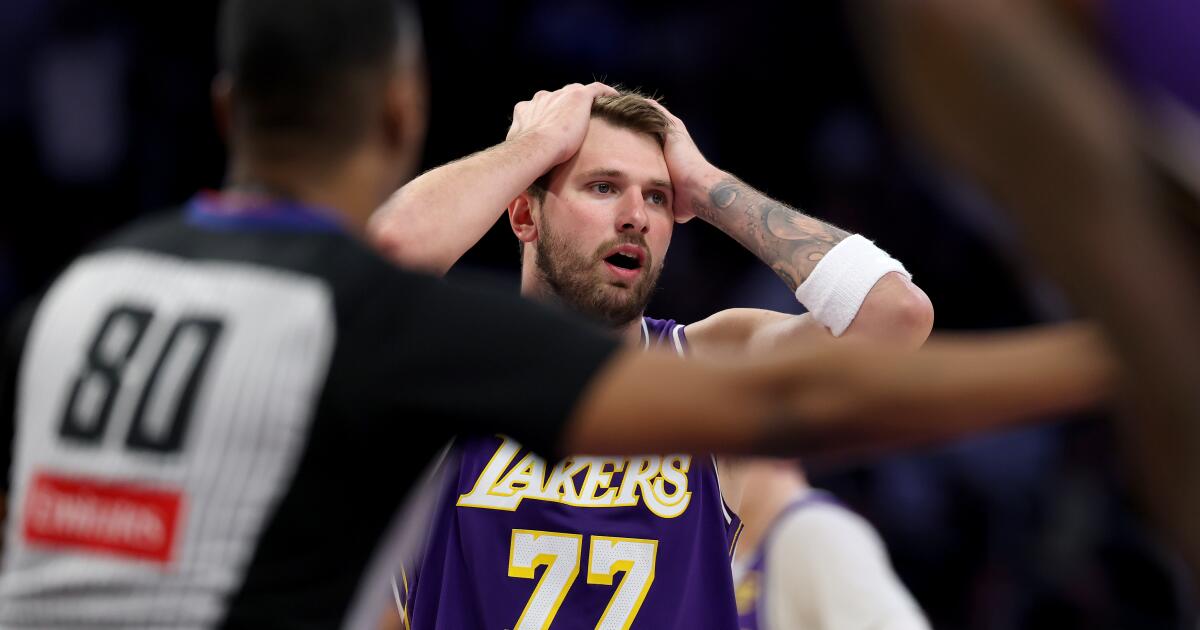
Lakers beat Nets, but Luka Doncic is facing suspension again after 16th technical

EU Parliament unblocks key political hurdle in digital euro talks

Man arrested in plot to firebomb Palestinian activist’s home after undercover op

Florida High School Football Rankings: Top 25 teams – Oct. 21

How old is Bo Nix? What to know about Oregon quarterback ahead of 2024 NFL Draft

Cleary's 21 help Le Moyne down Central Connecticut State 69-64 in OT

99th annual Pony Swim held in Virginia

Indiana Members Credit Union announced as new anchor tenant at Bottleworks District
EU Parliament unblocks key political hurdle in digital euro talks
Man arrested in plot to firebomb Palestinian activist’s home after undercover op

WATCH: Senate hearing goes silent after Angel Father confronts top Dem over daughter’s death

US diplomat Marco Rubio denounces settler violence, tolls in Hormuz strait

Iran-linked hackers have breached FBI Director Kash Patel’s personal emails | CNN Politics
-

 Detroit, MI1 week ago
Drummer Brian Pastoria, longtime Detroit music advocate, dies at 68
-

 Movie Reviews1 week ago
‘Youth’ Twitter review: Ken Karunaas impresses audiences; Suraj Venjaramoodu adds charm; music wins praise | – The Times of India
-

 Sports7 days ago
IOC addresses execution of 19-year-old Iranian wrestler Saleh Mohammadi
-

 New Mexico5 days ago
Clovis shooting leaves one dead, four injured
-
 Business1 week ago
Disney’s new CEO says his focus is on storytelling and creativity
-

 Technology6 days ago
YouTube job scam text: How to spot it fast
-

 Tennessee4 days ago
Tennessee Police Investigating Alleged Assault Involving ‘Reacher’ Star Alan Ritchson
-

 Texas1 week ago
How to buy Houston vs. Texas A&M 2026 March Madness tickets