Culture
Man City’s Premier League charges – exploring what their past cases and evidence reveals


On February 6, 2023, Manchester City were charged by the Premier League with more than 100 breaches of the competition’s rules.
As champions in six of the past seven seasons, the eventual verdict of an independent commission will have a seismic impact on the Premier League, regardless of which way their decision goes.
Each of the 115 (or more accurately 129) charges is related to the competition’s financial fair play rules, which are complicated and ever-changing — with both sides fighting tooth and nail over the details of each alleged breach.
One key part of the evidence in the bundle is internal emails from Manchester City, published by German newspaper Der Spiegel, which suggest potential wrongdoing. These formed the basis of a UEFA case against City — where the club were initially found guilty, before being cleared in July 2020 by the Court of Arbitration for Sport (CAS). You can read that ruling in full here.
In the latest case, the Premier League has since gathered what it believes is further evidence through the process of disclosure. City have insisted throughout the process that they have not broken any regulations.
That hearing is now over and the three-person panel has gone away to make its judgment. Its decision is expected before the end of the season.
But it is worth explaining exactly what it will be ruling on, so here is an explanation of the charges, broken down, using all the publicly available information and rulings about City’s case and graphic illustrations of the key points.
Fifty-four charges of failure to provide accurate financial information
These charges range over nine seasons, the longest such span of the alleged breaches. A complicating factor is that Premier League rules on this subject are often subtly revised, meaning the information City had to provide might have changed each season.
Generally, this addresses the demand for clubs to release financial information in order to demonstrate their adherence to FFP. Think of it like declaring all of your income so that a correct tax amount can be calculated — failure to do so is an offence.
The below graphic, like all others in this article, is based on the published judgment by the Court of Arbitration for Sport (CAS), with its context and the page it refers to noted above each excerpt.
Fifty-four charges are a lot, but they are all governed by the same principle.
Each individual charge in this section — for example, in 2014-15, City are accused of breaching six Premier League laws — relates to the specifics of what they were expected to provide information on. These include separate financial areas such as revenue, related parties, and operating costs. Effectively, City are alleged to have breached five or six clauses every year for nine years.
But rather than 54 separate cases, there is one key broader question at hand: were all of these figures accurate? To get specific: were Abu Dhabi-owned City reporting the true revenue they were gaining from sponsorship deals with Abu Dhabi-linked companies as they maintain, or only declaring part of it?
Discussion in the Der Spiegel emails as published in the CAS ruling shows City executives discussing cashflow between sponsors and the football club, as well as what they were expected to show for auditing purposes. Under Premier League rules, City were expected to provide “(in) the utmost good faith, accurate financial information that gives a true and fair view of the club’s financial position”.
Initially, Manchester City were found guilty by UEFA’s adjudicatory chamber, which stated it was “comfortably satisfied” that City “did not truthfully declare their sponsorship income as payments purportedly made by sponsors were in reality payments from (owners) ADUG or (Sheikh Mansour).”


City subsequently appealed the case to CAS, arguing that UEFA, European football’s governing body, was misreading the emails.

In the CAS case, though found guilty by the initial panel, the appeal committee found that they could not consider the legitimacy of the alleged payments from Etisalat because they were time-barred — a barrier which is not expected to affect the Premier League, according to legal experts consulted by The Athletic.
Two of CAS’ three-man panel dismissed the main charges that City had received disguised payments through Etihad and Etisalat, finding that all claims relating to payments from Etisalat were time-barred, as were some of those from Etihad, and that in any event, the charge of providing incorrect information had not been established.
The Premier League is unlikely to be blocked by time-barring rules in the same way UEFA was, while it is also understood that the legal process of disclosure has resulted in it gaining additional documents than those UEFA had.
If the commission finds on “the balance of probabilities” that City failed to provide accurate financial information, based on misreporting the origin of sponsorship money, the club will be found guilty.
Fourteen charges of failure to provide accurate details for player and manager payments
This is another alleged example of failing to share correct information for FFP purposes but differs slightly. Rather than being accused of injecting funds into the club by disguising it as sponsorship deals, here City are charged with hiding money being paid out to players and coaches.
Effectively, this has the advantage of being off-the-books, meaning portions of salaries would not count under the FFP cap. The Premier League alleges this occurred between 2009 and 2016.
The most high-profile examples discussed in the leaks from Der Spiegel relate to alleged payments made to manager Roberto Mancini and midfielder Yaya Toure during their days at the club.

(Laurence Griffiths/Getty Images)
In Mancini’s case, City’s then manager signed a deal with Abu Dhabi club Al Jazira — owned, like City, by Sheikh Mansour — which would pay him £1.75million annually for a minimum of four days’ work per year. The Premier League will claim this constituted part of his City salary, with executives at the club (including the chief financial officer and head of finance) sharing emails related to the Al Jazira payments. Mancini and City have always denied any wrongdoing.
With Toure, the questions relate to image-rights payments allegedly made by Sheikh Mansour’s Abu Dhabi United Group (ADUG) rather than City themselves, and subsequently were not declared as salary. As with Mancini, club and player deny any wrongdoing.
Seven (or 21…) charges of breaching profit and sustainability rules
The exact subject matter here is slightly less certain; it is based on information gathered during the Premier League’s investigation rather than the leaked emails. The charges can be split into alleged breaches over three seasons: 2015-16, 2016-17 and 2017-18.
Arguably, this is where it is more accurate to use 129 charges rather than 115 to describe the total number of offences allegedly committed by City. The Premier League has charged them with breaching seven PSR rules in each of those three seasons — during early explanations of the case, these were grouped as a total of seven charges rather than added together to make 21.
The Premier League has not engaged with the media on any aspect of the case since February 2023, including confirming the current number of charges.
While Everton and Nottingham Forest were also charged with breaching PSR rules, their situations are not directly comparable with City’s — those two clubs were subject to an updated Premier League rulebook from 2022-23 onwards and their cases only related to whether they exceeded the maximum allowable loss, where the rules in their entirety are far broader.

Guardiola’s side are still awaiting their fate, but City deny any wrongdoing (James Gill – Danehouse/Getty Images)
Regardless, the Premier League’s historic PSR rules indicate areas in which it may seek to prove wrongdoing by City.
For example, Rule E.53.2.2 states that a PSR balance sheet should be “to the best of the club’s knowledge and belief, an accurate estimate of future financial performance”. If any of the charges already discussed should be upheld, it is clear how City may be in breach.
Rules E.54-57 relate to related party transactions, which are relevant to the Abu Dhabi-linked sponsorship deals City are alleged to have illicitly struck.
Finally, Rule E.59 relates to the well-known “losses in excess of £105million” limit — again, if previously discussed charges are upheld, a recalculation of City’s PSR submissions with the new figures may find them in breach of this permitted total.
Five charges of failing to comply with UEFA’s FFP regulations
In 2014, City made a deal with UEFA after £118.75million of sponsorship was questioned and the club’s own accounting was rejected. Their settlement saw City repay UEFA €20m from TV revenue, as well as submitting themselves to future spending guardrails. City publicly announced their displeasure with UEFA’s findings.
These charges, however, are slightly different, beginning in the 2013-14 season and continuing until 2017-18. In some sense, this predominantly comes under UEFA’s remit, but the Premier League has its own rules requiring that clubs also follow the continental ones — these are the laws that City are alleged to have broken.
The Premier League has not explained exactly which UEFA rules it is referring to. For example, Rule B.15.6, as it stood from 2014-15 until 2017-18, simply reads: “Membership of the league shall constitute an agreement between the league and each club to be bound by and comply with the statutes and regulations of UEFA”.
But it is likely to relate to the possibility that if City’s true PSR numbers are found to be different to their publicly declared ones, they break UEFA’s maximum-allowable-loss restrictions as well as those of the Premier League.
Thirty-five charges of failing to cooperate with Premier League investigations
This is straightforward to explain, although 35 is another very high number.
Simply put, the Premier League accuses City of breaking numerous rules related to “acting in good faith” since its investigation began in 2018 — the charges relate to each of the seasons from 2018-19 to 2022-23, inclusive.
They were found to have done similar by UEFA.
Specific rules City are alleged to have broken include the failure to release documents to the Premier League by insisting they are confidential, and not providing “full, complete, and prompt assistance to the (Premier League) board”. City expressed their surprise at this during the initial public comments following the charges, “given the extensive engagement and vast amount of detailed materials that the EPL has been provided with”.
To get some sense of the mood of this process, one witness who had already been spoken to by City’s lawyers described it as “hardcore”, “aggressive”, and “no-holds-barred” — though this is more illustrative of the enmity between the two sides rather than specifically related to non-cooperation.
Initially, the CFCB hearing found that City had breached Article 56 of its laws by failing to provide requested information and at one point advancing a case that the club’s ownership “must have known to be false”.
City appealed to CAS, stating they did not need to authenticate the leaked emails and arguing they went beyond what was needed in helping the panel.
However, the CAS upheld the decision of the CFCB, pointing to the club’s failure to provide witnesses, complete copies of the leaked emails, and prevaricating over the identity of the mysterious “Mohamed”.

What comes next?
With closing arguments made on December 6, the three-person commission is now compiling its verdict. The identity of that panel has been tightly guarded.
There is no set time frame on how quickly it must reach a decision, unlike last season’s PSR cases involving Everton and Forest. Those cases took around a month to reach their judgments, while City’s case is far more wide-reaching and complex.
Nevertheless, all parties expect a decision to be released before the end of the season. With the process governing a case of this scope effectively unprecedented, it is not clear whether City, if guilty, will immediately be given their punishment or whether that will be finalised at a later date. City have denied any wrongdoing throughout.
Both sides have the right to appeal any verdict. English (and European) football awaits.
(Top photos: Getty Images; design: Eamonn Dalton)



Whatever you do, don’t think of a bird.
Now: What kind of bird are you not thinking about? A pigeon? A bald eagle? Something more poetic, like a skylark or a nightingale? In any case, would you say that this bird you aren’t thinking about is real?
Before you answer, read this poem, which is quite literally about not thinking of a bird.
Human consciousness is full of riddles. Neuroscientists, philosophers and dorm-room stoners argue continually about what it is and whether it even exists. For Wallace Stevens, the experience of having a mind was a perpetual source of wonder, puzzlement and delight — perfectly ordinary and utterly transcendent at the same time. He explored the mysteries and pleasures of consciousness in countless poems over the course of his long poetic career. It was arguably his great theme.
Stevens was born in 1879 and published his first book, “Harmonium,” in 1923, making him something of a late bloomer among American modernists. For much of his adult life, he worked as an executive for the Hartford Accident and Indemnity Company, rising to the rank of vice president. He viewed insurance less as a day job to support his poetry than as a parallel vocation. He pursued both activities with quiet diligence, spending his days at the office and composing poems in his head as he walked to and from work.
As a young man, Stevens dreamed of traveling to Europe, though he never crossed the Atlantic. In middle age he made regular trips to Florida, and his poems are frequently infused with ideas of Paris and Rome and memories of Key West. Others partake of the stringent beauty of New England. But the landscapes he explores, wintry or tropical, provincial or cosmopolitan, are above all mental landscapes, created by and in the imagination.
Are those worlds real?
Let’s return to the palm tree and its avian inhabitant, in that tranquil Key West sunset of the mind.
Until then, we find consolation in fangles.

When the director Rob Reiner cast his leads in the 1986 film “Stand by Me,” he looked for young actors who were as close as possible to the personalities of the four children they’d be playing. There was the wise beyond his years kid from a rough family (River Phoenix), the slightly dim worrywart (Jerry O’Connell), the cutup with a temper (Corey Feldman) and the sensitive, bookish boy.
Wil Wheaton was perfect for that last one, Gordie Lachance, a doe-eyed child who is ignored by his family in favor of his late older brother. Now, 40 years later, he’s traveling the country to attend anniversary screenings of the film, alongside O’Connell and Feldman, which has thrown him back into the turmoil that he felt as an adolescent.
Wheaton has channeled those emotions and his on-set memories into his latest project: narrating a new audiobook version of “The Body,” the 1982 Stephen King novella on which the film was based.
A few years ago, Wheaton started to float the idea of returning to the story that gave him his big break — that of a quartet of boys in 1959 Oregon, in their last days before high school, setting out to find a classmate’s dead body. “I’ve been telling the story of ‘Stand By Me’ since I was 12 years old,” he said.
But this time was different. Wheaton, who has narrated dozens of audiobooks, including Andy Weir’s “The Martian” and Ernest Cline’s “Ready Player One,” says he has come to enjoy narration more than screen acting. “I’m safe, I’m in the booth, nobody’s looking at me and I can just tell you a story.”
The fact that he, an older man looking back on his younger years, is narrating a story about an older man looking back on his younger years, is not lost on Wheaton. King’s original story is bathed in nostalgia. Coming to terms with death and loss is one of its primary themes.
Two days after appearing on stage at the Academy Awards as part of a tribute to Reiner — who was murdered in 2025 alongside his wife, Michele — Wheaton got on the phone to talk about recording the audiobook, reliving his favorite scenes from the film and reexamining a quintessential story of childhood loss through the lens of his own.
This interview has been edited and condensed.
“I felt really close to him, and my memory of him.”
Wheaton on channeling a co-star’s performance.
There’s this wonderful scene in “Stand By Me.” Gordie and Chris are walking down the tracks talking about junior high. Chris is telling Gordie, “I wish to hell I was your dad, because I care about you, and he obviously doesn’t.”
It’s just so honest and direct, in a way that kids talk to each other that adults don’t. And I think that one of the reasons that really sticks with people, and that piece really lands on a lot of audiences, and has for 40 years, is, just too many people have been Gordie in that scene.
That scene is virtually word for word taken from the text of the book. And when I was narrating that, I made a deliberate choice to do my best to recreate what River did in that scene.
“You’re just a kid,
Gordie–”
“I wish to fuck
I was your father!”
he said angrily.
“You wouldn’t go around
talking about takin those stupid shop courses if I was!
It’s like
God gave you something,
all those stories
you can make up, and He said:
This is what we got for you, kid.
Try not to lose it.
But kids lose everything
unless somebody looks out for them and if your folks
are too fucked up to do it
then maybe I ought to.”
I watched that scene a couple of times because I really wanted — I don’t know why it was so important to me to — well, I know: because I loved him, and I miss him. And I wanted to bring him into this as best as I could, right?
So I was reading that scene, and the words are identical to the script. And I had this very powerful flashback to being on the train tracks that day in Cottage Grove, Oregon. And I could see River standing next to them. They’re shooting my side of the scene and there’s River, right next to the camera, doing his off-camera dialogue, and there’s the sound guy, and there’s the boom operator. There’s my key light.
I could hear and feel it. It was the weirdest thing. It’s like I was right back there.
I was able to really take in the emotional memory of being Gordie in all of those scenes. So when I was narrating him and I’m me and I’m old with all of this experience, I just drew on what I remembered from being that little boy and what I remember of those friendships and what they meant to me and what they mean to me today.
“Rob gave me a gift. Rob gave me a career.”
Wheaton recalls the “Stand By Me” director’s way with kids on set, as well as his recent Oscars tribute.
Rob really encouraged us to be kids.
Jerry tells the most amazing story about that scene, where we were all sitting around, and doing our bit, and he improvised. He was just goofing around — we were just playing — and he said something about spitting water at the fat kid.
We get to the end of the scene, and he hears Rob. Rob comes around from behind the thing, and he goes, “Jerry!” And Jerry thinks, “Oh no, I’m in trouble. I’m in trouble because I improvised, and I’m not supposed to improvise.”
The context for Jerry is that he had been told by the adults in his life, “Sit on your hands and shut up. Stop trying to be a cutup. Stop trying to be funny. Stop disrupting people. Just be quiet.” And Jerry thinks, “Oh my God. I didn’t shut up. I’m in trouble. I’m gonna get fired.”
Rob leans in to all of us, and Rob says, “Hey, guys, do you see that? More of that. Do that!”
The whole time when you’re a kid actor, you’re just around all these adults who are constantly telling you to grow up. They’re mad that you’re being a kid. Rob just created an environment where not only was it supported that we would be kids — and have fun, and follow those kid instincts and do what was natural — it was expected. It was encouraged. We were supposed to do it.
They chanted together:
“I don’t shut up,
I grow up.
And when I look at you I throw up.”
“Then your mother goes around the corner
and licks it up,”
I said, and hauled ass out of there,
giving them the finger over my shoulder as I went.
I never had any friends later on
like the ones I had when I was twelve.
Jesus, did you?
When we were at the Oscars, I looked at Jerry. And we looked at this remarkable assemblage of the most amazingly talented, beautiful artists and storytellers. We looked around, and Jerry leans down, and he said, “We all got our start with Rob Reiner. He trusted every single one of us.”
And to stand there for him, when I really thought that I would be standing with him to talk about this stuff — it was a lot.
“I was really really really excited — like jumping up and down.”
The scene Wheaton was most looking forward to narrating: the tale of Lard Ass Hogan.
I was so excited to narrate it. It’s a great story! It’s a funny story. It’s such a lovely break — it’s an emotional and tonal shift from what’s happening in the movie.
I know this as a writer: You work to increase and release tension throughout a narrative, and Stephen King uses humor really effectively to release that tension. But it also raises the stakes, because we have these moments of joy and these moments of things being very silly in the midst of a lot of intensity.
That’s why the story of Lard Ass Hogan is so fun for me to tell. Because in the middle of that, we stop to do something that’s very, very fun, and very silly and very celebratory.
“Will you shut up and let him tell it?”
Teddy hollered.
Vern blinked.
“Sure. Yeah.
Okay.”
“Go on, Gordie,”
Chris said. “It’s not really much—”
“Naw,
we don’t expect much from a wet end like you,”
Teddy said,
“but tell it anyway.”
I cleared my throat. “So anyway.
It’s Pioneer Days,
and on the last night
they have these three big events.
There’s an egg-roll for the little kids and a sack-race for kids that are like eight or nine,
and then there’s the pie-eating contest.
And the main guy of the story
is this fat kid nobody likes
named Davie Hogan.”
When I narrate this story — whenever there is a moment of levity or humor, whenever there are those brief little moments that are the seasoning of the meal that makes it all so real and relatable — yes, it was very important to me to capture those moments.
I’m shifting in my chair, so I can feel each of those characters. It’s something that doesn’t exist in live action. It doesn’t exist in any other media.
“I feel the loss.”
Wheaton remembers River Phoenix.
The novella “The Body” is very much about Gordie remembering Chris. It’s darker, and it’s more painful, than the movie is.
I’ve been watching the movie on this tour and seeing River a lot. I remember him as a 14- and 15-year-old kid who just seemed so much older, and so much more experienced and so much wiser than me, and I’m only a year younger than him.
What hurts me now, and what I really felt when I was narrating this, is knowing what River was going through then. We didn’t know. I still don’t know the extent of how he was mistreated, but I know that he was. I know that adults failed him. That he should have been protected in every way that matters. And he just wasn’t.
And I, like Gordie, remember a boy who was loving. So loving, and generous and cared deeply about everyone around him, all the time. Who deserved to live a full life. Who had so much to offer the world. And it’s so unfair that he’s gone and taken from us. I had to go through a decades-long grieving process to come to terms with him dying.
Near the end
of 1971,
Chris
went into a Chicken Delight in Portland
to get a three-piece Snack Bucket.
Just ahead of him,
two men started arguing
about which one had been first in line. One of them pulled a knife.
Chris,
who had always been the best of us
at making peace,
stepped between them and was stabbed in the throat.
The man with the knife had spent time in four different institutions;
he had been released from Shawshank State Prison
only the week before.
Chris died almost instantly.
It is a privilege that I was allowed to tell this story. I get to tell Gordie Lachance’s story as originally imagined by Stephen King, with all of the experience of having lived my whole adult life with the memory of spending three months in Gordie Lachance’s skin.

Welcome to Great Adaptations, the Book Review’s regular multiple-choice quiz about printed works that have gone on to find new life as movies, television shows, theatrical productions and more. This week’s challenge highlights offbeat television shows that began as comic books. Just tap or click your answers to the five questions below. And scroll down after you finish the last question for links to the comics and their screen versions.
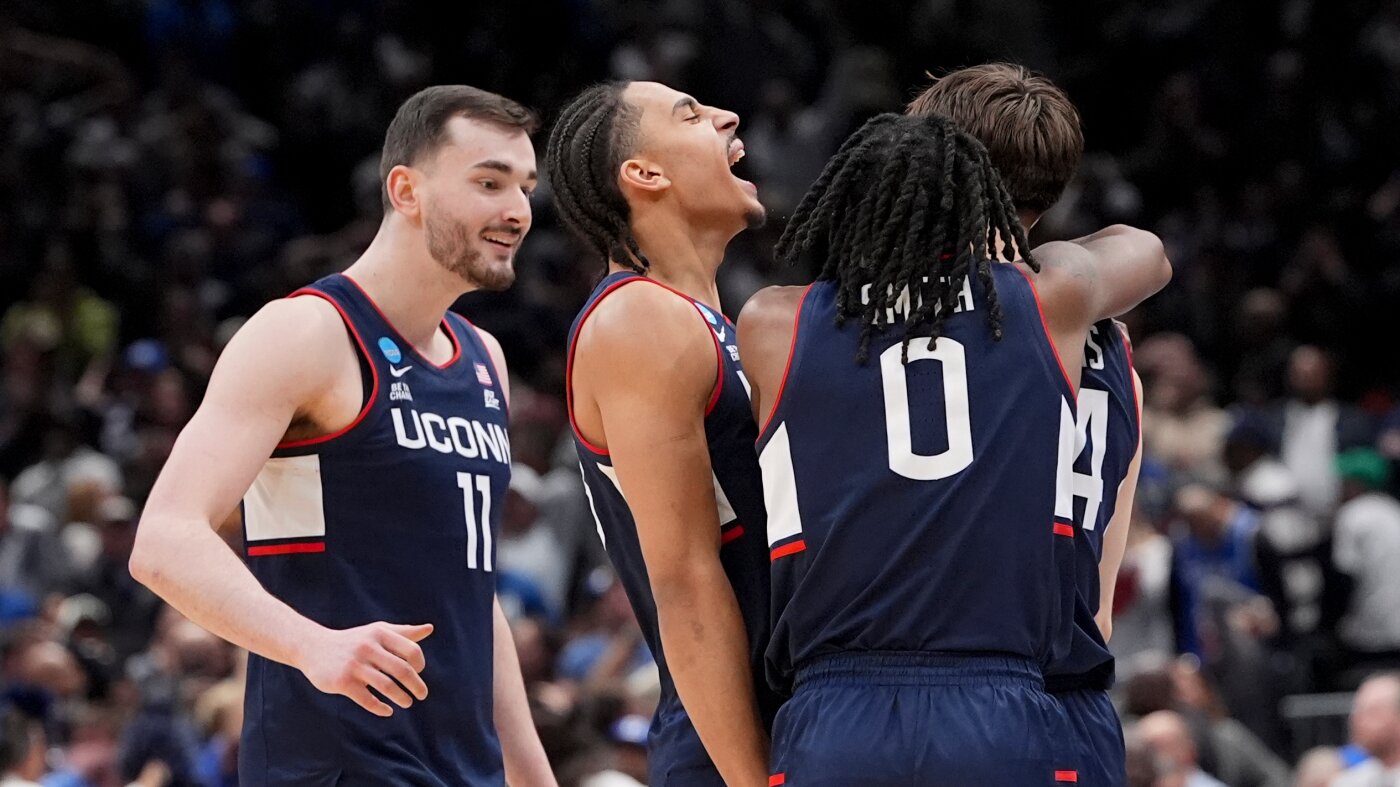
The Final Four is set with UConn stunning Duke to join Illinois, Arizona and Michigan

Game times announced for Saturday’s Final Four in Indianapolis

NW Iowa family witnesses field catch fire firsthand Saturday

+)HERE’S WAY TO WATCH Portland Thorns FC vs Kansas City Current LIVE GAME Free Tv

Mark Pope can’t gamble on three-point shooters in the transfer portal

Florida High School Football Rankings: Top 25 teams – Oct. 21

How old is Bo Nix? What to know about Oregon quarterback ahead of 2024 NFL Draft

Cleary's 21 help Le Moyne down Central Connecticut State 69-64 in OT

99th annual Pony Swim held in Virginia

Indiana Members Credit Union announced as new anchor tenant at Bottleworks District

Scathing report claims nation’s oldest labor union ‘betrayed’ MAGA members through ‘shocking’ spending

Republican US lawmaker demands Congress vote on any Iran troop deployment

So you went to a No Kings protest. Now what?

JD Vance says he was ‘obsessed’ with UFOs, believes aliens are actually ‘demons’
The EU's recipe for trade deals : easy on beef, tough on wine
-

 Sports1 week ago
IOC addresses execution of 19-year-old Iranian wrestler Saleh Mohammadi
-

 New Mexico1 week ago
Clovis shooting leaves one dead, four injured
-

 Miami, FL3 days ago
Jannik Sinner’s Girlfriend Laila Hasanovic Stuns in Ab-Revealing Post Amid Miami Open
-

 Tennessee6 days ago
Tennessee Police Investigating Alleged Assault Involving ‘Reacher’ Star Alan Ritchson
-

 Minneapolis, MN3 days ago
Boy who shielded classmate during school shooting receives Medal of Honor
-

 Politics1 week ago
Schumer gambit fails as DHS shutdown hits 36 days and airport lines grow
-

 Technology1 week ago
YouTube job scam text: How to spot it fast
-

 Science1 week ago
Record Heat Meets a Major Snow Drought Across the West