Culture
Jaylon Johnson was defined by what he didn't have, now he has more than enough


Jaylon Johnson finally emerged with a contract extension from the Chicago Bears in March.
The Bears asked him to come to Halas Hall to announce the $76 million deal with $47.8 million guaranteed, the second-highest amount ever given to a defensive back. Johnson was willing, but only if the team commissioned a private jet to fly him and his loved ones from his hometown of Fresno, Calif. The Bears agreed.
At the news conference, nine of his people — including father John Johnson Sr., mother Carmella Warren Johnson, brother, housemate and trainer Johnny Johnson, agent Chris Ellison and girlfriend Janessa McFadden — accompanied Johnson. He walked in wearing a long-sleeved Prada shirt with mother-of-pearl buttons and hand-crafted fringes on the shoulders. The red-and-black pattern looked like it came from an exotic butterfly.
Johnson had prepared an opening statement. Then he amended it. “My spirit was like, you can’t do that without talking about what you went through,” he says. “You have to put it all out there.”
He started the news conference by thanking God, then said abruptly, “I went to therapy last season for sexual addiction.”
Nobody knew he would say that, not even the people he brought with him. And few could understand why.
This wasn’t a contract signing as much as a metamorphosis.
For a while, Johnson was defined by what he didn’t have — interceptions, a new contract and self-control.
In early 2022, the Bears hired a new general manager and head coach. Johnson, a second-round pick in 2020, didn’t show up for voluntary offseason workouts. When mandatory workouts began, he had been demoted to second string. He regained his starting spot quickly, but some hard feelings lingered, especially while Johnson acclimated to coach Matt Eberflus’ push for more intensity.
Since his rookie training camp, Johnson has not been shy about questioning or challenging authority, and that has not changed over time.
“Clearly, I was one of the top guys on the team, so with that should have come a sense of respect,” Johnson says. “I shouldn’t have had to prove myself in everything. Don’t play with me. We’re grown men. I didn’t feel valued from the coaching staff.”
Takeaways are priority No. 1 in Eberflus’ defense, and given that Johnson had no interceptions and missed six games with injuries in 2022, “they were probably questioning what I could do,” he says.
GO DEEPER
Bears rookie Theo Benedet brings athleticism from Vancouver to the NFL
Johnson had just one interception over 39 games in his first three NFL seasons, but part of his problem may have been that he’s so sticky in man-to-man that quarterbacks avoided throwing to the players he covered. “He’s got elite quickness,” Eberflus says. “He has elite ability to stay attached to receivers. And he’s uber-intelligent.”
The Bears’ faith in him remained in question. Johnson was hoping for an offseason contract extension. There were talks, but the two parties remained far from a middle ground. They agreed to see how Johnson played in the early season and revisit it.
In the spring of 2023, Johnson was baptized. The church has always been a part of his life. Years ago, he had “Proverbs 16:3” tattooed on his arm: “Commit your actions to the Lord, and your plans will succeed.”
He didn’t need to be baptized, but he wanted to be.
“I didn’t want to keep being what I say is a lukewarm Christian, reading Bible verses but living your life a different way,” he says. “I wanted to make a commitment and an outward expression of my faith to the world.”
He also needed to redirect himself. He had been unfaithful to Janessa, his girlfriend since 2021. Again. And he was watching a lot of pornography.
Johnson says he lost his virginity at 16 and then adopted the mindset that more is better. In high school, he was a four-star recruit. In college at Utah, he was all-conference. Things came easily for the big man on campus.
“Playing a manly sport drew girls to me,” he says. “It wasn’t hard to go to a party, get a number and have sex. I got lost in a sense of who I was created to be versus whatever felt good to me.”
Johnson graduated in two and a half years, and the Bears drafted him in the second round in 2020. As a pro, he was afforded an unhealthy combination of time and celebrity.
“I could just have fun, sleep with whomever I wanted,” he says. “Anytime there was nothing going on, it would revert to girls. It got to the point where I wasn’t able to shake it.”
He justified it. He wasn’t doing anything different from a lot of people like him.
He downplayed it. Nobody was getting hurt, right?
By the summer of 2023, Johnson started to see more clearly. He wouldn’t want his 4-year-old daughter, Zaveah, to end up with someone who behaved like him. McFadden was special, he believed, and he didn’t want to lose her. He was ashamed.

GO DEEPER
Chicago Bears 2024 schedule: Spotlight shines on Caleb Williams early, often
Finally, he admitted to himself and to McFadden that he had a problem. He spent an hour or two in therapy almost every week during the season. It was, however, a struggle. He had to tear down walls, talk about his childhood and accept blame.
What he was going through had nothing to do with football.
And everything to do with football.
On a sunny fourth quarter at Soldier Field, Johnson watched the eyes of Las Vegas Raiders quarterback Brian Hoyer. Johnson hung back, waiting for wide receiver Davante Adams to break. As Hoyer cocked his arm, Johnson jumped the route, stepped in front of Adams and came up with the interception — his first in 28 games. He brought it back 39 yards for a touchdown, then intercepted another pass five plays later.

Jaylon Johnson’s interception return for a touchdown against the Raiders in October 2023 helped send him on his way to the Pro Bowl. (Todd Rosenberg / Getty Images)
The Bears reopened negotiations, but their respective opinions of his value still differed.
“Their offers were very disrespectfully low,” Johnson says. “The players they compared me to, there’s no way you can compare me to these players. One of them was (Minnesota’s) Byron Murphy.”
Johnson was frustrated, and not just because of his contract situation. The Bears lost seven of their first nine games after a 3-14 record the year before.
“We kept losing, losing, losing,” he says. “And then they weren’t showing interest in bringing me back. I wasn’t happy with the culture and how we were losing, so I asked for a trade.”
The Bears declined. Then in late October, as the trade deadline approached, he asked a second time. Chicago gave his agent, Ellison, permission to shop Johnson but said they would accept nothing less than a first-round pick in return, according to Johnson. Ellison says seven or eight teams were interested. According to Johnson, the Bills, 49ers, Raiders and Steelers were among them. The Bills and 49ers tried hard to strike a deal but ultimately were not willing to meet the Bears’ demands.
So the trade deadline passed, contract talks were tabled and Johnson committed to making the Bears realize he was worth what he thought he was.
“I didn’t want to talk about it anymore,” he says. “I didn’t want to think about it anymore. It was, let’s just go play football.”
Johnson finished the season with four interceptions — he dropped two more potential picks — 10 passes defensed and one touchdown allowed. He was voted second-team All-Pro and a Pro Bowler and was given Pro Football Focus’s highest grade among cornerbacks.
On March 5, Chicago placed the non-exclusive franchise tag on Johnson. Two days later, the sides agreed on terms for his four-year extension.
GO DEEPER
Everything continues to feel different for the Bears and Caleb Williams
They say money like his is life-changing, but it’s not like he bought a chateau on a cliff or a gold chain heavy enough to prevent a hot air balloon from taking off.
Teammates tease him because he still drives a Honda Accord.
“Hey, it’s sporty, clean, all black,” he says. “It gets me to and from where I need to go.”
The money is, however, affirmation. And so are words.
“Jaylon has exhibited everything we want in a Chicago Bear,” says Eberflus, who plans to use Johnson in new ways this season. “It’s how we draw it up in terms of him loving football, being a very talented player and having the desire to try to master his craft. He’s a really good teammate. And he’s one of ours.”
Falcons receiver Darnell Mooney, Johnson’s former teammate in Chicago, calls him the best cornerback in the NFL. “He always gives me problems,” Mooney says. “Every time I line up against him, I’ve got to be focused.”
At only 25, Johnson has become the elder statesman of the Bears’ secondary and a cornerstone of a young team. Johnson says his relationship with the coaching staff has improved over time. He’s pleased to be a Bear and invigorated by the challenge of living up to his contract, as well as earning the next one, which he will have a chance to sign before his 30th birthday.
Befitting his new status, Johnson has a new uniform number: 1. Johnson switched from 33 back to the number he wore in high school and college when it became available after the trade of quarterback Justin Fields. He says he loves the new vibe.

Bears cornerback Jaylon Johnson and girlfriend Janessa McFadden are expecting a child. (Courtesy of Jaylon Johnson)
Therapy did what he hoped it would, enabling him to regain control and enhancing his perspective. “I learned that giving yourself away should be sacred to someone you are going to spend the rest of your life with,” he says. Going public with his addiction may benefit others with similar problems, he believes, so he has no regrets.
His relationship with McFadden is in a good place, a really good place. Last month, he proposed. She said yes. He is convinced that her honesty and support are making him better. He loves the way she cares for his daughter. And in September, they are expecting a child.
He also is expecting more interceptions — at least five this season.
As far as Johnson could tell, his previous interception failures weren’t because of anything he did wrong. It was as if his karma was out of whack.
And then 2023 happened.
“He had a nice glow to him walking around last year,” says Mooney, who considers Johnson a brother. “He just had some lovely energy every time you were around him.”
Johnson says he wasn’t doing anything different on the field. “What changed was God gave me the opportunities,” he says.
He thinks he knows why.
“When you have your mind and spirit on a certain level, the physical takes over and doors start to open up,” he says. “As I was trying to improve who I am as a man, all of a sudden, things I was hoping for happened.”
(Illustration: John Bradford / The Athletic; photo: Quinn Harris / Getty Images)



Welcome to Great Adaptations, the Book Review’s regular multiple-choice quiz about printed works that have gone on to find new life as movies, television shows, theatrical productions and more. With ancient Greek texts back in the cultural conversation — thanks to the new film based on Homer’s “Odyssey” — this week’s challenge highlights screen adaptations of other Greek plays, poems and histories. Just tap or click your answers to the five questions below. Scroll down after you finish the last question for links to the works and their screen versions.
Homer’s “Odyssey” has been translated into English countless times, with versions ranging from contemporary and accessible to highly poetic. A.O. Scott, critic at large for The New York Times Book Review, breaks down three translations and explains which one might be right for you.

Among the many complaints made about the modern American novelist, the loudest, if not the most intelligent, has been the charge that he is not speaking for his country. A few seasons back an editorial in Life magazine asked grandly, “Who speaks for America today?” and was not able to conclude that our novelists, or at least our most gifted ones, did.
This opening paragraph is from an essay titled “The Fiction Writer and His Country” by a writer whose work was influenced by Catholicism, the rural South and peacocks. Who was it?
-
 Business3 minutes ago
Netflix reports higher profits as investors worry about growth
-
 Entertainment9 minutes ago
Kris Jenner’s mom, beloved matriarch Mary Jo ‘MJ’ Shannon, dies at 91
-
 Politics21 minutes ago
Trump repeats debunked claims about voting vulnerabilities in prime-time speech
-
 Science27 minutes ago
Bass administration quietly replaced chief heat officer a month ago
-
 Sports33 minutes ago
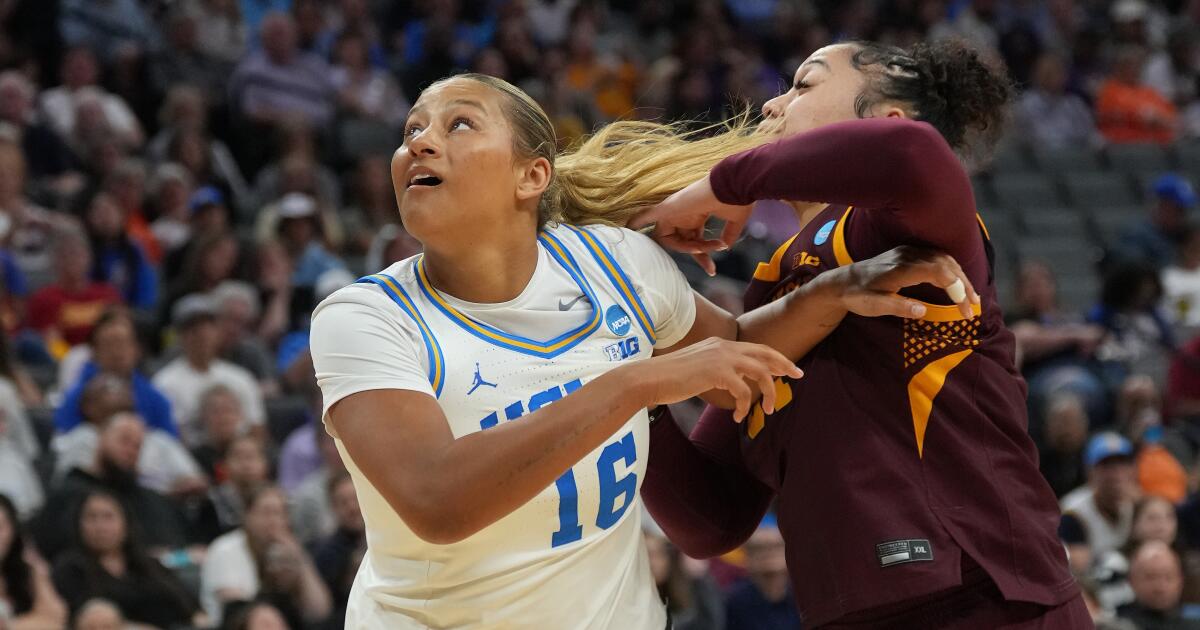
UCLA women embrace new players, tougher standards in bid to repeat as champs
-

 World45 minutes ago
China rebukes UK over nationalisation of British Steel
-
 News1 hour ago
Flood sirens blare in South Central Texas as rivers reach perilous heights
-

 Los Angeles, Ca3 hours ago
Arrest made in deadly shooting at 4th of July gathering in Compton; search for 2nd suspect continues

