Crypto
The Q1 2025 of the cryptocurrency market in an article


Q1 of 2025 turned out to be an intense and complex period for the cryptocurrency market, heavily marked by international events, cyberattacks, and regulatory developments. Recent months have indeed highlighted — once again — how sensitive the world of cryptocurrencies is to global political and economic dynamics, leading to tangible consequences for investors and industry operators.
Cybercrime grows in the cryptocurrency market: over 1.78 billion stolen during Q1 2025
“`html
One of the most alarming aspects of the quarter was the exponential increase in cryptocurrency-related thefts, with a total of over $1.78 billion stolen in targeted attacks. Of these, $1.4 billion were drained in the attack involving Bybit alone.
“`
These episodes have affected all major digital assets and contributed to generating a widespread loss of confidence in the sector. Authorities and industry experts are now questioning the effectiveness of current security measures and the need for further regulations to protect private investors.
The return of Trump to the White House and the domino effect on the cryptocurrency market
Weighing significantly on market dynamics was also the inauguration of President Donald Trump for a new term. The tariff policies introduced in the early months of 2025 contributed to fueling global uncertainty, with direct impacts on the financial sector and, in particular, on the criptovalute sector. The perceived risk index increased significantly, leading to an 80% devaluation of the personal crypto portfolio of Trump.
The strong dependence of the sector on geopolitical factors is also evidenced by the changes in the number of billionaires in Bitcoin in the United States: almost 14,000 addresses identified as “Bitcoin millionaires” have been deleted or have lost their status, indicating a drastic downsizing of portfolios. In parallel, there has been a significant decrease in Bitcoin ATMs, with 185 fewer units operational in the U.S. territory, suggesting a contraction in the demand for physical cryptocurrency transactions.
XRP: fewer regulatory obstacles, but also less participation
Despite the departure of Gary Gensler from the SEC chairmanship and the positive comment from Ripple’s CEO, Brad Garlinghouse, who stated that many regulatory hurdles had been overcome, the XRP token has seen a decrease in interest from its community. The number of active unique addresses has dropped by 16,772 units, a significant decline that contrasts with recovery expectations.
This trend suggests that, although regulatory challenges are easing, other factors — including macroeconomic uncertainty and general distrust in the market — are keeping users away.
Methodology: where the data comes from
The data presented in the report is based on a meticulous collection of information from reliable and verified sources. Among these are on-chain analysis platforms like Arkham Intelligence and SlowMist, market aggregators like CoinMarketCap, as well as reports from exchanges and official statements from the competent authorities. Each figure has been verified, where possible, through cross-referencing, to ensure consistency and accuracy.
However, it should be remembered that the cryptocurrency sector is extremely fluid and often opaque. The figures presented, although reliable at the time of collection, can quickly become obsolete and do not always fully capture the real scenario, especially with regard to the deferred effects of regulatory or political evolutions.
Confidence and risks: reading the market with caution
The combination of capital flight, political interventions, and reduced user engagement presents a picture of high instability. It is therefore essential that investors fully understand the risks associated with the sector of cryptocurrencies, which remains — despite the promises of decentralization and financial autonomy — extremely vulnerable to external factors.
As highlighted in the report, cryptocurrencies are high-risk investments, and they offer no guarantees in terms of capital protection. Those entering this world should act with awareness, avoiding impulsive moves driven by bull or bear euphoria or panic.
A look to the future
The first quarter of 2025 thus offers a clear lesson: the cryptocurrency market continues to experience a phase of transition, in a precarious balance between the desire to establish itself as a global store of value and the reality of an industry threatened by attacks, speculation, and regulatory instability. While waiting to see if the coming months will bring a recovery or a further collapse, the advice remains to closely monitor the developments in the sector and maintain a prudent and informed approach.
In summary, no market player can afford to let their guard down: not the developers, not the regulators, and least of all the investors. The year 2025 has started on an uphill path for the world of cryptocurrencies, and the journey towards sustainable stabilization still appears long and fraught with obstacles.



Crypto
Solana Foundation Launches STRIDE Security Program for DeFi Protocols Following Drift Incident

Key Takeaways:
- The Solana Foundation and Asymmetric Research launched STRIDE on April 6, 2026, a tiered DeFi security program covering all protocols.
- Protocols exceeding $10M TVL qualify for foundation-funded 24/7 monitoring, while those above $100M TVL receive formal verification.
- The new Solana Incident Response Network (SIRN) unites five founding firms, including OtterSec and Neodyme, for real-time crisis coordination.
Solana Foundation Debuts STRIDE to Protect DeFi Protocols With Tiered Security
The program, which stands for Solana Trust, Resilience and Infrastructure for DeFi Enterprises, moves away from the traditional model of one-off audits and replaces it with continuous, foundation-funded protection scaled to each protocol’s size and risk profile.
STRIDE is structured around eight security pillars covering operational security, access controls, multisig configurations, and governance vulnerabilities. Asymmetric Research conducts hands-on assessments of participating protocols and publishes findings in a public repository, giving users and investors direct visibility into each protocol’s security standing.
All Solana DeFi protocols are eligible to apply. Every participating project receives an independent evaluation and a published report regardless of size.
The announcement explains that protocols that pass the STRIDE evaluation and hold more than $10 million in total value locked (TVL) qualify for foundation-funded 24/7 operational security support and real-time threat monitoring. The monitoring is calibrated to risk, meaning higher-value protocols receive more intensive coverage aimed at catching suspicious activity before it escalates.
For the largest protocols, those managing more than $100 million in TVL, the Solana Foundation funds formal verification. This method uses mathematical proofs to check every possible execution path in a smart contract, eliminating entire classes of vulnerabilities that standard audits can miss.
STRIDE version 0.1 is live now and is expected to evolve as real-world assessments provide feedback.
Alongside STRIDE, the foundation launched the Solana Incident Response Network, known as SIRN, a coalition of security firms dedicated to real-time crisis response across the ecosystem. Founding members include Asymmetric Research, OtterSec, Neodyme, Squads, and Zeroshadow. SIRN is open to all Solana protocols, with response prioritized by TVL and potential impact.
The program builds on existing no-cost tools the Solana Foundation has already deployed, including Hypernative for ecosystem-wide threat detection, Range Security for real-time risk alerting, Riverguard by Neodyme for attack simulation, Sec3 X-Ray for static analysis, and Auditware Radar for template-based issue detection.

Drift Protocol Hack 2026: What Happened, Who Lost Money, and What’s Next
A Solana-based perpetual futures exchange lost $286 million in 12 minutes on April 1, 2026, after attackers spent three weeks…
Read Now


Drift Protocol Hack 2026: What Happened, Who Lost Money, and What’s Next
A Solana-based perpetual futures exchange lost $286 million in 12 minutes on April 1, 2026, after attackers spent three weeks…
Read Now
Drift Protocol Hack 2026: What Happened, Who Lost Money, and What’s Next
Read Now
A Solana-based perpetual futures exchange lost $286 million in 12 minutes on April 1, 2026, after attackers spent three weeks…
Projects like Squads Multisig, Kamino, and Jupiter Lend have already set high internal security standards, with ten or more audits across some protocols. STRIDE is designed to extend comparable protections to teams that lack the resources to fund that level of coverage independently.
The Solana Foundation also participates in the Crypto Defenders Alliance for cross-industry fraud prevention, and STRIDE adds a Solana-specific layer on top of those broader efforts. The initiative follows the recent $286 million Drift Protocol hack, which was the largest DeFi breach so far in 2026.
Drift Protocol is the largest perpetuals exchange on Solana and it saw its TVL slide from $550 million to the current $234 million. The project’s token, DRIFT, as of 6:30 p.m. Eastern time on Monday, is down more than 37% over the last seven days. DRIFT is 98.5% below the crypto asset’s all-time high of $2.60 logged in November 2024.
Crypto
Cryptocurrency analytics company Santiment announces that Bitcoin network profitability is at its peak! Here are the details

Cryptocurrency analytics company Santiment shared some noteworthy data regarding profitability on the Bitcoin network.
According to the company’s latest report, the ratio of profitable to losing Bitcoin trades rose to 2.95 to 1 last weekend.
This metric is calculated based on the difference between the price of a Bitcoin at the time of transfer and the price at which it was purchased. This ratio reveals the extent to which investors are profitable under current market conditions, while also offering important clues about market sentiment.
According to Santiment data, this ratio historically approaching the 3.0 level is generally considered a signal indicating a short-term price peak. Analysts point out that during such periods when a large portion of investors are in profit, selling pressure may increase, which could have a downward impact on the price.
Market experts emphasize that this data alone should not be seen as a definitive bearish signal, and that evaluating it in conjunction with other technical and on-chain indicators will yield healthier results. However, it is stated that the current ratio level indicates that investors should exercise caution.
While Bitcoin’s price has shown strong performance recently, investors’ tendency to take profits could be decisive in determining the market’s direction. According to experts, changes in on-chain data and transaction volume in the coming days will provide a clearer picture of price movements.
*This is not investment advice.

This Week in Crypto Law
The opinion editorial below was written by Alex Forehand and Michael Handelsman for Kelman.Law.
The final week of March delivered a series of pivotal legal and regulatory developments bridging traditional finance and digital assets. From tokenized securities trading in the United States to global enforcement actions and jurisdictional battles, regulators are increasingly asserting control while also enabling new market structures
SEC Approves Nasdaq Plan for Tokenized Securities Trading
The U.S. Securities and Exchange Commission approved a proposal by Nasdaq to facilitate trading of certain equities and ETFs in tokenized form. This move represents a significant step toward integrating blockchain infrastructure into traditional securities markets, allowing tokenized representations of assets to trade alongside conventional instruments. The approval signals growing regulatory acceptance of blockchain-based settlement systems and could accelerate adoption of tokenization across mainstream financial markets.
Hong Kong Tightens Crypto Licensing Regime
Hong Kong has intensified its crypto licensing requirements, warning exchanges that failure to obtain proper authorization could result in enforcement action as the transition period ends. The shift reflects a broader regulatory evolution—from early-stage openness to strict compliance enforcement. While some firms may exit the market, others may view this as a necessary step toward institutional credibility and long-term adoption.
Nigeria Charges Binance Executives with Tax Evasion
Nigeria has filed tax evasion charges against executives of Binance, escalating its efforts to regulate crypto activity within its borders. The case presents a major test of how far national governments can extend jurisdiction over global crypto platforms and their personnel, particularly in emerging markets.
Scrutiny Mounts After SEC Enforcement Chief Resigns
U.S. lawmakers are seeking answers following the abrupt resignation of the U.S. Securities and Exchange Commission’s enforcement director. The departure has raised concerns about potential political influence over enforcement priorities, including those related to crypto markets. Leadership changes at key regulatory agencies can significantly impact enforcement strategy, creating uncertainty for market participants navigating compliance obligations.
Department of Labor Opens Door to Crypto in 401(k) Plans
The U.S. Department of Labor proposed new guidance that could allow crypto assets to be included in 401(k) retirement plans. The proposal would permit plan fiduciaries to allocate to crypto alongside other alternative investments, such as private equity. This marks a potential turning point for mainstream adoption—but also raises complex legal questions regarding fiduciary duties, risk disclosures, and investor protection in retirement accounts.
U.S. Government Challenges State Regulation of Prediction Markets
The U.S. government has filed lawsuits against multiple states, asserting that only the Commodity Futures Trading Commission has authority to regulate prediction markets. The dispute centers on whether event-based trading platforms should be regulated as gambling under state law or as derivatives under federal law. This is a critical jurisdictional battle that could determine how emerging digital trading platforms—such as prediction markets—are regulated in the United States.
Staying informed and compliant in this evolving landscape is more critical than ever. Whether you are an investor, entrepreneur, or business involved in cryptocurrency, our team is here to help. We provide the legal counsel needed to navigate these exciting developments. If you believe we can assist, schedule a consultation here.
This Week in Crypto Archive:
This Week in Crypto Law (Mar. 22, 2026)
This Week in Crypto Law (Mar. 15, 2026)
This Week In Crypto Law (Mar. 8, 2026)

Maryland House passes bill to end automatic charging of some juveniles as adults

UConn vs. Michigan score, live updates: March Madness ends with NCAA men’s basketball championship

Massachusetts landscapers may be charging more this spring due to rising gas prices

Eligibility questions spark calls to suspend Minnesota’s $100 million ‘promise’ to small businesses

Vote Clarion Ledger Mississippi girls high school athlete of the week March 30-April 4

Florida High School Football Rankings: Top 25 teams – Oct. 21

How old is Bo Nix? What to know about Oregon quarterback ahead of 2024 NFL Draft

Cleary's 21 help Le Moyne down Central Connecticut State 69-64 in OT

99th annual Pony Swim held in Virginia

Indiana Members Credit Union announced as new anchor tenant at Bottleworks District

Map: Minor Earthquake Strikes Near San Diego

Trump claims he’d win as the president of Venezuela — just needs to ‘quickly’ learn Spanish

US Supreme Court clears path for Steve Bannon criminal case dismissal
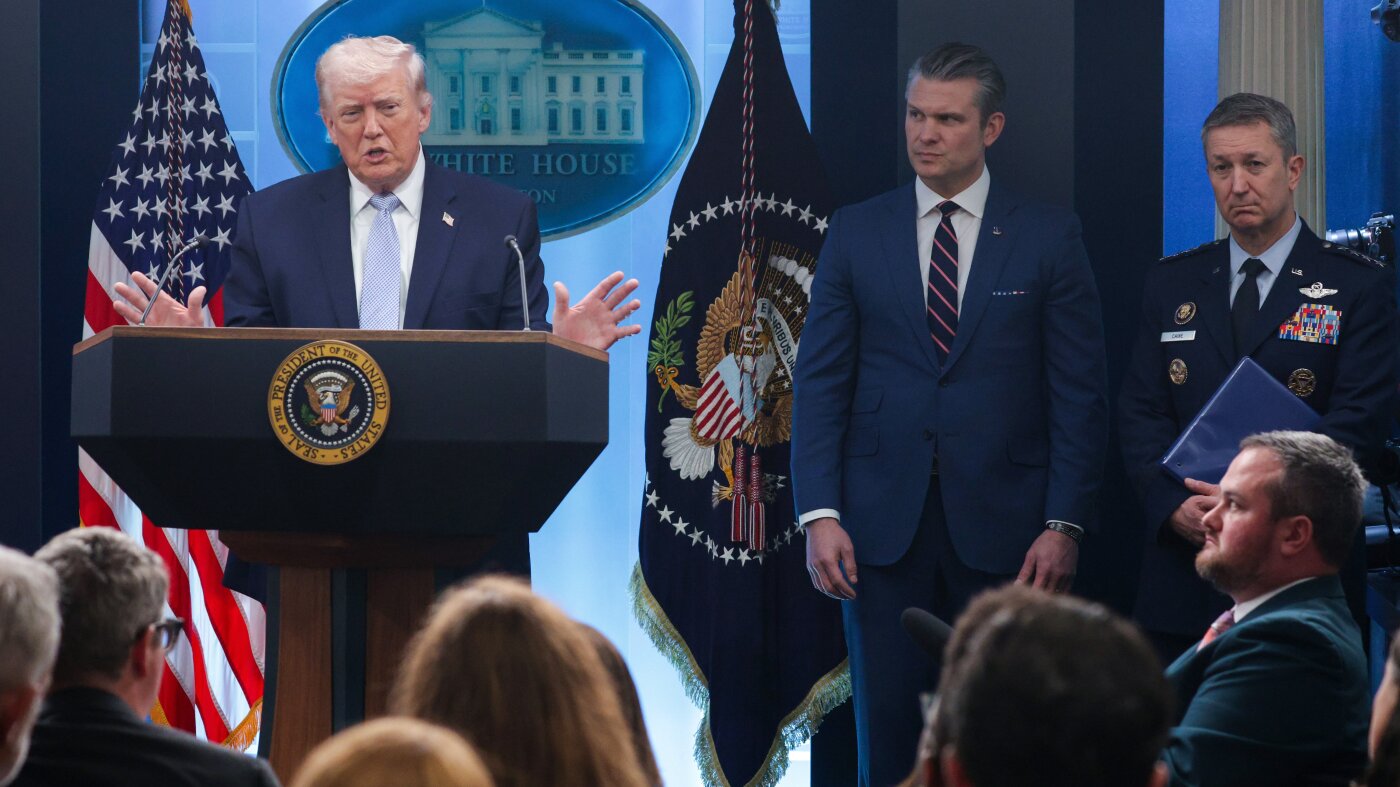
Trump reiterates threats to bomb Iran’s power plants and bridges

Trump threatens Iranian infrastructure over Strait of Hormuz | BBC News
-

 Atlanta, GA2 days ago
1 teenage girl killed, another injured in shooting at Piedmont Park, police say
-

 South-Carolina1 week ago
South Carolina vs TCU predictions for Elite Eight game in March Madness
-

 Vermont1 week ago
Skier dies after fall at Sugarbush Resort
-

 Movie Reviews5 days ago
Vaazha 2 first half review: Hashir anchors a lively, chaos-filled teen tale
-

 Politics1 week ago
Trump’s Ballroom Design Has Barely Been Scrutinized
-

 Atlanta, GA1 week ago
Fetishist ‘No Kings’ protester in mask drags ‘Trump’ and ‘JD Vance’ behind her wheelchair
-
 Entertainment5 days ago
Inside Ye’s first comeback show at SoFi Stadium
-

 Politics1 week ago
JD Vance says he was ‘obsessed’ with UFOs, believes aliens are actually ‘demons’