Crypto
Money laundered through cryptocurrency reached $22.2 billion in 2023 – Report


A report by blockchain research platform, Chainalysis, has revealed that a total of $22.2 billion was laundered globally through different cryptocurrency exchanges in 2023.
The report, however, indicated that this was a significant decrease from the $31.5 billion laundered through digital currency in 2022.
According to the report, the drop could be attributed to an overall decrease in crypto transaction volume, both legitimate and illicit.
Several industry experts have argued that the anonymity of trades on blockchain technology makes it a veritable tool for money laundering. This has led to repeated calls for crypto regulation in Nigeria by stakeholders.
Destination of the funds
Chainalysis in the report noted that centralized exchanges have been the primary destination for funds sent from illicit addresses, at a rate that has remained relatively stable over the last five years.
- “Over time, the role of illicit services has shrunk, while the share of illicit funds going to DeFi protocols has grown.
- “We attribute this primarily to the overall growth of DeFi generally during the time period, but must also note that DeFi’s inherent transparency generally makes it a poor choice for obfuscating the movement of funds,” it said.
The company observed that 2023 mostly resembled 2022 in terms of the breakdown of service types used for money laundering, but saw a slight decrease in the share of illicit funds moving to illicit service types, and an increase in funds moving to gambling services and bridge protocols.
- “If we zoom in to look at how specific types of crypto criminals laundered money, we can see that there was in fact a significant change in some areas. Most notably, we saw a huge increase in the volume of funds sent to cross-chain bridges from addresses associated with stolen funds.
- “We also observed a substantial increase in funds sent from ransomware to gambling platforms, and in funds sent to bridges from ransomware wallets,” it added.
Deposit addresses
Examining the money laundering concentration at the deposit address level (deposit addresses are addresses at centralized services associated with individual users —akin to bank accounts) Chainalysis said 109 exchange deposit addresses received over $10 million worth of illicit cryptocurrency each, and collectively, they received $3.4 billion in illicit cryptocurrency in 2023.
- “While that still represents significant concentration, in 2022, only 40 addresses received over $10 million in illicit crypto, for a collective total of just under $2.0 billion.
- “In 2022, just 542 deposit addresses received over $1 million in illicit cryptocurrency, for a total of $6.3 billion, which was over half of all illicit value received by centralized exchanges that year.
- “In 2023, 1,425 deposit addresses received over $1 million in illicit cryptocurrency, for a total of $6.7 billion, which accounts for just 46% of all illicit value received by exchanges for the year,” it said.




Crypto ATM Data 2026: 597 Net Removals
Recent figures show the global count of crypto ATMs edged close to the 40,000 mark this month, yet data recorded on March 29, 2026, reveals a net reduction of 769 machines. The year opened with a drop of 139 crypto ATMs, followed by the addition of 231 new installations in February.
An additional 80 units were installed at the beginning of March, according to Coin ATM Radar’s net growth logs, though the removal of 769 machines ultimately pushed the year’s total to a net loss of 597. As of this weekend, the global tally of crypto ATMs sits at 38,928 machines. Geographic data from Coin ATM Radar shows the U.S. holds 30,247 of those units, representing 77.7% of the total.
Canada follows with 3,839 crypto ATMs, accounting for 9.9% of the worldwide figure. Europe maintains 1,727 machines, or roughly 4.4% of the overall count of 38,928. Taken together, the U.S., Europe, and Canada host 35,813 machines, comprising 92% of the global share. The remaining 8% is distributed across Asia, Oceania, and other regions.
The crypto ATM tracking site further indicates that the top ten global operators collectively oversee 30,450 machines, representing 78.2% of the total. The industry’s leading provider is Bitcoin Depot, which runs a commanding 9,246 machines (23.8% market share). It is followed by Coinflip with 5,493 machines (14.1%) and Athena Bitcoin with 4,045 machines (10.4%).
Rockitcoin holds a solid footprint with 2,757 machines (7.1%), while Bitstop and Margo operate 2,372 (6.1%) and 2,138 (5.5%) machines, respectively. Stats further show that bitcoin ( BTC) remains the most widely supported asset, available across nearly all machines tracked worldwide by Coin ATM Radar.
Following bitcoin, altcoins as a collective category are supported by 38,910 machines, suggesting that nearly every ATM offering bitcoin also includes at least one alternative asset. Among individual altcoins, ethereum ( ETH) leads with support at 22,200 locations, closely followed by litecoin ( LTC) at 21,292 and tether ( USDT) at 19,894.
Roughly 91.6% of crypto ATMs are configured to facilitate cryptocurrency purchases, while the remaining machines support both buying and selling of digital assets. Logs from Coin ATM Radar offer a revealing snapshot of recent crypto ATM reductions in 2026, showing that the 40,000 threshold remains just out of reach for the industry at present.
Whether the crypto ATM count clears 40,000 this year depends largely on whether operators expand or continue pulling machines. The numbers show a market sorting itself out; large providers like Bitcoin Depot, Coinflip, and Athena hold the majority of installations, while smaller operators account for the gap. With North America controlling over three-quarters of the global count, the industry’s direction remains tied closely to conditions in a single market.
FAQ 🔎
- How many crypto ATMs are there in the world in 2026? As of March 29, 2026, Coin ATM Radar tracks 38,928 active crypto ATMs globally.
- Which country has the most Bitcoin ATMs? The United States leads with 30,247 machines, representing 77.7% of the worldwide total.
- Who is the largest crypto ATM operator in 2026? Bitcoin Depot operates 9,246 machines, giving it a 23.8% share of the global market.
- What cryptocurrencies do crypto ATMs support? Bitcoin is available at nearly all machines, with ethereum supported at 22,200 locations and litecoin at 21,292.
Global Legal Insight publishes a yearly print-and-digital series that investigates urgent themes in business and law with contributions from legal experts worldwide. In the 2025 volume on Blockchain and Cryptocurrency, Ernst & Young Tax and Law Norway wrote the country chapter, which addresses whether cryptocurrency is lawful in Norway and surveys how cryptoassets are positioned domestically under Norwegian regulation.
Norway generally permits cryptoasset ownership and trading, while placing the strongest compliance expectations on intermediaries that exchange, safeguard, or facilitate transfers for others.
Cryptocurrency Regulation in Norway: Institutions and Policy Signals
The chapter presents perspectives from the Financial Supervisory Authority of Norway, the Ministry of Finance, and the Norwegian Central Bank on current market conditions and responsible approaches to a fast‑moving sector. It also distills the operative legal framework and key tax rules for digital assets. In practice, the Financial Supervisory Authority of Norway is the primary supervisory body for many compliance questions that arise when a business provides crypto-related services (for example, exchange services or custody-like safeguarding for clients), while tax reporting and assessment are handled by the Norwegian Tax Administration.
For crypto businesses, the most relevant requirements typically relate to anti-money laundering compliance, including customer due diligence, transaction monitoring, and internal controls. Businesses that provide exchange services between cryptoassets and fiat currency, or that provide services for holding or administering cryptoassets on behalf of others, may need to register with the Financial Supervisory Authority of Norway before offering services, and should be prepared to document ownership and management, governance arrangements, risk assessments, routines for customer checks, and recordkeeping. If you are looking for a “crypto license” in Norway, the practical path is usually a registration-based process tied to anti-money laundering obligations rather than a single, universal license for all crypto activity.
Legal Status and Compliance Overview
This piece is a practical reference for readers seeking clarity on how Norway governs crypto asset activity. It delivers a concise, trustworthy roundup of regulation in Norway, touching on consumer protection and practical themes for participants in digital finance. For individuals, that often means understanding which activities are permitted, how to document transactions, and which authorities oversee intermediaries versus taxation.
From a consumer-use perspective, self-custody wallets such as Trust Wallet are generally available in Norway through standard app distribution channels, and individuals commonly use them as they do in other markets. Using a self-custody wallet does not typically require registration by the individual, but it does not remove tax obligations or documentation expectations; users should keep clear records of purchases, transfers, swaps, and disposals so gains, losses, and income can be reported correctly. Some banks and payment providers may apply their own risk controls around transfers to and from crypto platforms, so users may encounter practical friction even when the underlying activity is lawful.
PayPal availability for purchasing Bitcoin in Norway depends on the specific service route. Some crypto platforms may support PayPal-funded purchases or deposits in certain cases, but many do not due to chargeback and fraud-risk controls, and availability can vary by provider and user verification status. Where PayPal is supported, users should expect identity checks, potentially higher fees, and limits that depend on the platform’s compliance and risk settings.
To buy Tether in Norway, individuals typically use a crypto exchange or broker that lists the stablecoin and supports onboarding for Norwegian residents. The usual flow is to complete identity verification on the platform, fund the account using the supported payment method (commonly bank transfer or card, depending on the provider), and then place an order for the stablecoin. Practical banking considerations can matter, including a bank’s willingness to process payments to particular platforms and the platform’s own requirements for source-of-funds information.
Bitcoin mining is generally lawful in Norway, but it can trigger ordinary business, tax, and local compliance considerations depending on scale (for example, zoning, noise, and commercial electricity arrangements). Norway’s electricity pricing is market-based and can be attractive in some regions, but miners should not assume dedicated government subsidies specific to crypto mining; any favorable power costs typically come from standard industrial contracts, local grid conditions, or general schemes that are not exclusive to mining and may change based on policy and eligibility criteria.
On taxation, cryptoassets are generally treated as taxable assets in Norway, and taxpayers are expected to report disposals and income tied to crypto activity. As a rule of thumb, gains and losses on sales, exchanges between cryptoassets, and spending crypto can be taxable events, while income-like receipts (such as rewards that function like compensation or yield) may be taxed when received, with later disposal potentially creating an additional gain or loss based on value changes. The applicable tax rate will typically follow the ordinary income tax rate for individuals, and accurate recordkeeping is essential for cost basis, acquisition dates, fees, and fair value at the time of each taxable event.
Legal ways to reduce crypto-related taxes in Norway tend to be documentation- and planning-driven rather than loophole-driven. Common approaches include ensuring all allowable losses are captured and reported, deducting eligible transaction costs where permitted, maintaining consistent cost-basis tracking so gains are not overstated, and planning disposals with an eye to offsetting gains with realized losses when that matches the taxpayer’s broader financial situation. For higher-activity traders or mining operations, it can also be important to assess whether the activity resembles a business in substance, since that can affect how income, expenses, and reporting are treated under Norwegian rules.

Bitcoin, Ether ETFs Deepen Losses as Weekly Selling Peaks
The week did not end quietly. Instead, it closed with conviction, and not the kind bulls would have hoped for.
Bitcoin ETFs recorded a steep $225.48 million in net outflows, marking one of the largest single-day withdrawals of the week. The selling was concentrated, but decisive. Blackrock’s IBIT accounted for the overwhelming majority, shedding $201.53 million alone. Bitwise’s BITB followed with $18.60 million in outflows, while Ark & 21Shares’ ARKB posted a smaller $5.35 million exit.
There were no inflows to soften the blow. Trading activity remained robust at $3.39 billion, yet net assets fell sharply to $84.77 billion, underscoring the weight of sustained redemptions.
Ether ETFs extended their losing streak to eight consecutive days, with total outflows reaching $48.54 million. Once again, Blackrock’s ETHA led the decline, posting a $70.80 million withdrawal. Fidelity’s FETH followed with $8.92 million in outflows, while Grayscale’s Ether Mini Trust lost $8.68 million.
Still, one fund continued to defy the trend. Blackrock’s ETHB attracted $39.86 million in inflows, reinforcing its growing appeal among investors. Its staking component appears to be drawing attention, even as broader sentiment around ether remains weak. Trading volume stood at $1.16 billion, with net assets closing at $11.52 billion.
Elsewhere, the picture was quieter but no less telling. XRP ETFs saw no trading activity, with net assets slipping to $933.33 million. Solana ETFs faced heavier pressure, recording a $7.84 million outflow entirely from Bitwise’s BSOL. Trading volume reached $45.21 million, while net assets declined to $809.62 million.
The pattern is hard to ignore. Capital is leaving the space at a steady pace, particularly from flagship bitcoin and ether products. Even isolated inflows are no longer enough to change the broader direction.
In summary, Friday capped a difficult stretch for crypto ETFs. Bitcoin led with a sharp outflow, ether extended its losing streak despite selective interest, solana weakened further, and XRP remained sidelined. The market closes the week on uncertain footing, with sentiment clearly under strain.
FAQ 📊
- Why did Bitcoin ETFs see such a large outflow on Friday?
The sharp outflow was largely driven by a significant withdrawal from Blackrock’s IBIT, reflecting continued institutional selling pressure. - What is causing Ether ETFs’ extended outflow streak?
Ether ETFs are experiencing persistent redemptions, mainly from Blackrock’s ETHA, indicating weaker investor confidence than bitcoin’s. - Why is Blackrock’s ETHB still attracting inflows?
ETHB’s staking feature is likely appealing to investors seeking yield, making it stand out even during broader market outflows. - What does continued inactivity in XRP ETFs suggest?
It indicates limited investor engagement and a wait-and-see approach, with capital focusing elsewhere in the crypto ETF market.

Newsletter: G7 ministers to hold talks on war’s economic fallout
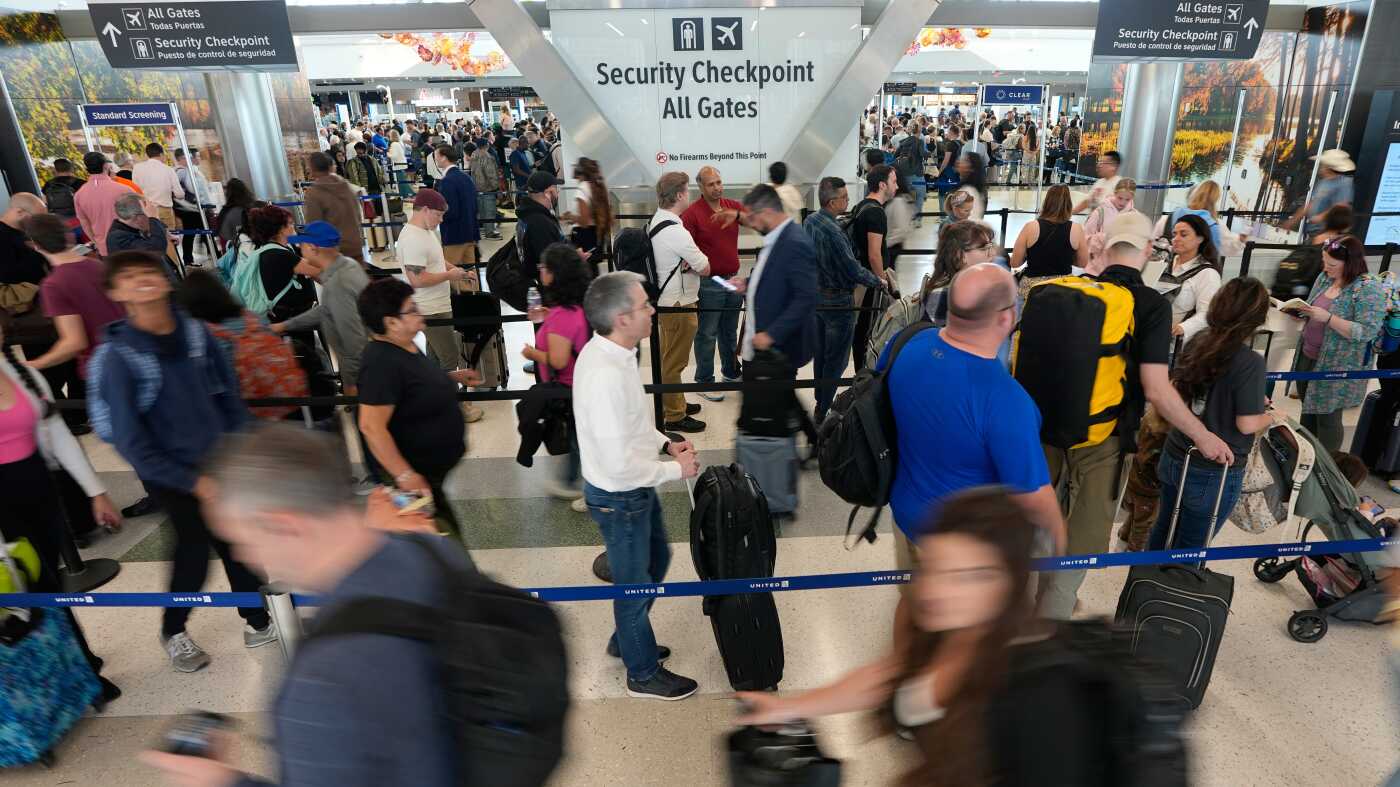
ICE officers could remain at airports after TSA workers are paid

Wolverines make Frozen Four

Bay Area residents hold rally in SF as war with Iran enters 2nd month

Dallas Jenkins says he is the ‘evangelical mascot of the LDS church’ and talks Easter celebrations

Florida High School Football Rankings: Top 25 teams – Oct. 21

How old is Bo Nix? What to know about Oregon quarterback ahead of 2024 NFL Draft

Cleary's 21 help Le Moyne down Central Connecticut State 69-64 in OT

99th annual Pony Swim held in Virginia

Indiana Members Credit Union announced as new anchor tenant at Bottleworks District
Newsletter: G7 ministers to hold talks on war’s economic fallout
ICE officers could remain at airports after TSA workers are paid

Scathing report claims nation’s oldest labor union ‘betrayed’ MAGA members through ‘shocking’ spending

Republican US lawmaker demands Congress vote on any Iran troop deployment

So you went to a No Kings protest. Now what?
-

 Sports1 week ago
IOC addresses execution of 19-year-old Iranian wrestler Saleh Mohammadi
-

 New Mexico1 week ago
Clovis shooting leaves one dead, four injured
-

 Miami, FL4 days ago
Jannik Sinner’s Girlfriend Laila Hasanovic Stuns in Ab-Revealing Post Amid Miami Open
-

 Tennessee6 days ago
Tennessee Police Investigating Alleged Assault Involving ‘Reacher’ Star Alan Ritchson
-

 Minneapolis, MN4 days ago
Boy who shielded classmate during school shooting receives Medal of Honor
-

 Politics1 week ago
Schumer gambit fails as DHS shutdown hits 36 days and airport lines grow
-

 Science1 week ago
Record Heat Meets a Major Snow Drought Across the West
-

 Technology1 week ago
YouTube job scam text: How to spot it fast