Crypto
Hawk Tuah Girl Just Launched A Cryptocurrency And Surprise, It's Already Being Called A Scam


If you thought 2024 couldn’t get more bonkers, Hawk Tuah girl just launched a cryptocurrency. I can’t believe that was a real sentence I just wrote.
Viral sensation, Hailey Welch, has found herself in a bit of a pickle after dipping her toes into the murky waters of cryptocurrency. And by ‘dipping her toes’, we mean cannonballing into the deep end of that thang.
For those who’ve been living under a rock, Hailey shot to stardom with her response to a TikTok vox pop. She catapulted to fame with her viral “hawk tuah” sound, earning her millions of followers and leading her to start many ventures.

But apparently, having a successful podcast, merch line, and 1.8 million wasn’t enough. No, Hailey decided to test her luck in the wild west of finance by launching her own cryptocurrency, $HAWK. What in the finance bro hell is this???
Within a mere 20 minutes of its launch on December 5, $HAWK went from soaring like its namesake to plummeting real fast.
The coin’s value nosedived from a whopping $490 million to $41 million, leaving fans clutching their empty wallets and wondering if they should’ve just bought a scratchie instead.
Naturally, the internet did what it does best – lose its collective mind. Accusations of a “rug pull” started flying around instantly. One poor soul claimed they’d invested their “life savings and children’s college education fund” into $HAWK, only to see it evaporate. Okay but what do you mean you invested that much into something you found on TikTok??
In a desperate attempt to salvage her reputation, Welch and her team hosted an audio event on X Spaces (it’s basically a live stream call on X), Wednesday evening. But instead of putting out the fire, they seemed to pour petrol on it.
Welch, uncharacteristically quiet, let her crypto partners from overHere do the talking. Their vague responses and circular logic did little to quell suspicions of a scam
YouTuber and crypto journalist, Coffeezilla, was not buying the podcaster’s statement and joined the conversation to to give Hailey a grilling accusing her team of insider trading and generating over a million dollars in fees while fans got “rug pulled”.
“This is one of the most miserable, horrible launches I’ve ever seen. I’ve been tracing it on the chain for a while. You guys generated over a million dollars in fees, while your fans got rug pulled. There were snipers, but there was also insider trading directly linked to y’all’s creator accounts,” Coffeezilla said.
He has since posted a take down of the crypto currency on his YouTube which you can watch here:
Welch’s response? Silence and then a classic “anywho, I’m gonna go to bed” exit strategy when another question got asked, leaving her team to face the music. The damage control attempt was so disastrous that Welch promptly removed the recording from her X account, though it’s still available on YouTube here:
To wrap up this crypto rollercoaster, overHere, the platform behind $HAWK, released a statement on X on December 5 attempting to clear the air:
“There has been a wild amount of fud circulating, let us explain: The main piece going around @X is the 96 per centFF cluster seen on @bubblemaps which shows $HAWK tokens being sent by the deployer address (xxxx), to the related addresses, according to the tokenomics that was published.
“The other 3 per cent was seeded into a Meteora LP and burned (300m $HAWK + 2598 $SOL = 1.2 million USD @ 20m FDV). We also seeded 0.3 per cent into a Raydium pool.”
They claimed that Haliey’s team has sold “absolutely no tokens whatsoever” and that Hailey’s team has 10 per cent allocation which is locked for one year and vested over three years.
“The rest of the tokens are distributed into the different wallets as according to the tokenomics.”
They’ve invited the community to raise concerns, promising to address them. But let’s be real, this explanation is about as clear as mud to anyone who doesn’t speak fluent crypto.
Plus, while overHere attempts to explain the token distribution, their statement doesn’t account for the alleged evidence of insider trading and sniping that led to the coin’s dramatic crash.
So, what’s next for our Hawk Tuah girl? Will she be swapping her designer threads for prison orange? Or will she somehow hawk her way out of this mess? Only time will tell.
For now, it seems the only thing soaring higher than $HAWK’s initial value is the number of questions surrounding this memecoin mayhem.



The cryptocurrency market dynamics have been consistent over the years, with prices fluctuating in cycles and trends. Such a pattern triggers discussions among crypto community members, particularly key opinion leaders and experts who explore researched data and historical trends to predict the future.
Notably, the evolving nature of the Bitcoin ecosystem triggers sentiments that differ from the digital asset’s early days. Experts analyzing this new phase, alongside developments in alternative cryptocurrency ecosystems, are projecting the crypto market, leaving pointers of what users should expect.
Bitcoin is a Scarce Commodity
One such expert and key opinion leader is Samson Mow, CEO of Jan3, a blockchain project that aims to accelerate hyperbitcoinization. In a recent interview, Mow highlighted the scarcity of Bitcoin that many users have yet to recognize. According to Mow, most people still don’t get what true scarcity means.
🚨 BIG Bitcoin Scarcity Warning from @Excellion (SAMSON MOW, CEO of @JAN3com) 🚨 — COACHTY (@TheRealTRTalks) July 8, 2026
Most people still don’t get what true scarcity means.
“There’s so much demand right now — from $Strategy, ETFs, nation-states, and regular HODLers — that most of the year’s mined $BTC supply is… pic.twitter.com/i2v1BvUadC
The renowned Bitcoin expert explained that there is so much demand for Bitcoin from Michael Saylor’s Strategy, ETFs, nation-states, and regular HODLers. He noted that demand is so high that most of the year’s mined $BTC supply has already been taken up multiple times over.
Mow cited a pattern among many Bitcoiners who typically postpone buying $BTC during pullbacks, expecting that the price would drop further. He emphasized that “there is no later” with Bitcoin, predicting the price will return above $100,000 soon. According to Mow, every institution on earth wants a share of the 21 million Bitcoin supply, which would make the cryptocurrency more expensive in the future.
For context, BlackRock has reportedly resumed accumulating $BTC. After recording steady outflows for approximately two weeks, the asset manager reversed course by purchasing $250 million worth of Bitcoin over the past two days. Besides direct purchases, on-chain data show several $BTC transfers from Coinbase Prime to the IBIT BlackRock wallet, valued at around $17 million to $19 million.
BlackRock’s crypto asset holdings have crossed $50.3 billion, comprising 730,440 $BTC, equivalent to $45.52 billion, and 2.752 million $ETH worth $4.79 billion. According to experts, BlackRock’s crypto accumulation pattern indicates that institutional demand for $BTC and $ETH remains unabated.
Ethereum Remains in Demand
Popular crypto influencer, identified as Tanaka on X, aligns with the growing $ETH demand philosophy. Tanaka described the propagation of settlement layers, such as the Robinhood Chain and the Arbitrum Orbit, as clear examples of how TradFi can move on-chain via L2s. He noted that these solutions create scenarios that funnel into increased demand for $ETH.
Tanaka highlighted the recent surge in meme activity on these chains, noting that the solutions go beyond that, covering real-world assets (RWAs), stock tokens, lending, and DeFi. According to Tanaka, L2 activities settle back to Ethereum, $ETH gas creates demand for using the cryptocurrency, while stock tokens, such as NVDA, AAPL, and GOOG, are going on-chain, all boosting demand for $ETH.
Meanwhile, Tanaka cited a scenario that could create more demand for Ethereum—Robinhood onboarding retail TradFi into tokenized stocks and DeFi. According to him, that would be a very positive signal for $ETH. In the meantime, Ethereum is used as the settlement layer for RWA, DeFi, and traditional financial products.
It is worth noting that developments around the Robinhood Chain are not the only factors behind $ETH’s potential demand. Tanaka noted that, despite considering it a positive catalyst, $ETH still depends on $BTC, macro, ETF flows, and Ethereum upgrades to sustain its momentum and remain relevant in the cryptocurrency ecosystem.
The Latest Meme Coin Narrative
Besides Bitcoin and Ethereum, crypto experts consider the meme coins ecosystem another relevant sector of the crypto market, despite the changing dynamics. Zippy, a key opinion leader in the meme coin sector, stated that the lifecycle of meme narratives is getting shorter with every cycle. According to him, what used to last for days or even weeks now often fades within 24 hours.
Zippy noted that most meme tokens experience sharp corrections as soon as liquidity rotates elsewhere. He explained that the new pattern does not mean the meme market is over. Instead, it signifies that capital is rotating at a much faster pace, and rather than staying with one token, the market is constantly chasing the next story.
The meme coin opinion leader noted that the new ecosystem narrative has emerged with meme waves led by ecosystems attracting fresh liquidity rather than old narratives trying to recover. He identified Robinhood as one of the leading ecosystems currently drawing attention in the meme coin sector.
However, Zippy noted that timing matters as much as conviction in the current meme ecosystem dispensation. According to him, sometimes, knowing when to exit is more valuable than knowing when to buy.
Related:Bitcoin Scarcity Gets Real as 403K $BTC Leaves Exchanges
Crypto
Bitdeer Invests $36 Million in First US Sealminer Factory as Bitcoin Mining Margins Stay Tight

Key Takeaways
- Bitdeer is building a $36M Nevada plant to produce 10,000 Sealminer units monthly by 2026.
- Sealminer efficiency targets weak mining margins as hashprice stays near historic lows.
- Bitdeer is expanding U.S. manufacturing and AI infrastructure to strengthen long-term growth.
Bitdeer Targets 10,000 Monthly Sealminer Units With New $36 Million Nevada Factory
Bitdeer is moving ahead with a major U.S. manufacturing push, breaking ground on a $36 million advanced electronics facility in Sparks, Nevada, even as bitcoin mining economics remain near historic lows.
The 187,000-square-foot plant will be the company’s first domestic manufacturing and assembly site in the U.S. It is expected to be completed by the end of 2026 and is designed to produce 10,000 Sealminer units per month.
Bitdeer said the project will create about 70 local jobs across engineering, skilled technician and support roles. The facility will expand the company’s U.S. footprint beyond mining and data centers, adding a domestic production base for its proprietary mining machines.
“Producing our advanced Sealminer units right here in Nevada reflects our long-term commitment to building capacity and nurturing the talent necessary to support our growing digital infrastructure operations in America,” remarked Paul Hanson, Chairman of Bitdeer Industrial.
Vertical Integration During a Mining Slump
The timing is notable. Bitcoin miners are still dealing with weak hashprice, a key measure of mining revenue per unit of computing power.
Spot hashprice was recently around $29.81 per PH/s/day, after touching a daily low of $27.89 on Feb. 24. March also marked a record-low monthly average of $31.27, according to industry data.
The pressure reflects several factors: the April 2024 halving, rising network hashrate, and low transaction-fee revenue. Together, they have reduced revenue for miners using the same amount of computing power.
At these levels, profitability is increasingly concentrated among operators with cheap power and newer, more efficient machines.
Bitdeer is trying to address that pressure through vertical integration. The company has been developing its own Sealminer hardware and deploying the machines across its self-mining fleet.
Catherine Guo, CEO of Bitdeer Industrial, commented that the Sparks plant reflects the company’s contribution to Nevada’s diversifying economy.
“Our commitment underscores the state’s strategic advantages, including a highly accessible and skilled workforce, robust logistics networks, and a consistently business-friendly environment,” Guo said.
U.S. Expansion Meets AI Demand
The Nevada facility will complement Bitdeer’s existing U.S. data centers and its innovation hub in San Jose, California.
The project also comes as Bitdeer expands across mining and AI infrastructure. In its May operating update, the company reported 70.2 EH/s of self-mining hashrate, 921 bitcoin mined during the month, and about $69 million of annualized recurring revenue from its AI Cloud business.
Bitdeer also said it was in advanced talks with a potential colocation tenant at its Tydal, Norway site. That follows a broader industry trend in which miners are exploring AI and high-performance computing uses for power-rich data center assets.
The facility is expected to begin contributing to Bitdeer’s manufacturing capacity as the mining hardware market becomes more selective. Weak hashprice can slow equipment demand, but it can also push well-capitalized miners to replace older machines with more efficient models.
Crypto
British Airline Jet2 Shares Jump 9% After $536M Fuel Hedge Gain Offsets Middle East Travel Fears

Key Takeaways
- Jet2 recorded a $536 million balance sheet windfall on July 8 after locking in low-cost fuel derivatives.
- The Middle East conflict triggered a 67% decline in annual cash inflows as travelers delayed holiday bookings.
- CEO Steve Heapy announced a $335 million buyback program and expanding operations at London Gatwick Airport.
Sector Resilience Amid Fuel Volatility
British airline and package holiday provider Jet2 defied intense geopolitical instability and travel sector panic triggered by the Middle East war by reporting a more than $500 million balance sheet boost, fueled by the rising price of jet fuel.
As the conflict in the Middle East escalated, spiking fuel rates caused the value of the company’s fuel derivatives to soar. According to Jet2’s full financial results released July 8, an extra $536 million in income was primarily driven by these favorable fair value movements.
The financial buffer comes after widespread fears earlier this year that rising energy costs could push airlines into bankruptcy and force massive summer holiday cancellations. In the United States, higher fuel prices contributed to the collapse of low-budget airline Spirit in May. The United Kingdom had been labeled as the nation “most exposed” to the jet fuel crisis, forcing government ministers to scramble to protect airline fuel access and temporarily suspend airport capacity rules.
While Jet2 was able to mitigate the price shock, the broader conflict still took a toll on booking behaviors. The airline conceded that ongoing travel uncertainty from the war caused holidaymakers to delay their trips and book much closer to their departure dates than usual. As a result, Jet2’s cash inflow plummeted by 67% to approximately $103 million for the fiscal year ending March 31.
Financially, Jet2 reported mixed full-year results. Group revenue climbed 4% to $10.05 billion, but pre-tax profit slipped 7% to $738.6 million, hit hard by lower income earned on its cash deposits.
Despite the profit dip, operational metrics showed strong consumer demand. Jet2 increased its total seat capacity by 8% to 24 million and flew 20.8 million passengers — a 5% increase year-over-year. The company also announced a new $335 million share buyback program, pointing to robust liquidity and confidence in its midterm outlook.
On the stock market, shares of the AIM-listed company jumped 9% to $19.92 at Wednesday’s opening bell, leaving the stock up 5% for the year.
Chief Executive Issues Tax Warning
The financial report coincided with an aggressive political warning from Jet2 Chief Executive Steve Heapy. Speaking to shareholders, Heapy cautioned political figures — specifically naming prominent politician Andy Burnham — against treating the aviation and holiday industry as a “cash cow.”
Burnham is widely anticipated to enter Downing Street later this month following recent political shifts.
“Don’t treat the aviation or holiday industry as a cash cow, because taxes increase the price of flying,” Heapy said, pointing out that Jet2 had to absorb $67 million in additional regulatory and tax costs over the last year. “I think, you know, enough is enough.”
Operationally, Jet2 is pushing a major expansion strategy designed to challenge the UK’s dominant legacy carriers. In March, the airline launched a six-aircraft hub at London Gatwick Airport, signaling an aggressive move out of its traditional northern England strongholds. The company notes it now operates within a 90-minute drive of more than 90% of the UK population.
-

 World3 minutes ago
Belgium to introduce new road tax in 2027, even for transiting drivers
-
 News28 minutes ago
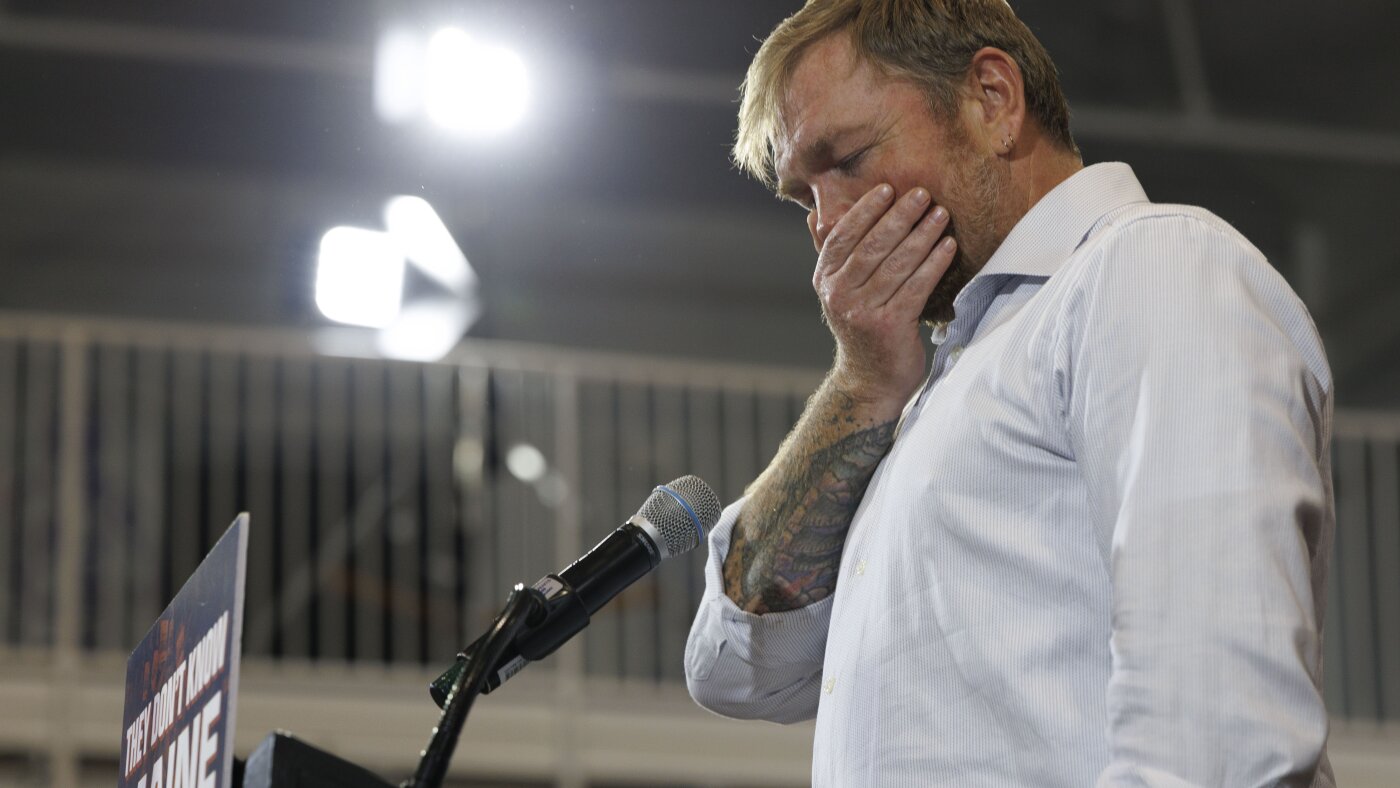
Graham Platner makes it official in Maine, submitting paperwork to leave Senate race
-

 Los Angeles, Ca2 hours ago
Knee irritation forces Shohei Ohtani out of Friday start, All‑Star game
-

 Detroit, MI2 hours ago
Detroit Evening Report: Waymo cars blocking first responders – WDET 101.9 FM
-

 San Francisco, CA2 hours ago
San Francisco Mayor Daniel Lurie Blocks Vacant Grocery Store Tax Proposal | KQED
-

 Miami, FL2 hours ago
Oregon Battling Miami, Mario Cristobal for Four-Star EDGE Recruit
-

 Dallas, TX2 hours ago
FC Dallas Forward Logan Farrington Inks Contract Extension
-

 Boston, MA3 hours ago
Red Sox face lengthy travel issues ahead of series vs. Mets

