Crypto
Cryptocurrency: 3 Coins To Buy for Long-Term (10x) Profits This Bull Run


The realm of cryptocurrency is dubbed volatile and exciting at the same time. There are times when dependable altcoins fail to perform their best while the underrated gems emerge as the ultimate winners of the race. It can be particularly hard to dissect notable coins that may deliver stable returns as compared to volatile ones, which may steal away all your savings and investments.
With that thought in mind, here’s our pick of the top three crypto coins that may deliver stabler profits this bull season.
Top 3 Cryptocurrencies to Hold for Stable Profits (10x) This Bull Season

Cryptocurrency #1: Solana SOL
Solana led the current bull run in all its glory, projecting a stellar price stance. The SOL ecosystem was rife with new presale coins and projects that helped the token sail to new highs.
The Solana ecosystem has recently deployed a congestion bug fix in its blockchain, which is bound to keep the network from crashing due to heavy traffic and trading.
This may help Solana onboard new users, as the network is primarily known as a hassle-free, low-cost, effective blockchain in the Web3 vertical. This will help SOL recover all its lost value at a rapid pace, crowning itself as a leading player in the web3 space.
According to CoinCodex, Solana may experience a notable price surge post-Bitcoin halving. Per CC, SOL may gain 13% to trade at $150 by the end of April 2024.
“The price of Solana may rise by 13.54% and reach $150.73 by May 18, 2024. Per our technical indicators, the current sentiment is bearish, while the Fear & Greed Index is showing 57 (greed). Solana recorded 15/30 (50%) green days with 9.78% price volatility over the last 30 days.”
Cryptocurrency #2: Ripple XRP
XRP has long been embroiled with the SEC in a heated legal spat. Despite its sluggish pace and the prolonged legal warfare with the SEC, the token continues to hold its ground steady. XRP’s magical price road is progressing primarily due to Ripple, its parent company, which is relentlessly pursuing monumental new partnerships with leading financial players in the space.

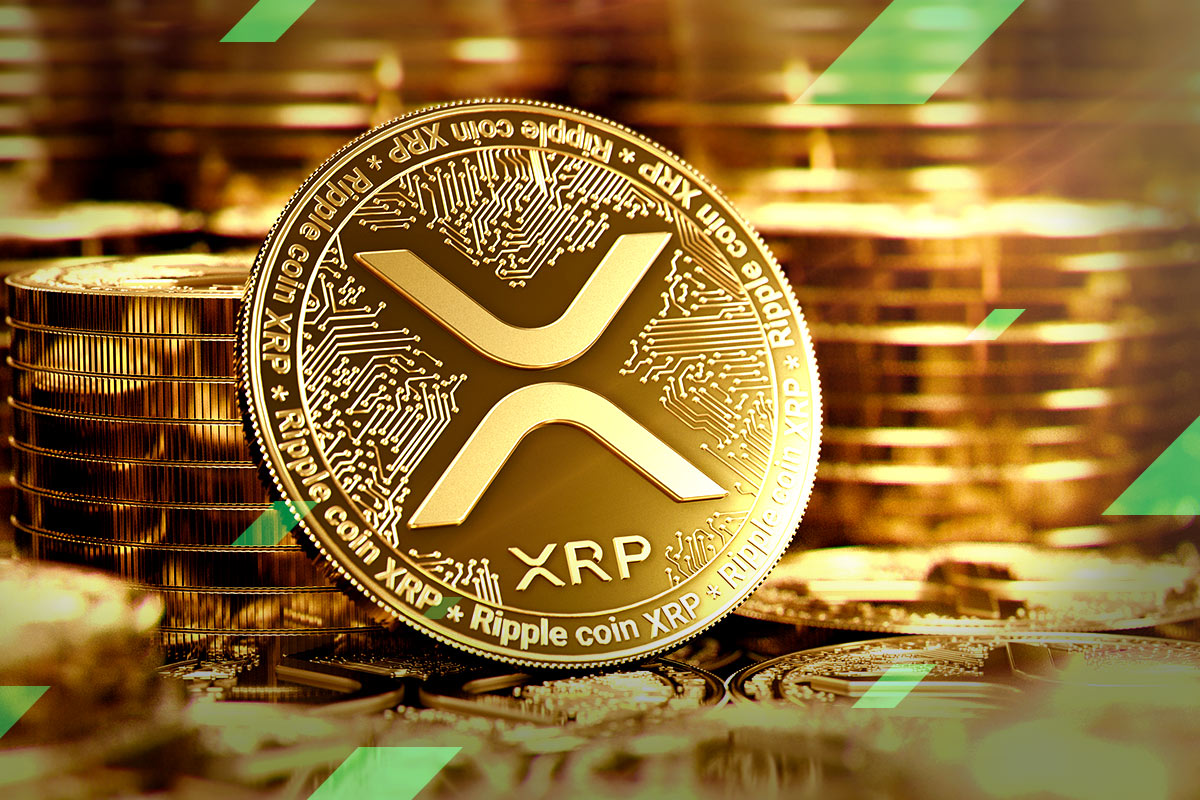
These new partnerships are key pathways for Ripple to gain further prominence, helping its token XRP to recover its lost fortunes sooner or later. Once the legal warfare with the SEC concludes, XRP may recover and regain its value, which makes it a great asset to hold and explore.
According to CoinCodex, XRP will gain 15% by the end of April, trading at $0.56 by May 17.
“The price of XRP may rise by 15.83% and reach $0.568167 by May 18, 2024. Per our technical indicators, the current sentiment is bearish, while the Fear & Greed Index is showing 57 (greed). XRP recorded 14/30 (47%) green days with 7.50% price volatility over the last 30 days.”
Cryptocurrency #3: Ethereum ETH
Ethereum is dubbed as the second-best cryptocurrency after Bitcoin. With the Bitcoin Halving event knocking on the door, the event may trigger a chain reaction, leading the altcoins to document a notable price spike.
Ethereum might also benefit from this change, assisting the token to seek stability in its price levels.
According to CoinCodex, Ethereum may spike 2% to trade at $3,107 by May 17. The slow yet steady price pace is what promises stable profit margins to its investors in the long term.
“The price of Ethereum may rise by 2.87% and reach $3,105.24 by May 18, 2024. Per our technical indicators, the current sentiment is bearish, while the Fear & Greed Index is showing 57 (greed). Ethereum recorded 16/30 (53%) green days with 4.90% price volatility over the last 30 days.”



Key Takeaways
Word Play With a Warning
Robert Kiyosaki, the author of the best-selling personal finance book “Rich Dad Poor Dad,” is recasting a familiar piece of investing advice. In a post on X, he argued that many investors only believe they are protected, adding:
“De-Worse-ified means they think they are diversified, but they have all their diversified assets, such as gold, silver, Bitcoin, stocks, bonds, real estate, and oil, in one asset class.”
His point is that spreading money across many holdings does not help if those holdings all move the same way in a crisis. When a liquidity shock hits, correlations rise and supposedly diverse portfolios can fall in unison, leaving investors “de-worsified” rather than diversified.
The commentary is consistent with the stance Kiyosaki has pushed throughout 2026 as he recently named bitcoin among the safest investments for the year, grouping it with what he calls real assets. He has repeatedly listed gold, silver, oil, food, bitcoin, and ether as his preferred holdings, framing them as scarce stores of value that printed money cannot dilute.
He has paired that view with stark price calls, setting a target of $250,000 for BTC by year’s end alongside a longer-term goal of $1 million. At current levels, the move would require a gain of more than 230%. On the precious metals side of things, he recently suggested a possible $200-per-ounce silver level this year, calling the metal’s climb a signal of mounting financial stress.
Kiyosaki’s broader thesis is darker still, warning investors of a historic market crash that he ties to surging global debt and fragile private credit markets, urging followers to build income streams, learn trade skills, and accumulate hard assets before the storm.
Timing Is Everything
The “de-worsified” warning arrives at a tense moment for markets, especially as bitcoin posted its worst week since the 2022 collapse of Sam Bankman-Fried’s FTX exchange, sliding below $60,000 as record exchange-traded fund (ETF) outflows and risk-off sentiment gripped the sector.
That is exactly the kind of broad drawdown scenario (where bitcoin, equities, and other assets fall together) that Kiyosaki has used time and again to illustrate his point.
That said, he has become an increasingly polarizing voice within the broader economic landscape, with skeptics pointing out that his crash predictions are frequent and his price targets aggressive (and that he has issued similar warnings for years). Supporters argue his core message of owning scarce assets, avoiding hidden correlation, and preparing for volatility is a reasonable hedge against an era of heavy money printing and rising debt.
Whether or not his $250,000 bitcoin call lands, the distinction he is drawing is a real one, as true diversification really does depend on owning assets that behave differently (not simply owning many of them). In a market where everything from gold to crypto to stocks can move on the same macro headlines, that lesson may matter more than any single forecast.

North Carolina lawmakers on Tuesday advanced a bill to protect consumers from cryptocurrency kiosk fraud.
House Bill 920, which passed the House with a 115-to-0 vote, aims to regulate an industry that its author claims is unregulated in the state.
“It’s the wild, wild West,” Rep. Neal Jackson, R-Moore, said during a committee discussion on Tuesday. “There is no regulation whatsoever in North Carolina. That’s what we’re trying to do here.”
Lawmakers cited a growing amount of fraud as the reason for the bill. About $389 million in losses were reported last year through cryptocurrency ATMs, a 58% increase from 2024, according to the FBI. The majority of those impacted are 60-plus.
The bill now goes to the Senate for consideration. It seeks to:
- Require licenses for all kiosk operators under the Money Transmissions Act.
- Place operators under the supervision of the Commissioner of Banks.
- Require fraud warnings and transaction receipts for every transaction.
- Require compliance and consumer protection officers that are always available.
It also seeks to place limitations on transactions in an effort to reduce fraud, requiring a $2,000 daily limit for the first 30 days for new customers and a $5,000 daily limit for existing customers, who would qualify after 30 days.
While other states have service fees between 20% and 30%, Jackson suggests putting a cap at 14%.
State Rep. Tim Longest, D-Wake, expressed concern about having the kiosks at all in the state. He said the bill’s protections could be stronger.
“These machines can be the subject of fraud, basically facilitating fraud on seniors and other vulnerable individuals and in those cases,” Longest said. “… In crafting regulations, I think it’s important that we ensure consumers are adequately protected by those regulations and I do not believe that, under the language of the bill currently before you, those regulations are sufficient to protect consumers.”
Jackson pointed to this bill as an effort to regulate, not shut down, cryptocurrency kiosks in the state and said there are even more consumer protections in place.
David N. Tente, the executive director of the ATM Industry Association, said the bill — and others like it — is problematic because it requires operators to provide refunds to fraud victims in certain instances.
“In most cases, the cash in the ATM/kiosk does not belong to the operator, which means that returning any of it would be, technically, theft,” Tente said. “If you give someone cash for something, and you change your mind after they leave, you probably won’t get it back.”
He added: “We certainly feel sorry for those being scammed, but there are very simple things you can do to avoid it.”
Tente said these kinds of scams have existed for centuries, adding: “They are still here — just using different means of payment.”

Key Takeaways
- Zcash surged 11.3% to $478, reclaiming its top privacy coin status over monero after an 80% rally.
- The ZEC spike wiped out $11.5 million in short positions within 24 hours as bitcoin dropped below $63,000.
- Analysts like Matthew Brienen watch Zcash next to see how the market prices in the 2022 Orchard pool bug.
The Orchard Vulnerability
Privacy coin Zcash (ZEC) surged on Tuesday, jumping 11.3% to $478 as it maintained a steady recovery that began shortly after it plunged to just under $265. At the time of writing (5:32 a.m. EST), the privacy coin’s latest climb pushed its gains since June 5 to approximately 80% and saw ZEC’s market capitalization reclaim the $8 billion threshold.
The coin, alongside rival monero, was one of a handful of altcoins that logged gains exceeding 5% even as bitcoin dipped below the $63,000 threshold. ZEC’s surge above $470 on June 9 resulted in $11.5 million in short positions on the coin being wiped out in 24 hours, compared with $2.43 million in liquidated long bets.
While Zcash has since wrestled back its top-dog status from chief rival Monero, the asset is still trading at a steep discount compared to its pre-June 5 peak of just over $600. Before the correction, ZEC was riding a powerful wave of momentum, fueled by a resurgence in the crypto-privacy narrative and high-profile endorsements from industry heavyweights like Arthur Hayes. However, that bullish trajectory ground to a sudden halt. The catalyst for the reversal was the unsettling discovery of a critical vulnerability within Zcash’s Orchard shielded pool—a zero-knowledge security flaw that had quietly lay dormant since 2022.
Despite this, supporters of the privacy coin believe the uncovering of the bug has not damaged ZEC’s long-term appeal. Posting on X, Eunice Wong insisted there is an extremely low likelihood an exploit was executed and said traders who offloaded their holdings had overreacted.
“Long-term thesis hasn’t changed. In an AI-driven world where every transaction is tracked, financial privacy will become the scarcest asset, and ZEC is still one of the strongest privacy plays in crypto. Catching this falling knife is going to look like a genius move,” Wong wrote.
Matthew Brienen, managing partner at Cryptocharged, said while he recently reduced his ZEC holdings, it was purely a risk-management decision rather than a change in conviction. Nevertheless, he offered an explanation for why caution is warranted even if there is no proof that ZEC was counterfeited.
“The Orchard bug isn’t a confirmed inflation event. It’s a confirmed inability to prove supply integrity. Those are not the same thing. The most important fundamental fact to remember is that turnstile accounting is not the same as proving Orchard balances are legitimate. You can track what entered. You can track what exited. That doesn’t prove every claim inside the pool was valid,” Brienen explained.
He added, however, that if counterfeit Orchard notes do exist, they could remain hidden until redemption is ultimately forced. According to Brienen, the recent price action suggests that is exactly what the market is trying to price in.
-

 Boston, MA3 minutes ago
Boston gives update on plans for 3 a.m. last call at bars, outdoor drinking areas during World Cup
-

 Denver, CO6 minutes ago
One Invitation Can Change a Life: Called By Name Campaign Inspires Future Priests For a Second Year in Denver
-

 Seattle, WA11 minutes ago
Survey: What’s the toughest game to start the Seahawks’ season?
-

 San Diego, CA18 minutes ago
Daily Business Report: June 10, 2026, San Diego Metro Magazine
-

 Milwaukee, WI21 minutes ago
50 electric school buses to transport MPS kids starting this fall
-

 Atlanta, GA26 minutes ago
Atlanta Dream hold off Chicago Sky 82-75, Rhyne Howard becomes youngest player to hit rare WNBA milestone
-

 Minneapolis, MN33 minutes ago
Operation Metro Surge cost Minneapolis $700 million, city leaders say
-
 Indianapolis, IN35 minutes ago
Person fatally shot on north side of Indianapolis

