Business
US Dollar Keeps Falling as Trump’s Tariffs Rattle Investors


The U.S. dollar extended its slide against other major currencies on Monday, the latest sign that investors may be starting to shun what has long been the safest haven in global financial markets.
An index that tracks the dollar against a basket of major trading partners fell for a fifth straight day, even as U.S. stocks and bonds rallied. The dollar has fallen by roughly 8 percent this year, trading near a three-year low.
There has been a particularly steep decline since President Trump announced tariffs on nearly every country’s imports a few weeks ago. The dollar has lost value against the euro, the yen, the pound and a host of other currencies, making imports from those countries more expensive for Americans, even before tariffs are applied.
Investors and many of Mr. Trump’s advisers had expected the dollar to strengthen as tariffs were put in place, given the conventional wisdom that the levies would discourage Americans from purchasing imported goods and in turn reduce the demand for foreign currency. Scott Bessent, the Treasury secretary, argued that the dollar’s appreciation would be significant enough to offset a rise in inflation.
In an interview with Bloomberg on Monday, Mr. Bessent sought to push back on concerns about the recent weakening of the dollar, saying it was still “strong” and the “global reserve currency.”
But the magnitude of the tariffs that Mr. Trump has announced has been more substantial than many expected, unleashing turbulence acute enough to raise questions about whether U.S. assets have lost their luster. On multiple days in recent weeks, when the dollar was selling off, so were U.S. stocks and government bonds, a combination that Krishna Guha, vice chairman at Evercore ISI, described as “rare, ugly and worrying.”
In part, the turmoil reflects the confusion about Mr. Trump’s plans for tariffs. Mixed messages about exemptions and pauses, and which products and countries might be hit with new tariffs, have rattled investors who have long seen dollar-denominated assets like U.S. Treasury bonds as the surest thing in finance.
“Both institutional investors and central banks are having to begin to think about what would happen should the dollar and the Treasury market no longer be the safe haven,” said Joe Brusuelas, chief economist at the consulting firm RSM.
Sharp moves in the value of the dollar can have a destabilizing effect on the global economy, because it serves as a central pillar of the financial system. The dollar is on one side of nearly 90 percent of all foreign-exchange trades, according to the Bank for International Settlements, from Americans abroad using their credit cards to large corporations making billion-dollar takeovers. Essential commodities, like oil, are also typically priced in dollars, regardless of who is buying or selling.
Brad Setser, a senior fellow at the Council on Foreign Relations who previously worked at the Treasury Department, said there were reasons not to read too much into the dollar’s sell-off.
For nearly a decade, U.S. assets have been among the best performers in the world — consider the “Magnificent Seven” tech stocks that propelled the S&P 500 and Nasdaq to a series of record highs.
“A lot of the money coming into the U.S. hasn’t been coming to the U.S. seeking safety. It’s been coming to the U.S. seeking yield and chasing the run-up in U.S. equities,” he said.
“In that context,” he added, “when there’s a general move to reduce risk — because the world certainly seems a lot riskier after Trump’s tariff announcement — some of that money that was betting on U.S. outperformance and the U.S. continuing to offer outsized returns is being unwound.”
Economists now see much higher odds of a recession in the United States because of escalating trade tensions. That may mean the Fed will be compelled at some point to start lowering interest rates to protect the labor market. Lower rates make holding dollar-denominated assets less appealing, which could put more pressure on the currency. While the bar for future cuts appears high given that inflation is poised to rise as growth slows, signs that the economy is hurtling toward a recession could change the central bank’s approach.
If that transpired, Christopher J. Waller, a Fed governor, would support cutting rates “sooner and to a greater extent” than initially expected, he said on Monday. In a speech, he also acknowledged the turbulence caused by Mr. Trump’s tariffs, saying it was an “understatement to say that financial markets did not respond well” to them.
The dollar would be destabilized further if Mr. Trump sought to undermine the independence of the Fed, which sets interest rates free from political influence. Mr. Bessent said on Monday that monetary policy was a “jewel box that’s got to be preserved.”
Mr. Trump will have a chance to pick a new chair of the Fed after Jerome H. Powell’s term expires in May 2026. The administration will begin that process in the fall, Mr. Bessent said.
But even Mr. Setser acknowledged that there might be something more fundamentally worrying to the dollar’s slide than simply a shift in expectations about the economic outlook.
“It is not crazy to think that after a period of exceptional policy volatility in the United States and with real risk of recession, that some foreign investors might wonder whether they should continue to put an ever increasing amount of money into the United States,” he said.



Trader Joe’s customers might soon get a payout from the popular grocery chain.
The Monrovia-based company agreed to a $7.4-million settlement in a class action lawsuit that claimed customers were left vulnerable to identity theft.
Customers who purchased items with a credit or debit card from March to July in 2019 might be eligible for a payment as part of the settlement.
The plaintiff alleged that some receipts printed in 2019 included 10-digit credit or debit card numbers —double what’s allowed under the Fair and Accurate Credit Transactions Act.
Trader Joe’s “vigorously denies any and all liability or wrongdoing whatsoever,” the grocery chain said in the settlement website. The grocery chain decided to settle to avoid a long and costly litigation process.
The payout will go toward paying impacted customers as well as attorney fees and other expenses.
About $2.6 million will go toward attorney fees, and the plaintiff will receive a $10,000 incentive payment, according to the settlement. The remaining funds will be distributed evenly among customers who submit valid claims.
It’s unclear how much money each customer would get, but the payout could be about $102, according to the settlement notice.
To receive the payout, customers must have received a receipt displaying the first six and last four digits of the card number.
Some customers identified as part of the settlement class have been notified and received a class ID number to file a claim.
Customers have from now until June 6 to file a claim online or by phone.
A customer not identified in the settlement can still submit a claim by entering the first six and last four digits of the card used, along with the date it was used at Trader Joe’s.
Brian Keim, the plaintiff who brought the case, used his debit card at stores in Florida in 2019. He said some stores printed transaction receipts that included the first six and last four digits of customers’ card numbers.
The receipts did not include other personal information, such as the middle digits of the users’ cards, the cards’ expiration dates, or the users’ addresses. No customer has reported identity theft as a result of the receipts since the lawsuit was filed, the grocer said.
However, identity theft doesn’t require submitting a claim for payment.
The settlement was agreed upon by both the grocer and the plaintiff, but still has to be approved by a court. A hearing is set in August.

As gas prices soared in California last month, Irvine resident Marc Tan realized his Mercedes SUV was getting too expensive to refuel.
He decided to save money at the pump and purchased a used Tesla last month.
“I had to trade in my SUV, “ said Tan, who works as a nurse. “It was just too expensive.”
Tan has bought two electric vehicles this year to avoid relying on gas while driving his kids to school and activities.
As the war in Iran squeezes the global oil supply, fuel prices have increased sharply across the U.S. Average prices in California climbed to nearly $6 per gallon, according to AAA, while national prices were slightly above $4. Gas prices in California have risen 30% since the start of the year, according to data from the U.S. Energy Information Administration.
The trend has driven renewed interest in electric vehicles, and those looking to save money on gas are also trying to save money on their cars by buying pre-owned vehicles.
New EV sales are still declining following blows to the industry from the Trump administration, but used EVs are bucking that trend because they look more affordable now relative to new cars and used gas-powered cars.
Used EV sales increased more than 20% year over year in the first quarter of 2026, according to data from Cox Automotive.
Used electric vehicles now cost around the same as used traditional cars and often offer better value, experts said.
“The high gas prices are getting people to look at what their options are, and the wheels are starting to spin,” said Jessica Caldwell, an auto analyst at Edmunds. “You can get a pretty nice used EV for under $25,000, which is not easy to do on the market at large,” including electric and gas cars.
Electric vehicles depreciate in value faster than traditional cars, meaning buyers can get a good deal on a used EV that hasn’t been on the road for long.
Used EVs are typically less than four years old and equipped with modern technology such as driver assistance, heated seats and Apple CarPlay. A wave of them is hitting the market as they come off lease from 2023, a year of heightened EV enthusiasm and new models.
While former President Biden was in office in 2023, the federal government heavily incentivized the transition to electric vehicles.
A Tesla dealership with cars lined up in the lot in Long Beach.
(Eric Thayer/Los Angeles Times)
“It’s not surprising that the used EV market is starting to accelerate, because it was about three or four years ago that the new one started accelerating,” said Mark Schirmer, director of industry insights at Cox Automotive. “We’re starting to get a better variety, better choice and better price points.”
Used EVs also tend to have lower mileage than their gas counterparts and therefore better value, Schirmer said, because EV drivers don’t use them for long road trips to avoid having to stop and charge.
Used electric vehicle sales increased 25% in the first quarter this year, according to Cox. New electric vehicle sales were down 26% in February from a year earlier.
The EV industry has faced setbacks recently as the Trump administration pares back EV incentives and dealership requirements, including eliminating a California ban on new gas-powered car sales by 2035.
In response, major automakers such as Ford, Hyundai and Stellantis have cut their EV offerings.
EV sales crashed following the September expiration of a $7,500 tax credit for new EVs and a $4,000 credit for used ones.
“There’s no premium you have to pay for an EV in the used market,” said iSeeCars.com analyst Karl Brauer. “Value is huge for used buyers, and when gas prices are going up, that becomes a focus.”
On social media, car shoppers and recent EV buyers are sharing their reasons for making the switch to electric.
“Not having to deal with the ups and downs of gas prices is one of the benefits of owning an EV,” one Reddit user wrote last month.
Another Reddit user said it cost them $1.59 total to charge their Ford Mustang Mach-E for six hours, reaching a battery level of 90%.
In California, the appeal of a new or used EV is twofold — gas prices are especially high, and charging infrastructure is more developed than in many other states. Although electricity rates are increasing in the state, many residents are turning to solar power to source their own energy for their cars and homes.
Data show that more people are shopping for EVs even if they haven’t made purchases yet.
Cars.com saw a 25% increase in searches for used EVs from the end of February to the end of March, and a 23% increase in searches for new EVs.
“I don’t see how else you can get a vehicle that’s as new, as reliable, as safe and as affordable as used electric vehicle,” auto analyst Brian Moody said. “Add to that the current gas prices, and it’s a no-brainer.”
Tesla’s were the most commonly searched for vehicle among used EVs on the site, according to Cars.com data.
Tesla sales have stumbled over the past year, hurt by industry challenges and reputation damage after Elon Musk involved himself in politics. Many alienated Tesla owners sold their vehicles in protest, leading to an influx of them on the used market, and therefore lower prices.
Tesla was dethroned early this year by Chinese automaker BYD as the largest EV seller in the world, but for many Californians, Musk’s signature vehicles are still an obvious choice. They come with an extensive super charging network and widespread service centers. They also offer “Full Self-Drive” mode, which appeals to many shoppers despite coming under regulatory scrutiny.
Tan, who bought two Teslas this year as gas prices have shot up, said he’s satisfied with his purchases.
“To me, Teslas are the most safe and reliable,” Tan said. “Gas has been absolutely too expensive.”

Reed Hastings, who helped launched Netflix from a fledgling DVD mail-order business into a global streaming juggernaut, plans to exit the company after nearly three decades.
Hastings will leave the company he co-founded to focus on philanthropy and other efforts, the streaming company announced said Thursday.
Hastings, who serves as chairman of the Los Gatos company’s board, told Netflix he will not stand for reelection when his term expires in June, Netflix said in a letter to shareholders timed to its fiscal first-quarter earnings.
He said the commitment of Netflix Co-Chief Executives Ted Sarandos and Greg Peters was “so strong that I can now focus on new things.”
Peters described Hastings, 65, as the company’s “biggest champion,” and that he “is a part of our DNA.”
Sarandos called Hastings a “true history maker,” saying in a statement that Hastings’ “selfless, disciplined leadership style” will continue to shape Netflix’s path ahead.
Hastings’ exit was not unexpected as his role in the company diminished after he stepped aside as co-chief executive of Netflix in 2023.
During his tenure, Hastings oversaw the substantial growth of the streaming colossus. Today, Netflix has a market cap of about $455 billion, more than double that of the Walt Disney Co.
“My real contribution at Netflix wasn’t a single decision; it was a focus on member joy, building a culture that others could inherit and improve, and building a company that could be both beloved by members and wildly successful for generations to come,” Hastings said in a statement.
For the first quarter of 2026, Netflix reported nearly $12.3 billion of revenue, up 16% compared to the same time period a year ago. Operating income grew 18% to $3.9 billion for the three-month period ending March 31.
Both figures were ahead of the company’s guidance, a feat the streamer attributed to slightly higher than expected subscription revenue.
The company reported net income of $5.3 billion, up more than 80% compared to the $2.9 billion it recorded during the same period last year. Earnings per share was $1.23, up from 66 cents last year.
Netflix said it continues to expect 2026 revenue ranging from $50.7 billion to $51.7 billion, with an operating margin of 31.5%.
The earnings release and the Hastings announcement came after markets closed.
Netflix shares closed at $107.79, virtually unchanged. After hours, the shares dropped more than 8% to $98.26. They have climbed about 18% this year.
The Los Gatos-based company had previously secured an $82.7-billion deal to buy Warner Bros. studios and streaming services in December but it withdrew from the bidding war in late February after Paramount Skydance offered $31 a share. As part of the switch, Netflix was paid a $2.8-billion termination fee.
“Warner Bros. would have been a nice accelerant for our strategy, but only at the right price,” Netflix said in its investor letter. “We have multiple ways to achieve our goals (including producing, licensing, and partnering) and we’re constantly seeking to allocate our resources to the most attractive opportunities to maximize the value we are delivering to our members.”
Before Reed Hastings revolutionized the global entertainment business, he sold Rainbow vacuum cleaners door-to-door during his gap year between high school and Bowdoin College, where he earned his bachelor’s degree in mathematics.
During his sales pitch, Reed would first clean a homeowner’s carpet with their vacuum and then demonstrate how to clean using a Rainbow. The job helped hone his ability to understand customers, a core foundation of Netflix’s user-driven, candor-obsessed culture.
After Bowdoin and before he earned his master’s degree in computer science at Stanford, Hastings served in the Peace Corps (he also did a stint in the Marines) teaching high school math in Swaziland (now Eswatini).
“Once you have hitchhiked across Africa with ten bucks in your pocket, starting a business doesn’t seem too intimidating,” he told Time magazine.
While those experiences helped shape Hasting’s business sense, it was a late fee for a video that became the catalyst for launching Netflix, upending the way viewers consumed content and disrupting how Hollywood does business.
As the story goes, Hastings had misplaced a VHS tape of “Apollo 13” racking up a hefty $40 charge.
It was 1997 and his company Pure Software had just been acquired. It dawned on him that a gym membership offered a better business model, than the average video store — where you paid a set fee for the month and you could work out as much or as little as you liked. He thought, why not apply that to the movie rental business?
Netflix, began in Scotts Valley, Calif., as a mail-order business. Customers paid a tiered monthly fee to rent DVDs online which were delivered by mail.
The business exploded racking up millions of customers as it jettisoned the post office to an internet-based business. As the business accelerated across the world it also expanded, creating original content such as award-winning blockbusters such as “Stranger Things” and “House of Cards.”
The company’s innovation extended internally too. Hastings became known for implementing a unique and controversial culture of radical transparency, where employee evaluations are brutally candid and average performances can be grounds for termination.
The concept was a central theme of his 2020 book “No Rules Rules: Netflix and the Culture of Reinvention,” written with business professor Erin Meyer.
Times staff writers Meg James and Wendy Lee contributed to this report.

Escaped wolf Neukgu returned to South Korean zoo after nine-day search involving thermal imaging drones

Grieving mothers scorch Dem lawmaker after he pivots during hearing to attack ‘MAGA Republicans’

RFK Jr. backs easier peptide access for wellness as doctors raise red flags

Recent UFC champion Carlos Ulberg says he lost title belt while celebrating the win

How scammers target grieving victims through online games

Florida High School Football Rankings: Top 25 teams – Oct. 21

How old is Bo Nix? What to know about Oregon quarterback ahead of 2024 NFL Draft

Cleary's 21 help Le Moyne down Central Connecticut State 69-64 in OT

99th annual Pony Swim held in Virginia

Indiana Members Credit Union announced as new anchor tenant at Bottleworks District
Grieving mothers scorch Dem lawmaker after he pivots during hearing to attack ‘MAGA Republicans’

Pressure mounts on Peru’s election authorities amid presidential race delay

Tornadoes touch down in Rochester area

Minnesota Republicans reveal which far-left candidate they want to challenge in open Senate race

Swedish rights groups slam ‘honest living’ criteria for migrants
-

 Ohio3 days ago
‘Little Rascals’ star Bug Hall arrested in Ohio
-

 Arkansas1 week ago
Arkansas TV meteorologist Melinda Mayo retires after nearly four decades on air
-

 Austin, TX1 week ago
ABC Kite Fest Returns to Austin for Annual Celebration – Austin Today
-

 Politics3 days ago
Dem fundraising giant in the hot seat as GOP lawmakers demand answers over dodged subpoena
-
 Science3 days ago
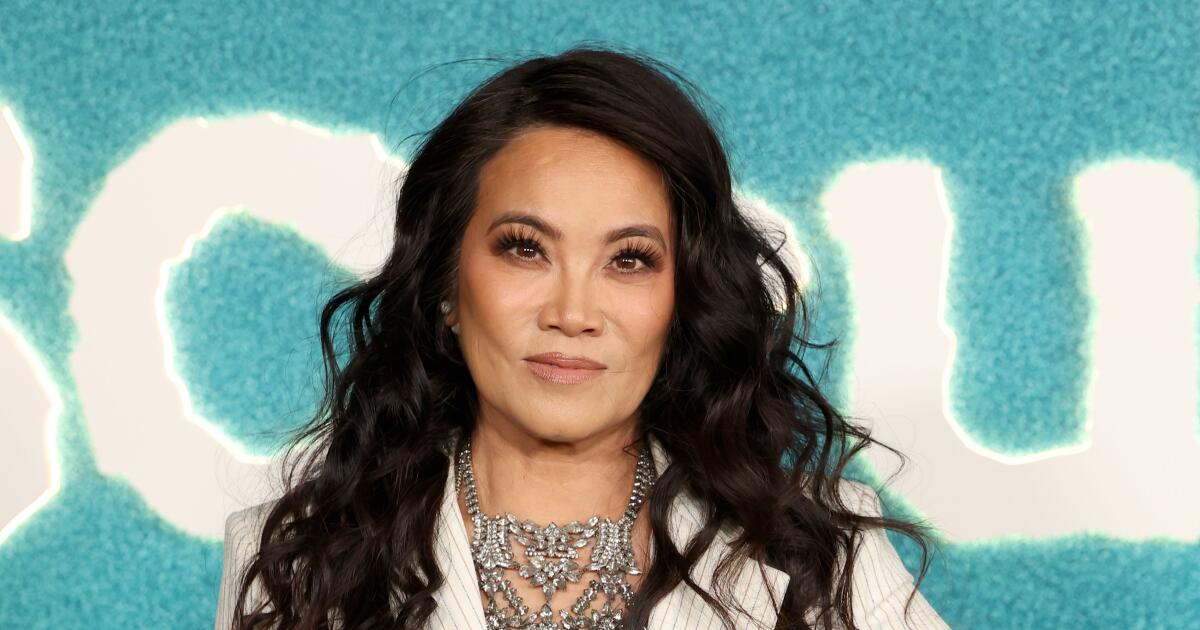
‘Dr. Pimple Popper’ Sandra Lee had a stroke last fall. Here’s how the TV doc is bouncing back
-

 Politics6 days ago
Trump blasts Spanberger ahead of Virginia meetings, says state faces tax base exodus like New York, California
-

 Health1 week ago
Woman discovers missing nose ring traveled to her lungs, causing month-long cough
-

 San Francisco, CA5 days ago
President Trump terminates Presidio Trust