Business
TikTok and Government Clash in Last Round of Supreme Court Briefs


The two sides in the momentous clash at the Supreme Court over a measure that could shut down TikTok made their closing written arguments on Friday, sharply disputing China’s influence over the site and the role the First Amendment should play in evaluating the law.
Their briefs, filed on an exceptionally abbreviated schedule set last month by the justices, were part of a high-stakes showdown over the government’s insistence that ByteDance, TikTok’s parent company, sell the app’s operations in the United States or shut it down. The Supreme Court, in an effort to resolve the case before the law’s Jan. 19 deadline, will hear arguments at a special session next Friday.
The court’s ruling, which could come this month, will decide the fate of a powerful and pervasive cultural phenomenon that uses a sophisticated algorithm to feed a personalized array of short videos to users. TikTok has become, particularly for younger generations, a leading source of information and entertainment.
“Rarely if ever has the court confronted a free-speech case that matters to so many people,” a brief filed Friday on behalf of a group of TikTok users said. “170 million Americans use TikTok on a regular basis to communicate, entertain themselves, and follow news and current events. If the government prevails here, users in America will lose access to the platform’s billions of videos.”
The briefs made only glancing or indirect references to President-elect Donald J. Trump’s unusual request last week that the Supreme Court temporarily block the law so that he can address the matter once he takes office.
The deadline set by the law for TikTok to be sold or shut down is Jan. 19, the day before Mr. Trump’s inauguration.
“This unfortunate timing,” his brief said, “interferes with President Trump’s ability to manage the United States’ foreign policy and to pursue a resolution to both protect national security and save a social-media platform that provides a popular vehicle for 170 million Americans to exercise their core First Amendment rights.”
The law allows the president to extend the deadline for 90 days in limited circumstances. But that provision does not appear to apply, as it requires the president to certify to Congress that there has been significant progress toward a sale backed by “relevant binding legal agreements.”
TikTok’s brief stressed that the First Amendment protects Americans’ access to the speech of foreign adversaries even if it is propaganda. The alternative to outright censorship, they wrote, is a legal requirement that the source of the speech be disclosed.
“Disclosure is the time-tested, least-restrictive alternative to address a concern the public is being misled about the source or nature of speech received — including in the foreign-affairs and national-security contexts,” TikTok’s brief said.
The users’ brief echoed the point. “The most our customs and case law permit,” it said, “is a requirement to disclose foreign influence, so the people have full information to decide what to believe.”
The government said that approach would not work. “Such a generic, standing disclosure would be patently ineffective,” Elizabeth B. Prelogar, the U.S. solicitor general, wrote on Friday.
In a brief filed last week in the case, TikTok v. Garland, No. 24-656, the government said foreign propaganda may be addressed without violating the Constitution.
“The First Amendment would not have required our nation to tolerate Soviet ownership and control of American radio stations (or other channels of communication and critical infrastructure) during the Cold War,” the brief said, “and it likewise does not require us to tolerate ownership and control of TikTok by a foreign adversary today.”
The users’ brief disputed that statement. “In fact,” the brief said, “the United States tolerated the publication of Pravda — the prototypical tool of Soviet propaganda — in this country at the height of the Cold War.”
TikTok itself said the government was wrong to fault it for its failure to “squarely deny” an assertion that “ByteDance has engaged in censorship or manipulated content on its platforms at the direction of” the Chinese government.
Censorship is “a loaded term,” TikTok’s brief said. In any event, the brief added, “petitioners do squarely deny that TikTok has ever removed or restricted content in other countries at China’s request.”



Singer-songwriter FKA twigs is suing her ex-boyfriend, actor Shia LaBeouf, claiming that he is trying to “silence” her from speaking out against sexual abuse through the use of an “unlawful” nondisclosure agreement.
The complaint, filed in Los Angeles Superior Court on Wednesday, seeks a court order to prohibit LeBeouf from enforcing sections of an NDA which Tahliah Barnett — the Grammy Award-winning singer’s legal name — says violates California law.
“Shia LaBeouf has tried to control Tahliah Barnett for the better part of a decade,” the filing states.
“This action was taken in response to Mr. LaBeouf’s attempt to bully and intimidate twigs through a frivolous and unlawful secret arbitration he filed against her in December in which he sought to extract money from her,” said the singer’s attorney Mathew Rosengart, national co-chair of media & entertainment litigation at Greenberg Traurig in Century City, in a statement.
Rosengart added that twigs “refuses to be bullied anymore. She is instead standing up for herself and other survivors of sexual abuse who have improperly been silenced. This is the unusual case that is not about money but about justice and upholding and enforcing California law and policy designed to protect survivors by nullifying illegal NDAs.”
LaBeouf’s attorney Shawn Holley of Kinsella Holley Iser Kump Steinsapir denied the claims.
“When Ms. Barnett and Mr. LaBeouf both decided to resolve their differences and move on with their lives, no one forced her or ‘bullied’ her to stay silent,” Holley said in a statement.
“As a woman with agency, she decided to settle the case and accepted money to dismiss her lawsuit.”
The suit arises out of litigation that Barnett brought against LaBeouf in 2020, when she accused the actor of “physical, sexual, and mental abuse” during their relationship,” as well as “knowingly infect[ing]” Barnett with a sexually transmitted disease.” That case was settled last year.
In a response to the suit, the actor told the New York Times that “many of these allegations are not true.”
But he added, “I am not in the position to defend any of my actions. I owe these women the opportunity to air their statements publicly and accept accountability for those things I have done.”
In the statement Thursday, Holley added that the claim of sexual battery “was disputed, as were the other claims made in Ms. Barnett’s lawsuit.”
Shia LaBeouf poses for photographers upon arrival at the premiere of the film “The Phoenician Scheme” at the 78th annual Cannes Film Festival May 18, 2025.
(Lewis Joly / Invision / AP)
According to the new lawsuit, LaBeouf filed a secret arbitration complaint and “improperly sought exorbitant monies” from Barnett last December, claiming she had breached their agreement by violating its nondisclosure provisions after she gave an interview to the Hollywood Reporter in October.
In the interview, Barnett was asked if she felt safe and answered that as a woman of color in the entertainment industry, she “wouldn’t feel safe” and discussed her involvement with organizations that support survivors, saying, “I think it’s less about me at this point and more about looking forward. Just, you know, moving on with my life.”
The agreement Barnett reached with LaBeouf “contained a deficient and unlawful NDA that is unenforceable,” under California’s Stand Together Against Non-Disclosure Act, according to the complaint. The law forbids NDAs from being used to silence victims of sexual misconduct.
“As the California Legislature has made clear, survivors should have the right to tell their stories without fear or coercion, and California law does not and must not allow abusers and bullies to silence them through secret agreements containing unconscionable, unlawful gag orders,” the complaint states.
The lawsuit further alleges that while LaBeouf has sought to prohibit Barnett from talking about her abuse, he has “repeatedly brought up his relationship with Ms. Barnett—on his own and without being directly asked about her—materially breaching the very confidentiality provisions that he had just contended were fully enforceable against Ms. Barnett.”
While the actor agreed to drop the arbitration in February, he has “refused to acknowledge, however, that the NDA provisions are illegal and unenforceable,” the filing states.
The latest round in LaBeouf’s legal battle with Barnett comes just weeks after a New Orleans judge ordered the actor to begin substance abuse treatment and undergo weekly drug testing after he was arrested on suspicion of assaulting two men in the city’s French Quarter. LaBeouf was also required to post $100,000 bond as part of the conditions of his release. He was charged with two counts of simple battery, the Associated Press reported.

Warner Bros. Discovery shareholders will soon render a verdict on Hollywood’s biggest merger in nearly a decade.
Warner has set an April 23 special meeting of stockholders to vote on the company’s proposed sale, for $31-a-share, to the Larry Ellison family’s Paramount Skydance.
The $111-billion deal is expected to reshape the entertainment industry by combining two historic film studios, dozens of prominent TV networks, including CBS, HBO, HGTV and Comedy Central, streaming services and two news organizations, CNN and CBS News. The tie-up would give Paramount such beloved characters as Batman, Wile E. Coyote, and Harry Potter, television shows including “Hacks,” and “The Pitt,” and a rich vault of movies that includes “Casablanca,” and “One Battle After Another.”
The $31-a-share offer represents a 63% increase over Paramount Chairman David Ellison’s initial $19-a-share proposal for the company in mid-September, and a 147% premium over Warner’s stock’s trading levels prior to news of Ellison’s interest.
“This transaction is the culmination of the Board’s robust process to unlock the full value of our world-class portfolio,” Warner Bros. Discovery Chief Executive David Zaslav said Thursday in a statement. “We are working closely with Paramount to close the transaction and deliver its benefits to all stakeholders.”
Paramount hopes to finalize the takeover by September. It has been working to secure the blessing of government regulators in the U.S. and abroad.
Should those regulatory deliberations stretch beyond September, Paramount will pay shareholders a so-called “ticking fee” — an extra 25 cents a share for every 90-day-period until the deal closes.
The transaction will leave the combined company with nearly $80-billion in debt, a sum that experts say will lead to significant cost cuts.
Paramount Skydance Chairman and CEO David Ellison attends President Trump’s State of the Union address three days before clinching his hard-fought Warner Bros. Discovery deal.
(Mark Schiefelbein / Associated Press)
For weeks it appeared that Netflix would scoop up Warner Bros.
Netflix initially won the bidding war in early December with a $27.75 offer for the studios and streaming services, including HBO Max. But Ellison refused to throw in the towel. He and his team continued to lobby shareholders, politicians and Warner board members, insisting their deal for the entire company, including the cable channels, was superior and they had a more certain path to win regulatory approval.
The Ellison family is close to President Trump. This week, Trump named Larry Ellison to a proposed White House council on technology issues, including artificial intelligence.
Warner’s board, under pressure, reopened the bidding in late February to allow Paramount to make its case. Warner board members ultimately concluded that Paramount’s bid topped the one from Netflix and the streamer bowed out. Paramount paid a $2.8-billion termination fee to Netflix and signed the merger agreement on Feb. 27.
Warner’s board is advising its shareholders to approve the Paramount deal. Failure to cast a vote will be the same as a no-vote, according to the company’s proxy.
Warner’s largest shareholders include the Vanguard Group, BlackRock, Inc. and State Street Corp.
Zaslav has significant stock and options holdings, worth about $517 million at the deal’s close, according to the proxy.
The regulatory filing also disclosed that a mysterious bidder had surfaced at the auction’s 11th hour.
A firm called Nobelis Capital, Pte., reportedly based in Singapore, alerted Warner on Feb. 18 that it was willing to pay $32.50 a share in cash.
The firm said it had placed $7.5 billion into an escrow account. However, Warner’s bankers “could not find the purported deposit at J.P. Morgan,” according to the proxy. And there was no evidence that Nobelis had any assets or any “equity or debt financing” lined up, Warner said, adding that it “took no further action with respect to the Nobelis proposal.”

new video loaded: How Kharg Island May Change the Trajectory of the Iran War
By Peter Eavis, Gilad Thaler, Edward Vega, Lauren Pruitt and Joey Sendaydiego
March 25, 2026
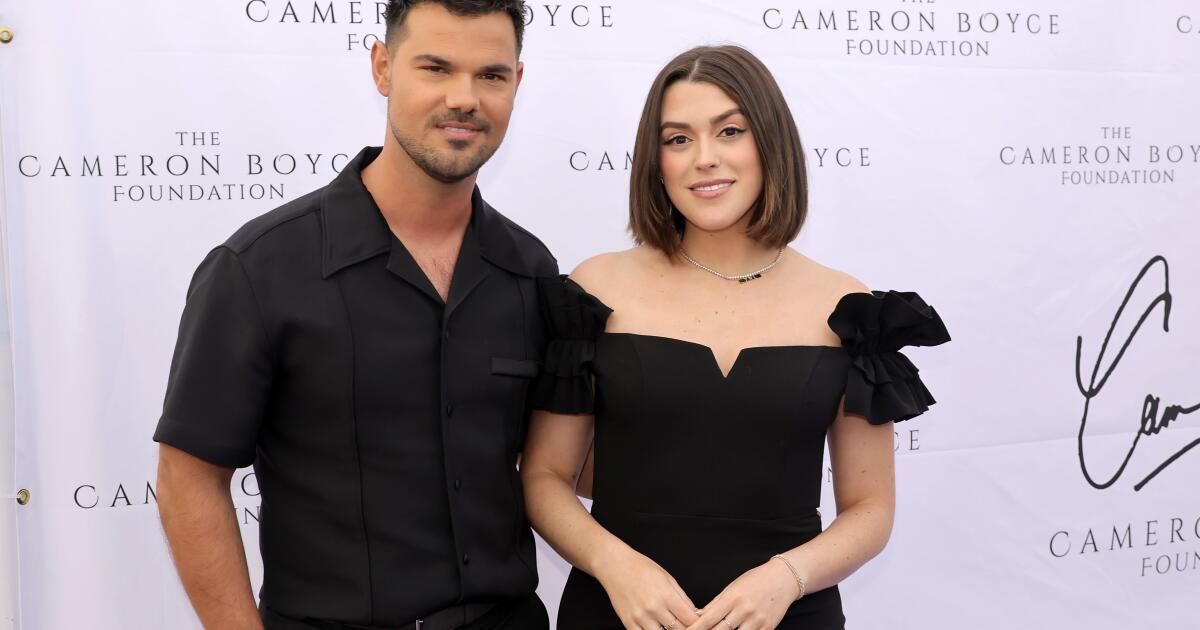
The two Taylor Lautners announce a baby Lautner is on the way

L.A. Affairs: Our night together reminded me of what I’d been missing this entire time

Trump jokes, rants, talks price of pens as Iran war enters fifth week

High school softball top 20 rankings for the Southland
Access Error

Florida High School Football Rankings: Top 25 teams – Oct. 21

How old is Bo Nix? What to know about Oregon quarterback ahead of 2024 NFL Draft

Cleary's 21 help Le Moyne down Central Connecticut State 69-64 in OT

99th annual Pony Swim held in Virginia

Indiana Members Credit Union announced as new anchor tenant at Bottleworks District

US diplomat Marco Rubio denounces settler violence, tolls in Hormuz strait

Iran-linked hackers have breached FBI Director Kash Patel’s personal emails | CNN Politics

Live: CPAC 2026 Day 2

Video: Will ICE Change Under Its New Leader?

DHS shutdown breakthrough comes at cost for Republicans as funding fights nears end
-

 Detroit, MI1 week ago
Drummer Brian Pastoria, longtime Detroit music advocate, dies at 68
-

 Movie Reviews1 week ago
‘Youth’ Twitter review: Ken Karunaas impresses audiences; Suraj Venjaramoodu adds charm; music wins praise | – The Times of India
-

 Sports6 days ago
IOC addresses execution of 19-year-old Iranian wrestler Saleh Mohammadi
-

 New Mexico5 days ago
Clovis shooting leaves one dead, four injured
-
 Business1 week ago
Disney’s new CEO says his focus is on storytelling and creativity
-

 Technology5 days ago
YouTube job scam text: How to spot it fast
-

 Tennessee4 days ago
Tennessee Police Investigating Alleged Assault Involving ‘Reacher’ Star Alan Ritchson
-

 Texas1 week ago
How to buy Houston vs. Texas A&M 2026 March Madness tickets