Business
Russell Simmons sued for defamation by former Def Jam executive who accused him of sexual assault

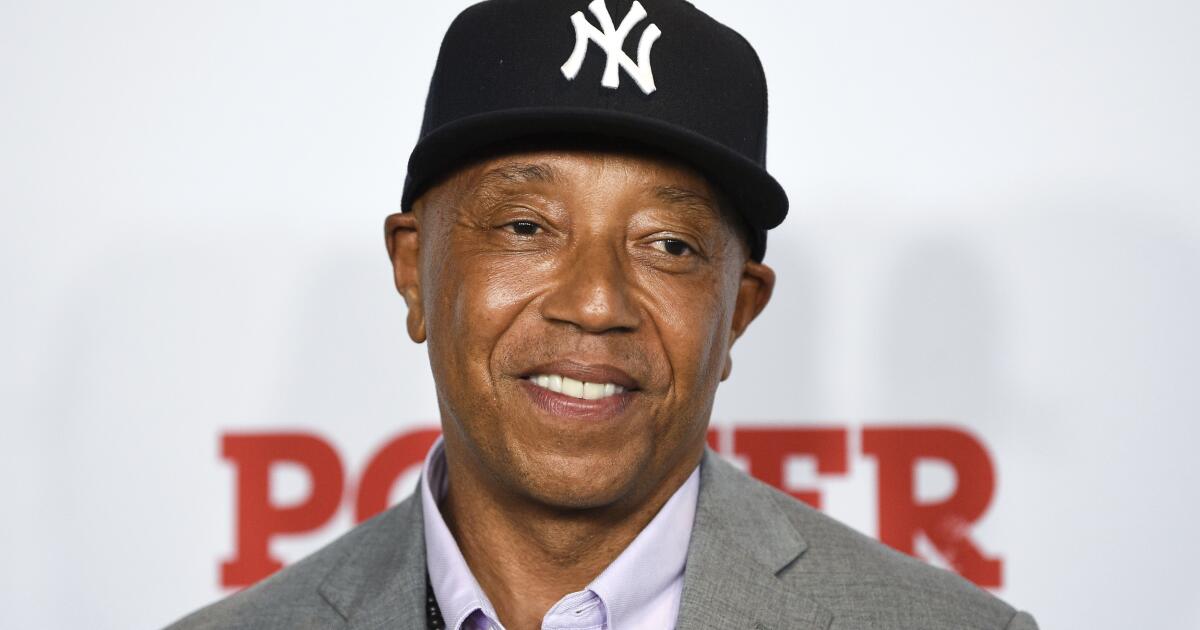
Hip-hop impresario and entrepreneur Russell Simmons is being sued for defamation by Drew Dixon, a former Def Jam Recordings executive who also has accused Simmons of sexual assault and harassment during her time at the label in the 1990s.
The complaint, filed Thursday in New York Supreme Court, claims that last December Simmons “subjected Ms. Dixon to public ridicule, contempt, and disgrace by, among other things, calling Ms. Dixon a liar in published statements with the malicious intent of discrediting and further damaging Ms. Dixon worldwide.” The suit further alleges that Simmons has “continued this pattern of defamation” through January of this year.
A representative for Simmons could not immediately be reached for comment. Simmons has previously denied Dixon’s and other accusers’ allegations.
It was the second lawsuit filed against Simmons this week.
On Tuesday, another woman, identified as a Jane Doe, sued Russell for rape in a separate complaint filed in U.S. District Court for the Southern District of New York. The accuser, who said she worked as a senior music executive at Def Jam, alleged that she was “sexually harassed, assaulted, sexually battered, and raped” by Simmons when she worked at the label during the 1990s.
“I have never engaged in nonconsensual sex. I would not, did not, and never will,” said Simmons in a statement to The Times in regards to the Jane Doe suit. A representative for Simmons said that the music mogul “has voluntarily taken numerous lie detector tests all of which support his statement.”
In 1994, Dixon, then 23, began working at Def Jam as director of A&R (artists and repertoire), in what she called “her dream job,” according to the suit.
At the label, Dixon garnered immediate success, conceiving and spearheading chart-topping songs such as “I’ll Be There for You — You’re All I Need” by Method Man, featuring Mary J. Blige.
But Dixon claims she was subjected to “persistent, nightmarish sexual harassment that culminated in a violent sexual assault by the man she once admired,” Simmons, her boss and co-founder of Def Jam.
Simmons “fostered a chaotic workplace environment where he thrived on the sexual exploitation of individuals who were dependent on access to his opinion and approval in order to perform their jobs and succeed in their careers,” states the complaint.
According to her suit, Dixon claims Simmons’ abuse began as soon as she started working at the label.
Dixon alleges that despite constantly rebuffing his alleged advances, Simmons “routinely attempted to grope her and kiss her.” Once he “forcibly pushed” her into a broom closet at a restaurant where he tried to kiss her, the suit says. Dixon alleges that Simmons “regularly exposed his erect penis” and “talked about how much she turned him on.”
Then she alleges that in 1995, Simmons raped her in his Manhattan apartment after she ran into him on the street. Dixon told him she was going to an ATM and he “ordered her into his car.” Once they arrived at his apartment, she said he asked her to come upstairs to listen to a new CD.
However, once inside his apartment, when Dixon opened the CD tray, she found it was empty. “Moments later Mr. Simmons grabbed Ms. Dixon from behind. He was naked except for a condom. He proceeded to pin her down on the bed and violently rape her,” according to the suit.
After the alleged assault, Dixon resigned from Def Jam.
According to Dixon’s complaint, Simmons has engaged in a “concerted and malicious campaign to discredit” her “and to so damage her reputation that Ms. Dixon’s factual reporting of what he did to her would not be credited.”
Dixon cites several statements Simmons made in a podcast interview with journalist Graham Bensinger that she claims reference her own public comments concerning her abuse allegations.
For instance, during the podcast, Simmons said, “Yeah, [rape is] a serious word, but I think they’ve changed the meaning,” according to the complaint.
“Ms. Dixon has taken enough abuse,” said Dixon’s lawyer Sigrid McCawley in a statement. “Not only was she violently raped by Russell Simmons — profoundly disrupting her personal and professional life — but after she tried to move forward and heal, he then further abused her by publicly proclaiming that she lied about the rape in search of ‘fame.’ Mr. Simmons has used his public platform to re-traumatize and terrorize Ms. Dixon, and the time has now come to hold him accountable for his defamatory statements and to end this cycle of abuse.”
Last November Dixon filed suit against music executive Antonio “L.A.” Reid for sexual assault and harassment, under the Adult Survivors Act.
After Dixon left Def Jam, she went to Arista, where she was vice president of A&R. Reid ran Arista and Epic Records.
In the suit, filed in federal district court in Manhattan, Dixon alleges that Reid “sexually harassed Ms. Dixon and refused to allow her to succeed unless she acquiesced to his demand to be alone and in close proximity to her, where he would create the opportunity to sexually assault her on two separate occasions.”
At the time of the filing, a representative for Reid did not respond to requests for comment.
Dixon first came forward with her abuse allegations against Simmons and Reid in a 2017 New York Times article. She was one of three women who accused Simmons of rape, claiming that he engaged in a pattern of sexual assault and harassment that derailed their careers and damaged their self-confidence.
Three years later, Dixon and other women of color were featured in the documentary “On the Record,” which further detailed abuse claims against Simmons and others in the record industry.
The film premiered at the Sundance Film Festival under a cloud of controversy.
Weeks before Sundance, Oprah Winfrey, one of “On the Record’s” producers, pulled her support from the film and removed her executive producer title from the project. Winfrey asserted that her decision was based on discussions with several individuals who found the film problematic and raised questions about Dixon’s account.
The move quashed the documentary’s distribution deal with Apple TV+. It is currently streaming on HBO Max.
Staff writers August Brown and Alexandra Del Rosario contributed to this report.



Welcome to the age of AI hacking, in which the right prompts make amateurs into master hackers.
A group of cybercriminals recently used off-the-shelf artificial intelligence chatbots to steal data on nearly 200 million taxpayers. The bots provided the code and ready-to-execute plans to bypass firewalls.
Although they were explicitly programmed to refuse to help hackers, the bots were duped into abetting the cybercrime.
According to a recent report from Israeli cybersecurity firm Gambit Security, hackers last month used Claude, the chatbot from Anthropic, to steal 150 gigabytes of data from Mexican government agencies.
Claude initially refused to cooperate with the hacking attempts and even denied requests to cover the hackers’ digital tracks, the experts who discovered the breach said. The group pummelled the bot with more than 1,000 prompts to bypass the safeguards and convince Claude they were allowed to test the system for vulnerabilities.
AI companies have been trying to create unbreakable chains on their AI models to restrain them from helping do things such as generating child sexual content or aiding in sourcing and creating weapons. They hire entire teams to try to break their own chatbots before someone else does.
But in this case, hackers continuously prompted Claude in creative ways and were able to “jailbreak” the chatbot to assist them. When they encountered problems with Claude, the hackers used OpenAI’s ChatGPT for data analysis and to learn which credentials were required to move through the system undetected.
The group used AI to find and exploit vulnerabilities, bypass defences, create backdoors and analyze data along the way to gain control of the systems before they stole 195 million identities from nine Mexican government systems, including tax records, vehicle registration as well as birth and property details.
AI “doesn’t sleep,” Curtis Simpson, chief executive of Gambit Security, said in a blog post. “It collapses the cost of sophistication to near zero.”
“No amount of prevention investment would have made this attack impossible,” he said.
Anthropic did not respond to a request for comment. It told Bloomberg that it had banned the accounts involved and disrupted their activity after an investigation.
OpenAI said it is aware of the attack campaign carried out using Anthropic’s models against the Mexican government agencies.
“We also identified other attempts by the adversary to use our models for activities that violate our usage policies; our models refused to comply with these attempts,” an OpenAI spokesperson said in a statement. “We have banned the accounts used by this adversary and value the outreach from Gambit Security.”
Instances of generative AI-assisted hacking are on the rise, and the threat of cyberattacks from bots acting on their own is no longer science fiction. With AI doing their bidding, novices can cause damage in moments, while experienced hackers can launch many more sophisticated attacks with much less effort.
Earlier this year, Amazon discovered that a low-skilled hacker used commercially available AI to breach 600 firewalls. Another took control of thousands of DJI robot vacuums with help from Claude, and was able to access live video feed, audio and floor plans of strangers.
“The kinds of things we’re seeing today are only the early signs of the kinds of things that AIs will be able to do in a few years,” said Nikola Jurkovic, an expert working on reducing risks from advanced AI. “So we need to urgently prepare.”
Late last year, Anthropic warned that society has reached an “inflection point” in AI use in cybersecurity after disrupting what the company said was a Chinese state-sponsored espionage campaign that used Claude to infiltrate 30 global targets, including financial institutions and government agencies.
Generative AI also has been used to extort companies, create realistic online profiles by North Korean operatives to secure jobs in U.S. Fortune 500 companies, run romance scams and operate a network of Russian propaganda accounts.
Over the last few years, AI models have gone from being able to manage tasks lasting only a few seconds to today’s AI agents working autonomously for many hours. AI’s capability to complete long tasks is doubling every seven months.
“We just don’t actually know what is the upper limit of AI’s capability, because no one’s made benchmarks that are difficult enough so the AI can’t do them,” said Jurkovic, who works at METR, a nonprofit that measures AI system capabilities to cause catastrophic harm to society.
So far, the most common use of AI for hacking has been social engineering. Large language models are used to write convincing emails to dupe people out of their money, causing an eight-fold increase in complaints from older Americans as they lost $4.9 billion in online fraud in 2025.
“The messages used to elicit a click from the target can now be generated on a per-user basis more efficiently and with fewer tell-tale signs of phishing,” such as grammatical and spelling errors, said Cliff Neuman, an associate professor of computer science at USC.
AI companies have been responding using AI to detect attacks, audit code and patch vulnerabilities.
“Ultimately, the big imbalance stems from the need of the good-actors to be secure all the time, and of the bad-actors to be right only once,” Neuman said.
The stakes around AI are rising as it infiltrates every aspect of the economy. Many are concerned that there is insufficient understanding of how to ensure it cannot be misused by bad actors or nudged to go rogue.
Even those at the top of the industry have warned users about the potential misuse of AI.
Dario Amodei, the CEO of Anthropic, has long advocated that the AI systems being built are unpredictable and difficult to control. These AIs have shown behaviors as varied as deception and blackmail, to scheming and cheating by hacking software.
Still, major AI companies — OpenAI, Anthropic, xAI, and Google — signed contracts with the U.S. government to use their AIs in military operations.
This last week, the Pentagon directed federal agencies to phase out Claude after the company refused to back down on its demand that it wouldn’t allow its AI to be used for mass domestic surveillance and fully autonomous weapons.
“The AI systems of today are nowhere near reliable enough to make fully autonomous weapons,” Amodei told CBS News.

The iPic dine-in movie theater chain has filed for Chapter 11 bankruptcy protection and intends to pursue a sale of its assets, citing the difficult post-pandemic theatrical market.
The Boca Raton, Fla.-based company has 13 locations across the U.S., including in Pasadena and Westwood, according to a Feb. 25 filing in U.S. Bankruptcy Court in the Southern District of Florida, West Palm Beach division.
As part of the bankruptcy process, the Pasadena and Westwood theaters will be permanently closed, according to WARN Act notices filed with the state of California’s Employment Development Department.
The company came to its conclusion after “exploring a range of possible alternatives,” iPic Chief Executive Patrick Quinn said in a statement.
“We are committed to continuing our business operations with minimal impact throughout the process and will endeavor to serve our customers with the high standard of care they have come to expect from us,” he said.
The company will keep its current management to maintain day-to-day operations while it goes through the bankruptcy process, iPic said in the statement. The last day of employment for workers in its Pasadena and Westwood locations is April 28, according to a state WARN Act notice. The chain has 1,300 full- and part-time employees, with 193 workers in California.
The theatrical business, including the exhibition industry, still has not recovered from the pandemic’s effect on consumer behavior. Last year, overall box office revenue in the U.S. and Canada totaled about $8.8 billion, up just 1.6% compared with 2024. Even more troubling is that industry revenue in 2025 was down 22.1% compared with pre-pandemic 2019’s totals.
IPic noted those trends in its bankruptcy filing, describing the changes in consumer behavior as “lasting” and blaming the rise of streaming for “fundamentally” altering the movie theater business.
“These industry shifts have directly reduced box office revenues and related ancillary revenues, including food and beverage sales,” the company stated in its bankruptcy filing.
IPic also attributed its decision to rising rents and labor costs.
The company estimated it owed about $141,000 in taxes and about $2.7 million in total unsecured claims. The company’s assets were valued at about $155.3 million, the majority of which coming from theater equipment and furniture. Its liabilities totaled $113.9 million.
The chain had previously filed for bankruptcy protection in 2019.

In an expansion of its business of processing pharmaceuticals in Earth’s orbit, Varda Space Industries is renting a large El Segundo plant where toy manufacturer Mattel used to design Hot Wheels and Barbie dolls.
The plant in El Segundo’s aerospace corridor will be an extension of Varda Space Industries’ headquarters in a much smaller building on nearby Aviation Boulevard.
Varda will occupy a 205,443-square-foot industrial and office campus at 2031 E. Mariposa Ave., which will give it additional capacity to manufacture spacecraft at scale, the company said.
Originally built in the 1940s as an aircraft facility, the complex has a history as part of aerospace and defense industries that have long shaped the South Bay and is near a host of major defense and space contractors. It is also close to Los Angeles Air Force Base, headquarters to the Space Systems Command.
Workers test AstroForge’s Odin asteroid probe, which was lost in space after launch this year.
(Varda Space Industries)
Varda is one of a new generation of aerospace startups that have flourished in Southern California and the South Bay over the last several years, particularly in El Segundo, often with ties to SpaceX.
Elon Musk’s company, founded in 2002 in El Segundo, has revolutionized the industry with reusable rockets that have radically lowered the cost of lifting payloads into space. Though it has moved its headquarters to Texas, SpaceX retains large-scale operations in Hawthorne.
Varda co-founder and Chief Executive Will Bruey is a former SpaceX avionics engineer, and the company’s spacecraft are launched on SpaceX’s workhorse Falcon 9 rockets from Vandenberg Space Force Base in Santa Barbara County.
Varda makes automated labs that look like cylindrical desktop speakers, which it sends into orbit in capsules and satellite platforms it also builds. There, in microgravity, the miniature labs grow molecular crystals that are purer than those produced in Earth’s gravity for use in pharmaceuticals.
It has contracts with drug companies and also the military, which tests technology at hypersonic speeds as the capsules return to Earth.
Its fifth capsule was launched in November and returned to Earth in late January; its next mission is set in the coming weeks. Varda has more than 10 missions scheduled on Falcon 9s through 2028.
For the last several decades, the Mariposa Avenue property served as the research and development center for Mattel Toys. El Segundo has also long been a center for the toy industry as companies like to set up shop in the shadow of Mattel.
The Mattel facility “has always been an exceptional property with a legacy tied to aerospace innovation, and leasing to Varda Space Industries feels like a natural continuation of that story,” said Michael Woods, a partner at GPI Cos., which owns the property.
“We are proud to support a company that is genuinely pushing the boundaries of what’s possible, and are excited to watch Varda grow and thrive here in El Segundo,” Woods said.
As one of the country’s most active hubs of aerospace and defense innovation, El Segundo has seen its industrial property vacancy fall to 3.4% on demand from space companies, government contractors and technology startups, real estate brokerage CBRE said.
Successful startups often have to leave the neighborhood when they want to expand, real estate broker Bob Haley of CBRE said. The 9-acre Mattel facility was big enough to keep Varda in the city.
Last year, Varda subleased about 55,000 square feet of lab space from alternative protein company Beyond Meat at 888 Douglas St. in El Segundo, which it started moving into in June.
Varda will get the keys to its new building in December and spend four to eight months building production and assembly facilities as it ramps up operations. By the end of next year, it expects to have constructed 10 more spacecraft.
In the future, Varda could consolidate offices there, given its size. Currently, though, the plan is to retain all properties, creating a campus of three buildings within a mile of one another that are served by the company’s transportation services, Chief Operating Officer Jonathan Barr said.
“We already have Varda-branded shuttles running up and down Aviation Boulevard,” he said.

Gas prices soar nearly another dime overnight

Illegal dumping plagues closed Milwaukee Pick ‘n Save

Thieves steal dozens of bikes meant for underprivileged kids from Atlanta nonprofit

Minneapolis City Council votes to extend eviction notice period

Chase Sexton out for at least another round, Indianapolis Supercross, with practice injuries

Florida High School Football Rankings: Top 25 teams – Oct. 21

Cleary's 21 help Le Moyne down Central Connecticut State 69-64 in OT

How old is Bo Nix? What to know about Oregon quarterback ahead of 2024 NFL Draft

99th annual Pony Swim held in Virginia

Indiana Members Credit Union announced as new anchor tenant at Bottleworks District

Map: 4.9-Magnitude Earthquake Shakes Louisiana

Paxton vows he’s ‘staying in this race’ even if Trump backs Cornyn in Texas GOP clash

Which Kurdish groups is the US rallying to fight Iran?

Man accused of plot to assassinate Trump testifies Iran pressured him, says Biden and Haley were other possible targets

DHS defends McLaughlin against allegations husband’s company profited millions from ad contracts: ‘Baseless’
-

 World1 week ago
Exclusive: DeepSeek withholds latest AI model from US chipmakers including Nvidia, sources say
-

 Massachusetts1 week ago
Mother and daughter injured in Taunton house explosion
-

 Wisconsin4 days ago
Setting sail on iceboats across a frozen lake in Wisconsin
-

 Maryland5 days ago
AM showers Sunday in Maryland
-

 Massachusetts3 days ago
Massachusetts man awaits word from family in Iran after attacks
-

 Florida5 days ago
Florida man rescued after being stuck in shoulder-deep mud for days
-

 Denver, CO1 week ago
10 acres charred, 5 injured in Thornton grass fire, evacuation orders lifted
-

 Oregon6 days ago
2026 OSAA Oregon Wrestling State Championship Results And Brackets – FloWrestling