Business
Ocean technology hub AltaSea blooms on San Pedro waterfront

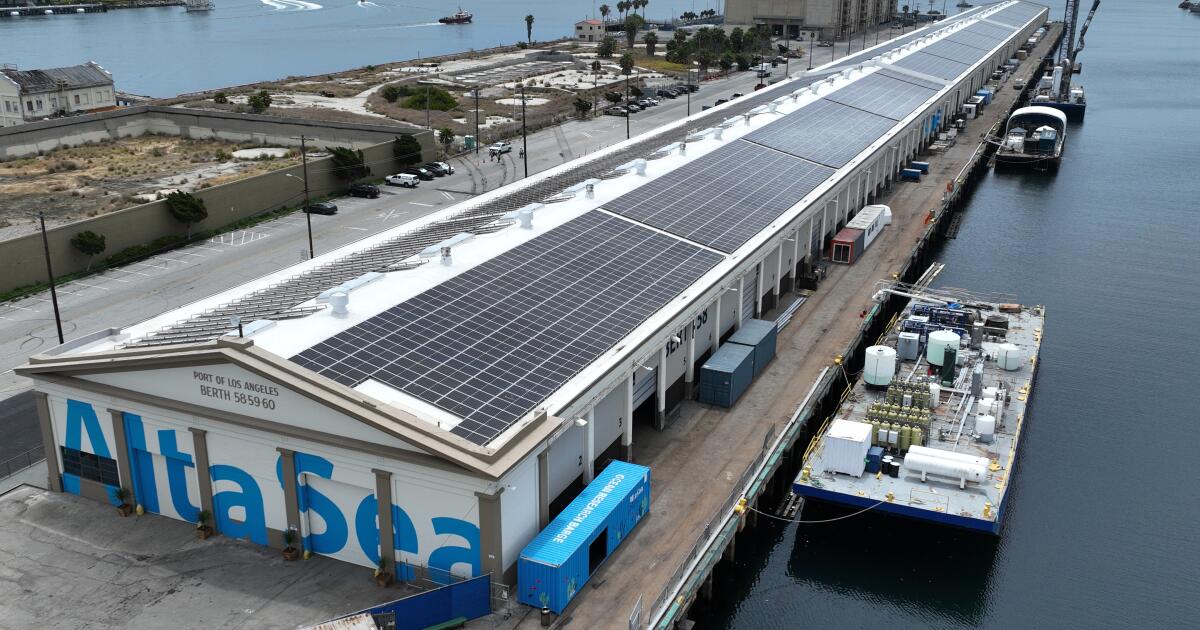
A moon shot to make Southern California an international leader in the “blue economy” is taking shape in San Pedro as a $30-million renovation of three historic waterfront warehouses nears completion.
AltaSea at the Port of Los Angeles, as the complex is known, is home to sea-centered businesses such as the headquarters of explorer Robert Ballard, who located the wrecks of the Titanic and the German battleship Bismarck. His research vessel the Nautilus docks there, as does Pacific Alliance, a vessel for farming mussels far out at sea.
On barges docked on AltaSea’s wharf, scientists from USC, UCLA and Caltech are developing methods of reducing ocean carbon dioxide and technology to scrub ships’ exhaust stacks. Other tenants in the former warehouses include startup firms that are building a new generation of remote undersea cameras and 3-D printers to build parts for offshore wind, wave and solar farms.
Jenny Cornuelle Krusoe, executive vice president and COO of AltaSea at the Port of Los Angeles.
(Allen J. Schaben / Los Angeles Times)
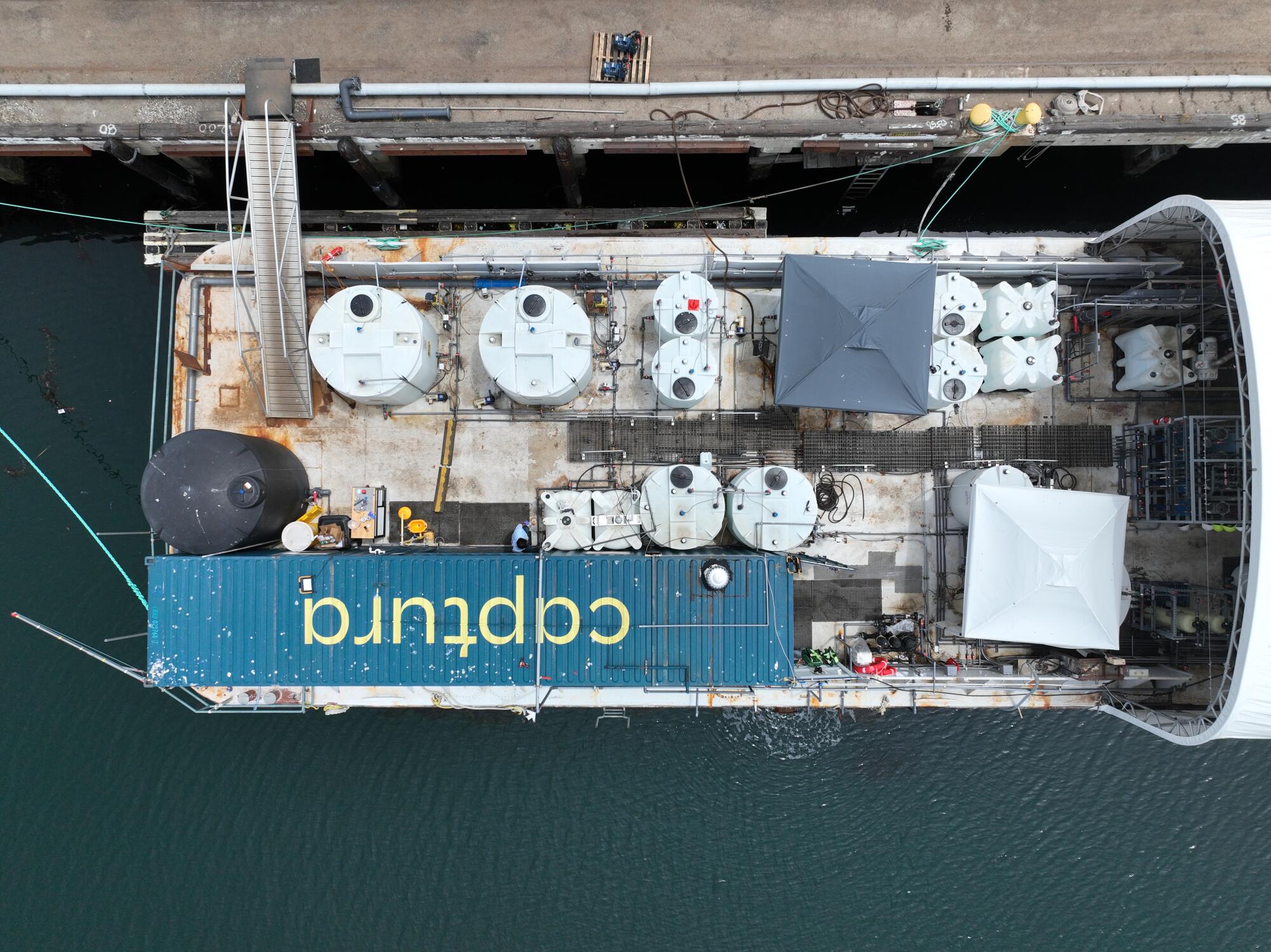
An aerial view of the Captura, a barge at AltaSea where crews monitor equipment used for pulling carbon dioxide from seawater.
(Allen J. Schaben / Los Angeles Times)
“AltaSea is education, research and business all working together,” said Jenny Krusoe, executive vice president and chief operating officer. The size and waterfront location, she added, make AltaSea “a unicorn piece of property that is basically made to be the mother ship for the blue economy.”
Mayor Karen Bass and others who played a part in AltaSea, including City Councilman Tim McOsker and Port of Los Angeles Executive Director Gene Seroka, are expected to officially open the facilities at a ceremony Wednesday.
AltaSea is bringing new purpose to a previously moribund wharf that once played a rich part in the evolution of Southern California.
In the early 20th century, Los Angeles merchants and city leaders set out to capture a share of the increased global shipping trade expected to pass through the Panama Canal, a link between the Atlantic and Pacific oceans that opened in 1914. They created a municipal wharf on the waterfront of what has become the sprawling Port of Los Angeles, with a long stretch of warehouses where ships were loaded and unloaded into trains, carts and trucks by burly longshoremen.
The growth of containerized shipping after World War II gradually rendered City Dock No. 1 obsolete for moving goods, and the wharf was little used for decades. By 2011, advocates, including port officials, saw it for what it was: a choice 35-acre site for a research center and tech companies focused on sustainable uses of the world’s oceans.
A key part of the mission of the nonprofit enterprise is to create jobs with pioneering companies. Among them is the nonprofit AltaSeads Conservancy, the largest aquaculture seed bank in the United States. Like their terrestrial counterparts, aquaculture seed banks are meant to preserve genetic diversity in plant life for the future. AltaSeads is also advancing the use of kelp as an easily grown resource.
“It’s a super versatile crop,” said scientist Emily Aguirre of AltaSeads, that can provide food for humans and livestock while removing carbon from the atmosphere. “It can be also be used to fertilize terrestrial agriculture, and it’s fantastic because if you grow it out in the ocean, you’re not taking up any land.”
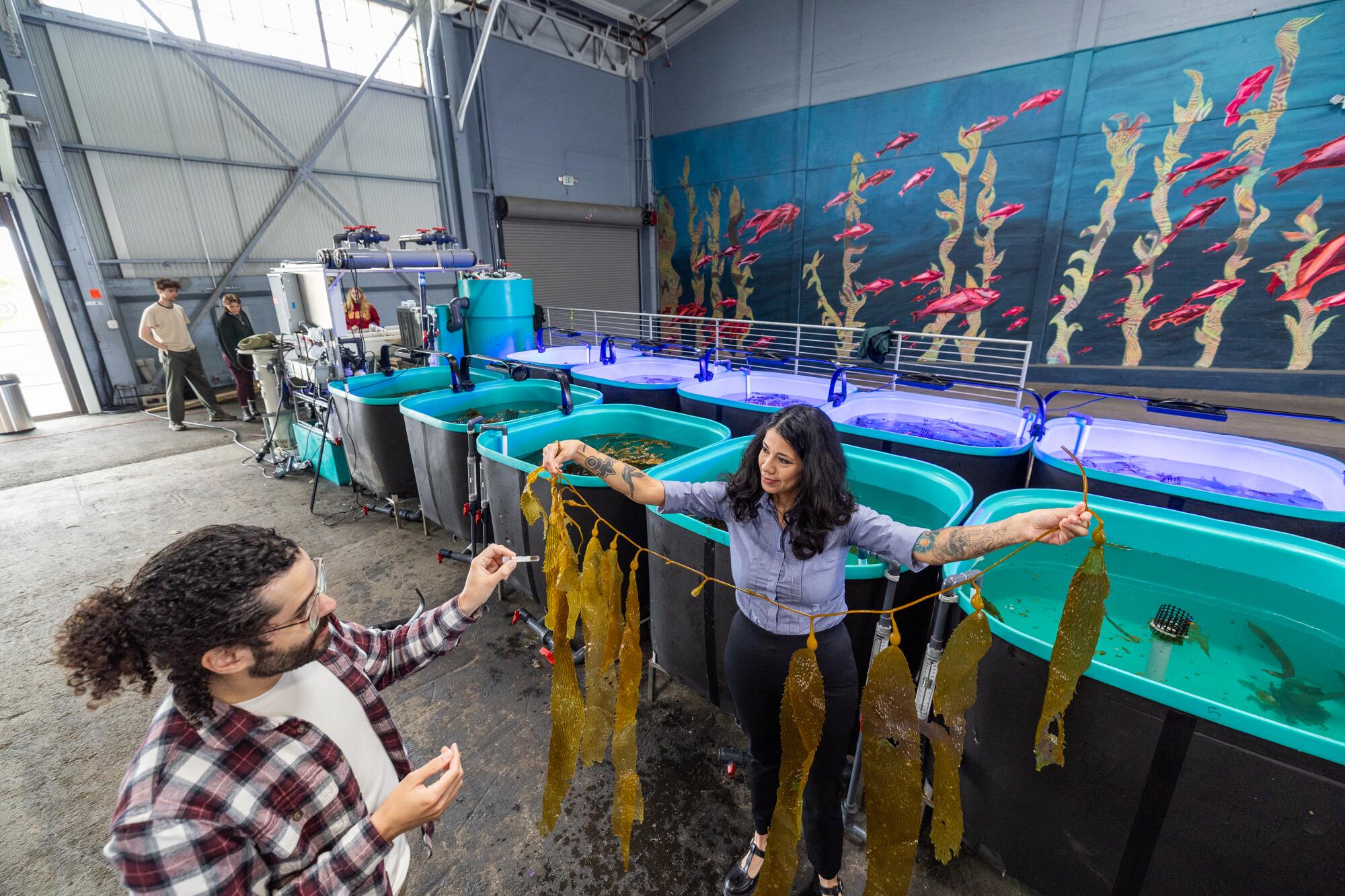
Michael Marty Rivera and Emily Aguirre of AltaSeads Conservancy monitor varieties of kelp in storage tanks.
(Allen J. Schaben / Los Angeles Times)
Kelp is also a source of algae that cuts methane emissions from cows, Aguirre said, and has many other food applications, including reducing freezer burn in ice cream.
Eco Wave Power, an Israel-based company, is set to install the first U.S. onshore wave energy pilot station in the coming months on the port’s Main Channel, next to AltaSea. The system of floaters attaches directly to preexisting structures — like breakwaters, wharfs and jetties — and produces energy from the constant motion of the waves. Another AltaSea business, CorPower Ocean, uses buoys and hydraulic pressure for energy production.
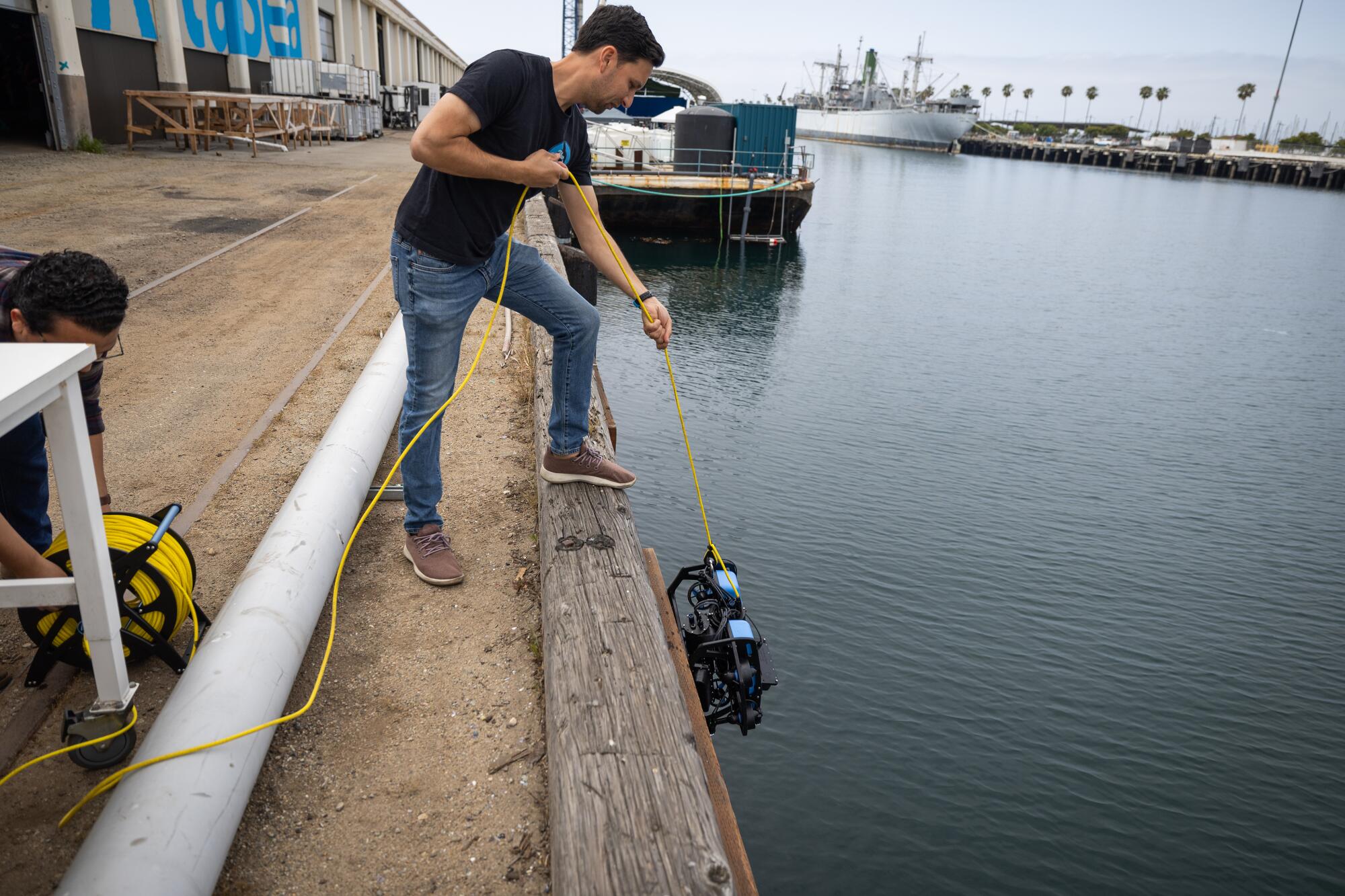
Rustom Jehangir, founder and CEO at Blue Robotics, demonstrates his BlueROV2, a high-performance remotely operated vehicle that can be used for inspections, research and adventuring.
(Allen J. Schaben / Los Angeles Times)
The figurative whale for AltaSea so far is Ballard, who set up shop at the aged docks several years ago and has captured public interest as a deep-sea explorer and scientific researcher. It’s his headquarters and home to his research and development.
AltaSea has an array of solar panels on the roof bigger than three football fields that generates 2.2 megawatts, enough to power 700 homes annually and more energy than the entire campus will need when it reaches full capacity.
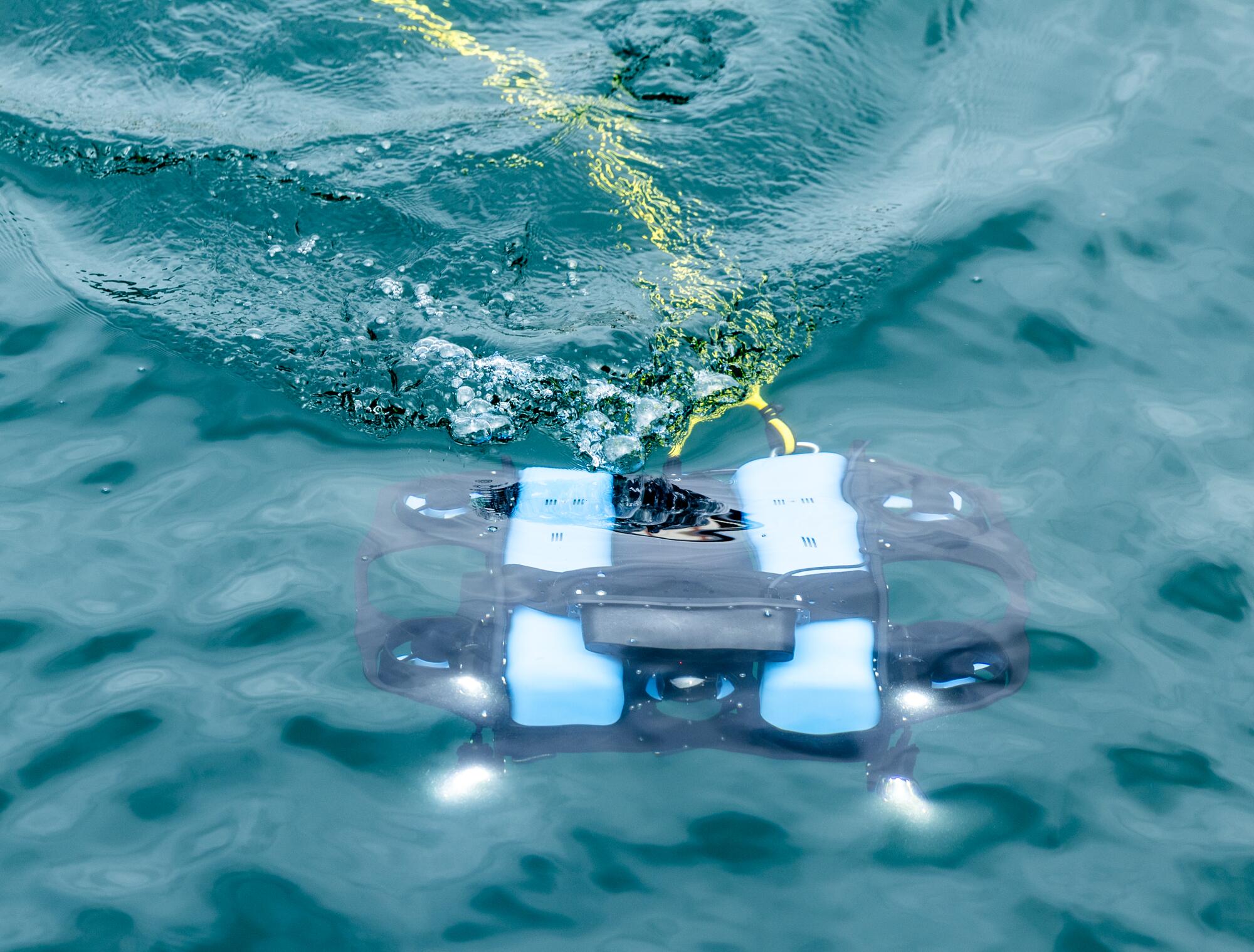
The BlueROV2 vehicle.
(Allen J. Schaben / Los Angeles Times)
To fund the wharf’s redevelopment, AltaSea received $29 million from the state, Port of Los Angeles and private donors. The funds paid for construction, installation of the solar panels and the future creation of a park.
AltaSea is one of multiple projects that are part of a two-decade process to clean up the air and water at the port and turn unused docks, wharves and warehouses into places where more people will want to work or visit, port officials said.
“Bringing people to our waterfront has been a hallmark of the Port of Los Angeles for decades,” Seroka said in 2020, and recent investments “will really bring us to the next level.”
Before the pandemic, about 3 million people came to L.A.’s waterfront annually for recreation, a tally port leaders hope to see double in the years ahead. To smooth the path of new development catering to visitors, the Port of Los Angeles is investing about $1 billion in infrastructure improvements over 10 years, Seroka said. Private developers building AltaSea and other projects will invest an estimated $500 million.
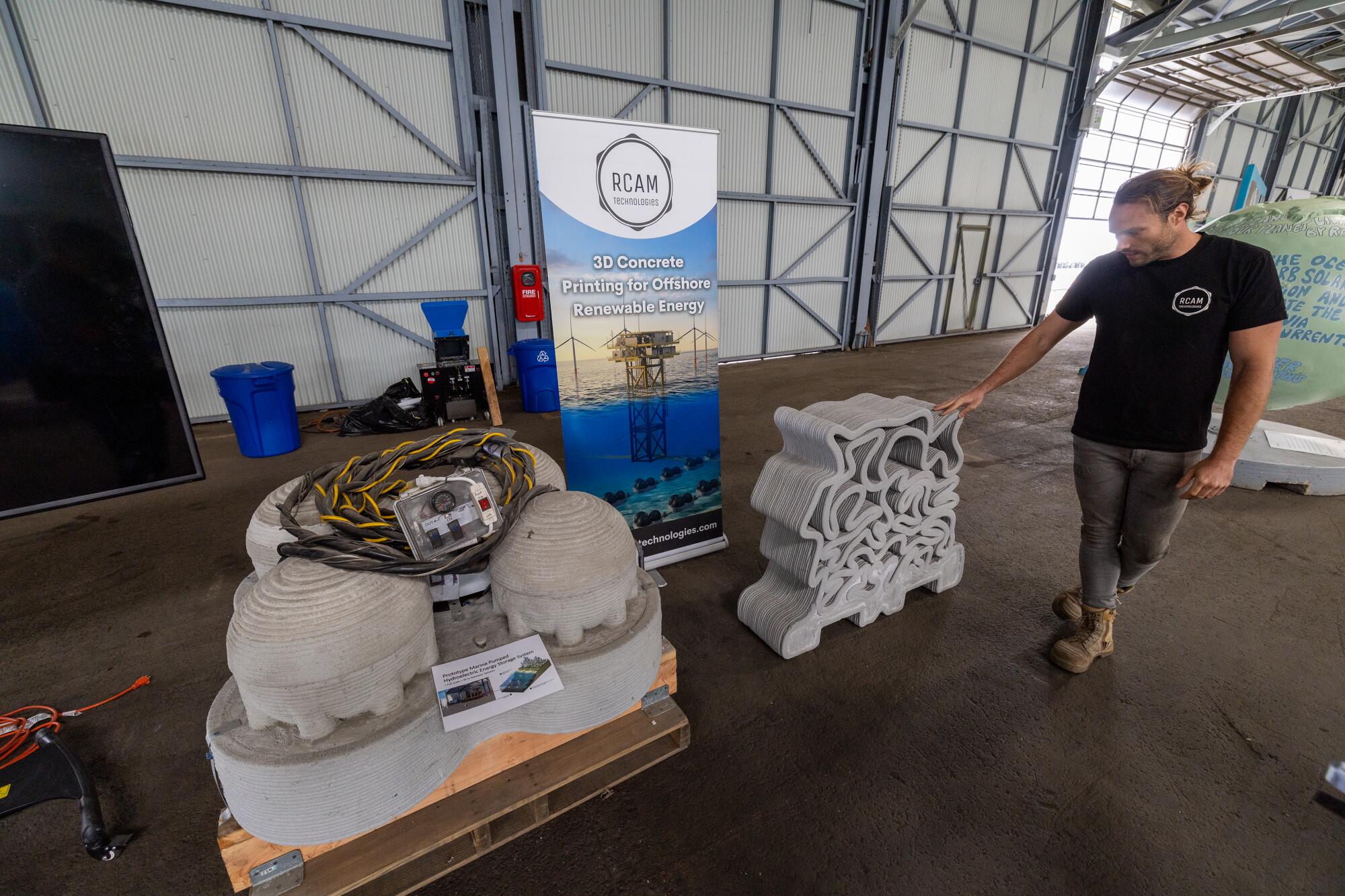
Taylor Marchment, the manufacturing R&D lead at RCAM Technologies, shows off 3-D concrete printing for offshore renewable energy.
(Allen J. Schaben / Los Angeles Times)
One of those projects, West Harbor, is a long-planned redevelopment of a 42-acre site that used to be home to Ports O’ Call, a kitschy imitation of a New England fishing village, built in the 1960s, that fell out of favor years ago and was razed in 2018.
Restaurants anchoring the dining, shopping and entertainment center will include Yamashiro, the second branch of a Japanese-themed Hollywood destination for locals and tourists. Another large restaurant will be Mexican-themed, with an over-water bar. There will also be a food hall and Bark Social, a membership off-leash dog park, bar and cafe. The complex is slated to open next year.
The waterfront developments represent improvements that San Pedro residents have been waiting decades to see, said Dustin Trani, whose family has been in the local restaurant business for nearly a century. Last year the chef opened Trani’s Dockside Station, a seafood restaurant situated between AltaSea and West Harbor, in part to capitalize on the expected influx of visitors.
“We’re on the cusp of a very big economic boom in this area that has not yet been seen,” Trani said.






Nvidia, the chipmaker that became the world’s most valuable public company two years ago, was alone worth more than $4.75 trillion as of Thursday morning. Its value, or market capitalization, is more than double the combined worth of all the companies in the energy sector, including oil giants like Exxon Mobil and Chevron.
The chipmaker’s market cap has swelled so much recently, it is now 20 percent greater than the sum of all of the companies in the materials, utilities and real estate sectors combined.
What unifies these giant tech companies is artificial intelligence. Nvidia makes the hardware that powers it; Microsoft, Apple and others have been making big bets on products that people can use in their everyday lives.
But as worries grow over lavish spending on A.I., as well as the technology’s potential to disrupt large swaths of the economy, the outsize influence that these companies exert over markets has raised alarms. They can mask underlying risks in other parts of the index. And if a handful of these giants falter, it could mean widespread damage to investors’ portfolios and retirement funds in ways that could ripple more broadly across the economy.
The dynamic has drawn comparisons to past crises, notably the dot-com bubble. Tech companies also made up a large share of the stock index then — though not as much as today, and many were not nearly as profitable, if they made money at all.
How the current moment compares with past pre-crisis moments
To understand how abnormal and worrisome this moment might be, The New York Times analyzed data from S&P Dow Jones Indices that compiled the market values of the companies in the S&P 500 in December 1999 and August 2007. Each date was chosen roughly three months before a downturn to capture the weighted breakdown of the index before crises fully took hold and values fell.
The companies that make up the index have periodically cycled in and out, and the sectors were reclassified over the last two decades. But even after factoring in those changes, the picture that emerges is a market that is becoming increasingly one-sided.
In December 1999, the tech sector made up 26 percent of the total.
In August 2007, just before the Great Recession, it was only 14 percent.
Today, tech is worth a third of the market, as other vital sectors, such as energy and those that include manufacturing, have shrunk.
Since then, the huge growth of the internet, social media and other technologies propelled the economy.
Now, never has so much of the market been concentrated in so few companies. The top 10 make up almost 40 percent of the S&P 500.
How much of the S&P 500 is occupied by the top 10 companies
With greater concentration of wealth comes greater risk. When so much money has accumulated in just a handful of companies, stock trading can be more volatile and susceptible to large swings. One day after Nvidia posted a huge profit for its most recent quarter, its stock price paradoxically fell by 5.5 percent. So far in 2026, more than a fifth of the stocks in the S&P 500 have moved by 20 percent or more. Companies and industries that are seen as particularly prone to disruption by A.I. have been hard hit.
The volatility can be compounded as everyone reorients their businesses around A.I, or in response to it.
The artificial intelligence boom has touched every corner of the economy. As data centers proliferate to support massive computation, the utilities sector has seen huge growth, fueled by the energy demands of the grid. In 2025, companies like NextEra and Exelon saw their valuations surge.
The industrials sector, too, has undergone a notable shift. General Electric was its undisputed heavyweight in 1999 and 2007, but the recent explosion in data center construction has evened out growth in the sector. GE still leads today, but Caterpillar is a very close second. Caterpillar, which is often associated with construction, has seen a spike in sales of its turbines and power-generation equipment, which are used in data centers.
One large difference between the big tech companies now and their counterparts during the dot-com boom is that many now earn money. A lot of the well-known names in the late 1990s, including Pets.com, had soaring valuations and little revenue, which meant that when the bubble popped, many companies quickly collapsed.
Nvidia, Apple, Alphabet and others generate hundreds of billions of dollars in revenue each year.
And many of the biggest players in artificial intelligence these days are private companies. OpenAI, Anthropic and SpaceX are expected to go public later this year, which could further tilt the market dynamic toward tech and A.I.
Methodology
Sector values reflect the GICS code classification system of companies in the S&P 500. As changes to the GICS system took place from 1999 to now, The New York Times reclassified all companies in the index in 1999 and 2007 with current sector values. All monetary figures from 1999 and 2007 have been adjusted for inflation.
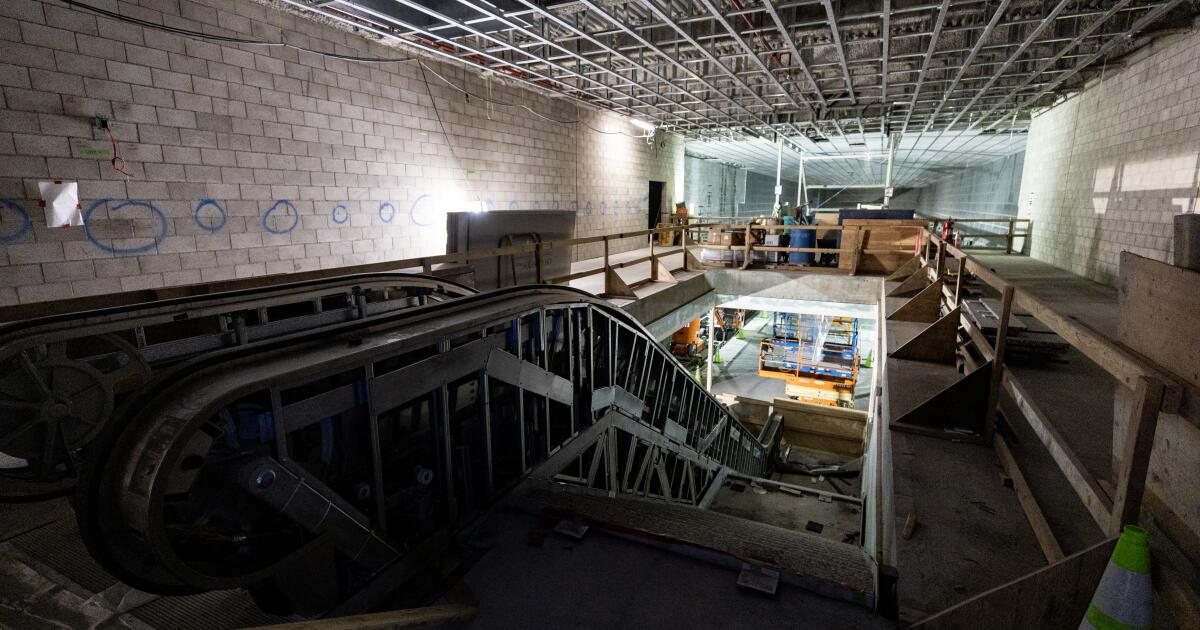
Metro has announced it will open three new stations connecting downtown Los Angeles to Beverly Hills in May.
The new stations mark the first phase of a rail extension project on the Metro D line, also known as the Purple Line, beneath Wilshire Boulevard. The extension will open to the public on May 8.
It’s part of a broader plan to enhance the region’s transit infrastructure in time for the 2028 Olympic and Paralympic Games.
The new stations will take riders west, past the existing Wilshire/Western station in Koreatown, and stopping along the Miracle Mile before arriving at Beverly Hills. The 3.92-mile addition winds through Hancock Park, Windsor Square, the Fairfax District and Carthay Circle. The stations will be located at Wilshire/La Brea, Wilshire/Fairfax and Wilshire/La Cienega.
This is the first of three phases in the D Line extension project. The completion of the this phase, budgeted at $3.7 billion, comes months later than earlier projections. Metro said in 2025 it expected to wrap up the phase by the end of the year.
The route between downtown Los Angeles and Koreatown is one of Metro’s most heavily used rail lines, with an average of around 65,000 daily boardings. The Purple Line extension project — with the goal of adding seven stations and expanding service on the line to Hancock Park, Century City, Beverly Hills and Westwood — broke ground more than a decade ago. Metro’s goal is to finish by the 2028 Summer Olympics.
In a news release on Thursday, Metro described its D Line expansion as “one of the highest-priority” transit projects in its portfolio and “a historic milestone.”
“Traveling through Mid-Wilshire to experience the culture, cuisine and commerce across diverse neighborhoods will be easier, faster and more accessible,” said Fernando Dutra, Metro board chair and Whittier City Council member, in the release. “That connectivity from Downtown LA to the westside will serve as a lasting legacy for all Angelenos.”
The D line was closed for more than two months last year for construction under Wilshire Boulevard, contributing to a 13.5% drop in ridership that was exacerbated by immigration raids in the area.
“I can’t wait for everyone to enjoy and discover the vibrance of mid-Wilshire without the traffic,” Metro CEO Stephanie Wiggins said in a statement.
As almost everybody knows, the AI gold rush is upon us. And in few fields is it happening as fast and furiously as in healthcare.
That points to an important corollary: Beware.
Artificial intelligence technology has helped radiologists identify anomalies in images that human users have missed. It has some evident benefits in relieving doctors of the back-office routines that consume hours better spent treating patients, such as filing insurance claims and scheduling appointments.
Eventually, a lot of this stuff is going to be great, but we’re not there yet.
— Eric Topol, Scripps Research
But it has also been accused of providing erroneous information to surgeons during operations that placed their patients at grave risk of injury, and fomenting panic among users who take its offhand responses as serious diagnoses.
The commercial direct-to-consumer applications being promoted by AI firms, such as OpenAI’s ChatGPT Health and Anthropic’s Claude for Healthcare — both of which were introduced in January — raise special concerns among medical professionals. That’s because they’ve been pitched to users who may not appreciate their tendency to output erroneous information errors and offer inappropriate advice.
“Eventually, a lot of this stuff is going to be great, but we’re not there yet,” says Eric Topol, a cardiologist associated with Scripps Research Institute in La Jolla.
“The fact that they’re putting these out without enough anchoring in safety and quality and consistency concerns me,” Topol says. “They need much tighter testing. The problem I have is that these efforts are largely stemming from commercial interests — there’s furious competition to be the first to come out with an app for patients, even if it’s not quite ready yet.”
That was the experience reported by Washington Post technology columnist Geoffrey A. Fowler, who provided ChatGPT with 10 years of health data compiled by his Apple Watch — and received a warning about his cardiac health so dire that it sent him to his cardiologist, who told him he was in the bloom of health.
Fowler also sought out Topol, who reviewed the data and found the Chatbot’s warning to be “baseless.” Anthropic’s chatbot also provided Fowler with a health grade that Topol deemed dubious.
“Claude is designed to help users understand and organize their health information, framing responses as general health information rather than medical advice,” an Anthropic spokesman told me by email. “It can provide clinical context—for example, explaining how a lab value compares to diagnostic thresholds—while clearly stating that formal diagnosis requires professional evaluation.”
OpenAI didn’t respond to my questions about the safety and reliability of its consumer app.
Topol, who has written extensively about advanced technology in medicine, is nothing like an AI skeptic. He calls himself an AI optimist, citing numerous studies showing that artificial intelligence can help doctors treat patients more effectively and even to improve their bedside manners.
But he cautions that “healthcare can’t tolerate significant errors. We have to minimize the errors, the hallucinations, the confabulations, the BS and the sycophancy” that AI technology commonly displays.
In medicine, as in many other fields, AI looks to have been oversold as a labor-saving technology. According to a study of AI-equipped stethoscopes provided to about 100 British medical groups published earlier this month in the Lancet, the British medical journal, the high-tech stethoscopes effectively identified some (but not all) indications of heart failure better than conventional stethoscopes. But 40% of the groups abandoned the new devices during the 12-month period of the study.
The main complaint was the “additional workflow burden” experienced by the users — an indication that whatever the virtues of the new technology, they didn’t outweigh the time and effort needed to use them.
Other studies have found that AI can augment physicians’ skills — when the doctors have learned to trust their AI tools and when they’re used in relatively uncomplicated, even generic, conditions.
The most notable benefits have been found in radiology; according to a Dutch study published last year, radiologists using AI to help interpret breast X-rays did as well in finding cancers as two radiologists working together. That suggested that judicious use of AI could free up time for one of the two radiologists. But in this case as in others, the AI helper didn’t do consistently well.
“AI misses some breast cancers that are recalled by human assessment,” a study author said, “but detects a similar number of breast cancers otherwise missed by the interpreting radiologists.”
AI’s incursion into healthcare even has become something of a cultural touchstone: In HBO’s up-to-the-minute emergency room series “The Pitt,” beleaguered ER doctors discover that an AI app pushed on them as a time-saving charting tool has “hallucinated” a history of appendicitis for a patient, endangering the patient’s treatment.
“Generative AI is not perfect,” the app’s sponsor responds. “We still need to proofread every chart it creates” — thus acknowledging, accurately, that AI can increase, not relieve, users’ workloads.
A future in which robots perform surgical operations or make accurate diagnoses remains the stuff of science fiction. In medicine, as elsewhere, AI technology has been shown to be useful to take over automatable tasks from humans, but not in situations requiring human ingenuity or creativity — or precision. And attempts to use AI-related algorithms to make healthcare judgments have been challenged in court.
In a class-action lawsuit filed in Minnesota federal court in 2023, five Medicare patients and survivors of three others allege that UnitedHealth Group, the nation’s largest medical insurer, relied on an AI algorithm to deny coverage for their care, “overriding their treating physicians’ determinations as to medically necessary care based on an AI model” with a 90% error rate.
The case is pending. In its defense, UnitedHealth has asserted that decisions on whether to approve or deny coverage remain entirely in the hands of physicians and other clinical professionals the company employs, and their decisions on coverage and care comply with Medicare standards.
The AI algorithm cited by the plaintiffs, UnitedHealth says, is not used “to deny care to members or to make adverse medical necessity coverage determinations,” but rather to help physicians and patients “anticipate and plan for future care needs.” The company didn’t address the plaintiffs’ assertion about the algorithm’s error rate.
“We shouldn’t be complacent about accepting errors” from AI tools, Topol told me. But it’s proper to wonder whether that message has been absorbed by promoters of AI health applications.
Disclaimers warning that AI responses “are not professionally vetted or a substitute for medical advice” have all but disappeared from AI platforms, according to a survey by researchers at Stanford and UC Berkeley.
The issue becomes more urgent as the language of chatbots becomes more sophisticated and fluent, inspiring unwarranted confidence in their conclusions, the researchers cautioned. “Users may misinterpret AI-generated content as expert guidance,” they wrote, “potentially resulting in delayed treatment, inappropriate self-care, or misplaced trust in non-validated information.”
Typically, state laws require that medical diagnoses and clinical decisions proceed from physical examinations by licensed doctors and after a full workup of a patient’s medical and family history. They don’t necessarily rule out doctors’ use of AI to help them develop diagnoses or treatment plans, but the doctors must remain in control.
The Food and Drug Administration exempts medical devices from government licensing if they’re “intended generally for patient education, and … not intended for use in the diagnosis of disease or other conditions. That may cover AI bots if they’re not issuing diagnoses.
But that may not help users who have willingly uploaded their medical histories and test results to AI bots, unaware of concerns, including whether their information will be kept private or used against them in insurance decisions. Gaps in their uploaded data my affect the advice they receive from bots. And because the bots know nothing except the content they’ve been fed, their healthcare outputs may reflect cultural biases in the basic data, such as ethnic disparities in disease incidence and treatment.
“If there’s a mistake with all your data, you could get into a pretty severe anxiety attack,” Topol says. “Patients should verify, not just trust” what they’ve heard from a bot.
Topol warns that the negative effect of misleading AI information may not only fall on patients, but on the AI field itself. “The public doesn’t really differentiate between individual bots,” he told me. “All we need are some horror stories” about misdiagnoses or dangerous advice, “and that whole area is tarred.”
In his view, that would limit the promise of technologies that could improve the effectiveness of medical practice in many ways. The remedy is for AI applications to be subjected to the same clinical standards applied to “a drug, a device, a diagnostic. We can’t lower the threshold because it’s something new, or different, with some broad appeal.”

Bill Clinton to testify before House committee investigating Epstein links

Registered sex offender’s city council bid sparks fury as officials explore blocking his path

Kansas law invalidates transgender driver’s licenses and birth certificates

Alleged Tren de Aragua criminal gang members charged in ATM robberies across New England

Robert ‘Fish’ Jenkins helped Detroit students soar in sports and life

Florida High School Football Rankings: Top 25 teams – Oct. 21

Cleary's 21 help Le Moyne down Central Connecticut State 69-64 in OT

How old is Bo Nix? What to know about Oregon quarterback ahead of 2024 NFL Draft

99th annual Pony Swim held in Virginia

Indiana Members Credit Union announced as new anchor tenant at Bottleworks District
Bill Clinton to testify before House committee investigating Epstein links

Read Judge Schiltz’s Order

Vulnerable House Dem lashes out at Trump’s ‘racist’ SOTU challenge: ‘That was uncomfortable’

Italy calls for suspension of EU carbon market

Chicagoans pay respects to Jesse Jackson as cross-country memorial services begin
-

 World1 day ago
Exclusive: DeepSeek withholds latest AI model from US chipmakers including Nvidia, sources say
-

 Massachusetts2 days ago
Mother and daughter injured in Taunton house explosion
-

 Montana1 week ago
2026 MHSA Montana Wrestling State Championship Brackets And Results – FloWrestling
-

 Oklahoma1 week ago
Wildfires rage in Oklahoma as thousands urged to evacuate a small city
-

 Louisiana4 days ago
Wildfire near Gum Swamp Road in Livingston Parish now under control; more than 200 acres burned
-

 Technology6 days ago
YouTube TV billing scam emails are hitting inboxes
-

 Denver, CO2 days ago
10 acres charred, 5 injured in Thornton grass fire, evacuation orders lifted
-

 Technology6 days ago
Stellantis is in a crisis of its own making