Business
L.A.'s Oaxacan community rallies after wildfire devastates a region of Mexico famed for its mezcal

The photos and videos began flooding in Feb. 27. In a region of Oaxaca famous for its flavorful mezcal, a wildfire was raging dangerously close to the town of San Lucas Quiaviní.
Massive plumes of smoke choked the horizon as the flames drove toward the town of 1,700. At nightfall, local officials put out an urgent call for volunteers to head out the next morning to beat back the fire. They asked for people over 18 who knew the roads and urged them to don helmets and face masks.
It would be days before the state government intervened with enough equipment and resources to get the blaze under control. In the interim, residents of San Lucas Quiaviní and neighboring towns in this agave-growing hub tried to mount a defense with shovels, pick axes and what little water they could spare.
By the time the government declared the wildfire contained on March 5, it had scorched more than 1,700 acres. And five men from San Lucas Quiaviní had died after heeding the call to battle.
Some of the fire victims had worked in Los Angeles and have close family here. Their deaths have struck an emotional chord in the city, home to the largest Indigenous Oaxacan population outside Mexico. Oaxacan restaurant owners and youth organizers have rallied in support, raising money and donations to help the families and towns that suffered losses.
The men killed have been identified by local officials and organizers as Rafael Antonio Morales, 65; Pedro Curiel Diego, 64; Felipe Garcia, 41; Celso Diego, 65; and Jose Hernandez Lopez, 47. All were farmers.
The relatives and restaurateurs organizing support in Los Angeles say the Mexican government failed the towns, waiting too long to mount an aerial defense. More broadly, they believe that the boom in mezcal production in this region of Oaxaca has left Indigenous communities more vulnerable to natural disaster.
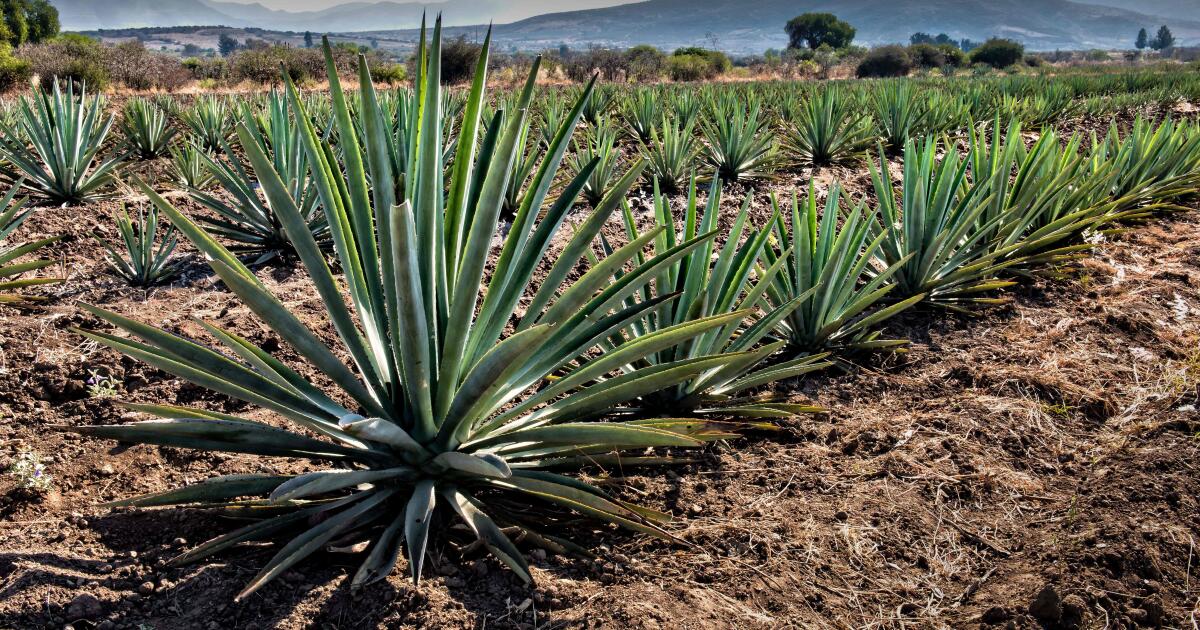
Mezcal, long a traditional and medicinal drink for Oaxacans, has swelled in popularity in the U.S. and beyond as a younger generation turns to craft spirits. As demand for the smoky liquor has climbed, vast tracts of forest in Oaxaca have been torn up and planted with agave, eroding the soil and weakening natural defenses in a mountainous region prone to wildfire and mudslides.
The fast-growing popularity of mezcal spirits has raised environmental concerns in Oaxaca as more land, water and firewood are dedicated to growing and distilling agave.
(Pedro Pardo / Getty Images)
At least 50 wildfires have broken out in Oaxaca in just the first few months of 2024 — though the state’s wildfire season typically starts in mid-March, according to El Universal, a Mexican publication.
“We’re in a critical period of drought and heat,” Oaxaca Gov. Salomon Jara Cruz said at a March 5 news conference. “The consequences are that we are more prone to any wildfire, whether it be brief, slight.”
Jara Cruz acknowledged the state was delayed in getting air support to San Lucas Quiaviní, but he said it readily deployed 267 personnel and 50 vehicles on the ground. He showed videos of the massive fire taken from the air, as well as images of San Lucas Quiaviní women carrying plastic jugs of water on their heads as they trekked up steep hills to deliver water to the men fighting the fire. The men who died had reportedly gone missing on Feb. 28, the day after they volunteered for duty.
“At all times, we have acted with responsibility and timeliness to protect the lives and integrity of Oaxacans,” Jara Cruz said.
In Los Angeles, days after the bodies were discovered, Indigenous youth held a rally in front of the Mexican consulate office in MacArthur Park to protest what they said was the government’s lax efforts to protect the people of San Lucas Quiaviní.
“I’ve heard from my cousin that they don’t even have proper shoes. They only have huaraches,” said Brenda Diego, who is Zapotec and lost an uncle in the fire. “They’re using machetes; they’re using shovels. They didn’t have anything prepared for a fire.”
Indigenous youth in Los Angeles staged a protest to condemn what they said was a lack of government urgency in sending equipment and personnel to protect Oaxacan towns from wildfire.
(Courtesy of Daphne Santos)
Mireya Curiel, one of the Zapotec youth organizers, said she was related to three of the men who died. Rafael Antonio Morales, her grandfather’s cousin, was known to offer a friendly smile and helping hand around town. Two others, Pedro Curiel Diego and Celso Diego, were her uncles.
“Not only were these folks older, but these folks were also experts in the land,” said organizer Randy Santiago, a Zapotec of Santiago Matatlán. “Their loss to their community has been immeasurable. Their expertise, their knowledge of the land, their knowledge of tradition, culture, everything, has now been lost. That is the fault of the government.”
In recent days, the youth group has collected supplies requested by people in Oaxaca: masks and respirators, fire-resistant boots and clothing, battery-powered headlamps, compression gloves and socks. They were able to ferry the supplies to Tijuana, where someone picked them up and delivered them to Oaxaca in southern Mexico. They have raised more than $40,000 to purchase more supplies and support families affected by the fire.
Jose Curiel of Venice lost an uncle, Pedro Curiel Diego. He has launched a GoFundMe campaign to raise money for his cousin, Diego’s daughter. His uncle spent about 10 years working as a dishwasher in Los Angeles before returning to the hometown he dearly missed, Curiel said.
San Lucas Quiaviní, Curiel said, is a rustic town where few people have cars and some households still collect water with barrels. It doesn’t have the draw of bigger towns in the region — such as Santiago Matatlán, known as the “world capital of mezcal” — that offer tourist packages combining mezcal-tasting with tours of the agave fields. But it is peaceful, and many in L.A.’s Oaxacan community plan to return there to build their dream homes. He said the men who died did so in defense of that sense of community.
“They went out to help, to make sure not only that they were safe, but to save their families, their town, their whole community,” Curiel said.
Ivan Vasquez, owner of Madre Oaxacan Restaurant & Mezcaleria, worries that the mezcal market is reshaping Oaxaca in ways that threaten Indigenous communities.
(Mariah Tauger / Los Angeles Times)
Ivan Vasquez, the owner of Madre Oaxacan Restaurant & Mezcaleria, which has four locations in Los Angeles County, spent a recent Sunday evening auctioning off vintage bottles of mezcal to raise funds for the towns affected, an event that generated more than $8,000. Vasquez, a native of Oaxaca City, travels to the region frequently to buy spirits from small-batch mezcaleros.
Vasquez said he was frustrated by the lack of awareness among large mezcal production companies moving into Oaxaca that benefit from the sprawling agave fields but have yet to support the communities affected by fire.
“Every single time that I go to Oaxaca and I go out of the city and go to the pueblos, you see more fields of agave replacing the trees,” he said. “The more agave you see, the more flattened land, the more fires we’re going to get. And the less water we’re going to get.”
Vasquez, who is Zapotec, said he worries about the future of the Indigenous communities as the mezcal market continues to reshape rural Oaxaca and global warming exacerbates conditions.
“This is just the beginning,” he said.



Disneyland Resort President Thomas Mazloum has been named chairman of Walt Disney Co.’s experiences division, the company said Tuesday.
Mazloum succeeds soon-to-be Disney Chief Executive Josh D’Amaro as the head of the Mouse House’s vital parks portfolio, which has become the economic engine for the Burbank media and entertainment giant. His purview includes Disney’s theme parks, famed Imagineering division, merchandise, cruise line, as well as the Aulani resort and spa in Hawaii.
Jill Estorino will become the head of Disneyland Resort in Anaheim. She previously served as president and managing director of Disney Parks International and oversaw the company’s theme parks and resorts in Europe and Asia.
Estorino and Mazloum will assume their new roles on March 18, the same day as D’Amaro and incoming Disney President and Chief Creative Officer Dana Walden.
“Thomas Mazloum is an exceptional leader with a genuine appreciation for our cast members and a proven track record of delivering growth,” D’Amaro said in a statement. “His focus on service excellence, broad international leadership and strong connection to the creativity that brings our stories to life make him the right leader to guide Disney Experiences into its next chapter.”
Mazloum had been about a year into his tenure at Disneyland. Before that, he was head of Disney Signature Experiences, which includes the cruise line. He was trained in hospitality in Europe.
In his time at Disneyland, Mazloum oversaw the park’s 70th anniversary celebration and recently pledged to eliminate time limitations for park-hopping, which are designed to manage foot traffic at Disneyland and California Adventure.
Mazloum will now oversee a 10-year, $60-billion investment plan for Disney’s overall experiences business, which includes new themed lands in Disneyland Resort and Walt Disney World. At Disneyland, that expansion could result in at least $1.9 billion of development.
The size of that investment indicates how important the parks are to Disney’s bottom line. Last year, the experiences business brought in nearly 57% of the company’s operating income. Maintaining that momentum, as well as fending off competitors such as Universal Studios, is key to Disney’s continued growth.
In his new role, Mazloum will have to keep an eye on “international visitation headwinds” at its U.S.-based parks, which the company has said probably will factor into its earnings for its fiscal second quarter. At Disneyland Resort, that dip was mitigated by the park’s high percentage of California-based visitors.
Times staff writer Todd Martens contributed to this report.

It has been a bumpy road for the electric vehicle market as declining federal support and plateauing public interest have eaten away at sales.
But EV sellers could soon receive a boost from an unexpected source: The war in Iran is pushing up gas prices.
As Americans look to save money at the pump, more will consider switching to an electric or hybrid vehicle. Average gas prices in the U.S. have risen nearly 17% since Feb. 28 to reach $3.48 per gallon. In California, the average is $5.20 per gallon.
Electric vehicles are pricier than gasoline-powered cars and charging them isn’t cheap with current electricity prices, but sky-high gas prices can tip the scales for consumers deciding which kind of vehicle to buy next.
“We probably will see an uptick in EV adoption and particularly hybrid adoption” if gas prices stay high, said Sam Abuelsamid, an auto analyst at Telemetry Agency. “The last time we had oil prices top $100 per barrel was early 2022 and that’s when we saw EV sales really start to pick up in the U.S.”
In a 2022 AAA survey, 77% of respondents said saving money on gas was their primary motivator for purchasing an electric vehicle. That year, 25% of survey respondents said they were likely or very likely to purchase an EV.
As oil prices cooled, the number fell to16% in 2025.
In California, annual sales of new light-duty zero-emission vehicles jumped 43% in 2022, according to the state’s Energy Commission. The market share of zero-emission vehicles among all light-duty vehicles sold rose from 12% in 2021 to 19% in 2022.
“Prior to 2022, we didn’t really have EVs available when we had oil price shocks,” Abuelsamid said. “But every time we did, it coincided with a move toward more fuel-efficient vehicles.”
Dealers are anticipating a windfall.
Brian Maas, president of the California New Car Dealers Assn., predicted enthusiasm for EVs will rebound across California if oil prices don’t come down.
“If prior gasoline price spikes are any indication, you tend to see interest in more fuel-efficient vehicles,” he said.
Rising gas prices could be a lifeline for EV makers at a time when federal support for green cars has been declining.
Under President Trump, a federal $7,500 tax incentive for new electric vehicles was eliminated in September, along with a $4,000 incentive for used electric vehicles.
In California, the zero-emission vehicle share of the total new-vehicle market was 22% through the first 10 months of 2025, then dropped sharply to 12% in the last two months of the year, according to the California Auto Outlook.
Meanwhile Tesla, the most popular EV brand in the country, has grappled with an implosion of its reputation with some consumers after its chief executive, Elon Musk, became one of Trump’s most vocal supporters and helped run the controversial Department of Government Efficiency.
Over the last several months, Ford, General Motors and Stellantis have pared back EV ambitions.
Other automakers, including Nissan, announced plans to stop producing their more affordable electric models.
The Trump administration has moved to roll back federal fuel economy standards and revoked California’s permission to implement a ban on new gas-powered car sales by 2035.
David Reichmuth, a researcher with the Clean Transportation program in the Union of Concerned Scientists, said the shift in production plans will affect EV availability, even if demand surges.
That could keep people from switching to cleaner vehicles regardless of higher gas prices.
“This is a transition that we need to make for both public health and to try to slow the damage from global warming, whether or not the price of gasoline is $3 or $5 or $6 a gallon,” he said.
According to Cox Automotive, new EV sales nationally were down 41% in November from a year earlier. Used EV sales were down 14% year over year that month.
To be sure, oil prices can fluctuate wildly in times of uncertainty. It will take time for consumers to decide on new purchases.
Brian Kim, who manages used car sales at Ford of Downtown LA, said he has yet to see a jump in the number of people interested in EVs, hybrids or more fuel-efficient gas-powered engines.
Still, if the price at the pump stays stuck above its current level, it could happen soon.
“Once the gas prices hit six [dollars per gallon] or more and people feel it in their pocket, maybe things will start to change,” he said.

A total of 59 gigawatts of U.S. clean energy projects are facing delays at a time when demand for power from AI data centers is surging, according to a trade group study.
Developers are seeing an average delay of 19 months over issues such as long interconnection times, supply constraints and regulatory barriers, the American Clean Power Assn. said in a quarterly market report.
The backlog is happening despite the growing need for power on grids that are being taxed by energy-hungry data centers and increased manufacturing. The Trump administration has implemented a slew of policies to slow the build-out of solar and wind projects, including delaying approvals on federal lands.
The potential energy generation facing delays is the equivalent of 59 traditional nuclear reactors, enough to power more than 44 million homes simultaneously.
“Current policy instability is beginning to impact investor confidence and negatively impact project timelines at a time when demand is surging,” American Clean Power Chief Policy Officer JC Sandberg said in a statement.
Despite the hurdles, developers were able to bring more than 50 gigawatts of wind, solar and batteries online in 2025, accounting for more than 90% of all new power capacity in the U.S., the report found. Clean power purchase agreements declined 36% in 2025 compared with 2024, signaling that the build-out of clean power in the U.S. could be lower in the 2028 to 2030 time period, according to the report.
Chediak writes for Bloomberg.

‘It’s really cool’: Utah selected to lead federal pilot program testing electric aircraft
VT Lottery Mega Millions, Gimme 5 results for March 10, 2026

The Good, the Bad and the Ugly from Virginia Tech’s 95-89 Loss to Wake Forest

Western Washington braces for wind, rain and hazardous Cascade travel through Thursday

‘Not a hiding place’: Ogden police lauded for role in catching Nevada, Wisconsin murder suspects

Florida High School Football Rankings: Top 25 teams – Oct. 21

Cleary's 21 help Le Moyne down Central Connecticut State 69-64 in OT

How old is Bo Nix? What to know about Oregon quarterback ahead of 2024 NFL Draft

99th annual Pony Swim held in Virginia

Indiana Members Credit Union announced as new anchor tenant at Bottleworks District

EXCLUSIVE: ICE says El Paso detention facility will stay open under new contractor after $1.2B deal scrapped

Von der Leyen ‘acting outside of competence,’ Araud tells Euronews

Wheelchair curler Steve Emt’s path from drunk driver to three-time Paralympian

Map: 2.3-Magnitude Earthquake Reported North of New York City

Trump stirs GOP primary drama with visit to Massie’s Kentucky home turf
-

 Wisconsin1 week ago
Setting sail on iceboats across a frozen lake in Wisconsin
-

 Massachusetts1 week ago
Massachusetts man awaits word from family in Iran after attacks
-

 Pennsylvania6 days ago
Pa. man found guilty of raping teen girl who he took to Mexico
-

 Florida1 week ago
Florida man rescued after being stuck in shoulder-deep mud for days
-

 Detroit, MI5 days ago
U.S. Postal Service could run out of money within a year
-

 Miami, FL6 days ago
City of Miami celebrates reopening of Flagler Street as part of beautification project
-

 Sports6 days ago
Keith Olbermann under fire for calling Lou Holtz a ‘scumbag’ after legendary coach’s death
-

 Virginia7 days ago
Giants will hold 2026 training camp in West Virginia