Business
Elon Musk's conflicts of interest: $2.37 billion in potential federal penalties, report says


Elon Musk and his companies faced at least $2.37 billion in potential federal fines and penalties the day President Trump took office, according to a congressional report released Monday that highlights the possible conflicts of interest posed by the billionaire’s cost-cutting work in government.
The 43-page memo by the minority staff of the Senate’s Permanent Subcommittee on Investigations, led by Sen. Richard Blumenthal (D-Conn.), is the most exhaustive attempt yet to detail Musk’s alleged conflicts as an advisor to Trump and chief promoter of his team called the Department of Government Efficiency, or DOGE.
Based on publicly available documents, media reports and the committee’s own calculations, the memo found that as of Jan. 20, Musk and his companies were “subject to at least 65 actual or potential actions by 11 different federal agencies” and that 40 of those created $2.37 billion in potential liabilities.
“Mr. Musk has taken a chainsaw to the federal government with no apparent regard for the law or for the people who depend on the programs and agencies he so blithely destroys,” the memo stated. “The through line connecting many of Mr. Musk’s decisions appears to be self-enrichment and avoiding what he perceives as obstacles to advancing his interests.”
The memo notes that Musk’s companies have received more than $38 billion in government contracts, loans, subsidies and tax credits going back more than 20 years. And it notes that SpaceX, as of Friday, had $10.1 billion in federal contracts.
“President Trump could not have chosen a person more prone to conflicts of interest,” states the memo, which calls on the president, executive departments and regulatory agencies to “take coordinated action to address Elon Musk’s threat to the integrity of federal governance.”
In a statement, White House Communications Director Steven Cheung said the claims were baseless.
“Mr. Musk has never used his position for personal or financial gain, and any assertion otherwise is completely false and defamatory. Dick is clearly suffering from a debilitating and uncurable case of Trump Derangement Syndrome,” Cheung said.
Blumenthal signed letters sent Sunday to Tesla, SpaceX, Neuralink, The Boring Co. and x.AI Corp. — Musk’s artificial intelligence company, which acquired his social media platform X Corp. — demanding more information about any federal investigations, litigation and regulatory actions involving each company.
The letters also requested to know what measures they had taken to deal with any possible conflict of interest involving Musk, who has majority stakes or controlling interests in the companies.
None of the companies immediately responded to emails for comment, nor did DOGE.
Musk has previously stated in a joint interview with President Trump on Fox News, that he would “recuse myself if it is a conflict,” while the president said, “He won’t be involved.”
Last week, Musk also said during a Tesla earnings call that he was stepping back from DOGE to focus on his electric car maker, though he would remain involved with the cost-cutting effort likely through Trump’s entire term.
The once-cutting-edge Austin, Texas, company has seen its profit and share price plunge amid Trump’s looming tariffs that Musk has opposed and a brand crisis precipitated by his prominent role in the administration.
The committee’s memo found that Tesla created most of the potential penalties for Musk — a cumulative $1.89 billion — due to investigations, lawsuits and other issues involving eight agencies.
The largest single liability was a potential $1.19-billion fine due to a reported criminal investigation opened by the Department of Justice into allegedly false or misleading statements made by Musk and the company about its Autopilot and Full-Self Driving Features since as early as 2016.
The Times previously reported the National Highway Traffic Safety Administration is probing the Full-Self Driving technology after reports of four collisions in low-visibility conditions, including one in which a pedestrian was killed.
However, doubts have been raised about the Justice Department’s commitment to any prosecution. The memo notes that in February the department dismissed a lawsuit it filed against SpaceX for allegedly discouraging asylum seekers and refugees from applying for jobs or hiring them because of their citizenship status. It calculated the lawsuit could have exposed SpaceX to $46.1 million in liabilities.
The second single largest liability of $462 million facing Musk also involved Tesla. It arose out of a 2023 lawsuit filed by the Equal Employment Opportunity Commission for the company’s alleged toleration of widespread racial harassment of Black employees at its Fremont, Calif., factory. Tesla has denied the allegations. In January, Trump fired two Democratic commissioners and the agency’s general counsel.
A third major potential liability of nearly $240 million involving the company stemmed from a media report that the company was subject to a Securities and Exchange Commission investigation due to a whistleblower claim that it didn’t disclose fire risks posed by its solar panel systems.
The other large potential liability, according to the memo, involved Neuralink, a company developing a brain-computer interface that allows paralyzed people to communicate via their thoughts or brain waves.
The memo notes the SEC opened an investigation into the Fremont, Calif., company after Musk allegedly overstated the safety of its implants while raising some $240 million from investors. A physician’s group filed a complaint that the implants had caused the deaths of at least 12 monkeys.
Neuralink has said it is committed to treating test animals humanely.
Another major alleged liability noted in the report involves a complaint the SEC filed against Musk accusing him of failing to make a timely disclosure in 2022 that he had acquired a 5% stake in Twitter.
The agency estimated Musk saved an estimated $150 million from unsuspecting investors unaware of this as he built up his stake in the company he ultimately acquired and renamed X. Musk has criticized the lawsuit, which is pending.
Other potential liabilities faced by Musk’s companies include a $633,000 fine the Federal Aviation Administration levied against SpaceX in September for alleged license violations during two Florida launches of its rockets. The agency said the case remains open.
Three of Musk’s companies also face allegations they violated Occupational Safety and Health Administration regulations, including 26 violations contested by Tesla creating $583,000 in liabilities, according to the memo.
With Republicans in control of the Senate, the Democrats on the investigations committee have minimal power, since they can’t hold hearings or subpoena witnesses. The committee has previously requested information from Musk’s companies on potential conflicts of interests, but Blumenthal said it hasn’t gotten a satisfactory response.
This memo calls on Trump and his administration to respond to congressional information requests regarding Musk’s “federal entanglements,” conduct reviews to ensure “appropriate measures were/are in place to prevent undue influence” and “initiate independent audits of major contracts and awards to Musk-affiliated companies, particularly those with Department of Defense and NASA.”
“No one individual, no matter how prominent or wealthy, is above the law. Anything less than decisive, immediate, and collective action risks America becoming a bystander to the surrender to modern oligarchy — public power in private hands,” the memo concludes.






Google and Character.AI, a California startup, have agreed to settle several lawsuits that allege artificial intelligence-powered chatbots harmed the mental health of teenagers.
Court documents filed this week show that the companies are finalizing settlements in lawsuits in which families accused them of not putting in enough safeguards before publicly releasing AI chatbots. Families in multiple states including Colorado, Florida, Texas and New York sued the companies.
Character.AI declined to comment on the settlements. Google didn’t immediately respond to a request for comment.
The settlements are the latest development in what has become a big issue for major tech companies as they release AI-powered products.
Suicide prevention and crisis counseling resources
If you or someone you know is struggling with suicidal thoughts, seek help from a professional and call 9-8-8. The United States’ first nationwide three-digit mental health crisis hotline 988 will connect callers with trained mental health counselors. Text “HOME” to 741741 in the U.S. and Canada to reach the Crisis Text Line.
Last year, California parents sued ChatGPT maker OpenAI after their son Adam Raine died by suicide. ChatGPT, the lawsuit alleged, provided information about suicide methods, including the one the teen used to kill himself. OpenAI has said it takes safety seriously and rolled out new parental controls on ChatGPT.
The lawsuits have spurred more scrutiny from parents, child safety advocates and lawmakers, including in California, who passed new laws last year aimed at making chatbots safer. Teens are increasingly using chatbots both at school and at home, but some have spilled some of their darkest thoughts to virtual characters.
“We cannot allow AI companies to put the lives of other children in danger. We’re pleased to see these families, some of whom have suffered the ultimate loss, receive some small measure of justice,” said Haley Hinkle, policy counsel for Fairplay, a nonprofit dedicated to helping children, in a statement. “But we must not view this settlement as an ending. We have only just begun to see the harm that AI will cause to children if it remains unregulated.”
One of the most high-profile lawsuits involved Florida mom Megan Garcia, who sued Character.AI as well as Google and its parent company, Alphabet, in 2024 after her 14-year-old son, Sewell Setzer III, took his own life.
The teenager started talking to chatbots on Character.AI, where people can create virtual characters based on fictional or real people. He felt like he had fallen in love with a chatbot named after Daenerys Targaryen, a main character from the “Game of Thrones” television series, according to the lawsuit.
Garcia alleged in the lawsuit that various chatbots her son was talking to harmed his mental health, and Character.AI failed to notify her or offer help when he expressed suicidal thoughts.
“The Parties request that this matter be stayed so that the Parties may draft, finalize, and execute formal settlement documents,” according to a notice filed on Wednesday in a federal court in Florida.
Parents also sued Google and its parent company because Character.AI founders Noam Shazeer and Daniel De Freitas have ties to the search giant. After leaving and co-founding Character.AI in Menlo Park, Calif., both rejoined Google’s AI unit.
Google has previously said that Character.AI is a separate company and the search giant never “had a role in designing or managing their AI model or technologies” or used them in its products.
Character.AI has more than 20 million monthly active users. Last year, the company named a new chief executive and said it would ban users under 18 from having “open-ended” conversations with its chatbots and is working on a new experience for young people.
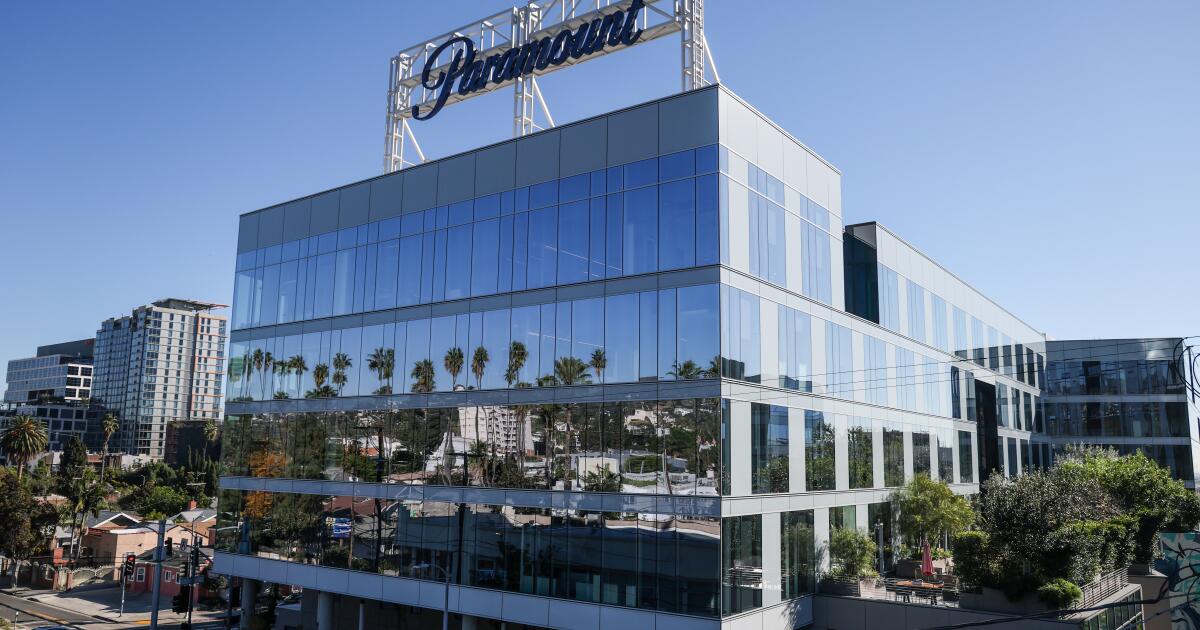
Paramount’s campaign to acquire Warner Bros. Discovery was dealt another blow Wednesday after Warner’s board rejected a revised bid from the company.
The board cited the enormous debt load that Paramount would need to finance its proposed $108-billion takeover.
Warner’s board this week unanimously voted against Paramount’s most recent hostile offer — despite tech billionaire Larry Ellison agreeing in late December to personally guarantee the equity portion of Paramount’s bid. Members were not swayed, concluding the bid backed by Ellison and Middle Eastern royal families was not in the best interest of the company or its shareholders.
Warner’s board pointed to its signed agreement with Netflix, saying the streaming giant’s offer to buy the Warner studios and HBO was solid.
The move marked the sixth time Warner’s board has said no to Paramount since Ellison’s son, Paramount Chief Executive David Ellison, first expressed interest in buying the larger entertainment company in September.
In a Wednesday letter to investors, Warner board members wrote that Paramount Skydance has a market value of $14 billion. However, the firm is “attempting an acquisition requiring $94.65 billion of [debt and equity] financing, nearly seven times its total market capitalization.”
The structure of Paramount’s proposal was akin to a leveraged buyout, Warner said, adding that if Paramount was to pull it off, the deal would rank as the largest leveraged buyout in U.S. history.
“The extraordinary amount of debt financing as well as other terms of the PSKY offer heighten the risk of failure to close, particularly when compared to the certainty of the Netflix merger,” the Warner board said, reiterating a stance that its shareholders should stick to its preferred alternative to sell much of the company to Netflix.
The move puts pressure on Paramount to shore up its financing or boost its cash offer above $30 a share.
However, raising its bid without increasing the equity component would only add to the amount of debt that Paramount would need to buy HBO, CNN, TBS, Animal Planet and the Burbank-based Warner Bros. movie and television studios.
Paramount representatives were not immediately available for comment.
“There is still a path for Paramount to outbid Netflix with a substantially higher bid, but it will require an overhaul of their current bid,” Lightshed Partners media analyst Rich Greenfield wrote in a Wednesday note to investors. Paramount would need “a dramatic increase in the cash invested from the Ellison family and/or their friends and financing partners.”
Warner Bros. Discovery’s shares held steady around $28.55. Paramount Skydance ticked down less than 1% to $12.44.
Netflix has fallen 17% to about $90 a share since early December, when it submitted its winning bid.
The jostling comes a month after Warner’s board unanimously agreed to sell much of the company to Netflix for $72 billion. The Warner board on Wednesday reaffirmed its support for the Netflix deal, which would hand a treasured Hollywood collection, including HBO, DC Comics and the Warner Bros. film studio, to the streaming giant. Netflix has offered $27.75 a share.
“By joining forces, we will offer audiences even more of the series and films they love — at home and in theaters — expand opportunities for creators, and help foster a dynamic, competitive, and thriving entertainment industry,” Netflix co-Chief Executives Ted Sarandos and Greg Peters said in a joint statement Wednesday.
After Warner struck the deal with Netflix on Dec. 4, Paramount turned hostile — making its appeal directly to Warner shareholders.
Paramount has asked Warner investors to sell their shares to Paramount, setting a Jan. 21 deadline for the tender offer.
Warner again recommended its shareholders disregard Paramount’s overtures.
Warner Bros.’ sale comes amid widespread retrenchment in the entertainment industry and could lead to further industry downsizing.
The Ellison family acquired Paramount’s controlling stake in August and quickly set out to place big bets, including striking a $7.7-billion deal for UFC fights. The company, which owns the CBS network, also cut more than 2,000 jobs.
Warner Bros. Discovery was formed in 2022 following phone giant AT&T’s sale of the company, then known as WarnerMedia, to the smaller cable programming company, Discovery.
To finance that $43-billion acquisition, Discovery took on considerable debt. Its leadership, including Chief Executive David Zaslav, spent nearly three years cutting staff and pulling the plug on projects to pay down debt.
Paramount would need to take on even more debt — more than $60 billion — to buy all of Warner Bros. Discovery, Warner said.
Warner has argued that it would incur nearly $5 billion in costs if it were to terminate its Netflix deal. The amount includes a $2.8-billion breakup fee that Warner would have to fork over to Netflix. Paramount hasn’t agreed to cover that amount.
Warner also has groused that other terms in Paramount’s proposal were problematic, making it difficult to refinance some of its debt while the transaction was pending.
Warner leaders say their shareholders should see greater value if the company is able to move forward with its planned spinoff of its cable channels, including CNN, into a separate company called Discovery Global later this year. That step is needed to set the stage for the Netflix transaction because the streaming giant has agreed to buy only the Warner Bros. film and television studios, HBO and the HBO Max streaming platform.
However, this month’s debut of Versant, comprising CNBC, MS NOW and other former Comcast channels, has clouded that forecast. During its first three days of trading, Versant stock has fallen more than 20%.
Warner’s board rebuffed three Paramount proposals before the board opened the bidding to other companies in late October.
Board members also rejected Paramount’s Dec. 4 all-cash offer of $30 a share. Two weeks later, it dismissed Paramount’s initial hostile proposal.
At the time, Warner registered its displeasure over the lack of clarity around Larry Ellison’s financial commitment to Paramount’s bid. Days later, Ellison agreed to personally guarantee $40.4 billion in equity financing that Paramount needs.
David Ellison has complained that Warner Bros. Discovery has not fairly considered his company’s bid, which he maintains is a more lucrative deal than Warner’s proposed sale to Netflix. Some investors may agree with Ellison’s assessment, in part, due to concerns that government regulators could thwart the Netflix deal out of concerns about the Los Gatos firm’s increasing dominance.
“Both potential mergers could severely harm the viewing public, creative industry workers, journalists, movie theaters that depend on studio content, and their surrounding main-street businesses, too,” Matt Wood, general counsel for consumer group Free Press Action, testified Wednesday during a congressional committee hearing.
“We fear either deal would reduce competition in streaming and adjacent markets, with fewer choices for consumers and fewer opportunities for writers, actors, directors, and production technicians,” Wood said. “Jobs will be lost. Stories will go untold.”
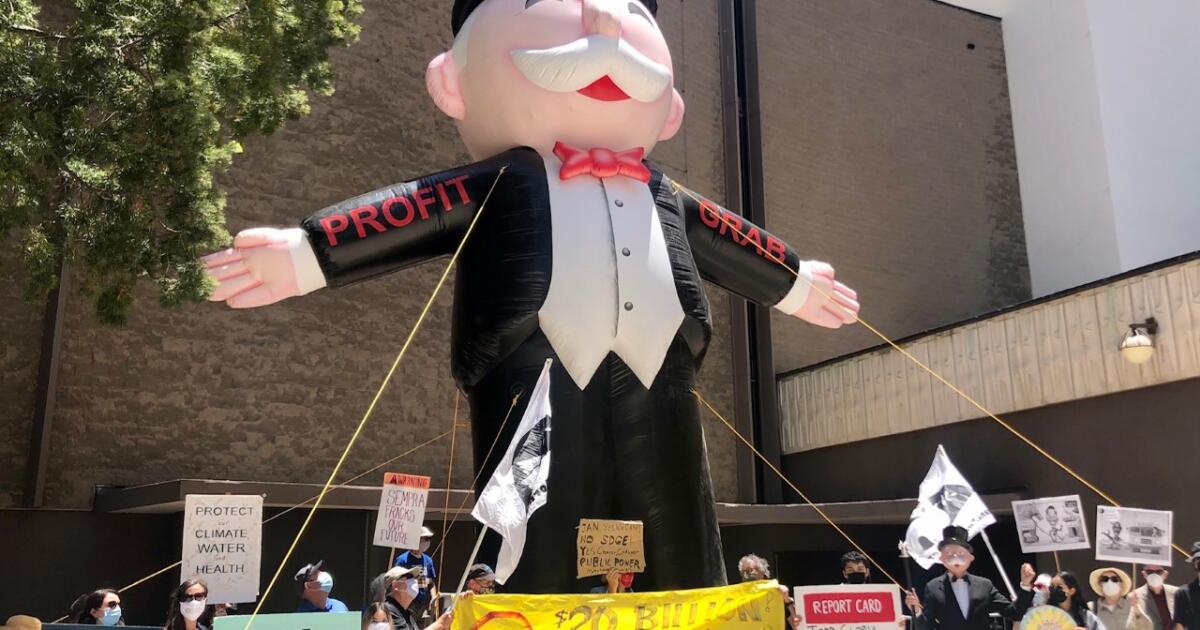
The fiery debate about a proposed ballot measure to tax California’s billionaires has sparked some soul-searching across the state.
While the idea of a one-time tax on more than 200 people has a long way to go before getting onto the ballot and would need to be passed by voters in November, the tempest around it captures the zeitgeist of angst and anger at the core of California. Silicon Valley is minting new millionaires while millions of the state’s residents face the loss of healthcare coverage and struggle with inflation.
Supporters of the proposed billionaire tax say it is one of the few ways the state can provide healthcare for its most vulnerable. Opponents warn it would squash the innovation that has made the state rich and prompt an exodus of wealthy entrepreneurs from the state.
The controversial measure is already creating fractures among powerful Democrats who enjoy tremendous sway in California. Progressive icon Sen. Bernie Sanders (I-Vt.) quickly endorsed the billionaire tax, while Gov. Gavin Newsom denounced it .
The Golden State’s rich residents say they are tired of feeling targeted. Their success has not only created unimaginable wealth but also jobs and better lives for Californians, they say, yet they feel they are being punished.
“California politics forces together some of the richest areas of America with some of the poorest, often separated by just a freeway,” said Thad Kousser, a political science professor at UC San Diego. “The impulse to force those with extreme wealth to share their riches is only natural, but often runs into the reality of our anti-tax traditions as well as modern concerns about stifling entrepreneurship or driving job creation out of the state.”
The state budget in California is already largely dependent on income taxes paid by its highest earners. Because of that, revenues are prone to volatility, hinging on capital gains from investments, bonuses to executives and windfalls from new stock offerings, and are notoriously difficult for the state to predict.
The tax proposal would cost the state’s richest residents about $100 billion if a majority of voters support it on the November ballot.
Supporters say the revenue is needed to backfill the massive federal funding cuts to healthcare that President Trump signed this summer. The California Budget & Policy Center estimates that as many as 3.4 million Californians could lose Medi-Cal coverage, rural hospitals could shutter and other healthcare services would be slashed unless a new funding source is found.
On social media, some wealthy Californians who oppose the wealth tax faced off against Democratic politicians and labor unions.
An increasing number of companies and investors have decided it isn’t worth the hassle to be in the state and are taking their companies and their homes to other states with lower taxes and less regulation.
“I promise you this will be the final straw,” Jessie Powell, co-founder of the Bay Area-based crypto exchange platform Kraken, wrote on X. “Billionaires will take with them all of their spending, hobbies, philanthropy and jobs.”
Proponents of the proposed tax were granted permission to start gathering signatures Dec. 26 by California Secretary of State Shirley Weber.
The proposal would impose a one-time tax of up to 5% on taxpayers and trusts with assets, such as businesses, art and intellectual property, valued at more than $1 billion. There are some exclusions, including property.
They could pay the levy over five years. Ninety percent of the revenue would fund healthcare programs and the remaining 10% would be spent on food assistance and education programs.
To qualify for the November ballot, proponents of the proposal, led by the Service Employees International Union-United Healthcare Workers West, must gather the signatures of nearly 875,000 registered voters and submit them to county elections officials by June 24.
The union, which represents more than 120,000 healthcare workers, patients and healthcare consumers, has committed to spending $14 million on the measure so far and plans to start collecting signatures soon, said Suzanne Jimenez, the labor group’s chief of staff.
Without new funding, the state is facing “a collapse of our healthcare system here in California,” she said.
U.S. Rep. Ro Khanna (D-Fremont) speaks during a news conference at the U.S. Capitol on Nov. 18.
(Celal Gunes / Anadolu via Getty Images)
Rep. Ro Khanna (D-Fremont) spoke out in support of the tax.
“It’s a matter of values,” he said on X. “We believe billionaires can pay a modest wealth tax so working-class Californians have the Medicaid.”
The Trump administration did not respond to requests for comment.
The debate has become a lightning rod for national thought leaders looking to target California’s policies or the ultra-rich.
On Tuesday, Sanders endorsed the billionaire tax proposal and said he plans to call for a nationwide version.
“This is a model that should be emulated throughout the country, which is why I will soon be introducing a national wealth tax on billionaires,” Sanders said on X. “We can and should respect innovation, entrepreneurship and risk-taking, but we cannot respect the extraordinary level of greed, arrogance and irresponsibility that is currently being displayed by much of the billionaire class.”
But there isn’t unanimous support for the proposal among Democrats.
Notably, Newsom has consistently opposed state-based wealth taxes. He reiterated his opposition when asked about the proposed billionaires’ tax in early December.
“You can’t isolate yourself from the 49 others,” Newsom said at the New York Times DealBook Summit. “We’re in a competitive environment. People have this simple luxury, particularly people of that status, they already have two or three homes outside the state. It’s a simple issue. You’ve got to be pragmatic about it.”
Newsom has opposed state-based wealth taxes throughout his tenure.
In 2022, he opposed a ballot measure that would have subsidized the electric vehicle market by raising taxes on Californians who earn more than $2 million annually. The measure failed at the ballot box, with strategists on both sides of the issue saying Newsom’s vocal opposition to the effort was a critical factor.
The following year, he opposed legislation by a fellow Democrat to tax assets exceeding $50 million at 1% annually and taxpayers with a net worth greater than $1 billion at 1.5% annually. The bill was shelved before the legislature could vote on it.
The latest effort is also being opposed by a political action committee called “Stop the Squeeze,” which was seeded by a $100,000 donation from venture capitalist and longtime Newsom ally Ron Conway. Conservative taxpayer rights groups such as the Howard Jarvis Taxpayers Assn. and state Republicans are expected to campaign against the proposal.
The chances of the ballot measure passing in November are uncertain, given the potential for enormous spending on the campaign — unlike statewide and other candidate races, there is no limit on the amount of money donors can contribute to support or oppose a ballot measure.
“The backers of this proposed initiative to tax California billionaires would have their work cut out for them,” said Kousser at UC San Diego. “Despite the state’s national reputation as ‘Scandinavia by the Sea,’ there remains a strong anti-tax impulse among voters who often reject tax increases and are loath to kill the state’s golden goose of tech entrepreneurship.”
Additionally, as Newsom eyes a presidential bid in 2028, political experts question how the governor will position himself — opposing raising taxes but also not wanting to be viewed as responsible for large-scale healthcare cuts that would harm the most vulnerable Californians.
“It wouldn’t be surprising if they qualify the initiative. There’s enough money and enough pent-up anger on the left to get this on the ballot,” said Dan Schnur, a political communications professor who teaches at USC, Pepperdine and UC Berkeley.
“What happens once it qualifies is anybody’s guess,” he said.
Lorena Gonzalez, president of the California Federation of Labor Unions, called Newsom’s position “an Achilles heel” that could irk primary voters in places like the Midwest who are focused on economic inequality, inflation, affordability and the growing wealth gap.
“I think it’s going to be really hard for him to take a position that we shouldn’t tax the billionaires,” said Gonzalez, whose labor umbrella group will consider whether to endorse the proposed tax next year.

Peter Thiel speaks at the Cambridge Union in 2024.
(Nordin Catic / Getty Images for the Cambridge Union)
California billionaires who are residents of the state as of Jan. 1 would be impacted by the ballot measure if it passes . Prominent business leaders announced moves that appeared to be a strategy to avoid the levy at the end of 2025. On Dec. 31, PayPal co-founder Peter Thiel announced that his firm had opened a new office in Miami, the same day venture capitalist David Sacks said he was opening an office in Austin.
Wealth taxes are not unprecedented in the U.S. and versions exist in Switzerland and Spain, said Brian Galle, a taxation expert and law professor at UC Berkeley.
In California, the tax offers an efficient and practical way to pay for healthcare services without disrupting the economy, he said.
“A 1% annual tax on billionaires for five years would have essentially no meaningful impact on their economic behavior,” Galle said. “We’re funding a way of avoiding a real economic disaster with something that has very tiny impact.”
Palo Alto-based venture capitalist Chamath Palihapitiya disagrees. Billionaires whose wealth is often locked in company stakes and not liquid could go bankrupt, Palihapitiya wrote on X.
The tax, he posted, “will kill entrepreneurship in California.”

Community reacts to ICE shooting in Minnesota. And, RFK Jr. unveils new food pyramid

Woman suspected to have been killed in Colorado’s first fatal mountain lion attack in over two decades

Noem puts Newsom on notice, vows California probe after Minnesota fraud bust

Body found during search for missing Texas teen Camila Mendoza Olmos as another teen girl disappears

Dem governor-elect taps Crockett’s former ‘chief brand strategist’ for top DEI role

Florida High School Football Rankings: Top 25 teams – Oct. 21

Cleary's 21 help Le Moyne down Central Connecticut State 69-64 in OT

How old is Bo Nix? What to know about Oregon quarterback ahead of 2024 NFL Draft

99th annual Pony Swim held in Virginia

Video: ‘It Didn’t Have to Happen This Way:’ U.Va. Faculty Call for Review of Police Response to Protests
Community reacts to ICE shooting in Minnesota. And, RFK Jr. unveils new food pyramid

Video: Minnesota Governor Condemns ICE Shooting

Trump greenlights Russian sanctions bill, paving way for 500% tariff on countries supporting Moscow: Graham

Saudi-led coalition says STC’s al-Zubaidi fled to UAE via Somaliland
U.S. to exit 66 international organizations in further retreat from global cooperation
-

 Detroit, MI5 days ago
2 hospitalized after shooting on Lodge Freeway in Detroit
-

 Dallas, TX3 days ago
Defensive coordinator candidates who could improve Cowboys’ brutal secondary in 2026
-

 Technology2 days ago
Power bank feature creep is out of control
-

 Health4 days ago
Viral New Year reset routine is helping people adopt healthier habits
-

 Nebraska1 day ago
Oregon State LB transfer Dexter Foster commits to Nebraska
-

 Politics4 days ago
Dan Bongino officially leaves FBI deputy director role after less than a year, returns to ‘civilian life’
-
 Nebraska2 days ago
Nebraska-based pizza chain Godfather’s Pizza is set to open a new location in Queen Creek
-

 Louisiana3 days ago
Internet company started with an antenna in a tree. Now it’s leading Louisiana’s broadband push.