Business
Column: The George Carlin auto-generated comedy special is everything that’s wrong with AI right now

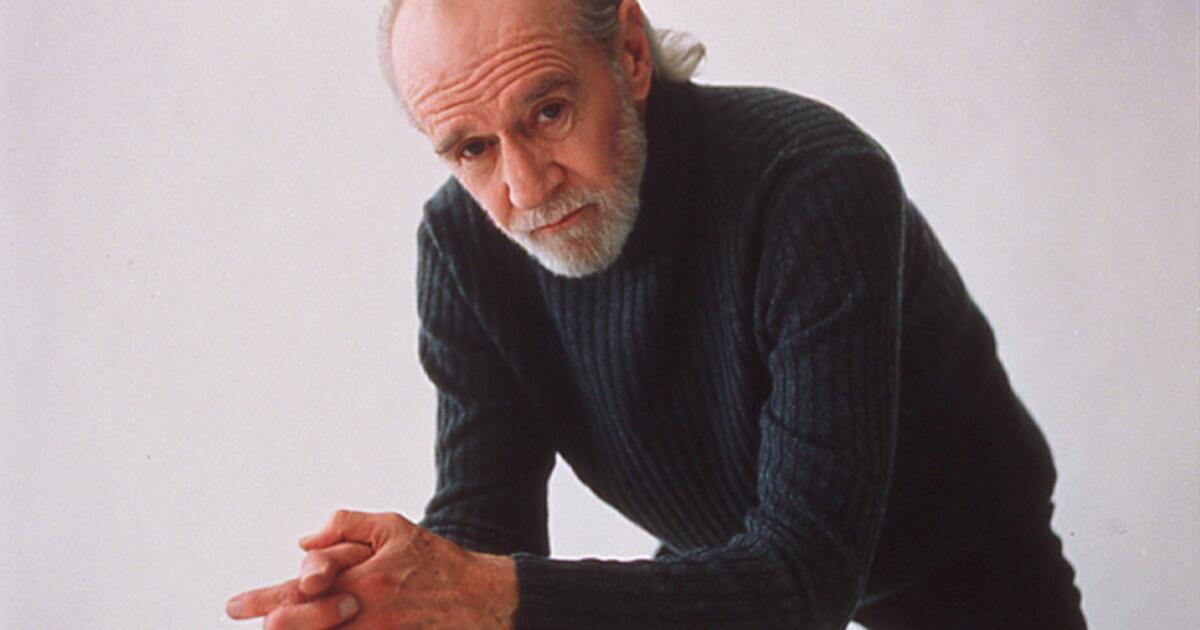
I knew it was going to be bad. By the time I sat down to watch the thing, much of the internet was already furious that a “state-of-the-art-entertainment AI” called Dudesy had generated an hourlong comedy special in the style of George Carlin, without the consent of the late comic’s horrified family. But I wasn’t prepared for it to be so bad.
The special, tastefully titled “George Carlin: I’m Glad I’m Dead,” is one of the most unpleasant things ostensibly produced for entertainment purposes that I have ever sat through. It’s a stroll through an uncanny valley of Carlin’s comedy, an audio program in which a serviceable replica of the familiar raspy voice delivers “jokes” on topics from mass shootings to Taylor Swift to artificial intelligence.
It’s all set to an unsettling rotating gallery of AI-generated images that roughly correlate to whatever Carlin’s simulacrum is discussing. When the Carlin voice is hitting on the malign influence of money in politics, there’s a bizarre diagram of politicians being bought off, with figures labeled “The guluar citizen” and “Liolbolist”; when AI Carlin says the you-know-what “has hit the fan,” a hyper-stylized brown tube protrudes from one.
It’s a nightmare. If I were to have to watch this whole thing in a darkened room, eyeballs peeled like the guy in “A Clockwork Orange,” there is a non-zero chance I would have a complete psychotic break.
Sadly, that’s the point. This thing wasn’t produced to convince anyone AI can produce great work in the style of one of our iconic comedians. It was, like the AI Drake song and those Harry Potter-directed-by-Wes Anderson images before it, a provocation. It was supposed to cause a stir, to go viral in a way that vaguely unsettles or irks people, and it did that exactly. Part of that calculation may have, depressingly, included pissing off Carlin’s family and estate, which it also did.
Carlin’s daughter, Kelly, responded to the special in a statement about her dad. “No machine will ever replace his genius,” she wrote on X. “These AI generated products are clever attempts at trying to recreate a mind that will never exist again. Let’s let the artist’s work speak for itself. Humans are so afraid of the void that we can’t let what has fallen into it stay there… Here’s an idea, how about we give some actual living human comedians a listen to?”
George Carlin fans have expressed disgust with the content itself, too: Vice’s Matthew Gault, a self-described longtime fan of the comic, described the special as “worse than you could possibly imagine.” Writer and PR pro Ed Zitron, another Carlin stalwart, wrote that “the jokes were bad, the voice was soulless and inaccurate, the pace was languid, and the world will have forgotten about it in two weeks unless Carlin’s estate sues (and I desperately hope they do so).”
But what bothers me uniquely about this episode is that it serves as a grim snapshot of where so much of the AI industry is at, a year into its reign as the dominant tech trend: Here we have an apparently impressive technology — we can’t know for sure, because the details are concealed in the production process, and almost surely involve ample human labor — designed not to meaningfully entertain, or to present any actual utility, but to exist wholly as a warped advertisement for itself.
So much of AI is smoke and mirrors right now, clouding what too often seems to have amounted to automated digital reappropriation (it’s no accident that the special begins with a long disclaimer that what you’re about to see is not actually George Carlin and was created by an AI that “learned” from his specials, in a laborious effort to avoid allegations of copyright infringement) and rank opportunism.
Notice the pattern of chief AI spokesman Sam Altman himself, who spent last year publicly extolling the vast and potentially terrible power of the AI he was building — a CNN headline from October noted that “Sam Altman warns AI could kill us all” — but has now pivoted to assuring business leaders in Davos, Switzerland, that actually, it’s just good for business. “It will change the world much less than we all think,” Altman said this week at the World Economic Forum there, adding that it’s an “incredible tool for productivity.”
The cynical observer might conclude that the apocalyptic AI hype tour Altman and his peers embarked on in 2023 was merely a sustained auto-generated George Carlin special: a stunt designed to generate interest in the power of a product that tech companies want to sell you.
That’s likely the case with Dudesy, the “AI” that allegedly created the special, though we can’t say for certain because what Dudesy actually is remains shrouded in the dumbest kind of secrecy. The Dudesy “AI” is the animating conceit of a comedy podcast hosted by ex-”MadTV” cast member Will Sasso and comedian Chad Kultgen. The premise is that both comics have handed over all their personal data to Dudesy — a bot created by an unnamed tech company, and which the hosts have told journalists that a nondisclosure agreement precludes them from discussing — and the “AI” runs the show.
I keep putting “AI” in scare quotes because it’s not entirely clear to what extent Dudesy exists as a technology, whether it’s fabricated by the comedians, or stitched together from ChatGPT output or voice manipulation technology or actually some proprietary chatbot or what. Honestly, I don’t know what would be worse: if two washed-up comedians stitched together a stunt that made it appear as though an AI generated a facsimile of George Carlin, insulting his memory, fans and family in order to flog their floundering podcast, or if there was a real tech company behind this and its bad-taste advertising for some voice-replication product.
The podcast, which isn’t all that popular, appears to rely on its central hook to juice its numbers. Before the Carlin stunt, Dudesy had produced another comedy special, this one performed by an AI version of quarterback Tom Brady, which was immediately met with the threat of legal action and taken down.
I want to pause here to note that one of the stories about that fiasco I found was published by Sports Illustrated, which recently faced down its own scandal over allegations the once-iconic sports magazine was using AI to write articles, which were posted to the site in uncharacteristically weird and unintelligible prose. And, well, here’s the opening sentence of the Sports Illustrated article about AI Tom Brady: “Comedy comes in many different forms and is portrayed in a multitude of ways, but a newly generated AI comedy special — created by comedians Will Sasso and Chad Kultgen — created some buzz last week.”
Can’t say for certain, but that scans as AI-generated to me! It felt like a glimpse of one plausible, fast-arriving future: generative AI products reviewing other generative AI products ad infinitum — bad AI content all the way down.


The tally from Trumpian attacks on science now includes billions of dollars in damage to farmers and ranchers and assaults on scientists’ freedom of speech
One of the rules I came to live by during my years of covering global trouble spots is: “Never assume that things can’t get worse.”
But it will be hard to find a worse display of shameful servility to the Trump administration by a scientific organization than the American Diabetes Association provided on Friday.
During the organization’s annual conference in New Orleans, five of its leading members — four former presidents and the current editor of Diabetes Care, its official journal — were distributing paper copies of an editorial from the journal decrying the administration’s aggressive attack on scientific research and funding.
The seeming endorsement by the ADA of the current administration’s approach to science and of its attacks on freedom of speech is unconscionable.
— Open letter to American Diabetes Association
Suddenly they were confronted by security guards and New Orleans police and manhandled out of the hall. (A video is here, courtesy of MedPageToday.)
Their papers were confiscated. They were ordered to surrender their passes and were informed that if they tried to reenter the hall they would be arrested for trespassing.
“We printed 1,000 copies of the editorial, at my personal expense, and we hoped that 200 people who hadn’t seen it would read it,” Steven Kahn, director of the Diabetes Research Center at the University of Washington, editor of the journal and the lead author of the editorial, told me.
Instead, the editorial has become a must-read, with tens of thousands of page views and widespread condemnation of the conference organizers’ actions.
An open letter to the ADA started by David Nathan of Massachusetts General Hospital, titled “Shame on You” and stating that “the seeming endorsement by the ADA of the current administration’s approach to science and of its attacks on freedom of speech is unconscionable” has more than 6,400 signatories on change.org as of this writing.
The Diabetes Association implied in an official statement that the scientists had breached IRS regulations that include “maintaining a strictly nonpartisan environment at all organizational events.” On Wednesday, the organization said it would commission “a thorough independent review of the events that occurred.”
The organization’s action underscores one reason why the Trump administration’s wholesale attack on scientific research has reached a level that, as I’ve written, will have generational ramifications: It’s because some of our most august scientific organizations have failed to stand up for principle.
“It’s part of a larger systems failure among the academic medical centers, research universities, scientific and professional societies and the National Academies,” says Peter Hotez of Baylor College of Medicine, a vaccine expert and veteran adversary of pseudoscience.
The attention given to individual incidents such as the ADA conflict obscure what Hotez calls “the greater reality … a much darker MAHA strategy to tear down American biomedicine.” The goal, he says, is to supplant independent academic research with “an entire system of pseudoscience and grift.” MAHA is the administration’s acronym for “Make America Healthy Again.”
The latest iteration of this effort came late last month with a rule proposal from the Office of Management and Budget, which is headed by the arch-conservative Russell Vought, that would in effect make all scientific grant applications subject to the oversight of politically-appointed commissars.
Among other provisions, grants would be rejected if they’re judged to “fund, promote, encourage, subsidize, or facilitate … diversity, equity, and inclusion” or “gender ideology” such as “theories or ideologies that deny the biological reality of sex or the sex binary in humans.”
The OMB proposal finally stirred major scientific bodies to speak up. “This latest move is a brazen power grab,” the American Association for the Advancement of Science said through its chief executive, Sudip Parikh. “If this rule becomes final, Americans’ hopes for future cures, national security and economic strength will rely on the scientific sensibilities of the nation’s chief bureaucrat.”
As it happens, the OMB proposal dropped just as the economic consequences of the extremist war on science were becoming clearer than ever.
Among the thousands of grants and programs that perished when the administration dismantled the U.S. Agency for International Development, for example, was a program monitoring the advance of the New World screwworm north from Central America.
The screwworm, which has the capacity to devastate cattle and sheep herds, has now appeared in Texas, where its costs could be enormous. Just last year, the Dept. of Agriculture calculated that the eradication of the pest in the U.S. in the 1990s yielded annual economic benefits to producers of an inflation-adjusted $1.7 billion a year to the cattle industry and $6 billion a year to the broader economy. A new outbreak, the USDA estimated, could cost the Texas economy $1.8 billion.
Then there’s measles. The Centers for Disease Control and Prevention reports 2,030 U.S. cases this year as of June 4, almost as many as were seen in all of 2025 (when there were 2,288, including three deaths), the worst outbreak since 1991. This is the harvest of the anti-vaccine ideology being spread by Health and Human Services Secretary Robert F. Kennedy Jr.
The outbreak’s consequences can be measured in dollars and cents: Responding to an outbreak of as few as 600 cases could cost local agencies $10 million, according to healthcare researchers at Johns Hopkins University.
The Trump administration has proposed slashing the budget of the grant making National Science Foundation by 61% and of the National Institutes of Health by 40%. The budget of the CDC, which once reigned as a global gold-standard for public health oversight but has suffered from the disdain of RFK Jr. and his minions, would be cut by 44%.
Taken together, these cuts “would shrink the economy by $1 trillion compared with maintaining the 2025 level of R&D,” reckons the Information Technology and Innovation Foundation, a science and tech think tank.
What frightens scientists more than the sheer numbers are that the cuts are arbitrary and manifestly pernicious. A study published last year in JAMA Internal Medicine identified 383 NIH-funded clinical trials that the administration terminated, leaving more than 74,000 participants high and dry.
“Scientific investment is not a cost to be minimized,” Henry Miller, a former biotech official at the Food and Drug Administration, observed recently; “it is an engine of national wealth. … The internet, mRNA vaccines, human gene therapy, GPS, the transistor — all emerged from the sustained public investment being dismantled today.”
The Diabetes Care editorial that Kahn and his colleagues attempted to distribute at the New Orleans conference is a cri de coeur targeted at the right-wing anti-science campaign. It’s titled, “Misguided Brushes of a Pen Continue to Dismantle and Destroy Biomedical Research in the United States.”
The result of the funding reductions, the authors wrote, will be “researchers being forced out of science and fewer people considering biomedical investigation as a career. Are we ready to watch the crippling of scientific advances in diabetes and all other diseases? It is no longer enough to stand idly by or work behind the scenes with lawmakers. Moreover, it is no longer appropriate to fret about political backlash.”
The scientists intended their distribution of the article implicitly as a counterweight to a keynote talk by NIH Director Jay Bhattacharya, who was going to speak without taking questions but who bailed out at the last minute. I sought a comment from Bhattacharya, who portrays himself as a champion of open scientific debate, about the eviction of the five scientists from the conference, but got no reply.
The uproar has roiled the ADA. Its president-elect, endocrinologist Jennifer Green of Duke University, and its scientific sessions planning committee chair, diabetes expert Mark Atkinson of the University of Florida, have both resigned their positions, though their role in the evictions, if any, is unknown.
The so-called New Orleans Five demanded an apology from the association, Kahn told me. They got one Wednesday from ADA Chief Executive Charles Henderson, via a video in which he extended his apology to “the broader diabetes community,” many members of which of whom he acknowledged were “disturbed, disappointed and concerned about what occurred.”
The truth is that the ADA’s action only validated the editorial’s exhortation to scientists to speak out forcefully: “We can no longer afford complacency and fear. We must all act now!” Will other scientific bodies draw a lesson from what happened in New Orleans? Let’s hope so.

Federal Bureau of Investigation officers served a search warrant Wednesday at the Garden Grove chemical plant, where a compromised tank containing toxic chemicals threatened to leak or explode, resulting in the evacuation of nearby residents in May.
“We are cooperating with authorities at our Garden Grove facility and will continue to do so,” a spokesperson of GKN Aerospace, which operates the facility, said in an email statement.
Laura Eimiller, an FBI spokesperson, said FBI agents are serving a search warrant as part of an ongoing investigation into the Garden Grove aerospace business.
GKN Aerospace is a division of Melrose Industries, a U.K.-based aerospace company that manufactures aircraft parts.
In May, at the manufacturing facility, which stores thousands of gallons of toxic chemicals in pressurized tanks used to produce materials such as plexiglass for fighter jet and commercial aircraft windows, one tank threatened to leak or explode.
Over 50,000 residents were temporarily evacuated as officials investigated the potential for an explosion for days. They found that a crack in the compromised tank released the pressure buildup inside the storage unit, which ruled out the possibility of an explosion, and allowed residents to return to their homes.
The compromised tank threatened to blow up, affecting adjacent tanks also containing the toxic chemical methyl methacrylate which could have caused a large-scale public safety emergency. Still, plans to remove the remaining MMA chemical tanks from the facility have been postponed, and no new date has been announced yet.
Residents who were impacted by the evacuation have already filed multiple class action lawsuits against the company, alleging negligence at the manufacturing facility and seeking compensation for loss of use of homes and diminished property value. Now, federal officials will investigate possible violations and factors that could have contributed to the incident.
According to the FBI warrant, the officers will seize items in violation of measures to prevent the accidental release of hazardous substances into the air.
The warrant allows FBI officers the discretion to search digital devices or seize and transport them as part of the investigation.

Electric-vehicle maker Rivian began delivery of a cheaper SUV on Tuesday as it aims to take customers from Tesla and others.
The long-anticipated R2, which will eventually be available for less than $45,000, could help boost the market share of the Irvine company better known for vehicles priced around $77,000.
The first R2s to roll off the company’s production line in Normal, Ill., are the performance version, starting at $57,990. Rivian said the R2 Premium will arrive in late 2026 for around $54,000, followed by an R2 Standard version in 2027 priced at $44,990.
“Rivian is really trying to prove its worth,” said Ivan Drury, director of insights at Edmunds. “They’ve gone past that initial stage and are hoping to move on to mass market products.”
The R2 Performance is still an expensive vehicle for many Americans, but it’s a step down from Rivian’s nearly $77,000 R1S. It’s typical for an automaker to launch the most expensive version of a new vehicle first, experts said.
Whether the R2 will be the success Rivian is hoping for won’t become clear until late 2027, once the standard versions are widely available. Chief Executive RJ Scaringe said the company is aiming to compete with not just other EV makers, but also traditional auto companies such as Jeep and Subaru.
“More mainstream people are going to be in on the R2, especially for the lower-priced models,” auto analyst Brian Moody said. “You’re always going to have early adopters, but there’s a lot more customers to go around in the $45,000 to $55,000 range.”
According to Cox Automotive, the average transaction price for a new EV in the U.S. is $55,000, compared with $49,000 for a gas-powered vehicle. Used EV sales have been surging lately because of their value, with an average transaction price of around $36,000.
Though there’s significant hype surrounding the launch of R2, investors have been unimpressed. Rivian shares fell 7% on Tuesday.
There has been a broad cooling of the EV market. Major automakers including Honda and Ford have cut back their EV options as excitement for the vehicles has fallen under the Trump administration. A $7,500 EV tax credit for new vehicles expired in September.
Drury added that an announcement of a new product would generally generate more buzz than the first deliveries of a vehicle that’s already been in the public eye.
“This is simply them delivering on a promise, and the market itself is not what it was when they had first conjured up the vehicle,” Drury said.
Rivian lost $3.6 billion last year and hasn’t been profitable since its founding in 2009. Scaringe said the company will reach profitability on a per-unit production basis with the R2 this year, but estimated that the company won’t turn an overall profit until closer to 2030.
Karl Brauer, an auto industry expert at ISeeCars.com, said the premium and standard versions of the R2 probably will sell in much higher volumes than the performance version.
“It’s in theory an exciting moment, because they’re launching this new version, but it’s the expensive one,” Brauer said. “There’s no indication in my mind that there will be huge, high-volume sales.”
-
 Sports2 minutes ago
Shohei Ohtani, Justin Wrobleski sustain injuries, exit early for Dodgers vs. Pirates
-

 World14 minutes ago
Russia ‘lost standing’ despite ‘a breather’ from higher oil prices, IMF chief says
-

 News37 minutes ago
A Nebraska immigration raid shut businesses down a year ago. The fallout is ongoing, officials say.
-

 Los Angeles, Ca2 hours ago
Southern California police officer accidentally shoots colleague in ‘horseplay’ incident
-

 Detroit, MI2 hours ago
Airbnb Is Betting on Detroit as a Destination
-

 San Francisco, CA3 hours ago
Gray whale found dead near Pier 80 in San Francisco, vessel strike suspected
-

 Dallas, TX3 hours ago
Dallas Mavericks Reportedly ‘Open’ To Trading 9th Pick in 2026 NBA Draft
-

 Miami, FL3 hours ago
Michael Stern’s JDS to bring on partner Jeff Soffer at Mercedes-Benz Miami project, working on $1B loan

