Business
Barbie brand takes another hit with festival flop

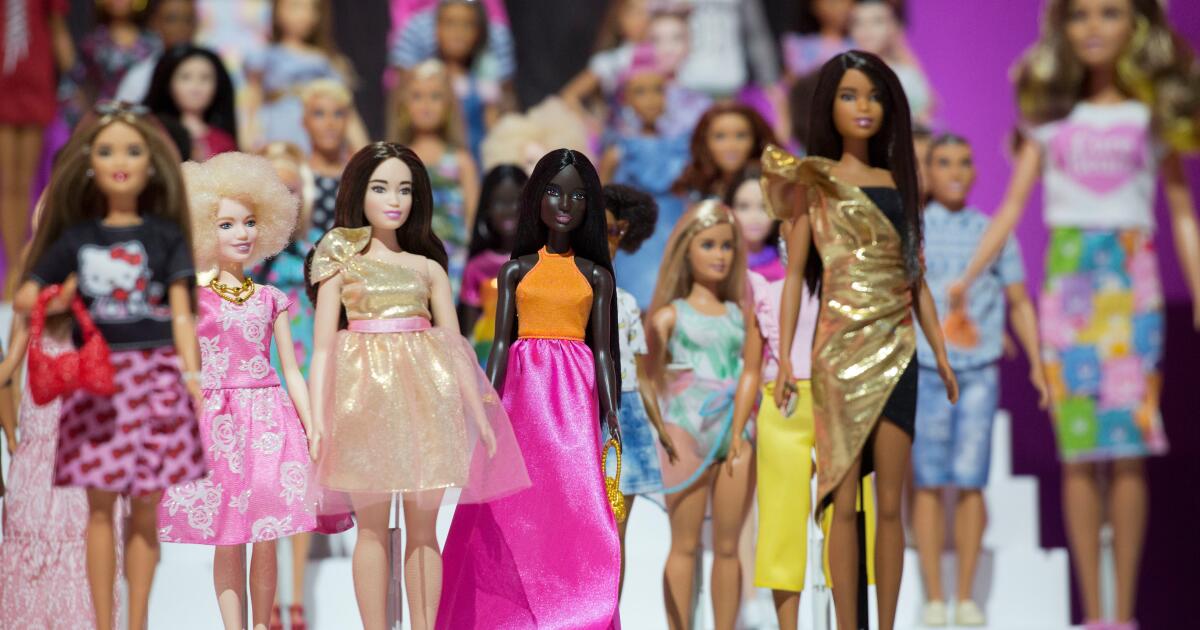
Jacqueline Kerr arrived to a Florida convention center Friday, suitcases stuffed with intricate, hand-made costumes — pink sequined ball gowns, a leopard bodysuit and an all-white rhinestone cowgirl ensemble — all paying homage to classic Barbie looks.
None of them made it out of her suitcase.
Kerr and her best friend had spent hundreds of dollars preparing for Barbie Dream Fest, a three-day event that organizers touted as a chance for fans to “live the dream life.”
But when Kerr arrived Friday, it felt more like a nightmare.
“I was so excited to have an event where I could finally put on my most Barbie-esque outfits and have an excuse to wear them without looking like a fool,” the 32-year-old from Florida said. “We were so disillusioned after that first day.”
Hundreds of posts from angry attendees flooded social media sites this weekend, many of whom said the event was a far cry from what was advertised. The event was organized by Mischief Management in Fort Lauderdale, Fla.
Tickets for adults were hefty, ranging from $69 for a day pass to $449 for a 3-day VIP experience. Kerr and her friend purchased a pass that cost $249 per person and included a swag bag that she never received, she said.
Mischief Management confirmed to The Times that the company is issuing full refunds to all ticket holders. Kerr was told the refund would process in three to four weeks.
The event was meant to be an intimate fan convention designed to offer fans closer access to the Barbie universe, a spokesperson for the company said.
“We appreciate the passion and engagement from the Barbie community,” said a spokesperson from Mischief Management. “Bringing fans together — alongside Barbie role models, designers, partners, and global icons who embody the true spirit of Barbie — was at the heart of this event.”
The event comes during a tough time for the Barbie brand. The doll, one of the most popular toys in Mattel’s inventory, has struggled to garner sales, despite gaining momentum in 2023, when the “Barbie” movie had widespread success.
Mattel’s shares plummeted in February after the company announced weak holiday season sales, with Barbie products taking a big hit. The company recently announced it’s laying off 65 employees in May, and let go of 89 other workers in January.
The Barbie brand was licensed by Mischief Management, a spokesperson for Mattel said.
“We want every fan experience to be an excellent one,” the spokesperson said.
The event sold ticket-holders a big dream, including an ’80s-themed neon roller-skating party, an interactive Barbie Dream House, a bicycle course and a free glam bar. The schedule also boasted a star-studded lineup of speakers, including Serena Williams and Angel Reese.
But that dream fell flat, attendees said.
Instead, eventgoers roamed a largely empty convention center with bare concrete walls void of pink and glitter. A small, makeshift rink sectioned off by barricades was stationed in the corner, and the glam bar was closed down by the second day of the event. The bicycle course featured four small bikes with training wheels, only suitable for young children.
Kerr and her friend worked their way through the convention in less than 45 minutes on Friday, she said.
Williams, Reese and other celebrities did hold speaking events over the weekend, though the audience was mostly empty, Kerr said. The Mattel designers responsible for making Barbie also spoke at the convention.
The schedule promoted a free glam bar, which wasn’t staffed for most of the weekend, said Brielle Cenci, a vendor who paid several thousand dollars to have a booth.
Cenci owns a company that sells mermaid clip-on hair extensions and flew in from New Jersey. The event felt poorly organized and vendors received little communication ahead of the convention that only dwindled as the weekend went on, she said.
Vendors expected the convention to be packed with thousands of people, but Cenci said she saw only about 100 attendees a day.
“It felt like a farmers market,” Cenci said. “It was a ghost town. It felt awkward for the people attending, because it was so silent and empty… We were just as in the dark about the event as the attendees were.”



Land area devoted to pistachio growing
Twenty years ago, California farmers bet big on the pistachio. The little green nut was considered niche in the United States, but it was a staple in Iran and the surrounding region.
That gamble has paid off. Demand for pistachios is high as wellness trends draw people to high-fiber, protein-rich foods. They are also a key ingredient of Dubai chocolate, the incredibly popular chocolate bar filled with pistachio cream and kataifi, or shredded phyllo.
Pistachio orchards cover more than 600,000 acres in California, up from 100,000 in 2001. The San Joaquin Valley of California has near-perfect conditions for pistachios, a mix of hot, dry summers and cold, wet winters. The United States is now the world’s largest producer and exporter of pistachios. Iran is second.
Yet more than a month into the war with Iran, ship traffic through the Strait of Hormuz is at historically low levels, which has stymied exports from the region.
The potential removal of a major player in the market is good news for farmers in California, who are likely to get higher prices for their pistachios.
“With this war, it’s going to limit what Iran is able to do, able to ship, to customers in Europe and China,” said Adam Orandi, who farms 1,600 acres of pistachio orchards in the San Joaquin Valley. His father imported saplings from Iran in the 1970s.
For hundreds of years, Iran dominated the market. Pistachios first found their way to California in the 1930s when an American botanist, William E. Whitehouse, brought the nuts back from Iran. Yet only one variety flourished, which was named the “Kerman.”
Pistachio orchards expanded in the 1970s in California, but Iran continued to control the global market until the Iranian hostage crisis of 1979, when students stormed the U.S. Embassy in Tehran and took dozens of Americans hostage.
Various trade embargoes against Iran were imposed and lifted in the following years, but a 241 percent tariff that was put in place in 1986 essentially ended Iran’s reign in the pistachio market in the United States.
Since 2011, the United States has consistently surpassed Iran as the largest exporter of pistachios. Iran has continued to lose market share.
The U.S. leads Iran in pistachio exports
“Production in Iran has been very erratic,” said David Magaña, who analyzes the fresh produce and tree nut industry at Rabobank. “Fifteen years ago, Iran accounted for 40 to 50 percent of global pistachio exports. More recently, Iran’s share has been more like 20 percent.”
The wholesale price of in-shell pistachios — what large manufacturers or retailers pay — has climbed 20 percent in the last 18 months to $4.57 a pound, according to Expana, a market data provider for the agriculture and food industries. In stores, consumers are paying significantly more.
The market is divided into two products: in-shell pistachios, which are sold whole and often roasted, and pistachio “kernels,” the seeds that are used in food production. The explosion of interest in pistachios as an ingredient in desserts and other foods has sharply increased demand for the kernels.
“For years, pistachios were a one-trick pony. They were a salty snack,” Mr. Orandi said. Just a few years ago, he added, he “couldn’t give the kernels away.”
In recent years, California growers have devoted more acreage to pistachios, and the state produced a record 1.6 billion pounds last year. American Pistachio Growers, a trade association, projected that California trees will bear more than two billion pounds of pistachios by 2031.
Pistachio imports have shot up worldwide
But there is one thing standing between the farmers and those projections: California’s water regulations, which people in the industry said may restrict the ability of some orchards to expand.
Pistachios, like other tree nuts, require large amounts of water. The amount needed by an acre of pistachio trees for an optimal crop yield depends on a number of factors, including soil salinity and the age of the trees.
On average, one acre of pistachios consumes over one million gallons of water in a year — slightly less than almonds and walnuts, according to estimates from University of California Agriculture and Natural Resources. For areas in California prone to droughts, the pistachio boom could add stress to the state’s already thin water resources.
The vast majority of pistachios in California — in addition to other nuts and crops — grow in areas classified as of “extremely high” water stress as defined by the World Resources Institute, an environmental research firm. Compared to two decades ago, the amount of water used annually for pistachios in these areas is now tens of billions more gallons than before.
Difference in water use in pistachio-growing regions between 2007 and 2025
Still, there may be benefits to pistachios emerging as a major nut crop of the state, according to Josué Medellín-Azuara, a water resources researcher and professor of environmental engineering at University of California, Merced. They are more tolerant to drought and water salinity compared to walnuts and almonds, and they are consistently a high value crop, he said.
The profitability of these water-intensive crops creates a paradox for the farmers planting them, said Rich Pauloo, a hydrologist. “They consume more water, but you get more money per drop of water.”

Zoom in to see prices in each county
The cost of fuel in the United States is on the rise, with the price of gasoline steadily ticking up since the U.S.-Israeli attacks on Iran began in February. As oil supplies remain disrupted in the Middle East, Americans have seen gas stations across the country change their signs every day for more than a month.
But the price increases have not been spread evenly. In California, where drivers typically pay the most for gas in the country, a gallon of regular unleaded has cost, on average, well over $5 a gallon, according to the AAA motor club. In Oklahoma, a gallon has been closer to $3.
The wide range is owed to regional differences in taxes, distribution costs and refining margins. But the common denominator is the supply of oil in the world.
Although the United States is a net exporter of petroleum products, it has to import millions of barrels a day of those commodities to refine, often mixed with our own domestic crude. The cost of those barrels is vulnerable to shockwaves in the global market.
If the war drags on, fuel prices will continue to chip away at Americans’ wallets.

Allbirds, an eco-friendly shoe company that won over Silicon Valley, was sold at a fraction of the $4 billion it was once worth.
The shoe brand said this week that it is selling all of its assets to American Exchange Group, a brand management company, for $39 million. The company, which makes shoes from wool and eucalyptus, attracted young Bay Area consumers and celebrities for its sustainable practices, but has since struggled to find its footing.
Allbirds peaked at a $4-billion valuation when it went public in 2021, but sales plummeted not long after. The company made $33 million in revenue in the third quarter of 2025, a little more than half of the $63 million it made for the same period in 2021.
The deal is still awaiting approval from shareholders and is expected to close in the second quarter of 2026.
The company canceled an earnings call it had scheduled for Tuesday, and its shares dropped by more than 10% Wednesday.
The company has evolved over the past decade into a brand known for innovation and comfort, Joe Vernachio, the company’s chief executive, said in a statement.
“This next chapter with AXNY builds on the foundational work already completed and sets up the brand to thrive in the years ahead,” Vernachio said.
The brand’s pricey wool shoes were initially embraced by celebrities like Leonardo DiCaprio, who invested in the company in 2018. However, the company failed to retain consumers for its other products, including flip-flops with sugarcane-based soles and wool leggings.
Allbirds was started nearly two decades ago in New Zealand by former professional football player Tim Brown. The company went public at a time when venture capitalists were funneling money into direct-to-consumer brands, which both make and sell goods through their own websites and stores.
The company eventually abandoned that approach, selling the product through retailers, but sales still tapered out. It had a net loss of just over $101 million in 2022.
Net proceeds from the sale are expected to be distributed to stockholders in the third quarter of 2026, the company said.

Missing Missouri college student Melissa Oelke found dead after abandoned vehicle discovered in rural Illinois

Thursday Headlines: Montana to the Moon, School bus vape, Highway crashes

Nebraska’s open and closed primaries: How they work for nonpartisan voters

What are some of your rights as a tenant in Southern Nevada?

As hoops betting spikes, it’s New Hampshire and other states vs. prediction markets

Florida High School Football Rankings: Top 25 teams – Oct. 21

How old is Bo Nix? What to know about Oregon quarterback ahead of 2024 NFL Draft

Cleary's 21 help Le Moyne down Central Connecticut State 69-64 in OT

99th annual Pony Swim held in Virginia

Indiana Members Credit Union announced as new anchor tenant at Bottleworks District

Map: 4.6-Magnitude Earthquake Shakes Northern California

What you need to know: 5 key takeaways from Trump’s Iran address
Will the Iran war threaten the EU's green transition?

Appeals court rejects HUD homelessness overhaul saying it would be “disastrous”

GOP leaders endorse Trump’s shutdown-proof move to end DHS funding lapse
-

 South-Carolina4 days ago
South Carolina vs TCU predictions for Elite Eight game in March Madness
-

 Culture1 week ago
Do You Know the Comics That Inspired These TV Adventures?
-

 Miami, FL7 days ago
Jannik Sinner’s Girlfriend Laila Hasanovic Stuns in Ab-Revealing Post Amid Miami Open
-

 Education1 week ago
Video: Trader Joe’s Dip Head-to-Head Taste Test
-

 Culture1 week ago
Wil Wheaton Discusses ‘Stand By Me’ and Narrating ‘The Body’ Audiobook
-

 Minneapolis, MN7 days ago
Boy who shielded classmate during school shooting receives Medal of Honor
-

 Tennessee1 week ago
Tennessee Police Investigating Alleged Assault Involving ‘Reacher’ Star Alan Ritchson
-

 Vermont4 days ago
Skier dies after fall at Sugarbush Resort