Business
Amazon’s Fight With Unions Heads to Whole Foods Market


At a sprawling Whole Foods Market in Philadelphia, a battle is brewing. The roughly 300 workers are set to vote on Monday on whether to form the first union in Amazon’s grocery business.
Several store employees said they hoped a union could negotiate higher starting wages, above the current rate of $16 an hour. They’re also aiming to secure health insurance for part-time workers and protections against at-will firing.
There is a broader goal, too: to inspire a wave of organizing across the grocery chain, adding to union drives among warehouse workers and delivery drivers that Amazon is already combating.
“If all the different sectors that make it work can demand a little bit more, have more control, have more of a voice in the workplace — that could be a start of chipping away at the power that Amazon has, or at least putting it in check,” said Ed Dupree, an employee in the produce department. Mr. Dupree has worked at Whole Foods since 2016 and previously worked at an Amazon warehouse.
Management sees things differently. “A union is not needed at Whole Foods Market,” the company said in a statement, adding that it recognized employees’ right to “make an informed decision.”
Workers said that since they went public with their union drive last fall, store managers had ramped up their monitoring of employees, hung up posters with anti-union messaging in break rooms and held meetings that cast unions in a negative light.
Audrey Ta, who fulfills online orders at the store, said that she planned to vote in favor of unionizing with the United Food and Commercial Workers, but that there was unease among the workers. She has stopped wearing her union pin on the job.
“People keep their head down and try to talk not to talk about it,” Ms. Ta said. “Management really pays attention to what we talk about.”
Whole Foods said it had complied with all legal requirements when communicating with employees about unions.
U.F.C.W. Local 1776, which represents workers in Pennsylvania, has filed unfair labor practice charges with the National Labor Relations Board, accusing Whole Foods of firing an employee in retaliation for supporting the union drive. The union also accused the chain of excluding the store’s employees from a pay raise that had been given this month to all its other workers in the Philadelphia area.
“They’re treating them differently,” said Wendell Young IV, president of U.F.C.W. Local 1776. “They’re discriminating against them for trying to form a union.”
Whole Foods denied allegations of retaliation. The company argued that it cannot legally change wages during the election process, and that it had delayed a raise until after the election to avoid the appearance of trying to influence votes.
A majority of the store’s workers signed union authorization cards last year before the union filed a petition for an election. But Ben Lovett, an employee who has led the organizing, said he expected the election to be close.
Whole Foods is the latest segment of Amazon’s business to confront the prospect of a union. In 2022, workers on Staten Island voted to form Amazon’s first union in the United States; it is now affiliated with the International Brotherhood of Teamsters. Amazon disputed the election outcome and has refused to recognize or bargain with the union pending a court challenge.
Delivery drivers, who work for third-party package delivery companies serving Amazon from California to New York, have also mounted campaigns with the Teamsters.
Rob Jennings, an employee in the prepared foods section of the Philadelphia store, has worked there for nearly two decades. He said he noticed a series of changes after Amazon bought the chain in 2017: a program that offered employees a portion of the store’s budget surplus was scrapped, part-time workers lost health insurance, staffing levels started to decline.
Even though Whole Foods had never been a worker paradise, Mr. Jennings said, “I have a fantasy about bringing back all the things they took away.”
Whole Foods said in a statement that the abandoned profit-sharing program did not evenly benefit all employees and that the company invested in wages instead; that part-time workers lost the ability to buy health insurance through the company and did not lose funded health insurance; that part-time workers receive other benefits like in-store discounts and a 401(k) plan; and that the company is committed to keeping stores appropriately staffed.
Khy Adams first knew the Philadelphia store as a high school hangout. She had been wanting to work there for years when, in August, she landed a job overseeing the hot foods bar.
But she did not find the work-life balance she had sought, she said, with management expecting an unreasonable level of availability. She said she hoped a union could help improve conditions.
In addition to Amazon’s pushback, the political transformation in Washington may pose hurdles. After the Biden administration’s embrace of unions, President Trump is expected to appoint a new N.L.R.B. general counsel whose approach could make it harder for organizing campaigns to succeed.
“Amazon has the machine behind them to prolong this, to shut this down, to make it the hardest thing for us to continue to work toward,” Ms. Adams said of the campaign to unionize.



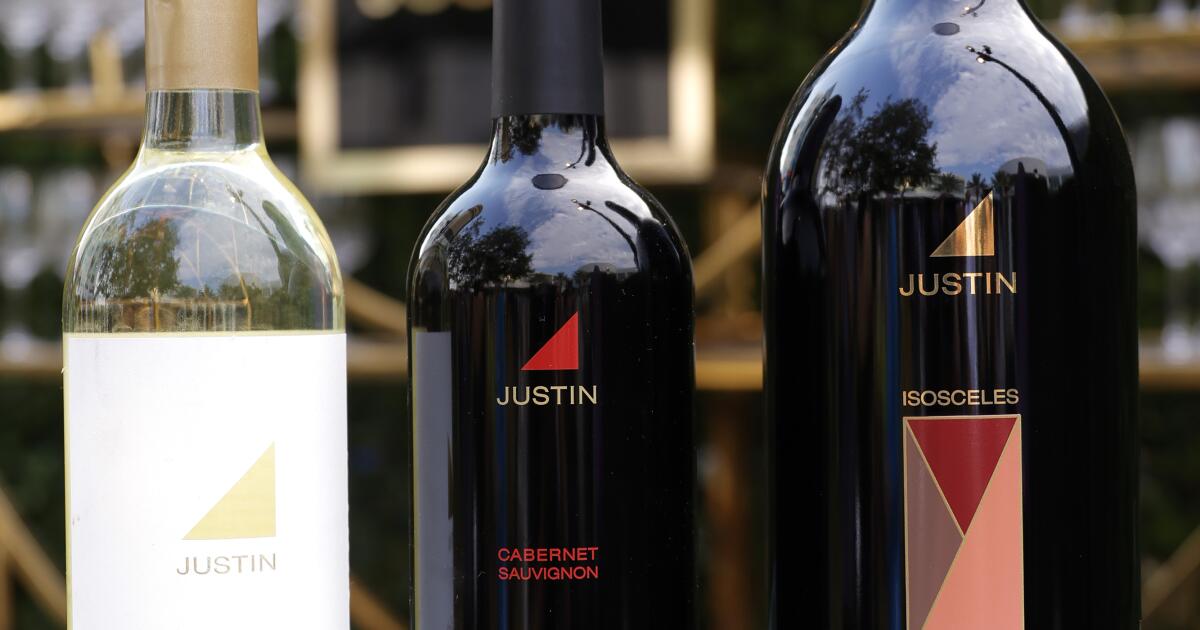
Justin Vineyards & Winery has agreed to workplace reforms and to pay $1.49 million to settle a federal lawsuit accusing it of allowing female employees to be sexually harassed and then retaliating against them for reporting it.
The Paso Robles business reached the settlement with the federal Equal Employment Opportunity Commission. It was was approved Thursday by a federal judge.
Also named in the lawsuit and settlement is the Wonderful Co., the Los Angeles agribusiness owned by Beverly Hills billionaires Lynda and Stewart Resnick.
In 2010, Wonderful acquired Justin, which includes production facilities, a tasting room, inn and Michelin-starred restaurant.
The lawsuit, filed in 2022, alleged that female employees were subject since August 2017 to comments about their appearance; texts containing inappropriate photos; touching of their breasts, buttocks and genitals; forced kissing and other harassment by their male supervisors.
It further alleged that the companies “knew or should have known” about the hostile work environment.
The lawsuit also said that when complaints were made about the harassment, they were not properly investigated and the employees were subject to retaliation, including being given double shifts, being accused of wrongdoing and being berated and yelled at by supervisors.
Aside from the monetary penalty, the settlement requires Justin and Wonderful to halt any harassment or retaliation, undergo compliance audits and take other measures at the vineyard operations.
The companies denied all the allegations and agreed to the settlement to resolve the litigation, according to the consent decree.
In a statement, Justin said that the matter “dates back many years and was dealt with immediately and decisively the moment we became aware of any allegations of conduct that did not align with what is appropriate in the workplace.
“With this agreement reached, we look forward to putting this chapter fully behind us and continuing to focus on the incredibly talented team we have in place today,” the statement said.
Beatriz Andre, acting regional attorney for the EEOC’s Los Angeles District Office, commended Justin and Wonderful for reaching the settlement.
“The policy changes and reporting to which the companies agreed are important steps in ensuring a workplace free of discrimination,” she said in a statement.
In 2016, workers cut down dozens of oaks trees on land managed by Justin to make room for new grape plantings, stirring up controversy.
The Resnicks said they were unaware of the cutting, apologized, donated the land to a nature conservancy and agreed to plant thousands of trees on vineyard property.
After buying Justin, Wonderful acquired Landmark Vineyards in Sonoma County and Lewis Cellars in Napa Valley.
Business
Commentary: How a custody fight over an old dog showed why lawyers should never trust AI to tell the truth

The seemingly limitless proliferation of cases in which lawyers have been caught letting fictitious AI-generated legal citations contaminate their briefs continues to amaze.
That’s not only because judges are fining more lawyers for their laziness, but because the publicity about these embarrassments has been inescapable.
Here’s one involving a dog named Kyra.
She’s a 16-year-old Labrador retriever who became the target of a nasty custody fight between a California couple after the dissolution of their domestic partnership. In the course of the lawsuit, one lawyer published two AI-fabricated citations in a filing. The opposing law firm didn’t catch the flaw and cited the same fake cases in its filings, including in a court order signed by a judge.
Most lawyers grew up in a time when you could expect the other side to spin and even to lie about the record some of the time, but just lying or making a mistake about the existence of a case was basically unheard of up until a few years ago.
— Eugene Volokh, UCLA law school
The case of Joan Pablo Torres Campos vs. Leslie Ann Munoz also points to how AI, touted worldwide as a labor-saving technology, has actually increased the workload in some trades and professions, like lawyering. For litigators, it has created a new imperative: ferreting out citations that have been fabricated by AI bots in their own court filings — and their adversaries’.
I’ve written before about the proliferation of AI-generated fabrications infiltrating legal filings and even legal rulings, despite the advice drilled into the heads of even law students about making sure that their citations to precedential cases are accurate. But the wave keeps building: A database of AI hallucinations maintained by the French researcher Damien Charlotin now numbers 1,174 cases, of which some 750 are from U.S. courts.
That’s almost certainly a conservative count. Most AI fabrications may not even come to the attention of litigants or judges, especially in state courts.
“For every case that talks about this, my guess is that there are many that aren’t visible,” says Eugene Volokh of UCLA law school and the Hoover Institution, who keeps a weather eye on AI-related courthouse developments. He believes there may be thousands escaping notice.
AI has introduced mistakes that were never seen in the past. “Most lawyers grew up in a time when you could expect the other side to spin and even to lie about the record some of the time, but just lying or making a mistake about the existence of a case was basically unheard of up until a few years ago,” Volokh told me. “That’s because there would be no source of hallucinations — maybe you’d get the citations slightly wrong or you mischaracterized or misquoted them, but to talk about a case that doesn’t exist — that didn’t happen. Now it happens a lot.”
The judiciary is getting increasingly nervous about AI fabrications becoming part of the judicial record. “Reliance on fake cases…seriously undermines the integrity of the outcome and erodes public confidence in our judicial system,” an appelate judge stated.
Therefore, he added, “it is imperative for both the court and the parties to verify that the citations in all orders are genuine….This is especially vital with the increasing incidence of hallucinated case citations generated by AI tools.”
Judges are still reluctant to bring down the hammer for AI-fabrications if lawyers acknowledge their fault and “throw themselves on the mercy of the court,” Volokh says. But they’re getting tougher on lawyers who deny their reliance on AI or try to shift blame.
As recently as Monday, federal Magistrate Mark D. Clarke of Medford, Ore., ordered the attorneys representing the plaintiff in a civil lawsuit to pay more than $90,000 in legal fees, on top of an earlier sanction of $15,500 imposed on one of the lawyers, for incorporating 15 fabricated case citations and eight misquotations into case filings.
Clarke also dismissed the $29-million lawsuit, which arose from a ferocious dispute among the sibling heirs to an Oregon winery fortune, with prejudice, so it can’t be refiled. It was an extraordinary punishment, Clarke acknowledged — and the largest penalty imposed in any case in Charlotin’s database.
“In the quickly expanding universe of cases involving sanctions for the misuse of artificial intelligence, this case is a notorious outlier in both degree and volume,” Clarke wrote. Among other faults, he noted, the plaintiff’s lawyers never adequately fessed up to their wrongdoing. “If there was ever an ‘appropriate case’ to grant terminating sanctions for the misuse of artificial intelligence,” he wrote, “this is it.”
That brings us back to the custody battle over Kyra. The case originated in 2024, two years after a family court judge in San Diego dissolved the domestic partnership of Joan Torres Campos and Munoz. The dissolution order allowed them to keep their own property, but didn’t mention the dog, who lived with Munoz.
Torres Campos subsequently sought shared custody of Kyra and visitation rights. (Pet custody battles have long been a cultural fixture: Film aficionados might recognize this case’s similarity to the custody fight over the wire-haired terrier Mr. Smith in the 1937 Cary Grant/Irene Dunne vehicle “The Awful Truth,” surely the funniest movie ever made by Hollywood.)
Munoz rejected Torres Campos’ request, arguing that he didn’t really care about the dog, but only aimed to harass her. A family court judge sided with her, but Torres Campos appealed.
In her initial reply to Torres Campos, Munoz’s lawyer, Roxanne Chung Bonar, cited California cases from 1984 and 1995 that she said supported her client’s refusal to grant visitation rights.
Both case citations were fictitious. The 1984 case, Marriage of Twigg, didn’t exist at all; Bonar’s citation pointed to a criminal case that had “nothing to do with pets or custody determinations,” California Appellate Judge Martin N. Buchanan wrote for a unanimous three-judge panel, upholding the family court judge . The second reference was to Marriage of Teegarden, which was handed down in 1986, not 1995, and also had nothing to do with the issue at hand.
Things only got more complicated from there. Torres Campos’ lawyer, in a reply brief and a subsequent proposed court order, didn’t mention that Twigg and Teegarden were fabricated cases, perhaps because the lawyer hadn’t checked the references personally. The family court judge signed the proposed order, including the fake citations, resulting on their infiltration into the official record. (Although Torres Campos’ lawyer drafted the proposed order, it actually rejected his lawsuit.)
It was only in the course of appealing the family court ruling did Torres Campos’ lawyer mention that the two cited precedents were “invented case law.”
There was one more turn of the screw: In responding to Torres Campos’ appellate filing, Bonar “doubled down,” Buchanan wrote. Bonar insisted that Twigg was a “valid, published precedent” and added three more purported citations to the case. All were “just as phony as the original citation,” Buchanan noted.
Bonar even taunted Torres Campos’ lawyer for his “failure to conduct basic legal research” to verify the ostensibly genuine precedents, adding that his “inability to locate them underscores the incompetence that led to his appeal’s dismissal.”
Where did these references come from? It turned out that the Twigg reference originally came from a Reddit article written by an Oregon blogger and animal rescuer who posts under the name “Sassafras Patterdale,” in which she cited the fictitious case in a post about pet custody battles. Munoz had received the article from a friend and passed it on to Bonar. Both of them assumed that everything in it was accurate.
According to the appellate ruling, the additional citations to Twigg don’t appear in the Reddit post. Bonar never explained where they came from. She did concede, however, that the fictitious citations “‘may have’ come from her use of AI tools,” Buchanan noted. He sanctioned her with a $5,000 fine, largely because she did not initially acknowledge that her citations were fake and tried to shift blame to her opposing counsel.
Although the appeals judges could have awarded the case to Torres Campos due to Bonar’s performance, they declined to do so — because Torres Campos’ lawyers hadn’t checked their opposing counsel’s citations themselves. At this stage, Munoz still has custody of the dog and the lawsuit is essentially over, according to Torres Campos’ attorney, David C. Beavens of San Diego.
Beavens says he took the case because he hoped to use it to obtain judicial clarification of a state law enacted in 2019, which authorized courts to issue orders regarding the ownership and care of pets in divorce cases. The appellate judges, sidetracked by the AI issue, never touched on that. But Beavens says he agreed with the panel’s position AI fabrications have become such a problem in court that “we need to hold everyone accountable” — lawyers on both sides of a case and the judges as well.
Bonar told me that she was not challenging the sanction but declined to comment on it further.
I did ask Bonar if she had any advice for other lawyers tempted to use AI in their work. “Yes,” she said: “Verify all third-party sources.”

Singer-songwriter FKA twigs is suing her ex-boyfriend, actor Shia LaBeouf, claiming that he is trying to “silence” her from speaking out against sexual abuse through the use of an “unlawful” nondisclosure agreement.
The complaint, filed in Los Angeles Superior Court on Wednesday, seeks a court order to prohibit LeBeouf from enforcing sections of an NDA which Tahliah Barnett — the Grammy Award-winning singer’s legal name — says violates California law.
“Shia LaBeouf has tried to control Tahliah Barnett for the better part of a decade,” the filing states.
“This action was taken in response to Mr. LaBeouf’s attempt to bully and intimidate twigs through a frivolous and unlawful secret arbitration he filed against her in December in which he sought to extract money from her,” said the singer’s attorney Mathew Rosengart, national co-chair of media & entertainment litigation at Greenberg Traurig in Century City, in a statement.
Rosengart added that twigs “refuses to be bullied anymore. She is instead standing up for herself and other survivors of sexual abuse who have improperly been silenced. This is the unusual case that is not about money but about justice and upholding and enforcing California law and policy designed to protect survivors by nullifying illegal NDAs.”
LaBeouf’s attorney Shawn Holley of Kinsella Holley Iser Kump Steinsapir denied the claims.
“When Ms. Barnett and Mr. LaBeouf both decided to resolve their differences and move on with their lives, no one forced her or ‘bullied’ her to stay silent,” Holley said in a statement.
“As a woman with agency, she decided to settle the case and accepted money to dismiss her lawsuit.”
The suit arises out of litigation that Barnett brought against LaBeouf in 2020, when she accused the actor of “physical, sexual, and mental abuse” during their relationship,” as well as “knowingly infect[ing]” Barnett with a sexually transmitted disease.” That case was settled last year.
In a response to the suit, the actor told the New York Times that “many of these allegations are not true.”
But he added, “I am not in the position to defend any of my actions. I owe these women the opportunity to air their statements publicly and accept accountability for those things I have done.”
In the statement Thursday, Holley added that the claim of sexual battery “was disputed, as were the other claims made in Ms. Barnett’s lawsuit.”
Shia LaBeouf poses for photographers upon arrival at the premiere of the film “The Phoenician Scheme” at the 78th annual Cannes Film Festival May 18, 2025.
(Lewis Joly / Invision / AP)
According to the new lawsuit, LaBeouf filed a secret arbitration complaint and “improperly sought exorbitant monies” from Barnett last December, claiming she had breached their agreement by violating its nondisclosure provisions after she gave an interview to the Hollywood Reporter in October.
In the interview, Barnett was asked if she felt safe and answered that as a woman of color in the entertainment industry, she “wouldn’t feel safe” and discussed her involvement with organizations that support survivors, saying, “I think it’s less about me at this point and more about looking forward. Just, you know, moving on with my life.”
The agreement Barnett reached with LaBeouf “contained a deficient and unlawful NDA that is unenforceable,” under California’s Stand Together Against Non-Disclosure Act, according to the complaint. The law forbids NDAs from being used to silence victims of sexual misconduct.
“As the California Legislature has made clear, survivors should have the right to tell their stories without fear or coercion, and California law does not and must not allow abusers and bullies to silence them through secret agreements containing unconscionable, unlawful gag orders,” the complaint states.
The lawsuit further alleges that while LaBeouf has sought to prohibit Barnett from talking about her abuse, he has “repeatedly brought up his relationship with Ms. Barnett—on his own and without being directly asked about her—materially breaching the very confidentiality provisions that he had just contended were fully enforceable against Ms. Barnett.”
While the actor agreed to drop the arbitration in February, he has “refused to acknowledge, however, that the NDA provisions are illegal and unenforceable,” the filing states.
The latest round in LaBeouf’s legal battle with Barnett comes just weeks after a New Orleans judge ordered the actor to begin substance abuse treatment and undergo weekly drug testing after he was arrested on suspicion of assaulting two men in the city’s French Quarter. LaBeouf was also required to post $100,000 bond as part of the conditions of his release. He was charged with two counts of simple battery, the Associated Press reported.

In battleground Wisconsin, the 2026 elections are poised to bring a ‘changing of the guard’

Morrisey: Growth of Alcon in Cabell County is evidence of good times ahead for WV

Wyoming teen discovers rare and ancient megalodon shark tooth off Florida coast

Where Will the Cryptocurrency XRP Be in 10 Years? | The Motley Fool

New Funding Models Needed As Global Health Faces Growing Financial Strain – Health Policy Watch

Florida High School Football Rankings: Top 25 teams – Oct. 21

How old is Bo Nix? What to know about Oregon quarterback ahead of 2024 NFL Draft

Cleary's 21 help Le Moyne down Central Connecticut State 69-64 in OT

99th annual Pony Swim held in Virginia

Indiana Members Credit Union announced as new anchor tenant at Bottleworks District

Dem senators dodge crucial question on illegal alien accused of killing Chicago college student

EU Parliament unblocks key political hurdle in digital euro talks

Man arrested in plot to firebomb Palestinian activist’s home after undercover op

WATCH: Senate hearing goes silent after Angel Father confronts top Dem over daughter’s death

US diplomat Marco Rubio denounces settler violence, tolls in Hormuz strait
-

 Detroit, MI1 week ago
Drummer Brian Pastoria, longtime Detroit music advocate, dies at 68
-

 Movie Reviews1 week ago
‘Youth’ Twitter review: Ken Karunaas impresses audiences; Suraj Venjaramoodu adds charm; music wins praise | – The Times of India
-

 Sports7 days ago
IOC addresses execution of 19-year-old Iranian wrestler Saleh Mohammadi
-

 New Mexico5 days ago
Clovis shooting leaves one dead, four injured
-
 Business1 week ago
Disney’s new CEO says his focus is on storytelling and creativity
-

 Tennessee5 days ago
Tennessee Police Investigating Alleged Assault Involving ‘Reacher’ Star Alan Ritchson
-

 Technology6 days ago
YouTube job scam text: How to spot it fast
-

 Texas1 week ago
How to buy Houston vs. Texas A&M 2026 March Madness tickets