Business
Amazon Prime Will Release a Melania Trump Documentary


Amazon said on Sunday that its Prime Video streaming service would release a “behind the scenes” documentary about Melania Trump’s life.
The film will head to movie theaters and stream on Amazon Prime in the second half of this year, the company said in a statement. Mrs. Trump will be an executive producer of the documentary, which started filming in December, the month after her husband, Donald J. Trump, won the presidential election.
Amazon said it was “excited to share this truly unique story.”
The company and its founder, Jeff Bezos, who also owns The Washington Post, had a rocky relationship with Mr. Trump during Mr. Trump’s first presidential term. But in recent months, Amazon and Mr. Bezos have taken steps to repair it. The tech giant said last month that it would donate $1 million to the president-elect’s inaugural fund, joining Meta and executives of some other Silicon Valley companies in writing checks to the inaugural committee. Mr. Bezos has said he is “very optimistic” about Mr. Trump’s new term in office and is eager to work with his administration on reducing regulation.
During his first presidential term, Mr. Trump criticized Mr. Bezos because of his newspaper’s political coverage and questioned whether the U.S. Postal Service was charging Amazon too little for shipping. Amazon, in turn, accused Mr. Trump of using “improper pressure” on the Pentagon to deny the company a cloud-computing contract.
Amazon now appears to be eager to turn the page.
In October, The Post said it would stop endorsing presidential candidates, a decision made by Mr. Bezos, and did not publish an endorsement of Vice President Kamala Harris that had already been drafted. Mr. Bezos defended his decision, saying newspaper endorsements “create a perception of bias.”
Last week, Ann Telnaes, a Post cartoonist, said she was resigning after the paper’s opinion section rejected a cartoon that showed Mr. Bezos and three other technology executives bending the knee to a statue of Mr. Trump while offering the president-elect bags of money. David Shipley, The Post’s opinion editor, said the cartoon was rejected because the section had published a column on the same subject and had already scheduled another one for publication. He said he had asked Ms. Telnaes to rescind her resignation, saying, “The only bias was against repetition.”
Amazon did not immediately respond to a request for comment on the efforts by the company and Mr. Bezos to forge closer ties to Mr. Trump. The Trump transition team also did not immediately respond to a request for comment.
Mrs. Trump has recently shown more willingness to share details about her life with the public. Last year, she published a memoir that described her career as a model, marriage to Mr. Trump and time in the White House. It became a No. 1 New York Times best seller. Her role as executive producer of the documentary suggests that she will have some influence over how it depicts her life.
Brett Ratner, a director and producer behind movies like “Rush Hour” and “The Revenant,” will direct the documentary. Mr. Ratner has kept a lower profile in recent years after questions were raised about his behavior. In 2011, he resigned as co-producer of the Oscars broadcast after he used an anti-gay slur at a public event. In 2017, Mr. Ratner was accused of sexual misconduct by six women in an article published by The Los Angeles Times, claims that he denied.
Amazon, which will have exclusive rights to the movie about Mrs. Trump, said it would reveal more details on the project as filming progressed and it completed release plans.



As gas prices soared in California last month, Irvine resident Marc Tan realized his Mercedes SUV was getting too expensive to refuel.
He decided to save money at the pump and purchased a used Tesla last month.
“I had to trade in my SUV, “ said Tan, who works as a nurse. “It was just too expensive.”
Tan has bought two electric vehicles this year to avoid relying on gas while driving his kids to school and activities.
As the war in Iran squeezes the global oil supply, fuel prices have increased sharply across the U.S. Average prices in California climbed to nearly $6 per gallon, according to AAA, while national prices were slightly above $4. Gas prices in California have risen 30% since the start of the year, according to data from the U.S. Energy Information Administration.
The trend has driven renewed interest in electric vehicles, and those looking to save money on gas are also trying to save money on their cars by buying pre-owned vehicles.
New EV sales are still declining following blows to the industry from the Trump administration, but used EVs are bucking that trend because they look more affordable now relative to new cars and used gas-powered cars.
Used EV sales increased more than 20% year over year in the first quarter of 2026, according to data from Cox Automotive.
Used electric vehicles now cost around the same as used traditional cars and often offer better value, experts said.
“The high gas prices are getting people to look at what their options are, and the wheels are starting to spin,” said Jessica Caldwell, an auto analyst at Edmunds. “You can get a pretty nice used EV for under $25,000, which is not easy to do on the market at large,” including electric and gas cars.
Electric vehicles depreciate in value faster than traditional cars, meaning buyers can get a good deal on a used EV that hasn’t been on the road for long.
Used EVs are typically less than four years old and equipped with modern technology such as driver assistance, heated seats and Apple CarPlay. A wave of them is hitting the market as they come off lease from 2023, a year of heightened EV enthusiasm and new models.
While former President Biden was in office in 2023, the federal government heavily incentivized the transition to electric vehicles.
A Tesla dealership with cars lined up in the lot in Long Beach.
(Eric Thayer/Los Angeles Times)
“It’s not surprising that the used EV market is starting to accelerate, because it was about three or four years ago that the new one started accelerating,” said Mark Schirmer, director of industry insights at Cox Automotive. “We’re starting to get a better variety, better choice and better price points.”
Used EVs also tend to have lower mileage than their gas counterparts and therefore better value, Schirmer said, because EV drivers don’t use them for long road trips to avoid having to stop and charge.
Used electric vehicle sales increased 25% in the first quarter this year, according to Cox. New electric vehicle sales were down 26% in February from a year earlier.
The EV industry has faced setbacks recently as the Trump administration pares back EV incentives and dealership requirements, including eliminating a California ban on new gas-powered car sales by 2035.
In response, major automakers such as Ford, Hyundai and Stellantis have cut their EV offerings.
EV sales crashed following the September expiration of a $7,500 tax credit for new EVs and a $4,000 credit for used ones.
“There’s no premium you have to pay for an EV in the used market,” said iSeeCars.com analyst Karl Brauer. “Value is huge for used buyers, and when gas prices are going up, that becomes a focus.”
On social media, car shoppers and recent EV buyers are sharing their reasons for making the switch to electric.
“Not having to deal with the ups and downs of gas prices is one of the benefits of owning an EV,” one Reddit user wrote last month.
Another Reddit user said it cost them $1.59 total to charge their Ford Mustang Mach-E for six hours, reaching a battery level of 90%.
In California, the appeal of a new or used EV is twofold — gas prices are especially high, and charging infrastructure is more developed than in many other states. Although electricity rates are increasing in the state, many residents are turning to solar power to source their own energy for their cars and homes.
Data show that more people are shopping for EVs even if they haven’t made purchases yet.
Cars.com saw a 25% increase in searches for used EVs from the end of February to the end of March, and a 23% increase in searches for new EVs.
“I don’t see how else you can get a vehicle that’s as new, as reliable, as safe and as affordable as used electric vehicle,” auto analyst Brian Moody said. “Add to that the current gas prices, and it’s a no-brainer.”
Tesla’s were the most commonly searched for vehicle among used EVs on the site, according to Cars.com data.
Tesla sales have stumbled over the past year, hurt by industry challenges and reputation damage after Elon Musk involved himself in politics. Many alienated Tesla owners sold their vehicles in protest, leading to an influx of them on the used market, and therefore lower prices.
Tesla was dethroned early this year by Chinese automaker BYD as the largest EV seller in the world, but for many Californians, Musk’s signature vehicles are still an obvious choice. They come with an extensive super charging network and widespread service centers. They also offer “Full Self-Drive” mode, which appeals to many shoppers despite coming under regulatory scrutiny.
Tan, who bought two Teslas this year as gas prices have shot up, said he’s satisfied with his purchases.
“To me, Teslas are the most safe and reliable,” Tan said. “Gas has been absolutely too expensive.”

Reed Hastings, who helped launched Netflix from a fledgling DVD mail-order business into a global streaming juggernaut, plans to exit the company after nearly three decades.
Hastings will leave the company he co-founded to focus on philanthropy and other efforts, the streaming company announced said Thursday.
Hastings, who serves as chairman of the Los Gatos company’s board, told Netflix he will not stand for reelection when his term expires in June, Netflix said in a letter to shareholders timed to its fiscal first-quarter earnings.
He said the commitment of Netflix Co-Chief Executives Ted Sarandos and Greg Peters was “so strong that I can now focus on new things.”
Peters described Hastings, 65, as the company’s “biggest champion,” and that he “is a part of our DNA.”
Sarandos called Hastings a “true history maker,” saying in a statement that Hastings’ “selfless, disciplined leadership style” will continue to shape Netflix’s path ahead.
Hastings’ exit was not unexpected as his role in the company diminished after he stepped aside as co-chief executive of Netflix in 2023.
During his tenure, Hastings oversaw the substantial growth of the streaming colossus. Today, Netflix has a market cap of about $455 billion, more than double that of the Walt Disney Co.
“My real contribution at Netflix wasn’t a single decision; it was a focus on member joy, building a culture that others could inherit and improve, and building a company that could be both beloved by members and wildly successful for generations to come,” Hastings said in a statement.
For the first quarter of 2026, Netflix reported nearly $12.3 billion of revenue, up 16% compared to the same time period a year ago. Operating income grew 18% to $3.9 billion for the three-month period ending March 31.
Both figures were ahead of the company’s guidance, a feat the streamer attributed to slightly higher than expected subscription revenue.
The company reported net income of $5.3 billion, up more than 80% compared to the $2.9 billion it recorded during the same period last year. Earnings per share was $1.23, up from 66 cents last year.
Netflix said it continues to expect 2026 revenue ranging from $50.7 billion to $51.7 billion, with an operating margin of 31.5%.
The earnings release and the Hastings announcement came after markets closed.
Netflix shares closed at $107.79, virtually unchanged. After hours, the shares dropped more than 8% to $98.26. They have climbed about 18% this year.
The Los Gatos-based company had previously secured an $82.7-billion deal to buy Warner Bros. studios and streaming services in December but it withdrew from the bidding war in late February after Paramount Skydance offered $31 a share. As part of the switch, Netflix was paid a $2.8-billion termination fee.
“Warner Bros. would have been a nice accelerant for our strategy, but only at the right price,” Netflix said in its investor letter. “We have multiple ways to achieve our goals (including producing, licensing, and partnering) and we’re constantly seeking to allocate our resources to the most attractive opportunities to maximize the value we are delivering to our members.”
Before Reed Hastings revolutionized the global entertainment business, he sold Rainbow vacuum cleaners door-to-door during his gap year between high school and Bowdoin College, where he earned his bachelor’s degree in mathematics.
During his sales pitch, Reed would first clean a homeowner’s carpet with their vacuum and then demonstrate how to clean using a Rainbow. The job helped hone his ability to understand customers, a core foundation of Netflix’s user-driven, candor-obsessed culture.
After Bowdoin and before he earned his master’s degree in computer science at Stanford, Hastings served in the Peace Corps (he also did a stint in the Marines) teaching high school math in Swaziland (now Eswatini).
“Once you have hitchhiked across Africa with ten bucks in your pocket, starting a business doesn’t seem too intimidating,” he told Time magazine.
While those experiences helped shape Hasting’s business sense, it was a late fee for a video that became the catalyst for launching Netflix, upending the way viewers consumed content and disrupting how Hollywood does business.
As the story goes, Hastings had misplaced a VHS tape of “Apollo 13” racking up a hefty $40 charge.
It was 1997 and his company Pure Software had just been acquired. It dawned on him that a gym membership offered a better business model, than the average video store — where you paid a set fee for the month and you could work out as much or as little as you liked. He thought, why not apply that to the movie rental business?
Netflix, began in Scotts Valley, Calif., as a mail-order business. Customers paid a tiered monthly fee to rent DVDs online which were delivered by mail.
The business exploded racking up millions of customers as it jettisoned the post office to an internet-based business. As the business accelerated across the world it also expanded, creating original content such as award-winning blockbusters such as “Stranger Things” and “House of Cards.”
The company’s innovation extended internally too. Hastings became known for implementing a unique and controversial culture of radical transparency, where employee evaluations are brutally candid and average performances can be grounds for termination.
The concept was a central theme of his 2020 book “No Rules Rules: Netflix and the Culture of Reinvention,” written with business professor Erin Meyer.
Times staff writers Meg James and Wendy Lee contributed to this report.

Many companies in California struggle to get enough electricity to power their growing businesses. One Long Beach startup just raised $26 million for what it says is a quick fix for that problem.
There are limits on how much power each company can draw from the public power grid so fast-growing industries can’t just crank up their consumption whenever they want. For uninterrupted supply, they sometimes have to wait for local utilities to build capacity, which can take years.
Critical Loop — an energy tech company based in an office overlooking the Long Beach airport — has already landed major clients and investors with its power management controller. It helps companies get more power when they need it and save money by seamlessly switching between the public grid, batteries and their on-site solar panels and generators.
The company is thriving in California because there is so much unmet need for power, Critical Loop Chief Executive Bala Ramamurthy told The Times.
“The amount of power-hungry industries here in L.A., especially across ports, logistics and manufacturing, is significant,” he said. “California is at the center of many of the grid challenges we’re solving.”
The company announced Tuesday that it has raised $26 million, bringing its total funding to $49 million. The funding was led by Conifer Infrastructure Partners and Hanover.
The startup did not disclose its valuation. It plans to use the money to power sites beyond California, expanding into sites such as data centers and advanced robotics warehouses.
It says it can bring more power to companies much sooner than others, in days or weeks, rather than waiting years for utilities to upgrade local substation and expand capacity.
Founded in 2023, the startups team has grown from eight to 35 people in the past year, with hires from SpaceX, Palantir and Tesla.
The team works out of Donald Douglas Drive in Long Beach, inside a former hangar. In the sprawling space, employees work on assembling and testing hardware, including container-sized batteries and their autonomous controllers.
The firm won a bid to manage peak-load reduction at the San Diego International Airport. During peak operating hours, when all conveyor belts and baggage sorting equipment are running, the airport relies on Critical Loop’s controller to predict and manage on-site battery needs.
CLB 500: Critical Loop’s container-sized battery units can be transported on the back of a truck delivering on-site power for industrial facilities. Their setup enables facilities to store power from the electric grid whenever necessary, and use on-site batteries to cover peak-constrained hours.
(Critical Loop)
It took four months to set up that system, Ramamurthy said.
The startup, effectively helps industries cut their electricity bills. Utilities charge large facilities based on their highest moment of power use in a given month — not their average. For instance, one peak summer afternoon, with every conveyor belt, boarding gate and baggage sorter running at full blast, can set the airport’s electricity rate for the entire month.
Critical Loop’s system switches to on-site batteries and solar during those peak hours, then back to the grid when demand drops, saving the airport millions over years.
The company recently deployed an electric-vehicle charging fleet for the company TerraWatt in just a few months. While the local utility’s upgrade timeline was five years, Critical Loop’s setup enabled the facility to draw power from the grid for most of the year and use on-site batteries to cover peak-constrained hours.
“What’s really compelling about battery-plus-inverter based systems is this ability to deliver power quicker by boosting the available power in concert with the grid,” said Ramamurthy.
It is in a sweet spot right now as the massive buildout of the data centers that power artificial intelligence has created an insatiable demand for quick power solutions, said Taylor McNair, deputy director of Gridlab, a technical think tank.
“In general, there is increased interest in on-site generation and off-grid deployments, particularly for new data centers,” he said.
While some California billionaires and businesses have been leaving the state, Critical Loop’s presence in Southern California has grown. It has a number of projects in Los Angeles County that need extra power but can’t rely solely on the grid.
It chose to set up in Long Beach to be close to high-quality hires as well. Southern California’s engineering talent, especially from companies such as SpaceX, Tesla and other advanced manufacturing and energy players, is difficult to find elsewhere.
“For a company building and deploying real infrastructure, proximity to the problem set, partners and talent needed to solve it matters more” than any drawbacks of working in California, Ramamurthy said. “L.A. delivers on all fronts.”

13 Actors You Should Never Miss on the New York Stage

Detroit Tigers call up prospect Hao-Yu Lee, place Zach McKinstry on IL

Maria Isabel Is a Masterclass in Mariscos and Moles

The Dallas Stars’ Secret Weapon Is a Canadian Hockey Genius

Inventory drops for first time since 2023 as sales rebound across coastal Miami, beaches

Florida High School Football Rankings: Top 25 teams – Oct. 21

How old is Bo Nix? What to know about Oregon quarterback ahead of 2024 NFL Draft

Cleary's 21 help Le Moyne down Central Connecticut State 69-64 in OT

99th annual Pony Swim held in Virginia

Indiana Members Credit Union announced as new anchor tenant at Bottleworks District

Minnesota Republicans reveal which far-left candidate they want to challenge in open Senate race

Swedish rights groups slam ‘honest living’ criteria for migrants

Orbán’s defeat is a win for democracy and a warning to Trump, some say

Firefighters Likely Had Limited View of Approaching Plane in LaGuardia Crash

Tennessee governor signs nuclear family month resolution as critics push back on exclusions
-

 Ohio3 days ago
‘Little Rascals’ star Bug Hall arrested in Ohio
-

 Arkansas1 week ago
Arkansas TV meteorologist Melinda Mayo retires after nearly four decades on air
-

 Austin, TX1 week ago
ABC Kite Fest Returns to Austin for Annual Celebration – Austin Today
-

 Politics3 days ago
Dem fundraising giant in the hot seat as GOP lawmakers demand answers over dodged subpoena
-

 Politics6 days ago
Trump blasts Spanberger ahead of Virginia meetings, says state faces tax base exodus like New York, California
-
 Science3 days ago
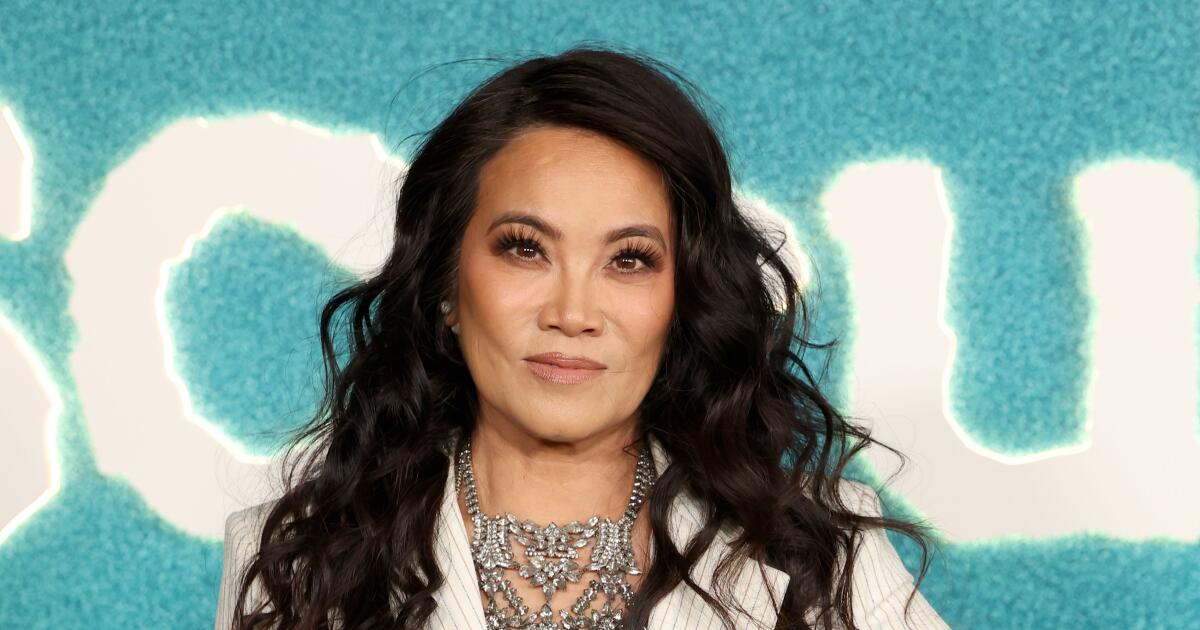
‘Dr. Pimple Popper’ Sandra Lee had a stroke last fall. Here’s how the TV doc is bouncing back
-

 Health1 week ago
Woman discovers missing nose ring traveled to her lungs, causing month-long cough
-

 San Francisco, CA5 days ago
President Trump terminates Presidio Trust