Business
10 years since Aliso Canyon: Disaster was wake-up call for U.S. on dangers of underground gas


On an evening 10 years ago, Porter Ranch resident Matt Pakucko stepped out of his music studio and was walloped by the smell of gas — like sticking your head in an oven, he recalled.
Pakucko called the fire department. It turned out crews had already been up to the Aliso Canyon gas storage facility in the Santa Susana Mountains behind the neighborhood, responding to a report of a leak. Many of his neighbors were beginning to feel ill, reporting issues such as heart palpitations, vomiting, burning eyes and bloody noses.
“I swear I thought I was standing behind a 747 with its engines blowing — it was not just gas, it was oil smell, it was chemical smell that permeated,” recalled Pakucko, who went on to co-found the advocacy group Save Porter Ranch. “I couldn’t stay out there for 30 seconds. It tasted like f— gasoline.”
Soon it was clear that this wasn’t just a leak — it was a blowout. Over the course of 112 days, the Aliso Canyon facility would spew an estimated 120,000 tons of methane and toxic chemicals into the atmosphere. It was the worst natural-gas well blowout in U.S. history, and an environmental disaster whose effects will be unpacked for generations.
The event was widely seen as a wake-up call to the dangers of methane and underground natural gas storage. Methane, a planet-warming greenhouse gas, is about 80 times more potent than carbon dioxide and is responsible for about a quarter of all the human-caused climate change we are experiencing. A study published by UCLA researchers last month found that women in their final trimester of pregnancy who were living within 6.2 miles downwind of the blowout in 2015 had a nearly 50% higher-than-expected chance of having a low birth-weight baby.
The blowout ushered in a wave of new regulations to strengthen the governance of natural gas storage facilities in California and the United States, as well as new tools and technology to monitor methane emissions.
But 10 years later, some Porter Ranch residents say the wounds still feel fresh, and too many promises have been broken. After the disaster, then-Gov. Jerry Brown called for the permanent closure of Aliso Canyon by 2027 — a goal his successor, Gavin Newsom, called a top priority and vowed to meet even sooner.
Instead, Aliso Canyon remains open, with regulators voting in December to continue using the facility for years — probably into the 2030s — citing the need for natural gas to help maintain affordable energy rates and grid reliability in California.
The facility is a key asset for Southern California Gas. In an emailed statement, the company said the state would struggle to meet electricity demand without Aliso Canyon’s storage. The site fuels 17 power plants and helps keep the lights on during the hours that can’t yet be met by solar, wind and other renewable resources, the company said. Natural gas still represents about 40% of the state’s electricity supply.

“There’s a lot of work to do to get off natural gas and oil in California,” said Adam Peltz, senior attorney with the nonprofit Environmental Defense Fund. “That work is underway, but it’s not complete. If you’ve built an economy on fossil fuels, it takes awhile to get off of it.”
Aliso Canyon was originally drilled as an oil field in the late 1930s before SoCalGas converted it to natural gas storage in the early 1970s. Utilities often use played out crude oil fields as places to pump gas downward under pressure and hold it until it is needed.
Aliso Canyon is one of the largest natural gas storage facilities in the U.S.
In the lead-up to the blowout, SoCalGas was filling the site in preparation for the winter heating season. Crews were using tremendous force to pump gas down a well that was more than 60 years old. But a metal casing on well SS-25 had corroded, and gas began blowing out at very high volumes.
Methane is not visible to the naked eye, but aerial images captured with infrared cameras and released by the Environmental Defense Fund showed a geyser-like eruption of the flammable, climate changing gas — making it clear to the whole world the magnitude of the disaster.

Matt Pakucko, right, founder of Save Porter Ranch, and other protesters against SoCalGas hold a rally at the intersection of Tampa Avenue and Rinaldi Street on Sept. 28, 2021, in Porter Ranch.
(Irfan Khan / Los Angeles Times)
It took nearly four months for crews to stop the leak. By that time, damage was done. More than 8,000 households were temporarily displaced, businesses were shut down, and two schools were relocated for several months.
Researchers are still working to unpack the health outcomes of the event. SoCalGas, meanwhile, has paid about $2 billion in settlements and agreed to operate the facility at a lower maximum pressure.
Officials with the gas company said they have shored up the facility, including replacing the inner steel tubing on all operating wells and conducting continuous ambient methane monitoring. All wells at the site are subject to real-time pressure readings and visual inspections four times a day, among other protocols, SoCalGas said.
“Over the past 10 years, SoCalGas has conducted comprehensive safety reviews and implemented multiple safety layers that protect one of California’s most important assets for energy reliability and affordability,” the company said.
While the maximum allowable operating pressure at the site remains reduced — about 3,183 pounds per square inch compared with 3,600 pounds per square inch in 2015 — state officials recently voted to let SoCalGas increase storage at the facility to 68.6 billion cubic feet of natural gas from 41 billion cubic feet, outraging many in the community.
But experts say there are silver linings to the disaster. California overhauled its underground natural gas storage regulations to make them the strongest in the nation and among the strongest in the world, according to Peltz, of the Environmental Defense Fund. The changes include more thoughtful rules for well construction, better monitoring and risk management, and improved planning and emergency response.
Congress reacted to the disaster by requiring its regulatory agency, the Pipeline and Hazardous Materials Safety Administration, to issue safety standards for natural gas storage nationwide. In 2016, it adopted best practices recommended by the American Petroleum Institute, which were strengthened at the beginning of this month.
Many states with natural gas storage previously had no regulations at all, Peltz said.
“On a national basis, the systems will be safer as a result of that change,” he said.
There have been technological advancements too. The infrared aerial recording of the leak captured in 2015 was a relatively new technique at the time, but has now become commonplace. The California Air Resources Board conducted its first large-scale statewide aerial methane survey in 2016, identifying many of the largest methane sources in the state.
There have also been considerable advancements in the ability to observe methane super-emitters through satellites and remote sensors, according to Seth Shonkoff, executive director at the science research institute PSE Healthy Energy and an associate researcher at the UC Berkeley School of Public Health.
“The rub is that we know more than we ever have, and we’re perhaps controlling more than we would have if we didn’t have the technology to see them, but we’re still seeing more and more of these large-scale emission events all across the United States and all across the world,” he said.
Methane concentrations in the atmosphere are still rising. It is streaming, often constantly, from facilities associated with the oil and gas industry, landfills and dairy farms, among other sources.

The Aliso Canyon Southern California Gas storage facility on May 28, 2020.
(Robert Gauthier / Los Angeles Times)
Methane isn’t the only concern either. Researchers now have a better understanding of what’s in the gas that blew from Aliso Canyon and that continues to be stored in natural gas facilities around the country. Although it is primarily composed of methane, roughly 99% of samples analyzed by Shonkoff and his team have contained hazardous air pollutants such as benzene, hexane and toluene, largely as a result of commingling with depleted oil and other subsurface materials.
Moving forward, he said, it will be critically important for gas companies to disclose to regulators and risk managers what their gas is composed of, so that if it leaks, responders can quickly determine the appropriate response.
“If we had had that with Aliso Canyon, we could have, within a matter of hours, understood whether people should get out of the way or stay inside, and we wouldn’t have had as many people suffering from health symptoms,” Shonkoff said.
In 2024, the Biden administration passed the first comprehensive rules to limit methane pollution by fining oil and gas developers for excessive emissions. But this year, the Trump administration revoked the rule, which it described as a tax.
At the same time, many natural gas storage facilities across the country are old and require retrofitting to meet current regulations, but such upgrades can be slow and expensive — often leaving ratepayers on the hook.
Residents near Aliso Canyon have also long feared an earthquake or wildfire in the area. The gas field sits along the Santa Susana fault and is in a high fire hazard severity zone. SoCalGas says it has numerous safety plans and procedures in place.
Perhaps the greatest tension remains between those who wish to see Aliso Canyon shuttered and the officials who say the facility is critically important to California’s energy supply, which is increasingly trying to serve power-hungry artificial intelligence data centers.

Dozens of Porter Ranch protesters chant “shut it all down,” as they demonstrate at the Aliso Canyon gas storage facility in Porter Ranch on May 15, 2016.
(Francine Orr / Los Angeles Times)
California has committed to reaching 100% carbon neutrality by 2045. But SoCalGas says it still needs Aliso Canyon.
“SoCalGas is aligned with the state of California in pursuing the technologies and infrastructure that supports California’s climate plan, including clean renewable hydrogen and renewable natural gas, that could, over time with other renewable energy projects, deliver the reliability and affordability Aliso Canyon supports today,” the utility said in a statement. However, any decision to reduce or eliminate operations at Aliso Canyon must be based on genuine reduced demand that is permanent, the company said.
Pakucko, of Save Porter Ranch, noted that the facility was offline for two years after the blowout without an interruption in service.
“Two years!” he said. “And guess what? We managed without the facility.”
For others in the area, it feels like the latest in string of broken promises.
Among SoCalGas’s settlement agreements was a $120-million consent decree with the state of California requiring the utility to fund methane mitigation projects, air monitoring and other initiatives to address alleged harms caused by the blowout. About $25 million of that went toward a long-term health study on the effects of natural gas exposure, which is being conducted by researchers at UCLA. The results are eagerly awaited.
About $26 million went to a program for dairy digesters in the Central Valley, which capture methane from cow manure before it enters the atmosphere. Many had hoped those funds would be spent closer to home, including former L.A. Mayor Eric Garcetti, who at one point envisioned the mitigation money being used to transform Porter Ranch into a net-zero community.
“That would have been so great,” said Patty Gleuck, a Porter Ranch resident who served on the community advisory group for the health study. Instead, “that money went to this dairy digester program that does not benefit this area.”
Like Pakucko, Gleuck recalled suffering health effects during the blowout, including a tightness in her chest and a metallic taste in her mouth that dissipated when she left the area and resumed when she returned.
She still suffers from a chronic cough and uses an inhaler, she said, adding that “a lot of inhalers were prescribed in the area.”
“A lot of people moved away, taking a loss on their homes because they were so sick, or their family members were sick,” she said. “I just don’t think that there has been justice.”



Semiconductor testing equipment company FormFactor is laying off more than 200 workers and closing manufacturing facilities as it seeks to cut costs after being hit by higher import taxes.
The Livermore, Calif.,-based company plans to shutter its Baldwin Park facility and cut 113 jobs there on Jan. 30, according to a layoff notice sent to the California Employment Development Department this week. Its facility in Carlsbad is scheduled to close in mid-December later this year, which will result in 107 job losses, according to an earlier notice.
Technicians, engineers, managers, assemblers and other workers are among those expected to lose their jobs, according to the notices.
The company offers semiconductor testing equipment, including probe cards, and other products. The industry has been benefiting from increased AI chip adoption and infrastructure spending.
FormFactor is among the employers that have been shedding workers amid more economic uncertainty.
Companies have cited various reasons for workforce reductions, including restructuring, closures, tariffs, market conditions and artificial intelligence, which can help automate repetitive tasks or generate text, images and code.
The tech industry — a key part of California’s economy — has been hit hard by job losses after the pandemic, which spurred more hiring, and amid the rise of AI tools that are reshaping its workforce.
As tech companies and startups compete fiercely to dominate the AI race, they’ve also cut middle management and other workers as they move faster to release more AI-powered products. They’re also investing billions of dollars into data centers that house computing equipment used to process the massive troves of information needed to train and maintain AI systems.
Companies such as chipmaker Nvidia and ChatGPT maker OpenAI have benefited from the AI boom, while legacy tech companies such as Intel are fighting to keep up.
FormFactor’s cuts are part of restructuring plans that “are intended to better align cost structure and support gross margin improvement to the Company’s target financial model,” the company said in a filing to the U.S. Securities and Exchange Commission this week.
The company plans to consolidate its facilities in Baldwin Park and Carlsbad, the filing said.
FormFactor didn’t respond to a request for comment.
FormFactor has been impacted by tariffs and seen its growth slow. The company employs more than 2,000 people and has been aiming to improve its profit margins.
In October, the company reported $202.7 million in third-quarter revenue, down 2.5% from the third quarter of fiscal 2024. The company’s net income was $15.7 million in the third quarter of 2025, down from $18.7 million in the same quarter of the previous year.
FormFactor’s stock has been up 16% since January, surpassing more than $67 per share on Friday.
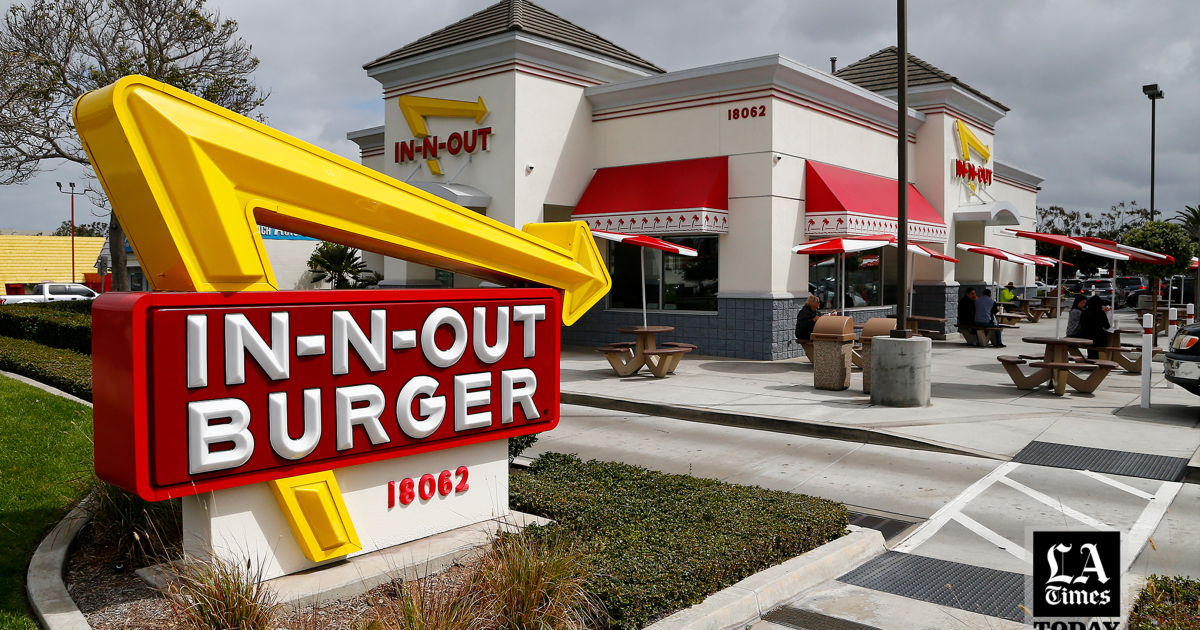
Two people allegedly used $100 counterfeit bills at dozens of In-N-Out Burger restaurants in Southern California in a wide-reaching scam.
Glendale Police officials said in a statement Friday that 26-year-old Tatiyanna Foster of Long Beach was taken into custody last month. Another suspect, 24-year-old Auriona Lewis, also of Long Beach, was arrested in October.
Police released images of $100 bills used to purchase a $2.53 order of fries and a $5.93 order of a Flying Dutchman.
The Los Angeles County District Attorney’s Office charged Lewis with felony counterfeiting and grand theft in November.
Elizabeth Megan Lashley-Haynes, Lewis’s public defender, didn’t immediately respond to a request for comment.
Glendale police said that Lewis was arrested in Palmdale in an operation involving the U.S. Marshals Task Force. Foster is expected in court later this month, officials said.
”Lewis was found to be in possession of counterfeit bills matching those used in the Glendale incident, along with numerous gift cards and transaction receipts believed to be connected to similar fraudulent activity,” according to a police statement.
A representative for In-N-Out Burger told KTLA-TV that restaurants in Riverside, San Bernardino and San Diego counties were also targeted by the alleged scam.
“Their dedication and expertise resulted in the identification and apprehension of the suspects, helping to protect our business and our communities,” In-N-Out’s Chief Operations Officer Denny Warnick said. “We greatly value the support of law enforcement and appreciate the vital role they play in making our communities stronger and safer places to live.”
The company, opened in 1948 in Baldwin Park, has restaurants in nine states.
An Oakland location closed in 2024, with the owner blaming crime and slow police response times.
Company chief executive Lynsi Snyder announced last year that she planned to relocate her family to Tennessee, although the burger chain’s headquarters will remain in California.
Business
Newsom’s budget includes $200 million to make up for Trump’s canceled EV rebates, among other climate items

Gov. Gavin Newsom on Friday doubled down on California’s commitment to electric vehicles with proposed rebates intended to backfill federal tax credits canceled by the Trump administration.
The plan would allocate $200 million in one-time special funds for a new point-of-sale incentive program for light-duty zero-emissions vehicles. It was part of a sweeping $348.9-billion state budget proposal released Friday, which also included items to address air pollution and worsening wildfires, amid a projected $3-billion state deficit.
EVs have become a flashpoint in California’s battle against the Trump administration, which moved last year to repeal the state’s long-held authority to set strict tailpipe emission standards and eventually ban the sale of new gas powered cars.
Last year, Trump ended federal tax credits of up to $7,500 for EV customers that were part of President Biden’s 2022 Inflation Reduction Act. In September, his administration also let lapse federal authorization for California’s Clean Air Vehicle decal program, which allowed solo EV drivers to use carpool lanes.
“Despite federal interference, the governor maintains his commitment to protecting public health and achieving California’s world leading climate agenda,” Lindsay Buckley, spokesperson for the California Air Resources Board, said in an email. “This incentive program will help continue the state’s ZEV momentum, especially with the federal administration eliminating the federal EV tax credit and carpool lane access.”
Newsom had previously flip-flopped on this idea, first vowing to restore a state program that provided up to $7,500 to buy clean cars and then walking it back in September. That same month, a group of five automakers including Honda, Rivian, Hyundai, Volkswagen and Audi wrote a letter urging Newsom and state legislators to establish a $5,000 EV tax rebate to replace the lost federal incentives, Politico reported.
During his State of the State speech Thursday — one year after the devastating Palisades and Eaton fires in Los Angeles — Newsom said California “refuse[s] to be bystanders” while China and other nations take the lead on electric vehicles and the clean energy transition. He touted the state’s investments in solar, hydrogen, wind and nuclear power, as well as its recent move away from the use of any coal-fired power.
“We must continue our prudent fiscal management, funding our reserves, and continuing the investments Californians rely on, from education to public safety, all while preparing for Trump’s volatility outside our control,” the governor said in a statement. “This is what responsible governance looks like.”
Several environmental groups had been urging Newsom to invest more in clean air and clean vehicle programs, which they say are critical to the state’s ambitious goals for human health and the environment. Transportation is the largest source of climate and air pollution in California and is responsible for more than a third of global warming emissions, said Daniel Barad, Western states policy manager with the nonprofit Union of Concerned Scientists.
“As federal attacks threaten California’s authority to protect public health, incentives are more essential than ever to scale up clean cars and trucks,” Barad said. “The governor and legislative leaders must act now to fully fund zero-emission transportation and pursue new revenue to grow and sustain climate investments.”
Katelyn Roedner Sutter, California senior director with the nonprofit Environmental Defense Fund, called it “an essential step to save money for Californians, cut harmful pollution, spur innovation, and support the global competitiveness of our auto industry.”
While the budget proposal does not include significant new spending proposals, it contains other line items relating to climate and the environment. Among them are plans to continue implementing Proposition 4, the $10-billion climate bond approved by voters in 2024 for programs geared toward wildfire resilience, safe drinking water, flood management, extreme heat mitigation and other similar efforts.
Among $2.1 billion in climate bond investments proposed this year are $58 million for wildfire prevention and hazardous fuels reduction projects in vulnerable communities, and nearly $20 million to assist homeowners with defensible space to prevent fire. Water-related investments include $232 million for flood control projects and nearly $70 million to support repairs to existing or new water conveyance projects.
The proposal also lays out how to spend money from California’s signature cap-and-trade program, which sets limits on greenhouse gas emissions and allows large polluters to buy and sell unused emission allowances at quarterly auctions. State lawmakers last year voted to extend the program through 2045 and rename it cap-and-invest.
The spending plan includes a new tiered structure for cap-and-invest that first funds statutory obligations such as manufacturing tax exemptions, followed by $1 billion for the high speed rail project, $750 million to support the California Department of Forestry and Fire Protection, and finally secondary program funding such as affordable housing and low-carbon transit options.
But while some groups applauded the budget’s broad handling of climate issues, others criticized it for leaning too heavily on volatile funding sources for environmental priorities, such as special funds and one-time allocations.
The Sierra Club called the EV incentive program a crucial investment but said too many other items were left with “patchwork strategies that make long-term planning harder.”
“Just yesterday, the Governor acknowledged in his State of the State address that the climate risk is a financial risk. That is exactly why California needs climate investments that are stable and ongoing,” said Sierra Club director Miguel Miguel.
California Environmental Voters, meanwhile, stressed that the state should continue to work toward legislation that would hold oil and gas companies liable for damages caused by their emissions — a plan known as “Make Polluters Pay” that stalled last year amid fierce lobbying and industry pressure.
“Instead of asking families to absorb the costs, the Legislature must look seriously at holding polluters accountable for the harm they’ve caused,” said Shannon Olivieri Hovis, California Environmental Voters’ chief strategy officer.
Sarah Swig, Newsom’s senior advisor for climate, noted that the state’s budget plan came just days after Trump withdrew the United States from the United Nations Framework Convention on Climate Change, a major global treaty signed by nearly 200 countries with the aim of addressing global warming through coordinated international action.
“California is not slowing down on climate at a time when we continue to see attack after attack from the federal government, including as recently as this week with the Trump administration’s withdrawal from the UNFCCC,” Swig told reporters Friday. “California’s leadership has never mattered more.”

How are Lions fans feeling after Bears’ thrilling win vs. Packers?

Philadelphia Eagles-San Francisco 49ers: Picks, odds for NFC Wild Card

Cowboys news: Former Dallas 1st-round pick weighs in on who should be next DC

NBA Mock Trade: Miami Heat Go All-In For LaMelo Ball In Deal With Charlotte Hornets

What Alex Bregman leaving Boston Red Sox could mean for Marcelo Mayer

Florida High School Football Rankings: Top 25 teams – Oct. 21

Cleary's 21 help Le Moyne down Central Connecticut State 69-64 in OT

How old is Bo Nix? What to know about Oregon quarterback ahead of 2024 NFL Draft

99th annual Pony Swim held in Virginia

Video: ‘It Didn’t Have to Happen This Way:’ U.Va. Faculty Call for Review of Police Response to Protests

Trump says Venezuela has begun releasing political prisoners ‘in a BIG WAY’

Somali minister says Israel plans to displace Palestinians to Somaliland

Slow-moving prisoner releases in Venezuela enter 3rd day after government announces goodwill effort

Video: Raising a Baby in Altadena’s Ashes

Trump signs order to protect Venezuela oil revenue held in US accounts
-

 Detroit, MI1 week ago
2 hospitalized after shooting on Lodge Freeway in Detroit
-

 Technology5 days ago
Power bank feature creep is out of control
-

 Dallas, TX3 days ago
Anti-ICE protest outside Dallas City Hall follows deadly shooting in Minneapolis
-

 Dallas, TX6 days ago
Defensive coordinator candidates who could improve Cowboys’ brutal secondary in 2026
-

 Delaware2 days ago
MERR responds to dead humpback whale washed up near Bethany Beach
-

 Iowa5 days ago
Pat McAfee praises Audi Crooks, plays hype song for Iowa State star
-

 Health7 days ago
Viral New Year reset routine is helping people adopt healthier habits
-

 Nebraska4 days ago
Oregon State LB transfer Dexter Foster commits to Nebraska