Lifestyle
Inside the L.A. club where dads swap kid chaos for golf and grounding exercises


To understand the gravitational pull toward golf, consider the sport as a sequence of problems. Aaron Singleton, a skilled player in the Dads Link Golf Club, is playing particularly well today at Palos Verdes Golf Course, having just hit two back-to-back birdies. But even on the shots that fly into a grassy oblivion, he smiles.
-
Share via
“Golf is 18 different holes. 18 different chances to solve a problem,” he says. “Each hole presents a different problem. Each shot is a different problem.” According to Singleton, this wisdom that players inherit on the golf course — especially resilience and patience — translates to fatherhood.
Singleton, who has a 3-year-old son, is part of a growing group of fathers who participate in the Dads Link Golf Club. The club is part of the region’s golf boom; Southern California Golf Assn. is estimated to have one of the largest memberships in the country, with over 200,000 golfers.

Ian Davis, the founder of Dads Link and Golf Club, watches his drive.
Ian Davis is the founder of Los Angeles’ Dads Link Golf Club. Each month, he invites fathers to enjoy golf together to focus on fellowship, fatherhood and their well-being.
“This has grown in a way that I couldn’t have imagined,” says Davis, who works as a wellness coach with an emphasis in mindfulness and meditation. He started the club in 2023 on the East Coast before relocating it to Los Angeles in January 2024, where the club hosts an annual Father’s Day tournament and various golf clinics.
At the driving range, Davis leads the group through “a grounding practice” that involves stretching and deep breathing. Member Ose Akhile, a personal trainer, follows up with stretching and other warm-up exercises. For many of the men, golf has become a rediscovered hobby. Singleton returned to the sport after playing it as a teenager. “I’m looking forward to getting better,” he says.
Club member Darius Ingram, father of 3-year-old daughter, says that reconnecting with the game has allowed him to prioritize his own well-being.
“I used to play golf recreationally. Now, I do it for mental stability,” he says.

Ian Davis greets Ose Akhile as Darius Ingram stands nearby.
Ian Monteilh, who is new to the group and has two daughters ages 11 and 15, says the outing provides camaraderie that was missing from his life.
“It’s a community that I didn’t have. I’m blessed to be around like-minded men with no pressure,” he says. “Even if we’re having a rough day on a golf course, there’s camaraderie.”
Once considered a predominantly white sport, golf is now being reshaped by a new generation of Black players and other players of color, including many of the fathers in Dads Link Golf Club. In 2024, 25% of golfers across courses nationally were Black, Asian and Latino, marking the most diverse era in the sport’s history, according to the National Golf Foundation.
“It’s a lot less pretentious — more diverse, more access for all different types of people,” says Ingram, who noticed a shift in golfing culture in recent years. Despite Tiger Woods’ storied career as one of the sport’s most impactful athletes, Black men remain underrepresented in top tournaments.

Darius Ingram reacts to barely missing a putt on the 18th green as Ian Davis watches.
Ingram partly attributes Black men’s interest in golf to renewed interest from other professional athletes. Star athletes like Michael Jordan and Steph Curry — who also happen to be dads — are skilled golfers.
“There are a lot of people who play their main sport, and they play golf when they retire,” says Ingram.

Ose Akhile smiles before teeing off.
Rappers like Schoolboy Q and DJ Khalid have also become interested in the sport, adding to its cachet.
The benefits of the groups are apparent, explains Akhile, who has three daughters, ages 6, 7 and 9.
“I’m outside — fresh air, sunshine, a break for my family. I get to decompress,” he says. Describing himself as a “Caribbean baby,” he explains that the ocean waves have a hypnotic effect on him. As the golfers move along the Palos Verdes course, the ocean stretches beyond them.
“Nature helps a lot with stress relief. There’s a lot of green grass and quiet out here. I love my child, but it’s hard to hear her yell, ‘Dad!’ every three seconds,” says Singleton. During the game, he stays calm while a squirrel approaches him. “Me and nature are one with each other,” he says. Behind him, a baby coyote prances into the fog.
Singleton adds that in the chaos of fatherhood, friendships occasionally fall to the wayside.
“There’s so much to do. Everyone separated. It’s beneficial to have a group text, a fellowship like this, where you can hear someone going through the same thing as you,” Singleton says.
Akhile agrees. “These are probably the only guys that understand the day-to-day stressors and pressures of my life,” he says.

Ose Akhile, Darius Ingram, Ian Monteilh, Ian Davis, Aaron Singleton and other Dads Link and Golf members have breakfast together.
After finishing nine holes, the men enjoy breakfast burritos. They joke that they will begin ranking the golf courses in the L.A. area by the quality of their breakfast burritos. Meanwhile, Davis leads the group through a conversation about fatherhood. Each month he chooses one dad to be the focus. This morning that’s Ingram. He speaks on being a father and how it relates to golf.
“I’m not as good as I want to be, so there’s frustration there,” Ingram says, referring to the challenges of parenting. He adds that to “right things” he doesn’t like about himself, he focuses on how his efforts could result in his daughter becoming a better version of him. The men offer encouragement as birds circle above. The sun pierces through the fog.
Monteilh looks up and jokes: “The only birdies I saw today were in the sky.”


U.S. Sen. Raphael Warnock, D-Ga., attends a rally opposing the SAVE America Act outside the U.S. Capitol on March 18 in Washington.
Heather Diehl/Getty Images
hide caption
toggle caption
Heather Diehl/Getty Images
Sen. Raphael Warnock, a Georgia Democrat, became the state’s junior U.S. senator over a decade after he was selected to serve as senior pastor of Ebenezer Baptist Church in Atlanta, Georgia, a church that was once led by the Rev. Martin Luther King Jr. His role as a senator brought him to Washington National Cathedral in 2023, where he marked Juneteenth that year with a sermon framed around the life of the prophet Isaiah.
“Every valley shall be exalted, every mountain and hill shall be made low, the crooked places shall be made straight, the rough places smooth, and the glory of the Lord shall be revealed, and all flesh shall see it together,” Warnock said during the sermon.
Warnock expands on that message in his new book, The Crooked Places Made Straight: Reflections on the Moral Meaning of America, where he argues that democracy is “the political enactment of a spiritual idea.”
In an interview with Morning Edition host Michel Martin, Warnock said the country’s divisions are less political than moral. “What we’re dealing with right now is not the difference between right and left, it’s really the difference between right and wrong,” Warnock said. He added that “it’s really too bad when my party cedes so much of the faith and values space … to those on the right.”
In his conversation with Martin, he explains why he believes faith should confront systemic injustice, not just personal behavior, and calls for a broader moral imagination in American politics.
Listen to the interview by clicking on the blue play button above.

Matthew Rhys in Widow’s Bay.
Apple TV
hide caption
toggle caption
Apple TV
Widow’s Bay is a spine-tingling blend of horror and comedy you won’t want to miss. The buzzy Apple TV series follows a mayor (Matthew Rhys) who is desperately trying to bring tourism to a small island town that might be cursed. The cast includes Stephen Root, Kate O’Flynn, and Betty Gilpin.
If you’re looking for other eerie island escapes, check out these episodes
A bratty boss gets a dose of his own medicine in ‘Send Help’
‘Lord of the Flies’ gets the Netflix treatment
Connect with Pop Culture Happy Hour:
Letterboxd / Facebook
Our weekly newsletter
Support Pop Culture Happy Hour+
Lifestyle
Her water bill was ‘insane.’ So she tore out her lawn and planted a ‘wabi-sabi’ wonderland
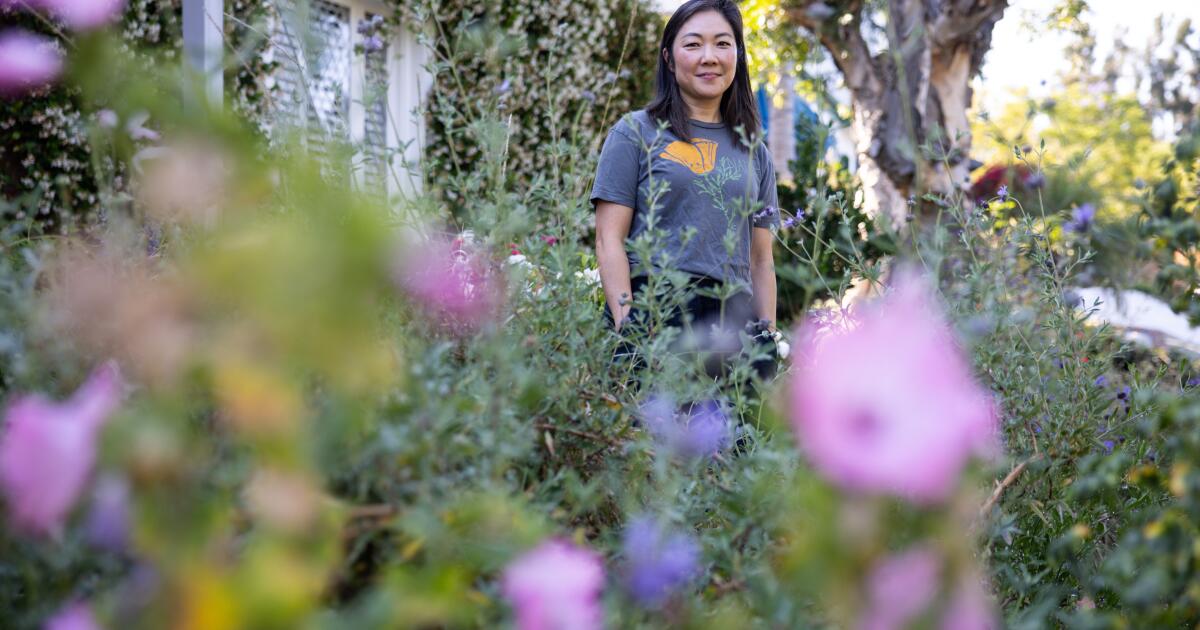
Water-hungry lawns are symbols of Los Angeles’ past. In this series, we spotlight yards with alternative, low-water landscaping built for the future.
Julia Lee had no need for a new garden when she and her husband purchased their Cheviot Hills home eight years ago. The traditional 1950 home came with mature tropical plants in the back and a sprawling grass hillside lawn in front, and it suited them just fine. But as drought and wildfires dragged on in California in recent years, she started to question whether keeping the thirsty lawn made sense.
“Our water bill was insane,” she says as she offers a tour of the former lawn, which is now filled with colorful native plants and drought-tolerant plants. “It was a waste of space. Our kids were getting older and didn’t play on the lawn. There was just no reason to keep a big green lawn.”
After reading a Times story about Georg Kochi, a retiree who swapped his Koreatown lawn with plants suited for California, Lee was inspired by Kochi’s wild, wabi-sabi-style garden, which embraces the art of imperfect beauty.
“I’m into chaos,” Lee says, bending down to smell the minty fragrance of a native Woolly bluecurls (Trichostema lanatum) shrub. “It’s an accurate reflection of my personality.”
Lee’s lawn in Cheviot Hills before she sheet-mulched it with cardboard.
(Julie Lee)

So in 2022, Lee decided to replace her lawn with a drought-tolerant landscape, using the LADWP Free Landscape Design Program, now called the Landscape Efficiency Assistance Program, for help. She also applied for the Metropolitan Water District’s turf replacement rebate, which was $3 per square foot at the time (now $5), and got $5,310 back when the garden was finished.
She wanted to learn more about native plants, so she took a garden design class at the Theodore Payne Foundation for Native Plants in Sun Valley. But the class felt overwhelming. “I love Theodore Payne,” she says, “but I hate measurements and trying to figure out hardscape. I’m not a math person. The instructor wanted us to use a compass and draw a scale drawing of the whole lawn, and I thought, ‘I can’t do this.’”
Feeling paralyzed, she thought about hiring someone to help her, even though she didn’t want to spend the money on a landscape designer. But when Lee shared her frustrations with her graduate school adviser, noted author and avid gardener Jamaica Kincaid, she got the encouragement she needed. “She told me to do it myself,” Lee says, “as she designed her own gardens herself, and they are idiosyncratic just like she is.”
1

2

3

1. Native Clarkia. 2. A ladybug sits on a dill plant. 3. Non-native Borage.
With encouragement from Kincaid, Lee, 49, began by planting small sages that would grow quickly and help prevent erosion, since water, mulch and rain often ran down the hillside to the sidewalk. She also spread Theodore Payne’s Rainbow Mix wildflower seeds throughout the landscape, including California poppies, Arroyo lupine, Desert Bluebells and Clarkia. In the spring, the yard was full of colorful wildflowers, but for the rest of the year, it stayed dormant. “People loved it because it was like a wildflower meadow in the middle of the city,” she says.
Walking through Lee’s garden, as birds, bees and butterflies zoom around the yard’s bright flowers, it’s obvious she loves color. With help from her friend Ben Liou, who replaced his lawn with native plants, Lee filled the space with a lively mix of sages and flowering perennials, including yellow Bladderpod, pink Palmer’s Penstemon, blue California lilac and poppies. Also, in the mix, there are California poppies, Channel Islands Tree poppies and tall Matilija poppies that look like fried eggs.

An endangered Western monarch caterpillar nibbles on some California native milkweed.

A “Think Global, Plant Local” sign rests next to a handwritten plant identification tag.
(Kayla Bartkowski / Los Angeles Times)
She was surprised to find that working in her garden helped her connect with her neighbors in unexpected ways.
“I was worried the neighbors would complain,” she says. “But I’ve met so many people because I’m out here every day. Other gardeners are curious and often ask me, ‘What’s that interesting yellow plant? Oh, Palmer’s Indian Mallow?’ I even know all the dogs’ names now.”
When she and her gardener sheet-mulched the front yard with cardboard Amazon boxes she had collected from her neighbors in October, one neighbor joked that it looked ready for Halloween. “She told me it looks like a graveyard,” Lee says, laughing.


An aerial view of Lee’s garden.
Not all the plants survived, partly because half the garden is shaded by a large magnolia tree on the parking strip. Lee estimates she lost about 70% of her plants in the first year because she didn’t water enough. “The very first year you’re supposed to water regularly, and I did not hand-water enough, so everything basically died. The water bill went down dramatically, though.”
Three years later, after losing so many plants, she decided to add an irrigation system. Liou and her gardener helped Lee install it and build a bioswale to catch rainwater, using stones from Valley Builders Supply and some larger rocks from Bourget Bros. “We installed it in one day,” she says. “It was my birthday present to myself.”

Lee installed the bioswale in just one day with help from a friend and her gardener.
At first, she was nervous about adding something so different from the other traditional lawns on her street. “There weren’t any other houses that had anything like that,” she says. “But now I like it because it breaks up the front lawn into separate planting sections.” She can also walk down the bioswale to work in the garden. “I find garden maintenance so relaxing,” she adds. “It’s meditative.”
Lee says plants help her connect with people. One neighbor who knew the home’s previous owner gave her succulents. Another brought her some aromatic California sagebrush, also called Cowboy Cologne. “I really like the fact that I can point to certain things and remember who gave them to me,” she says. “That’s really nice.”
She hopes the golden yarrow will spread, and she’s especially proud of the large white sage she grew from seeds that a friend gave her. “It’s so happy over there,” she says, clearly excited by its growth. “Look at how big it is. I am so proud of it.”

Not all the plants in the unamended soil are California natives or even drought-tolerant. Lee kept some plants that have been growing in the yard for decades, like the jasmine climbing around the front of the house as well as the white roses. “I really don’t like lantana,” she says, “but I hate killing things.”
Someday she hopes to set up a free seed library, and she’s excited to see bluebird hatchlings in the bluebird house that Venice beekeeper Ian Kimbrey installed in her tree. “I just need to be patient,” Lee says about the bluebird box, which is still empty. “I’ve entered that phase of my life where I just love to see so many birds and bees and other animals in my garden. It’s good for my mental health.” She also wants to add a water feature where birds and butterflies can bathe and sip, and she plans to plant more berries to attract more pollinators.
Lee, who grew up in L.A. and teaches English at Loyola Marymount University, says her unkempt garden reminds her of Los Angeles in some ways. “Everybody just wants to look young and perfect all the time, and that’s not healthy,” she says. “My garden is beautiful in the spring; then it goes dormant in the summer. And that’s OK.”
1

2

3

4

5

1. Blue non-native Cornflowers. 2. Pink Cosmos, also a non-native. 3. Lee reaches to sniff some hardy Cleveland sage 4. A native Clarkia flower. 5. Pink and white native Clarkia flowers.
She hopes her story will encourage others who who can’t afford a landscape designer or simply feel overwhelmed by the idea of replacing their lawn. “I think sometimes it’s helpful just having somebody who’s there to hold your hand,” she says of her friend Liou. “For me, that was critical. I don’t think I would have ever made any progress without him.”
The project was ultimately about more than just saving water. It gave Lee a chance to connect with her community while experimenting in what she calls a “test garden.” She calls her garden a work in progress, and although she has suffered failures along the way, she values the friendships she has made outside her front door. “My garden doesn’t look designed because it isn’t. I’ve learned it’s OK if things aren’t perfect.”
Actually, she says, an imperfect,-always-evolving garden is “a good lesson for life.”

Lee looks for bees inside the Matilija poppies in her garden.
(Kayla Bartkowski / Los Angeles Times)
Plants used in this garden
California native shrubs/flowers
Coulter’s Matilija poppy (Romneya coulteri)
Pigeon Point Coyote Brush (Baccharis pilularis “Pigeon Point”)
Twin Peaks No. 2 Dwarf Coyote Bush (Baccharis pilularis “Twin Peaks No. 2”)
Lilac Verbena “De La Mina” (Verbena lilacina “De La Mina”)
Armstrong California Fuchsia (Epilobium canum “Armstrong”)
Marin Pink California Fuchsia (Epilobium canum “Marin Pink”)
“Bert’s Bluff’ California Fuchsia (Epilobium canum)
Catalina California Fuchsia (Epilobium “Catalina”)
Hummingbird sage (Salvia spathacea)
California Sagebrush (Artemesia Californica)
California Buckwheat (Eriogonum fasciculatum)
Red Buckwheat (Eriogonum grande var. rubescens)
“Warriner Lytle” Buckwheat (Eriogonum fasciculatum “Warriner Lytle”)
Ashyleaf Buckwheat (Eriogonum cinereum)

Lee grew the white sage from seed.
Sea Cliff Buckwheat (Eriogonum parvifolium)
Ceanothus “Julia Phelps”
Yankee Point Carmel Ceanothus (Ceanothus thyrsiflorus var. griseus “Yankee Point”)
Coyote Mint (Monardella villosa)
Woolly Blue Curls (Trichostema lanatum)
Golden Currant (Ribes aureum var. gracillimum)
Bush Monkeyflower (Diplacus longiflorus)
Jelly Bean Red (and Pink, and Orange, and Fiesta Marigold) Monkeyflower (Diplacus “Jelly Bean Red,” etc.)
Canyon Prince Giant Rye (Elymus condensatus “Canyon Prince”)
Island Alumroot (Heuchera maxima)
Santa Ana Cardinal Alumroot (Heuchera “Santa Ana Cardinal”)
California bee plant (Scrophularia californica)
California Huckleberry (Vaccinium ovatum)
Common Snowberry (Symphoricarpos albus var. laevigatus)
Fragrant Pitcher Sage (Lepechinia fragrans)
“Whirly Blue” Cleveland sage (salvia clevelandii “Whirly Blue”)
“Celestial Blue” Cleveland sage (salvia clevelandii “Celestial Blue”)
Winnifred Gilman Cleveland sage (salvia clevelandii “Winnifred Gilman”)
Allen Chickering Cleveland sage (salvia clevelandii “Allen Chickering”)
“Bee’s Bliss” sage (Salvia “Bee’s Bliss”)
“Mrs. Beard” creeping sage (Salvia sonomensis “Mrs. Beard”)
Russian sage (Salvia yangii)
Santa Barbara Mexican Bush sage (Salvia leucantha “Santa Barbara”)
Deer grass (Muhlenbergia rigens)
California bush sunflower (Encelia californica)
Margarita BOP penstemon (Penstemon heterophyllus “Margarita BOP”)
Palmer’s Indian Mallow (Abutilon palmeri)
Island Mallow (Malva assurgentiflora)
White sage (salvia apiana)
Black sage (saliva mellifera)
Butterfly bush (Buddleja)
California Yarrow (Achillea millefolium)
Oregano (Origanum vulgare)
French lavender (Lavandula dentata)
Bush Anemone (Carpenteria californica)
Channel Islands tree poppy (Dendromecon hartfordii)
Manzanita
Blue Grama (Bouteloua gracilis)
Showy Island snapdragon (Gambelia speciosa)
Bladderpod (Cleomella arborea)
Wildflowers (Native and non-native)
California poppies (Eschscholzia californica)
Blue Globe gilia (gilia capitata)
Elegant Clarkia (Clarkia unguiculata)
“Farewell to Spring” Clarkia (Clarkia amoena)
Cornflowers (Centaurea cyanus)
Theodore Payne’s Rainbow Mix wildflower seeds
“Indian Summer” Black Eyed Susan (Rudbeckia hirta, “Indian Summer”)
Cosmos (cosmos bipinnatus)
Various breadseed poppies (papiva somniferum)
-

 Wyoming1 minute ago
Wyoming County Fires Prison Warden – ROCKET-COURIER
-

 Crypto6 minutes ago
Stack’s Bowers Auctions Funded 0.5 Bitcoin Casascius Token From America’s 237th Birthday
-

 Finance13 minutes ago
Study shows that Florida and Georgia rank among top states where people search for financial help
-

 Fitness16 minutes ago
Expert Available: Curtis Bickham on Fitness, Exercise, and Healthy Living | Newswise
-

 Movie Reviews28 minutes ago
‘Toy Story 5’ review: The franchise’s best movie in 16 years hilariously tackles AI
-

 World36 minutes ago
Studiocanal Reveals Sales on Multiple Cannes Market Titles, Including ‘The Midnight Library,’ ‘Words of Love,’ ‘Another Day’
-

 News43 minutes ago
Live 2026 Election Results: Georgia, Alabama and Oklahoma Primary and Runoff Races
-

 Politics46 minutes ago
Video: U.S. Charges 15 in Minneapolis With Conspiracy

