Whispers, mysteries still hang in air 50 years after Bolles’ murder
Arizona Republic reporter Don Bolles died on June 13, 1976, 50 years ago. There are still mysteries surrounding his death from a car bombing.
- A memorial honoring journalists who died in the line of duty will be built on the National Mall in Washington, DC.
- The memorial was inspired by the 2018 Capital Gazette shooting and will honor journalists like The Arizona Republic’s Don Bolles, who was killed in 1976.
- While the national memorial moves forward, a similar effort to create a memorial for Bolles at the Arizona Capitol has repeatedly stalled.
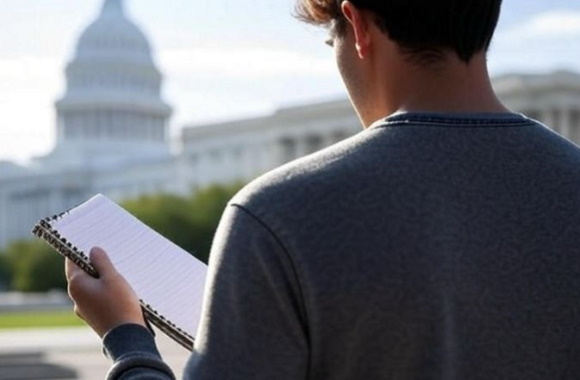
A memorial designed to pay tribute to journalists who have died in pursuit of a story — including Arizona Republic reporter Don Bolles, who had a bomb explode under his car 50 years ago — will soon have a home on the National Mall in Washington, DC.
The Fallen Journalists Memorial, set to open in June 2028, won’t include individual names of journalists. A rule says that unless Congress makes an exception, a memorial wall can only include a group whose last member died more more than a quarter century prior.
And the number of journalists who die in pursuit of truth continues to grow every year.
The foundation creating the memorial has featured journalists on its website. Included in the first round of those showcased is Bolles.
Bolles was a reporter with The Arizona Republic who investigated the mafia, land fraud and political corruption. He was killed in June 1976 by a bomb planted under his Datsun at a midtown Phoenix hotel, an incident that shocked the nation and shook the journalism community.
Barbara Cochran, president of the Fallen Journalists Memorial Foundation, said the aim was to remind people of the work done by journalists like Bolles.
“They go as eyewitnesses. They document,” she said. “They dig deep and come up with information that people don’t have time to do on their own.”
Bolles’ legacy was not just forged by his death, Cochran said, but the work his death inspired.
Scores of reporters from around the country descended on Phoenix to continue investigating political corruption as Bolles had.
That collective action sent a message.
“Even if you kill the journalist, you won’t kill the story,” Cochran said. “Don Bolles was really the symbol of that.”
The memorial will honor journalists who, like Bolles, were targeted for their reporting, Cochran said. It would also honor those who died in pursuit of a story.
That’s the story of at least five more Arizona journalists.
In 1985, Republic reporter Charles Thornton was killed in Afghanistan, which at the time was invaded by the Soviet Union. Thornton was a health reporter and took the trip to cover a clinic set up by Americans looking to save the lives of people injured in the war by bombs and chemical weapons.
Thornton knew the risks of traveling to a war zone. But said he thought it was worth it to bring the story of the injuries suffered by the Afghan rebels to Republic readers.
In 2007, two news helicopters collided while covering a police chase in midtown Phoenix. The helicopters, one from Channel 3, KTVK-TV, and one from Channel 15, KNXV-TV, each carried a cameraman and a pilot. All four men died when the helicopters crashed onto Steele Indian School Park.
Bolles will be the only Arizona reporter among the first to be honored as part of the new National Mall memorial project.
The physical memorial in Washington will be made up of glass rectangles.
On one end of the plaza, they will be laid in an abstract design. The glass rectangles could serve as benches on the plaza.
As visitors walk to the other end, the glass rectangles begin stacking. Visitors will then enter a circle formed by more glass rectangles.
On the ground in the center of the circle will be the words of the First Amendment to the U.S. Constitution.
Reporter writes ‘the book I wanted to read’ on slain journalist Don Bolles
Axios reporter Jeremy Duda discusses “Murder in the Fourth State,” a book on the murder of The Arizona Republic’s Don Bolles, who died after a car bombing in 1976.
Arizona effort to create a Don Bolles memorial stalls at state Capitol
The DC memorial was introduced in Congress in 2019. It passed both the House and Senate unanimously in 2020 and was signed into law in December 2020 by President Donald Trump.
In contrast, a push to create a memorial for Bolles on the grounds of the state Capitol was proposed at the Arizona Legislature each of the past few years. But every attempt has stalled.
The bill passed the Arizona House unanimously this year. It was bottled up in the state Senate, as has happened since it was first introduced in 2023.
The Bolles memorial bill was assigned to the Senate Government Committee, chaired by state Sen. Jake Hoffman, R-Queen Creek. He did not give the bill a hearing, just as he had declined to do in the previous two sessions.
Hoffman, who has done contract work for the conservative groups Turning Point USA and Turning Point Action, has had an antagonistic relationship with the mainstream press and The Republic.
Rep. Selina Bliss, R-Prescott, the sponsor of the measure, said she is not sure exactly why Hoffman hasn’t given the bill a hearing. She expected it would easily pass if it made it to the state Senate floor.
“I can’t get into the minds of others,” she said, “why they choose to hear or don’t hear a bill.”
Bliss said she recognized the passion that Bolles had for journalism.
“It’s like a line of duty death, if you will,” she said. “People are killed in action doing what they do.”
Bliss said she was a teenager in Prescott at the time of the Bolles bombing. She remembers the experience as searing.
“It shook everyone so dramatically,” she said.
Bliss said she might expand the bill next session to include all fallen Arizona journalists, in hopes of getting it out of the logjam in the Senate.
Tim Eigo, president of the Arizona chapter of the Society of Professional Journalists, has testified at the Arizona Legislature in support of the bill to allow a Bolles memorial.
Eigo said it was unfortunate that the bill was caught up in the swirl of current political feelings about journalism.
“I think people can get confused about whether dogged coverage is also advocacy. It’s not,” he said. “Some people get confused by that. So, they hesitate to honor a remarkable journalist like Don Bolles because there are other journalists they don’t like.”
Commemorating reporters who were targeted specifically because of their work like Bolles sends a signal, Eigo said.
“When we are honoring their accomplishments and commitment,” he said, “we are also defeating those who feel they can commit crimes against the press with impunity. … We are speaking truth to that cynical power.”
Shooting that killed journalists in Maryland inspired push for memorial
The idea for the DC memorial came after the June 2018 mass shooting at the Capital Gazette newsroom in Annapolis, Maryland. Five people were killed in the incident, four of them journalists.
The convicted gunman had filed a defamation suit against the newspaper after it reported on his legal troubles. He reportedly sent letters threatening to attack the newspaper’s journalists before he stormed the newsroom with a shotgun.
Retired U.S. Congressman David Dreier sat on the board of Tribune Publishing, the corporate owner of the sister newspapers, The Capital and the Maryland Gazette. Dreier, a Republican from California, worried that by 2019 the memory of the shooting was already fading.
He wanted a public memorial on the National Mall. The idea gained urgency, Cochran said, when the Newseum announced in 2019 that it was closing. That museum had an exhibition honoring slain journalists. Its centerpiece was the blown-out car from the 1976 Bolles bombing.
“There is nothing in Washington that talks about the sacrifices of journalists or that talks about the First Amendment, which is such a unique contribution to freedom and free expression for people everywhere,” Cochran said.
The location cited for it is a triangular plot of land about three blocks from the U.S. Capitol. The site, about a quarter-acre, was formed by the intersection of Independence Avenue and Maryland Avenue, which runs on a diagonal to the U.S. Capitol.
“The site has a clear view of the Capitol Dome,” Cochran said. “It’s a connection to journalism and a symbol of democracy. It reinforces the idea that journalism is a pilar of democracy.”
The memorial will not carry the names of any of the fallen journalists.
Cochran said a federal regulation governing memorials on the National Mall has a rule about those being honored in a group needing to have been deceased for more than 25 years.
“This is a memorial for which there would never be an end time,” she said.
Threats to press freedom are on the rise across the globe
The anniversary of Bolles’ death and the memorial underway come as journalists around the world face increased threats.
Reporters Without Borders, a global nonprofit advocating for independent journalism, has tracked press freedom around the world since 2002. The organization scores countries based on how free journalists are to report, evaluating the legal, political, economic and cultural constraints. It also looks at journalists’ safety working in the countries.
The organization’s 2026 World Press Freedom Index returned the lowest average score among all countries in 25 years.
The United States ranked as the 64th freest country in the world, dropping seven places from its ranking in 2025. The organization cited Trump’s continued attacks on journalists who cover him, as well as his administration’s pressure on networks and news outlets as part of the ranking.
Trump has made attacking the press and sowing distrust in traditional news media a hallmark of his agenda since his first run for higher office in 2015. He has threatened to ease libel laws to make it easier to sue news outlets.
Trump himself sued the CBS and ABC networks based on their journalists’ work. The networks settled despite legal experts saying the cases were weak.
U.S. presidents have long had an antogonistic relationship with the press.
George Washington, the first president of the United States, referred to journalists as “infamous scribblers.” Vice President Spiro Agnew called the press “nattering naybobs of negativism.” President Barack Obama used the Espionage Act to plug what he perceived were leaks from his administration to the press, according to the Cato Institute.
The Freedom of the Press Foundation, a nonprofit news advocacy group, has tracked more than 2,500 anti-press incidents in the United States since 2017, with nearly 1,400 assaults making up the majority. The tracker records non-physically violent threats, too, such as subpoenas and legal interventions, or chilling statements.
The Committee to Protect Journalists has recorded 17 journalists and reporters killed in the United States since 1992.
In Arizona, 28 anti-press incidents were recorded since 2017, including arresting reporters and denying them access to government events.
The Arizona incidents over the past decade include an interview subject who pushed and shoved an Arizona Republic reporter before stealing her cell phone during the interview, the detention by Phoenix police of a Wall Street Journal reporter who was talking to customers outside a bank, and the detention of an Arizona Republic photographer who was covering protests outside the state Capitol in 2024.
Taylor Seely is a First Amendment Reporting Fellow at The Arizona Republic / azcentral.com. Do you have a story about the government infringing on your First Amendment rights? Reach her at tseely@arizonarepublic.com or by phone at 480-476-6116.
Reach Richard Ruelas at richard.ruelas@arizonarepublic.com or at 602-444-8473.
Never forgotten: Arizona Republic reporter Don Bolles was assassinated 50 years ago