Lifestyle
Gut troubles? This gastroenterologist has tips to help you achieve ‘poophoria’

DBenitostock/Moment RF/Getty Images
Forty percent of Americans have their daily lives interrupted by uncomfortable bowel symptoms, according to the American Gastroenterological Association. That’s a lot of troubled guts.
But Dr. Trisha Pasricha says at the other end of the spectrum, there are people who experience “poophoria.” That’s Pasricha’s term for a state of being where doing your business is painless and worry-free. “ I just want you to poop quickly, effortlessly, and then go live your best life,” she says.
Want the latest stories on the science of healthy living? Subscribe to NPR’s Health newsletter.
Pasricha is the director of the Institute for Gut-Brain Research at Beth Israel Deaconess Medical Center, an assistant professor of medicine at Harvard Medical School, and writes for the Washington Post. She also treats patients with IBS and other painful digestive issues that can be tricky to diagnose.
Pasricha’s is not a one-size-fits all approach. There’s no magic number of times you need to go in a day, nor a perfect color or consistency that means you’re healthy or normal, she says. But if you often struggle with issues like bloating, constipation or diarrhea she wants you to know: There’s a better way to poop.

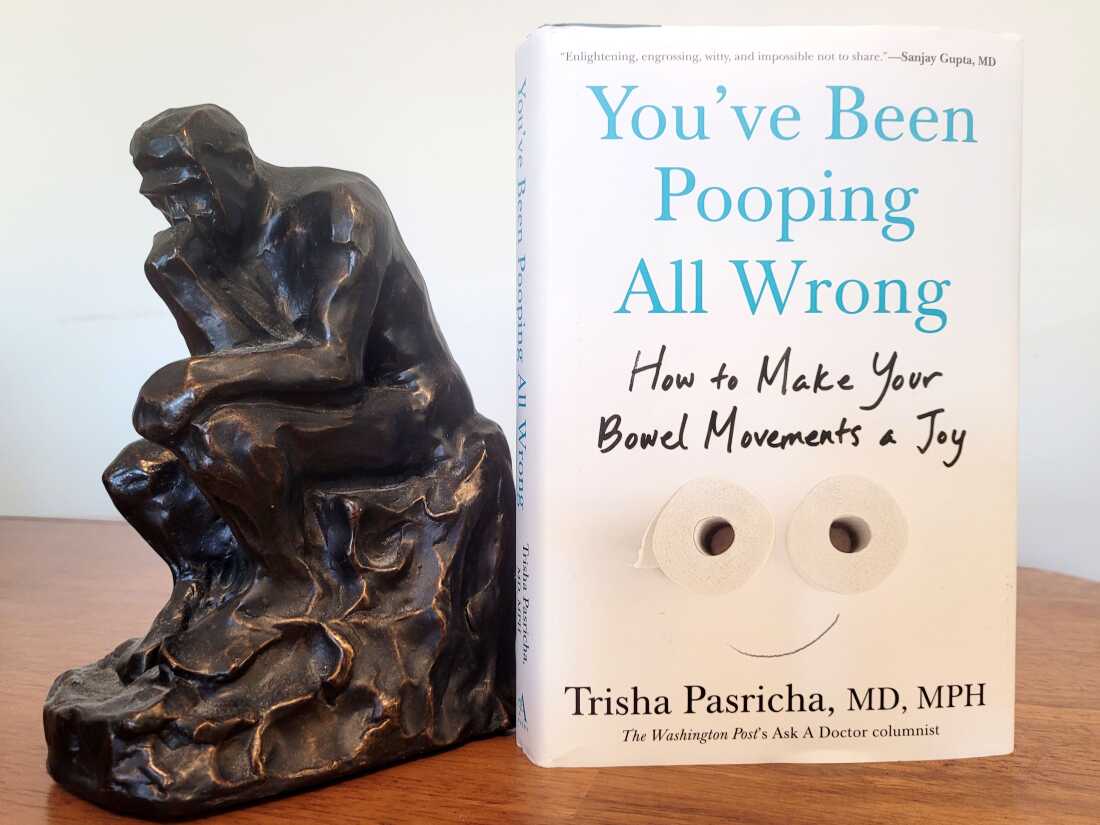
In her new book You’ve Been Pooping All Wrong: How to Make Your Bowel Movements a Joy Pasricha lays out evidence-based habits and practices to make your relationship with your solid waste as smooth as possible. Here are some of her most tried-and-true tips. Pasricha offers much of this advice to her patients — but following it just might save you a trip to the doctor.
Do: Take a look at your Number 2
A lot of people are shy about looking at the toilet bowl but Pasricha says you can learn a lot if you do. Very hard, small lumps or watery, soupy liquid are both cause for concern. A spectrum of shades is fine — but seek medical attention if you see black or whitish stool. A red or maroon color may indicate bleeding, or it can just give you insight on how long it took you to digest those beets.
When it comes to how often you go, there is a normal range: Pasricha says having a bowel movement anywhere from three times a day to three times a week can be perfectly healthy.

Do: Eat more fiber, and experiment with spices
Why is fiber at the top of the list when it comes to digestive health? It’s a real problem-solver even in the short term, Pasricha says. “If you have diarrhea, it forms this gel that kind of pulls it together and makes it more formed. If you have constipation, it softens it up,” she says.
Even more importantly, fiber is food for the microbes in your colon. Those microbes in turn produce short-chain fatty acids that reduce inflammation in the gut. Some of these fatty acids like have been linked to lower risk of colon cancer, and reduced risk of heart attack and dementia.
Since most people don’t get enough fiber in their diets, Pasricha often recommends a psyllium supplement — a plant-based powder that you can mix into water or coffee. Or you can learn which foods are high in fiber and amp up your intake.
Loading up on spicy food cooked with hot peppers can sometimes kick your bowel movements into overdrive, and not in a good way. ”But if you eat just the right amount, it can actually, in the long term, prevent pain and help you stay regular,” Pasricha says. Other seasonings including mustard, oregano, garlic and horseradish have been shown to stimulate the same nerve receptors.

Don’t: Consume a lot of ultra-processed foods and artificial sweeteners
Research has found concerning links with ultra-processed foods and digestive troubles. Specifically some additives and emulsifiers appear to “decrease the mucus barrier that’s on our guts, and can change the microbes,” Pasricha says. A study she cites in her book of over 200,000 human participants found that people who ate higher amounts of ultra-processed foods were 20% more likely to have irritable bowel syndrome compared to those who ate the least.
Pasricha also advises her patients to steer clear of foods with artificial sweeteners — often advertised as sugar-free — because they’re known to cause diarrhea and bloating.
Don’t: Spend more than 5 minutes on the toilet
Researchers think that sitting for extended periods on a toilet seat with an unsupported pelvic floor can increase risk for hemorrhoids. Hemorrhoids are actually something we all have, Pasricha says. They’re cushions of veins that sit inside the rectum. Sitting suspended over the toilet bowl for too long may weaken the connective tissue around the hemorrhoids, “and those veins start to bulge, then they pop out and they become inflamed and angry,” she explains.
What to do instead: Get up and move your body
If you’re perched in the bathroom for more than five minutes without results, take a movement break. Any amount of exercise can be beneficial, Pasricha says. “Studies have found that even just a brisk walk will be enough to help stimulate contractions of your bowel movement.”
Don’t: Bring your phone to the throne
After seeing a study from Great Britain from 1989 about people reading the newspaper in the loo, Pasricha decided to try an updated version in her own lab. She focused, of course, on smartphone use. Her team at Beth Israel surveyed 125 people about their lifestyle and bowel habits. Then the patients went in for colonoscopies and the doctors noted whether each patient had hemorrhoids or not.
The result? People who said they used their smartphones on the toilet were 46% more likely to have hemorrhoids than those who went device-free. “We found out that you were five times as likely to spend more than five minutes in the bathroom if you brought your smartphone in,” Pasricha says.
Aside from distracting you from the job at hand, Pasricha points out that there’s plenty of research on the stress-inducing effects of social media. “ You’re doom scrolling. You’re like getting caught by some rage bait,” she says. And stress can make it harder for the muscles in your pelvic floor to relax enough to clear the pipes..
What to do instead: Try some light print material
When she was a kid, people used to keep “bathroom reading” within easy reach of the seat, Pasricha notes with nostalgia. “To me, the ideal bathroom reader is something that gives you quick takes like a comic book, like short magazine articles, and ideally it should be from like three months ago,” she says.
If you absolutely must look at your phone, Pasricha tells patients to set a “two TikTok limit.” ”That’s, I have to bring my phone in, but after two TikToks, I’m gonna check in with myself and make a decision.”
Do: Squat, and lean forward
When you’re sitting at a 90-degree angle, a muscle called the puborectalis curves around the colon like a sling and helps keep it shut. But when you’re defecating, you want the tube of your bowel to be able to straighten out. And that’s where squatting comes in.
Pasricha says there’s no need to abandon the comfort of a modern toilet — instead put a stool or a pair of yoga blocks under your feet to raise your knees higher than your hips. “That basically allows that muscle to relax so that the tube straightens up again,” Pasricha says.
And to perfect your pooping posture, look to the famous sculpture, The Thinker by August Rodin. The figure is leaning forward, resting his elbows on his knees. There’s research suggesting “that’s the optimal way,” to help straighten the angle of the tube, says Pasricha.
Gut health is complex, and can change with age, shifts in lifestyle, and a whole number of other factors. If something seems off, don’t be shy about bringing it up with your doctor, Pasricha says. “ I get a lot of pictures of poop in my clinical messaging tool and I mean, it’s very helpful.”

Lifestyle
‘Wait Wait’ for May 30, 2026: Our Endless Summer with Tiffany Haddish, Lucy Dacus, and more!

Lucy Dacus of Boygenius performs at the Outdoor Theatre during the 2023 Coachella Valley Music and Arts Festival on April 15, 2023 in Indio, California. (Photo by Emma McIntyre/Getty Images for Coachella)
Emma McIntyre/Getty Images
hide caption
toggle caption
Emma McIntyre/Getty Images
This week, we celebrate an early start to summer by revisiting our interviews with Tiffany Haddish, Taimane, Becca Mann, and Lucy Dacus!

Fresh Air critic Justin Chang says All of a Sudden (starring Tao Okamoto and Virginie Efira) was his favorite movie at the 2026 Cannes Film Festival.
Courtesy of the Cannes Film Festival.
hide caption
toggle caption
Courtesy of the Cannes Film Festival.
The first Cannes Film Festival I ever attended, in May 2006, was a deliriously star-studded affair. Penélope Cruz, Ethan Hawke and Kirsten Dunst walked up the red-carpeted steps. Future Oscar hopefuls like Volver, Babel and Marie Antoinette competed for the Palme d’Or, the festival’s top prize. There were world premieres of blockbusters like The Da Vinci Code and X-Men: The Last Stand — terrible movies, but great photo ops. And near the end of the festival, I walked into a film I knew nothing about called Pan’s Labyrinth and emerged knowing I’d seen a classic.
This year’s Cannes kicked off with a 20th-anniversary screening of Pan’s Labyrinth, but otherwise, there wasn’t much of that 2006-era razzle-dazzle. The major Hollywood studios tightened their belts and stayed home, perhaps with still-fresh memories of the stinging Cannes reception for the last Indiana Jones movie back in 2023.
But there were stars here and there. Demi Moore and Stellan Skarsgård were on this year’s jury. Adam Driver and Miles Teller showed up for the world premiere of James Gray’s terrific 1986-set crime drama, Paper Tiger, in which they play brothers who unwisely go into business with the Russian mob. Driver and Teller are outstanding, and Scarlett Johansson is heartbreakingly good as a family member forced to deal with the fallout.
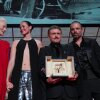
Paper Tiger deserved a prize, but it left the festival empty-handed. Instead, the jury awarded the Palme d’Or to the gripping and sometimes infuriating small-town drama Fjord. It’s the second Palme win for the Romanian filmmaker Cristian Mungiu; he won his first in 2007 for the movie 4 Months, 3 Weeks and 2 Days.
In Fjord, Sebastian Stan and Renate Reinsve are almost unrecognizable as an evangelical Christian couple who have recently moved from Romania to a small Norwegian town with their five children. When the couple are accused of child abuse, Fjord becomes a fierce battle between the forces of religious conservatism and secular liberalism. It may be set in Norway, but it’s likely to resonate with American audiences when it opens later this year.
I hope there will also be robust turnout for Minotaur, a perfectly chilled tale of adultery and murder that won the Grand Prix, or second place. It’s a remake of the 1969 Claude Chabrol drama La Femme Infidèle, this time set in Russia, not long after the 2022 invasion of Ukraine. The director of Minotaur, Andrey Zvyagintsev, nearly died of COVID during the pandemic, and it was moving to see him back in Cannes with a film this powerful and uncompromising in its critique of the Putin regime.
One of the buzziest out-of-competition titles was Club Kid, a hugely enjoyable comedy directed by the actor, writer, comedian and social-media star Jordan Firstman. He plays a gay New York City club promoter who’s sent reeling when he learns that he has a 10-year-old son. The result is basically a ketamine-laced version of every adult-bonds-with-cute-kid movie you’ve ever seen, but Firstman is a real talent.
Firstman’s also one of several queer filmmakers who made a bold impression at the festival this year. Jane Schoenbrun, the director of the inventive transgender allegory I Saw the TV Glow, came to Cannes with their third feature, Teenage Sex and Death at Camp Miasma. Starring a very game Hannah Einbinder and Gillian Anderson, the movie is a clever homage to, and deconstruction of, ’80s and ’90s slasher thrillers, digging deep into the often-unspoken connections between our love of pop culture and our hang-ups about sex and desire.
Along with Paper Tiger, Club Kid and Camp Miasma were welcome reminders that American cinema isn’t close to dead, at Cannes or anywhere else. Even so, I can’t say that I minded the general absence of Hollywood at the festival this year. One of the reasons I keep returning to Cannes is that it shows interesting movies from all over the world — movies like the gorgeous and moving Rwanda-set drama, Ben’Imana, about efforts to bring about truth and reconciliation years after the 1994 genocide. The film earned its director, Marie-Clémentine Dusabejambo, the Caméra d’Or prize for best debut feature.
My favorite film at Cannes this year was All of a Sudden, from the Japanese director Ryûsuke Hamaguchi. Set in and around a Parisian elder-care home, it uses the close bond between two women — one French and one Japanese — to raise haunting questions about how we live, how we die, and most of all, how we talk to each other. Like Hamaguchi’s Oscar-winning Drive My Car, All of a Sudden is a reminder that something as simple as a conversation between friends can make for sublimely moving cinema. I can’t wait to see it again, and I can’t wait for you to see it, too.

Cary Elwes may not have been born in Los Angeles, but it’s probably fair to consider the native Brit an honorary Angeleno. The “Princess Bride” star was born in and spent his formative years kicking around London; he moved to L.A. in 1990, on his brother’s recommendation. He met his wife, photographer Lisa Marie Kurbikoff, at a cookoff in Malibu about a year later and the two married in 2000. A daughter, Dominique, arrived in 2007.

In Sunday Funday, L.A. people give us a play-by-play of their ideal Sunday around town. Find ideas and inspiration on where to go, what to eat and how to enjoy life on the weekends.
Elwes has spent his years in California not just establishing his family life, but also further enmeshing himself in Hollywood. He’s appeared in everything from “Saw” to “Ella Enchanted,” and played a corrupt government agent in a couple of “Mission Impossible” movies. His latest role is as a former cop turned private detective in Peacock’s new crime thriller, “M.I.A.,” streaming now.
“I’ve been out here for quite a bit now and while [2025’s] fires were pretty devastating — changing a lot of the landscape and people’s lives in ways that none of us could have imagined — I’m hopeful,” Elwes says. “I feel like we’re going to build back stronger and better. Things can seem dark sometimes, but I still have a spark of hope in my heart.”
Here’s how Elwes would spend his perfect, hopeful Sunday in Los Angeles.
This interview has been edited for length and clarity.

10 a.m.: Coffee and a chat
We wake up around 10 a.m., which is kind of late for me. Then we’ll have our coffee. I tend to lean toward Gelson’s beans, which I find have a particular flavor I tend to like. I do like my coffee. It’s probably the only addiction I really have.
Anyway, after I finish up my coffee, I’ll typically ask my wife and daughter what they’d like to do for the day. My daughter is 19, and she’s terrific. I always tell my wife she’s the best production we’ll ever do together.
Noon: Leisurely lunch
My wife is very fond of this Italian restaurant in Woodland Hills called Casaléna. It’s right off Ventura Boulevard and it’s terrific. Even their salads are extraordinary. It’s fairly new, too, but it’s always booked out solid so you really have to make a reservation in advance. Luckily, my wife and daughter are organized, so if they want to go there, they’ll have planned ahead.

2 p.m.: Head to the movies
We like to go see movies at the Imax at Universal CityWalk. The quality of that theater is very, very good and seeing films on the biggest screen possible is important to us.
My wife and I went on a date to see “Michael” in Imax, which was sold out and it was phenomenal. Antoine Fuqua did a great job and our friend Colman [Domingo] was honestly transformative as Joe Jackson. And Jaafar Jackson, who’s Michael’s nephew, is remarkable. It’s an extraordinary film, but sold out with people cheering and dancing? That made it a phenomenon. People were interacting with the movie as it played and it was remarkable.
If we’re not interested in whatever’s playing at the time, we might go for a hike in Tapia Park. I grew up watching “MASH” as a kid and when I realized they filmed there, I thought “How blessed am I to be living just a few miles from where such an iconic series was made?”
It’s a really beautiful park too. If you take a long hike, you’ll see waterfalls and lots of wildlife. On a nice afternoon, taking the dog out there for a walk? You can’t beat it.
There’s so much rich history here. I remember going on the Universal Studio Tour for the first time when I visited L.A. as a kid. They had a thing where they’d pick a couple of tour guests and the guide would put you on camera in front of a blue screen and you’d reenact a scene from a movie. The tour also took you by the “Jaws” shark coming out of the water and through an old western town, and I found out years later that a director friend of mine had been making westerns there when I was a kid and I didn’t even know it.
That tour was fantastic. With parting the sea for “The Ten Commandments” and then the boulders coming down the hill during the rockslide? Absolutely magnificent.

5 p.m.: Pick a Getty, any Getty
Depending on what time our movie ends or if we just end up going for a walk instead, we might go over to the Getty Center. We love it there. Usually we’ll go in the afternoon — maybe we’ll have a late lunch up there — and sometimes we’ll go to the Getty Villa instead, which luckily survived the Palisades fire.
We just love being around art. We’ll walk through the entire collection, plus whatever exhibit they have on at the time. We’ll go to LACMA sometimes, too, or even the Academy Museum to see whatever new exhibits they have.
Culturally, we really try to keep busy. Sometimes we’ll want to sit at home and play Spite and Malice or watch a show on TV, but mostly I try to go out and encourage my family to do the same, especially because we live in such a wonderfully diverse, cultural city.
7 p.m.: Taco time
I always leave meal decisions up to the girls, and sometimes they like to go out and get tacos. We like the fish tacos at Escuela. It’s pretty close to Quentin Tarantino’s movie theater, the New Beverly Cinema, which we like to go to as well. I took my daughter to see “Jaws” there, in fact, which she loved.

9 p.m.: More movies
I’m trying to educate my daughter in the films and TV shows that I watched growing up. She’s taking a film history class in school. She wants to be an actor as well, so I want her to have an understanding of the history of film and history of performance, so I show her the great performances that inspired me as a kid and encourage her in that way.
When I grew up in England, we literally had two channels, both in black and white. Young people can’t quite wrap their heads around that now, but it really did make you pay attention because you had to be sitting in front of the television to catch a show or movie you wanted to watch.
I remember that the BBC, particularly on weekends, would have matinee screenings of movies. We actually had pretty good quality TV in England growing up, but they’d also heavily focus on British films from the ‘40s all the way through to the ‘60s so I got my education from that particular style of films, like the postwar films, ‘50s films, and the Ealing comedies. David Lean and Laurence Olivier, Ralph Richardson … a lot of the films they were in or directed really helped shape who I am today.
Alec Guinness and Peter Sellers had a very strong influence on me as a kid, too, so I really want to try to share with my daughter why these films meant so much to me.

10:30 p.m.: Books in bed
I’m not really a late-night person anymore. I used to be when I was a kid, but now, unless we’re out on a date, my wife and I are homebodies.
-

 Los Angeles, Ca1 hour ago
Motorcyclist killed by hit-and-run truck driver in Sun Valley
-

 Detroit, MI2 hours ago
Clear skies give Metro Detroit perfect Blue Moon viewing weather
-

 Dallas, TX2 hours ago
H-E-B files construction permit for Dallas location, next step towards 2028 open
-

 San Francisco, CA2 hours ago
18-year-old dies in crash on I-80 near SoMa district
-

 Miami, FL2 hours ago
Live Updates from Florida Gators vs. Miami Hurricanes in Gainesville Regional
-

 Boston, MA2 hours ago
Police Blotter: Cambridge meth chemist sentenced to prison; Boston firefighters make high-flying save
-

 Denver, CO2 hours ago
Colorado outdoor spirit, music comes to downtown Denver
-

 Seattle, WA2 hours ago
Mild weekend weather in Seattle before 80s return

