Colorado
Colorado’s mountains are likely already at peak snowpack. Now the heat dome will kick off melting.


Colorado’s mountains have likely already hit peak snowpack, and record-high heat forecast for the coming days will kick off widespread melting even at high elevations — weeks ahead of normal.
A heat dome that’s expected to hover over the state and the Mountain West through Saturday is forecast to bring temperatures into the 80s at lower elevations and into the 50s and 60s at higher elevations. The heat this week follows the warmest winter recorded in Colorado since records began in 1895.
“It’s possible that many areas of the state at high elevations have already seen peak snowpack,” Peter Goble, the assistant state climatologist, told the Colorado Water Conservation Board’s Water Conditions Monitoring Committee on Tuesday.
The temperatures expected from the heat dome will be high enough to spur melting, said Brian Domonkos, a hydrologist with the Colorado office of the federal Natural Resources Conservation Service. Statewide, snowpack depth typically peaks around April 8.
The National Weather Service forecast for a point near Loveland Pass — at an elevation of 11,020 feet — shows overnight lows are not expected to drop below freezing until Sunday night. Daytime highs could hit 60 degrees.
Wolf Creek Pass, located at nearly 11,000 feet in southern Colorado, is also not forecast to reach freezing temperatures overnight this week.
The record heat is expected to shrink an already anemic snowpack. Statewide snowpack sat at 59% of the median for this time of year on Wednesday, the lowest recorded since records began in 1986. Some river basins in southern Colorado — including the Rio Grande, the San Juan, the Animas and the Arkansas — had less than half of normal snowpack on Wednesday.
“We have very little winter left,” Domonkos said. “There’s essentially no chance for us to get back to normal snowpack.”
Colorado’s mountains and streams will begin to see increased water flows from the melting this week, according to the Colorado Basin River Forecast Center.
Flows in the Yampa River in Steamboat Springs will likely more than double in the next seven days, from 124 cubic feet per second on Wednesday to more than 400 cfs late next week. The Animas River in Durango could hop from winter flows hovering around 300 cfs to more than 1,000 cfs by the end of next week.
Those flows are still far lower than peak runoff flows that will come later this spring and summer. But expected extended warm temperatures, paired with the “extremely grim” snowpack, mean those peak flows will also be lower than normal, said Cody Moser, a hydrologist with the Colorado Basin River Forecast Center, at a briefing Wednesday.
Across the Colorado River Basin — which includes a large swath of western Colorado — those flows are expected to be at or below 70% of the average recorded between 1991 and 2020, he said.
Across the Colorado River Basin, “I think it’s highly likely that we’ve already seen peak snowpack,” Moser said.
The vast majority of Colorado’s water supply comes from its winter snowpack. The lack of snow has water providers across the state enacting drought restrictions or preparing to do so.
Denver Water — which serves 1.5 million people across the Front Range — will likely skip declaring a drought watch and instead skip to the next step by imposing Stage 1 water restrictions, Nathan Elder, the utility’s water supply manager, said Tuesday.
Those restrictions — last implemented in 2013 — would require mandatory reductions in outdoor water use.
Colorado Gov. Jared Polis on Tuesday activated the state Drought Task Force to address the dire conditions. The task force will monitor conditions across the state and recommend mitigation efforts to Polis. The governor last activated the task force in 2020.
If conditions continue to deteriorate, Polis could declare a drought emergency and seek federal disaster assistance.
“Colorado is experiencing the warmest year so far in our 131-year record, and one of the driest,” Polis said in a news release. “Activating the Drought Task Force will help ensure we are protecting one of our most precious resources by closely tracking impacts, supporting communities, and coordinating better as we prepare for the year ahead.”
Get more Colorado news by signing up for our Mile High Roundup email newsletter.



All flights at Denver International Airport are grounded because of high winds, causing nearly 700 flight delays Thursday as thunderstorms and hail hit Colorado’s Eastern Plains.
Federal Aviation Administration officials ordered the DIA ground stop at 5 p.m. and extended it twice because of ongoing high winds, according to the alert. The ground stop is now set to expire at 8 p.m.
Wind gusts at the airport hit 45 mph at 5:18 p.m. and blowing dust is limiting visibility, according to the National Weather Service., and was still gusting at 29 mph just before 7 p.m.
Colorado weather: Severe thunderstorm watch, possible tornadoes for Eastern Plains
Airlines reported 674 flight delays at the Denver airport as of 7:10 p.m., including 260 delays on Southwest, 179 on United and 138 on SkyWest, according to the flight tracking website FlightAware.
Severe thunderstorms are expected to bring wind gusts up to 70 mph, golf ball-sized hail and the potential for tornadoes to the Eastern Plains this afternoon and evening, NWS forecasters said.
This is a developing story and will be updated.
Get more Colorado news by signing up for our daily Your Morning Dozen email newsletter.

The group behind an upcoming rebate program is hoping to get more Coloradans to make the switch to heat pumps for their heating and cooling needs.
Power Ahead Colorado, administered by the Denver Regional Council of Governments, says applications for the new rebates will open this summer. However, people are already taking advantage of incentives.
“I am so ready for the summer,” said Denver homeowner Eric Gehringer, who came home from work as his heat pump was being installed, and he’s pretty excited about it.
“We’re going to be in the house, just chillin’, like, ‘Oh man, is it warm outside? I don’t even know,’” he joked.
Gehringer is upgrading from a swamp cooler and chose a heat pump over a traditional heating and cooling system.
“With the rebates that are happening right now, it just made financial sense as well,” he said.
Several rebates can be stacked for maximum savings, including a state rebate from Xcel Energy.
“The average size of those rebates has been anywhere from $6,000 to $12,000, depending on the size of the heat pump,” said Trevor Seeyle, the president and CEO of Independent Power, a Boulder-based company that installs heat pumps.

Power Ahead Colorado will also be launching a $1,500 rebate program this summer.
“Our typical heat pump installation is probably anywhere from $15,000 to $25,000, and on average, those stacked heat pump rebates are probably about $10,000, and so it’s a significant portion of the installation cost,” Seeyle added.
Heat pumps are also a more energy-efficient option than traditional heating and cooling, and more Coloradans are making the switch.
Independent Power says they install around seven to eight per week.
Heat pumps work by pulling heat from the outside air when it’s cold, and cold from the air when it’s hot outside. The unit then disperses it within the home.
And although heat pump technology has improved to handle sub-zero temperatures in the colder months, there’s also an option to install a furnace along with it.
“That’s the backup that will typically only be running when it’s very, very cold outside,” Seeyle explained.
Heat pumps could be the long-term future of heating and cooling, with people like Gehringer eager to go all in.
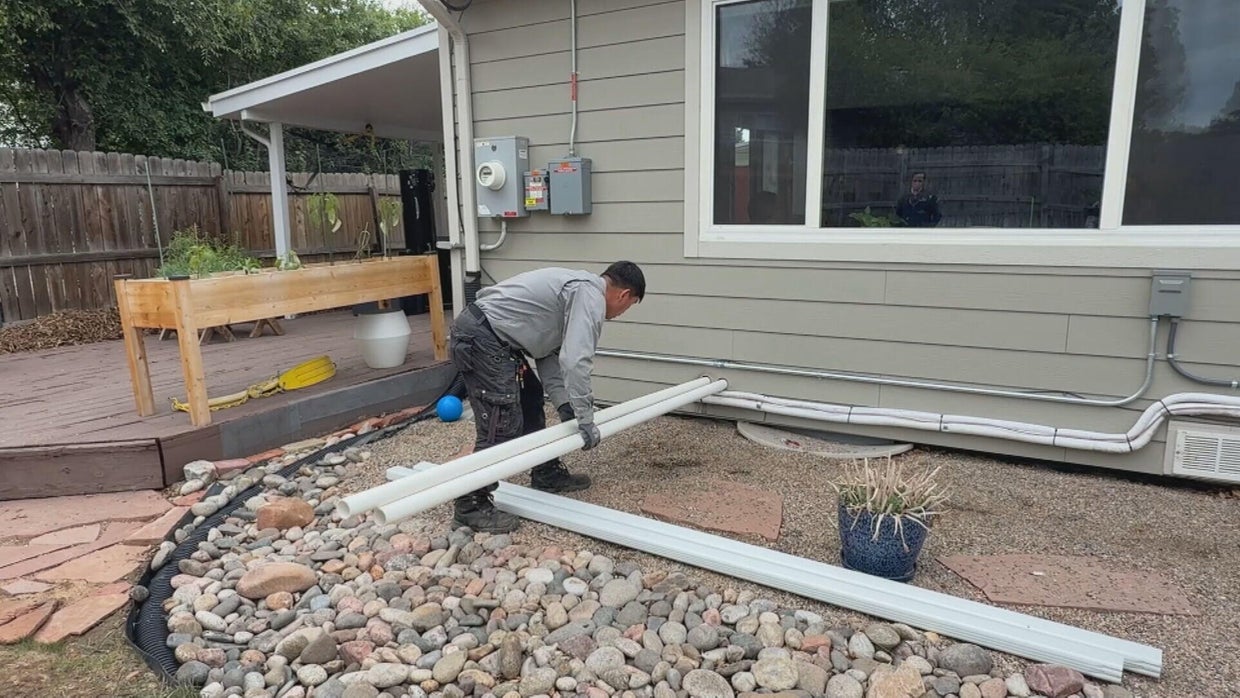
“And seeing that the swamp cooler is gone is fabulous,” Gehringer added.
Colorado
Colorado Supreme Court orders children’s hospital to resume gender-affirming care for minors

DENVER (AP) — The Colorado Supreme Court has ordered Colorado’s largest provider of gender-affirming care for young people to resume medical treatments like puberty blockers and hormone therapy despite threats that providing the care could lead to losing federal funding.
Children’s Hospital Colorado suspended medical treatments for transgender patients under 18 in January after it said the U.S. Department of Health and Human Services opened an investigation into its treatments following a series of clashes between President Donald Trump’s administration and advocates over transgender health care for children.
WATCH: Trump administration seeks to cut off access to transgender health care for U.S. children
The hospital said in a statement that it is reviewing Monday’s court ruling and considering its next steps. It previously said it would continue to provide mental health treatment for minors and also medical treatment for patients aged 18 to 21.
Four transgender girls, ranging from age 10 to 17, sued the hospital, through their parents, alleging that the hospital was violating the state’s antidiscrimination law by refusing to provide them treatment both because of their gender identity and their disability, gender dysphoria. Gender dysphoria is the distress caused when someone’s gender expression doesn’t match their sex assigned at birth.
The girls said they feared not being able to get medication and monitoring to prevent them from undergoing puberty and developing male traits. And they cited mental health fallout, including depression and suicidal ideation.
The court sided with the girls in a 5-2 ruling, finding that the decision to shutter the services for minors violated a state antidiscrimination law. In the majority opinion, Justice William Wood III said, “We conclude that the actual immediate and irreparable harm to petitioners outweighs the speculative harm CHC may face if the federal government further acts against it.”
In a dissent, Justice Brian Boatright said the hospital didn’t make its decision to stop the case because of the gender identity of the patients. Rather, he wrote, “It was a decision driven by the direct threat to the viability of the entire hospital.”
A Kansas judge also sided with transgender minors in a ruling last week.
The Colorado hospital’s TRUE Center, which focuses on gender-affirming care, is one of the largest programs in the country and the only comprehensive care center in the Rocky Mountain region, according to the lawsuit.
Children’s Hospital Colorado said the HHS opened the investigation of the hospital after Health and Human Services Secretary Robert F. Kennedy Jr. issued a declaration that called treatments like puberty blockers, hormone therapy and surgeries unsafe and ineffective for children and adolescents experiencing gender dysphoria, or the distress when someone’s gender expression doesn’t match their sex assigned at birth.
An Oregon-based federal judge ruled in March for Colorado and 20 other states that Kennedy’s declaration went too far.
Mulvihill reported from Haddonfield, New Jersey.
A free press is a cornerstone of a healthy democracy.
Support trusted journalism and civil dialogue.
-

 Politics1 minute ago
Video: Trump Settled a Case With Himself. Was That Legal?
-
 Lifestyle37 minutes ago
‘Star Wars: The Mandalorian and Grogu’ may not be the way : Pop Culture Happy Hour
-

 Technology49 minutes ago
Anker’s new earbuds’ call quality is ridiculously good
-

 World55 minutes ago
US arrests sister of powerful Cuban official over alleged ties to communist regime
-

 Politics1 hour ago
Rep. Tom Kean Jr. says he expects to return to Congress ‘in the next couple of weeks’ after missing 100 votes
-

 Health1 hour ago
Finding the sleep ‘sweet spot’ could help you live longer, study suggests
-

 Sports1 hour ago
Knicks crush Cavaliers in Game 2, take commanding 2-0 lead in series behind Josh Hart’s career night
-

 Technology1 hour ago
Meta AI launches private Incognito Chat

