Politics
California Democrats unite against Trump, differ on vision for state’s future


SAN FRANCISCO — While united against a common political enemy in the White House, the California Democratic Party remains deeply divided over how to address the state’s affordability crisis and who is best suited to lead the state in this turbulent era of President Trump.
Those fractures revealed themselves during the party’s annual convention in California’s liberal epicenter, San Francisco, where a slate of Democrats running to succeed Gov. Gavin Newsom pitched very different visions for the state.
Former Orange County Rep. Katie Porter and wealthy financier Tom Steyer were among the top candidates who swung left, with Porter vowing to enact free childcare and tuition-free college and Steyer backing a proposed new tax on billionaires. Both candidates also support universal healthcare.
San Jose Mayor Matt Mahan, the newest major candidate to enter the race, hewed toward partisan middle ground, chastising leaders in Sacramento for allowing the state budget to balloon without tangible improvements to housing affordability, homelessness and public schools.
Rep. Eric Swalwell (D-Dublin), a vociferous critic and constant target of the Trump administration, emerged from the convention with the greatest momentum after receiving the most votes for the California Democratic Party’s endorsement, with 24% of delegates backing him.
“The next governor has two jobs: one, to keep Donald Trump and ICE out of our streets and out of our lives, and two, to lower your costs on healthcare, on housing, on utilities,” Swalwell said. “Californians need a fighter and protector, and for the last 10 years, I’ve gone on offense against the worst president ever.”
Still, none of the top Democrats running for governor received the 60% vote needed to capture the endorsement, indicating just how uncertain the race remains just months away from the June primary.
Betty Yee, a former state controller and party vice chair, placed second in the endorsement vote with 17%; former U.S. Health and Human Services Sec. Xavier Becerra had 14%; and Steyer had 13%. The remaining candidates had single-digit levels of support from among the more than 2,300 delegates who cast endorsement votes.
Speaker Emerita Nancy Pelosi (D-San Francisco) takes a selfie with supporters during the California Democratic Party’s annual convention at the Moscone Center in San Francisco on Saturday.
(Christina House / Los Angeles Times)
Despite anxiety and infighting over the governor’s race, many in the party agreed that the most effective way to fight Trump is to win back control of the House in November’s midterm elections.
“We’re going to win the House. There’s absolutely no question we will win the House,” said former House Speaker Nancy Pelosi (D-San Francisco) at a Young Dems event on Friday evening. “We’re going to protect the election, we’re going to win the election, and we’re going to tell people the difference that we will make.”
Thousands of delegates, party allies and guests attended the weekend California Democratic Party convention at Moscone Center in the South of Market neighborhood. The gathering included a tribute to Pelosi as she serves her final term.
Party leaders did coalesce behind one of the Democrats running to replace Pelosi, Scott Wiener, a liberal state senator who is vying be the first openly gay person to represent San Francisco in Congress.
The convention comes as party members and leaders continue to soul search after Trump’s second election. California remains a stronghold of opposition to the president, but its next governor will also have to face a growing cost-of-living crisis in a state where utility costs keep climbing and the median single-family home price is more than double what it is nationally.
Under growing pressure, the candidates for governor went on the offensive at the party gathering. Candidates sniped at each other — though rarely by name — for being too rich, too beholden to special interests or for voting in the past in support of ICE and border wall funding.
While largely panned by delegates who tend to lean further left than the typical California Democratic voter, Mahan has jolted the race by quickly raising millions from tech industry leaders and targeting moderate voters with a message of getting the state “back to basics.”
“We are at risk of losing the trust of the people of California if we don’t hold ourselves accountable for delivering better results on public education, home building, public safety,” Mahan said. “We’re not getting the outcomes we need for the dollars we’re spending.”
Mahan has raised more than $7.3 million since entering the contest in late January, according to campaign finance disclosures of large contributions. Many of the donors are tied to the tech industry, such as Y Combinator, Doordash, Amazon and Thumbtack. Billionaire Los Angeles developer Rick Caruso has also contributed the maximum allowed to Mahan’s campaign.

Technology businessman Dennis Bress, from Newport Beach, wears a pin supporting Planned Parenthood and a Yes on Proposition 50 shirt at the California Democratic Party convention at the Moscone Center on Friday in San Francisco.
(Christina House / Los Angeles Times)
Other candidates have raised concerns about the cash infusion, particularly Steyer, who has already dropped more than $37 million into his self-funded campaign and is pitching himself as a “billionaire who will take on the billionaires.”
“Here’s the thing about big donors: If you take their money, you have to take their calls,” Steyer said during his floor speech.
Delegates and party leaders said California’s next governor will have to continue leading the state’s aggressive opposition to Trump while dealing with the issues at home.
“I think people want a fighter,” said Rep. Dave Min (D-Irvine), who represents Porter’s former congressional district and has endorsed her in the governor’s race. “They want someone who’s going to stand up to Donald Trump but also fight to help average people who feel like they’re getting a raw deal in today’s America.”
Several of the candidates made the case that they could do both.
During her speech, Porter held up a whiteboard — her signature prop when grilling CEOs and Trump administration officials while she served in Congress — with “F— Trump” written on it.
“I’ll stand up to Trump and his cronies just like I did in Congress,” she said. “But this election for governor is about far more than defeating Trump.”
Porter, a law professor at UC Irvine, called on Democrats to “send a message about democracy by rejecting billionaires and corporate-backed candidates.” She also rolled out a long list of “true affordability measures” including free child care, free tuition at public universities, and single-payer healthcare, though she did not specify how she would pay for them.
Fighting back against Trump is “the floor,” said 29-year-old Gregory Hutchins, an academic labor researcher from Riverside. “We need to go higher than the floor — what can you do for the people of California? We all recognize that this is a beautiful and wonderful state, but it is very difficult to afford living here.”
Even some delegates — often the most politically active members of a party — have yet to make up their minds in the governor’s race. Nearly 9% opted not to endorse a particular candidate at the convention.
“You want that perfect candidate. You want that like, yes, this is the person,” said Sean Frame, a school labor organizer from Sacramento who is running for state Senate. “And I don’t feel like there is one candidate for me that fits all that.”
For all the focus on affordability, there were undertones of growing frustration from even reliable Democratic allies over a lack of tangible results in a state where the median home price is more than $823,000. SEIU California president David Huerta said workers have “been deferring our power to elected leadership” for too long.
“I think we need to be the ones who set the agenda and hold them accountable to that agenda,” Huerta said. “And they need to be leading from the direction of working people.”
It’s a constant battle with Democrats at state and local levels to get fair pay, said Mary Grace Barrios, who left a career in insurance to take care of her disabled adult daughter.
Barrios makes $19 an hour as an in-home caregiver to other clients in Los Angeles County. When Newsom signed a law to raise wages for most healthcare workers to $25 an hour by 2030, in-home support staff like Barrios were not included.
“It’s so important that we be given the respect and pay we need to live because we can’t live on that amount,” she said, adding that it feels like a “constant attack by people in our own party that we supported, that forgot us.”
“As citizens, you get what you vote for, right? So we have to do it. We have to make the change.”


NEWYou can now listen to Fox News articles!
Lawmakers on Capitol Hill had split reactions to the Supreme Court’s ruling to strike down President Donald Trump’s bid to end birthright citizenship, further allowing children born in the United States to be recognized as U.S. citizens.
“It’s a terrible decision,” Rep. Byron Donalds, R-Fla., told Fox News Digital.
“Regulate folks before they come in — in terms of not coming here just to have a baby and leave,” Rep. Ro Khanna, D-Calif., said.
“In terms of the immigration process coming in, there should be regulation. Not that once you’re born here that we’re going to denaturalize you,” he continued.
REPUBLICAN ACCUSES SCOTUS OF BETRAYING US, PUSHES BILL RESTRICTING BIRTHRIGHT CITIZENSHIP, PREGNANT VISITORS
Rep. Ro Khanna, the U.S. Supreme Court and Rep. Byron Donalds weighed in after the high court rejected President Donald Trump’s bid to end birthright citizenship. (Shannon Finney/NBC via Getty Images; Li Rui/Xinhua via Getty Images; Nathan Posner/Anadolu via Getty Images)
The case, which left many Republicans and Democrats divided, challenged Trump’s executive order to detach birthright citizenship from the 14th Amendment. Most Democrats who Fox News Digital spoke to argued that if the ruling had gone the other way, it would have been considered unconstitutional.
“I think they got it right,” Rep. Christian Menefee, D-Texas said. “The Supreme Court said that the Constitution says what it says. That if anybody even has a question about what the 14th Amendment says, I think it’s a little embarrassing. So I’m glad they got it right.”
TRUMP SUFFERS MAJOR SUPREME COURT DEFEAT AS JUSTICES UPHOLD BIRTHRIGHT CITIZENSHIP
Rep. Christian Menefee (D-TX) speaks onstage during DJ Michael 5000 Watts King’s Day at The Bell Tower on 34th on February 16, 2026 in Houston, Texas. Watts passed away on January 30, 2026 at the age of 52. (Marcus Ingram/Getty Images)
“I believe in the Constitution,” Rep. James Clyburn, D-S.C., said when asked about the ruling.
“The Constitution is the Constitution. If you don’t like the Constitution, you can try to change it,” Rep. Seth Magaziner, D-R.I., said. “But honestly, I think we’ve got much bigger problems as a country than Americans trying to live their lives as birthright citizens.”
The 6-3 decision highlights a significant loss for Trump’s immigration agenda as he has criticized birthright citizenship as a “magnet for illegal immigration.”
ICE SURGES ENFORCEMENT, MAKES 10,000 ARRESTS IN FIVE DAYS AMID SUPREME COURT BIRTHRIGHT CITIZENSHIP DECISION
“I think the president has an obsession with immigrants in this country,” Rep. Sarah Elfreth, D-Md., said. “He’s hell bent on making it as uncomfortable as possible. We’ve seen that time and again with ICE, we’ve seen this with an attack on the 14th Amendment .”
Justice Clarence Thomas, Justice Neil Gorsuch and Justice Samuel Alito were the three to dissent — arguing the 14th Amendment does not guarantee birthright citizenship to all children born to parents who are unlawfully and temporarily in the country. Alito cited that the ruling fails to recognize the rise of “birth tourism,” the concept that foreigners come to America just to give birth, potentially opening the door to national security threats.
CLICK HERE TO DOWNLOAD THE FOX NEWS APP
Rep. Ilhan Omar, D-Minn., and Rep. Maxine Waters, D-Calif., declined to comment on the ruling to Fox News Digital.
“Americans should be happy, because the Constitution means more than one guy’s opinion,” Rep. Bennie Thompson, D-Miss., said.
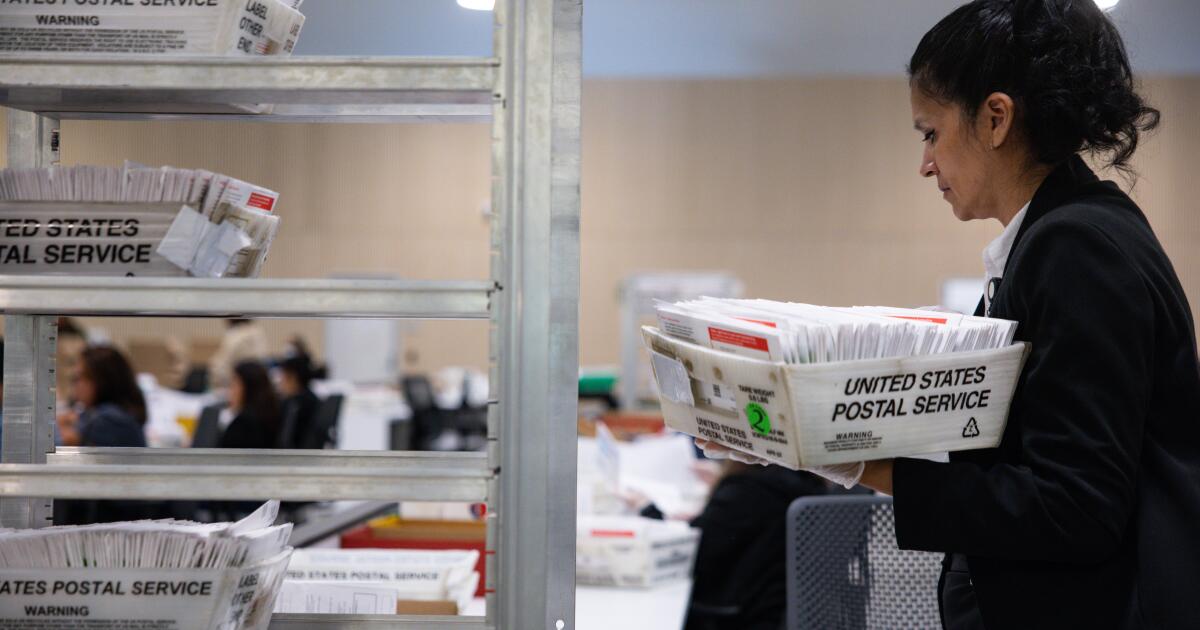
WASHINGTON — President Trump has spent months waging an unusually aggressive campaign to reshape how states run elections, leveraging federal agencies in ways no previous president has attempted.
He has pushed the Department of Homeland Security to compile a list of citizens in each state to help determine voter eligibility. He is seeking to give the Postal Service a role in deciding who can receive mail ballots. He has threatened to withhold federal funding from states unless they phase out electronic voting machines. And he is pressuring Republican lawmakers to overhaul voting laws, claiming without evidence that elections are being rigged.
The efforts have run into resistance in court and within his own party. They have also left postal workers and local election officials bracing for an election cycle marked by deepening doubts about election integrity, and uncertainty about how the federal government may challenge the post-election results.
“It’s an unprecedented power grab to reshape how our elections work so that he and his allies can maintain and expand power,” said Eric Kashdan, director of federal advocacy at the Campaign Legal Center, a nonpartisan government ethics organization.
The White House defends the effort as fulfilling a campaign promise, and argues the administration is “lawfully enacting the agenda President Trump was elected to enact.”
One of Trump’s defining efforts to assert some federal control over state elections has been his insistence on passing the SAVE America Act, which would require voters to provide proof of citizenship when they register, require Americans to show identification when casting a ballot and require states to send voter data to the Department of Homeland Security.
His relentless push for the measure has prompted him to derail a bipartisan housing bill and threaten to forgo signing any piece of legislation unless the voting measure is approved. He says he considers the matter a “national emergency.” Despite the pressure campaign, Senate Republican leaders maintain there is not enough support to pass the measure.
The political stakes ahead of the midterms have been laid out more bluntly by House Speaker Mike Johnson (R-La.), whose chamber has approved the SAVE America Act. Last month, Johnson warned conservatives gathered at the Faith & Freedom Coalition that if Democrats win back control of the House, they will “go after the president’s family, the Cabinet, his donors, friends,” and supporters.
“I run the protection program,” Johnson said. “I will take care of you.”
Setbacks in court
The administration’s ambitions have hit numerous snags in court in the last month, with judges reaffirming in many cases that the Constitution gives states — not the federal government — primary authority over elections.
In one case, U.S. District Judge Sparkle L. Sooknanan, who was appointed by President Biden, went further.
She said a federal immigration database the Department of Homeland Security was compiling to determine voter eligibility violated privacy laws. She added that the database has resulted in states actively removing U.S. citizens from voter rolls based on inaccurate information.
“All in all, the federal government has knowingly trampled on the privacy rights of American citizens in a manner that threatens the sacred right to vote,” Sooknanan wrote. “This Court cannot stand idly by while that happens.”
James Percival, the general counsel for Homeland Security, said the ruling was the latest example of “how hard the Left will fight to stop us from solving problems they insist do not exist.”
The Supreme Court’s conservative majority this week also dealt a blow to the GOP and upheld state laws that allow for counting mail ballots that are postmarked by election day but arrive late.
The decision left Trump fuming. He said it was a “a little bit surprising” to see the court’s decision, claiming without evidence that the result will inevitably give “people more time to vote illegally.”
Democrats, in turn, saw the ruling as a necessary check on the Trump administration’s efforts.
“While we continue to see unprecedented efforts to interfere with elections from the Trump administration, it is a relief to see federal courts make clear that these attacks on mail and absentee voting are clearly illegal and unconstitutional,” Sen. Alex Padilla (D-Los Angeles) said in a statement after the ruling.
Trump is still eyeing changes to voting by mail. In March, he issued an executive order that seeks to limit who can receive mail ballots. Under the proposed rule, the Postal Service would not deliver mail ballots to states that don’t turn over sensitive voter data to the federal government, Postmaster General David Steiner told a Senate panel last month.
The admission drew immediate condemnation from Democratic lawmakers. They argued the regulation is an illegal attempt to coerce states into handing over their voter rolls.
“Please push back on being a pawn in this authoritarian playbook,” Sen. Elissa Slotkin (D-Mich.) told Steiner. “The Postal Service is one of the most important institutions in our country. Don’t taint it with the obsession of this one man.”
A day after that back-and-forth, U.S. District Court Judge Indira Talwani, who was nominated by President Obama, blocked those plans — at least for now.
“The Constitution does not grant the President any specific powers over elections,” the judge wrote, while adding that the Postal Service does not have the legal authority to determine who can vote by mail and how.
The White House said Wednesday that the administration remains confident the executive order will be in place by the November election.
Taken together, the administration’s efforts are unprecedented, UCLA law professor Rick Hasen said. That’s because the Constitution puts control over elections in the hands of the states and grants Congress the ability to pass laws, he said.
“The president really only has authority through federal statutes that have already been passed,” Hasen said. “It’s not surprising that many courts have struck down or stopped him from doing things to try to interfere with how elections are being run.”
Postal workers waiting for clarity
The legal setback for the Postal Service proposed rule was welcome news to the union representing postal workers.
“We believe that what we’re being asked to do is in violation of the oath that we took,” said Jonathan Smith, the president of the American Postal Workers Union, which represents more than 200,000 postal workers.
Following the ruling, the union called on the agency to abandon the rule, arguing it “will crush mailers’ trust in the Postal Service” and undermine “one of the most important functions the Postal Service and postal workers perform in service of the United States and its remarkable democracy.”
In several states, the union has run ads promoting mail voting as safe and a needed option for Americans. The ads were planned before Trump signed his executive order in March seeking to limit who can receive mail ballots, Smith said.
Now, the ads are taking a different meaning. Smith argued that “sometimes God works in mysterious ways.”
“The ad was then and is now intended as a piece to educate America about how good vote by mail is, how much it has been working out,” Smith said. “It’s an educational piece, not a response to the White House.”
Ahead of the election, Smith said postal workers are waiting for clarity on how their duties may change. But right now, he says, there isn’t much.
Orange County Registrar Bob Page said his office is monitoring any changes to existing federal and state election laws to ensure any changes, if needed, are implemented without disruptions. But he acknowledged the timing crunch could create some hurdles the closer the election gets.
“In many ways, any change to how California voters cast their ballots made between now and election day would create a challenge and may even be disruptive,” Page said.
He said many counties have ordered outgoing and return ballot envelopes for the election to ensure envelopes for more than 23 million California voters are ready to use by the Oct. 5 mailing deadline. Any change to how ballots should be prepared or mailed could present an issue.
“Our office has received calls from voters asking about potential changes to vote-by-mail procedures usually tied to media coverage about proposed changes,” he said. “We inform these voters that our procedures have not changed because the law has not changed and that we will mail their 2026 General Election ballots by Oct. 5.”
L.A. County prepares for possible voting changes
In Los Angeles County, election officials are also in a battle to bring clarity to the process as the administration ushers in a series of proposed changes to the election.
Dean Logan, the head of the Los Angeles County registrar-recorder/county clerk’s office, said his office is fighting to contain a wave of election misinformation, including some that is amplified by the White House.
“It’s not something that we’ve seen happen before, and certainly not at the level we’ve seen,” Logan said.
Rather than respond to every claim, Logan says his office picks its battles, intervening only when a falsehood appears likely to reach a wide audience. Even then, the office tries to avoid engagement with whoever is spreading it.
If the administration imposes a new rule closer to the election, Logan said his office is ready to follow the law.
“It’s really been about finding this balance of staying alert and prepared for the possibility [of change] but also not getting sucked into the political distraction,” he said.
Last month, Trump claimed without evidence that Democrats have cheated to win California’s primary elections, and boasted about federal prosecutors in Los Angeles investigating the matter.
Trump has also continued to claim Democrats are trying to rig or cheat in the upcoming election, remarks that have faced rebukes from members of his own party.
“I think it is ironic that we control the House, Senate, Supreme Court and the White House and we are yelling election fraud. I mean, we won all the damn elections,” Rep. Thomas Massie (R-Ky.) told reporters last month.
At the national level, Senate Democrats have said they plan to send election observers to polling places on behalf of Congress in reaction to Trump’s efforts.
“We are not waiting for chaos to arrive,” Senate Minority Leader Chuck Schumer (D-N.Y.) said last month. “We are preparing now.”
Times staff writer Justine McDaniel contributed to this report from Washington.
Politics
Sanctuary county refused 615 ICE transfer requests, turned over just 11 illegal immigrants, records show

Angel mom Cheryl Minter demands accountability from Fairfax DA
The House GOP grilled Fairfax DA Steve Descano over his controversial soft-on-crime record, particularly his office’s leniency toward illegal immigrant criminals. During powerful testimony, Angel Mom Cheryl Minter detailed how her daughter’s murder by an alleged illegal alien with over 30 prior arrests highlighted the tragic consequences.
NEWYou can now listen to Fox News articles!
FIRST ON FOX: Records obtained by a conservative legal group show Fairfax County, Virginia, declined to transfer 615 illegal immigrants to ICE over the past 16 months, while turning over just 11.
Fairfax County, whose board includes one Republican supervisor for what is the most populous jurisdiction in the Old Dominion, formally designated itself a sanctuary jurisdiction in 2021 after passing the Public Trust and Confidentiality Policy or “Trust Policy.”
America First Legal filed a Freedom of Information Act request with the county seeking records from the office of Fairfax County Sheriff Stacey Ann Kincaid, who testified at a contentious House hearing earlier this spring on Fairfax’s reluctance to cooperate with federal law enforcement.
The data, obtained directly from a Fairfax County Sheriff’s Office document, showed that for the entirety of 2025, Kincaid’s office refused to transfer 448 illegal immigrants to the Department of Homeland Security for processing and instead only turned over a total of nine to ICE. During the first four months of 2026, Fairfax declined to transfer another 167 illegal immigrants, while turning over only two.
WATCH: ANGEL MOM TURNS TABLES ON SANCTUARY POLITICIANS WITH BASIC QUESTION ABOUT THEIR PRIORITIES
Fairfax County Sheriff Stacey Kincaid (Eva Russo/Getty Images)
Since then, county policy has barred law enforcement from honoring ICE civil detainers or otherwise assisting with federal immigration enforcement.
America First Legal (AFL), which first obtained the data, placed much of the blame on Fairfax County Commonwealth’s Attorney Stephen Descano, who sat beside Kincaid at the recent hearing and faced sharp questioning from Republicans over his prosecutorial discretion in cases involving illegal immigrants arrested in the county.
SOROS-BACKED DA’S LAX ILLEGAL IMMIGRATION POLICIES LED TO ‘PREVENTABLE’ BUS STOP STABBING MURDER: COMPLAINT
AFL said in a statement obtained by Fox News Digital that Fairfax’s overall framework encourages recidivism by illegal immigrant offenders and has directly led to several gruesome cases, including the murder of Fredericksburg, Virginia, woman Stephanie Minter, whose alleged killer is an illegal immigrant from West Africa with a lengthy criminal record in Fairfax County.
AFL noted that Descano is under investigation by the Justice Department’s Civil Rights Division over claims U.S. citizens are effectively discriminated against because of the prosecutor’s stated preferential policies, which appeared on his campaign pages and elsewhere and were highlighted by Subcommittee Chairman Tom McClintock, R-Calif., and others during the hearing.
The group pointed to fatal stabbings; the alleged assault of a woman on the Washington & Old Dominion Trail, a popular rail trail spanning from Washington, D.C., to Purcellville that has long been considered safe; and other crimes allegedly committed by illegal immigrants who, it said, received light sentences or had charges dropped.
FEDERAL JUDGE BLOCKS BLUE STATE’S LAW PROHIBITING ICE AGENTS FROM WEARING MASKS ON THE JOB
Descano has long defended his prosecutorial discretion as evidence-based and handled on a case-by-case basis.
A Descano spokesperson told Fox News Digital in a statement Thursday that the DOJ’s probe is politically motivated and has “distort[ed] the office’s policy.” The spokesperson also said the notice appeared to arrive intentionally just before Descano testified before McClintock.
“Our office’s policies are fair, legal and reflect the values of Fairfax County, and we will not be distracted from our mission of keeping this community safe and holding individuals accountable when they commit crimes,” the spokesperson said.
Fox News Digital also reached out to Kincaid’s office for comment.
Fairfax County Commonwealth’s Attorney Steve Descano, left, and Fairfax County Sheriff Stacey Ann Kincaid, right, testify before Congress. (Tom Williams/Getty Images)
AFL counsel Will Scolinos rejected the county’s defense, telling Fox News Digital that tragic cases such as Minter’s murder are the product of the Trust Policy and the shielding of “hundreds of illegal aliens … from federal law enforcement.”
“This deliberate obstruction by county officials protects illegal alien lawbreakers and endangers every family in Northern Virginia,” Scolinos said. “For too many families, it is already too late. But to protect other Virginians from future crimes at the hands of illegal aliens with prior arrests, Fairfax County must reverse this reckless, anti-American governance immediately.”
In the most recent month recorded, April 2026, 32 illegal immigrants were listed as being in the sheriff’s office’s custody, with none released to ICE. All 32 were subject to an “informed detainer,” and three were listed as convicted.
AFL also noted that Santa Clara County, California — home to the San Francisco 49ers’ new stadium — informed the group that it received 529 ICE detainer requests in 2025 and honored none.
SIGN UP TO GET THE POLITICS NEWSLETTER
“If each detainer represents a unique illegal alien, an average of 1.34 arrested illegal aliens were released into Santa Clara every day,” AFL said in April.
CLICK HERE TO DOWNLOAD THE FOX NEWS APP
The numbers reflect a pattern that is expected to continue drawing scrutiny from the Trump administration and groups such as AFL, which has also sought data from sanctuary jurisdictions nationwide.
Fox News Digital reached out to DHS for comment.
-

 Delaware4 minutes ago
Delaware Man Killed by Falling Camel
-

 Florida11 minutes ago
Florida Supreme Court reverses rule on knock-and-announce evidence
-

 Georgia14 minutes ago
FBI assigns 260 staffers to Georgia election investigation
-

 Idaho14 minutes ago
Trump OKs disaster declaration for northern Idaho counties
-

 Hawaii17 minutes ago
Hawaii commemoration of America’s birthday funded on a shoestring – The Garden Island
-

 Illinois26 minutes ago
Fireworks Near Me: July 4th Events Around Chicago Heights For 2026
-

 Indiana29 minutes ago
Retro Indy: These cities could have been Indiana’s capital
-

 Iowa34 minutes ago
11 beaches on Iowa DNR’s swimming not recommended list for July 4

